


Auction: 26001 - Orders, Decorations and Medals
Lot: 277
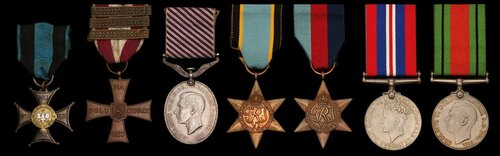
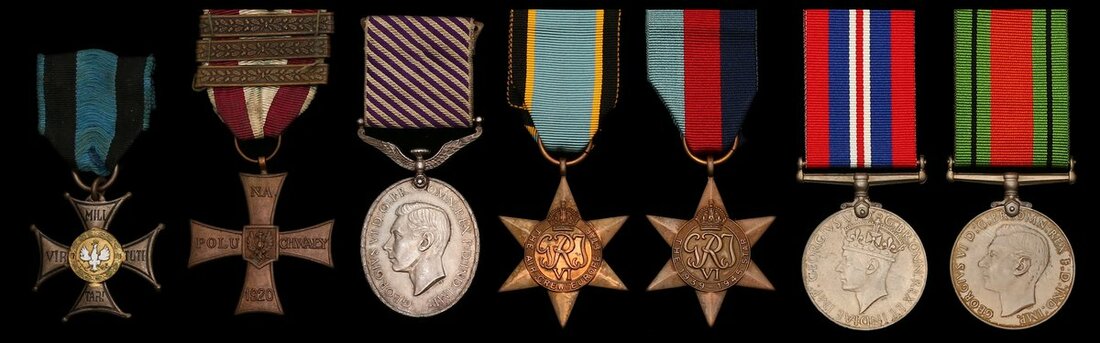
(x) The well-documented Virtuti Militari, Cross of Valour with three Bars, D.F.M. group of seven awarded to Sergeant J. Platacz, No. 300 (Polish) Squadron, Royal Air Force, who served on three of the Thousand Bomber Raids, notably Operations Millennium I and Millennium II
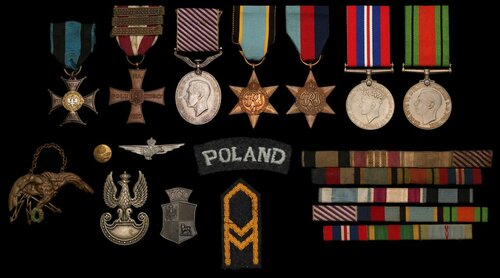
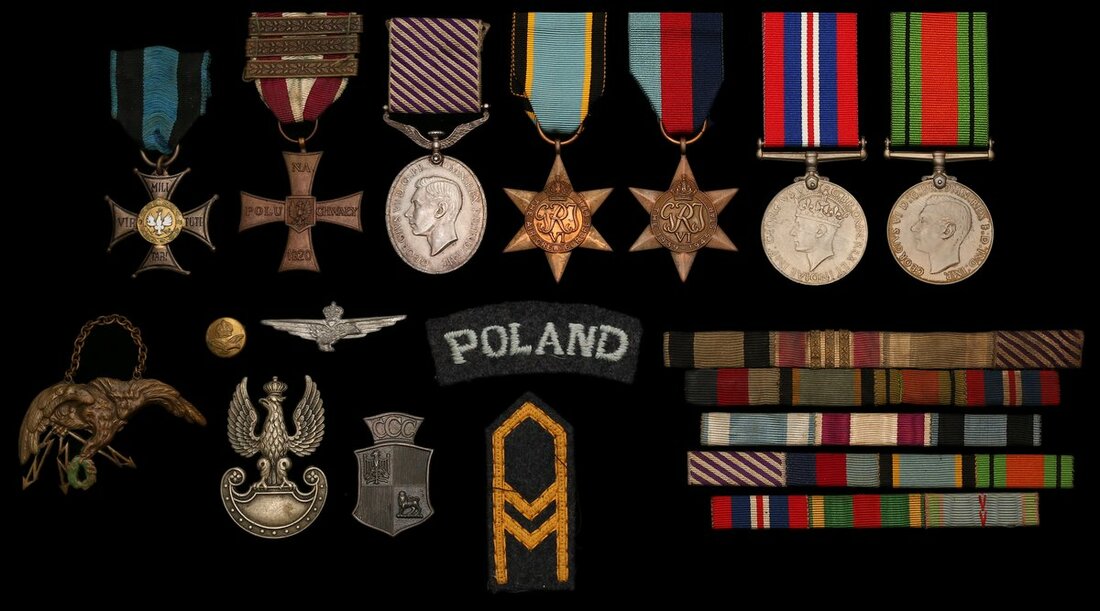
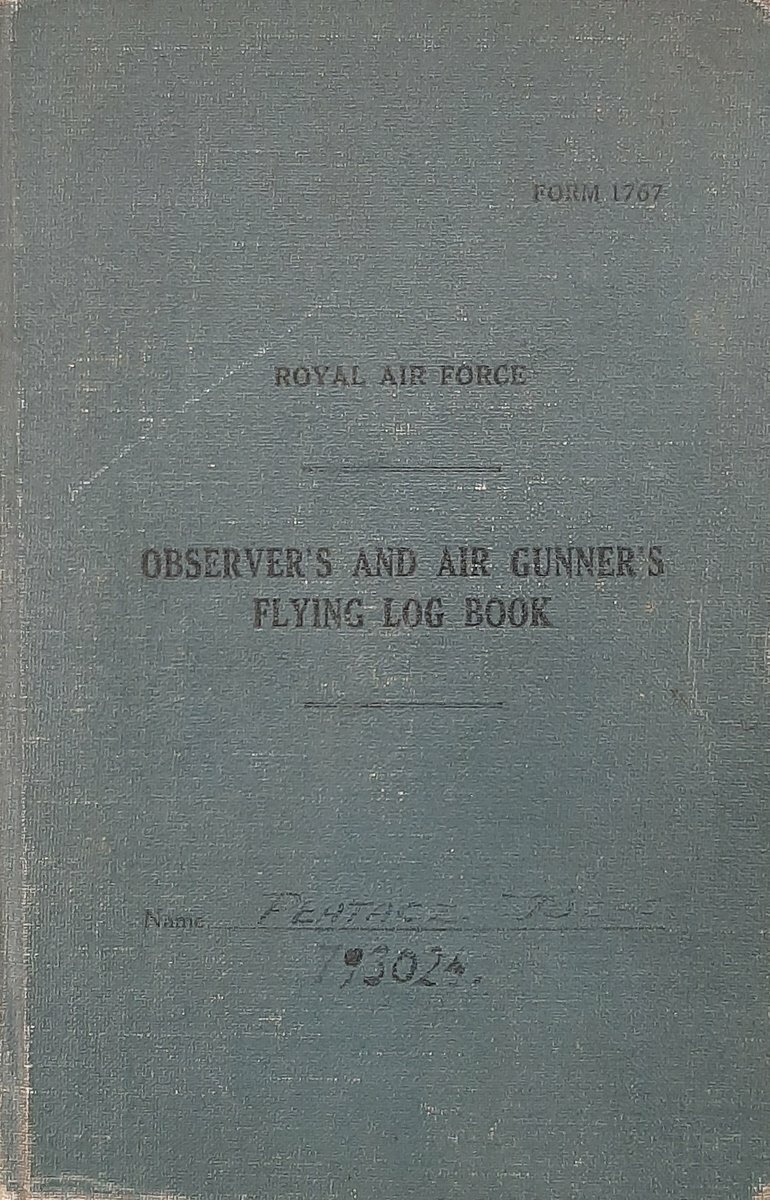
Poland, Republic, Order of Virtuti Militari, breast Badge, 5th Class, silver and enamel, officially impressed '9591', Krupski & Matulewicz pre-war manufacture; Cross of Valour, with Second, Third and Fourth Award Bars; Distinguished Flying Medal, G.VI.R. (P.793024 Sgt. J. Platacz), on its original investiture pin; 1939-45 Star; Air Crew Europe Star; Defence and War Medals 1939-45, sold together with an archive of original material including the recipient's Flying Log Book dated from 9 March 1941-17 June 1948, good very fine (7)
Just 66 D.F.M.'s issued to Polish Airmen for the Second World War 1939-45.
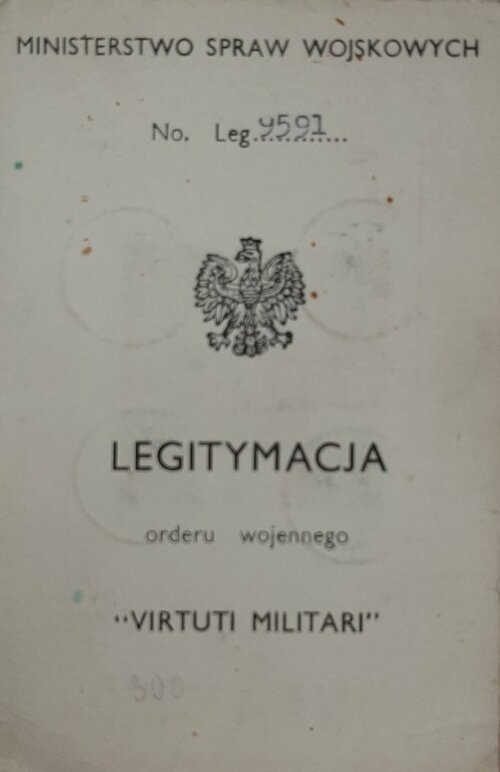
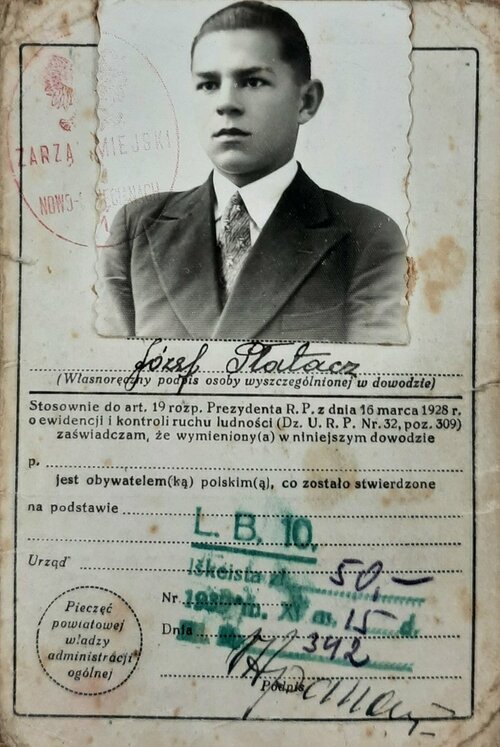
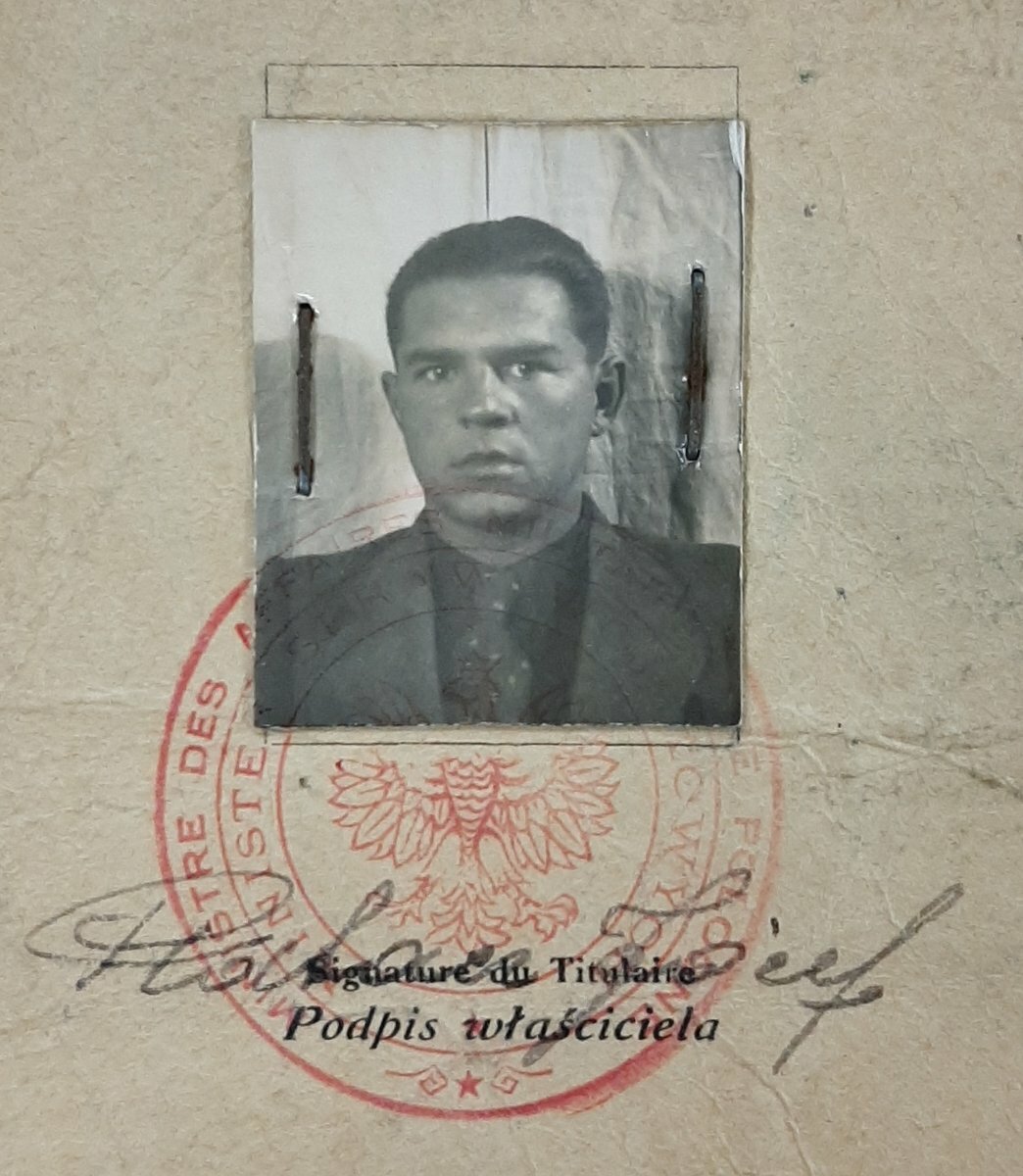
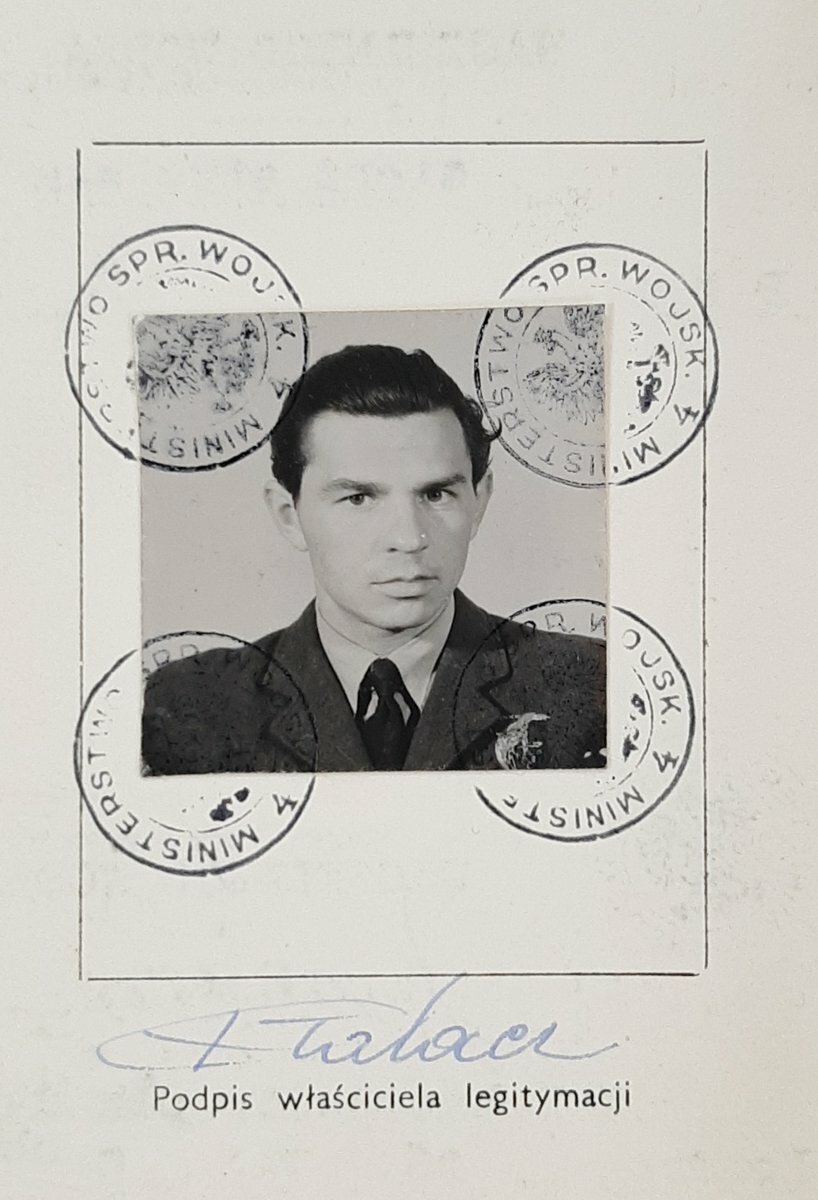
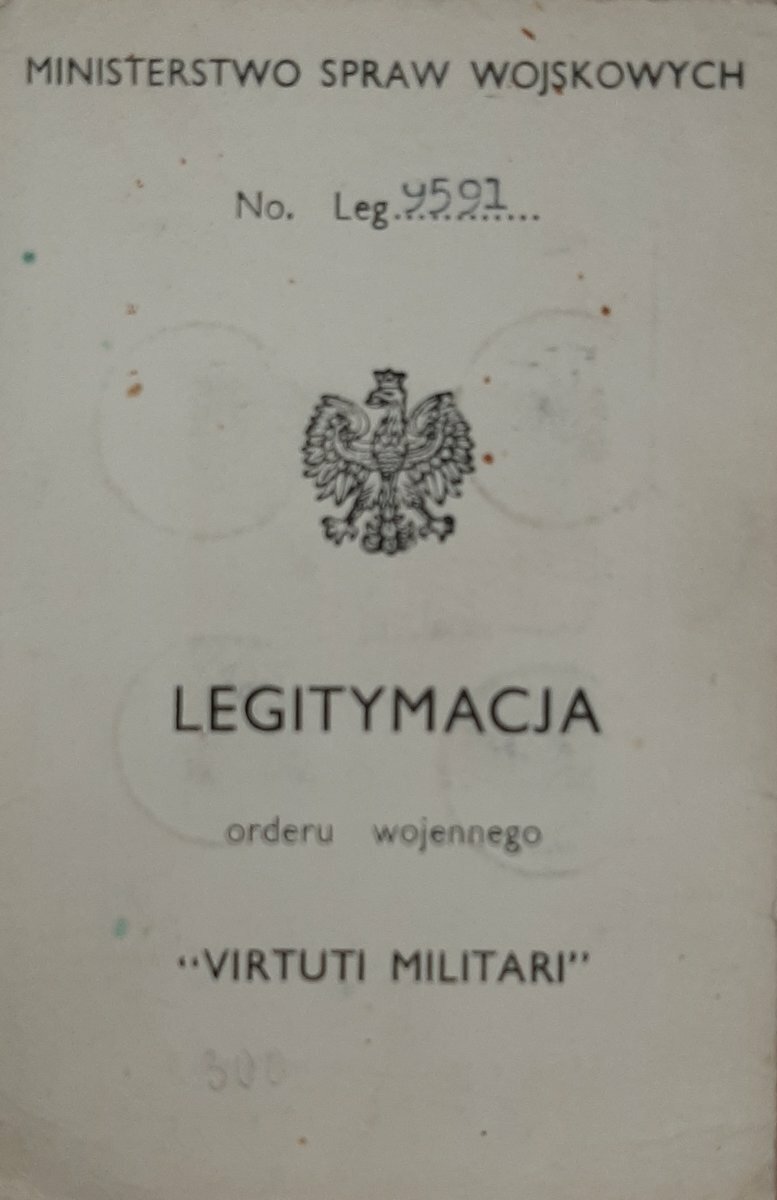
Virtuti Militari, Diploma signed by General Sikorski on 13 August 1942, with original presentation tube, additionally received Legitimacja (carry sized document with photo authorization) in 1945.
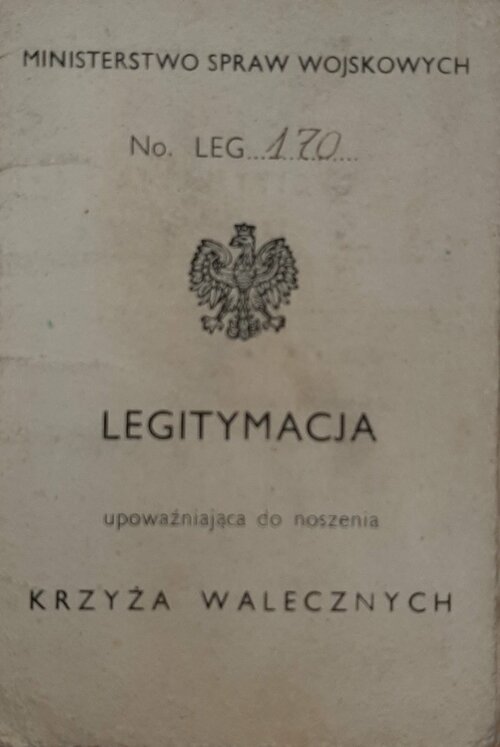
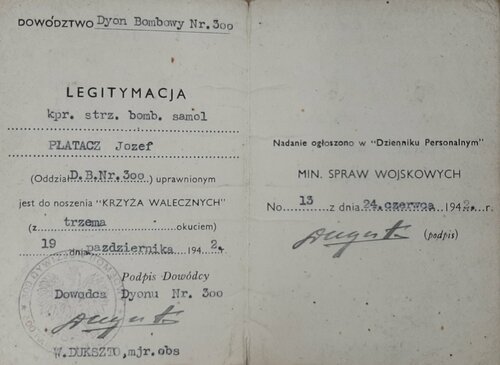
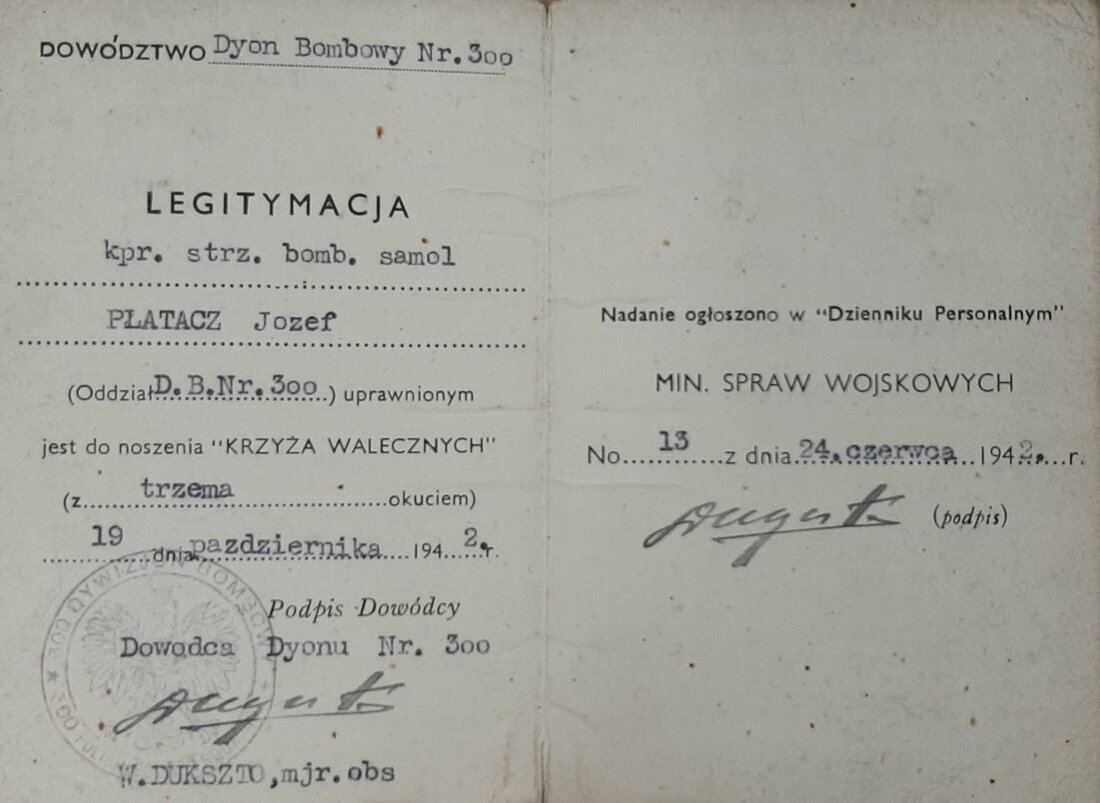
Cross of Valour authorisation (Legitymacja) to wear granted 19 October 1942, for 1st Award with subsequent awards officially noted on back of 'Legitymacja'.
D.F.M. approval to wear granted 17 April 1943. The original recommendation states:
‘Participated in 37 sorties against heavily defended targets and has shown complete disregard for danger. His alertness and accurate fire have assisted in driving attacking aircraft away.’
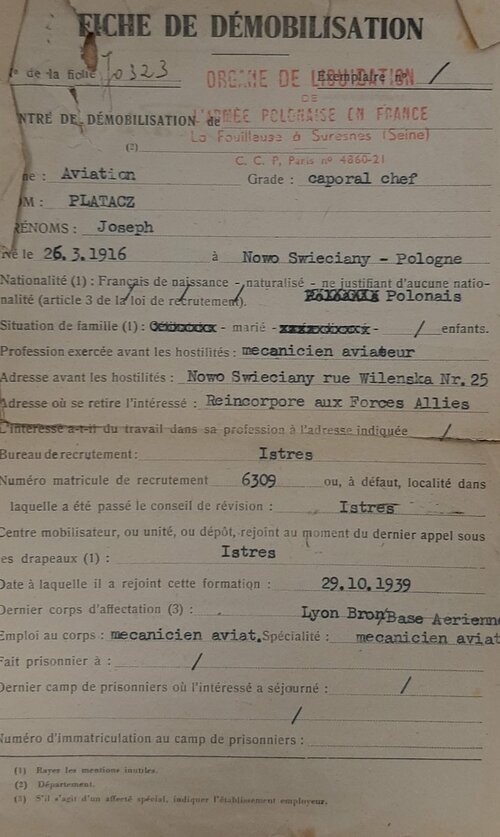
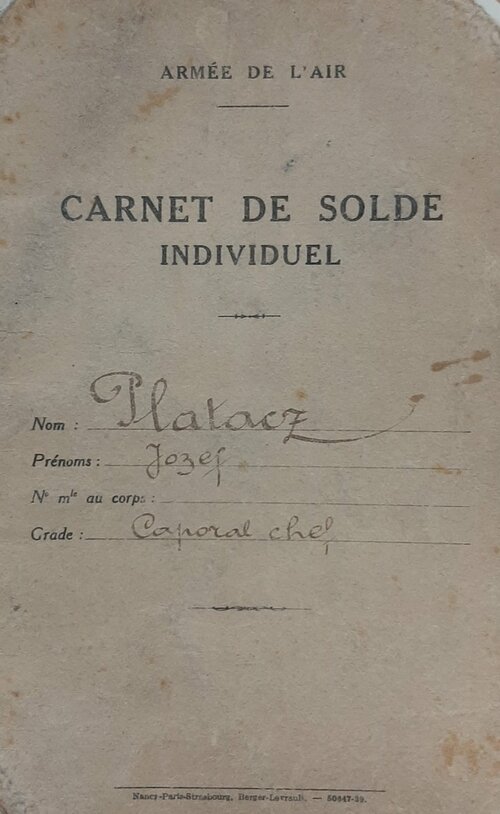
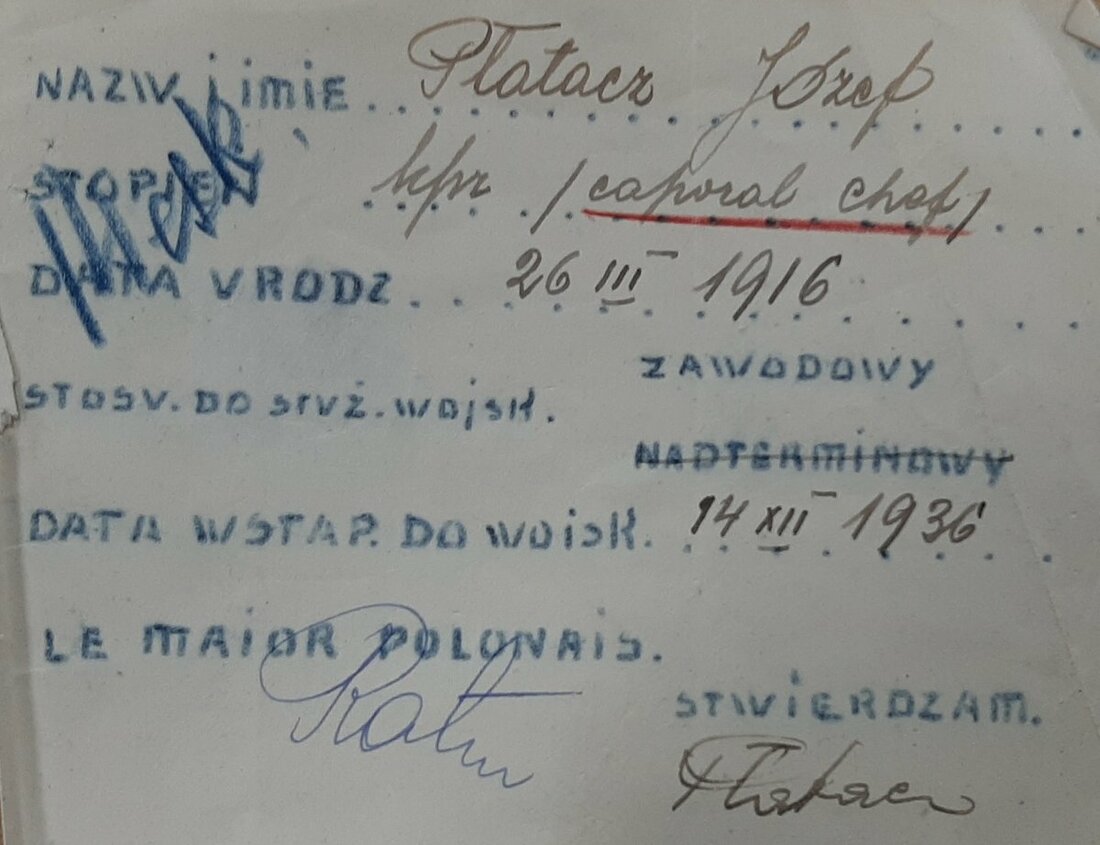
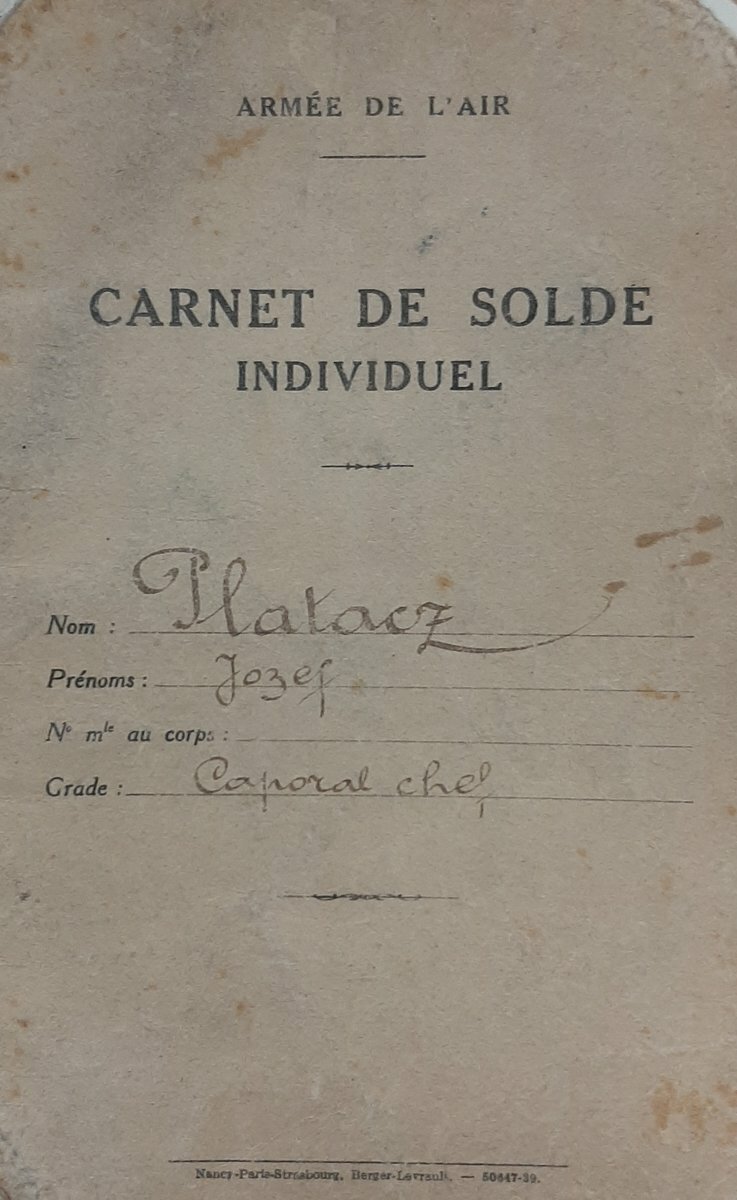
Josef Platacz was born at Nowo Swieciany, Poland on 26 March 1916, the son of Josef and Julianna Platacz. Working as a Power Press Operator before the war, like many Poles he escaped the Fall of Poland to continue the fight abroad. Finding himself in France, Platacz joined the Polish Air Force being reformed in France as Corporal (Air Mechanic) on 20 October 1939, with his paybook listing pay from 1 March- 31 May 1940.
Again escaping the seemingly unstoppable advance of the German Blitzkrieg he arrived in Britain where he joined the Royal Air Force. Qualifying as a Radio Operator on 6 June 1941 and Air Gunner on 15 August 1941 he posted to No. 18 Operational Training Unit at Bitteswell from 25 November-17 December 1941. Plalacz and his crew chalked up 38.35 hours of day flying and 20.10 hours of night flying there before joining No. 300 (Polish) Bomber Squadron.
Operational flying began on 18 January 1942 in the Squadron's Vickers Wellingtons, with the first raid occurring at the end of the month on 22 January over Munster. Platacz's next operational flight was over Bremen on 11 February however this action was cut short as the German's began their 'Channel Dash' the same day.
Desperate to draw their major fleet assets back from the range of British bombers the Germans elected to launch a major air operation to cover the withdrawal, codenamed 'Donnerkeil' or 'Thunderbolt'. As soon as Platacz landed after the Bremen raid his crew was ordered up again as the RAF and Royal Navy scrambled to respond. The crew flew twice during this time, on 11 February and 13 February however despite the brave efforts of the RAF. they were unable to prevent the German ships from escaping their blockade in Brest.
Three missions over Essen in March saw Platacz taking part in the first ever raid by Lancasters, although No. 300 Squadron was still flying Wellingtons themselves. Sadly, at the end of the month he was to undertake a flight searching for missing aircrew although his logbook did not indicate whether they met with any success.
By April 1942 the R.A.F. had developed a new radio navigation system which brought more German cities into range leading to the raid over Cologne on 5 April in which Platacz, again, took part. It was this raid which caused the Luftwaffe to begin planning the 'Baedeker Blitz', the first of a series of tit-for-tat raids which saw a number of British and German cities devastated.
Further raids over Essen and Hamburg followed before an attack on Rostock on 25 April targeting the Heinkel aircraft factory in the area, not the last time Platacz would find himself in the region. The month was rounded out with another attack on Cologne and the aircraft works outside Paris.
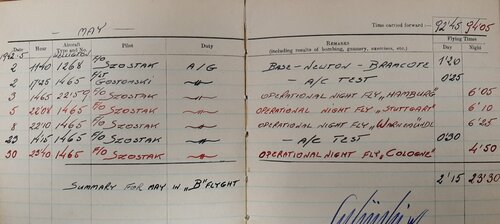
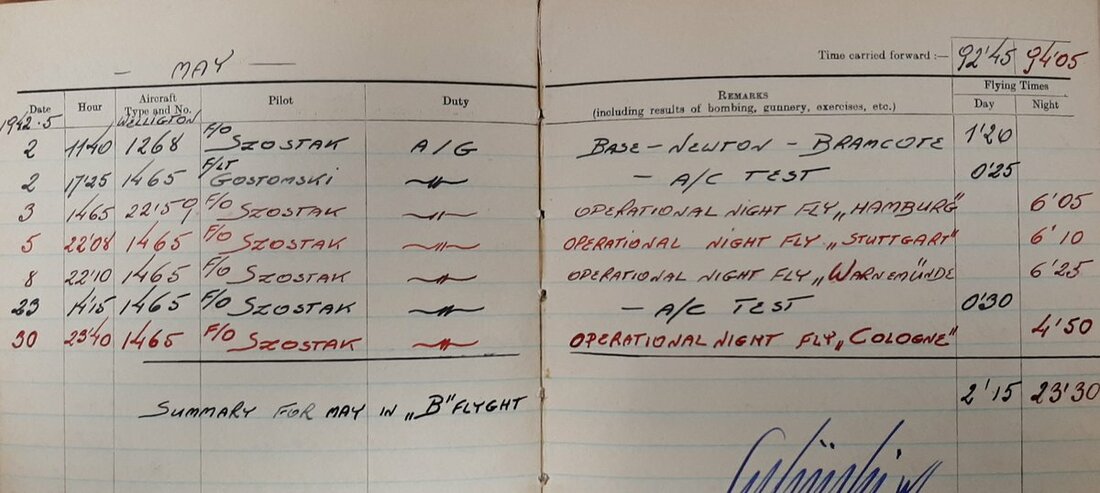
The next month saw raids over Hamburg and Stuttgart before Platacz returned to the Rostock region, this time targeting the Heinkel factory at nearby Warmemunde on 8 May. However it was to be at Cologne on 30 May, that the largest operation of the month was borne out, 'Operation Millennium', the first 1,000 bomber raid over Cologne. Polish units were more heavily represented during this operation that they had been in previous raids as Air Chief Marshall Harris was casting around for additional aircraft to make up the historic number. They suffered losses of 43 aircraft but left Cologne devastated, notably it does not appear again in Platacz's logbook, suggesting a knockout blow to the city.
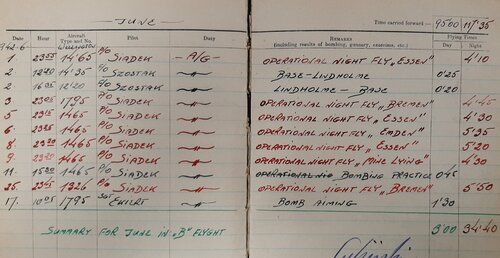
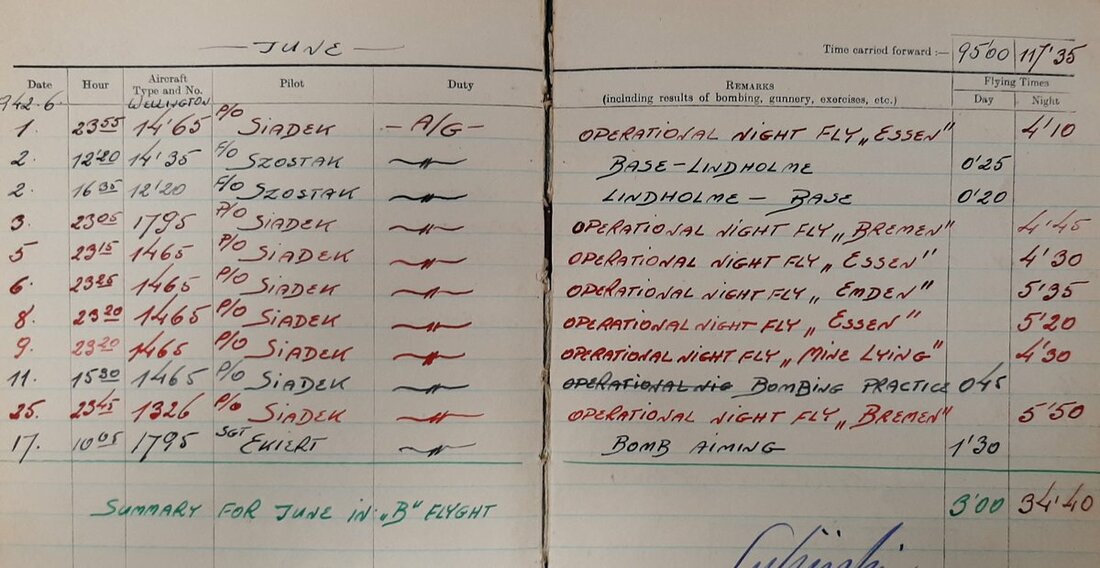
His next mission was the second Thousand Bomber Raid, this one over Essen on the night of 1-2 June Heavy cloud cover allowed them to reach the target unseen. Unfortunately it gave out and a strong moon gave the German right fighters an opportunity to reap a heavy tally on the attackers. Platacz took part in five missions over the first nine days of June including his first 'Gardening' mission on 9 June.
The final Thousand Bomber Raid, Operation Millennium II took place over Bremen on the night of 25-26 June. The main target being the U-Boat yards on the outskirts of the city, they were somewhat successful with the Focke Wulf factory in the area suffering serious damage however the attackers lost 48 aircraft, some 5% of their number.
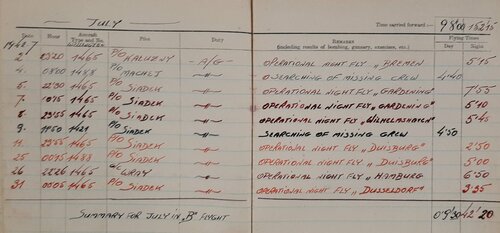
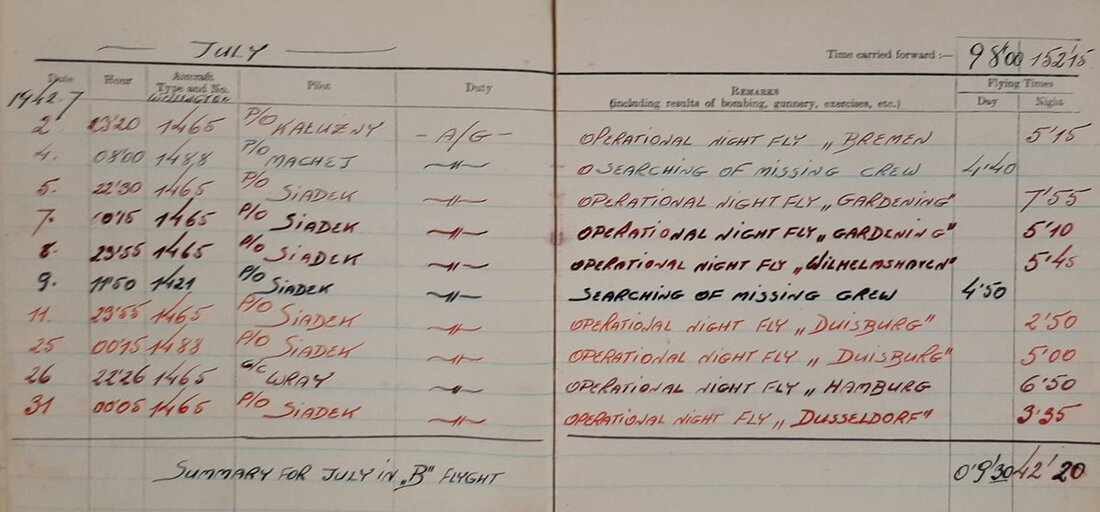
Despite this Platacz was back over the city within a week for a follow up raid on 2 July 1942, followed by a spell of Gardening missions on 5 July and 7 July. This was to prove his busiest month with another five missions for a total of eight operational flying entries in his logbook. The last being a major attack over Dusseldorf, which saw heavy damage caused to the city.
However, such intense flying took its toll upon pilots and Platacz saw only two missions between 1-12 August before being posted to a Gunnery Refresher course and from there to No. 16 Service Flying Training School in October 1943. He remained with this unit for well over a year, likely in an instructional role before finally being approved to return to active service in February 1945.
At this point No. 300 Squadron was transferring to Lancaster Bombers and so Platacz was posted to No. 1658 Heavy Conversion Unit for training on both Lancaster and Halifax bombers. Posted back to his squadron in June 1945 he missed seeing any further action although continued to fly as late as 1948.
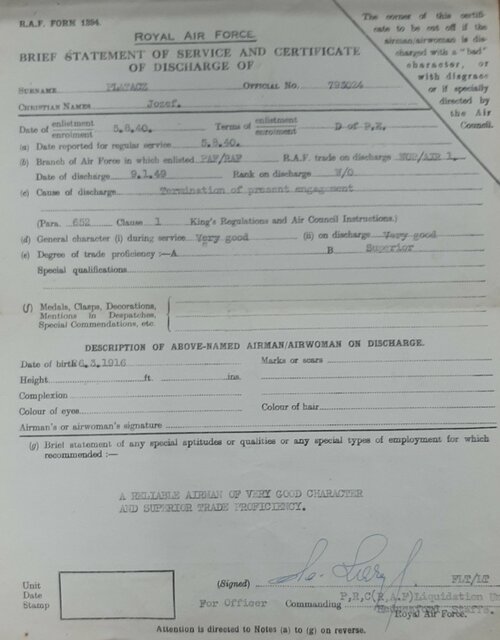
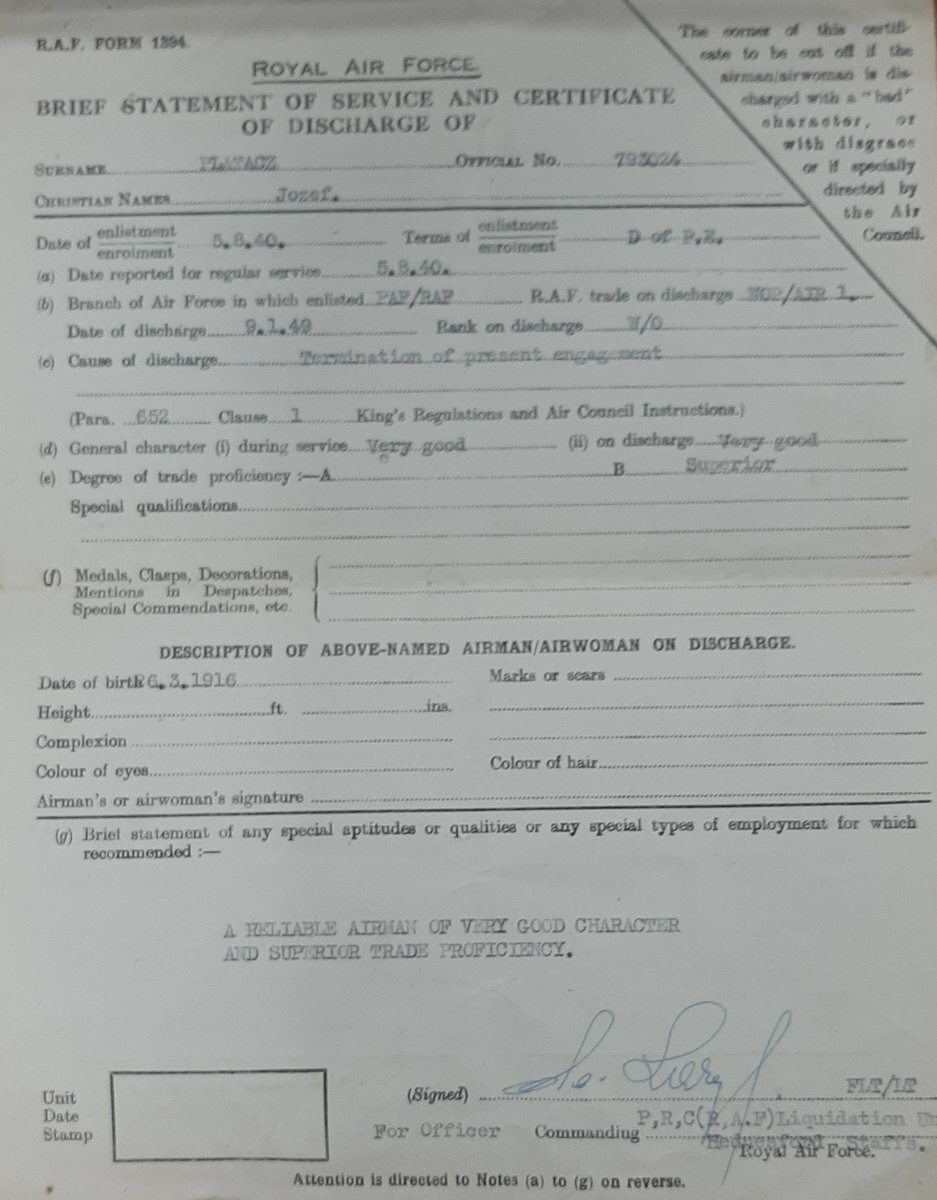
Platacz was finally discharged on 9 January 1949, his statement of character states:
'A reliable Airman of very good character and superior trade proficiency'
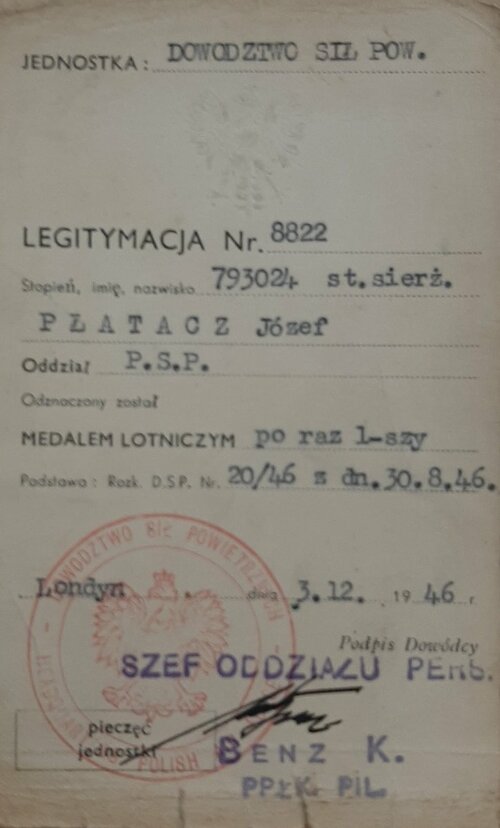
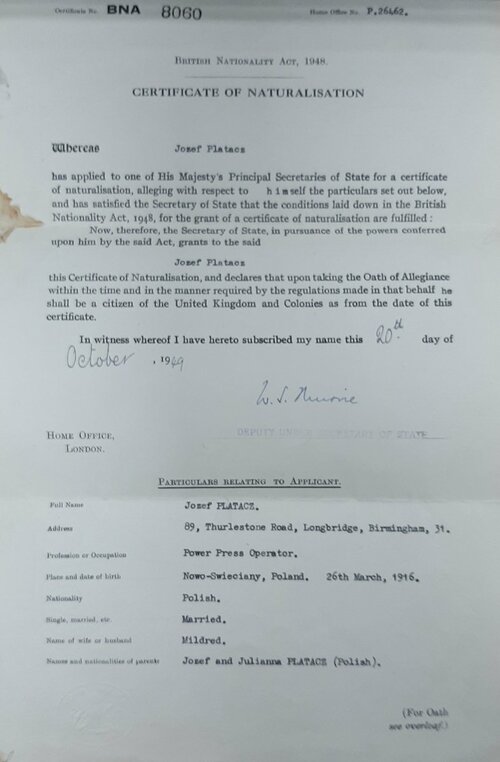
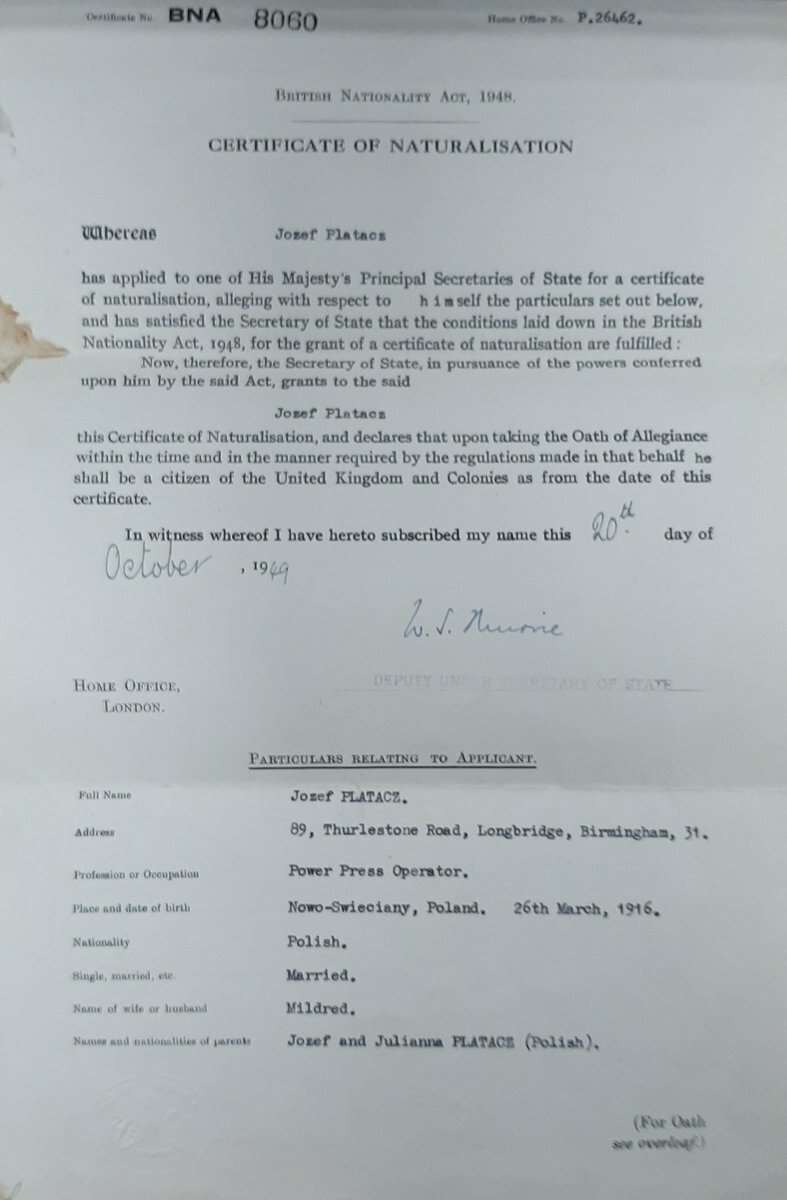
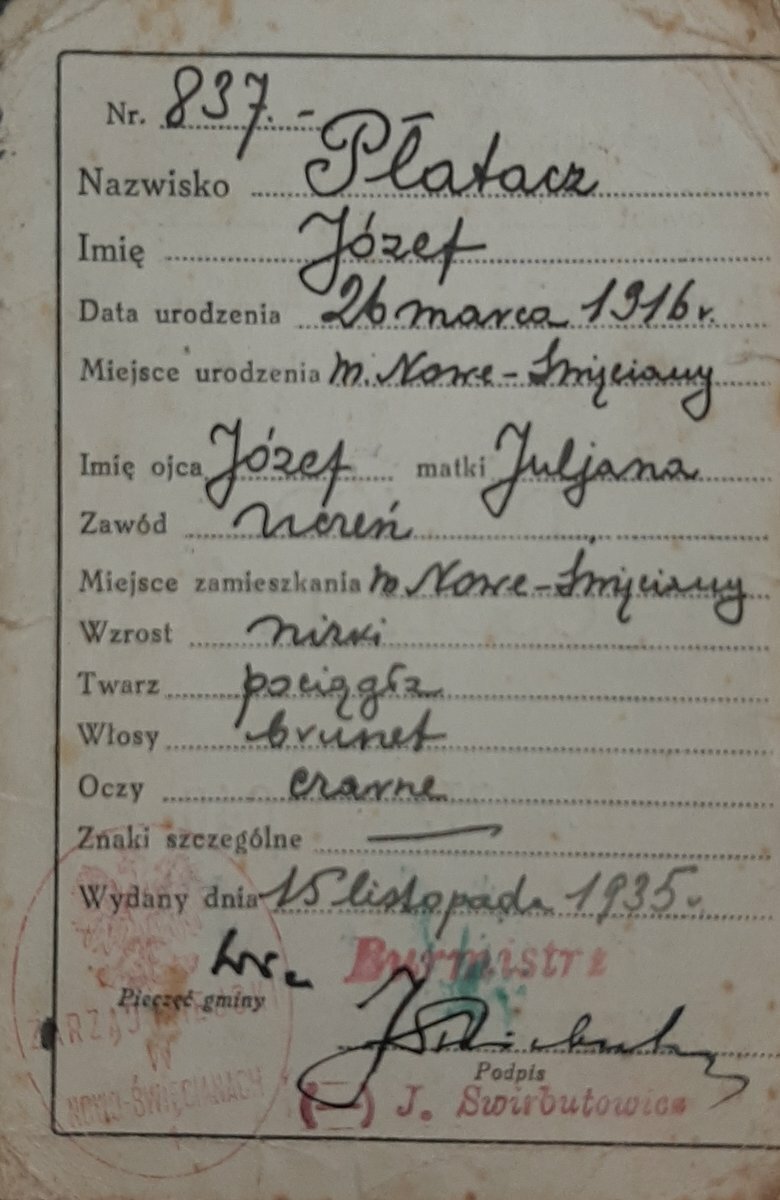
That same year he became a naturalised citizen on 20 October 1949, while living at 89 Thurlestone Road, Longbridge, Brimingham; sold together with copied research and an original archive comprising:
i)
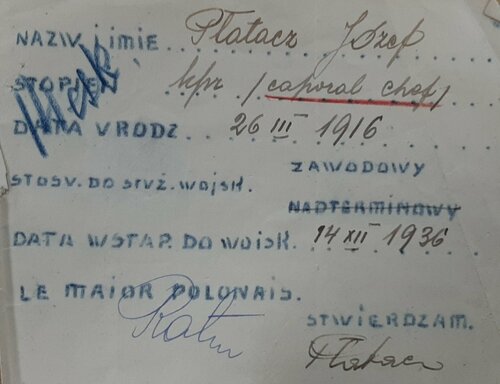
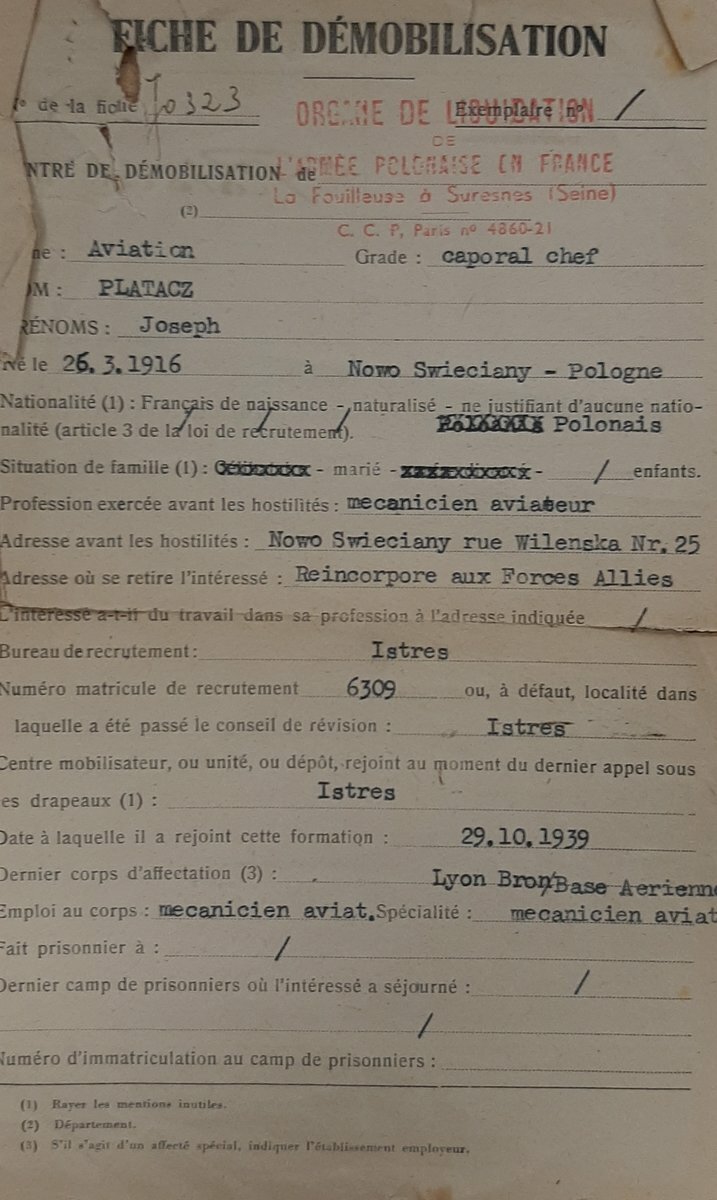
Documents related to the recipient's time in the Polish Air Force in France comprising, A French Airforce Paybook filled in from March-May 1940, demobilisation certificate and Combattants Volontaires Federation membership card.
ii)
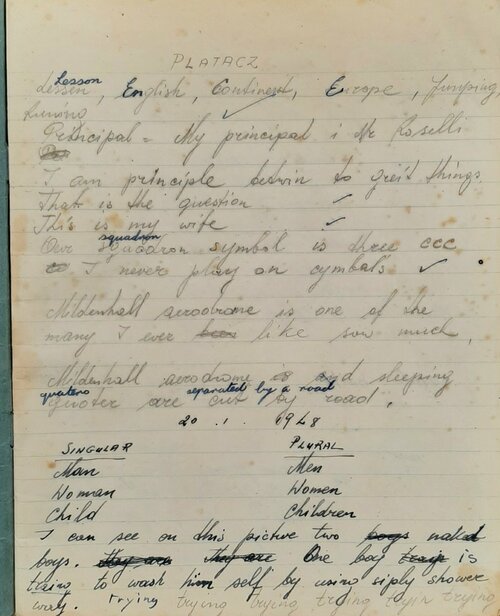
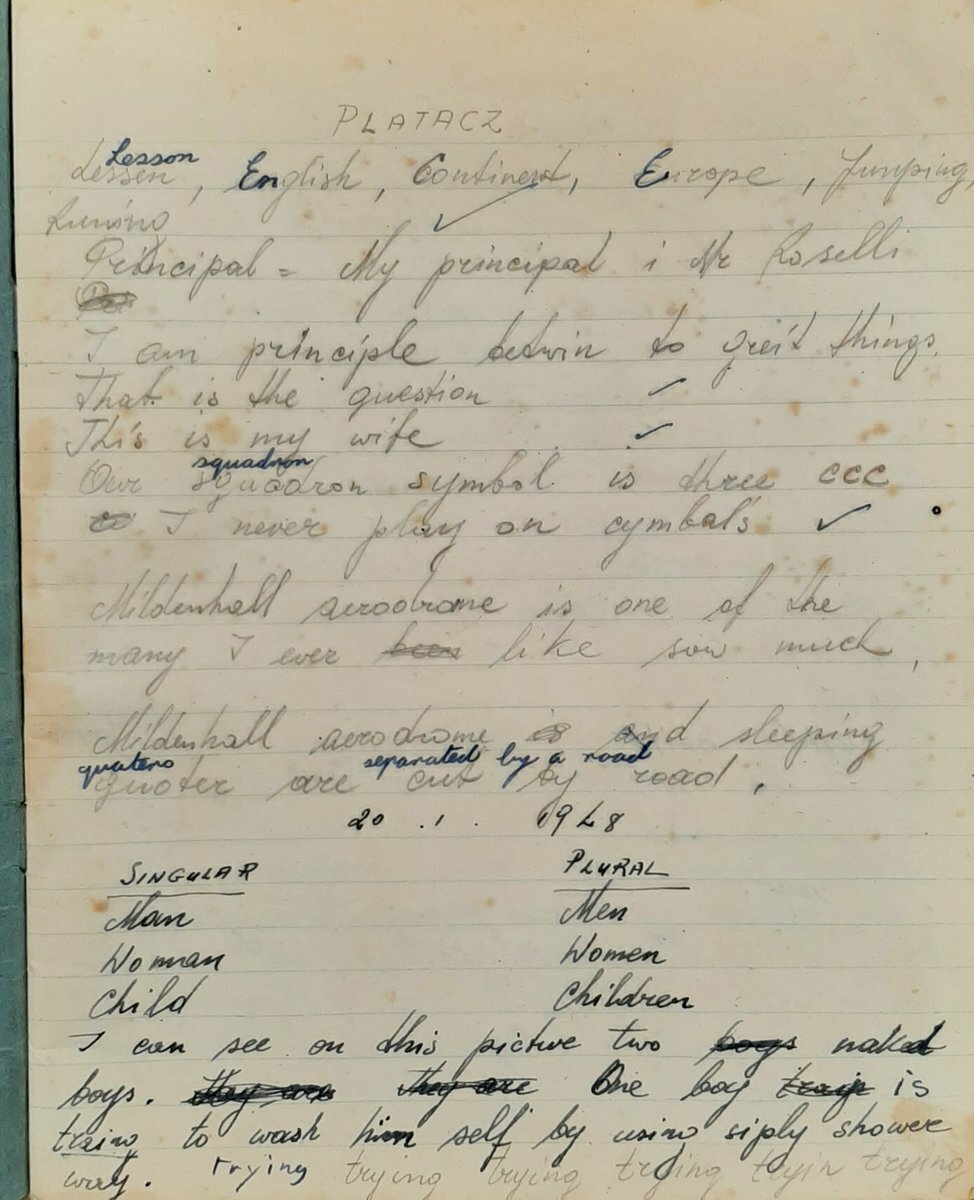
An R.A.F. workbook, filled with notes on the recipient's study of English.
iii)
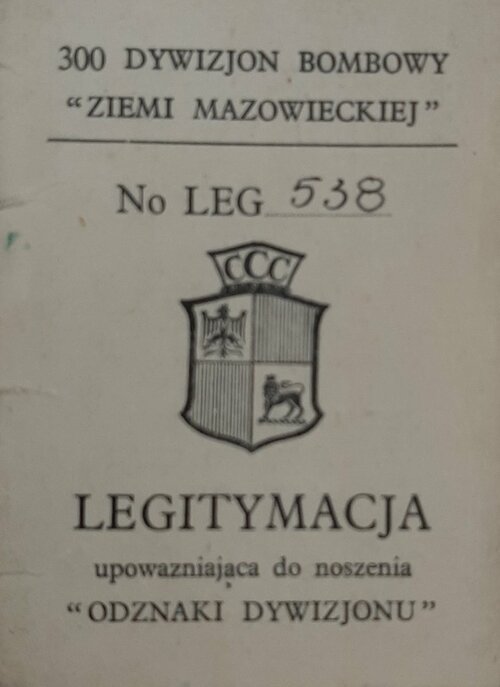
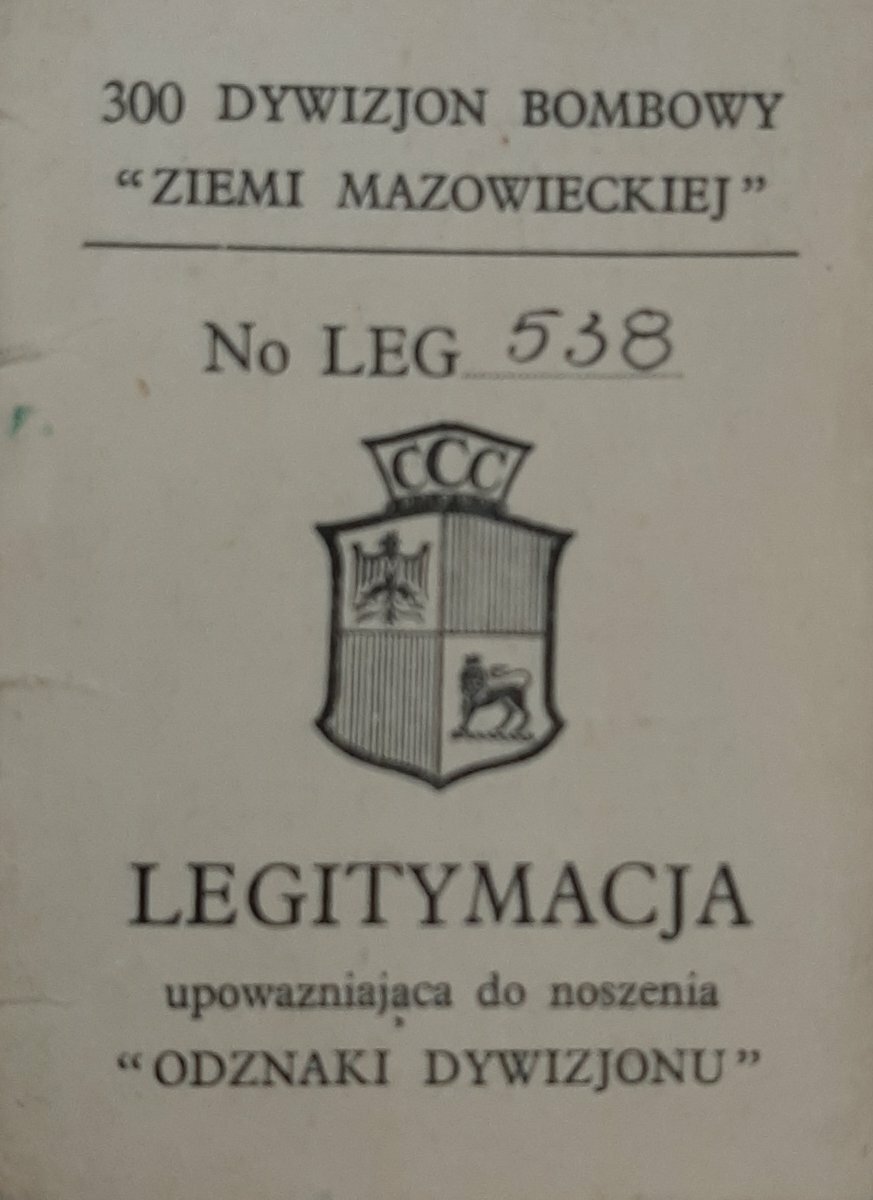
No. 300 (Polish) Squadron Unit Badge authorization and wartime squadron badge.
iv)
Authorisation to wear card for the Virtuti Militari, named to the recipient with the number '9591' along with the diploma of issue signed by General Sikorski in 1942 in its original card tube.
v)
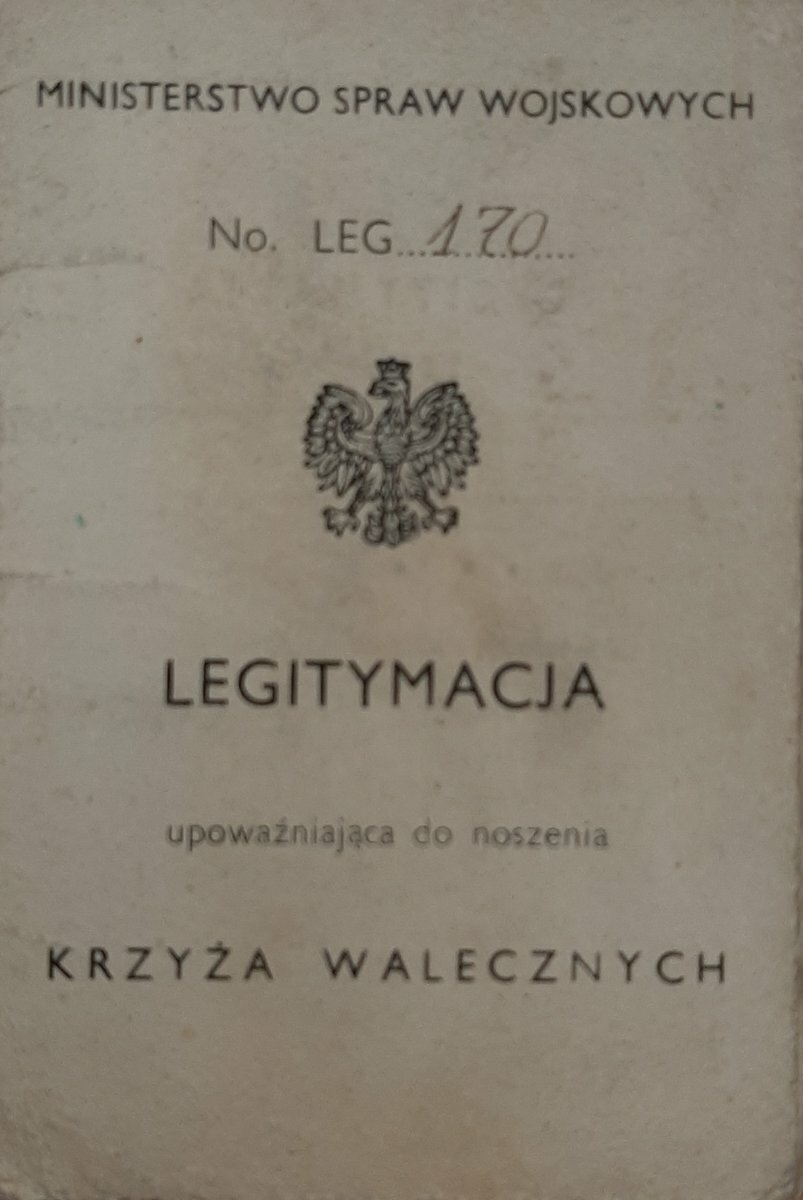
Authorisation to wear card for Cross of Valour, named to the recipient with the number '170'.
vi)
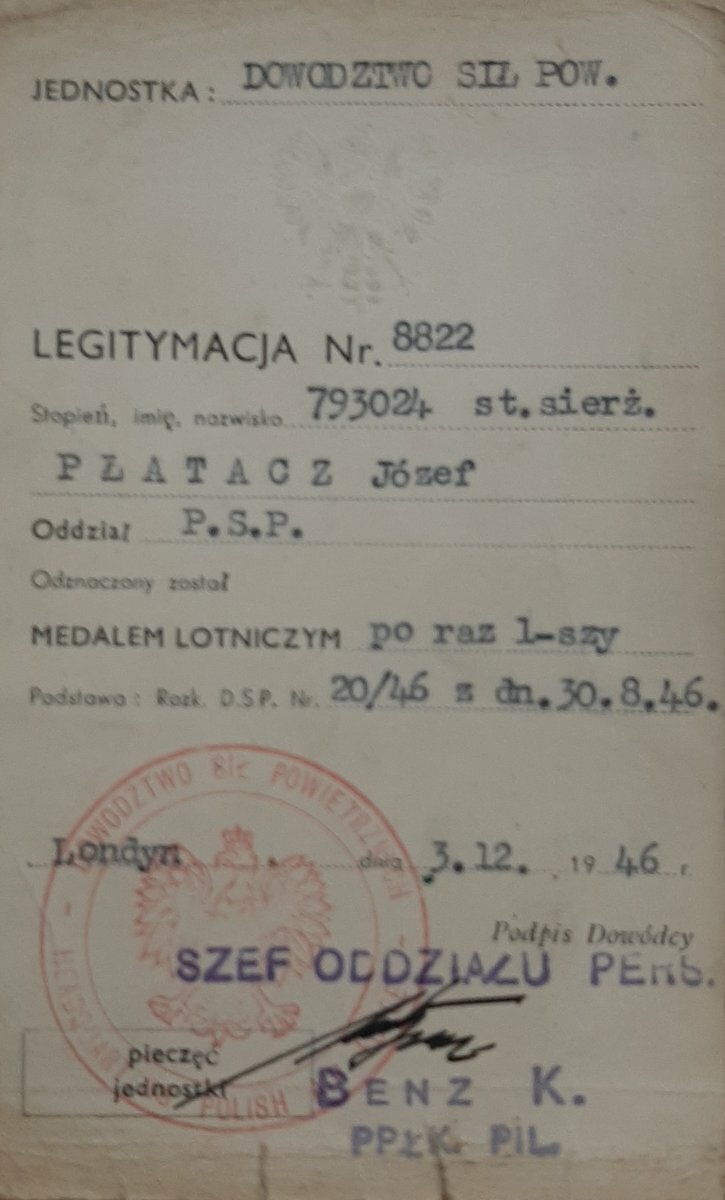
Authorisation to wear card for Air Force Active Service Medal, dated 30 August 1946.
vii)
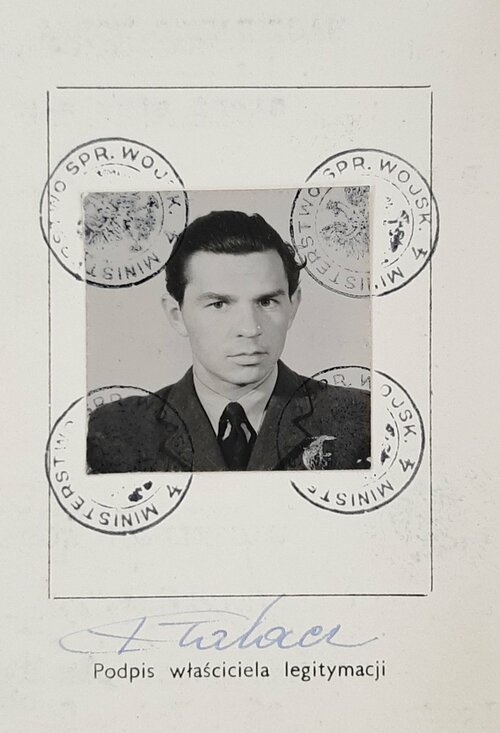
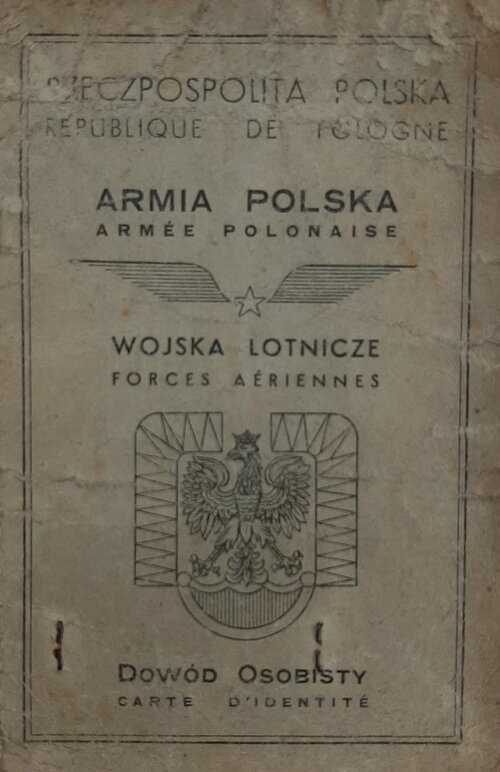
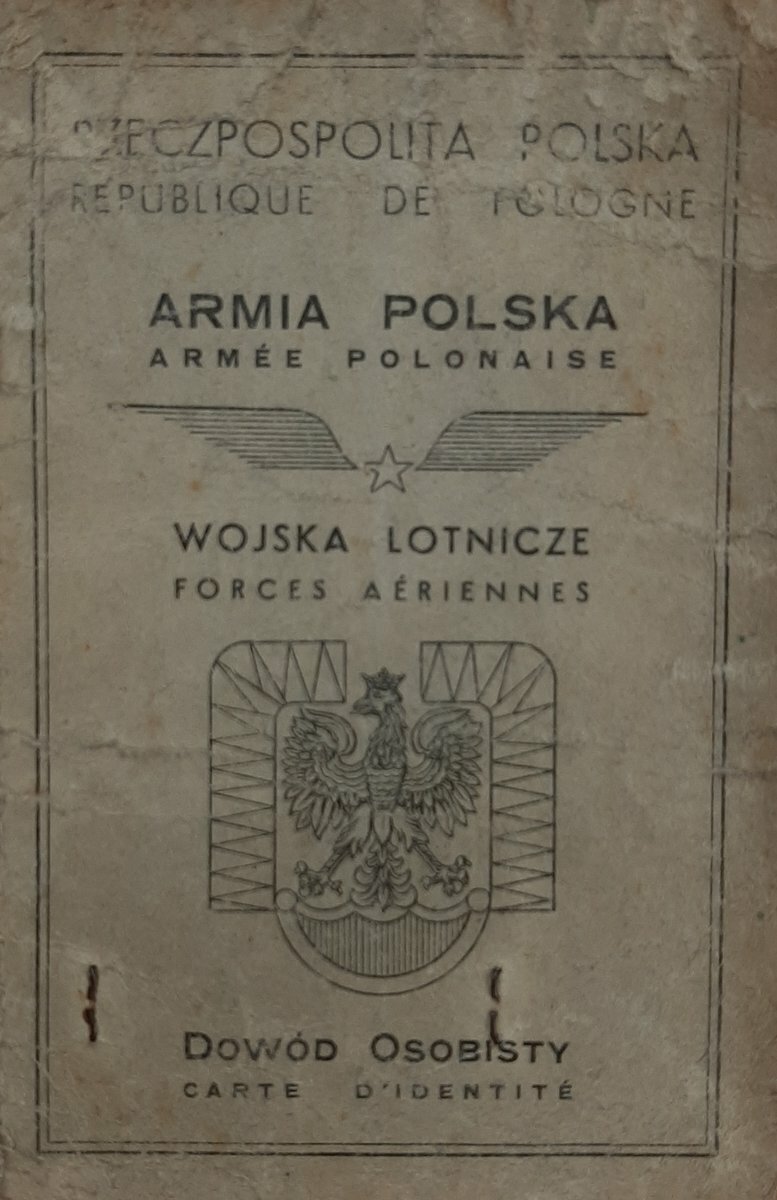
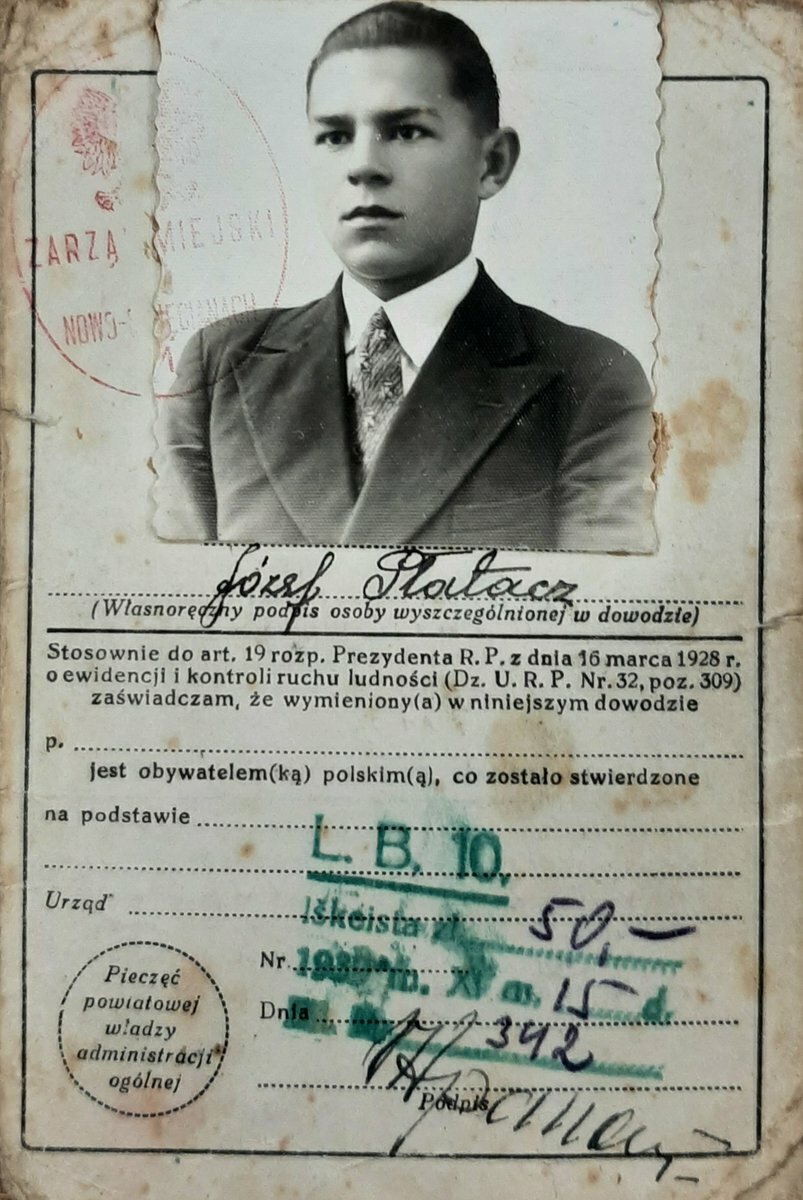
Air Force Identity Card, named to the recipient.
viii)
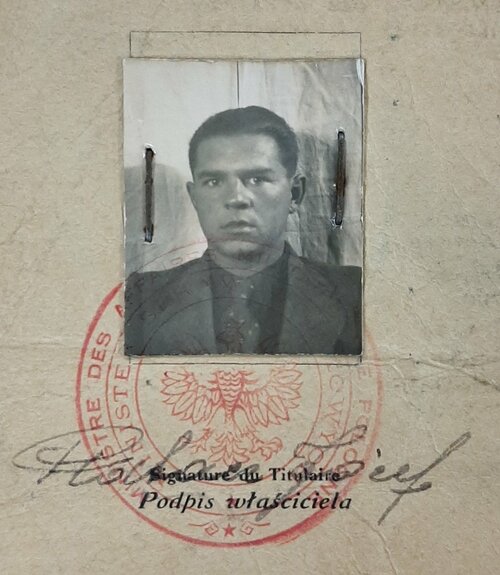
Polish Army in France ID, named to the recipient.
xi)
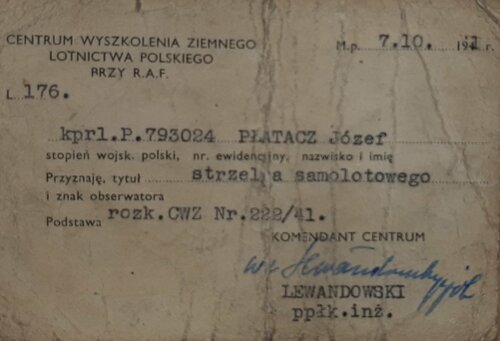
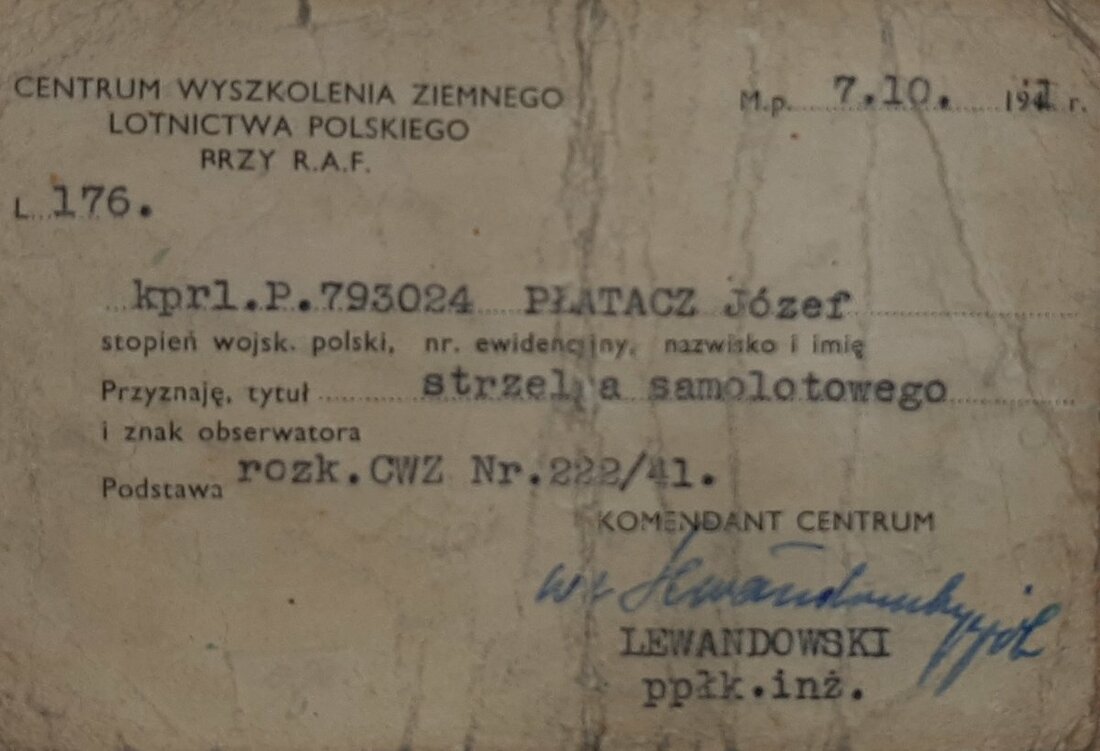
R.A.F. Polish Training Centre ID, named to the recipient and dated 7 October 1941.
x)
British Naturalisation Certificate.
xi)
RAF. statement of service and discharge certificate
xii)
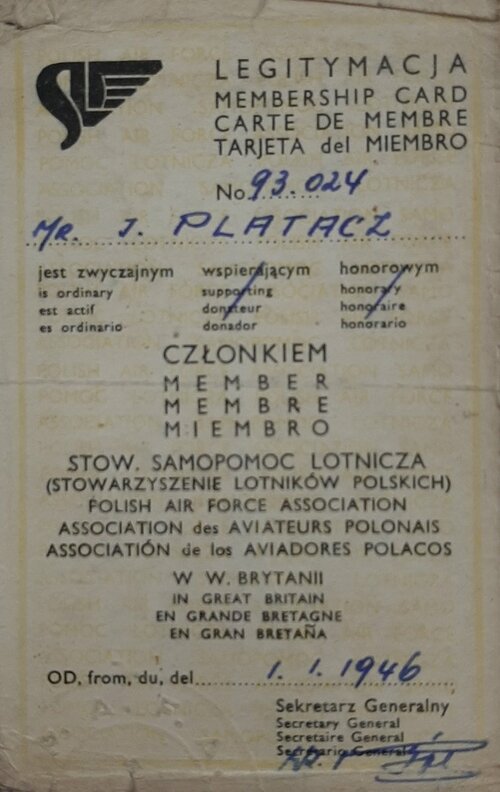
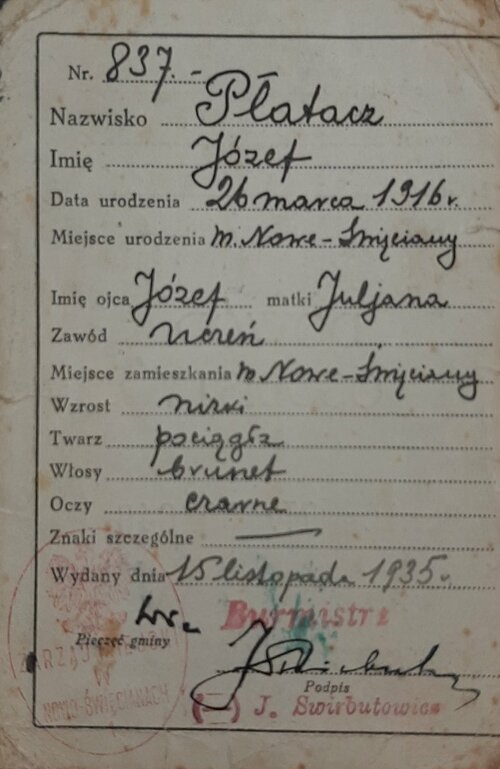
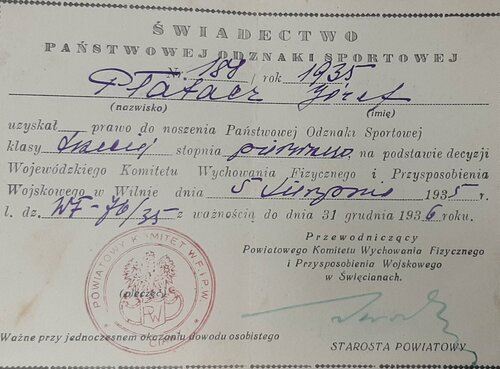
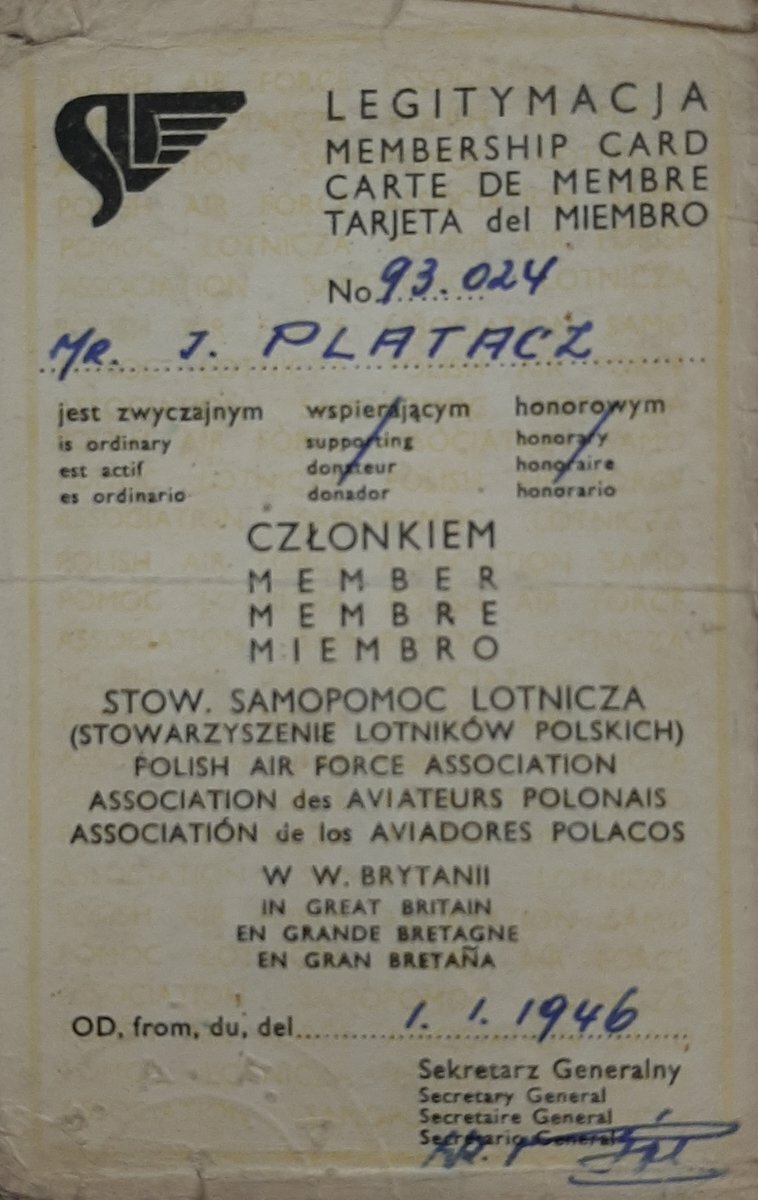
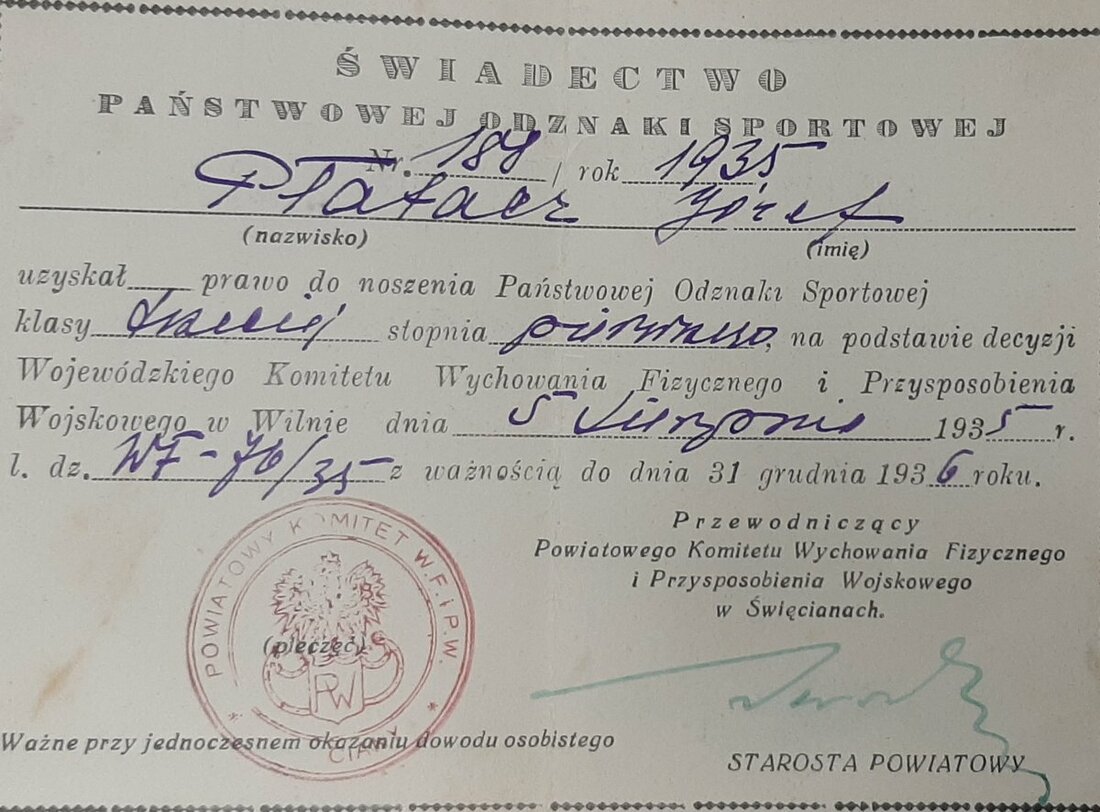
Three membership cards, two related to the recipient's pre-war life in Poland, one Polish Air Force Association membership card and a National Sports Medal certificate named to the recipient and dated 1935.
xiii)
Junior Methodists medal, a mix of currency with five coins and one banknote from assorted countries and a snuff box.
xiv)
A Jewel Movement Swiss-made watch.
xv)
A mix of four badges including a rare Spink radio operator/gunner badge with Spink marked screwback, a No. 300 (Polish) Squadron badge, an uniform button, Polish Side Cap Eagle mfg J.R. Gaunt and one cloth patch indicating his Polish rank with bullion thread, one Poland shoulder flash and one rank indicator.
xvi)
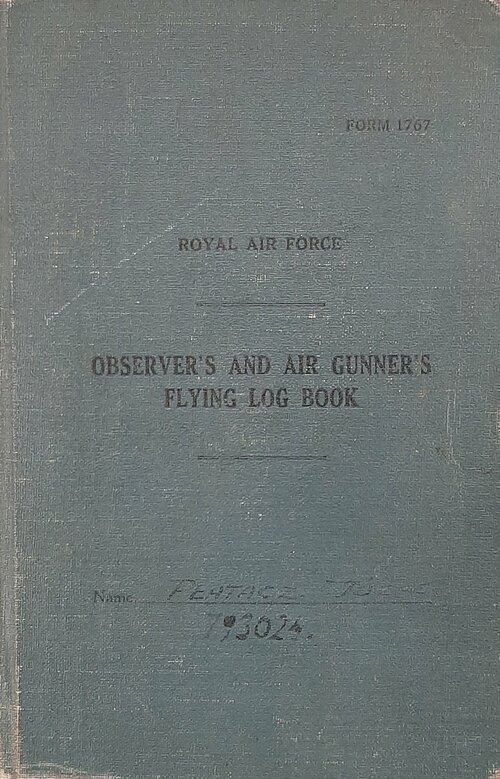
The recipient's British Flying Log Book dated from 9 March 1941-17 June 1948.
xvii)
The recipient's French log book (carne de solde).
xviii)
2 sets of Ribbon bars including his wartime manufactured set taken from his uniform.
Further entitled to the Polish Air Force Active Service Medal along with the French Cross of Volunteer Combatants (Combattant Volontaire) and Commemorative Medal of the 1939-45 War.
Subject to 5% tax on Hammer Price in addition to 20% VAT on Buyer’s Premium.
Sold for
£18,000
Starting price
£5800


Watch, listen and bid as if you were in the room. Now available for auctions worldwide.
Click here to bid live
An exclusive and confidential service for the discerning collector or vendor.
View the Gallery
Download every Spink catalogue on your iPad, iPod or iPhone using free Spink app.
Download From iTunes© 2026 Spink & Son. All rights reserved.