
Auction: 26001 - Orders, Decorations and Medals
Lot: 223
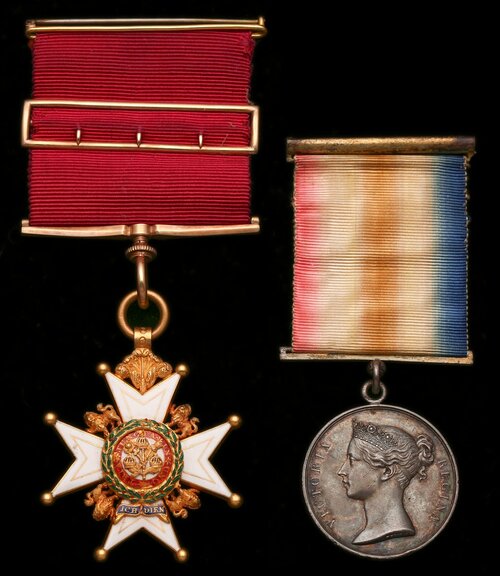
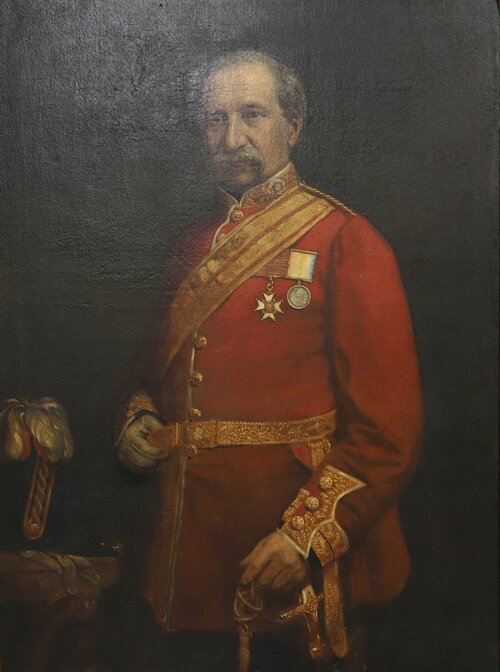
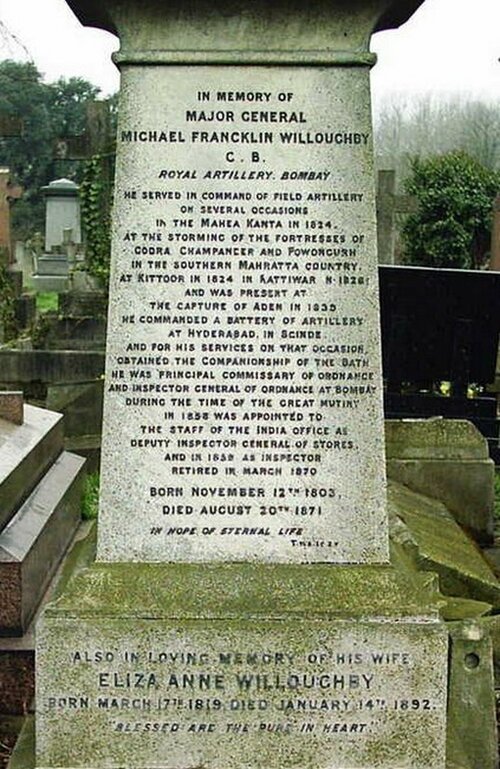
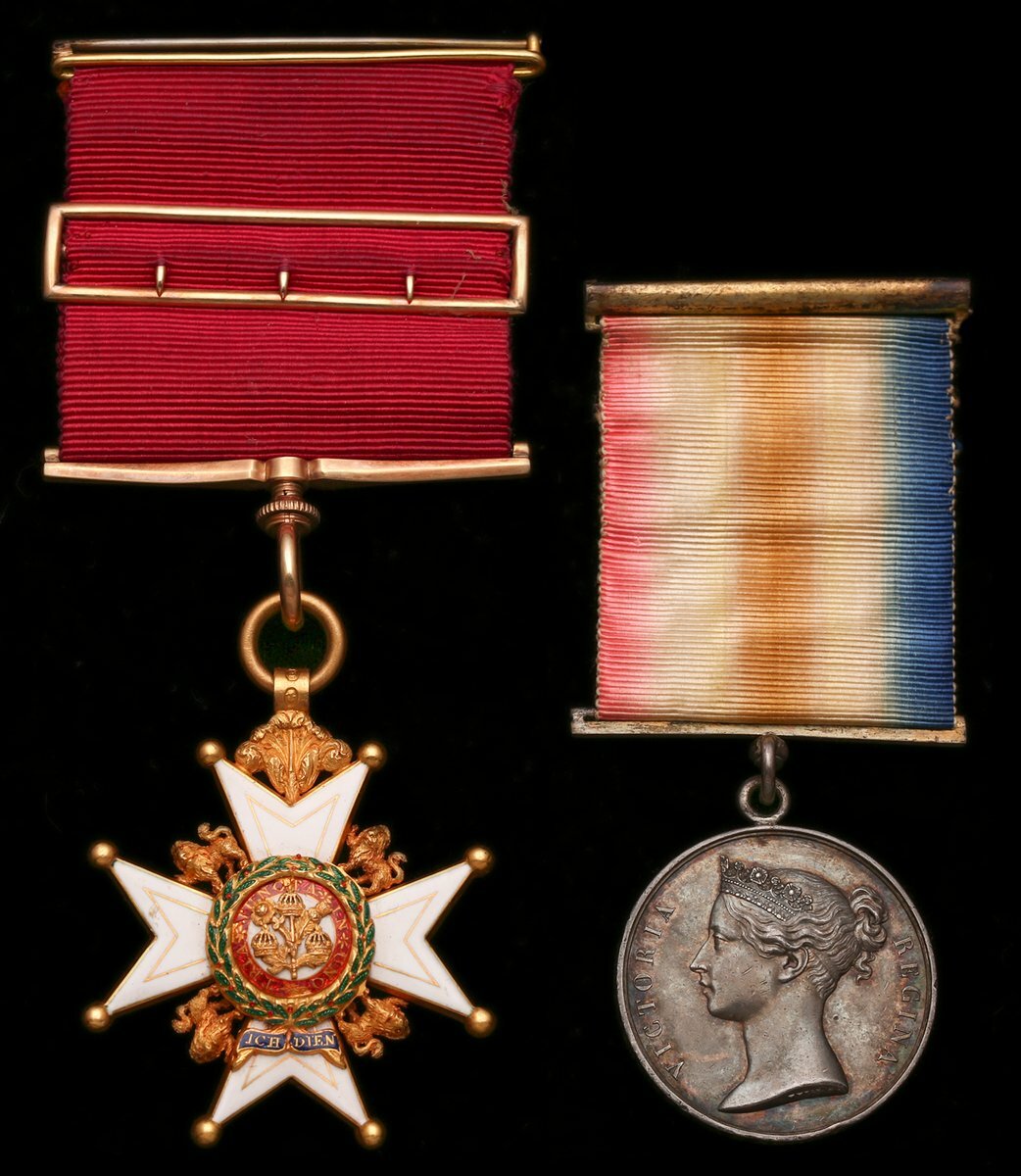
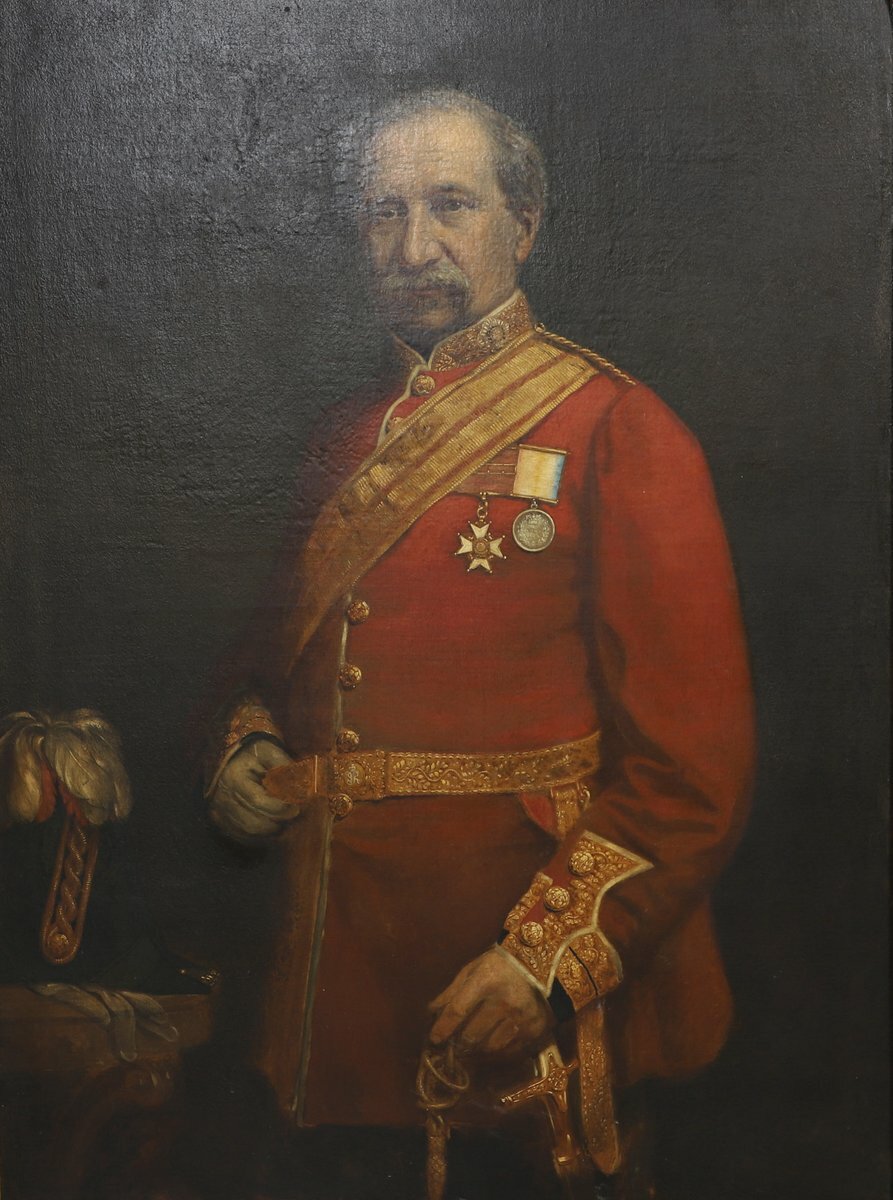
A good 'Battle of Hyderabad' C.B. pair awarded to Major-General M. F. Willoughby, Bombay Artillery, who had previously shared in the capture of Aden in 1839
The Most Honourable Order of the Bath, Military Division, Companion's (C.B.) breast Badge, gold and enamel; Hyderabad 1843 (Captn M. Willoughby Bombay Artillery), suspension replaced with ring suspension, minor edge knock to second, overall good very fine (2)
C.B. London Gazette 4 July 1843.
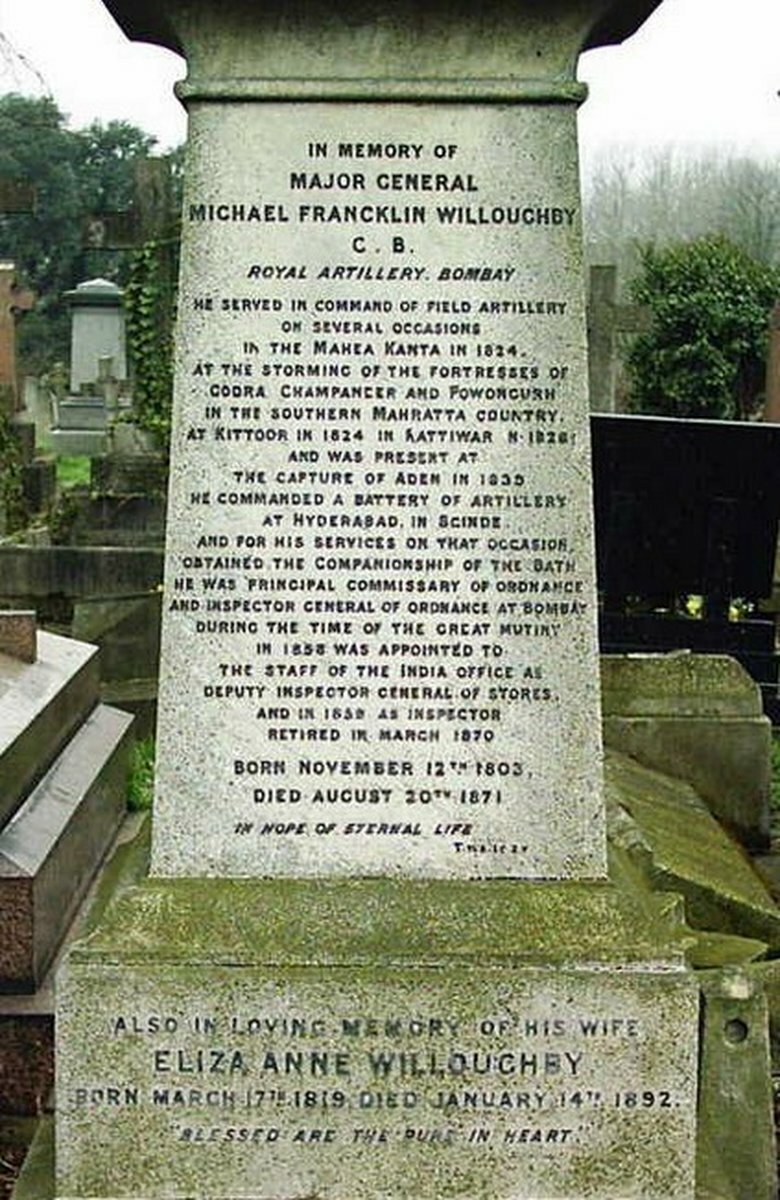
Michael Francklin Willoughby was born at Halifax, Nova Scotia, Canada in 1803 the son of Sarah and the Reverend Edward Willoughby. Attending the East India Company's academy at Addiscombe he was commissioned into the Bombay Artillery on 19 December 1820.
Arriving in the wake of the Third-Anglo Maratha War the young Willougby was still very actively employed in actions consolidating British rule in Northern India and settling revolts were the occurred. His first command was of a field detachment in Matree Kanta between 1822-23 before a major expedition was launched in the region which he joined in 1824. During that year he saw action during the storming of Godra and the reduction of Powanghur Hill Fort as well as blowing the gate of Fort Champaneer. This last act is impressively depicted in a colour illustrated book entitled 'Colonel M. F. Willougby a 6 pounder knock at the Gates of Champooner'. It depicts Willoughby organising a team of gunners to drag a 6 pound gun to the gate of the fort and under heavy fire blasting through the obstacle to admit the British storming party.
After this auspicious start to his career he was appointed to command the Foot Artillery at the Siege of Kittor later in 1824. The Rani of the province Chennamma has revolted against the British imposition of the Doctrine of Lapse and succeeded in handing them a heavy defeat, killing the political agent and capturing senior officers. Willoughby was present for the final siege of the fort which held out for some time before finally surrendering. His good services saw him appointed to commanded the Foot Artillery at Kattiawar in 1825.
Marrying Emilie Weekes at St. Thomas Church, Bombay on 25 January 1832 he was advanced Captain on 19 December 1835. In that rank Willoughby was appointed to commanded the Artillery for the Red Sea Force in under Brigadier Bayly (or Baillie) in 1839. Whilst he was still in that position the force was directed to seize Aden, which they did, attacking and capturing the fortress Island of Sira. The force under Captain Henry Smith (later Admiral K.C.B. - Medals sold in these Rooms in April 2025) and his small expedition arrived at Aden on 16 January 1839 and in the morning of 18 January Volage, Cruizer, and Mahé sailed to the front of the town from where they were fired upon.
At 0930hrs, the rest of the expedition arrived and the warships sailed in close to Aden's batteries to bombard them. By 1100hrs the gunnery of the ships had demolished Aden's lower batteries and destroyed a large tower, while landing parties ordered by Smith had cleared out the remaining enemy musket men in the rubble. At this point Smith ordered the main two landings of troops to take place, which were completed successfully with two naval casualties and sixteen from the army, with the defending garrison of 1,000 men suffering around fifty casualties. (The Royal Navy, a History from the Earliest Times to the Present by William Clowes, refers).
So it was that Willoughby had captured the first Colonial acquisition for Great Britain and her new sovereign, Queen Victoria. Smith was rewarded with an immediate C.B. and the thanks of the George Eden, 1st Earl of Auckland, the Governor General of India.
Returning to India, Willougby was given command of a battery of artillery in the Sindh under Sir Charles Napier. The British defeated the Talpur army at Miani and captured Hyderabad with the support of the artillery, a relief army approached and despite being heavily outnumbered Napier stormed their positions and crushed them. Willougby must have performed well as he was promoted Brevet Major on 4 July 1943 and awarded the C.B. on the same day.
This marked the last of his active service in India as Willoughby was appointed Agent for Gunpowder with the Bombay Ordnance Board. Later appointed Principal Commissary of Ordnance and Inspector-General of Ordnance and Magazines he was confirmed in the rank of Major on 4 February 1950. Further advanced Lieutenant-Colonel just three years later on 20 January 1853 he had by this time become a widower and married his second wife married at Bombay on 20 June 1854.
Advanced Colonel on 20 January 1856 it was in that rank that Willoughby was appointed Deputy Inspector-General of Stores in 1858 and Inspector for Stores for India 8 February 1859 during the Indian Mutiny, although he does not appear on the roll in any capacity. Appointed Major-General on 3 July 1860 he retired in 1870 and settled Broadwater, Sussex. Unfortunately he died the next year in London on 20 August 1871, buried at Kensal Green Cemetery, Kensington. Notably a son Michael Weekes Willoughby reached the rank of Lieutenant-General; sold together with copied research including a previous auction listing, copied newspaper cutting and three copied illustrations depicting his life including the Siege of Champooner, 'delivering the Rajahs Present to Queen Victoria' and an image of him with his wife at a society gathering.
A sword belonging to the recipient sold at Auction in November 2024.
Subject to 20% VAT on Buyer’s Premium. For more information please view Terms and Conditions for Buyers.
Sold for
£4,200
Starting price
£1400
Watch, listen and bid as if you were in the room. Now available for auctions worldwide.
Click here to bid live
An exclusive and confidential service for the discerning collector or vendor.
View the Gallery
Download every Spink catalogue on your iPad, iPod or iPhone using free Spink app.
Download From iTunes© 2026 Spink & Son. All rights reserved.