
Auction: 26001 - Orders, Decorations and Medals
Lot: 217
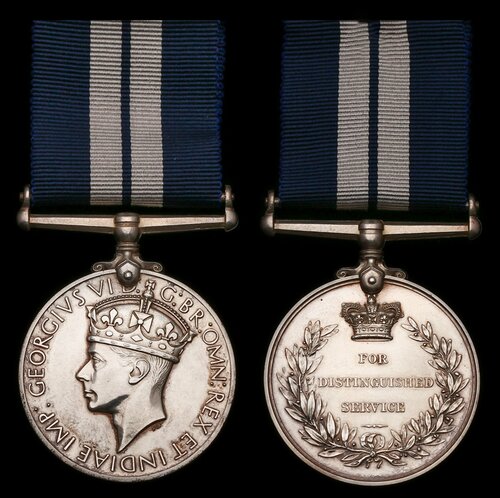
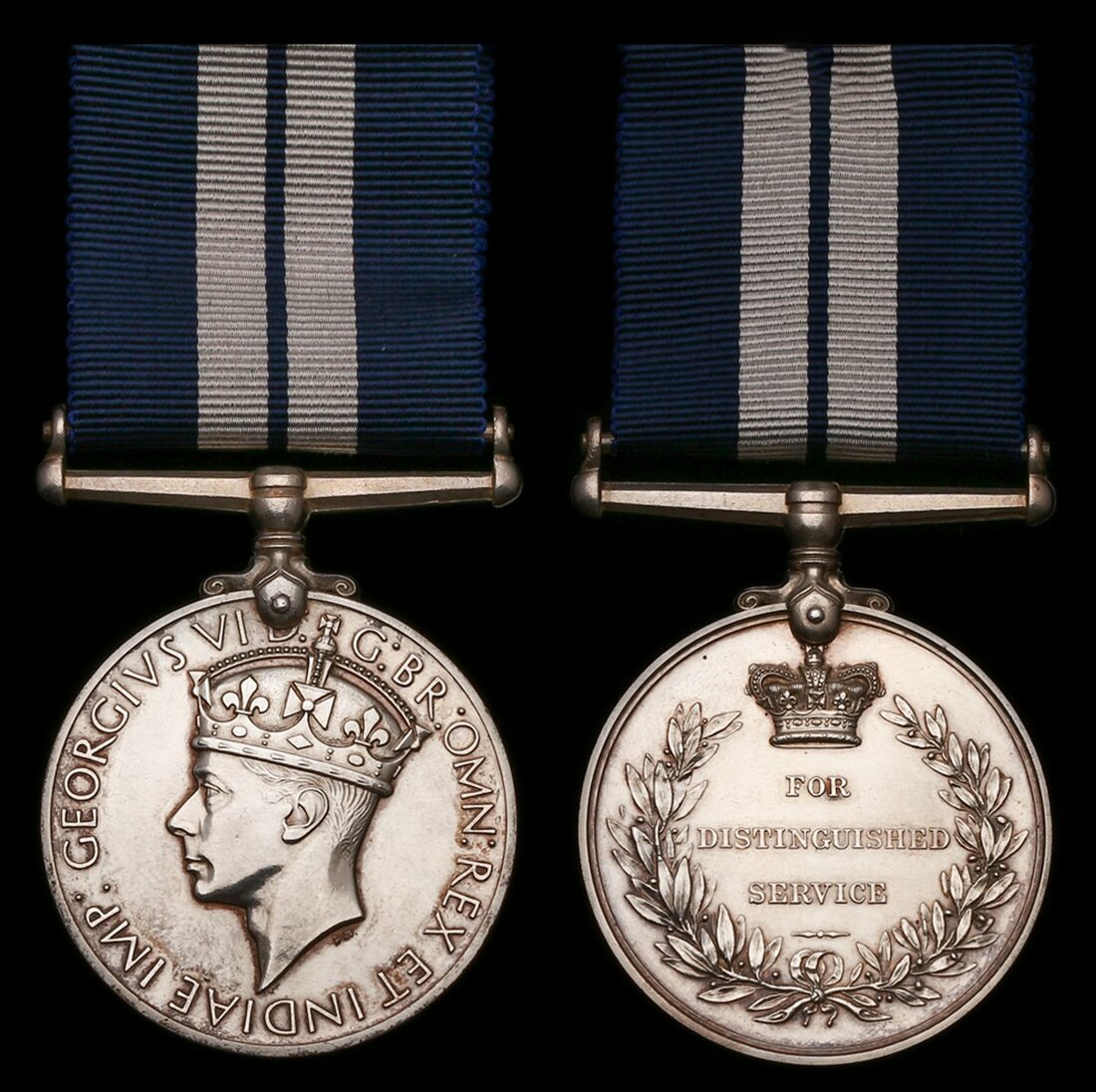
A fine Convoy PQ-18 D.S.M. awarded to Chief Steward W. Hamilton, Merchant Navy, for his courage aboard the S.S. Empire Snow under relentless attacks by the enemy while on passage to North Russia
Distinguished Service Medal, G.VI.R. (W. Hamilton. Ch. Stwd.), on its original investiture pin and in case of issue, good very fine
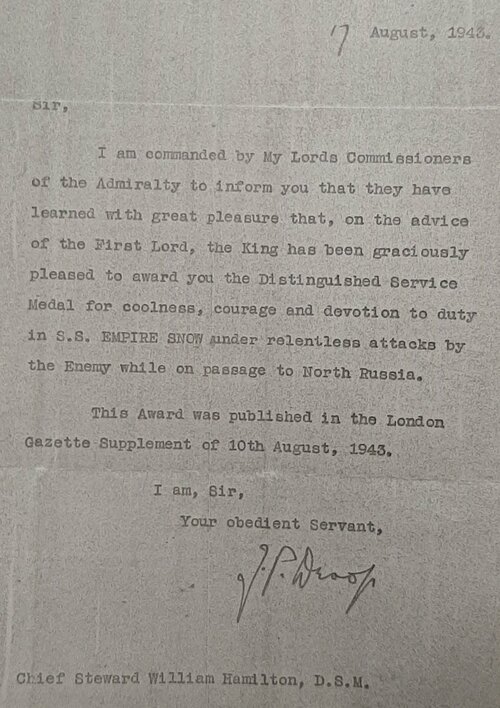
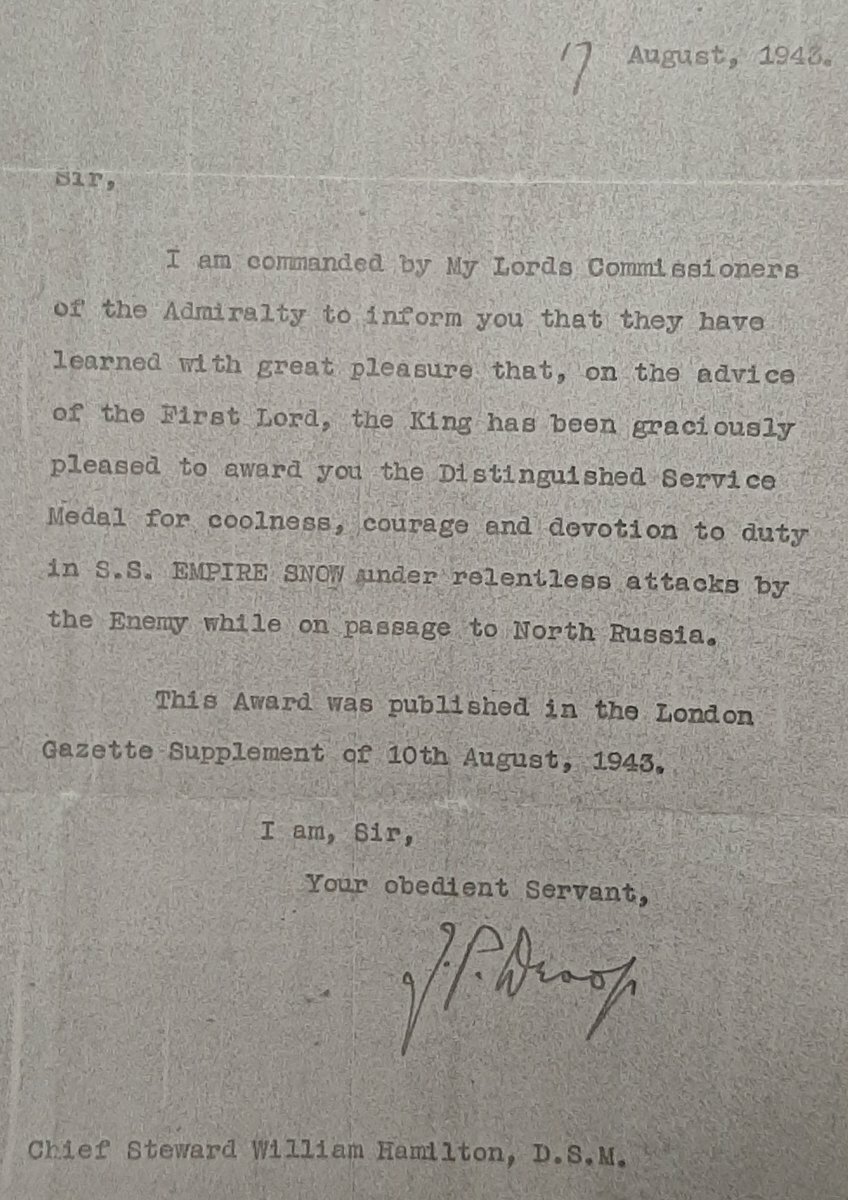
D.S.M. London Gazette 10 August 1943, the original citation states:
'For coolness, courage and devotion to duty under relentless attacks by the enemy while on passage to North Russia.'
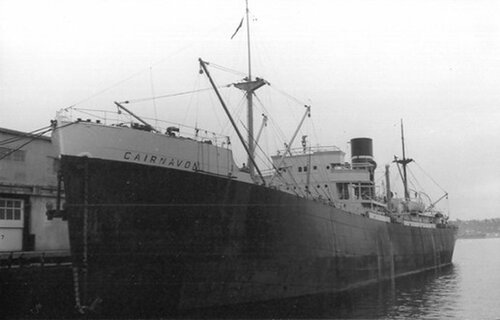
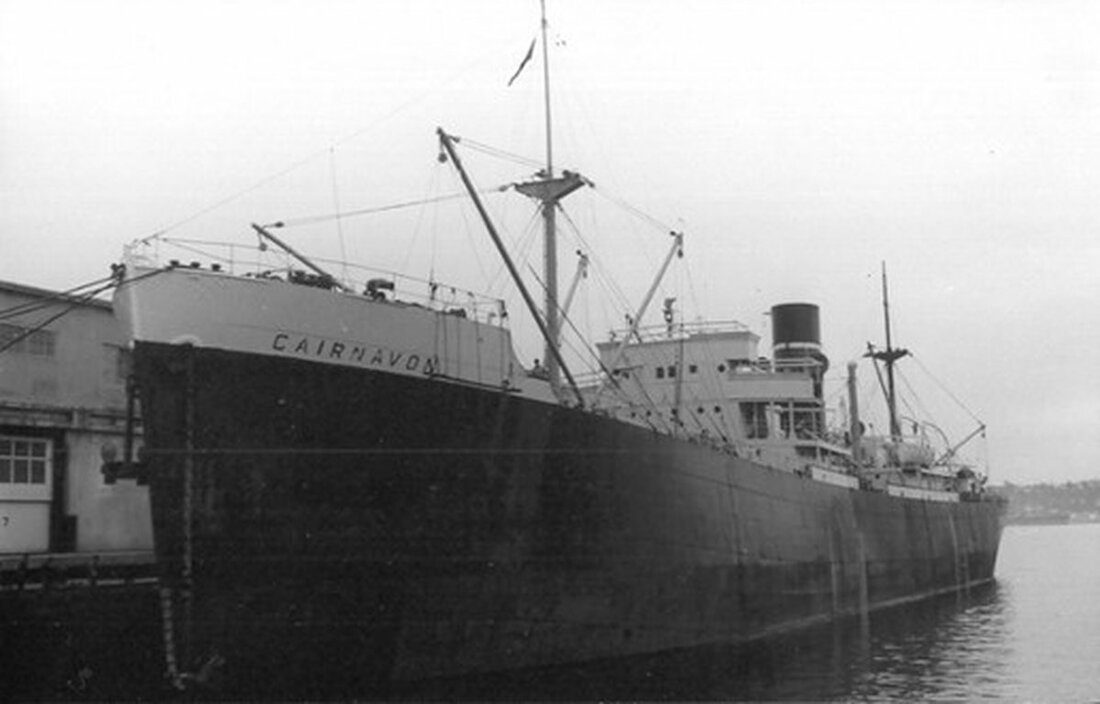
William Hamilton a merchant seaman was born at Hull on 19 August 1907 and was serving as Chief Steward on the S.S. Empire Snow when he was awarded the DSM for convoy duties. The Empire Snow took part in several notable Arctic convoys, including RA 53 and PQ 18, delivering vital supplies to Russia.
Convoy PQ18
The significance of arctic convoy PQ 18, the subject of several books, followed the worst allied convoy disaster of World War Two, PQ 17. With the Battle of Stalingrad hanging in the balance had the convoy suffered similar unacceptable losses it's likely the Arctic route would have been suspended with potentially war changing consequences for the allies.
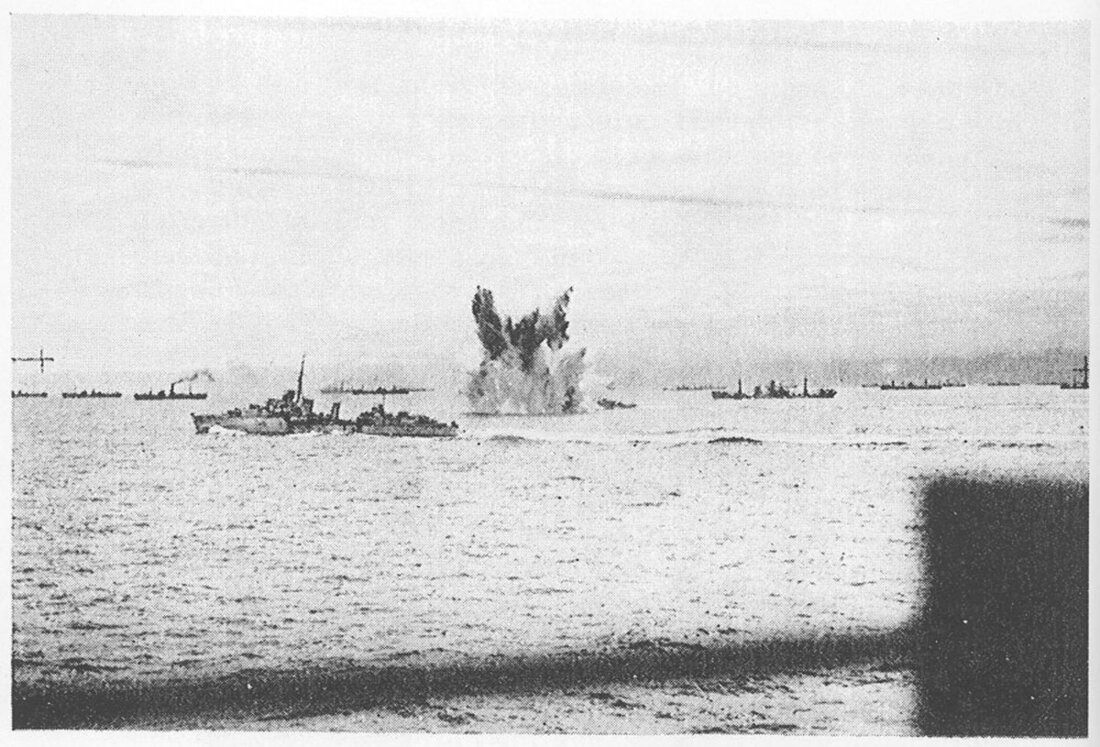
The convoy consisted of 40 merchant ships, 2 oilers, 2 anti-aircraft ships and a rescue ship with a Royal Navy escort comprising 34 warships headed by H.M.S. Scylla. The convoy departed Loch Ewe on 2 September 1942 arriving at Archangel on 21 September 1942.
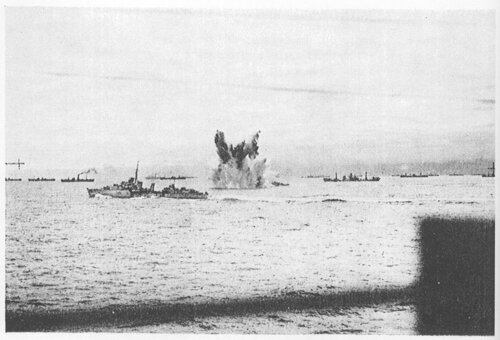
It came under relentless air and U-boat attack from 12 to 18 September 1942, resulting in the loss of 13 merchant ships sunk and many badly damaged. The convoy was under constant attack from 225 German aircraft and 36 U-boats. The crews of the ships were continually at action stations and, for most of the time, were unable even to change their clothes.
Richard Woodman takes up the story in Arctic Convoys:
'A formidable array of aircraft prepared to attack PQ-18 from northern Norway. Forty-two Heinkel He. 111 H-6 torpedo-bombers of KG26 were joined by thirty-five Junkers Ju. 88 A-17s of KG26, the faster Ju. 88 modifications capable of carrying torpedoes, which had been flown up from France. These aircraft were, of course, supported by the long-range Condors and Blohm and Voss flying boats though not by fighters, which did not possess the range to cover the bombers. They were, however, bolstered by the Ju. 88 bombers of KG30 and this combination allowed the Luftwaffe to employ a tactic known as the Golden Zange, or golden Comb, a conjoint low-level airborne torpedo attack which was supported by diversionary medium-level and dive-bombing. By this tactic it was hoped to fragment a convoy's defences and enable the torpedo-bombers, who at low altitude would duck under the surveillance radar, to press home a devastating and overwhelming onslaught. Intelligence had revealed that an aircraft-carrier would accompany the convoy and Goering insisted that 'the attack against the aircraft-carrier must be so violent that this threat is removed.' Despite this, German aircraft tended always to seek out merchant ships, knowing that in doing so they were aiming for the most significant targets. A victory over PQ-18, the young pilots were told, would help their comrades in the Wehrmacht, easing the conquest of the Caucasus and the capture of Stalingrad by depriving the Red Army of its sinews.
On 14 September 1942, the Luftwaffe delivered no less than eight major assaults against PQ-18, large forces of Ju. 88s, He. 111s and He. 115s unleashing a torrent of bombs and torpedoes, many of the latter finding their mark. In fact so thick was the sky with enemy aircraft that the Commodore likened them to 'a cloud of phantom locusts', while a young Sub. Lieutenant recalled seeing them 'rise up on the horizon, black and repulsive', where 'they extended far on either side of our view' - a scene which shortly became even more memorable with the advent of the intense A.A. fire put up by the allied ships.
As the initial wave of torpedo bombers in this attack disappeared over the horizon, a dozen Ju-88s appeared overhead and started dive-bombing. Several ships including Avenger, made narrow escapes while the Germans lost another aircraft. Almost immediately twenty-five torpedo aircraft came in from ahead, dividing as before into two groups, one of which made dead set for Avenger. Avenger had ten fighters in the air, and these together with the ship's guns, shot down nine more enemy aircraft, but one ship, Mary Luckenbach in the starboard wing column, was torpedoed. She blew up with such force that Nathaniel Green right behind her in the column was covered with debris and several of her deck cargo crates burst. Notwithstanding such protracted attention from the enemy, and in no small part thanks to Colthurst's 'gallantry, skill and resolution', PQ-18 reached the North Dvina in the afternoon of the 19th, with nearly three quarters of the convoy's merchantmen.'
Hamilton died at Hull on 22 September 1985; sold together with a copied version of the recipient's named Admiralty letter of notification of the D.S.M., dated '17 August, 1943'.
Subject to 20% VAT on Buyer’s Premium. For more information please view Terms and Conditions for Buyers.
Sold for
£900
Starting price
£600

Watch, listen and bid as if you were in the room. Now available for auctions worldwide.
Click here to bid live
An exclusive and confidential service for the discerning collector or vendor.
View the Gallery
Download every Spink catalogue on your iPad, iPod or iPhone using free Spink app.
Download From iTunes© 2026 Spink & Son. All rights reserved.