
Auction: 26001 - Orders, Decorations and Medals
Lot: 88
(x) 'He was too brave, if anything. He simply wanted to be at them, and at them he went. I don't know where his sword was, but he hadn't it when I saw him. But he had a rifle with fixed bayonet just like the rest of us. I saw him being wounded, but he fought on gamely till he and his party of brave fellows were cut off and surrounded.'
A tribute by Private Reid of the Argyll and Sutherland Highlanders to the bravery of his Commander
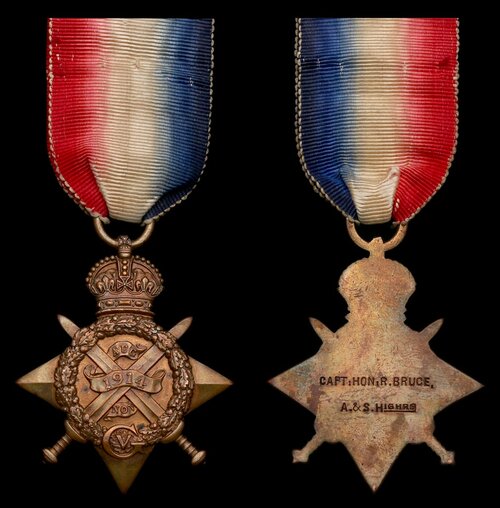
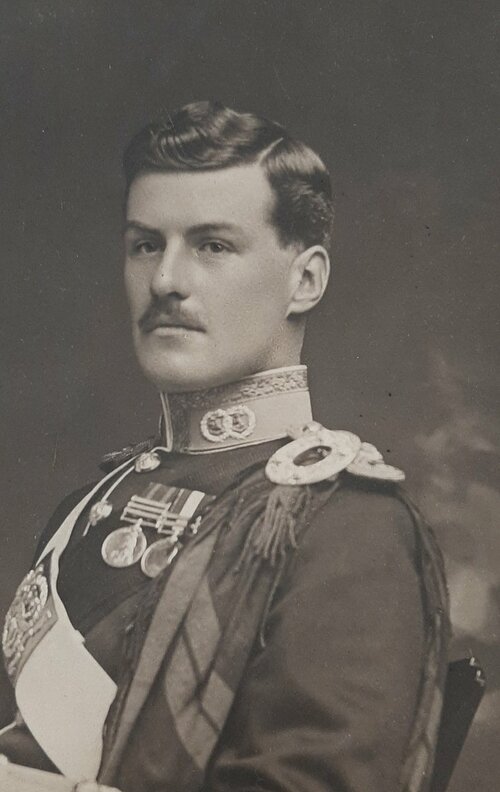
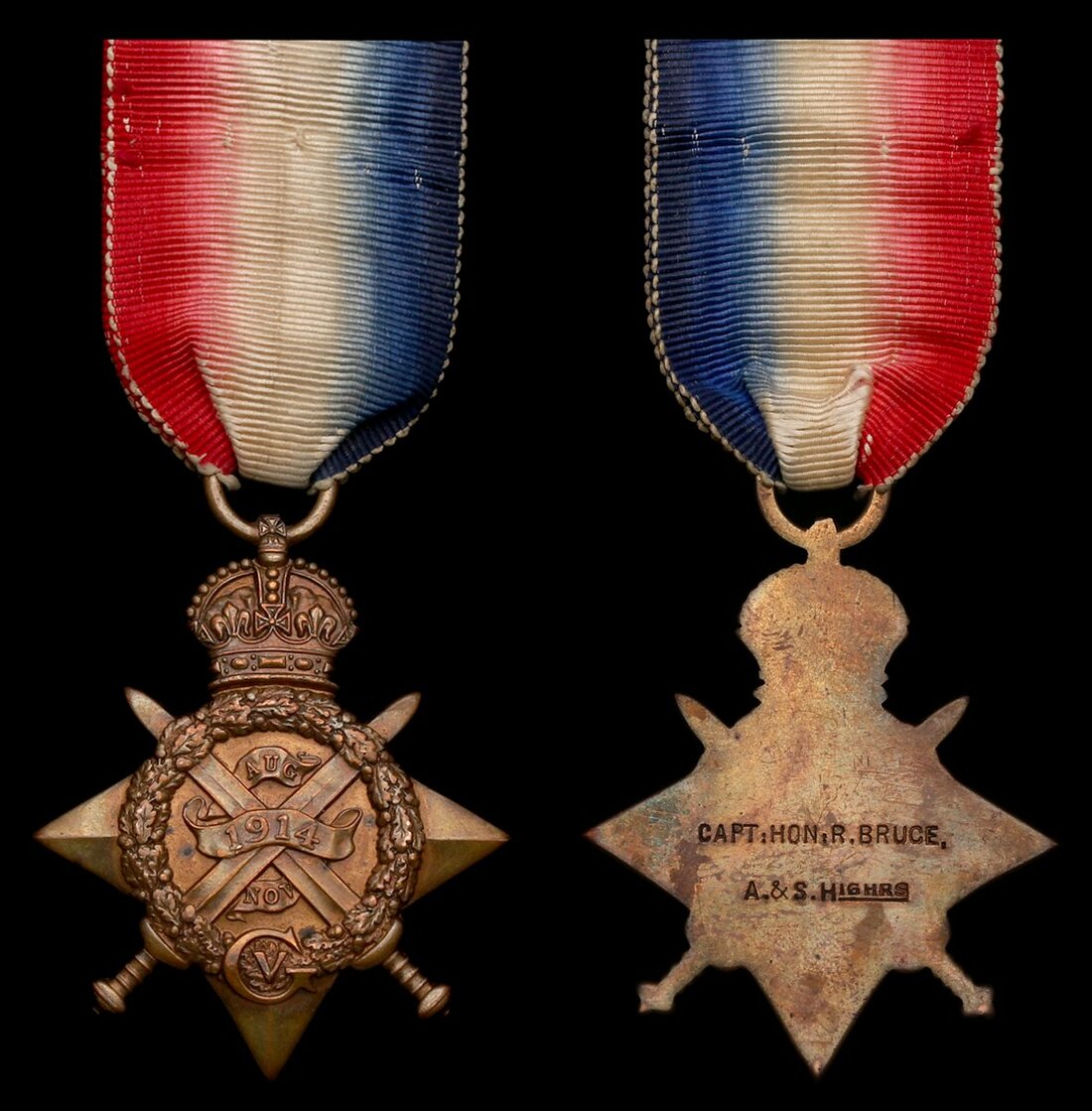
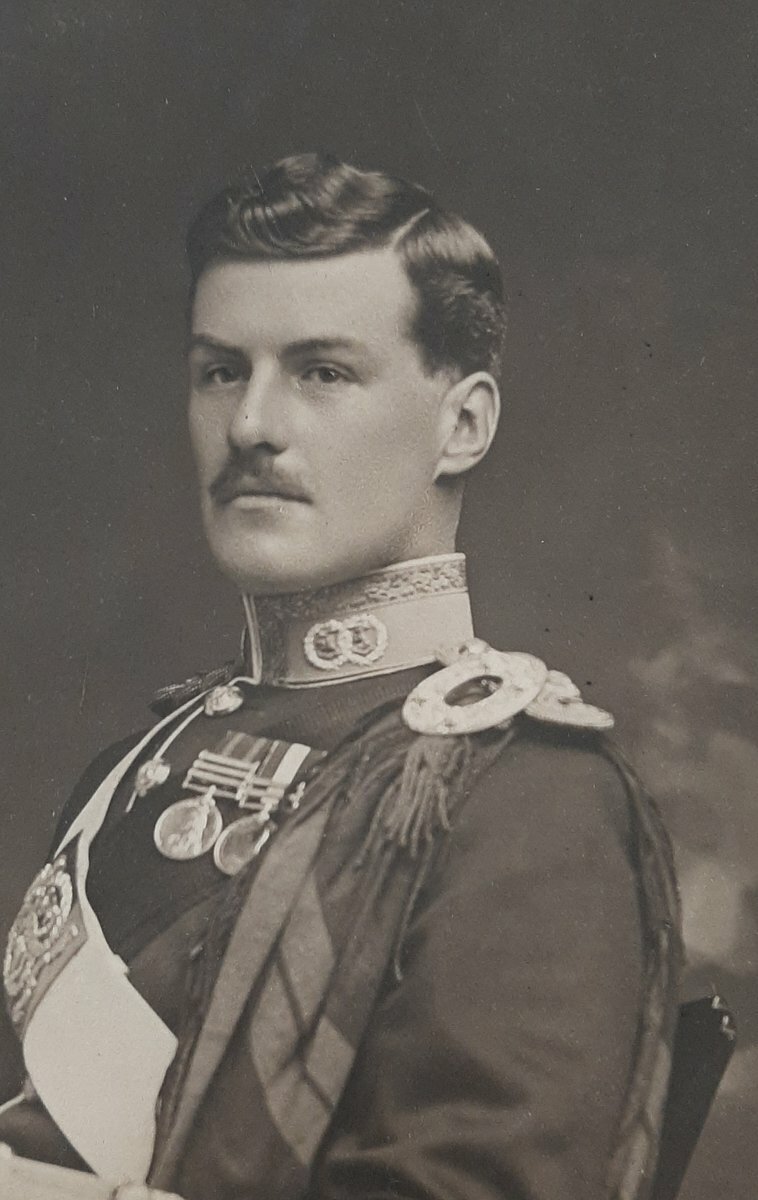
The 1914 Star awarded to Captain The Honourable R. Bruce, 2nd Battalion, Argyll & Sutherland Highlanders, Master of Burleigh, whose career saw him earn an Order of the Medjidie for his services in Sudan before he was tragically killed in action, rifle in hand at the Battle of Le Cateau
1914 Star (Capt: Hon: R. Bruce. A.&S. Highrs), good very fine
[Order of the Medjidie 4th Class], London Gazette 11 November 1913.
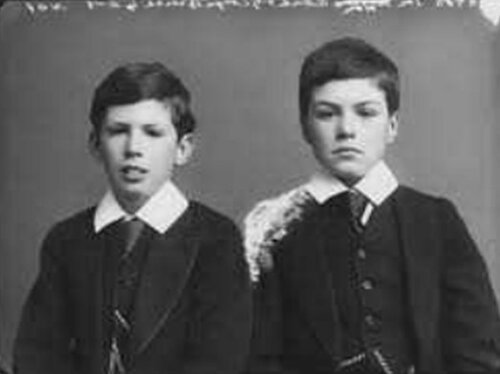
Robert Bruce, Master of Burleigh was born at Edinburgh, Scotland on 25 September 1880, the eldest son of Lady Katherine and Lord Alexander Bruce, 6th Lord Balfour of Burleigh. Educated at Norris Hill Preparatory and later Eton he was commissioned 2nd Lieutenant with the 3rd (Reserve) Battalion, Argyll & Sutherland Highlanders.
Posted to the 4th (Reserve) Battalion on 23 September 1900 he was mobilised with this unit and saw action in the Second Anglo-Boer War. As the war ground on and losses mounted good officers were needed and as such Bruce was transferred to the 1st Battalion- effectively joining the Regular Army- to replace 2nd Lieutenant McLaren who had died of exposure. It was with this unit that he was to see action in Orange Free State, Transvaal, Orange River Colony and Cape Colony, earning a 4-clasp Q.S.A. and 2-clasp K.S.A.
The end of hostilities saw him joining the 2nd Battalion in India before returning with them to post-war South Africa and being promoted Lieutenant on 11 August 1903. Bruce was seconded to the Egyptian Army in the rank of Bimbashi from 25 March 1910 whilst his official rank was advanced Lieutenant on 3 May 1910. Further promoted Captain on 25 September 1910 he took part in the expedition again the Beir and Anuak tribes in South Sudan in 1912.
Serving as Intelligence Officer with the force that accompanied the Join Commission sent to delimit the boundary between Sudan and Uganda in 1913, for which he was awarded the Order of the Medjidie. This same service saw him earn the Khedive's Sudan Medal 1910 with one clasp.
The advert of the Great War saw Bruce restored to the establishment of the Argyll & Sutherland Highlanders on 17 April 1914 as Supernumerary Captain. Posted to the 2nd Battalion, Argyll & Sutherland Highlanders he entered the war in France on 10 August 1914. By all accounts he was well respected and even liked by his men, one story recounted in the Stirling Saturday Observer of 24 Octobers 1914 refers:
'An interesting story has reached Stirling regarding Captain Bruce (the Master of Burleigh), of the Argyll and Sutherland Highlanders, who is believed to be a prisoner in Germany. In the early stages of the war the captain's company halted one day to dispose of a somewhat scanty midday meal. the portion served to Lord Balfour's heir showed no diminution, however, and the gallant officer quickly noted the contrast between the contents of his mess-tin and those of the privates. Summoning one of the latter, Captain Bruce compared the two allowances and straightway ordered the soldier to go to the company's cook and inform him that he (the captain) was to receive the same portion as that provided for the men. This may be considered a trivial incident but is undoubtedly the sort of thing that endears the British officer to the "Tommies" who fight under him. Captain Bruce was a great favourite with his men'
The Battalion saw little fighting at Mons, being stationed on a part of the line facing broadly away from the German line of attack. However they were part of Smith-Dorrien's Division and as such were to see heavy fighting in the delaying action of Le Cateau on 26 August 1914. It was there that Bruce was to meet his end whilst rallying the wavering line of the Battalion and in the most heroic of circumstances.
A Private of the 'D' Company of Bruce's Battalion gave an account of the Battle in the Dundee Evening Telegraph of 14 September 1914 which sheds some light on the circumstances around his death, stating:
'Just in the thick of the fight, when the Germans were pouring into us and our Officers and men were falling rapidly, Captain Bruce, son of Lord Balfour of Burleigh, snatched up a dead man's rifle, and rushed to the firing line. I believe he is a prisoner of war. How it cheered the men to see this gallant Officer join them in the fight'
Many newspapers initially reported Bruce as a prisoner of war, not an unreasonable assumption as the last sight most had of him was leading a group of soldiers cut off from the main body of the Battalion. The tragic reality was soon reported however with the Aberdeen Weekly Journal of 9 October 1914 stating:
'Captain the Honorable Robert Bruce (Master of Burleigh) was killed at Le Cateau on 26 August 1914 aged 33. Initially he was listed as missing in action. It appears he was killed behind German lines during the retreat from Mons. He was the son of Sir Alexander Hugh Bruce, the 6th Lord Balfour. He fought in the South African War where he won two medals with five clasps. He also fought in the Sudan Campaign in 1912 again winning a medal and a clasp'
He is buried at Le Cateau Military Cemetery. He is further entitled to the clasp and a British War and Victory Medal Pair.; sold together with copied research and a portrait photograph.
Subject to 5% tax on Hammer Price in addition to 20% VAT on Buyer’s Premium.
Sold for
£500
Starting price
£160
Watch, listen and bid as if you were in the room. Now available for auctions worldwide.
Click here to bid live
An exclusive and confidential service for the discerning collector or vendor.
View the Gallery
Download every Spink catalogue on your iPad, iPod or iPhone using free Spink app.
Download From iTunes© 2026 Spink & Son. All rights reserved.