
Auction: 26001 - Orders, Decorations and Medals
Lot: 28
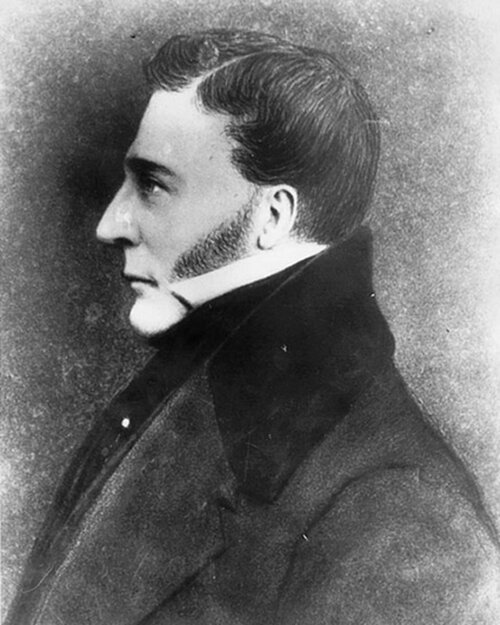
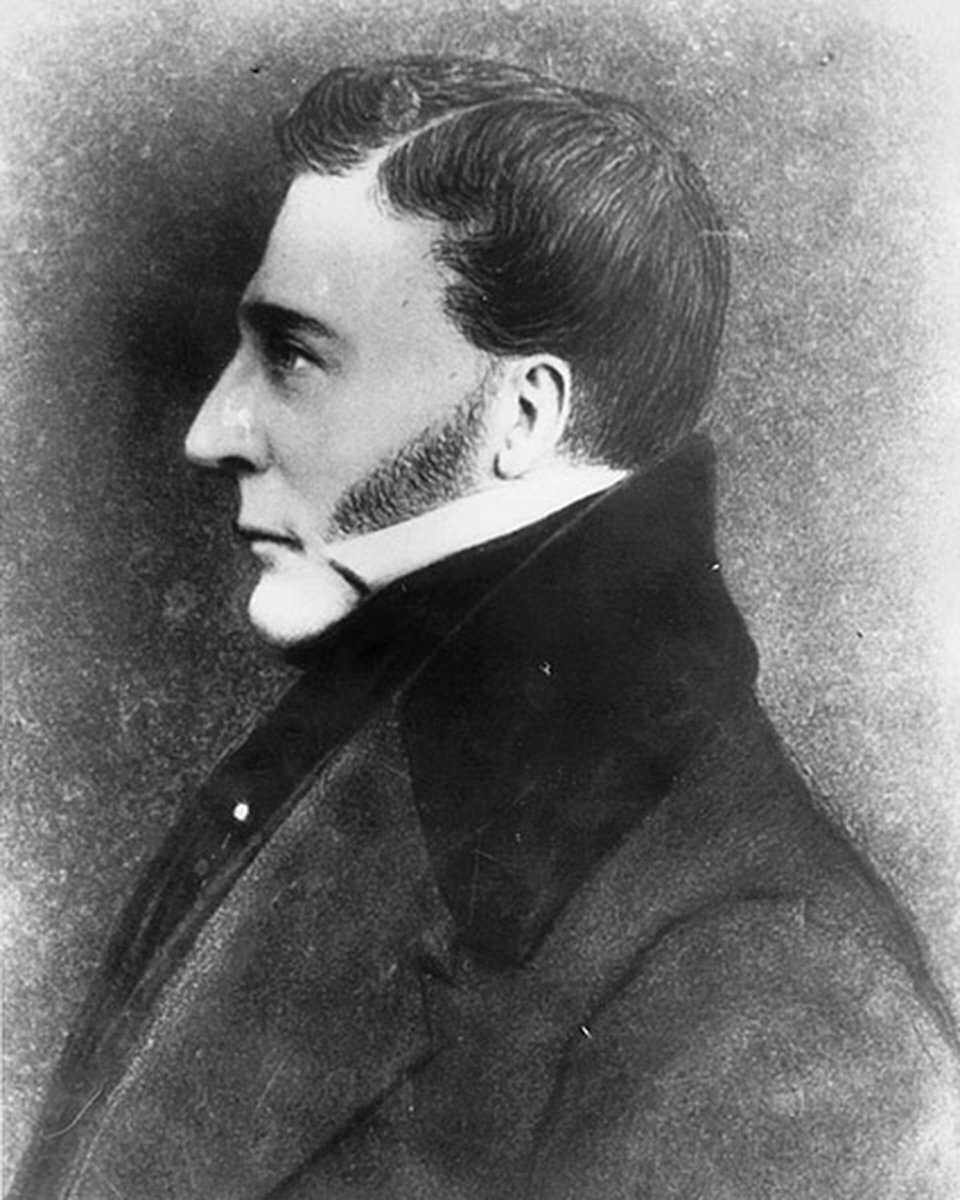
'[He] arrived in the colony in September 1843 [at Hobart Town as Chief Police Magistrate]. Burgess found his new office both important and exacting. He was responsible for superintending the constabulary and magistrates in charge of police districts, compiling extensive statistical returns, collecting licence fees and generally enforcing the law, and had extra duties and correspondence arising from the large convict population.
Under Burgess's able and energetic administration, his department achieved a high degree of efficiency. In June 1846 his abilities were honoured with his appointment as judge during the session of the Criminal Court at Norfolk Island, but ill health forced his return to Hobart in September. He was gazetted a member of the Executive Council in October 1843, and in July 1847 was appointed to the Legislative Council.'
Australian Dictionary of Biography on Francis Burgess
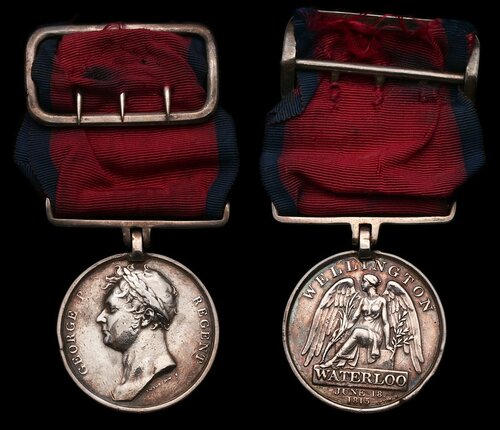
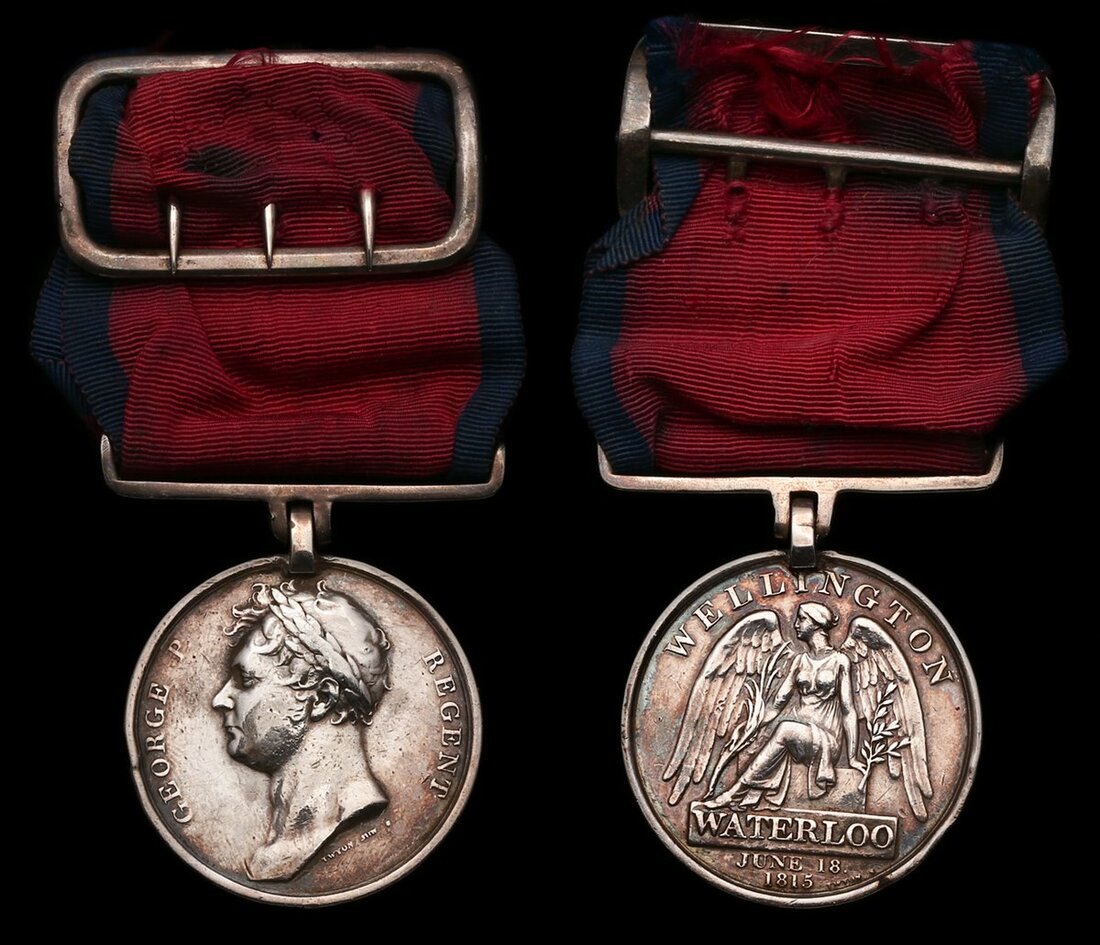
The notable Waterloo Medal awarded to Lieutenant F. Burgess, 54th Regiment of Foot (West Norfolk), who was wounded whilst carrying the Regimental Colour at the Battle of Merxem in January 1813; he subsequently followed a career in the law and forged an important career in the Colony of Australia, being made Chief Police Magistrate of Van Diemen's Land and latterly a Member of the Van Diemen's Land Legislative Council
Waterloo 1815 (Lieut. Francis Burgess, 54th Regiment Foot.), replacement silver suspension, polished and worn with pride, nearly very fine, with original riband and silver riband buckle as worn
Francis Burgess was born in Leicester in 1793 and became an Ensign in the Leicester Militia, 31 May 1809 and was advanced to Lieutenant on 5 July 1811. He purchased an Ensigncy in the 54th (West Norfolk) Regiment of Foot on 4 June 1812 and was present with his battalion during the campaign in the Low Counties in early 1813. During the campaign, he took part in the Battle of Merxem, near Antwerp, 2 February 1813, where he carried the Regimental Colour into battle. Here the 54th formed part of the Light Brigade of General Gibbs's 2nd Division and were heavily engaged, forcing the French back during a charge. However, they sustained heavy casualties later in the battle when engaged with a militia battalion; Burgess was himself wounded in action as part of the wider victory which saw the enemy thrown off and the blockade of Antwerp tightened.
Promoted Lieutenant (without purchase) in December 1813, during the Waterloo campaign Burgess served as an extra Staff Officer to Major-General Johnstone, commander of the 6th Brigade of Lieutenant-General Colville's 4th Division. Only lightly engaged on 18 June 1815 (indeed, the 6th Brigade was not present at either Quatre Bras or Waterloo), Wellington compensated the Division by giving them the duty of storming the fortress of Cambrai on 24 June. Johnstone's Brigade was one of two tasked with the successful storming the fortress, one of the three storming columns being commanded Major Campbell of the 54th.
Placed on Half Pay in 1817, Burgess then opted for a career change and saw fit to follow a career in the Law, joining the Middle Temple and being called to the Bar in May 1835, joining the Midland Circuit. Becoming a Senior Judge, he was appointed Birmingham's First Police Commissioner in 1839.
At the time there was much trouble in Birmingham but Burgess's three years in charge met with remarkable success, so much so that in 1843, on the recommendation of Sir Robert Peel, he was appointed Chief Police Magistrate of Van Diemen's Land (later Tasmania).
Voyaging out with his wife and family, from Sheerness on the barque Asiatic, '...after abandoning all his professional prospects in London, selling his property at a sacrifice, and sinking a large sum in outfitting himself', they landed at Hobart on 23 September 1843. It was recalled:
'If Birmingham had its fair share of criminals, Tasmania was overrun with them, many of them escapees from the merciless penal colonies. The tension between the free settlers and the criminal interlopers made for a highly charged atmosphere, and one in need of a firm hand. Birmingham must have seemed like a kindergarten in comparison. Nevertheless, Burgess brought the same efficient, zero-tolerance policing to Tasmania and made a success of it. By 1846 his talents as a police commissioner were rewarded with elevation to the bench to serve on the chief penal colony of Norfolk Island. Ill health, however, forced him to return to Hobart. Burgess still had the approbation of the British Government as an effective administrator and, in addition to his duties in Hobart, he was appointed to the colony's Executive Council in 1843 and its Legislative Council four years later.
By the mid-1850s Burgess was at last beginning to think about slowing down, especially since, with the end of transportation, Hobart was no longer the 'Wild West' town it had once been. And here, in his final years, Francis Burgess began to feel let down by the British Government, which did not show the kind of pecuniary gratitude to which he felt entitled.
He was offered a pension of only £170 a year and refused an army officer's land grant. Burgess continued to serve as a member of the Legislative Council - effectively an Australian M.P. - and as a stipendiary magistrate at the same time.'
Burgess died at Richmond, Tasmania on 24 February 1864.
Subject to 20% VAT on Buyer’s Premium. For more information please view Terms and Conditions for Buyers.
Sold for
£3,600
Starting price
£3500
Watch, listen and bid as if you were in the room. Now available for auctions worldwide.
Click here to bid live
An exclusive and confidential service for the discerning collector or vendor.
View the Gallery
Download every Spink catalogue on your iPad, iPod or iPhone using free Spink app.
Download From iTunes© 2026 Spink & Son. All rights reserved.