
Auction: 26001 - Orders, Decorations and Medals
Lot: 9
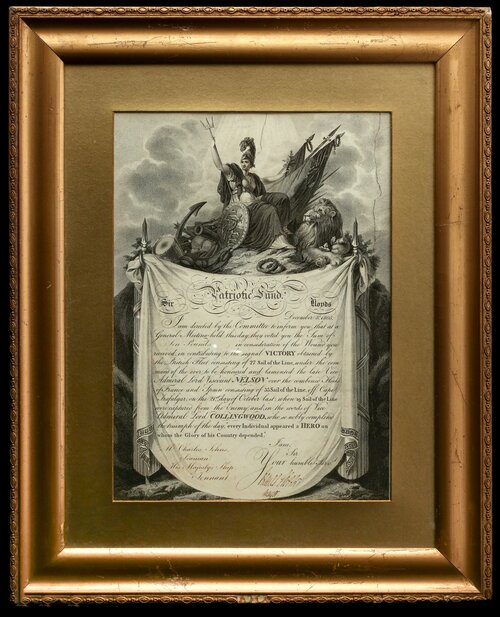
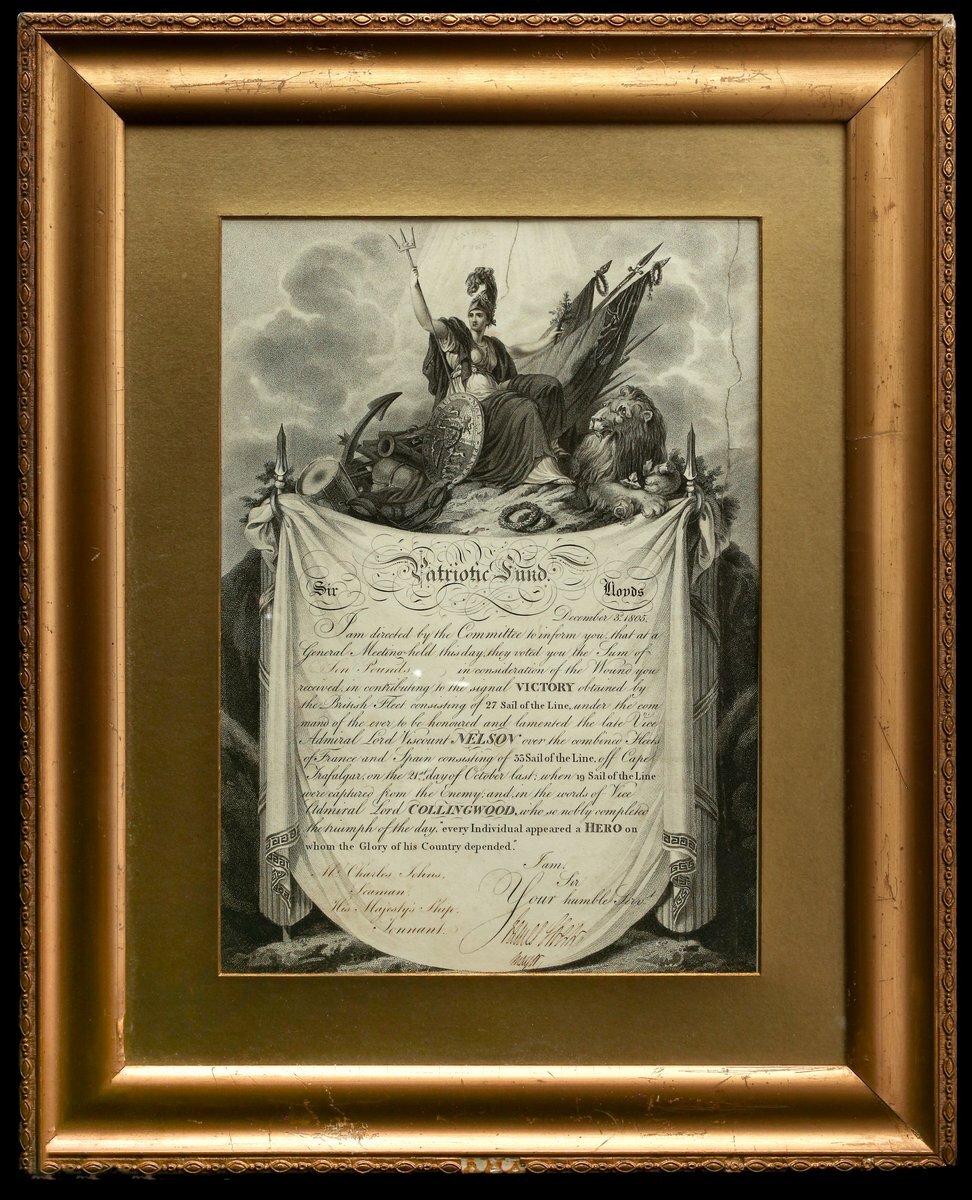
A rare Battle of Trafalgar Lloyd’s Patriotic Fund Honorary Wounds Certificate for Ten Pounds to Seaman Charles Johns, Royal Navy, who served aboard H.M.S. Tonnant on 21 October 1805
Lloyd’s Patriotic Fund Honorary Wounds Certificate for Ten Pounds in the name of 'Mr Charles Johns, Seaman, His Majesty's Ship, Tonnant', dated 3 December 1805, framed and glazed, two tears to the Certificate, otherwise script remains visible and good overall
Charles Johns, a Welshman from Pembroke, was born circa 1785 and joined the 80-gun Tonnant from the frigate H.M.S. Doris on 20 February 1805. Interestingly, Doris was wrecked in Quiberon Bay on 15 January that year and her captain and ship's company were rescued by Tonnant: perhaps Johns was one of those saved that day and subsequently entered onto the books of the latter ship.
H.M.S. Tonnant commenced life as the French Le Tonnant, an 80-gun vessel designed by the great ship-designer Jaques-Noel Sane and built in the Toulon shipyard, launched there on the 24 October 1789. However, she seemed destined never to serve her French masters for any length of time, as Tonnant fell into Anglo-Spanish hands in August 1793, when Admiral Sir Samuel Hood captured her after leading the combined allied fleet into the harbour in support of French Royalists who invited them to help defend the city from Republican forces; however she was one of the ships left behind and intact when the allies were forced to withdraw. In the French line-of-battle at the Nile in August 1798, she was captured by Nelson's fleet and entered into service with the Royal Navy under her own name.
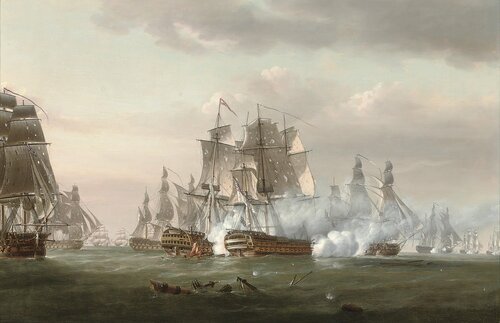
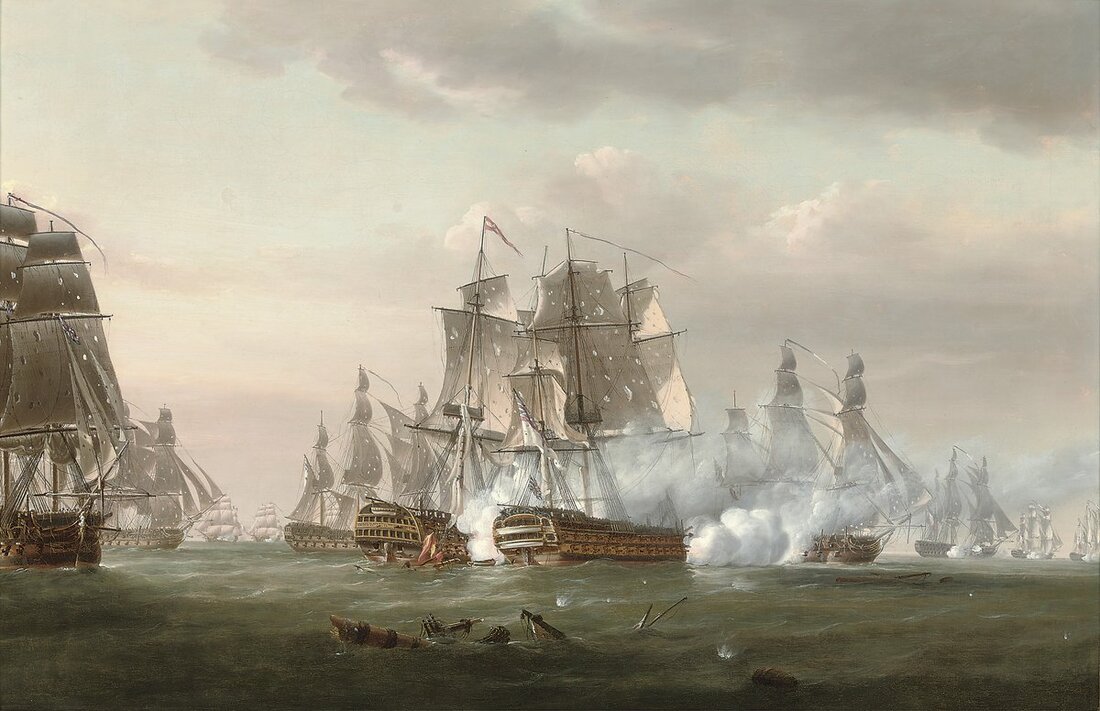
On 21 October 1805, Tonnant would be the fourth ship in Admiral Collingwood's Lee column: as they bore down on the Franco-Spanish fleet her band played the popular tune 'Britons Strike Home', and the British vessel cut the line around a host of enemy 74's, sailing between the Spanish Monarca, the French Algeciras (flagship of Rear Admiral Magon) the French Pluton.
Lieutenant Frederick Hoffman of the Tonnant described the breakthrough and the proximity of the enemy ships on each side as: 'so close that a biscuit could have been thrown on either of them. Our guns were double shotted. The order was given to fire; being so close, every shot was poured into their hulls, and down came the Frenchman's (Algeciras') mizzen mast, and after our second broadside, the Spaniard's (Monarca's) fore and crossjack yards.' A third broadside was enough for the Monarca and she hauled down her colours, drifting away as she did so, being the first ship in the Combined Fleet to surrender, within ten to fifteen minutes of the action opening and a sign of the accuracy of Tonnant's gunnery. The British ship sailed on and Captain Tyler spotted H.M.S. Mars being pounded by the French Pluton and so, turning to starboard, raked Pluton through her starboard quarter - however, an alert Admiral Magon brought Algeciras around to return the compliment to Tonnant.
Turning to meet the new threat the bowsprit of Algeciras thrust through the shrouds of Tonnant amidships. Hoffman described the combat: 'A French ship of 80 guns, with an Admiral's flag, came up and poured a raking broadside into our stern, which killed or wounded forty petty officers and men, nearly cut the rudder in two, and shattered the whole of the stern, with the quarter galleries.
She then in the most gallant manner locked her bowsprit in our starboard main shrouds and attempted to board us with the greater part of her officers and ship's company. She had riflemen in the tops who did great execution. Our poop was soon cleared, and our gallant Captain shot through the left thigh, and obliged to be carried below.
During this time we were not idle. We gave it to her most gloriously with the starboard and main-deckers and turned the forecastle guns, loaded with grape, on the gentlemen who wished to give us so fraternal a hug.
The marines kept up a warm destructive fire on the boarders. Only one man made good his footing on the quarterdeck, when he was pinned through the calf of his right leg by one of the crew with his half-pike, whilst another was going to cut him down, which I prevented, and desired to be taken to the cockpit.
Our severe contest with the French Admiral lasted more than half an hour, our sides grinding so much against each other that we were obliged to fire the lower-deck guns without running them out.'
Both ships caught fire in the close exchange (but were eventually extinguished) and the fight continued. Hoffman again takes up the story:
'At length we had the satisfaction of seeing her three lower masts go by the board, ripping the partners up in their fall, as they had been shot through below the deck, and carrying with them all their sharp-shooters to look sharper in the next world, for as all our boats were shot through we could not save one of them in this. The crew were then ordered with the second lieutenant to board her. They cheered and in a short time carried her. They found the gallant French Admiral Magon killed at the foot of the poop ladder, the captain dangerously wounded. Out of eight lieutenants five were killed, with three hundred petty officers and seamen, and about one hundred wounded. We left the second lieutenant and sixty men in charge of her, and took some of the prisoners on board when she swung clear of us. We had pummelled her so handsomely that fourteen of her lower deck guns were dismounted, and her larboard bow exhibited a mass of splinters.'
Following her duel with Algeciras, Tonnant became engaged in exchanging broadsides with the Spanish 74, San Juan Nepomuceno, but the honour of finishing off the Spaniard went to the late-arriving H.M.S. Dreadnought, who concluded the action within ten minutes. Tonnant would finish the battle badly damaged, with all three topmasts and the mainyard shot away, her hull and rudder battered together and her stern gallery and rails demolished; as well as the material damage she had suffered seventy-six killed and wounded with her captain among the latter.
Johns does not appear on the Roll for the Naval General Service Medal.
Subject to 20% VAT on Buyer’s Premium. For more information please view Terms and Conditions for Buyers.
Sold for
£600
Starting price
£1100

Watch, listen and bid as if you were in the room. Now available for auctions worldwide.
Click here to bid live
An exclusive and confidential service for the discerning collector or vendor.
View the Gallery
Download every Spink catalogue on your iPad, iPod or iPhone using free Spink app.
Download From iTunes© 2026 Spink & Son. All rights reserved.