
Auction: 26001 - Orders, Decorations and Medals
Lot: 8
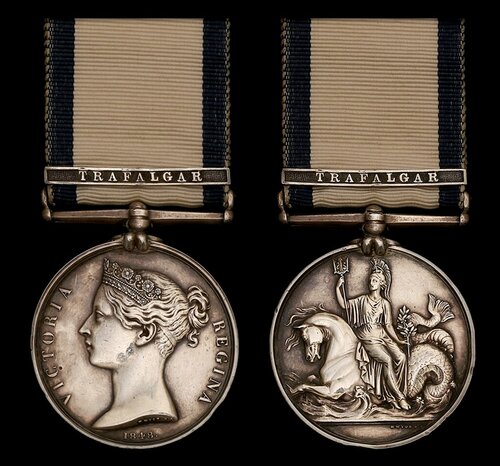
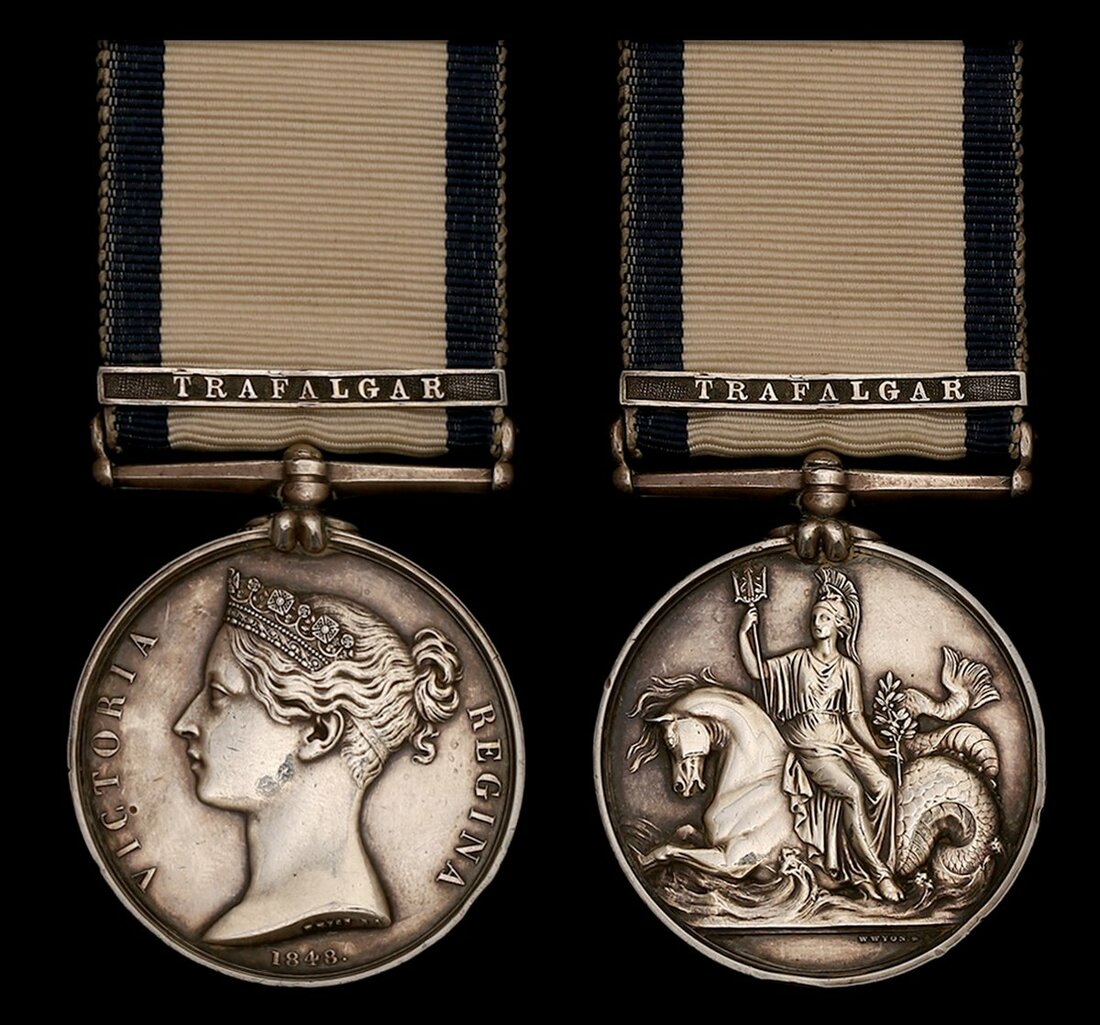
The Naval General Service Medal awarded to Boy W. Pope, Royal Navy, who served aboard Admiral Nelson's Victory at the Battle of Trafalgar at the tender age of seventeen
Naval General Service 1793-1840, 1 clasp, Trafalgar (William Pope.), a few minor edge knocks and scratches around last three letters of first name, otherwise very fine
Just six Boys aboard Victory lived to claim their Naval General Service Medal. Five men of this name appear on the Medal roll compiled by Colin Message, this however being the only award with a single clasp 'Trafalgar' claimed via P/431.
William Pope was born at Portsmouth, Hampshire, in 1788 and is noted on the roll as 'Boy' - though other online sources (such as The National Archives 'Trafalgar Ancestors' database and the 1805 Club research database) list him as a Volunteer 1st Class. Interestingly, he is also noted as joining Victory from the 32-gun frigate Amphion in July 1803; the latter vessel's commanding officer at that time was none other than Captain Thomas Masterman Hardy and, having transported Admiral Nelson to the Mediterranean so that he could take up his new post as Commander-in-Chief Mediterranean Fleet, it was also in July 1803 that Hardy exchanged places with Victory's captain, Samuel Sutton, to take over the three-decker - quite a difference from a small 32-gun single-decked frigate! Pope undoubtedly followed Hardy at the same time and perhaps the two were known to one-another in some way as, when Hardy left Victory on 14 January 1806, Pope again did exactly the same. At the time of the Battle of Trafalgar on 21 October 1805, the crew of the 104-gun Victory comprised some 820 officers and men; Pope, then aged 17, was one of 31 boys borne on the ship's books and all were of a similar age.
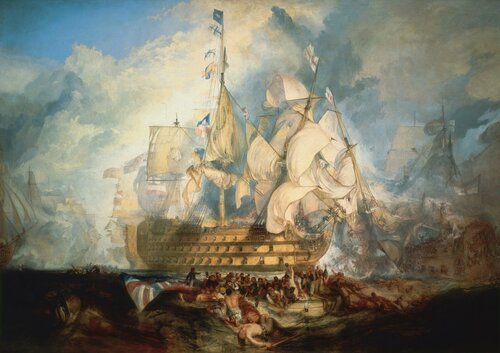
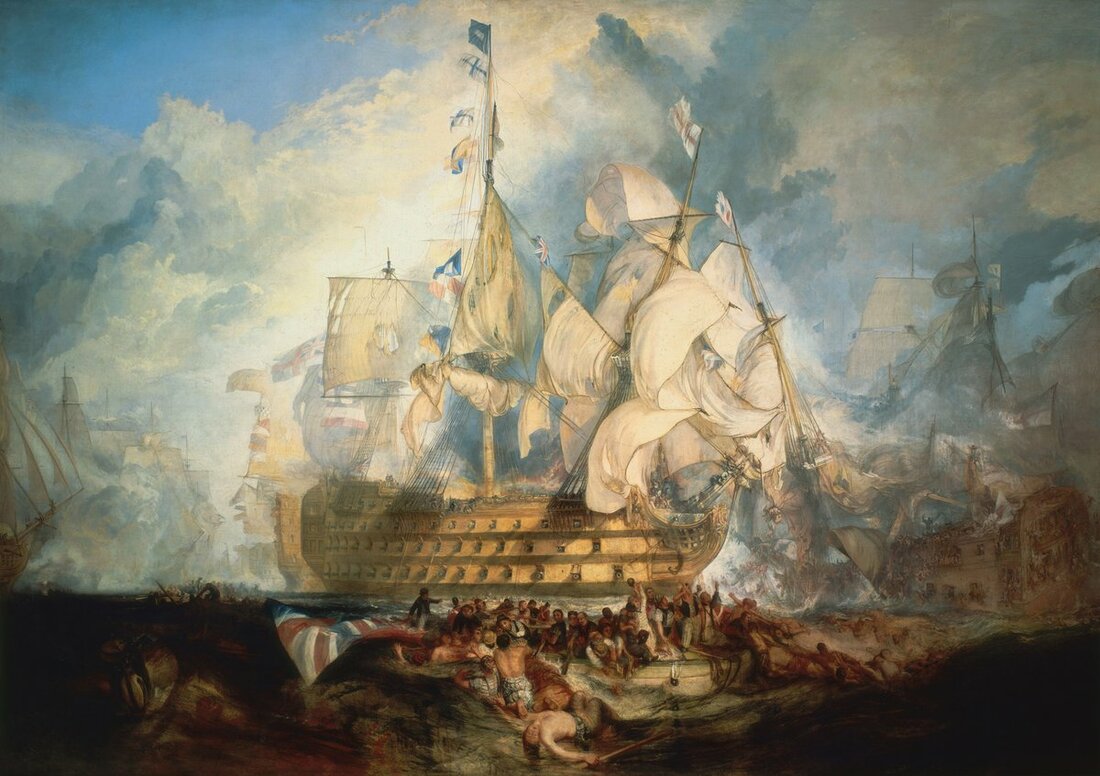
Being such a famous ship at such a famous battle, perhaps her full history and a blow-by-blow account of 21 October is unnecessary here. Laid down in 1759, by the time of Trafalgar Victory was already a veteran of many battles and campaigns including the First and Second battles of Ushant; the Siege of Gibraltar; and the Battle of Cape St Vincent. On that fateful October morning she assumed her position as lead ship in the Weather column, closely followed by Temeraire and Neptune. Sailing directly at the combined Franco-Spanish fleet, Victory broke the line between the French flagship (the 80-gun Bucentaure) and the 74-gun Redoutable; firing a double-shotted full broadside into the exposed stern of the Bucentaure at a distance of mere feet, she was a target impossible to miss and, shockingly, that devastating discharge is believed to have killed and wounded around half her crew (of 800 men) in one fell swoop. The carnage unleashed as deadly iron shot and jagged splinters careered down the full length of the ship is simply impossible to comprehend; this put her out of action for the rest of the battle.
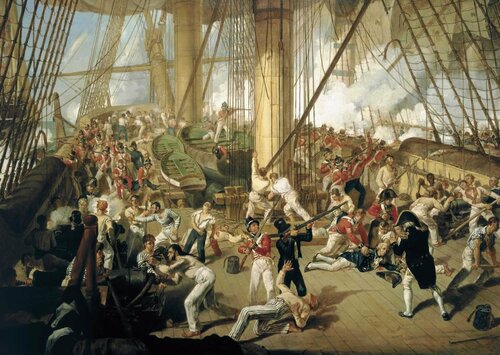
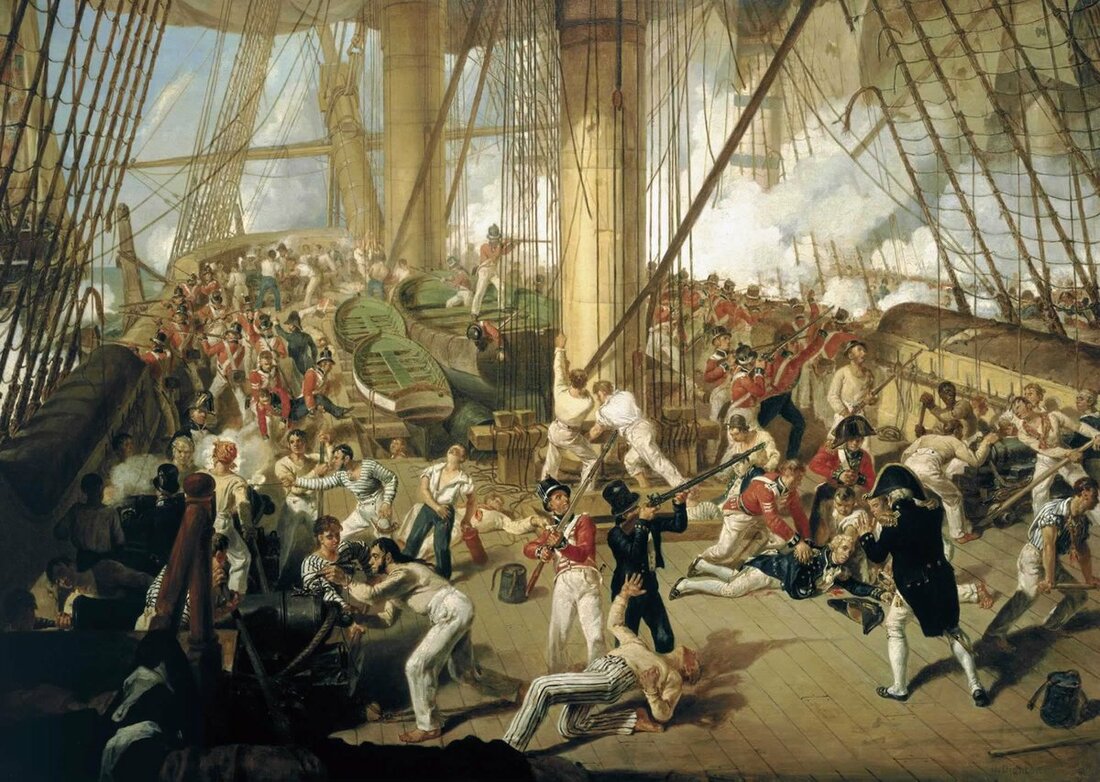
On the starboard side, Redoutable proved a more difficult opponent: she became entangled with Victory and her commander, Captain Lucas, had trained his men well in the use of small-arms and hand grenades - these quickly started taking their toll on the exposed upper deck of the British flagship and, at 1.15 p.m., Nelson was hit in the left shoulder by a musket ball which continued through his body and lodged in his spine - the wound was, of course, fatal and he died just over three hours later. Redoutable attempted to board Victory several times, each time being repulsed and Lucas and his men were finally defeated by the timely arrival of Temeraire under Captain Eliab Harvey: another vastly destructive broadside at point-blank range killed or wounded over 200 of Redoutable's crew including Lucas, and, when H.M.S. Tonnant also entered the fray, the battered French ship finally surrendered.
Victory had suffered badly, with severe structural damage and casualties of 57 killed and 102 wounded - some 19% of her crew. Pope, however, appears to have come through that astonishing action without a scratch, though undoubtedly shared in the collective post-battle melancholy thoughts throughout the British fleet at the loss of Horatio Nelson and so many of his gallant shipmates.
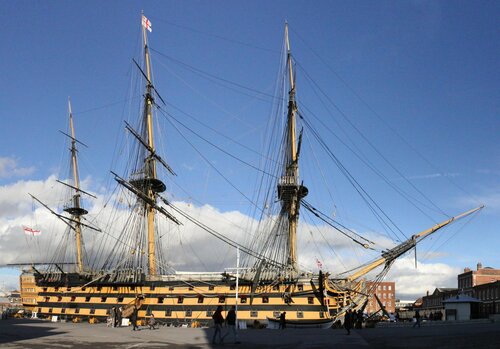
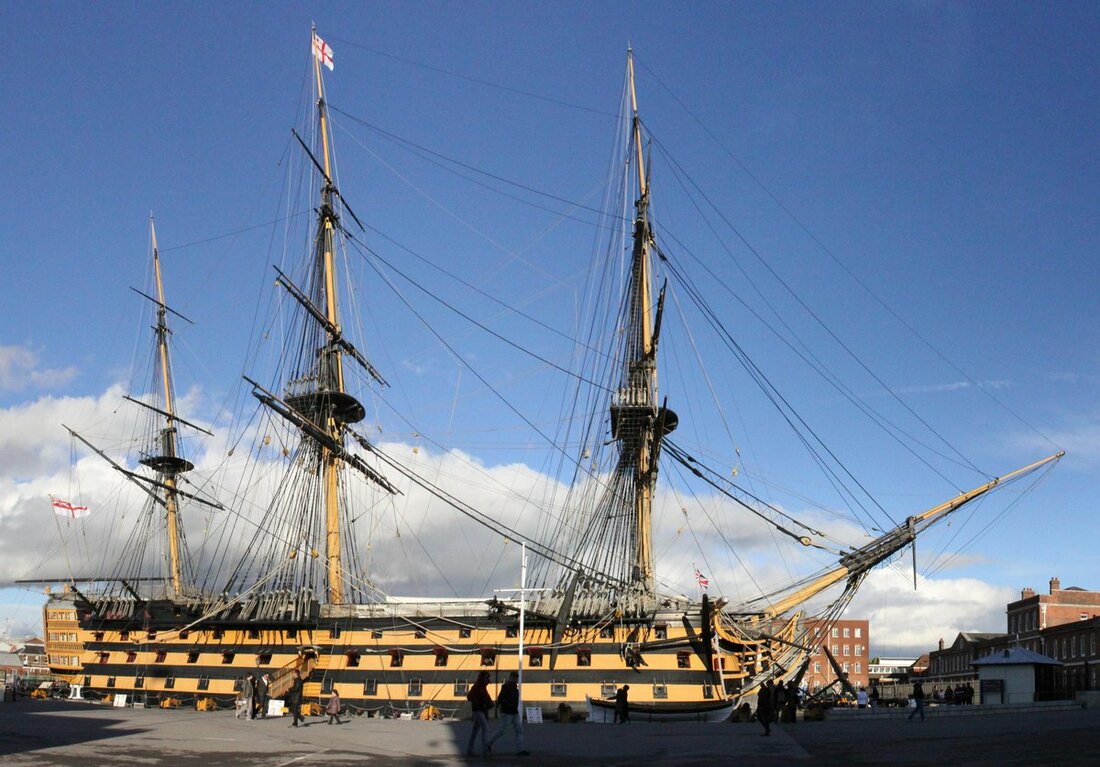
Being still in existence and still in commission, Victory has 248 years of service and is arguably the most famous vessel in the world - she can of course be visited today at Portsmouth Historic Dockyard and therefore one can walk not just in the footsteps of Nelson and Hardy, but of more ordinary members of her crew that day - men (and boys) such as William Pope.
Subject to 20% VAT on Buyer’s Premium. For more information please view Terms and Conditions for Buyers.
Sold for
£19,000
Starting price
£10000
Watch, listen and bid as if you were in the room. Now available for auctions worldwide.
Click here to bid live
An exclusive and confidential service for the discerning collector or vendor.
View the Gallery
Download every Spink catalogue on your iPad, iPod or iPhone using free Spink app.
Download From iTunes© 2026 Spink & Son. All rights reserved.