
Auction: 321 - The Numismatic Collector's Series Sale and Stocks and Bonds of the Americas
Lot: 565
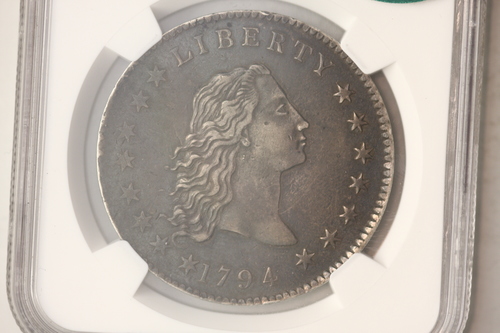
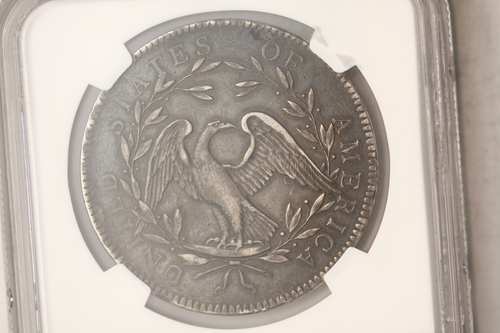
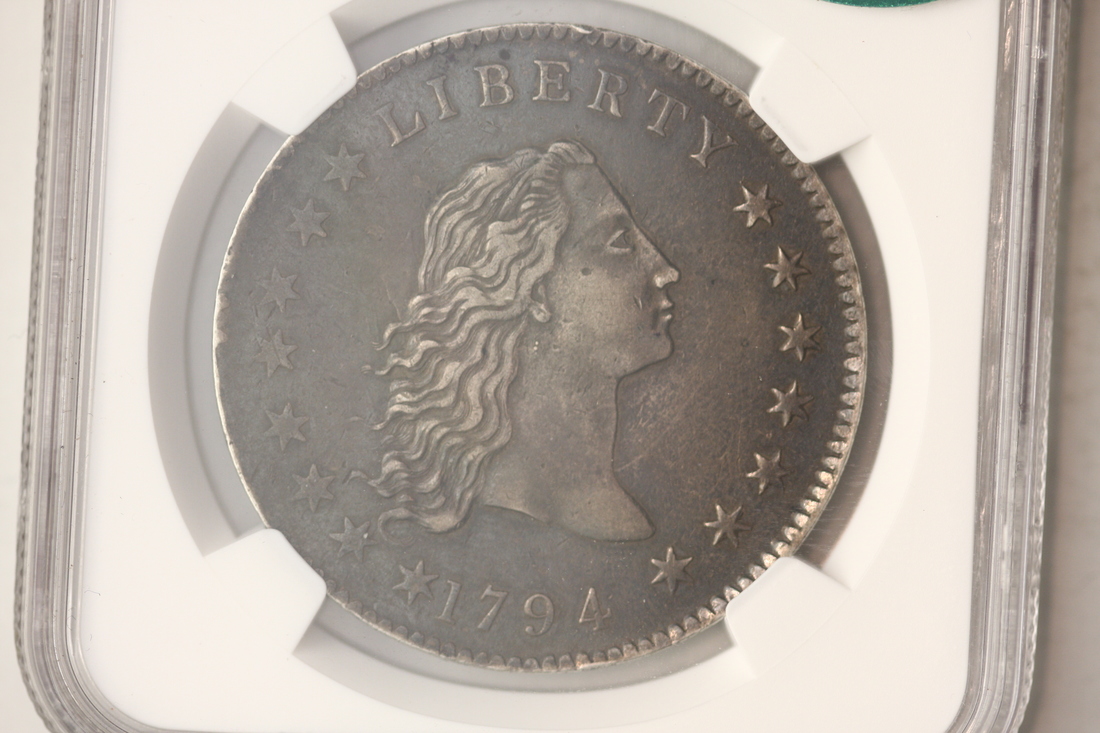
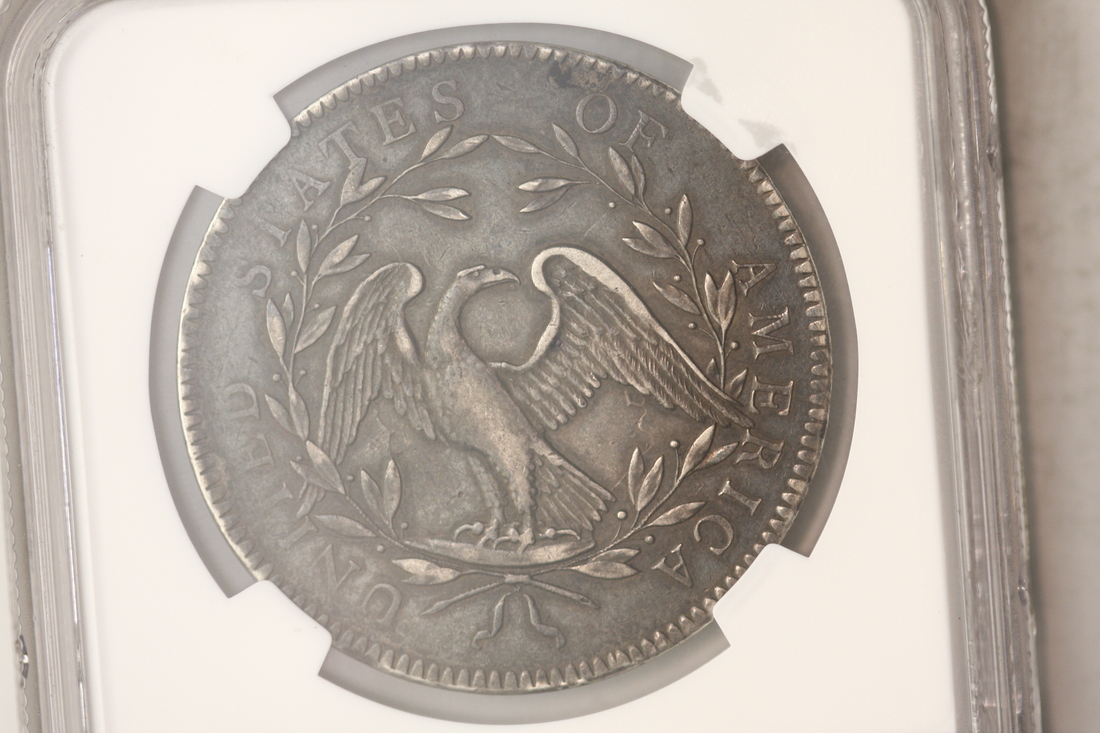
1794 1 Dollar. NGC AU 50, CAC verified. BB-1, B-1. Especially sharp for the issue, displaying a strong date, bold details and pleasing rich, deep gray toning. On the reverse, the "STATES" shows some typical weakness, but the strike is still far superior to most examples of the United States' first Silver Dollar. Only one pair of dies was used in the production of the 1794 issue. The young nation's first mint had just been established in Philadelphia two years earlier, spread over two lots on 7th Street between Market and Arch, with the renowned scientist and inventor David Rittenhouse as its director. Thomas Jefferson's repeated efforts to secure the services of Swiss inventor Jean-Pierre Droz had never born fruit. (Droz had created a new coining process that notably streamlined the striking of crown-size coins). But the employment of Albion Coxe of Great Britain as assayer had been secured, along with that of a Philadelphia clock-maker and steam-engine builder, Henry Voight - who had repaired many a watch and clock for Jefferson - as the mint's chief coiner. Voight would prepare much of the dies. The early mint, though, faced many difficulties. Minting its own money was an entirely new enterprise for a new nation and expertise, not surprisingly, was in short supply. Tools and materials were hard to come by and the three horses who provided the "horsepower" for the mint's machinery were not overly robust. Such issues likely contributed to the small output of the first U.S. Silver Dollar -- a mere 1,758 dollars were produced in 1794. Still they were coins of which the mint and fledgling republic could be proud; and the silver dollar would go on to be the United States' most iconic coin. A lovely example of this very rare and important coin.
Sold for
$380,000

Watch, listen and bid as if you were in the room. Now available for auctions worldwide.
Click here to bid live
An exclusive and confidential service for the discerning collector or vendor.
View the Gallery
Download every Spink catalogue on your iPad, iPod or iPhone using free Spink app.
Download From iTunes© 2026 Spink & Son. All rights reserved.