
Auction: 3016 - Orders, Medals, Decorations & Militaria
Lot: 165
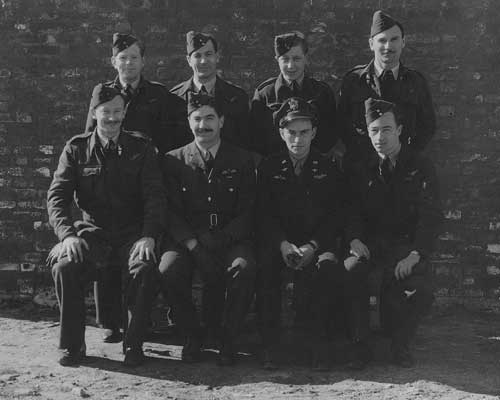
A Good Coastal Command D.S.O., D.F.C., Group of Six to Wing Commander J. B. Grant, Royal Air Force
Distinguished Service Order, G.VI.R., reverse of lower suspension bar dated '1943', silver-gilt and enamel; Distinguished Flying Cross, reverse dated 1941; 1939-45 Star; Atlantic Star; Defence and War Medals, M.I.D. Oakleaf, minor green enamel damage to wreath, good very fine or better together with recipient's Pilots Flying Log Books (2) January 1936 - November 1957 (6), and some original photographs and press cuttings
D.S.O. London Gazette8.5.1945. Wing Commander James bernard Grant, 58 Squadron (Halifaxes) Royal Air Force.
The Recommendation states; ''Wing Commander J.B. Grant has commanded No. 58 Squadron for the past eleven months with considerable ability, and under his guidance it has had its greatest successes in operations against the enemy. Before arrival at Stornoway, 58 Squadron was engaged on anti-'U'-boat operations, but since it arrived here, it has been employed almost exclusively on anti-shipping duties. Under Wing Commander Grant's leadership the Squadron has carried out many attacks in the Skagerrak and Kattegat and off the Norwegian Coast, culminating in no less than fiftyone attacks during March, 1945 - the last month of his command. He has been entirely responsible for the tactics and strategy, and by precept and example has always maintained the Squadron at a very high standard. Moreover, his personal courage, modest outlook and sincere interest in personnel have held the Squadron happily together, and welded them into an efficient unit which has done much towards increasing the high reputation of the Royal Air Force in this war.
His individual record of operations is impressive, as he has completed some 1, 100 hours on operational sorties. Before joining No. 58 Squadron as a Flight Commander some twenty two months ago, he had already completed a long and successful tour with No. 269 Squadron, where he had been awarded the Distinguished Flying Cross. After a period as Chief Flying Instructor at a Coastal Command O.T.U. in Canada, he started his second operational tour with 58 Squadron, and has done more than 500 hours on night work against "U"-boats and enemy shipping, most of which has been carried out in the vicinity of the enemy coast.
On 14th January, 1944, in Halifax HR 741, he attacked a "U"-boat in the position 45.20 degrees N. 8.00 degrees W. The attack was pressed home at low level in the face of considerable flak. The depth charges fell very close to the starboard side of the "U"-boat, which was seen to be stopped on the surface when the aircraft had to leave. On the 21st June, 1944, he led a strike upon a suspected "U"-boat in St. Annes Harbour in the heavily defended Channel Islands.
On anti-shipping sorties in the Skagerrak he has carried out a number of attacks, but, as is usual with this kind of work, definite evidence has been lacking to confirm results obtained. On several occasions when low cloud and bad visibility rendered repeated attempts to bomb visually abortive, in spite of strong enemy opposition, he has pressed home his attacks and bombed by radar. Such was the case on 26th July, 1944, near the Gironde River, and on the 13th January, 1945, in the Skagerrak, flak being plentiful on both occasions.
An example of his leadership and quiet self-possession is well illustrated by the following: In August, 1944, he was endeavouring to attack three "U"-boats very close to the heavily defended Gironde mouth, when, in the confusion of radar contacts, he inadvertantly passed over a vessel at 800 feet, receiving a direct hit which exploded in the aircraft, causing it to crash into the sea. It was a dark night, and there were five survivors and no dinghy. Two of the survivors died, but Grant and the remaining two were picked up after swimming for about ten and a half hours. Such an experience must have caused him considerable shock, but such is his keeness and devotion to duty, that in less than a fortnight he was back with his Squadron, supervising their move from Wales to Stornoway, and in less than a month he was again flying on operations in the new area.
Wing Commander Grant's courage, quiet unassuming manner and very considerable operational experience have endeared him to all ranks, and he is held in affectionate regard by all who have been associated with him.
For the excellence of his work, for his organisation, for his personal courage and devotion to duty, and for the results achieved by the Squadron due to his guidance, he is strongly recommended for the Distinguished Service Order.
D.F.C. London Gazette 27.5.1941. Flight Lieutenant (Acting Squadron Leader) 269 Squadron (Hudsons).
The Recommendation states: 'This Officer has carried out over 800 hours of operational flying in this Squadron since the outbreak of the war. He has taken part in ten bombing raids over enemy territory at night, and has twice attacked enemy shipping by day close to the Norwegian Coast, and on one occasion sank a large enemy merchant ship by a determined low-flying attack with bombs. As a Flight Commander he has shown very fine spirit, and has lead his Flight on five occasions in night bombing raids over Norway. He took part in the three raids on Bergen - Stavanger Railway at Finse, led the successful attack on the aluminium factory at Hoyanger on 9.4.41, and the leaflet raid over the strongly defended areas of Stavanger and Bergen on the night of 14.4.41.'
Subject to 20% VAT on Buyer’s Premium. For more information please view Terms and Conditions for Buyers.
Sold for
£3,200


Watch, listen and bid as if you were in the room. Now available for auctions worldwide.
Click here to bid live
An exclusive and confidential service for the discerning collector or vendor.
View the Gallery
Download every Spink catalogue on your iPad, iPod or iPhone using free Spink app.
Download From iTunes© 2026 Spink & Son. All rights reserved.