
Auction: 26776 - America 250th Anniversary Sale Ft. Coins, Medals, Banknotes, Objets de Vertu & Ephemera
Lot: 57
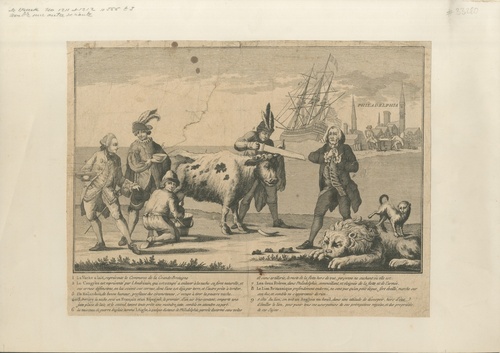
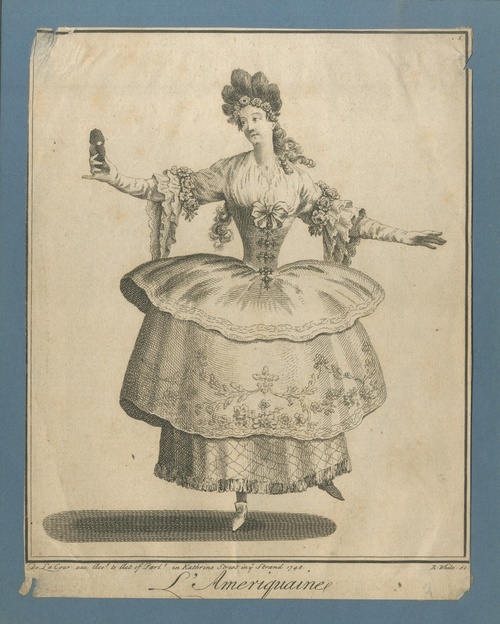
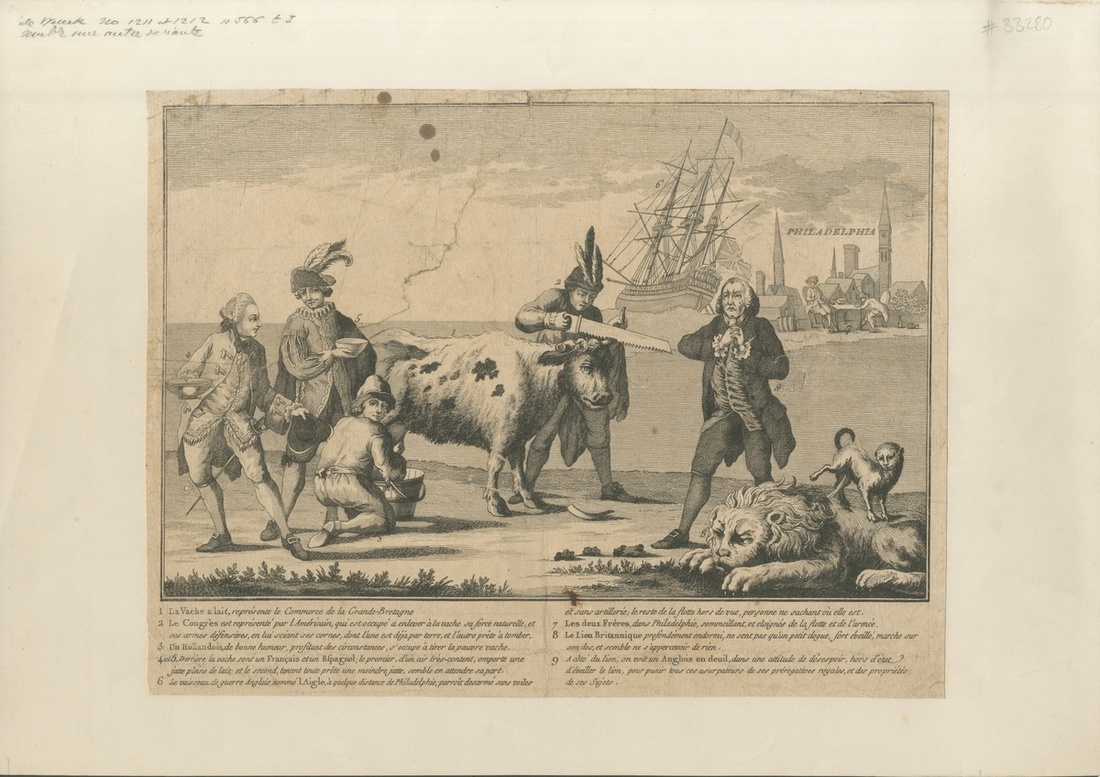
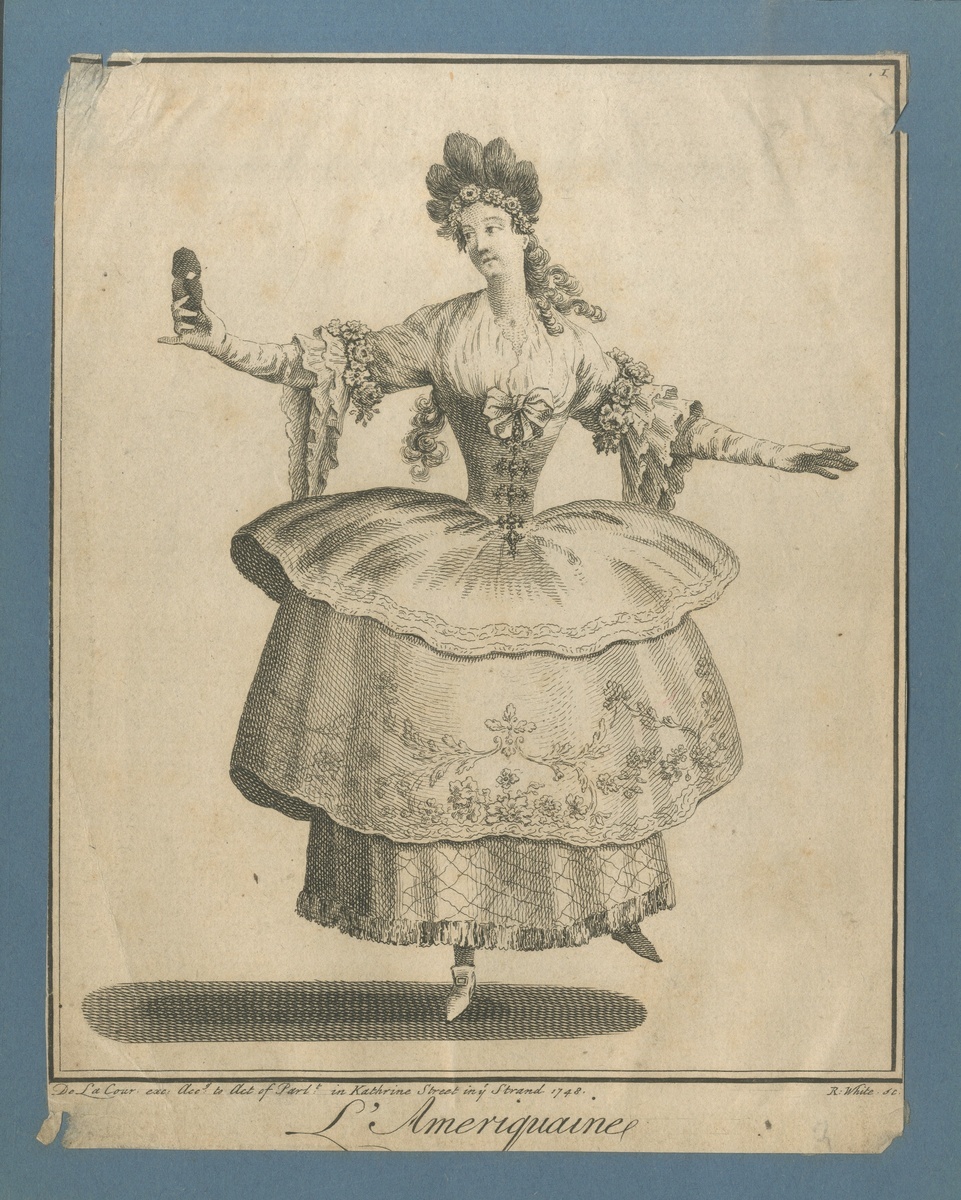
France, Paris, American Revolution: La Vache à Lait, représente le Commerce de Grande-Bretagne...[A Picturesque View of the State of the Nation], circa 1778, uncoloured engraved caricature, relating to Britain's struggle and ineffectiveness in controlling their position in the Americas, 200 x 265mm (cf. BM 5726b), this example annotated at the bottom of the image, detailing the narrative of the image. Trimmed to the plate mark, long repaired closed tears impacting the printed image, slight spotting, tipped into later paper; with, London, (R). White, L'Ameriquaine, 1748, a rare uncoloured engraved satire illustrating the latest American female fashion, 210 x 160mm, some wear and fraying to the corners, tipped onto later card (2)
This piece is a French version of an English satirical caricature originally published in the Westminster Magazine, vol., 6 in March of 1778. The cartoon shows America, represented by a man with feathered cap (No. 2), cutting the horns off a cow, which symbolises British commerce (No. 1). The cow is being milked by a Dutchman (No. 3), and two other men, who symbolise France and Spain, (Nos. 4 and 5) are waiting patiently for their bowls to be filled with milk. The British lion (No.8) is shown sleeping and is unaware of the events unfolding around him, so much so that a small dog stands on his back and urinates. A helpless and crying English man (No. 9) is shown just beyond the lion. In the background the city of Philadelphia and the British ship the 'Eagle', captained by Admiral Howe, is shown laid-up in the dry dock. Both Admiral Howe and his brother General Howe, are shown slumped at a table, a keg and empty wine bottles surrounding them.
Both brothers, General Sir William Howe and Admiral Lord Richard Howe, were instrumental in the Philadelphia Campaign in 1777. Together they planned and executed an amphibious landing at Head of Elk, Maryland, from which the army marched north to take Philadelphia.
The military operation itself was largely successful. William Howe defeated Washington at Brandywine Creek, and the British entered Philadelphia on September 26. Richard Howe's navy subsequently broke the American river blockade by bombarding Fort Mifflin into submission, securing the army's supply lines into the occupied city.
However, the campaign's fatal flaw was strategic. Lord George Germain, British Secretary of State for America, and General Burgoyne both assumed Howe would send support northward to assist Burgoyne's invasion from Canada. Instead, Howe committed his entire force to Philadelphia, leaving Burgoyne isolated. Burgoyne was surrounded and surrendered at Saratoga in October 1777; a defeat that brought France into the war on the American side and transformed the conflict entirely.
When news of Saratoga reached Philadelphia, William Howe resigned in October 1777, complaining of inadequate support from London. Richard Howe resigned his naval command shortly after. Both brothers returned to England in 1778 and faced parliamentary scrutiny and a pamphlet war over their conduct. William lost his Commons seat in 1780. He was replaced as army commander by Sir Henry Clinton, who promptly abandoned Philadelphia and withdrew to New York to guard against the French threat.
Subject to 20% VAT on Buyer’s Premium. For more information please view Terms and Conditions for Buyers.
Estimate
$150 to $200
Starting price
$100

Watch, listen and bid as if you were in the room. Now available for auctions worldwide.
Click here to bid live
An exclusive and confidential service for the discerning collector or vendor.
View the Gallery
Download every Spink catalogue on your iPad, iPod or iPhone using free Spink app.
Download From iTunes© 2026 Spink & Son. All rights reserved.