


Auction: 26052 - Jewellery & Objets de Vertu
Lot: 27
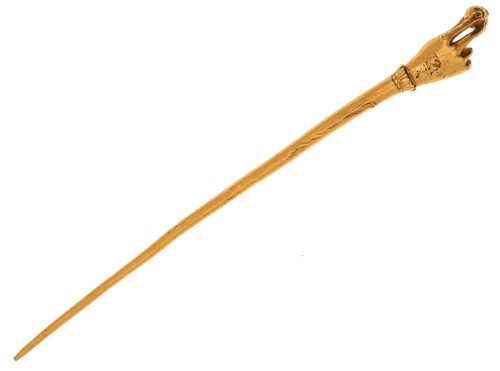
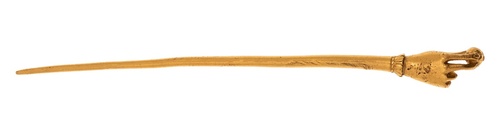
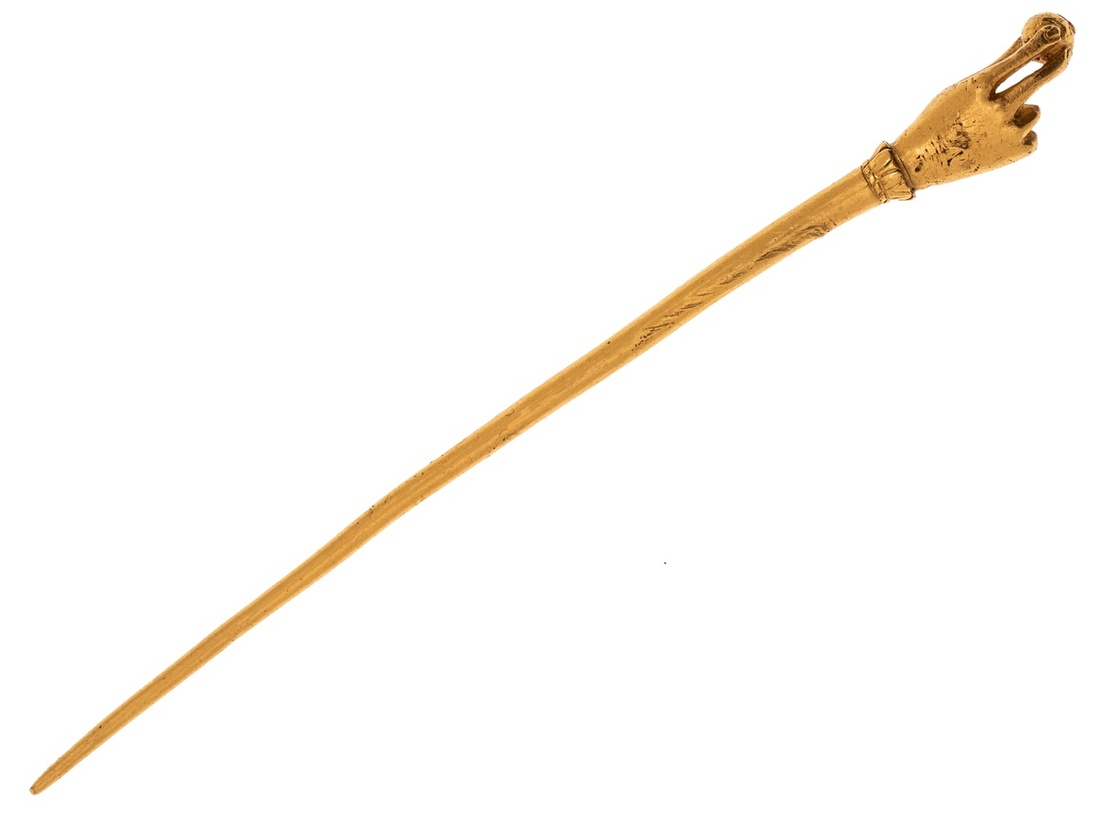
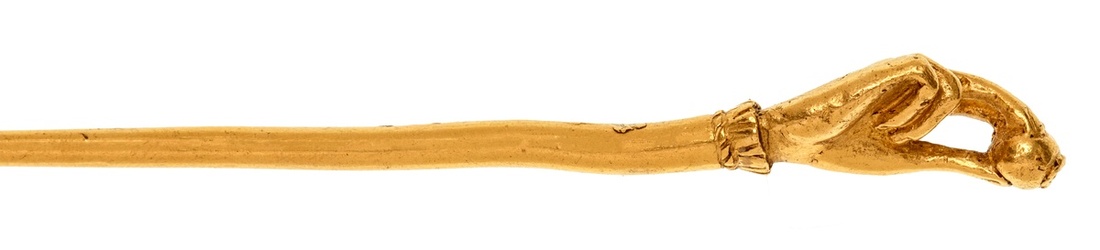
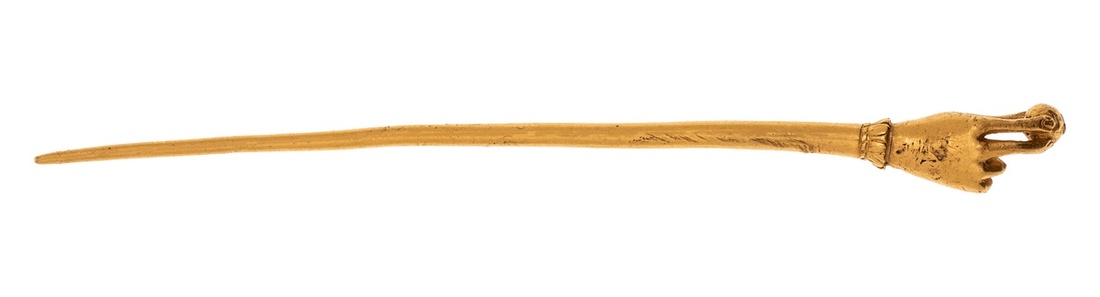
A ROMAN GOLD HAIRPIN
CIRCA 1ST-3RD CENTURY AD
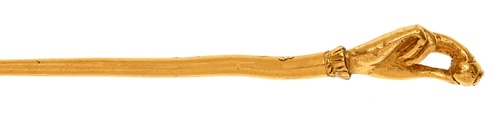
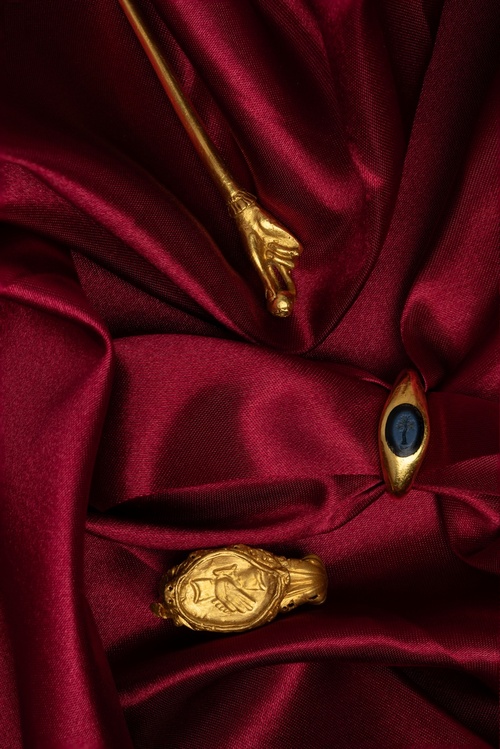
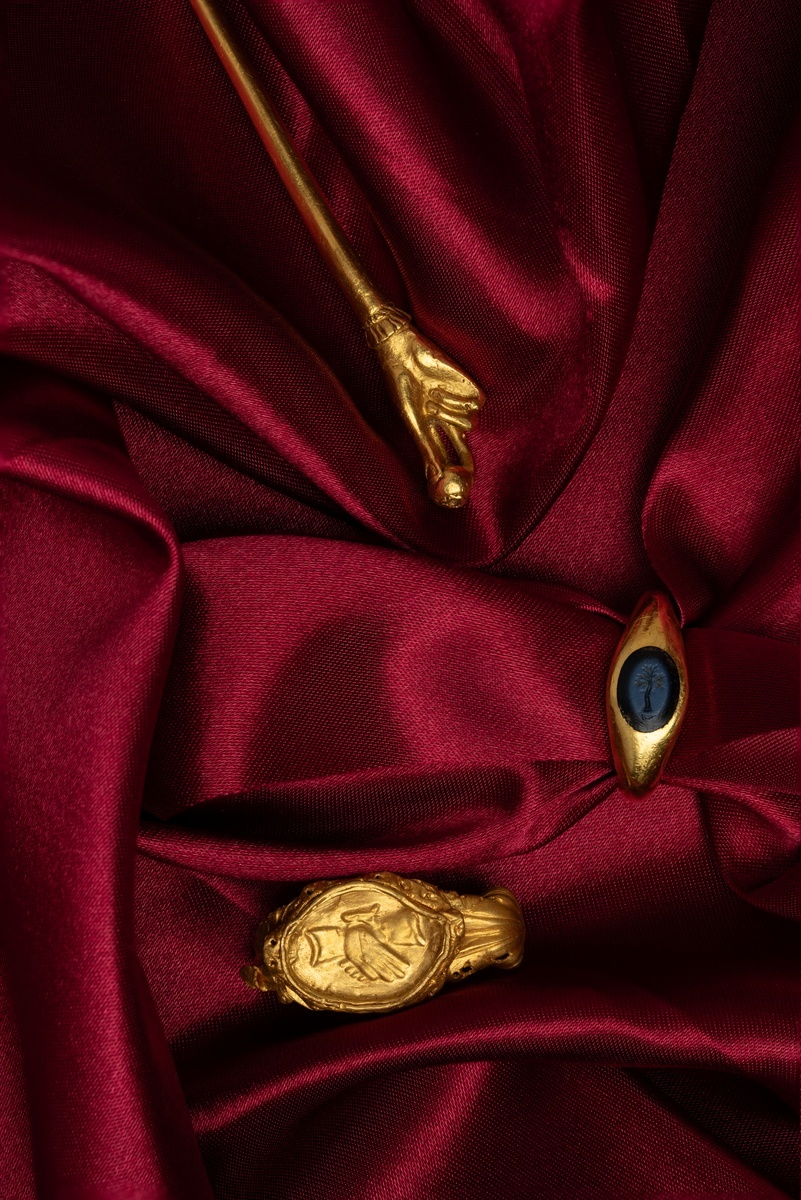
The gold pin terminating in an extended right hand emerging from a calyx, holding a pomegranate between the thumb, index and middle fingers.
Analysed as 90.49% gold, 7.68% silver, 1.84% copper
Unmarked
Size/dimensions: 10.80cm long
Gross weight: 13.70g
The pin shows small signs of wear consistent with age, with some pitting and small dents, otherwise it is offered in very good condition with exquisite ancient workmanship.
Provenance
A.E. Martin, London
Alan E. and Marianne Schwartz, Michigan, acquired from the above on 3 October 1967
Thence by descent in the family
Their sale, Sotheby's, London, Ancient Sculpture and Works of Art, 5 July 2024, lot 108
Where acquired by the present owner
In the ancient world the pomegranate, with its abundance of seeds, was a symbol of fertility, marriage and renewal, closely associated with Proserpina, whose eating of its seeds bound her to return to the underworld each year. The gesture of the hand may carry a religious meaning. Similar hands appear on bronze votive offerings dedicated to Jupiter Dolichenus, a god whose cult originated at Doliche in Commagene, in what is now south-eastern Turkey. His mystery cult spread through the Roman world, especially among soldiers, and reached its height under the Severan emperors (AD 193-235). Dávid Bartus has examined these inscribed votive hands alongside hand-terminal hairpins in his study “Roman Hairpins Representing Human Hands: Typology and Symbolism”, raising the possibility that pins of this type shared in the cult’s imagery. A pin of very similar form, made in silver-gilt rather than gold, was shown in the exhibition Antiquities from the Collection of Christos G. Bastis at The Metropolitan Museum of Art, New York, in 1987 (cat. no. 188).
Subject to 20% VAT on Buyer’s Premium. For more information please view Terms and Conditions for Buyers.
Estimate
£6,000 to £8,000
Starting price
£5500



Watch, listen and bid as if you were in the room. Now available for auctions worldwide.
Click here to bid live
An exclusive and confidential service for the discerning collector or vendor.
View the Gallery
Download every Spink catalogue on your iPad, iPod or iPhone using free Spink app.
Download From iTunes© 2026 Spink & Son. All rights reserved.