
Auction: 26050 - Jewellery & Objets de Vertu
Lot: 32
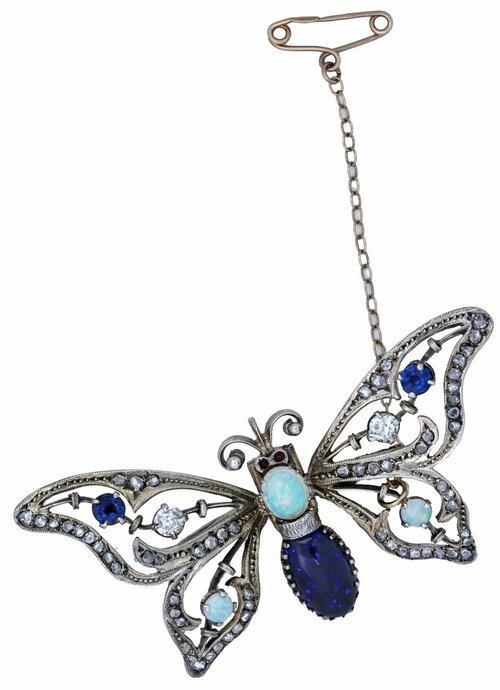
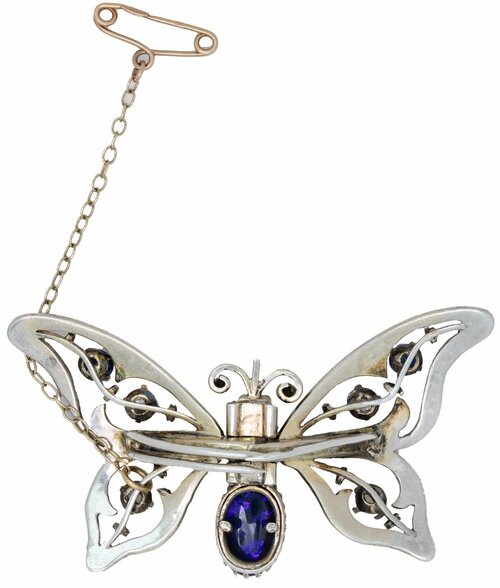
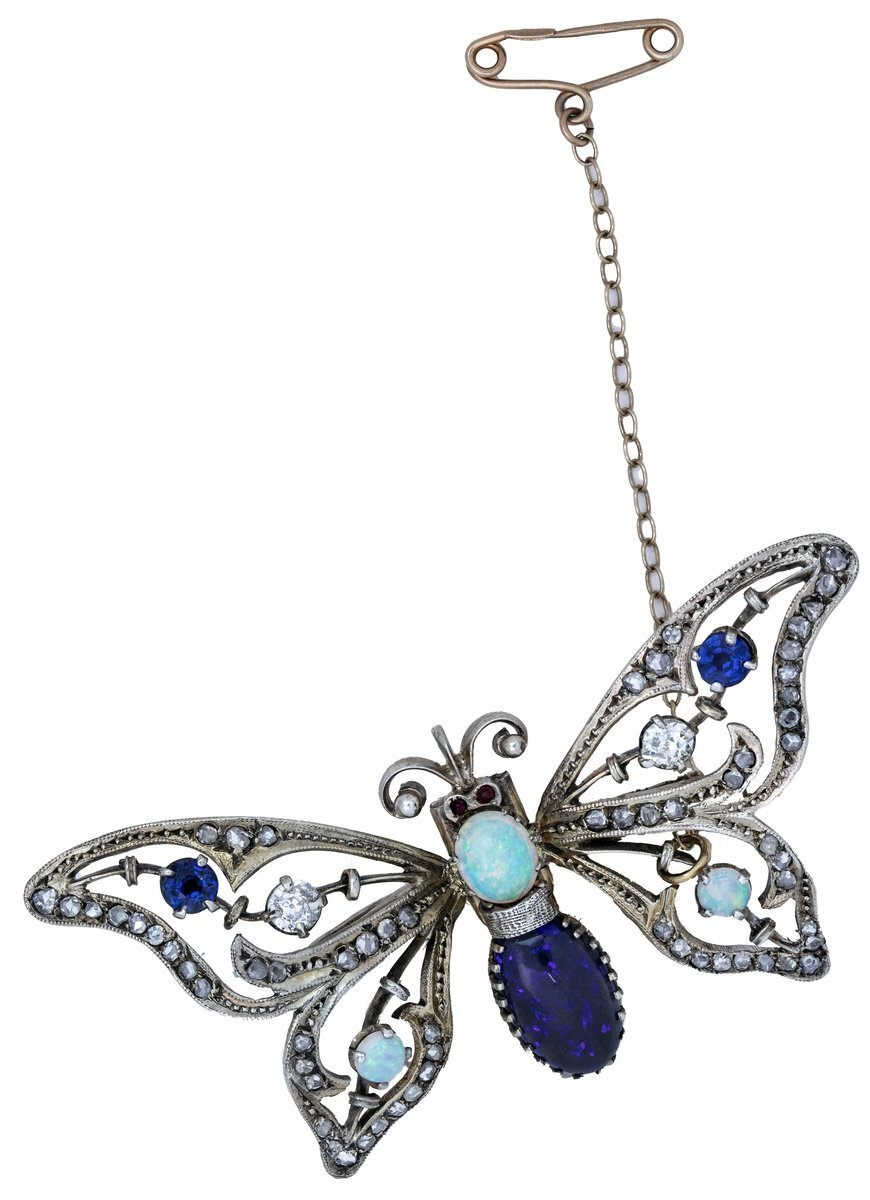
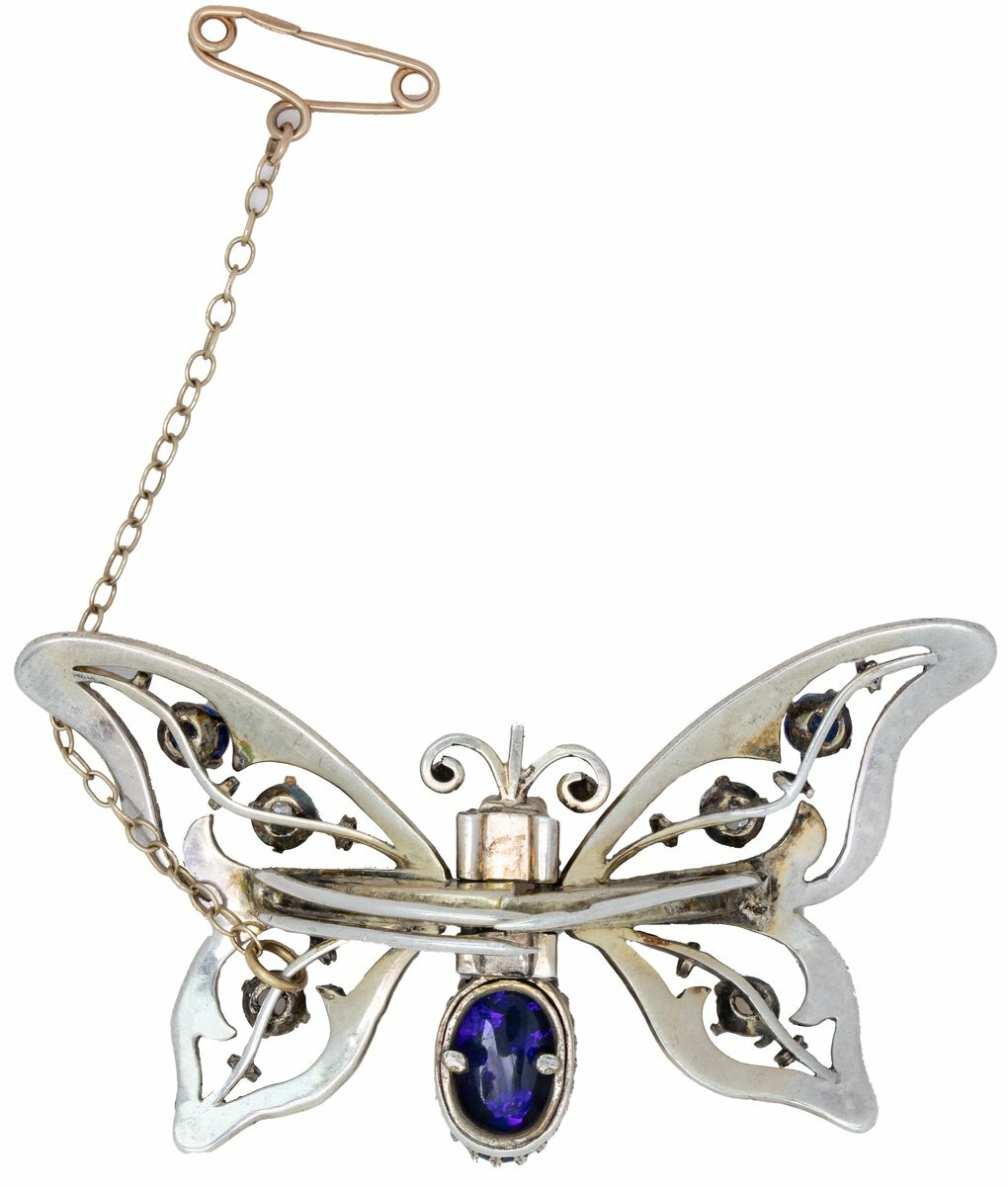
A VICTORIAN OPAL, DIAMOND AND SAPPHIRE BROOCH
CIRCA 1885-1910
In the form of a butterfly, featuring openwork wings set with black opal, white opal, sapphires and diamonds, crafted in silver-topped gold.
Pin stamped 375
Size/dimensions: 6.00cm long
Gross weight: 8.59g
In very good condition. Set with opals, sapphires, and a mix of old mine-cut and rose-cut diamonds. The black opal is approximately 1.45ct, with smaller white opals surrounding, exhibiting a strong play of colour. The total estimated diamond weight is approximately 0.26ct. The metal shows light wear, and the clasp is in working order.
The butterfly was one of the most evocative and enduring motifs in Victorian jewellery, uniting scientific observation, artistic refinement, and rich symbolic meaning.
Advances in scientific classification, alongside widely circulated illustrated works and museum displays, brought the intricate beauty of insects to a broad public audience. Jewellers responded by creating highly naturalistic ornaments that reflected both the accuracy of scientific observation and the decorative ambitions of the period. The butterfly, with its symmetrical wings and vivid colouring, proved especially suited to gem-set interpretation.
Beyond its visual appeal, the butterfly carried powerful symbolic associations. From classical antiquity it had been linked to the soul, while in Christian iconography it became an emblem of resurrection and spiritual transformation. In the Victorian imagination, these meanings were expanded further to include renewal, freedom, and the transient beauty of life. Such associations made butterfly jewels particularly appropriate as personal ornaments, often exchanged as tokens of sentiment or worn to express emotional significance.
From the early 1860s onwards, insect jewellery became increasingly fashionable, encompassing butterflies, bees, dragonflies, and other natural forms. Worn on bodices, sleeves, and hats, such jewels were part of a broader decorative language through which nature was incorporated into dress. By the final decades of the nineteenth century, these designs had reached a high point of sophistication, combining lifelike observation with the imaginative transformation of nature into ornament.
Subject to 20% VAT on Buyer’s Premium. For more information please view Terms and Conditions for Buyers.
Estimate
£1,000 to £1,500
Starting price
£900
Watch, listen and bid as if you were in the room. Now available for auctions worldwide.
Click here to bid live
An exclusive and confidential service for the discerning collector or vendor.
View the Gallery
Download every Spink catalogue on your iPad, iPod or iPhone using free Spink app.
Download From iTunes© 2026 Spink & Son. All rights reserved.