
Auction: 26003 - Orders, Decorations and Medals
Lot: 395
Sold by Order of the Family
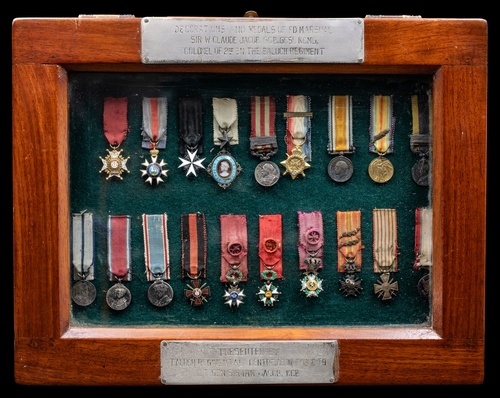
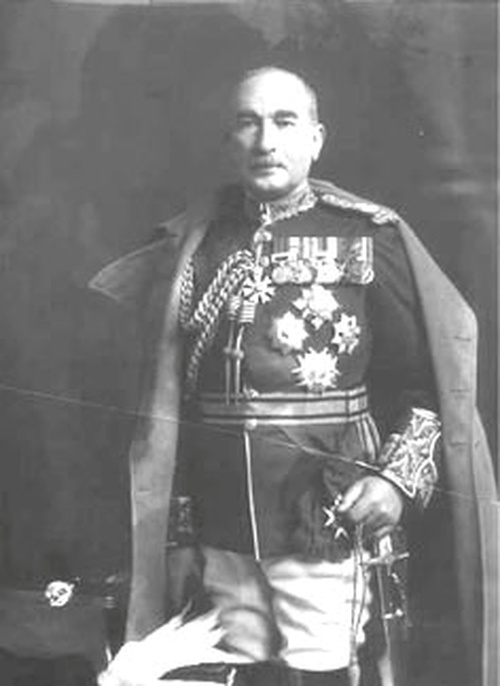
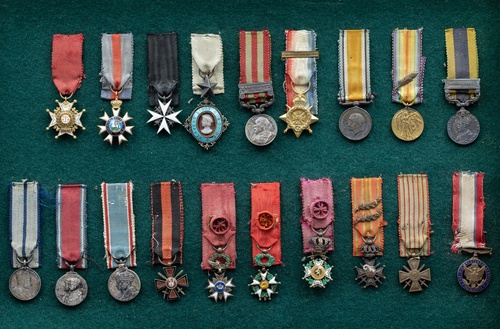
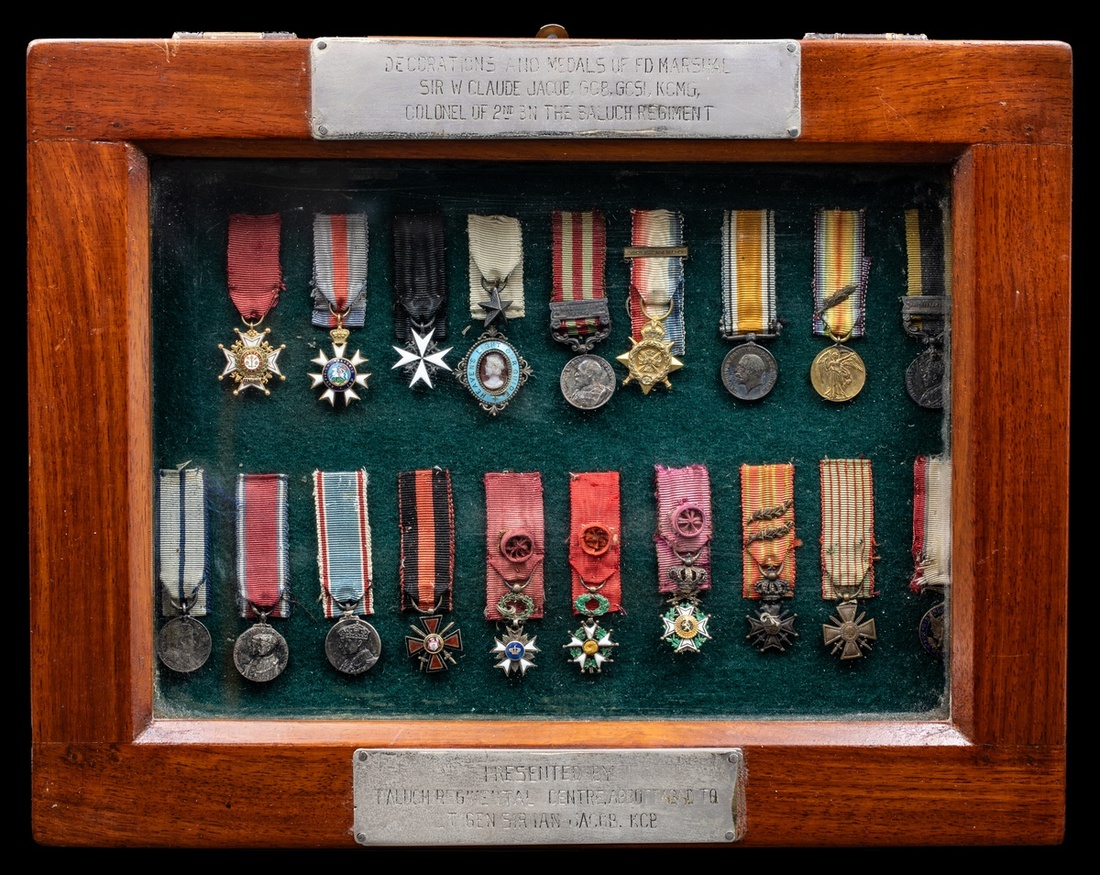
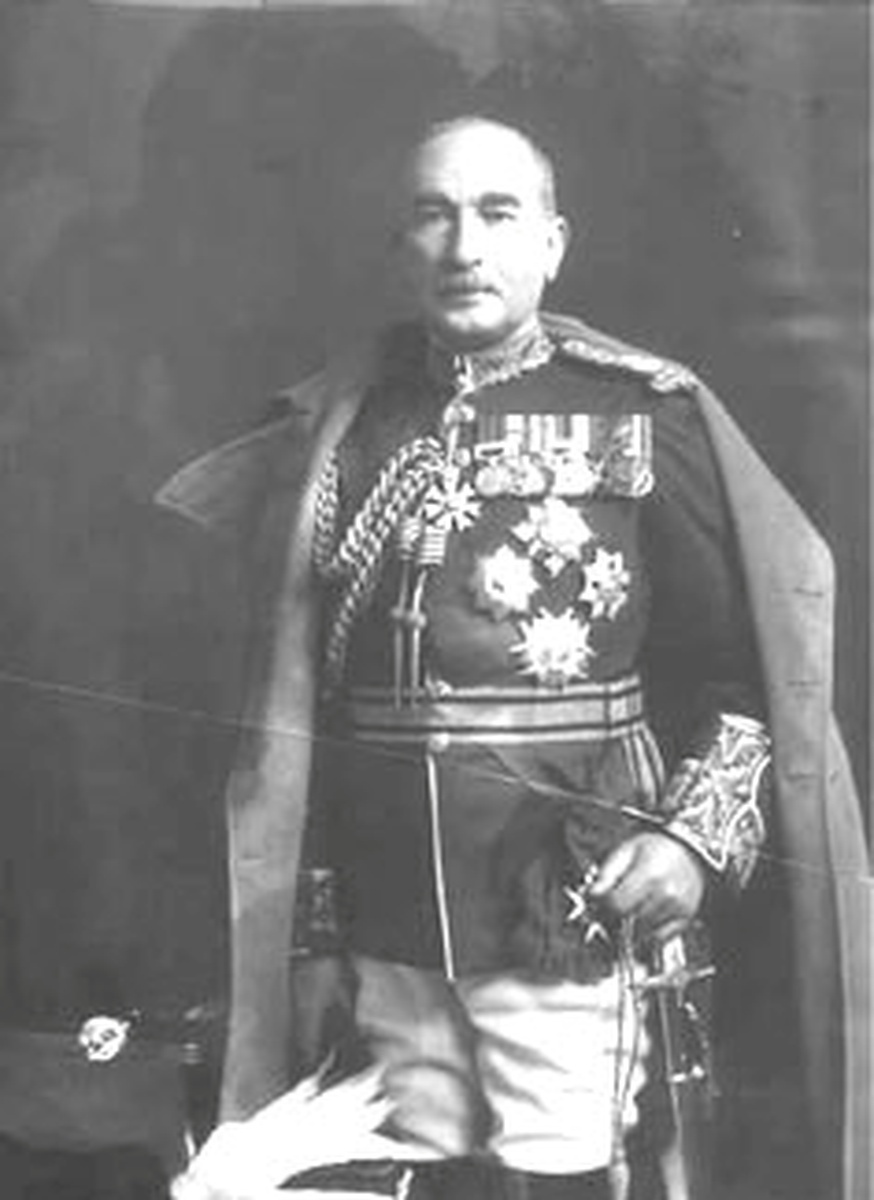
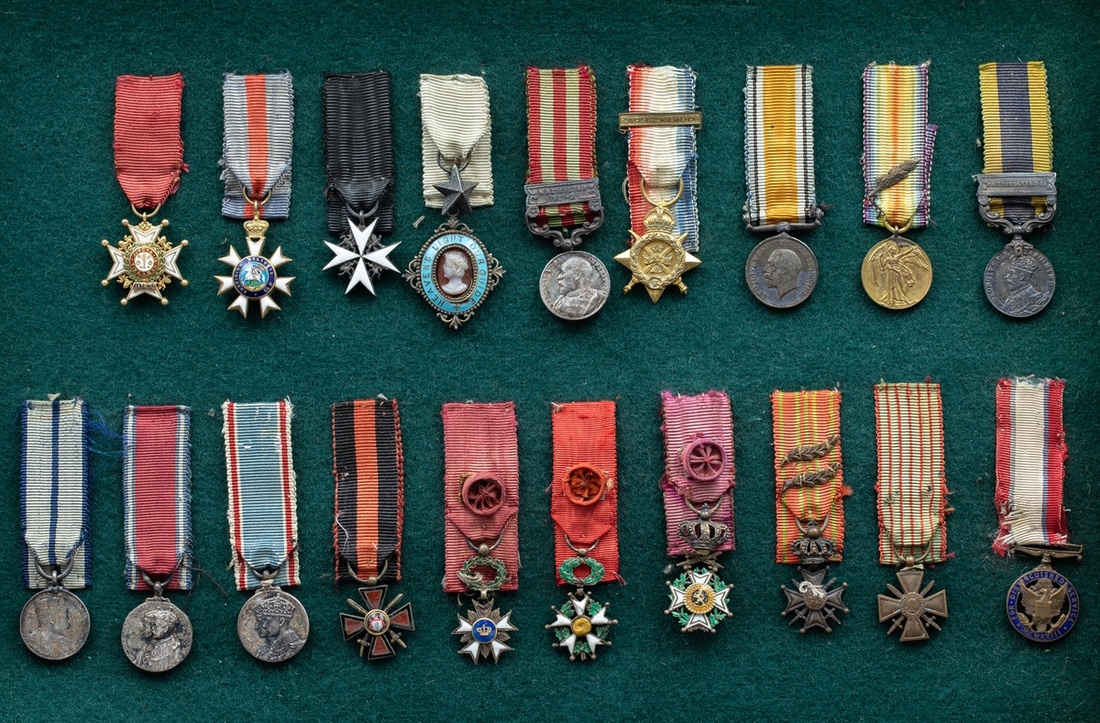
The exceptional G.C.B., K.C.M.G., and G.C.S.I. group of 19 miniature dress medals attributed to Field Marshal Sir C. W. Jacob, founder of the 106th Hazara Pioneers and later G.O.C. of Kitchener's 21st Division
Jacob finished his war as G.O.C. of II Corps before a brief post-war stint as Chief of the General Staff in India; he was later to be appointed head of Northern Command there
In retirement, he was appointed Constable of the Tower of London and Colonel of the 106th Hazara Pioneers, the Worcestershire Regiment and the Seaforth Highlanders
The Most Honourable Order of the Bath, Military Division, gold and enamel; The Most Distinguished Order of St Michael and St George, gold and enamel; The Most Venerable Order of St John of Jerusalem, silver and enamel; The Most Exalted Order of the Star of India, silver-gilt and enamel, with central onyx cameo of a youthful Queen Victoria; 1914 Star, with clasp; British War and Victory Medals, with M.I.D. oak leaves; India General Service 1908-35, 1 clasp, Waziristan 1921-24; Delhi Durbar 1911; Jubilee 1935; Coronation 1937; Russia, Imperial, Order of St Vladimir, Military Division, silver-gilt and enamel; Belgium, Kingdom, Order of the Crown, silver-gilt and enamel, with rosette upon riband; France, Republic, Legion of Honour, silver-gilt and enamel, with rosette upon riband; Belgium, Kingdom, Military Division, Order of Leopold, silver-gilt and enamel, with rosette upon riband; Croix de Guerre, with two palm leaves upon riband; France, Croix de Guerre; United States of America, Republic, Distinguished Service Medal, bronze and enamel, all mounted in frame, all very fine (19)
[K.C.M.G.] London Gazette 1 January 1919.
[G.C.S.I.] London Gazette 3 June 1930.
[G.C.B.] London Gazette 3 July 1926.
[K. St J.] London Gazette 19 June 1926.
[Russian Order of St Vladimir, 4th Class] London Gazette 25 August 1915.
[Belgian Order of the Crown, Grand Officer] London Gazette 11 March 1918.
[French Legion of Honour] London Gazette 15 December 1919.
[French Croix de Guerre] London Gazette 7 January 1919.
[American Distinguished Service Medal] London Gazette 12 July 1919.
Claude William Jacob (also sometimes spelt Claud) was a prominent British Indian Army officer during the first half of the 20th century. He was born on 21 November 1863 at Mahidpur, Bombay to Major-General William Jacob and Eliza Jacob. He was educated back in England at Sherborne School, where upon leaving he passed into Sandhurst and subsequently commissioned into the Worcestershire Regiment in September 1882. Only two years later, while stationed at Quetta, he transferred to the Indian Army and in July 1886, he served with the 30th Regiment (Jacob's) Bombay Native Infantry, otherwise known as the 3rd Baluch Regiment. Brigadier-General John Jacob, founder of Jacobabad, inventor of the Jacob's Rifle and the man who helped redesign a number of the Indian Army's regiments, was the young Jacob's Great Uncle. And so the call to serve with the regiment must have been strong, and it was with them that he saw his first action at the Zhob Valley in 1890.
After this action, in 1891, Jacob then transferred to the 24th (Baluchistan) Regiment of Bombay Infantry where he remained for the next ten years. He worked his way up to Major by July 1901, when he was selected to command the Zhob Levy Corps, whose role it was to keep the peace on the North West Frontier along the Waziristan and South Afghanistan border. Later that year, he participated in the blockade of the Mahsud Waziri tribe. In October 1904, Jacob was promoted Lieutenant-Colonel and later instructed by Lord Kitchener, who at the time was Commander-in-Chief in India, to raise a battalion of Hazara Pioneers. And thus, Jacob commanded the 106th Hazara Pioneers for a number of years and with them was promoted Brevet Colonel in 1908 and full Colonel in 1911. His final pre-war appointment was as general staff officer grade 1 of the Meerut Division in September 1912.
Upon the outbreak of the Great War, Jacob and his division were deployed to the Western Front immediately, as part of the Indian Corps. He saw action very soon after at the battle of La Basée in October where they relieved exhausted British units during the first stages of the race to the sea. A few months later in January 1915, Jacob was promoted Brigadier-General and given command of the Dehra Dun Brigade and proudly led the brigade at the battle of Neuve Chapelle and the battle of Aubers Ridge two months later. He was promoted once more in September 1915 to temporary Major General and was made the General Officer Commander (G.O.C.) of the Meerut Division and led that division at the Battle of Loos.
At this time the Indian Corps were preparing to leave the Western Front, but Jacob stayed and was given the appointment of G.O.C. of the 21st Division, a new division made up of Kitchener's 'New Armies'. He took over the role in November 1915 and led the Division through some of the most important offenses of the war, including through the battle of the Somme. In January 1916, he received the rank of Major-General but later, in March, he was wounded in action, catching a stray bullet. He took a month out of leadership to recuperate, before returning on 1 April, not long before he was promoted lieutenant general in May 1916.
Towards the end of the year in September 1916, Jacob was appointed G.O.C. of II Corps in the Fifth Army and during the battle of the Somme, his corps was core to the attack at the battle of Thiepval Ridge, and later the battle of Ancre. He served the rest of his war with them and was promoted Lieutenant General in June 1917 for his service in the battle of Passchendaele.
Jacob continued to serve in the British Army after the war and saw action at the occupation of the Rhineland. Then, in January 1920, he became Chief of the General Staff in India and was promoted full general. He had the honour of being appointed aide-de-camp to King George V in May 1920 and after this brief flying visit to England, returned to India where he was given the Northern Command. For a few months in 1925, Jacob was temporarily acting as Commander-in-Chief of India, after which he returned to England by the end of the year.
Still keen to exploit his experience serving in the British Indian Army, Jacob was appointed Military Secretary to the India Office in April 1926 and promoted Field Marshal in the November. He remained in this role until his retirement from the military in May 1930.
In his retirement, Jacob was appointed a constable of the Tower of London. He was also appointed colonel of the 2nd Battalion, Baluch Regiment as well as Colonel of the 106th Hazara Pioneers, the unit he formed as a much younger man over 20 years prior. His final appointment was as Colonel of the Worcestershire Regiment, the regiment where his military career began. He was made Honorary Colonel of the Seaforth Highlanders in March 1940 until eight years later, when he died at the age of 84 years.
For medals to Jacob's son, Sir Lieutenant-General Ian Jacob, please see Lot 396.
For medals to his grandson, Lieutenant William Le Grande Jacob, please see Lot 189.
For medals to his first cousin twice removed, Sir Major-General George Le Grand Jacob, please see Lot 127.
For medals to his second cousin once removed, Captain Augustus Jacob, please see Lot 119.
For his son's father-in-law, Major General Francis Traherne, please see Lot 403.
Subject to 20% VAT on Buyer’s Premium. For more information please view Terms and Conditions for Buyers.
Estimate
£400 to £600
Starting price
£320
Watch, listen and bid as if you were in the room. Now available for auctions worldwide.
Click here to bid live
An exclusive and confidential service for the discerning collector or vendor.
View the Gallery
Download every Spink catalogue on your iPad, iPod or iPhone using free Spink app.
Download From iTunes© 2026 Spink & Son. All rights reserved.