
Auction: 26001 - Orders, Decorations and Medals
Lot: 147
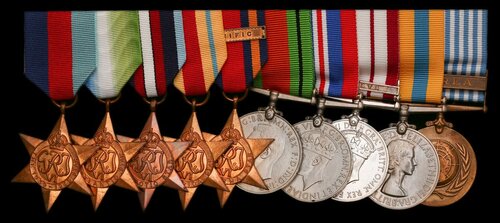
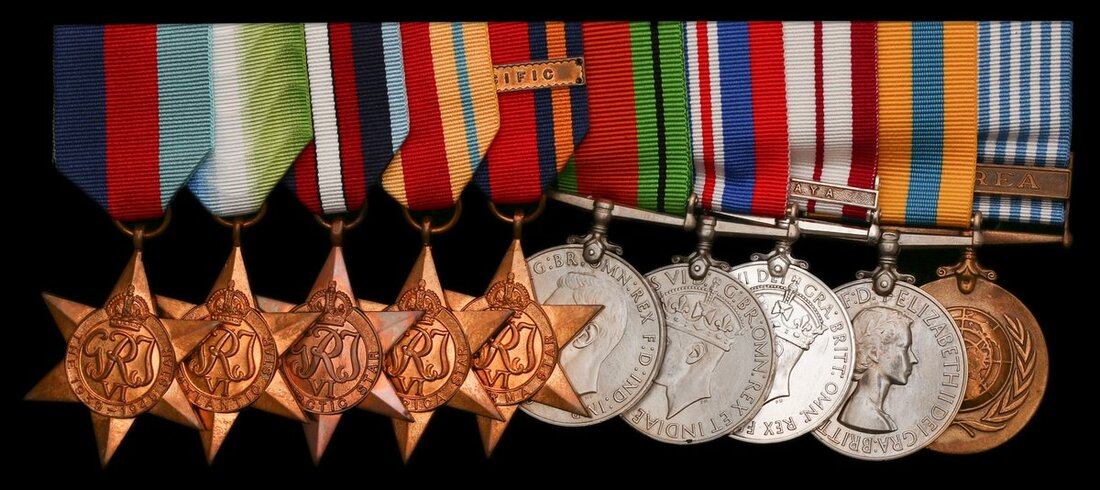
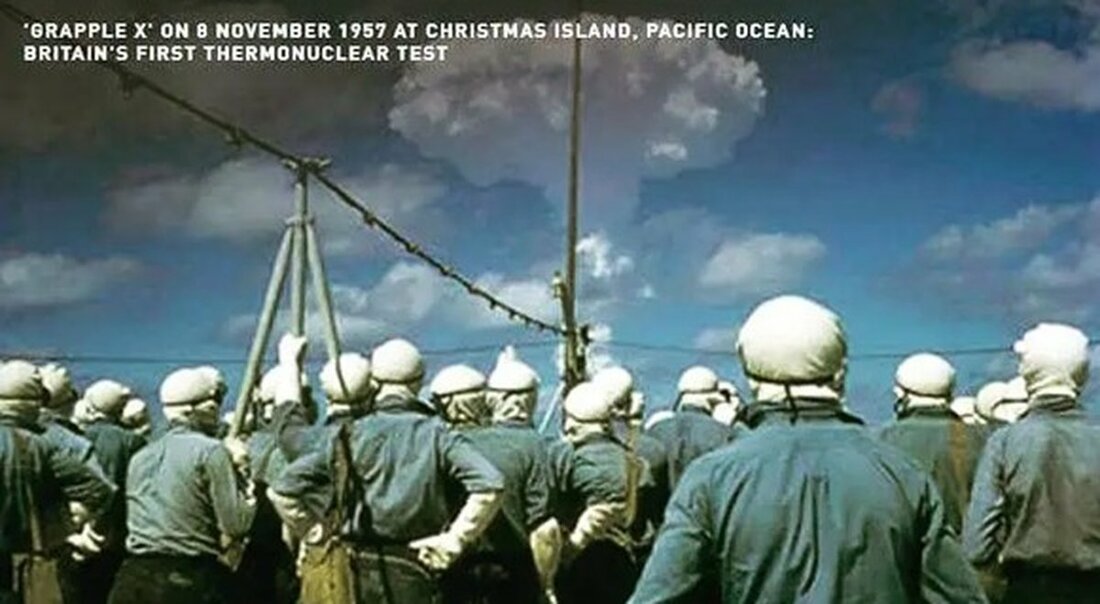
(x) The well-documented campaign group of ten awarded to Chief Radio Supervisor A. Henderson, Royal Navy, whose extensive career began with service on Operation Claymore - the Lofoten Islands Raid - Arctic Convoys, the Battle of the Malacca Strait and ended with service in Operation Grapple, Britain's H-Bomb tests in the Pacific
1939-45 Star; Atlantic Star; Arctic Star; Africa Star; Burma Star, clasp, Pacific; Defence and War Medals 1939-45; Naval General Service 1915-62, 1 clasp, Malaya (D/JX.1710029 A. Henderson Tel. R.N.); Korea 1950-53 (D/JX.1710029 A. Henderson. L Tel. R.N.); U.N. Korea 1950-54, sold together with a comprehensive archive of original material, minor contact marks, overall very fine (10)
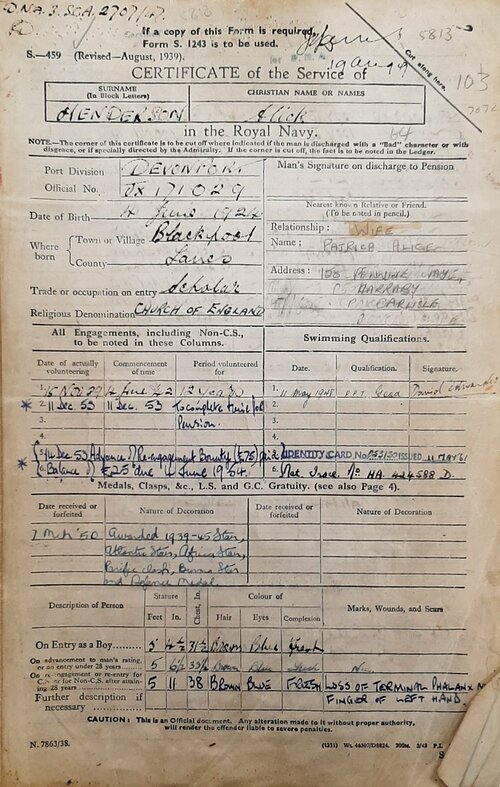
Alick Henderson was born at Blackpool, Lancashire on 4 June 1924 and enlisted in the Royal Navy on 29 November 1939 as a Boy Seaman Class 2 with the service number D/JX 171029 at age 15. His first service afloat was with H.M.S. King George V in November 1939 and with her joined the early Atlantic Convoys seeing service in BHX104, traveling to Halifax by way of Bermuda.
Atlantic and the Arctic
She was to later serve in the escort for Operation Claymore, the raid of the Norwegian Lofoten Islands. The raid was a great success, the combined attacking force destroying 18 cod-liver oil factories (capable of producing nitro-glycerine) and taking around 215 prisoners, in addition to embarking over 300 Norwegians. They further seized a set of rotor wheels for an Enigma Machine and the attendant code books.
Undertaking two more convoys, the more direct HX- Halifax- route, at this time Henderson reached the rating of Boy Telegraphist on 21 March 1941. He was to leave King George V before the last Battle of the Bismark however he did remain with the ship for long enough to see her transfer her Walrus aircraft to Norfolk off Iceland for use in the hunt.
Going ashore he joined Renown on 20 August 1941 and was stationed with her during her refit at Rosyth. Renown departed Scapa Flow for Iceland on 20 December. A deployment which followed from ENIGMA decrypts indicating that Tirpitz was ready to leave the Baltic and that the Scharnhorst, Gneisenau and Prinz Eugen were preparing to break out from Brest. Renown was positioned to intercept the German vessels should they attempt a breakout into the Atlantic.
This did not come to pass and instead she conducted sea trials at Hvalfjörður, Iceland. Whilst stationed there she was involved safeguarding Arctic Convoys against the threat of Tirpitz, then stationed in Trondheim. In her first sally, PQ 12 Tirpitz left port but was scared off by the strength of the convoy escort. She was also present for QP 8, QP 9 and acted as part of the Heavy Cover force for PQ 13.
Finally leaving Arctic waters she was assigned as flagship of Force W for escort duties with USS Wasp between Gibraltar and Malta. Around the same time Henderson reached his majority, being rather as Ordinary Telegraphist on 4 June 1942 and Telegraphist on 18 September 1942. Transferring to Force H in October 1942 she took part in Operation Torch, covering the landing forces and escorting the convoys which made the landings possible. Doubtless as a Telegraphist, Henderson was responsible for co-ordinating some of the cover fire Renown put down over the landing sites.
Appointed Leading Telegraphist (TY) on 25 September 1943 he was still serving with Renown brought Winston Churchill and his staff back from the Quebec Conference in September and conveyed them to the Cairo Conference in November. Renown was assigned to the Assigned to the Eastern Fleet in December 1943 she arrived at Colombo, Ceylon in January 1944.
The War in the East
Joining the Eastern Fleet, a British led formation she joined repeated career strikes against Japanese held positions. As such she was present for Operation Cockpit against Sabang, Dutch East Indies, Operation Transom against Surabaya, Operation Pedal against Port Blair in the Andaman Islands and Operation Crimson a carrier raid and bombardment again directed against Sabang. Henderson's final operation with Renown was Operation Millet, the attack on the Nicobar Islands which was undertaken as a diversion for the American landings a Leyte in the Philippines.
Posted ashore in March 1945 he was posted to Saumarez in April 1945 , taking part in Operations Sunfish- photographic reconnaissance of the west coast of Sumatra and air attacks on northern Sumatra- and Dukedom- intercepting Japanese surface ships trying to evacuate troops from the Andaman Islands. It was during the latter operation that she was part of the Battle of the Malacca Strait. A British force managed to close upon the Japanese cruise Haguro and the destroyer Kamikaze, Saumarez was the leader of a flotilla of five destroyers for the action. Venus pushed the Haguro towards Saumarez and Verulam however as they prepared to make their attack Kamikaze appeared of their starboard bows.
Saumarez opened fire heavily on Kamikaze and made ready to fire her torpedoes at Haguro however as they did so the cruiser opened up a heavy fire which hit her in No. 1 Boiler Room, damaging a boiler as well as damaging a funnel. Launching torpedoes at fairly close range Saumarez manged three hits before pulling away, the other destroyers from the group encircled the damaged Haguro. Repeated hits from Virago, Vigilant and Venus finally saw her sink while Kamikaze made her escape.
Henderson was serving with Saumarez for Operation Zipper, the re-occupation of Western Malaya before returning to Europe, being stationed at Royal Albert on the Rhine in November 1946. Returning to the Far East in March 1948 he joined the Wireless Station at Singapore, Kranji before serving on a series of motor launches over the next three years. Post notably, H.D.M.L. 1386 which served off Malaya from April 1949.
Joining the aircraft carrier Eagle in August 1952 they served in Exercise Mainbrace, one of the earliest NATO exercises, involving a large-scale naval exercise off the coast of Norway and Denmark. Transferring to Ocean in December 1952 Henderson saw action off Korea and Japan between May and November 1953 where they deployed Hawker Sea Furies.
Operation Grapple
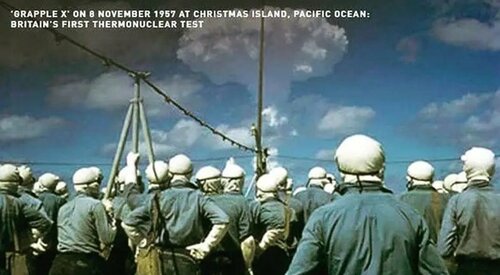
Transferring to Ark Royal in 1955 Hendson joined Operation Grapple with naval station Resolution at Christmas Island in July 1958. He was present in Resolution for four of the hydrogen bomb tests, Grapple Z1 on 22 August, Grapple Z2 on 2 September, Grapple Z3 on 11 September and Grapple Z4 on 23 September. These tests were undertaken over Malden Island and Kiritimati (Christmas Island) in the Gilbert and Ellice Islands in the Pacific Ocean and were the final tests undertaken before Britain began to co-operate with the United States. As a result of this posting Henderson must have been entitled to the Nuclear Test Medal.
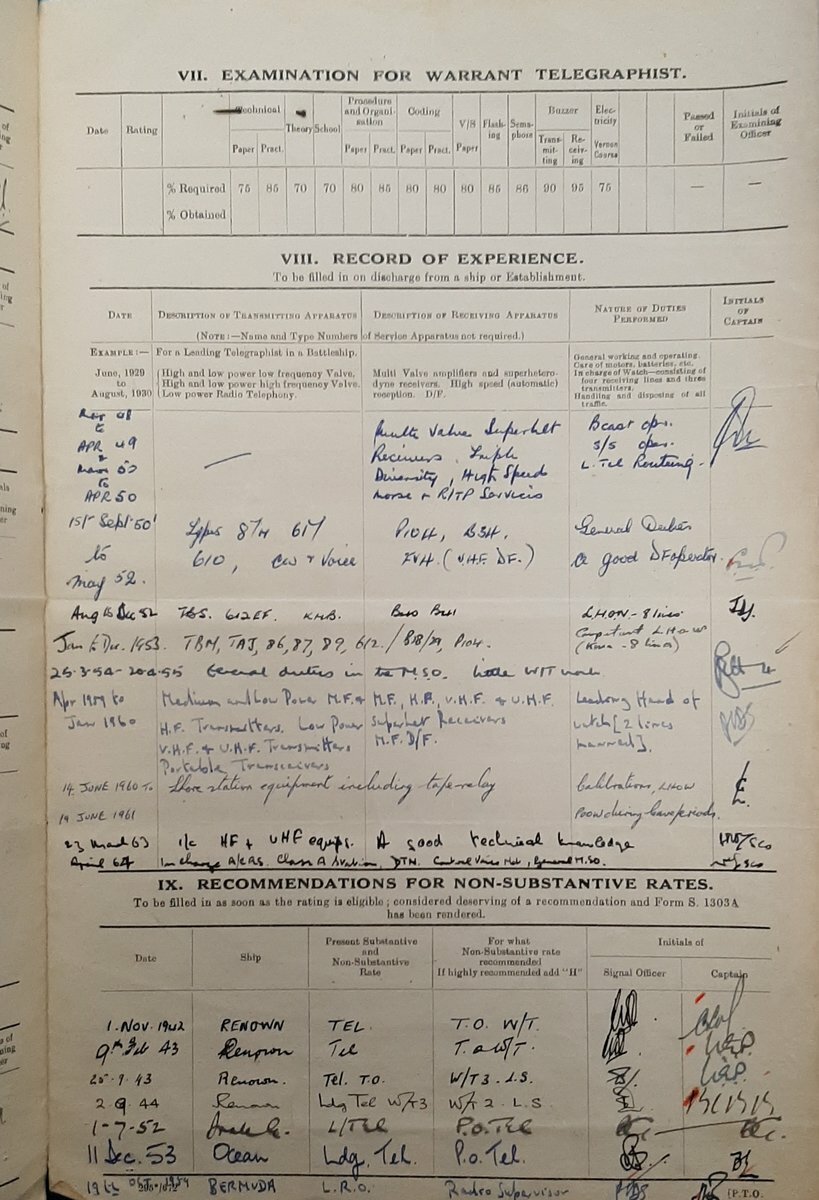
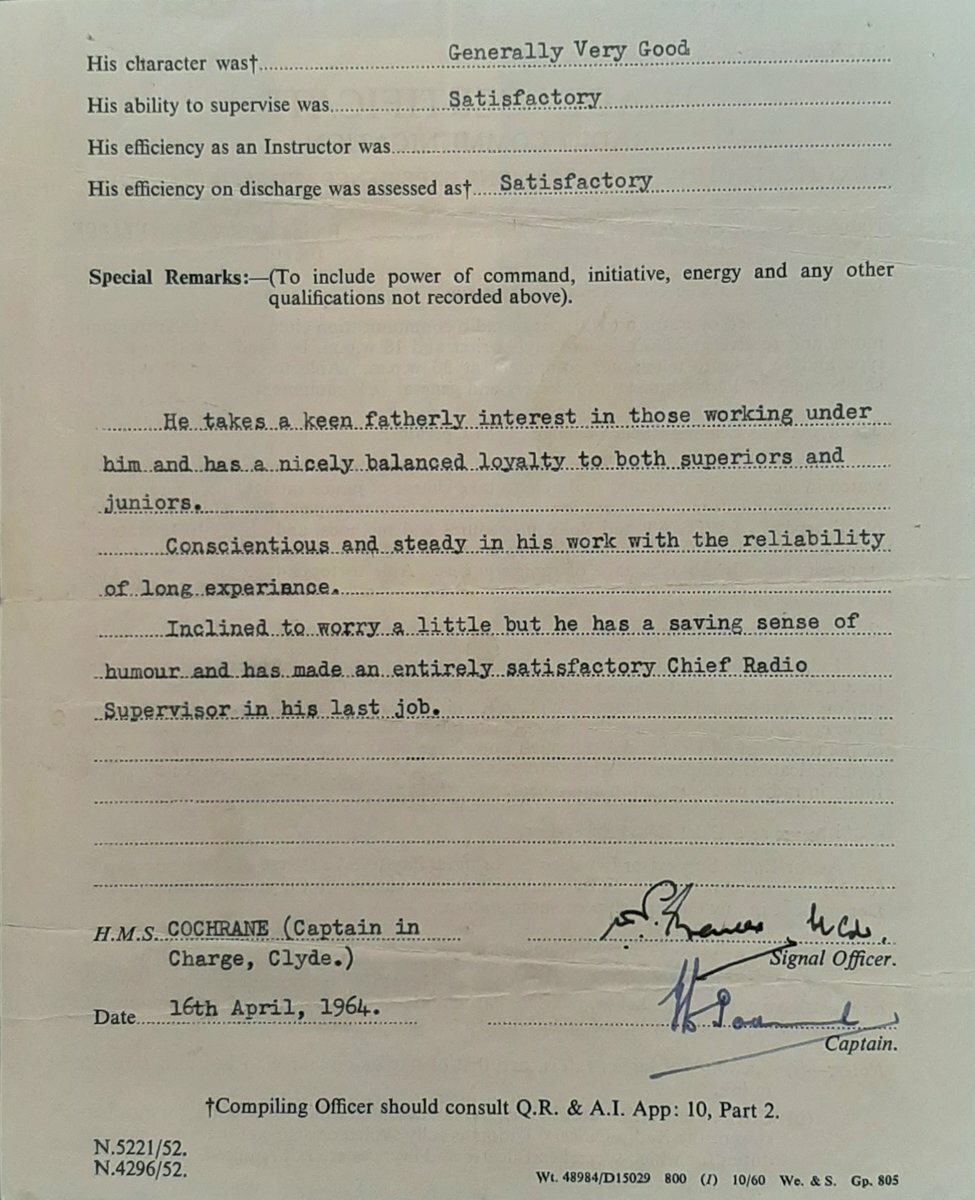
Promoted Leading Radio Operator on 31 October 1958 he joined the Joint Service Amphibious Warfare Centre at Poole in November 1958. Further advanced Radio Supervisor with Bermuda on 2 May 1961 before joining Ark Royal in June 1961 where he was finally advanced Acting Chief Radio Supervisor on 21 August 1963. Finally going ashore in April 1964 he retired on 9 June that year after almost 25 years of service; sold together with copied research and an impressive archive of original material comprising:
i)
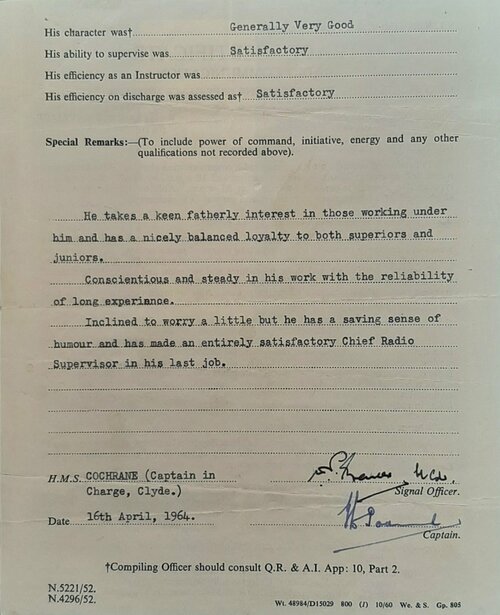
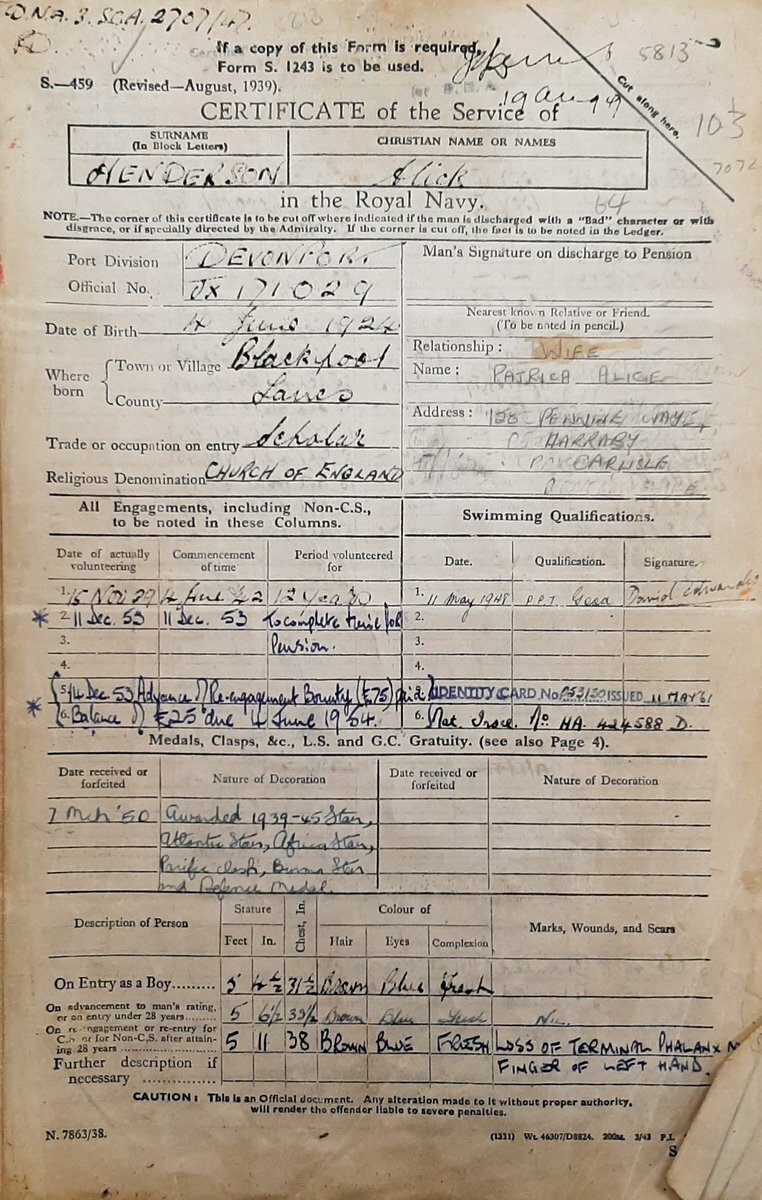
Two original service record sheets.
ii)
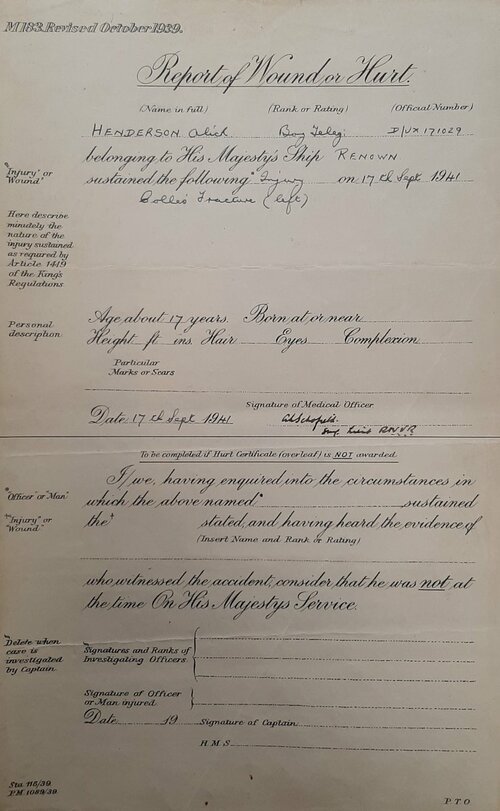
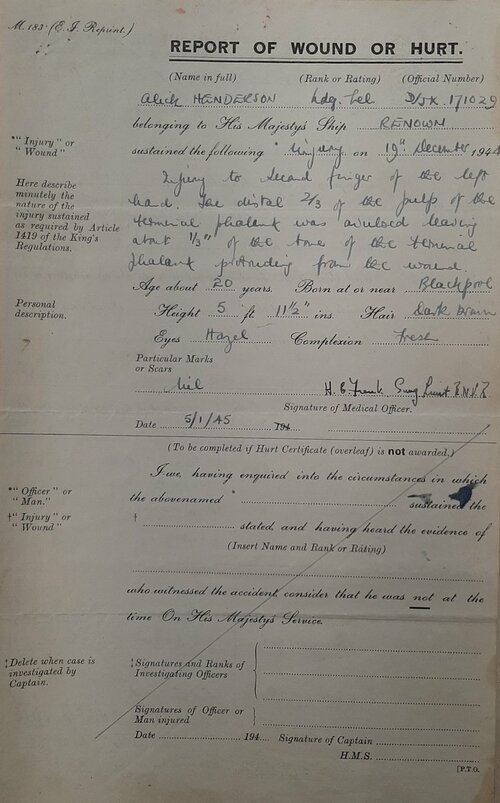
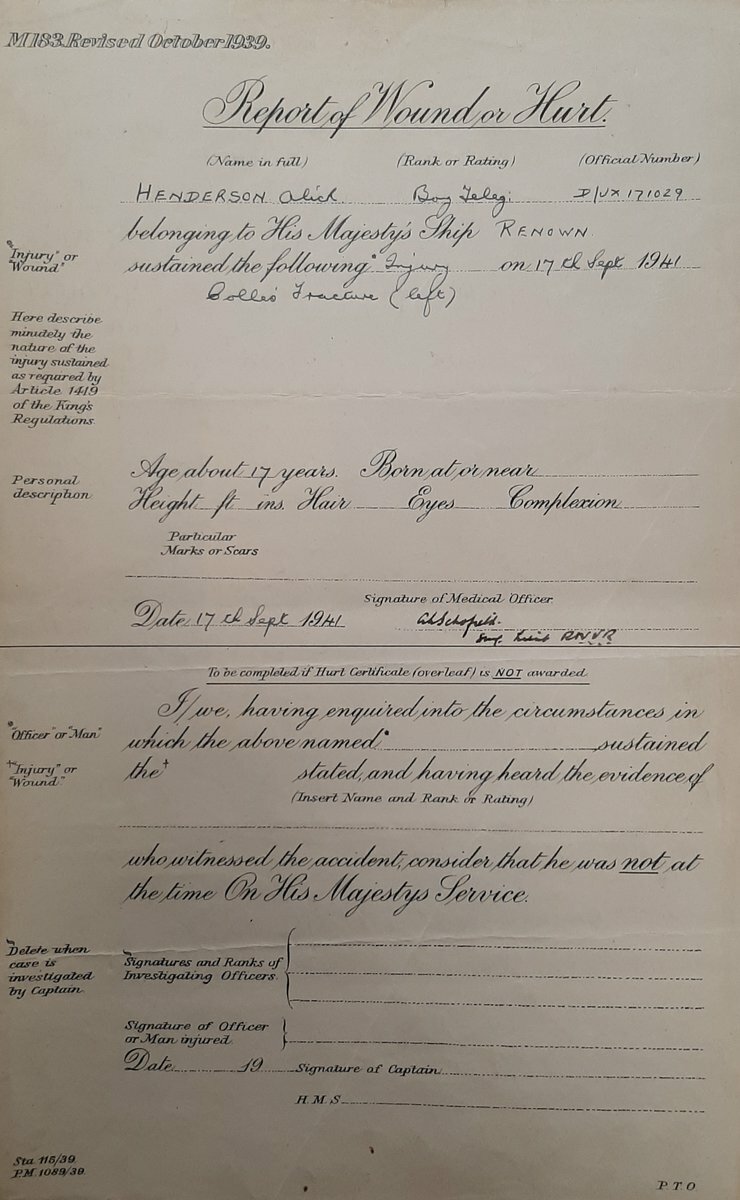
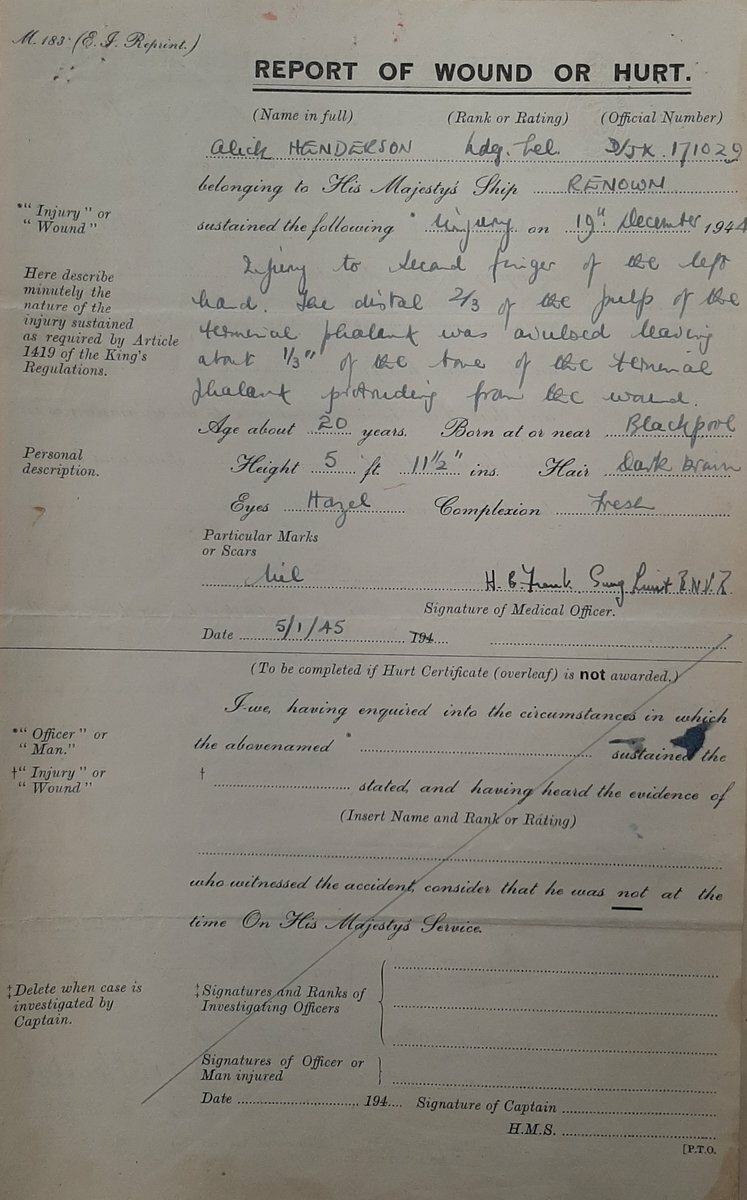
Two original Report of Wounds or Hurt certificates, both for service with Renown in 1941 and 1944.
iii)
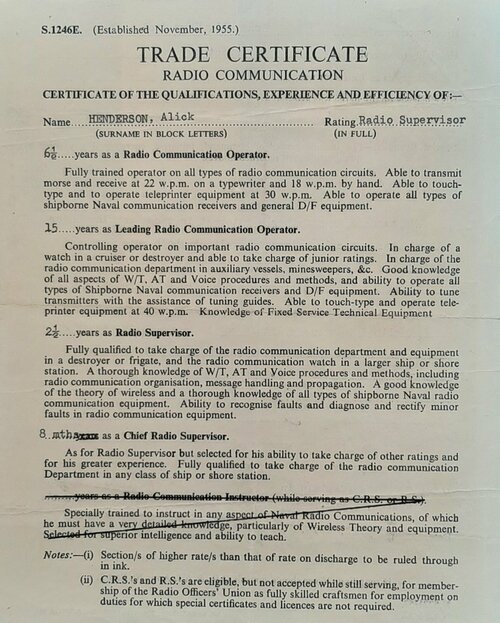
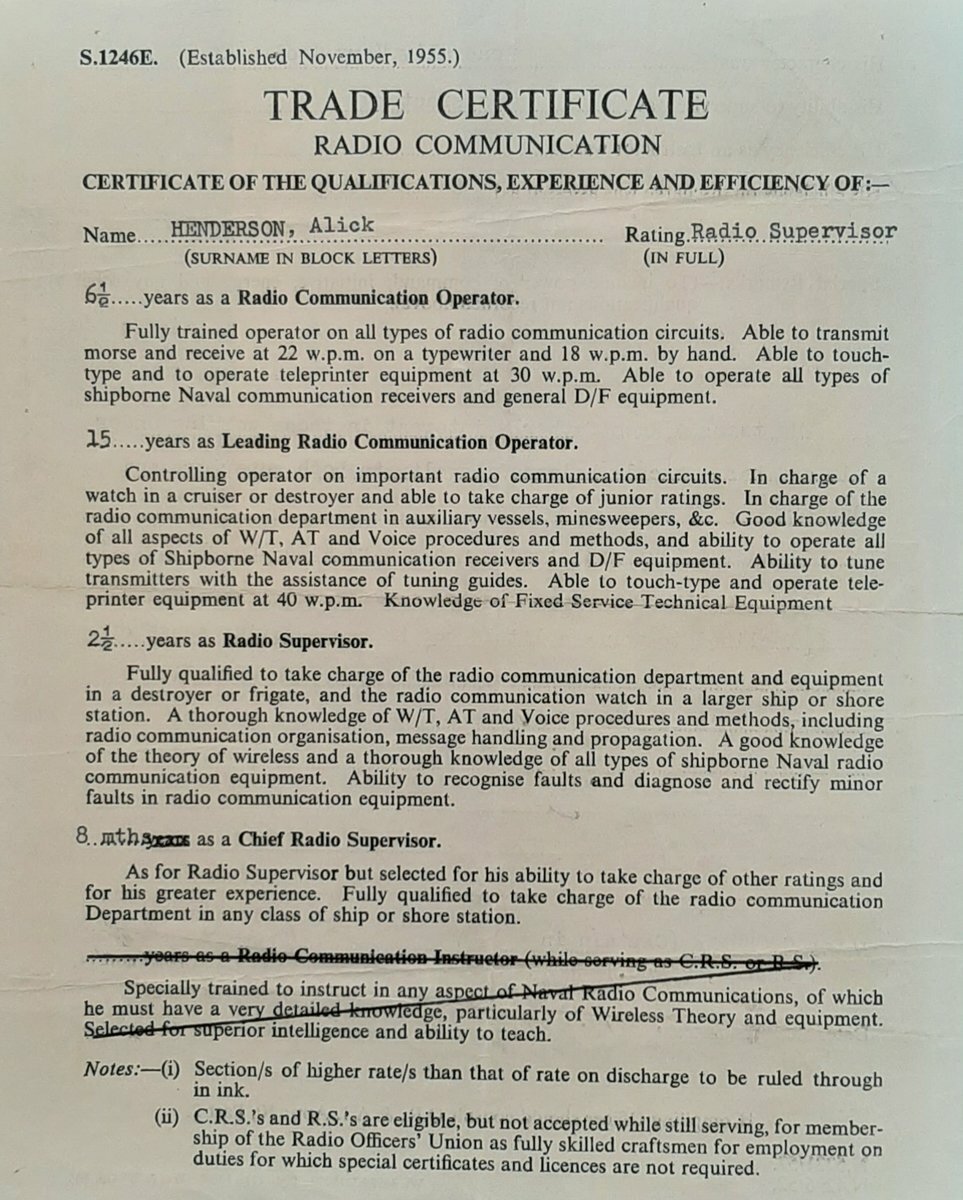
Trade Certificate for Radion Communication dated 16 April 1954 at H.M.S. Cochrane signed by OiC, H.M.S. Clyde.
iv)
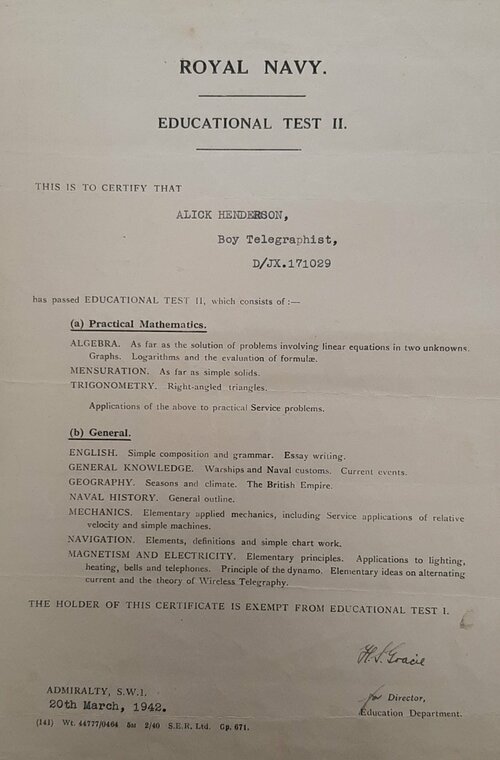
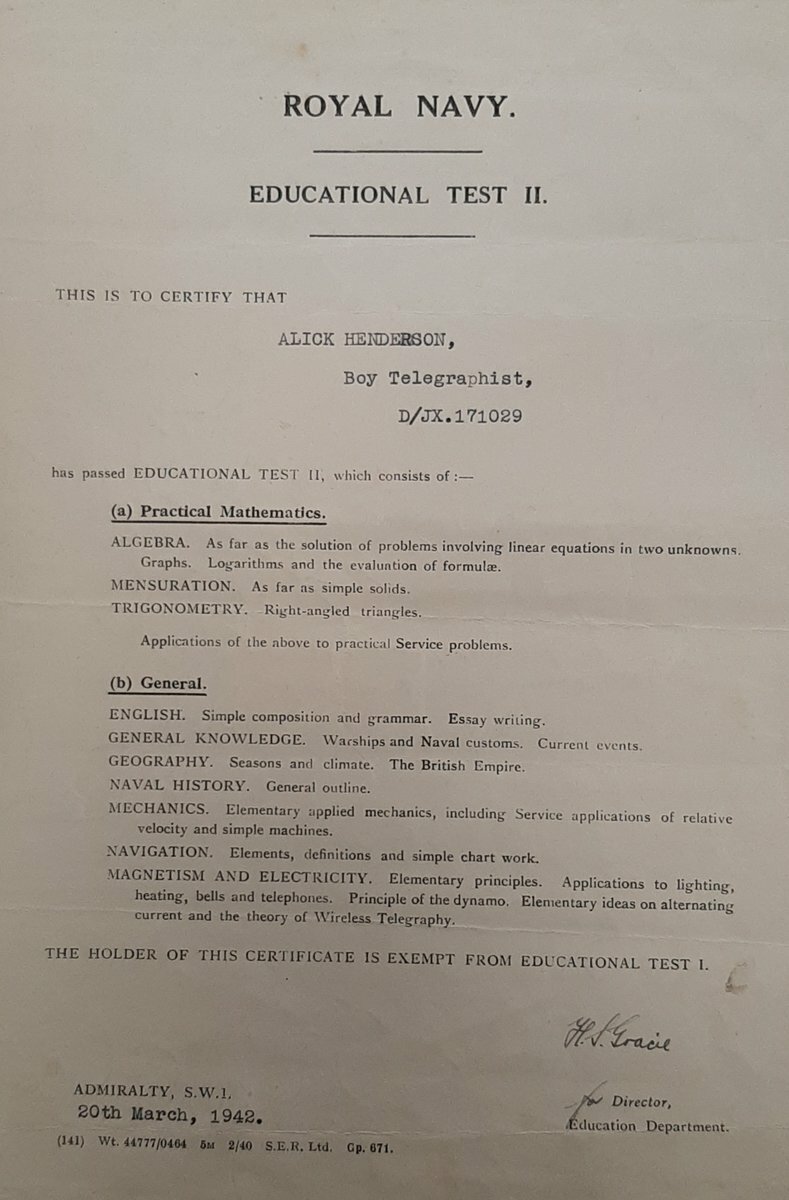
Original Royal Navy Educational Test dated March 1942.
v)
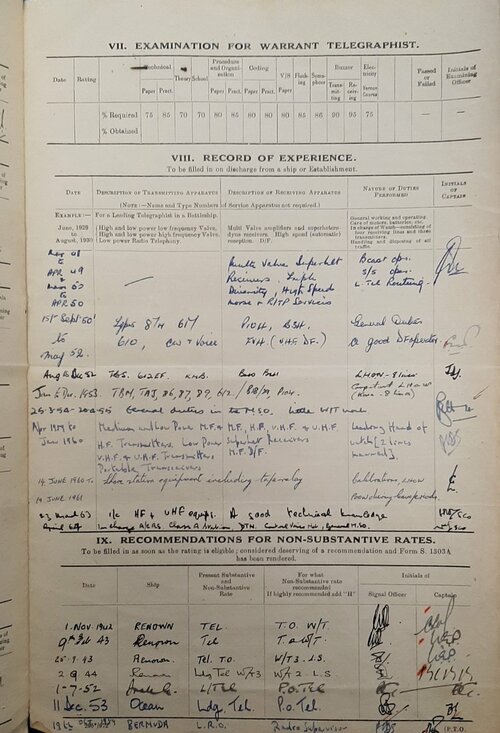
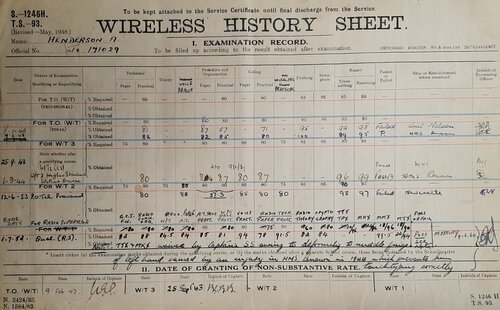
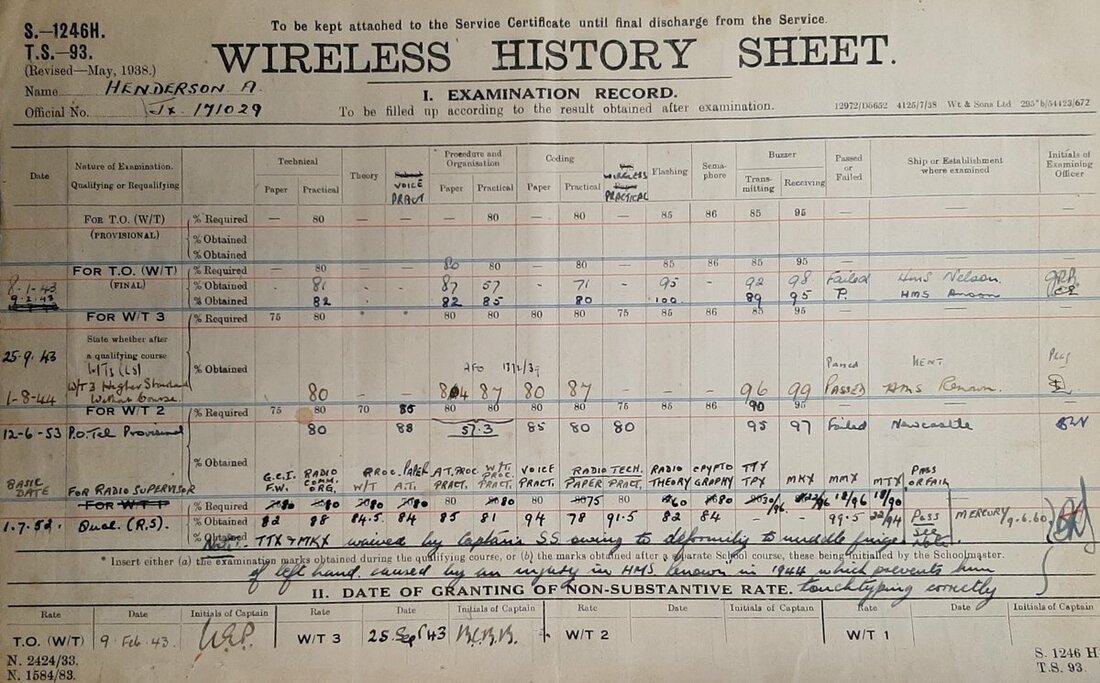
Original Wireless History sheet, Examination Record, with dates ranging between March 1941 and October 1959.
Further entitled to the Nuclear Test Medal.
Subject to 5% tax on Hammer Price in addition to 20% VAT on Buyer’s Premium.
Sold for
£850
Starting price
£550
Watch, listen and bid as if you were in the room. Now available for auctions worldwide.
Click here to bid live
An exclusive and confidential service for the discerning collector or vendor.
View the Gallery
Download every Spink catalogue on your iPad, iPod or iPhone using free Spink app.
Download From iTunes© 2026 Spink & Son. All rights reserved.