
Auction: 26001 - Orders, Decorations and Medals
Lot: 139
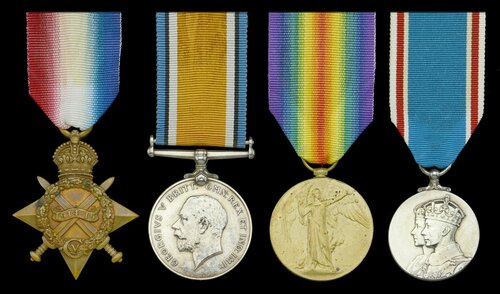
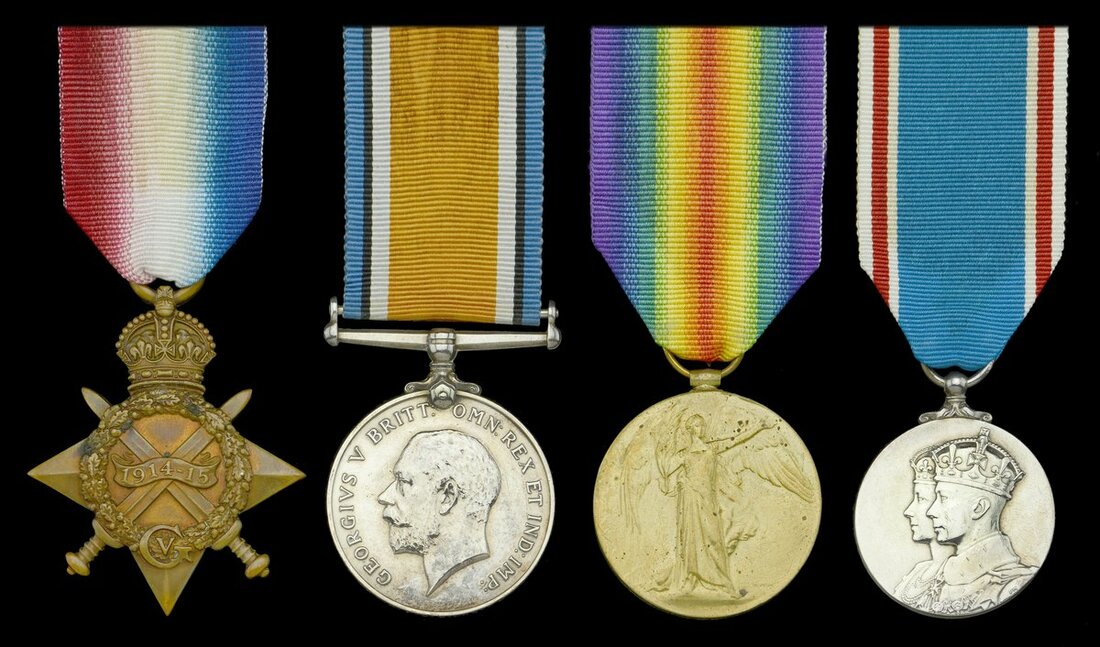
(x) Four: Lieutenant-Colonel F. B. Binney, Royal Flying Corps, Royal Air Force and Royal Artillery, a BE2c pilot who flew with No. 1 & 12 Squadrons on the Western Front, and was the latters first loss of the Great War, when he was shot down, wounded, and taken a Prisoner of War during the Battle of the Loos, 26 September 1915 - having just bombed a train from a height of 500ft
1914-15 Star (Capt. F. B. Binney. R.F.C.); British War and Victory Medals (Major. F. B. Binney. R.A.F.); Coronation 1937, unnamed as issued, generally good very fine (4)
Frank Burgess Binney was born at Maidenhead, Berkshire on 11 July 1887, and was the son of Thomas G. Binney of Guisnes Court, Tolleshunt D’Arcy, Essex. He was educated at Wellington College, Berkshire and the Royal Military Academy Sandhurst. Binney was commissioned as a Second Lieutenant in the Royal Artillery in July 1908, and advanced to Lieutenant in July 1911. He undertook a course as a pupil at the Bristol School at Brooklands, Surrey, and was granted his Aviator’s Certificate (No. 736) on 16 February 1914.
Binney transferred as Lieutenant in the Royal Flying Corps in August 1914, and advanced to Temporary Captain and Flight Commander in February 1915. He served as a pilot with 1 Squadron in the French theatre of war from March 1915, before transferring to 12 Squadron at St. Omer later that year.
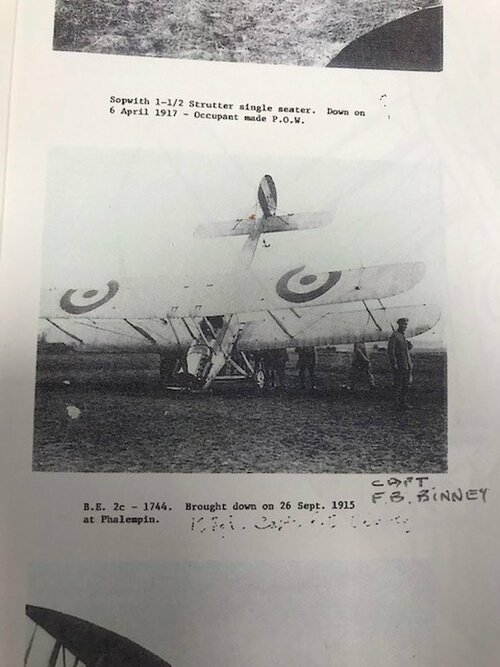
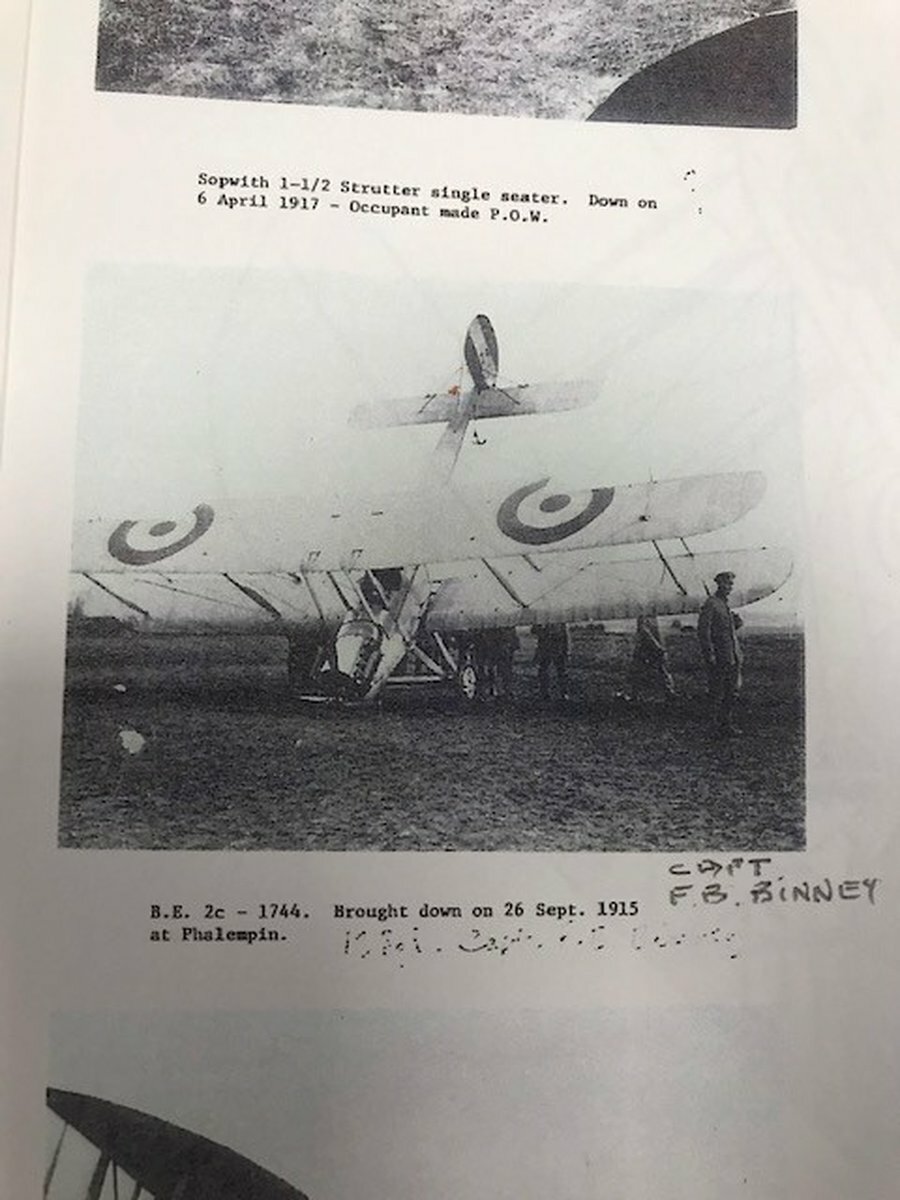
Binney commanded ‘C’ Flight and was the senior flight commander. The Squadron was mainly engaged on long-range reconnaissance, and was heavily involved in the preparations for the Battle of Loos. The opening artillery bombardment for which commenced on 21 September, including special bombing operations conducted by the Second and Third Wings and 12 Squadron. These attacks were directed at trains on the move, especially in cuttings, and commenced on 23 September – two days before the infantry attack. 12 Squadron undertook three attacks on the opening day and participated in further attacks over the next five days. It was during one of these raids on 26 September that the squadron experienced its first casualty when Binney (in BE2c 1744) was shot down by anti-aircraft fire and forced to land behind German lines just north of Phalempin after bombing a train from 500ft.
Binney was wounded in the left lung, and after having landed nose first south of Phalempin, was taken prisoner of war. His report, written 3 August 1918, gives the following:
‘I was employed dropping bombs on the enemy’s railway communications in a given area. I descended to 150 feet to drop my bombs on a moving train consisting of an engine and a single carriage. Bombs fell alongside the train but I do not think I actually hit it. The train stopped but I could not see any damage. I started to rise again when I was wounded, first on my right shin and then in the upper part of my right thigh. One of the aileron control cables of the aeroplane was cut. I fainted three times in the air. On coming to the second time, I found myself at a height of about 300 feet and in a spinning nose dive. To right the aeroplane I cut off the engine. I fainted again before I could put it on again. When I came to the third time I was laying on the ground surrounded by the enemy.’
Binney was repatriated 14 June 1918, and advanced to Honorary Major in December of the same year. After repatriation he wrote a detailed report on German Hospitals and POW Camps - based on his own experience, and reports from others (photocopy of which included with the lot). Binney was appointed to a permanent commission in the R.A.F. in 1919, before returning to the Royal Artillery the following year. He served as a Military Adviser to the Indian States Artillery in 1931. He advanced to Lieutenant Colonel in March 1936 but retired on 15 July 1939 as a result of ill health, and died in London in October 1964.
His brother was Captain Ralph Binney C.B.E. of which the Binney Memorial Medal is named after was created.
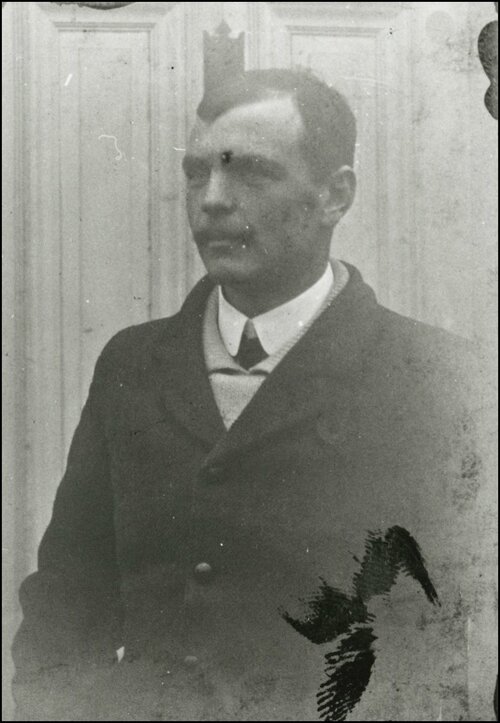
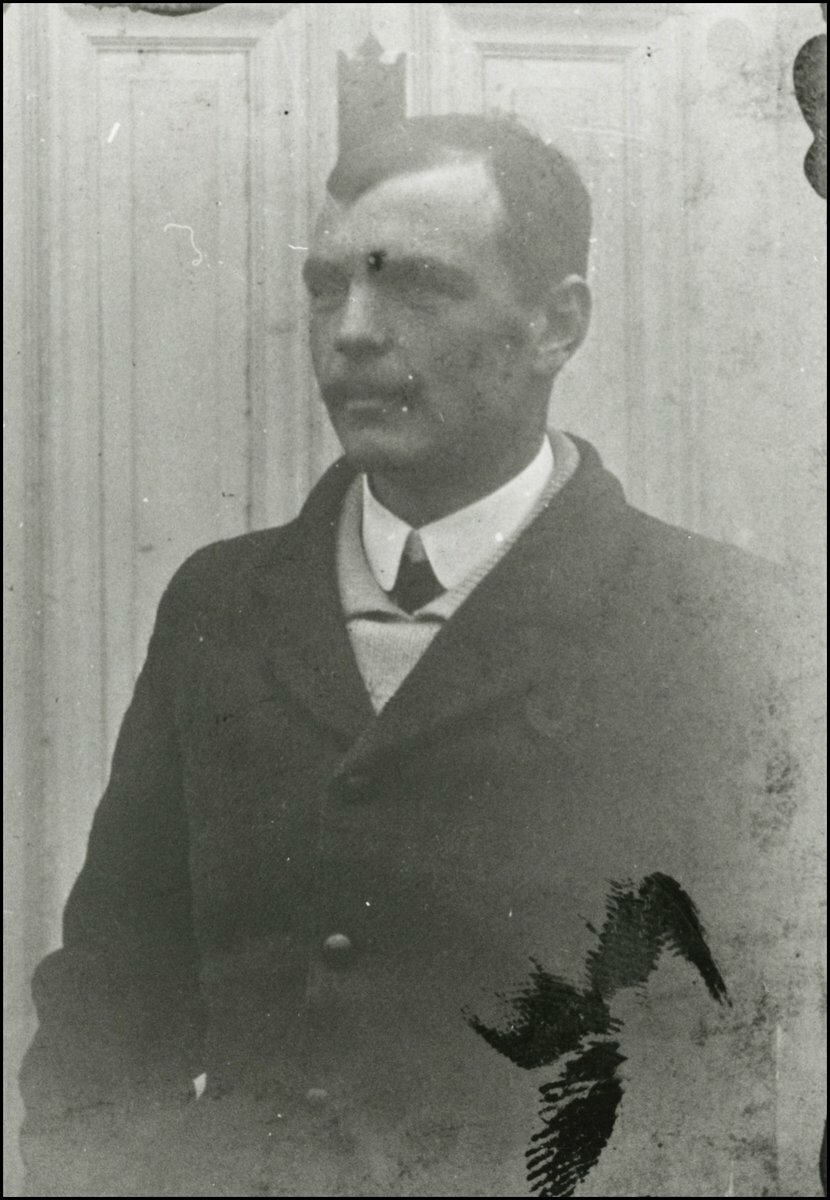
Sold with comprehensive copied research, including a photographic image of recipient, and a photographic image of recipient’s aircraft having crashed and being surrounded by German troops.
Subject to 5% tax on Hammer Price in addition to 20% VAT on Buyer’s Premium.
Sold for
£650
Starting price
£400
Watch, listen and bid as if you were in the room. Now available for auctions worldwide.
Click here to bid live
An exclusive and confidential service for the discerning collector or vendor.
View the Gallery
Download every Spink catalogue on your iPad, iPod or iPhone using free Spink app.
Download From iTunes© 2026 Spink & Son. All rights reserved.