
Auction: 26001 - Orders, Decorations and Medals
Lot: 138
‘Her spirit of fun, which helps Tommy more than anything, was unfailing, however tired she was herself. Men have told me that no one could help feeling happy when Sister Arnold was there...
To those capable of appreciating her, her unselfishness, her uncomplaining fearless nature, Peggy Arnold will ever remain a blessed memory’.
A tribute to Peggy Arnold, published in The Times, 31 March 1916
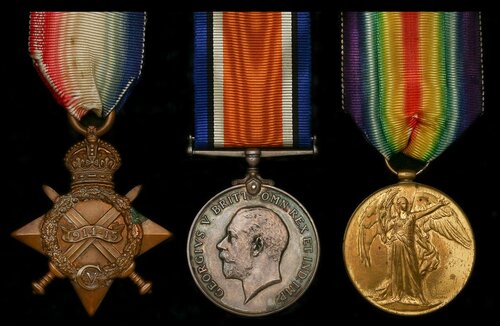
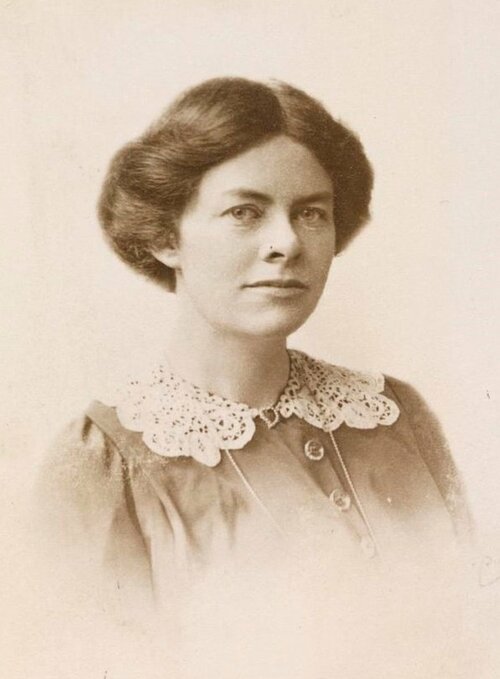
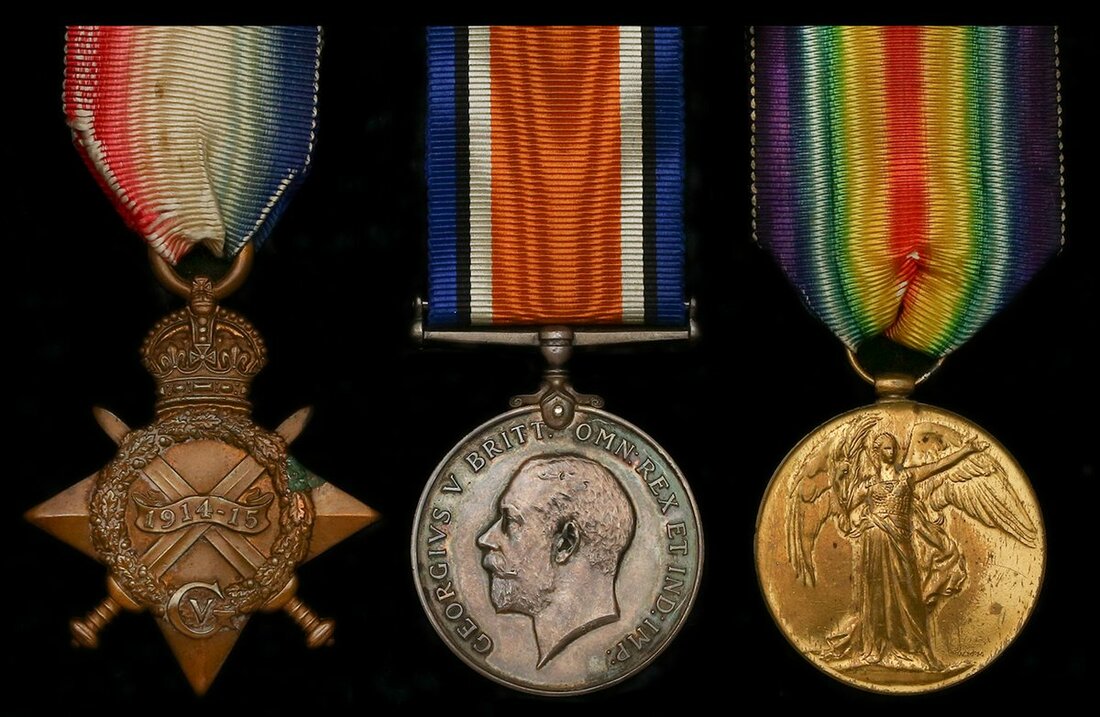
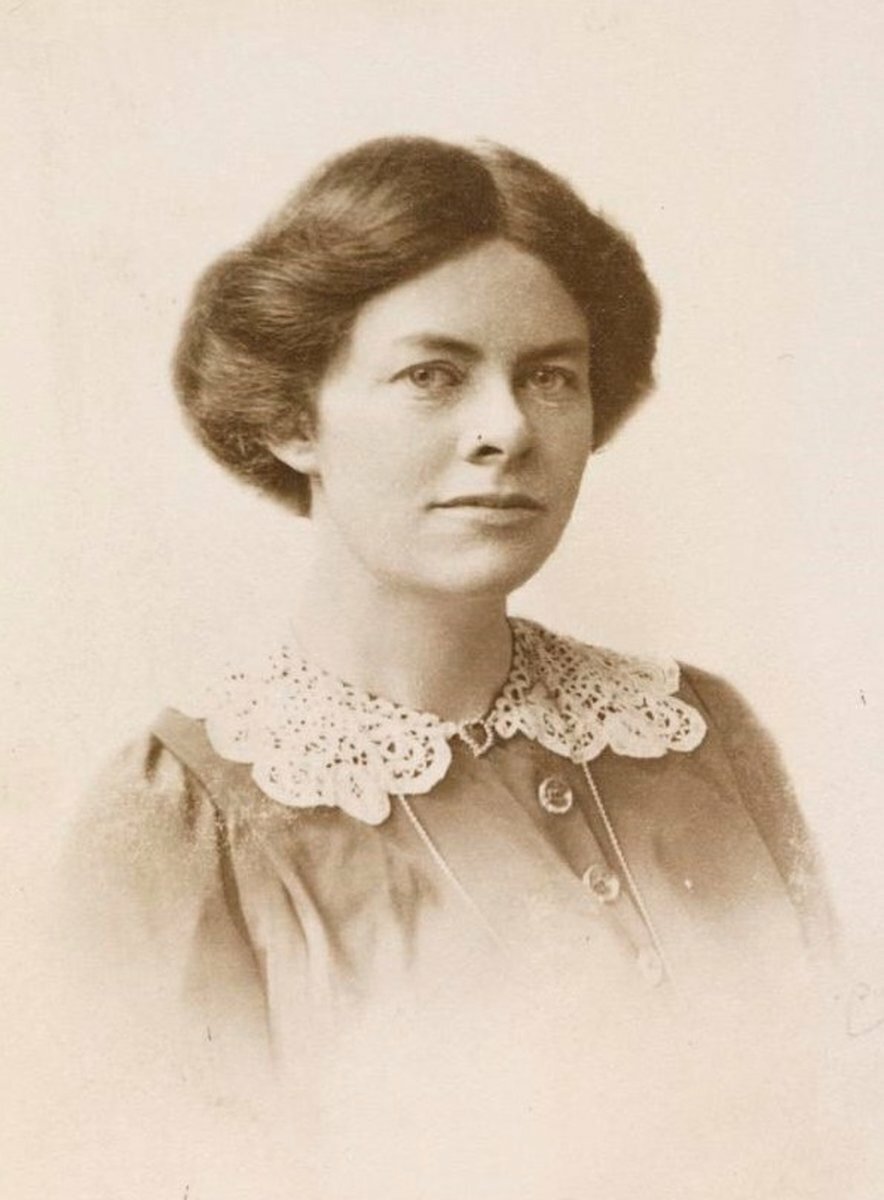
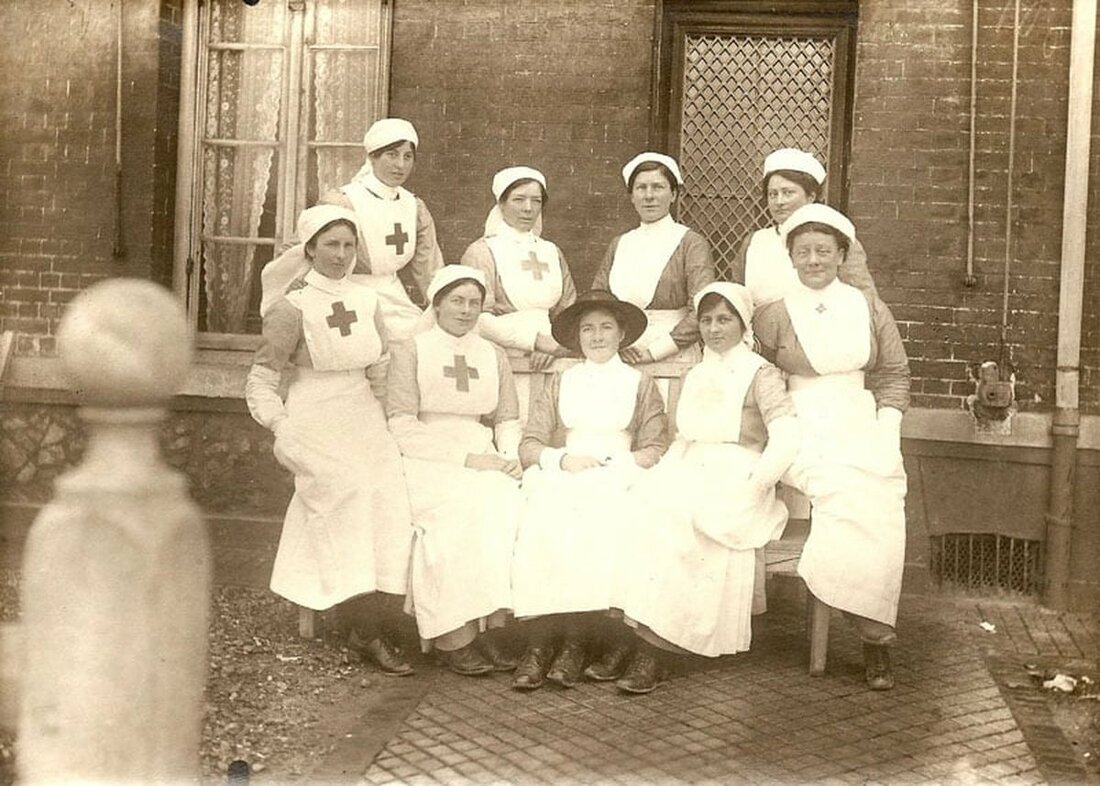
The campaign group of three awarded to Miss M. T. Arnold, Voluntary Aid Detachment, who served as a Nurse at No. 16 General Hospital at Le Tréport, and died of double pneumonia on 12 March 1916
1914-15 Star (M. T. Arnold. V.A.D.); British War and Victory Medals (M. T. Arnold. V.A.D.), good very fine (3)
Margaret Trevenen Arnold was born at East Grinstead on 1884 the eldest of four daughters of Edward Augustus Arnold and his wife Minnie, née Wakefield. The family lived in Kensington, London, and rented a series of country retreats in the Godalming and Haslemere area of Surrey. In 1913 they moved permanently into a large Edwardian house they had built at Pook Hill, Chiddingfold, Surrey.
She was mostly educated by governesses, including in Latin to an ‘advanced stage’. Her sisters Mary and the twins Nancy and Ruth went in their teens to newly-established schools for girls, but it seems that Peggy as she became known, as the eldest sister, was born a bit too early to attend one. She did, however, go to a school in Paris for a year when she was 19.
In her twenties Peggy became involved with the Passmore Edwards Settlement in Bloomsbury, London. Her father’s cousin Mary Ward, better known as the novelist Mrs Humphrey Ward, was the driving force of the settlement, which provided educational, social and health services to the disadvantaged of the area. Over the next ten years Peggy’s voluntary work at the settlement included running the children’s library, being a manager of the school and making home visits to families. The 1911 census lists her occupation as a ‘social worker for the London County Council Care Committee’.
The start of the war caught the family, as most people, by surprise and Peggy was soon involved as a member of Chiddingfold’s Emergency Committee, while in St Pancras she was still organising relief. Before the war Peggy and her sister Ruth had joined the Surrey branch of the British Red Cross, attending lectures and practical classes. In November 1914 Peggy was doing hospital work and by the following February was being trained for nursing at Hilders House, Shottermill, Haslemere, a newly-established Red Cross war hospital.
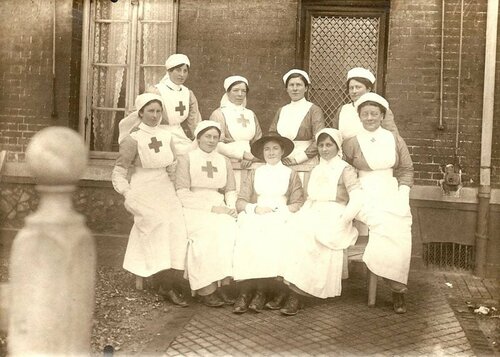
On 5 June 1915, Peggy embarked for France as one of the first VADs to serve in a military hospital outside Great Britain. She was sent to No.16 hospital at Le Tréport, near Dieppe. The hospital, atop 300-foot cliffs, was ‘entirely under canvas’, although wooden huts were later provided for the VADs’ quarters. Nearby was the Trianon, a large, fashionable Edwardian hotel which had been converted into No 3 Hospital for officers.
Peggy’s nine months at Le Tréport are vividly chronicled in her diary (which is held by her family), with day-to-day accounts of hospital life with all its panics and lulls, tragedies and camaraderie. The frontline trenches were about 60 miles away in the valley of the Somme and hospital life was governed by the ebb and flow of the war – plus the vagaries of the weather. In October 1915 she wrote that there were days when the ‘fighting [must have] been fearful and we have had convoy after convoy in, and they have been cleared off the next morning to make room for others’. On the ward there were ‘groans, and moans, and shouts, and half-dazed mutterings, and men with trephined heads suddenly sitting bolt upright . . . nearly every sheet showing signs of the wound, and face wounds showing pus at the side of their dressing. It was awful, and I really know now what war means’.
But there was also the delight of time off with a chance to go shopping in Le Tréport, have a proper bath in an hotel, or to drive into the surrounding countryside. ‘Oh, why is there a war to spoil things!’
In February 1916 Peggy started nursing in an isolation unit for patients with ‘blue pus’, caused by bacterial infection of wounds or injuries. Possibly as a result of this work she developed double pneumonia and became a patient in the Trianon. She died within two days on 12 March 12 1916. Peggy was buried the following Wednesday at Le Tréport Military Cemetery.
A tribute to her appeared in The Times of 31 March, written by someone ‘who witnessed her work and the enormous help and sympathy she gave to our sick and wounded men’. It concludes: ‘Her spirit of fun, which helps Tommy more than anything, was unfailing, however tired she was herself. Men have told me that no one could help feeling happy when Sister Arnold was there... To those capable of appreciating her, her unselfishness, her uncomplaining fearless nature, Peggy Arnold will ever remain a blessed memory’. She was one of 25 members of the Surrey Branch of the British Red Cross who died or were killed while on active service in the First World War. Her Great War Bronze Memorial Plaque is known to be extant and was sold at Auction in 2024.
Subject to 20% VAT on Buyer’s Premium. For more information please view Terms and Conditions for Buyers.
Sold for
£1,100
Starting price
£480
Watch, listen and bid as if you were in the room. Now available for auctions worldwide.
Click here to bid live
An exclusive and confidential service for the discerning collector or vendor.
View the Gallery
Download every Spink catalogue on your iPad, iPod or iPhone using free Spink app.
Download From iTunes© 2026 Spink & Son. All rights reserved.