
Auction: 26001 - Orders, Decorations and Medals
Lot: 106
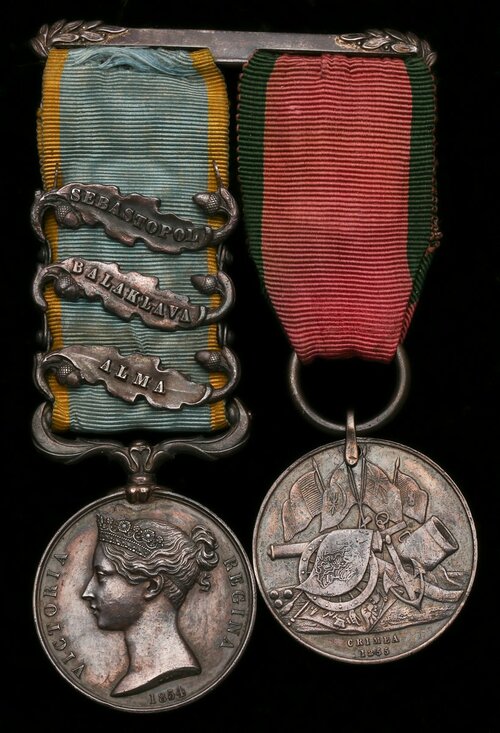
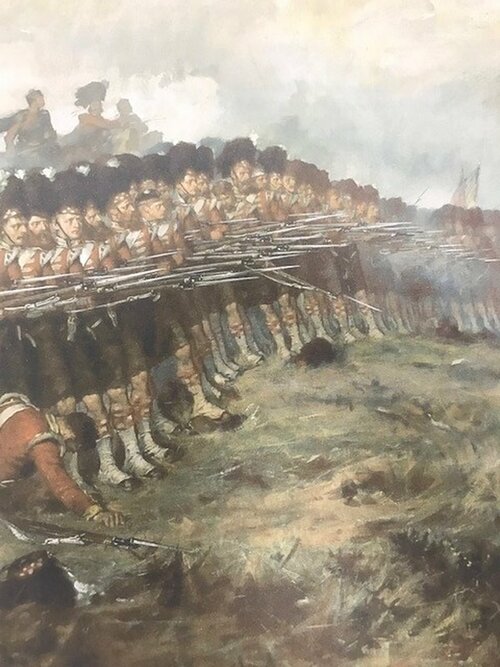
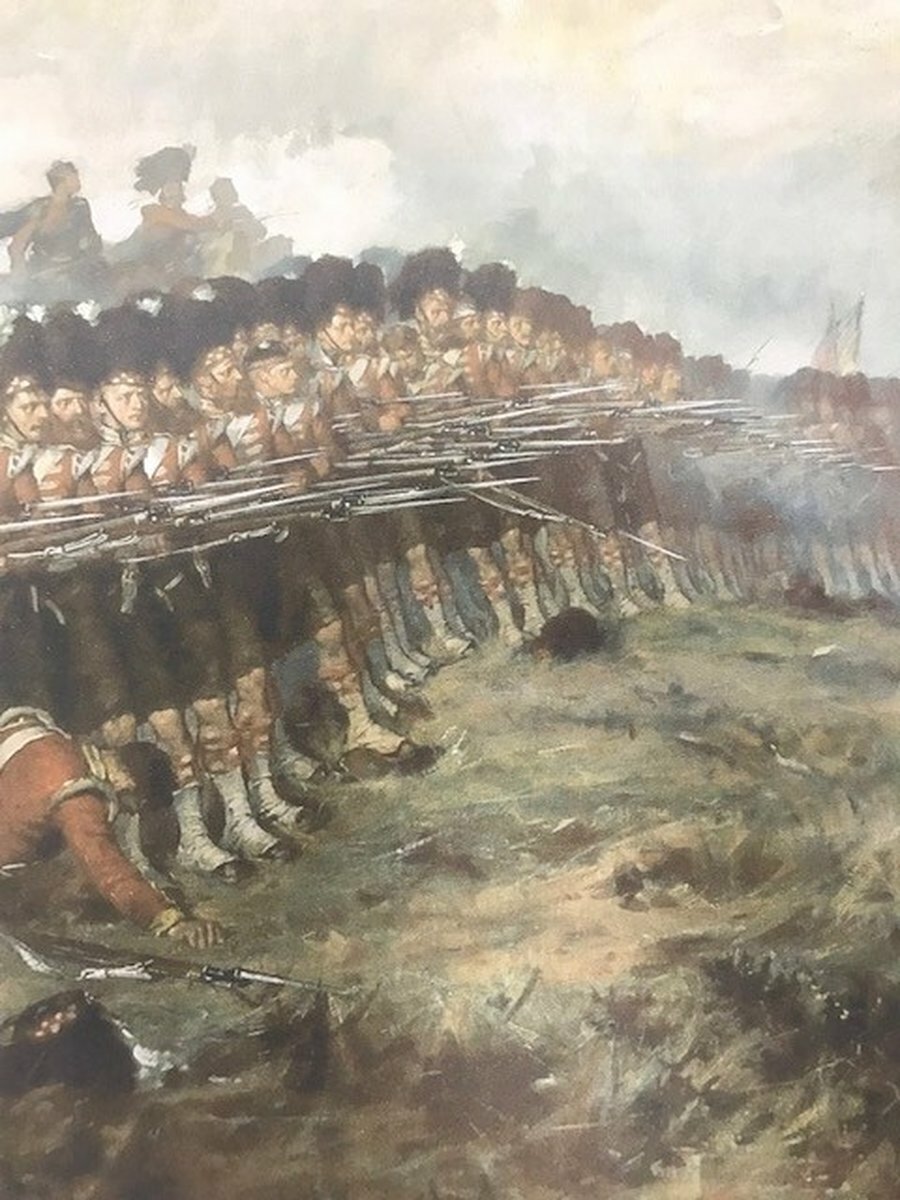
The notable Crimean War pair awarded to Colonel W. B. Ainslie, C.B., 93rd (Sutherland Highlanders) Regiment of Foot, who led the main body of the famed 'Thin Red Line'
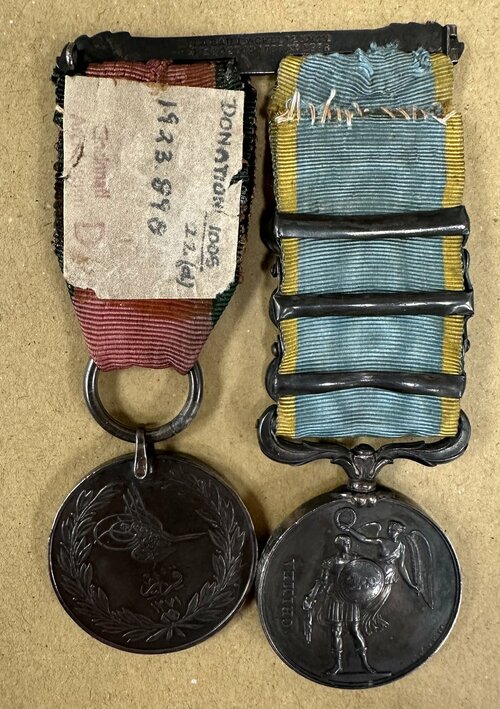
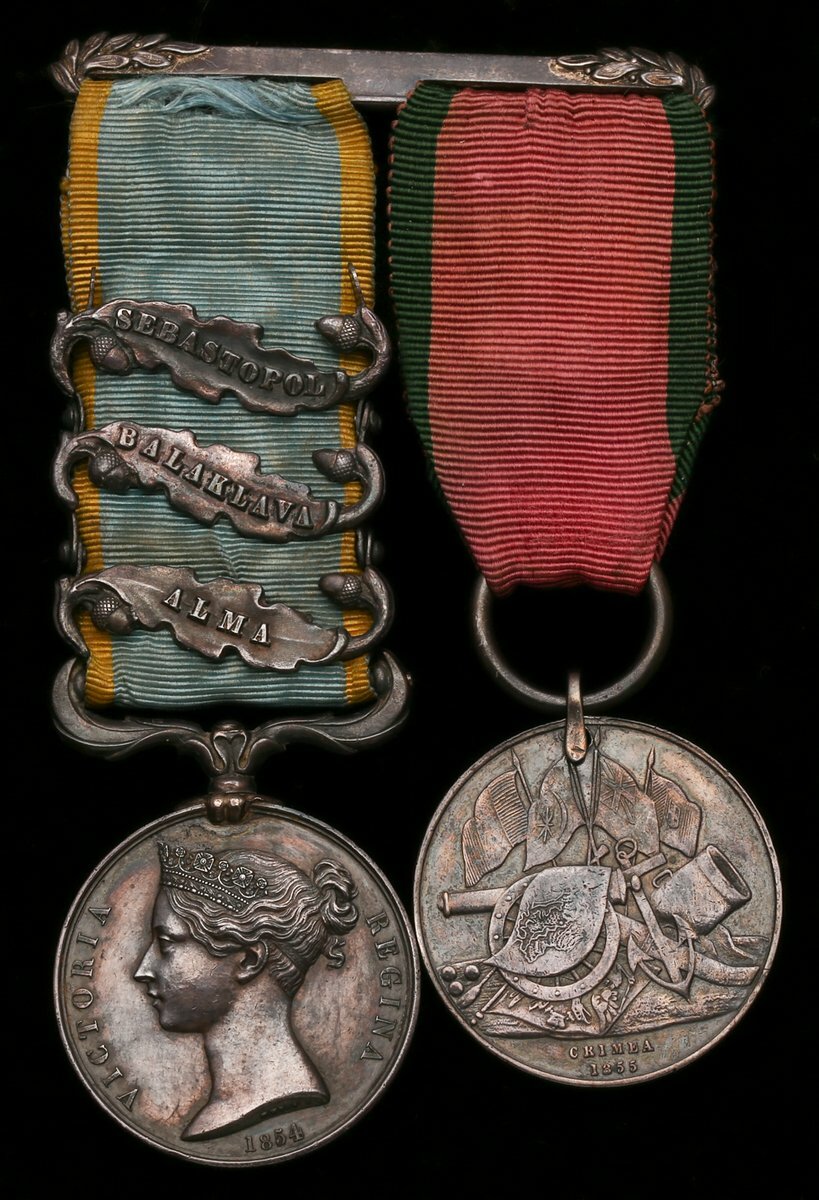
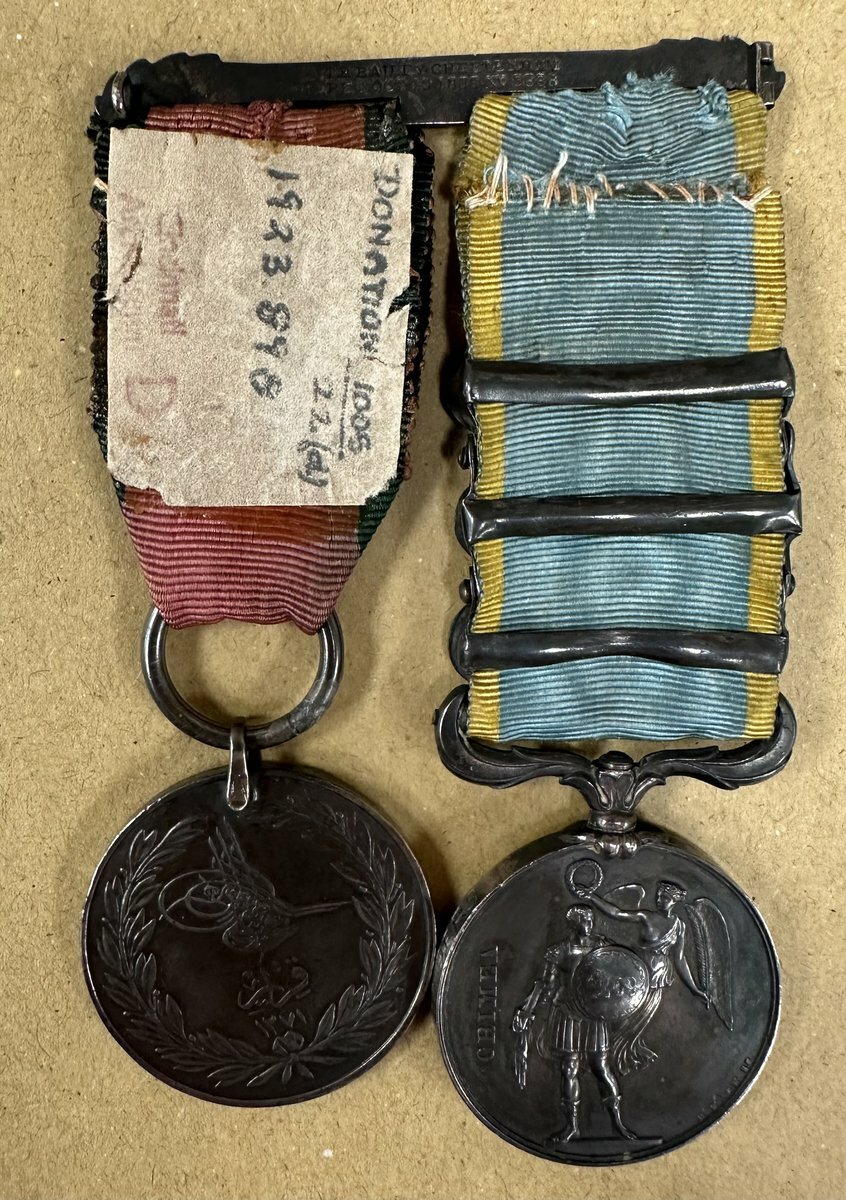
Crimea 1854-56, 3 clasps, Alma, Balaklava, Sebastopol (Lt. Col. Wm B Ainslie 93rd Highlanders), engraved in upright capitals; Turkish Crimea 1855, fitted with replacement ring suspension, unnamed as issued, mounted on attractive silver suspension bar by T. B. Bailey, Cheltenham, good very fine (2)
The reverse of the riband with an old label stating 'Donation 1005 22, 1923. Cincinnati Art Museum D [Deaccessioned?]'.
[C.B.] London Gazette 10 July 1855.
[Turkish Order of Medjidie] London Gazette 2 March 1858.
William Bernard Ainslie was born at Futtigur, India on 17 August 1812. Made Cornet on 28 September 1830, he was promoted to Lieutenant on 24 November 1835, Captain on 30 September 1837, Major on 1 October 1850 and to Lieutenant-Colonel on 21 October 1853.
Further details of his most famous day, and perhaps that of the entire unit are extracted from the Regimental Record and History of the Services of the Sutherland Highlanders, which states:
'The Battle of Balaklava - On the morning of the 25 October 1854 at about 7 a.m. a large force of the enemy debouched from the direction of the Tchernaya and Baidar Valleys and attacked with a large body of skirmishers and artillery, the Turkish Redoubts. The British force around Balaklava, which had been as usual under arms since before daylight, consisted of about 800 Marines (under Col. Hurdle) and 2 Companies of the 93rd Highlanders under Major Gordon.
The main body of the 93rd Highlanders under Lt. Col Ainslie was drawn up in line on a small hill in front of their encampment, which covered the approach to Balaklava from the Plain. On the left of the 93rd Highlanders was drawn up a small party of about 100 Invalids from different Regts that had been collected at Balaklava for the purpose of being embarked on board of ship. These Invalids were under Lt.Col. Daveney. On their left and on the right of the 93rd, stood on each flank of the line, a Battalion of Turks in column. Nearly half a mile to the left front of infantry stood the British Heavy Cavalry in Column.
The Battle commenced by the Russians concentrating a severe fire of Artillery upon No 1 (the most Eastern and afterwards known as Canny-Robert's) Redoubt, from which after a short resistance, the Turks were dislodged and the redoubt containing three guns was captured by the enemy. In obedience to orders previously received: 'to fall back upon the main body of the Regt should any disaster befall the Turks'.
Major Gordon with his 2 Companies of the 93rd at once descended the heights and proceeded to join Lt. Col Ainslie in the plain and at a distance of about 2 miles. The capture of No.1 redoubt was speedily followed by that of No.'s 2 and 3 with the guns they contained. The Russians commenced a severe fire on the flying Turks. The 93rd Highlanders, having been joined by its 2 companies form the heights under Major Gordon, was now directed, together with the Invalids and Turks, to advance, covered by the Light Company of the 93rd in skirmishing order, the whole bringing forward the left shoulder.
The enemy then opened fire upon the Regt with round shot and shell, from the Redoubts and heights from which they had just driven the Turks. Our small force was then ordered by Sir Colin Campbell to retire some yards and until under cover of the hillock (afterwards known as Highlander Hill, Dunrobin Hill, or, Sutherland Hill) in our rear. Here the force remained for a short time lying down under the fire of the enemy's Artillery. Presently a large body of the enemy's cavalry appeared on the opposite side of the plain, at about 1,000 yards in our front. The order was then given to the Regiment which was still in line, to advance to the summit of the hillock.
The Turkish Battalions at sight of the cavalry immediately commenced dissolving, their Officers being the first to disappear. Sir Colin rode down the line and said 'There is no retreat from here men; you must die where you stand'. (I heard this myself. I commanded No 6 Company 93rd that day. FB). This was responded by a cheerful 'Aye, aye, Sir Colin, we'll do that'.
The order was then given to commence firing. The enemy's cavalry having commenced to advance against our line at a quick and ever increasing pace. The few Turks remaining on our flanks, after firing a confused volley retired in disorder (bolted) but the well sustained file firing of the 93rd and Invalids checked the advance of the Russian cavalry. These before coming into contact with our line (and within 200 paces of our front wheeled off to their left and retired in some confusion. Their confusion was increased by some well directed shots fired into their midst by Lt. Wolf R.A. who was in command of 2 heavy guns in position, at the right rear of the 93rd Highlanders Camp (In retreating through the 93rd Camp some Turks attempted to pillage the tents, but were prevented by the determination shewn by Mrs Smith, a stalwart Scottish Matron, the wife of a Private in the Regt Mrs Smith, afterwards known as the 'Kakava Schmidt' was, to the merriment of all, seen holding on to a burly Turk, vociferating at him, and belabouring him with all her might.
Almost simultaneous with, but a little before the attack of the Russian cavalry upon the 93rd, a similar body of the enemy's cavalry advanced against the British Heavy Dragoons on our left front. These met their assailants in the right gallant style. (The red coats of our troops were seen dashing through the charge was witnessed by the 93rd and was responded to by a hearty cheer along their line. Hardly however had the cheers died away when there appeared the column of Russian cavalry advancing to attack us.'
Ainslie was awarded a C.B. along with an Order of Medjidie, 4th Class together with a Sardinian War Medal for his Crimea Service. He was promoted to full Colonel on 28 November 1854. Ainslie retired to live in Edinburgh and eventually died on 31 October 1887 and is buried in St Mary's, Huddington, Worcestershire.
His full size C.B. and miniature awards were sold at auction some years ago.
Subject to 20% VAT on Buyer’s Premium. For more information please view Terms and Conditions for Buyers.
Estimate
£1,400 to £1,800
Starting price
£1100
Watch, listen and bid as if you were in the room. Now available for auctions worldwide.
Click here to bid live
An exclusive and confidential service for the discerning collector or vendor.
View the Gallery
Download every Spink catalogue on your iPad, iPod or iPhone using free Spink app.
Download From iTunes© 2026 Spink & Son. All rights reserved.