
Auction: 26001 - Orders, Decorations and Medals
Lot: 82
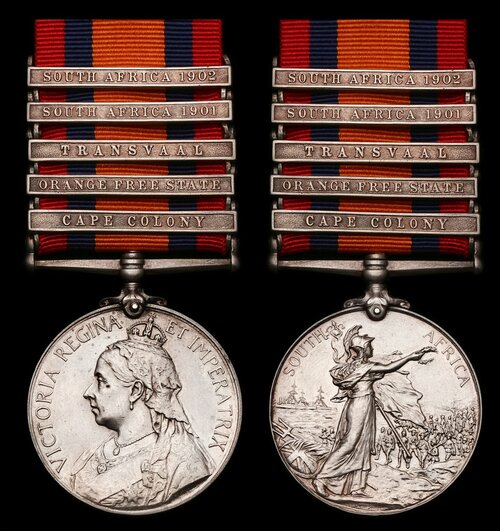
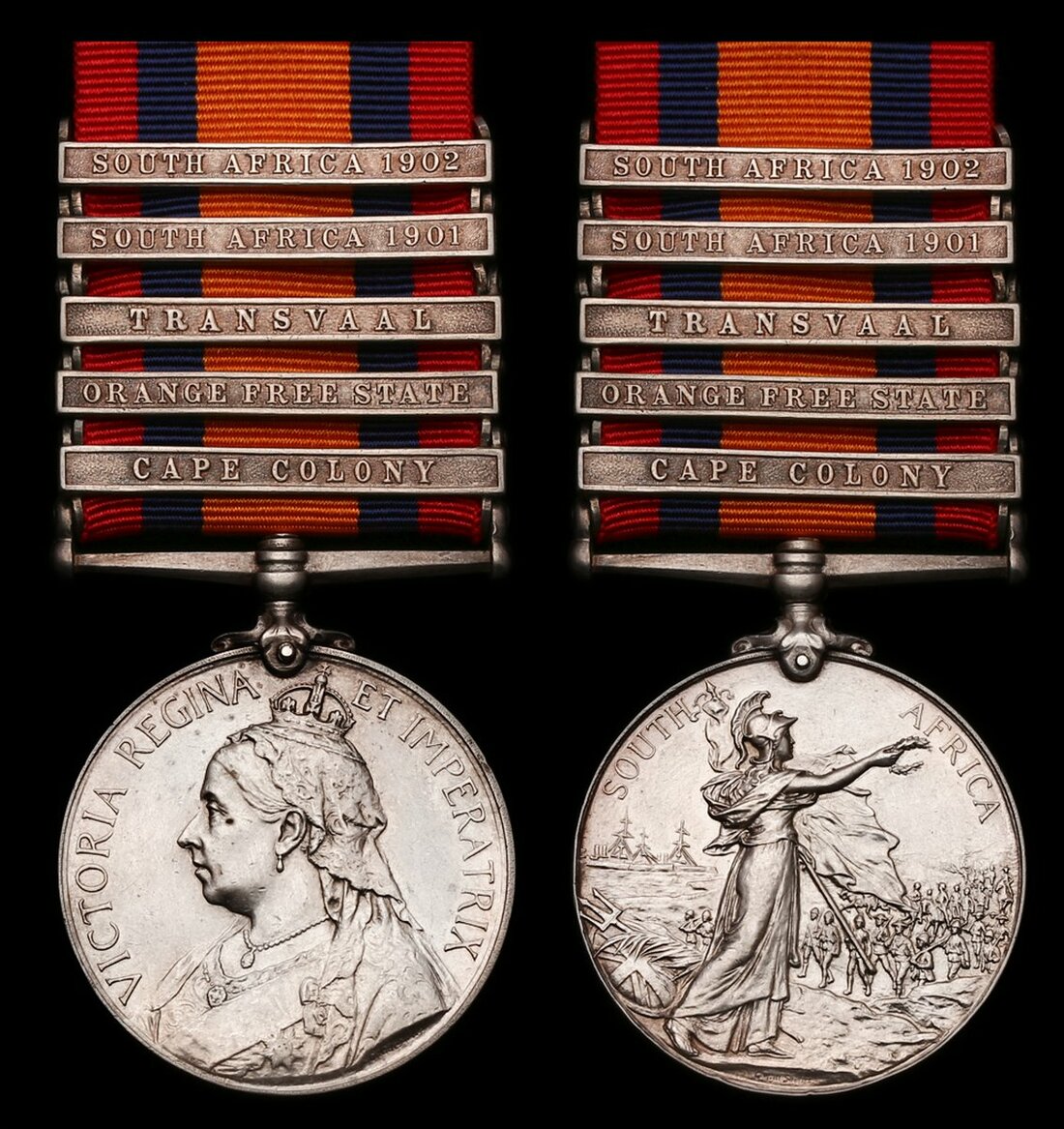
(x) Queen's South Africa 1899-1902, 5 clasps, Cape Colony, Orange Free State, Transvaal, South Africa 1901, South Africa 1902 (216 Pte T. R. Tibbetts. Queensland I.B.), good very fine
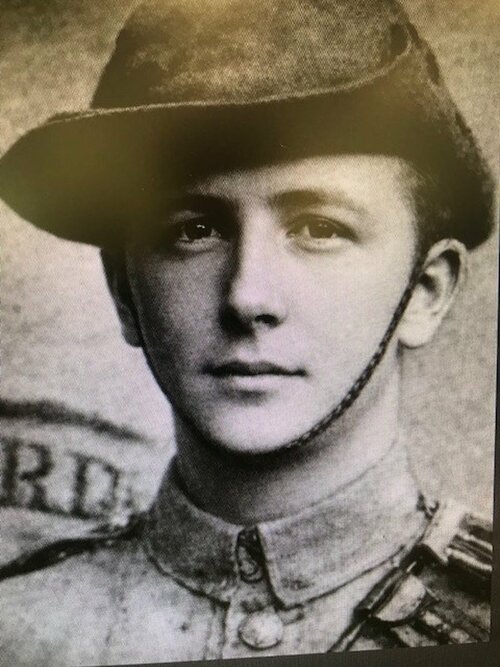
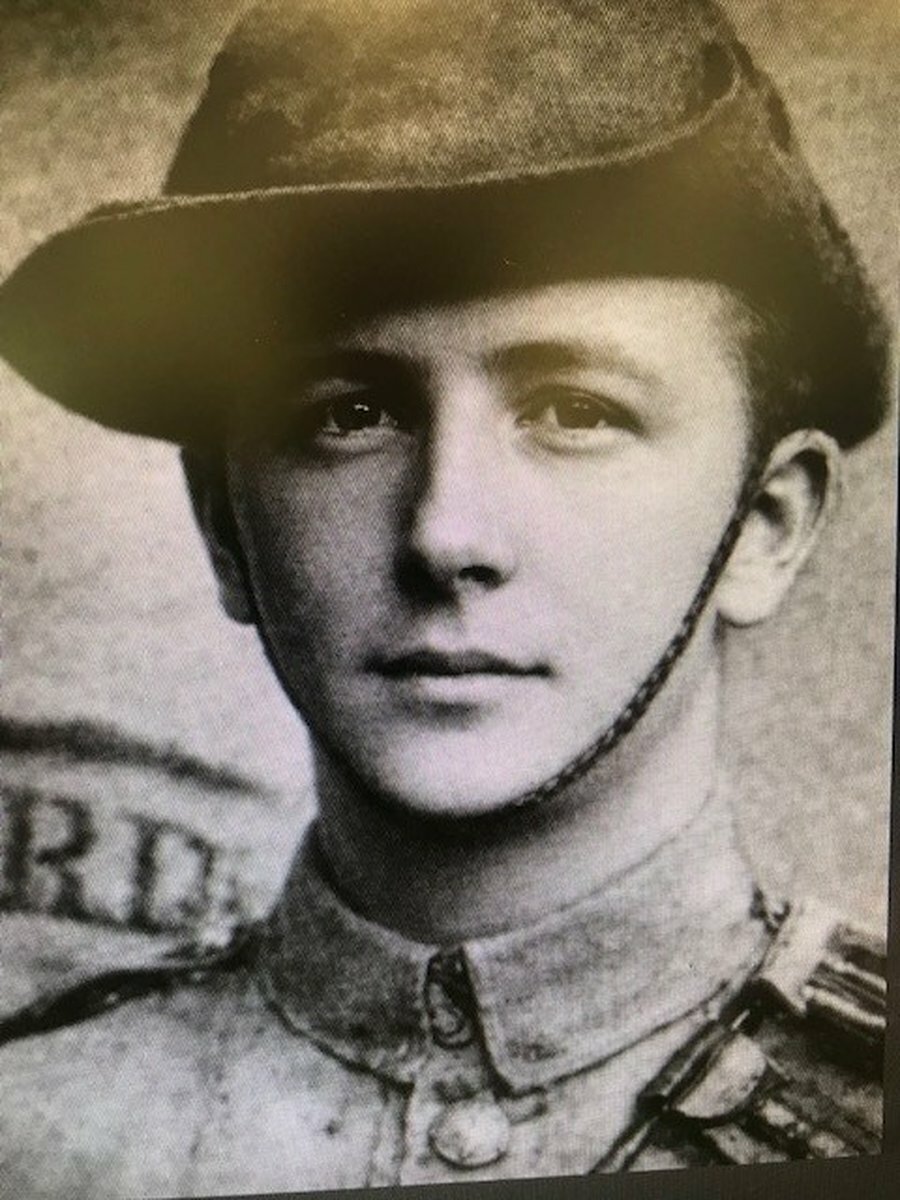
Frederick Richard Tibbetts was born at the Benevolent Asylum, Sydney, New South Wales, on 30 October 1880 to Janet Dykes, with no father listed on his birth registration. During his early childhood, he was referred to as Frederick Dykes. However, after his mother married James William Tibbetts in Ryde, NSW, in 1882, he took his stepfather's surname and became known as Frederick Richard Tibbetts. His stepfather James William Tibbetts was originally from Wrentham, Norfolk, Massachusetts, USA and he arrived in New South Wales on 12 July 1977 along with two brothers and he was a 25-year-old mason. He and Janet had four sons and two daughters together, making them Frederick's half-siblings, although both sisters passed away at a very young age. At some stage Tibbetts moved to Queensland, however his parents remained in New South Wales. It is believed that he lived sometime at Injune, a small town in south-west Queensland, located on the Carnarvon Highway, 92 kilometres north of Roma.
As a young man, he enlisted to fight in the South African (Boer) War and became part of the 5th Queensland Imperial Bushmen, serving as private number 216. He embarked from Brisbane in March 1901 and arrived at Port Elizabeth in April. The unit was engaged in relentless sweeping operations throughout the Transvaal, Orange River Colony, and Cape Colony to dismantle Boer resistance. Their service was marked by fierce skirmishes, particularly at Mokari Drift in September 1901 and the Battle of Onverwacht on 4 January 1902, where a small detachment suffered 13 men killed and 15 wounded due to a Boer ambush. Major Frederick Toll led the contingent for much of the campaign, which earned a reputation for its resilience. Toward the end of his service, he was hospitalized in Charlestown, South Africa, before returning to Australia on the steamer Aurania. His military service qualified him for the Queen's South Africa Medal, with five clasps.
Following his return from war, he resumed civilian life in Queensland. On 15 July 1903, he married Mary Elizabeth Bell. By 1908, he was working as a tram conductor living on Rosemount Street, O'Connell Town, Brisbane. The couple had three children: Leslie Frederick (born 9 September 1905), Stanley John (born 2 December 1910), and Eunice Elizabeth. In 1911, they were recorded as living at 29 Somerset Street, Fortitude Valley, with him still employed as a tram conductor. By the 1920s, they had moved to Windsor, Brisbane, and his occupation was listed as a vanman, likely a delivery driver. On 6 August 1940, his wife Mary tragically passed away in Brisbane at the age of 57 and was buried at Toowong Cemetery. He remained active in the veteran community, attending the 40th anniversary reunion of the South African War Veterans Association in 1942.
On 27 October 1945, Frederick remarried Lillian May Mortimer, the widow of George Mortimer, who had died earlier that year on 12 April 1945. Lillian, whose maiden name was Bailes, had married George Mortimer in 1918. After their marriage, Frederick and Lillian moved to 105 Day's Road, Enoggera, Brisbane, where his occupation was listed as a carrier. They remained at this address until Frederick passed away on 15 August 1961 at the age of 80. He was cremated at Mount Thompson Memorial Gardens and Crematorium in Holland Park, Brisbane. Lillian passed away on 8 April 1971 at the age of 84 and was buried with her first husband in Lutwyche Cemetery, Brisbane.
Of note, when Lillian May Bailes was eight years old in 1894, she was indecently assaulted by Joseph Hamberston. Hamberston was found guilty and sentenced to four days' imprisonment, as well as a private whipping (20 lashes) with a leather strap. It is assumed that this whipping would have been administered by Lillian's father.
Both sons served during the Second World War. Leslie Frederick Tibbetts (QX39591) was a staff sergeant at the General Details Depot. Stanley John Tibbetts (Q256003 / 222758) served in both the army and the Royal Australian Air Force.
Two half-brothers served during the First World War. Private Stanley George Tibbetts (3094) joined the reinforcements of the Railway Units on 5 June 1918. While in a military hospital in England, he died from pneumonia on 27 October. His British War Medal, plaque, and scroll were issued to his widow.
Allan Ray Tibbetts enlisted on 13 November 1916 and was assigned service number 2889. Like his brother, he worked for the railways and joined the 6th reinforcements of the 35th Infantry Battalion. After transferring to the 4th Infantry Battalion, he was awarded the Military Medal for devotion to duty and coolness under fire during operations at Broodseinde Ridge, east of Ypres, from 3 to 6 October 1917, serving as Company Runner to Battalion Headquarters. He carried out his duties under heavy shell and machine gun fire.
Sold together with a USB stick which contains a variety of research and copied original photographs of the recipient etc.
Subject to 5% tax on Hammer Price in addition to 20% VAT on Buyer’s Premium.
Sold for
£360
Starting price
£200

Watch, listen and bid as if you were in the room. Now available for auctions worldwide.
Click here to bid live
An exclusive and confidential service for the discerning collector or vendor.
View the Gallery
Download every Spink catalogue on your iPad, iPod or iPhone using free Spink app.
Download From iTunes© 2026 Spink & Son. All rights reserved.