
Auction: 23112 - Orders, Decorations and Medals - e-Auction
Lot: 359
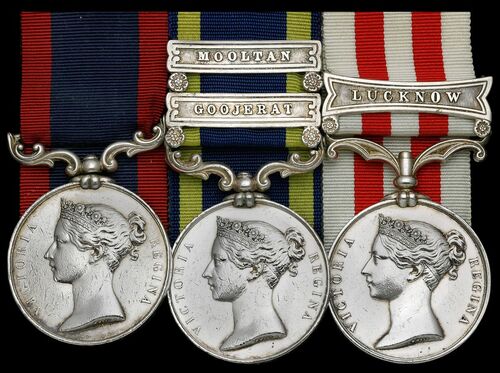
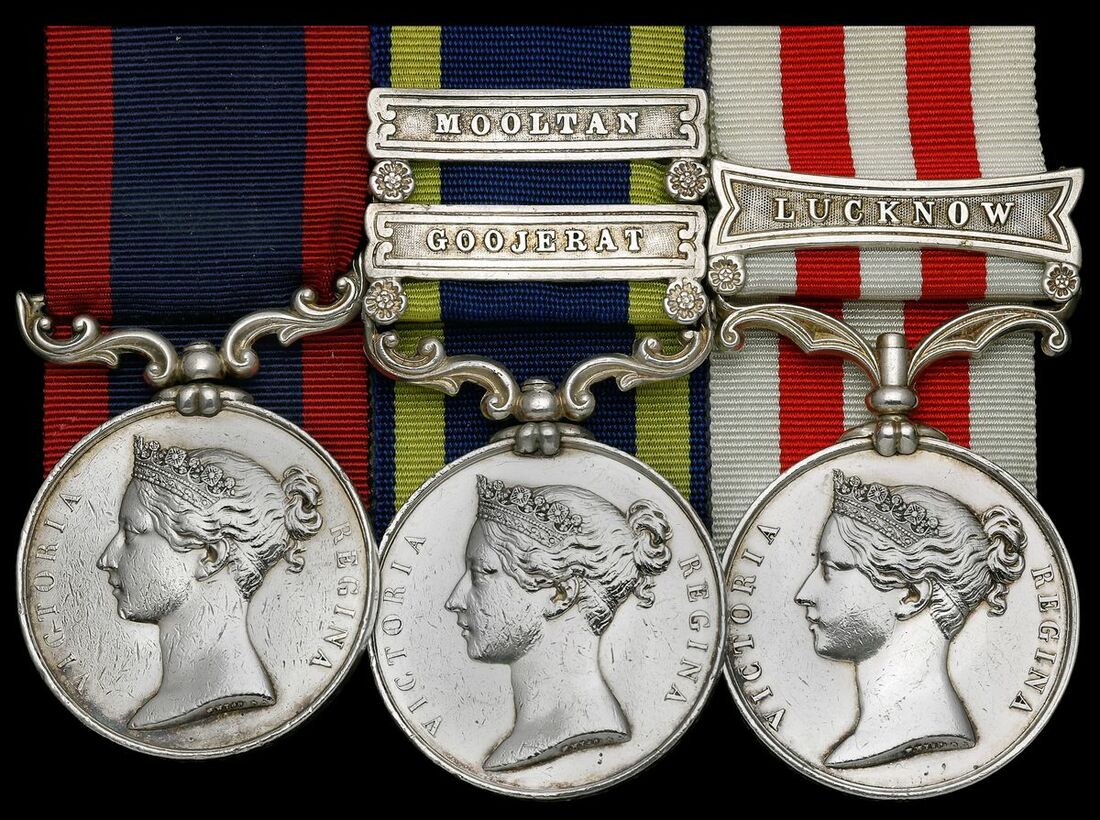
Three: Private G. Peaugh, 1st Battalion, 10th Foot
Sutlej 1845-46, for Sobaron 1846 (Geo: Peaugh 10th Regt); Punjab 1848-49, 2 clasps, Goojerat, Mooltan (Geo. Peaugh, 10th Foot); Indian Mutiny 1857-59, 1 clasp, Lucknow (G, Peaugh, 1st Batn 10th Regt), contact marks and heavy contact wear overall, nearly very fine (3)
Note, this group previously displayed at the O.M.R.S. Convention 1982, by David Haller.
George Peaugh at St Brovels, Colford, Gloucestershire and attested for the 41st Foot at Newport, Monmouthshire on 13 November 1841. Volunteering for service with the 10th Foot three days later he joined them and was soon posted to the East Indies.
First Anglo-Sikh War
Peaugh was present there for the First Anglo-Sikh War with the 10th Foot being deployed at the Battle of the Sobaron. At this climactic action they formed part of General Dick's division, twice launching attacks against the Sikh entrenchments with the second carrying the day. His service records then note his presence during the occupation of Lahore as the British moved into the Punjab.
Second Anglo-Sikh War
Still in the country on the outbreak of the Second War the 10th were joined General Whish's army at the Siege of Mooltan. Here he was involved in three of the major actions of the Siege, the affair of 9 September, storming the enemies strongly held entrenchments on 12 September and carrying the Heights on 27 December. He was present with them for the surrender of the city and the later Battle at Goojerat. Having survived these two difficult campaigns against a fierce and disciplined enemy Peaugh might have been forgiven for thinking he would see out the rest of his service on garrison duty.
The Indian Mutiny
When the Indian Mutiny started the Regiment was at Dinapore and their first action the attempted relief of Arrah. Though in the event only a small number were able to join the action due to the failure to find enough steamers to transport the full force. The attempt was a failure with heavy losses and Arrah would not be relieved until August 1857.
The 10th Regiment was then ordered to proceed to Lucknow as part of the second relief of that city as part of General Franks' column. They faced hard fighting during the advance with a portion of the Regiment even required to ride as mounted infantry due to their lack of trained horsemen. Fighting their way through rebel forces at Chanda, Umerapore, Sultanpore and Darowdha.
Subject to 20% VAT on Buyer’s Premium. For more information please view Terms and Conditions for Buyers.
Sold for
£1,300
Starting price
£320
Watch, listen and bid as if you were in the room. Now available for auctions worldwide.
Click here to bid live
An exclusive and confidential service for the discerning collector or vendor.
View the Gallery
Download every Spink catalogue on your iPad, iPod or iPhone using free Spink app.
Download From iTunes© 2026 Spink & Son. All rights reserved.