
Auction: 317 - The Collector's Series
Lot: 751
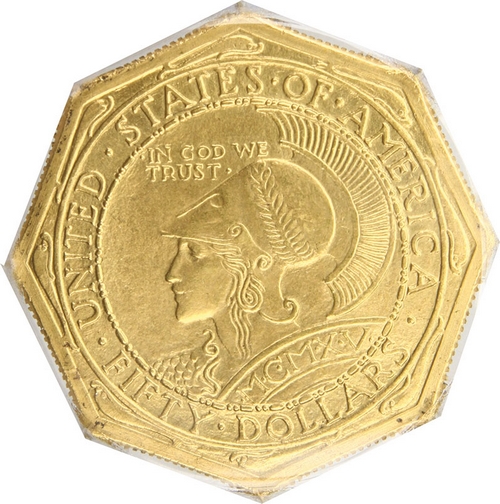
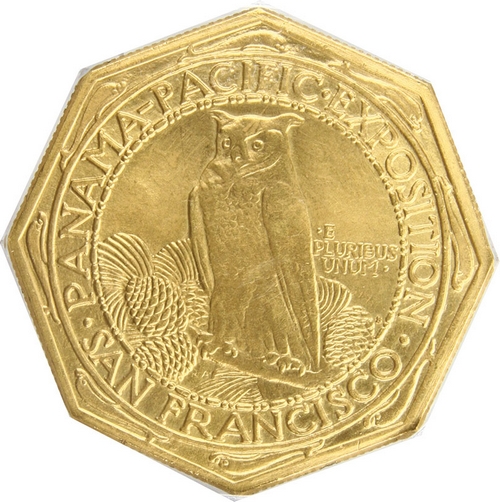
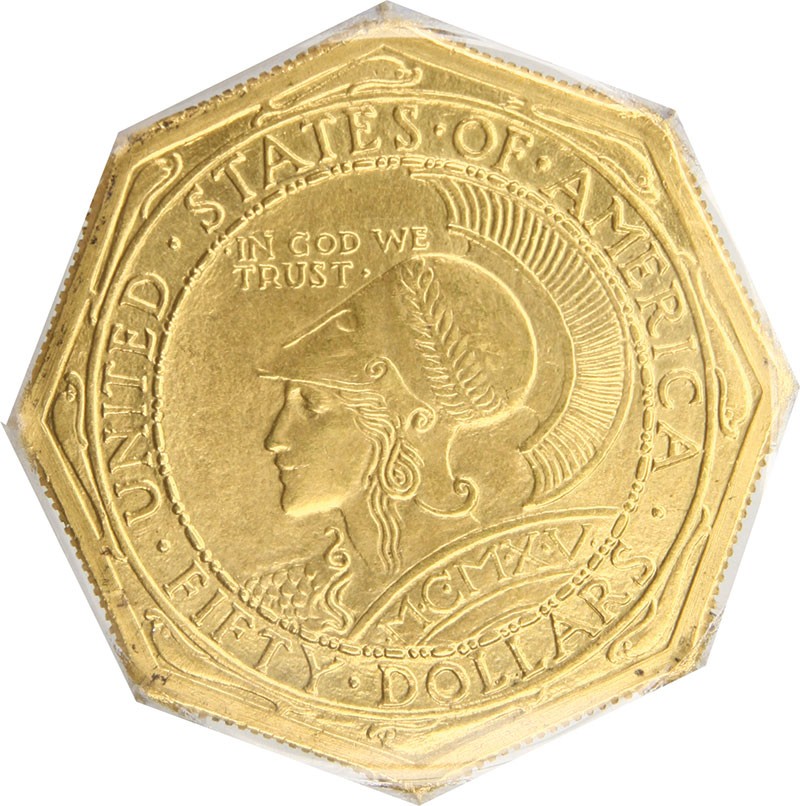
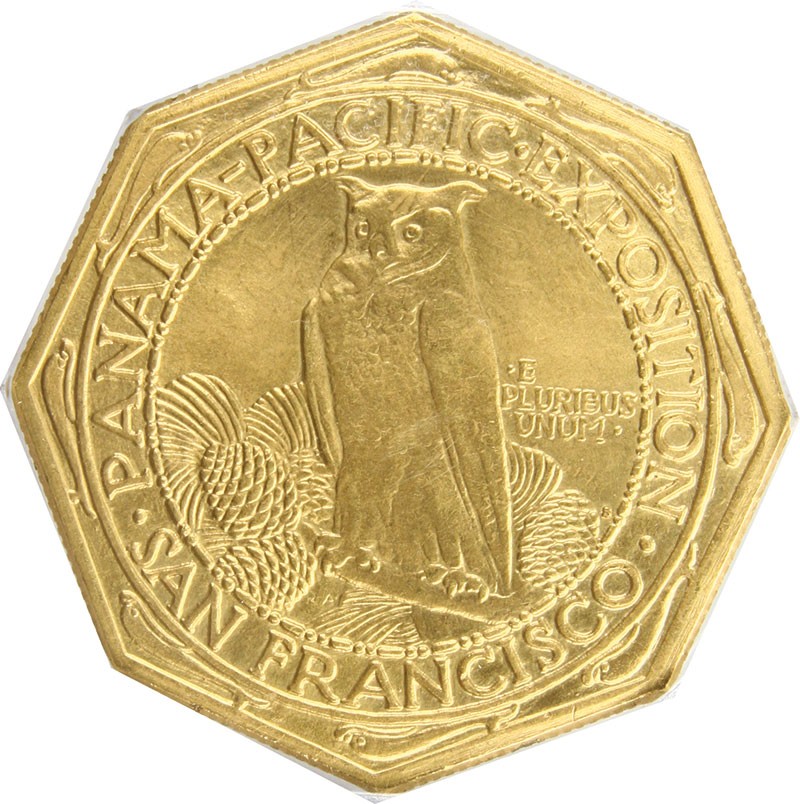
1915-S $50 Panama-Pacific Exposition. Octagonal. PCGS MS65. Upon even a cursory initial examination of the magnificent coin offered here, it becomes quite clear that one is viewing an item that is very special within the context of what is typically encountered for an example of this issue. Moreover, as one gazes more thoroughly upon its surfaces and luster, an even deeper appreciation for the quality of this jewel quickly becomes evident. Its originality and wholly unencumbered appearance easily sets it apart from the overwhelming majority of the survivors of this important commemorative $50 gold issue. The strike is quite bold throughout every area of the design, and the luster is remarkably well preserved; there being a warm, incredibly unbroken velvet-like mint bloom on either side. Trivial hints of peripheral obverse staining attest to the complete "virgin" nature of this beauty, and unlike almost every one of its brothers, the surfaces retain all of their original "skin" on both the obverse and reverse. If that is not enough to entice all potential bidders, only the most trivial of marks and minor imperfections are detectable, even upon very close scrutiny with a glass. In fact, those who hope to obtain a finer example in a PCGS holder may never have the chance to do so within their lifetime, as PCGS has graded only a single specimen higher than this piece (that being an MS66 last sold publicly in January 2005). Those who demand only the finest in U.S. commemorative coinage must not take this opportunity lightly, as this marvelous coin deservedly warrants very special consideration! Of the 1500 pieces originally struck at the San Francisco Mint for sale at the Exposition (the asking price of which was $100.00), only 645 pieces were sold. The remainder were melted along with the unsold round $50 gold pieces that proved to be even less popular at the time.
(use a different typeface for the following)
Produced during what many numismatists consider to be the height of the so-called "Renaissance" of American coinage, the Panama-Pacific Exposition $50 gold pieces have rightfully earned the distinction of being among the most coveted coins ever to be struck by The U.S. Mint. Possessing the "total numismatic package", this glorious issue both in its round and octagonal varieties enjoys the utmost in aesthetic beauty, historicity, and rarity. The example offered here, furthermore, is of a quality level that is quite distinctive in light of the large size and fragile nature of Robert Aitken's open and exposed design.
In what most consider to be Aitken's numismatic masterpiece, the artist has effectively communicated what may very well be a dual message. One such message is clear within the context of the Exposition itself, and another of which is quite fitting in light of the turbulent times during which this noteworthy issue was coined. Within the context of the Exposition, Aitken sought to represent the theme of the products of wisdom and industry as they relate to the construction of the Panama Canal. An additional context, however, can also be inferred. In the days prior to the entrance of the U.S. into the European "War to End All Wars", Aitken manages to convey a strong yet sober vision of American power and resolve. By employing design elements that harken back to the Greek Empire and its cultural and intellectual heart of Athens, Aitken likens the U.S. to those traits that made the Greeks the powerful yet thoughtful visionaries of their day.
Using both obverse and reverse motifs similar to the oft-seen Athenian tetradrachms, Aitken communicates volumes without ever uttering a word. His depiction of Liberty as the helmeted goddess Athena (patron goddess of ancient Athens) conveys elements of strength, justice, and resolve. Athena's companion, the wise owl, is an expression of America's thoughtful observation of the growing war in Europe and a foreshadowing of its eventual intervention into a war of which it had no desire to impulsively get involved. A portion of Athena's shield bearing the date 1915 in Roman numerals is visible on the obverse, and indicates the ability of the U.S. to defend itself if need be regardless of any possible American intervention. A total of sixteen dolphins embellish the peripheries of this octagonal design. Dolphins were another motif regularly encountered on Greek coins (those of Syracuse, Argos, and Calabria to name a few) and often symbolized a messenger. The relationship between the Panama Canal, dolphins, and an improved water route is clear, however Aitken's symbolic means of conveying a message to the world in light of the political turmoil of the time also seems quite evident. Indeed, Robert Aitken, the consummate artist, medalist, and sculptor that he was clearly mastered his craft, and brought both inspiration and understanding to all those that thoughtfully examined his work.
Sold for
$115,000

Watch, listen and bid as if you were in the room. Now available for auctions worldwide.
Click here to bid live
An exclusive and confidential service for the discerning collector or vendor.
View the Gallery
Download every Spink catalogue on your iPad, iPod or iPhone using free Spink app.
Download From iTunes© 2026 Spink & Son. All rights reserved.