
Auction: 26776 - America 250th Anniversary Sale Ft. Coins, Medals, Banknotes, Objets de Vertu & Ephemera
Lot: 54
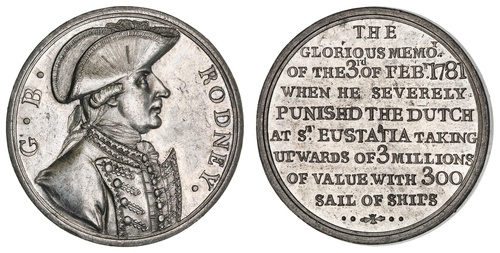
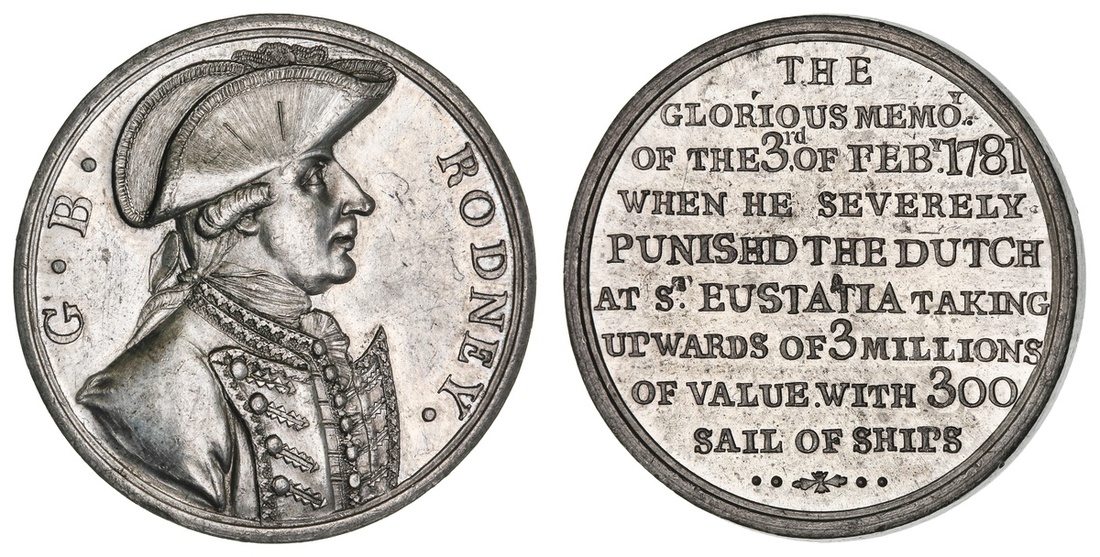
Capture of St. Eustatius by Admiral George Rodney, WM Medal, 1781, unsigned, G . B . RODNEY ., uniformed bust right, rev. THE | GLORIOUS MEMOY. | OF THE 3RD OF FEBY. 1781 | WHEN HE SEVERELY | PUNISHED THE DUTCH | AT ST. EUSTATIA TAKING | UPWARDS OF 3 MILLIONS | OF VALUE . WITH 300 | SAIL OF SHIPS, 17.42g, 34mm (Eimer -; BHM 231), minor wear otherwise with a pleasing lustre to original surfaces, extremely fine and rare
St Eustatius, in the Leeward Islands, was the centre of Dutch trade in the West Indies and was used both for the shipment of arms to the American colonists and for the victualling of French ships.
The island's importance increased during the American War of Independence due to the British blockade, which made it difficult to transport goods directly across the Atlantic to US ports. It was also alleged by Rodney that British goods had been sold through the island to her enemies; when this became known in Britain it caused great anger amongst the leaders of the country.
In the autumn of 1780 Holland joined the coalition against Great Britain and Rodney was ordered to seize the island. He appeared off the coast with twelve ships on 3rd February 1781 and after a fierce engagement succeeded in capturing it. A large quantity of munitions and merchandise consigned to General Washington was taken and some 150 merchants were also seized.
The ease in which Rodney was able to take the island was partly due to the fact the news of the war's outbreak had not yet reached St. Eustatius's shores.
However, the capture of the island was seen by many as controversial. It was alleged that Rodney and Lieutenant-General Vaughan had used the opportunity to enrich themselves and had neglected their more important military duties.
The wealth of the goods they discovered on the island was far beyond what they had anticipated. Instead of delegating the task of estimating the captured wealth, they personally undertook this task, something which took a great deal of time and diverted resources from elsewhere. Naval officer Samuel Hood suggested that Rodney should have sailed to intercept a French fleet which was travelling to Martinique. However, he did not due to his preoccupation with such tasks on the island, leaving the French fleet free to sail north towards Chesapeake Bay of Virginia and Maryland.
Rodney had further weakened his fleet by sending a strong defending force to Britain to accompany his treasure ships. After further months on St. Eustatius, capturing more goods, Rodney eventually decided to send part of his fleet north to aid General Cornwallis and the British forces fighting the Americans. However, this delay meant that the French had a far superior fleet and partly contributed to the British's tactical retreat and defeat in the Battle of Chesapeake. The French were able to block the bay, trapping Cornwallis and his forces at Yorktown, leading to their eventual surrender.
The British occupation of St. Eustatius did not last long. In November 1781, 1,500 French troops led by Marquis de Bouillé landed covertly at St. Eustatius and quickly gained control of the island's fortifications. The French returned the island to the Dutch in 1784 after which its importance as a based for trade grew.
Subject to 20% VAT on Buyer’s Premium. For more information please view Terms and Conditions for Buyers.
Estimate
$200 to $260
Starting price
$140

Watch, listen and bid as if you were in the room. Now available for auctions worldwide.
Click here to bid live
An exclusive and confidential service for the discerning collector or vendor.
View the Gallery
Download every Spink catalogue on your iPad, iPod or iPhone using free Spink app.
Download From iTunes© 2026 Spink & Son. All rights reserved.