
Auction: 26776 - America 250th Anniversary Sale Ft. Coins, Medals, Banknotes, Objets de Vertu & Ephemera
Lot: 52
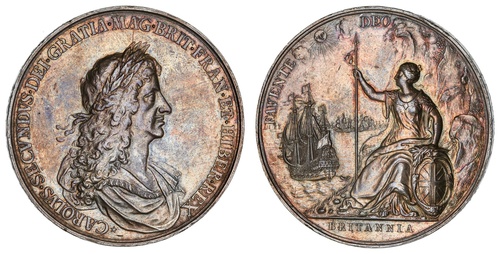
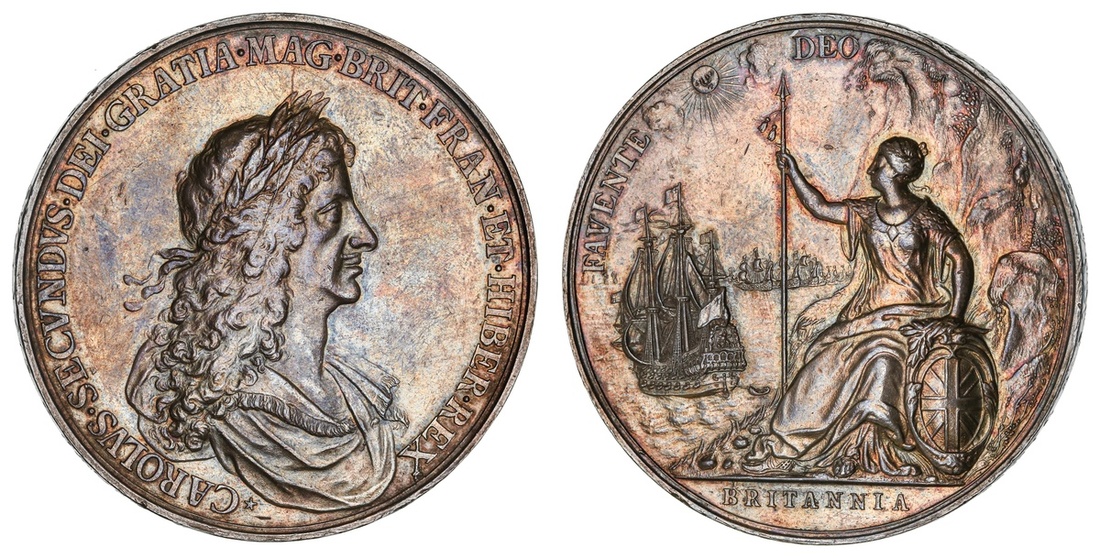
Peace of Breda, AR Medal, 1667, by Roettier, * CAROLVS • SECVNDVS • DEI • GRATIA • MAG • BRIT • FRAN • ET • HIBER • REX, laureate and draped bust right, rev. FAVENTE DEO, Britannia seated on the sea-shore, reviews her fleet; above, sun piercing the clouds, BRITANNIA in exergue, CAROLVS * SECVNDVS * PACIS * ET * IMPERII * RESTITVTOR * AVGVSTVS (m.m rose, Greek cross, rose) on edge, 56mm, 77.64g (Eimer 241; MI 535/186; van Loon II, 522), die flaw across portrait, fields lightly contact marked, otherwise all detail to central devices remains, lustrous and with attractive blue and ochre toning, near extremely fine
Provenance
"A Collection of British Historical Medals", Glendining, 16 March 1989, lot 209*
A H Baldwin, by private treaty, March 1910 - £2 [with ticket in hand of Albert Henry Baldwin]
In the summer of 1667, diplomats gathered in the Dutch city of Breda to end the Second Anglo-Dutch War. The treaty they produced might at first glance appear to be just another piece of seventeenth-century European statecraft, but buried within its provisions was a confirmation that would help shape the founding of an entirely new nation.
Three years earlier, in 1664, English forces acting on the orders of the Duke of York had sailed into the harbour of New Amsterdam and demanded the surrender of the prosperous Dutch colony at the tip of Manhattan. The governor wanted to fight, but the settlers compelled him to yield, and the colony was promptly renamed New York. The Peace of Breda simply formalised this transfer, with the Dutch receiving Suriname in exchange; a trade history would judge rather harshly.
What England had acquired was more than a convenient harbour. New Amsterdam had been a cosmopolitan place, marked by religious tolerance and a respect for commercial law unusual for the age. These qualities did not vanish with the Dutch flag. They seeped into the character of New York and, through it, into the broader culture of the colonies. At a larger scale, the treaty confirmed English dominance over a continuous stretch of Atlantic seaboard, consolidating the geographical block that would develop the shared grievances and political culture making unified resistance to the Crown conceivable.
New York went on to play a central role in the founding moment itself. When the Constitution was ratified, it was the former New Amsterdam that served as the first capital of the United States, and it was there that Washington took his oath of office in 1789.
There is a final irony worth noting. The Dutch, having lost their colony by the sword and surrendered it by treaty, became the first foreign nation to recognise American independence in 1782, and Dutch banks extended vital loans to the struggling republic in its earliest years. The nation that gave up Manhattan helped ensure that the country built upon it would survive.
Subject to 20% VAT on Buyer’s Premium. For more information please view Terms and Conditions for Buyers.
Estimate
$1,000 to $1,500
Starting price
$700

Watch, listen and bid as if you were in the room. Now available for auctions worldwide.
Click here to bid live
An exclusive and confidential service for the discerning collector or vendor.
View the Gallery
Download every Spink catalogue on your iPad, iPod or iPhone using free Spink app.
Download From iTunes© 2026 Spink & Son. All rights reserved.