Auction: 26052 - Jewellery & Objets de Vertu
Lot: 54
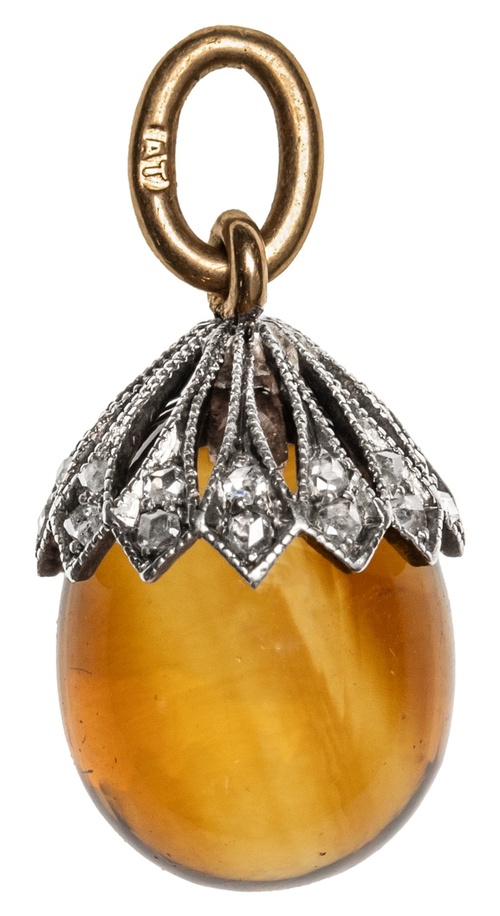
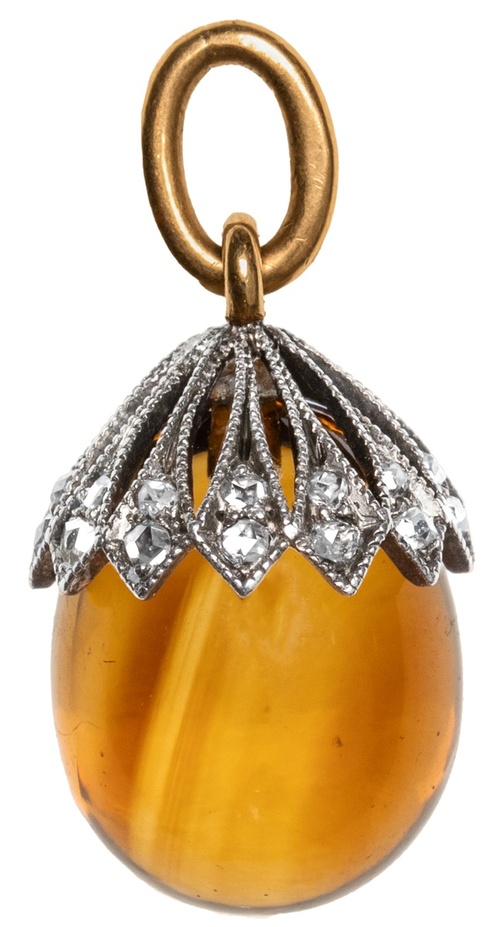
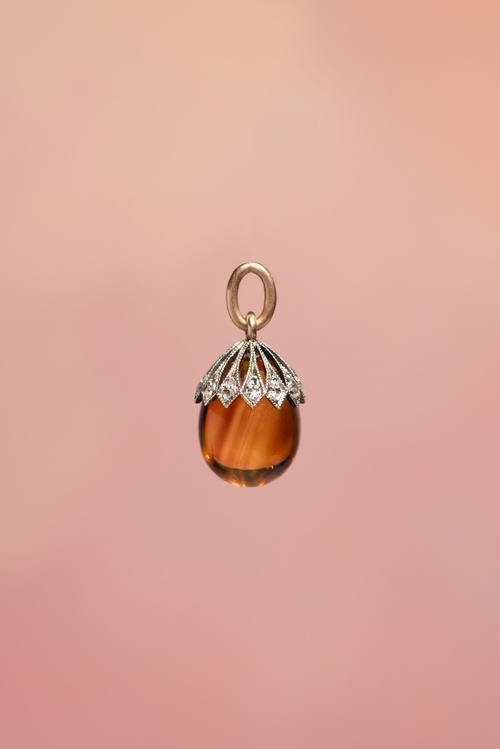
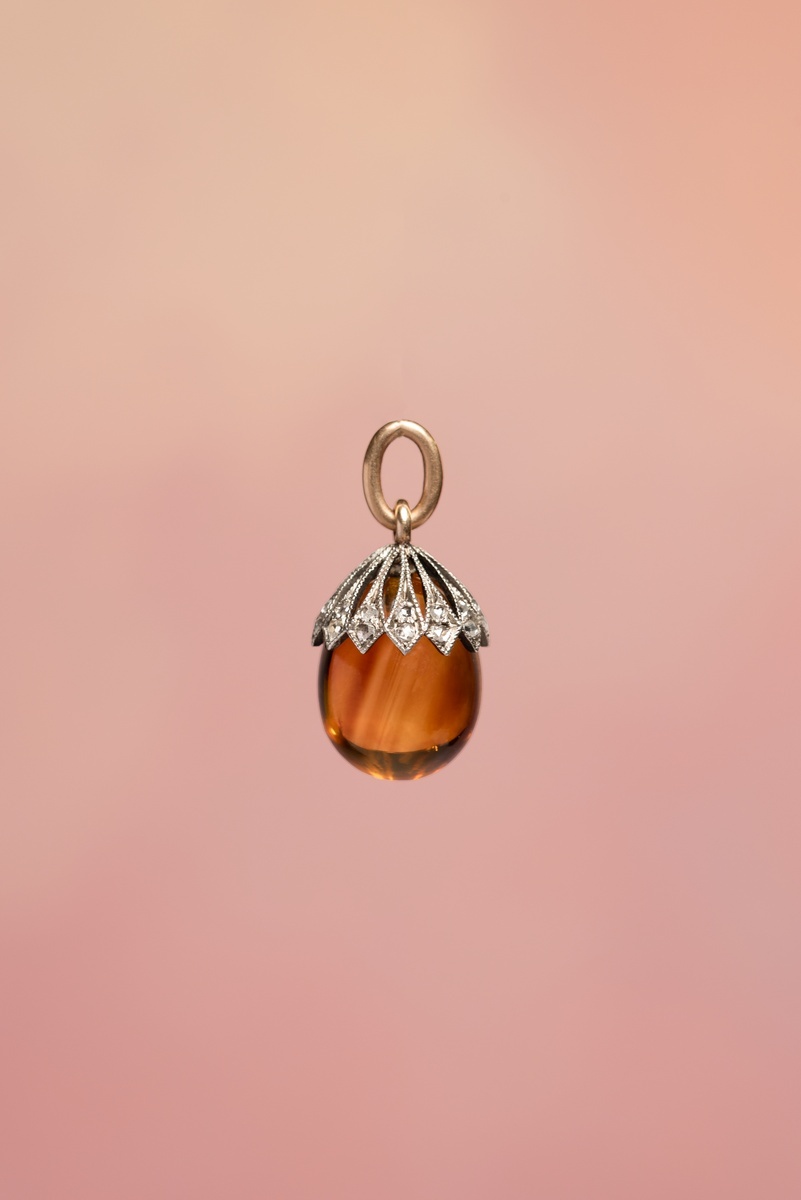
ALFRED THIELEMANN FOR FABERGÉ, A CITRINE AND DIAMOND MINIATURE EGG PENDANT
ST. PETERSBURG, CIRCA 1880-1900
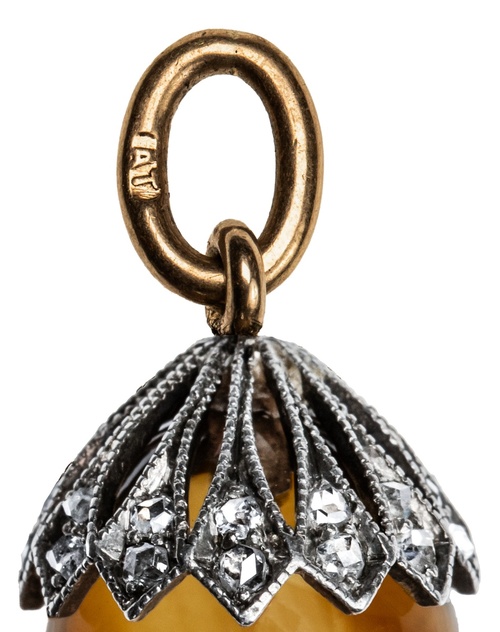
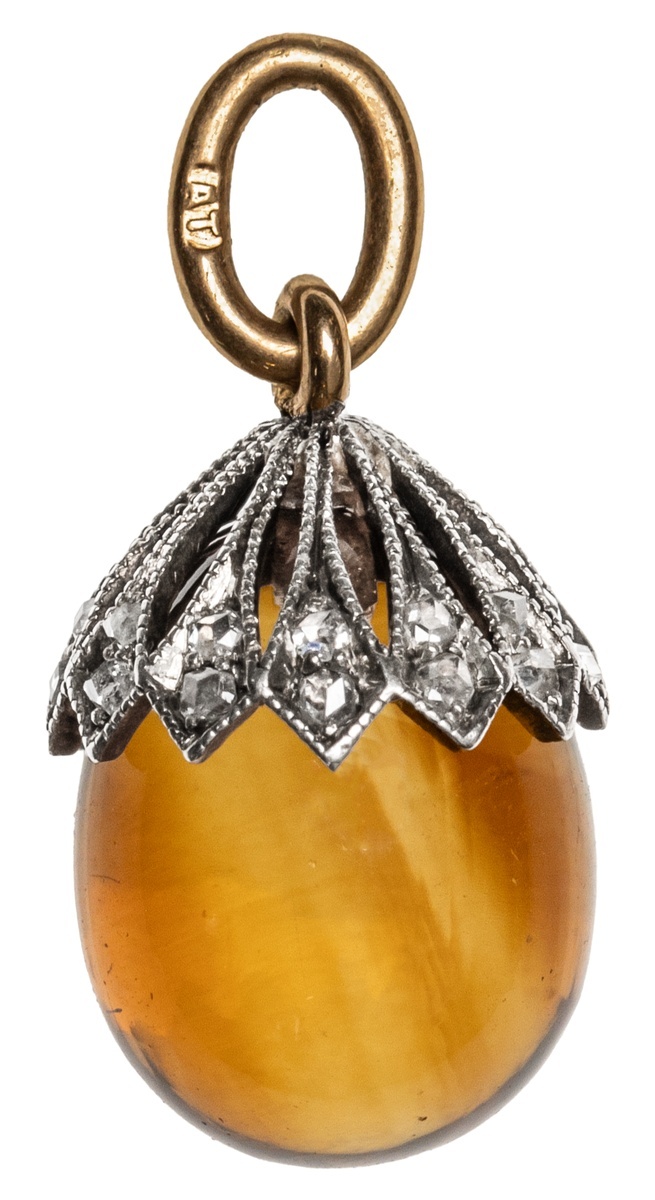
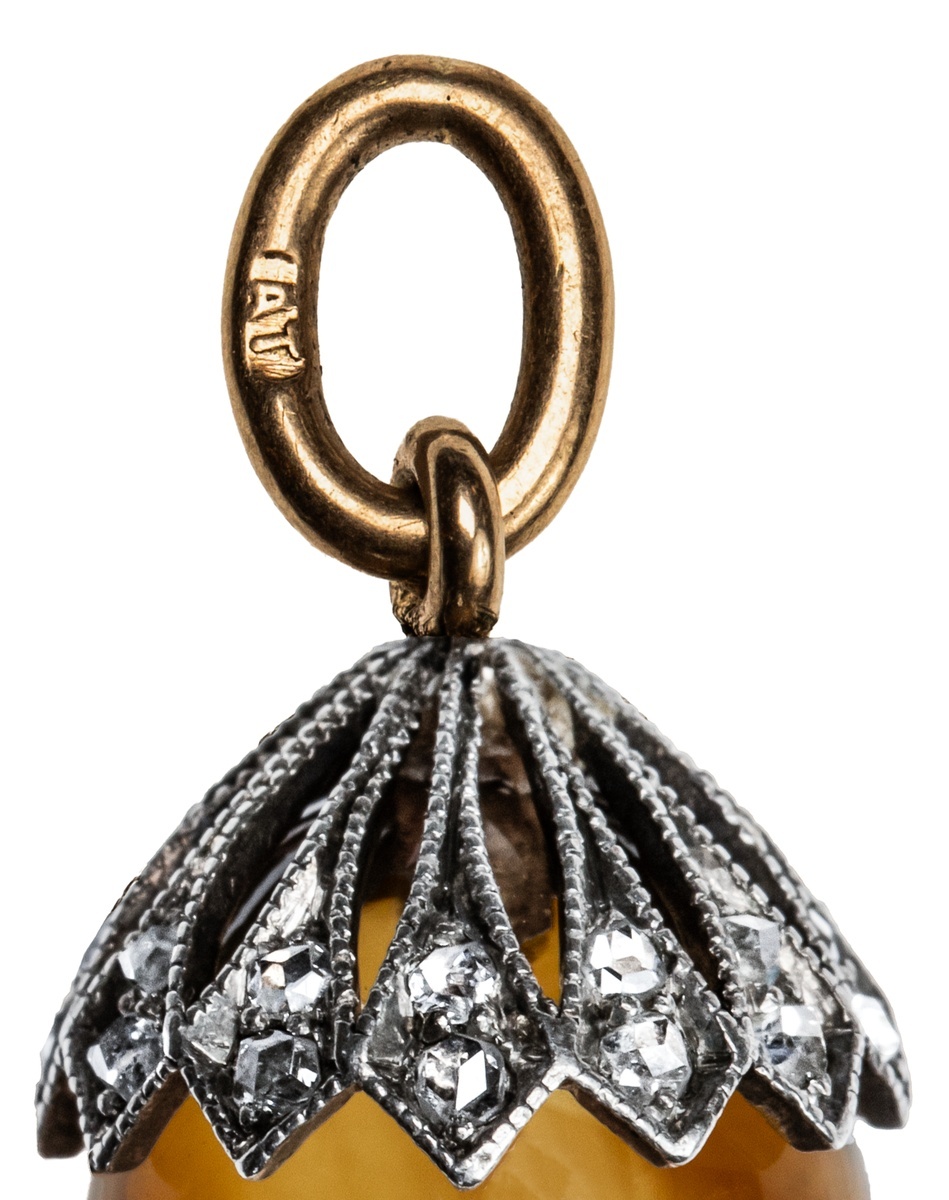
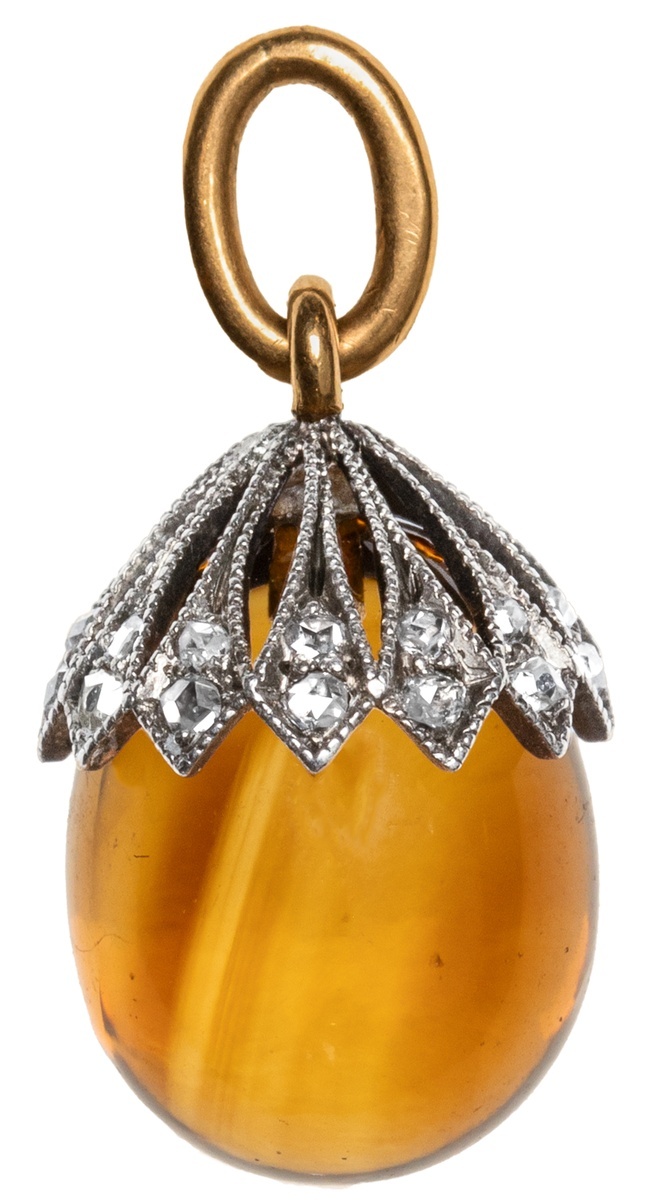
Designed as a miniature egg with a smoothly polished cabochon citrine body, capped with a fluted crown set with rose-cut diamonds, its tabs following the curve of the stone.
Suspended from a connector ring and bail.
Workmaster's mark 'AT' for Alfred Thielemann
With silver mount and gold loop and bail
Size/dimensions: 2.20cm long (including bail); 1.11cm wide
Gross weight: 3.02g
All diamonds are present and securely set. The citrine shows some small scratches and pits, noticeable only under magnification, and characteristic colour zoning in straight bands. The mount shows small signs of wear, but the piece is offered in very good overall condition.
Provenance
Princess Marie Louise of Orléans (1896-1973), later Mrs Walter F. Kingsland
By gift to the present owner
Family provenance; no documentary evidence accompanies the lot.
The family believe the charms may have belonged to Princess Marie Louise as a girl.
Found attached to the chain of the evening bag offered as lot 103, together with the Cartier charm offered as lot 6.
In Imperial Russia, Easter was the most important festival of the year, celebrated with the exchange of eggs and the traditional greeting “Christ is risen”. Among the wealthy, the humble painted egg was transformed into a jewel. Miniature egg pendants in gold, enamel and hardstone were given at Easter, and a young woman might receive one each year, threading them onto a chain until a necklace recorded the Easters of her life. The Imperial Easter eggs that Fabergé made for the Tsars were the most spectacular expression of this custom, but the miniature eggs, made in great variety and at every price, were among the firm’s most popular creations.
Fabergé’s jewellery was produced in two principal workshops in St Petersburg, one controlled by August Holmström and the other by Alfred Thielemann, a craftsman born in the city to German parents. Thielemann ran his workshop until his death between 1908 and 1910, when his son Karl Rudolph took it over.
Subject to 20% VAT on Buyer’s Premium. For more information please view Terms and Conditions for Buyers.
Estimate
£2,000 to £3,000
Starting price
£1400
Watch, listen and bid as if you were in the room. Now available for auctions worldwide.
Click here to bid live
An exclusive and confidential service for the discerning collector or vendor.
View the Gallery
Download every Spink catalogue on your iPad, iPod or iPhone using free Spink app.
Download From iTunes© 2026 Spink & Son. All rights reserved.