
Auction: 26052 - Jewellery & Objets de Vertu
Lot: 47
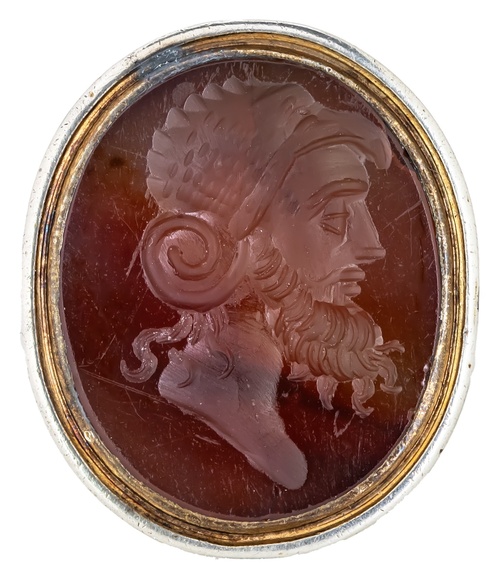
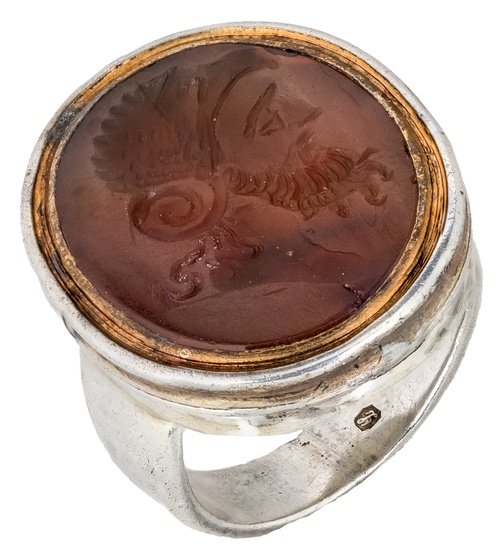
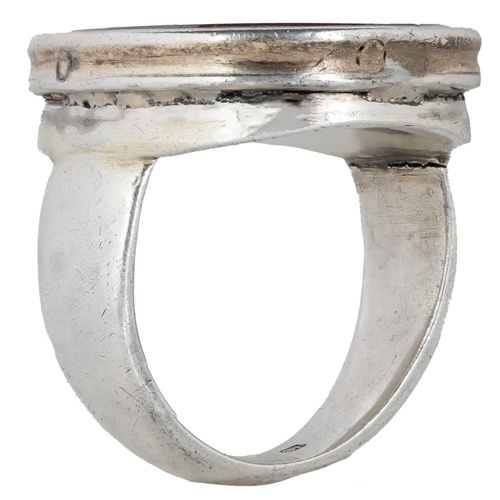
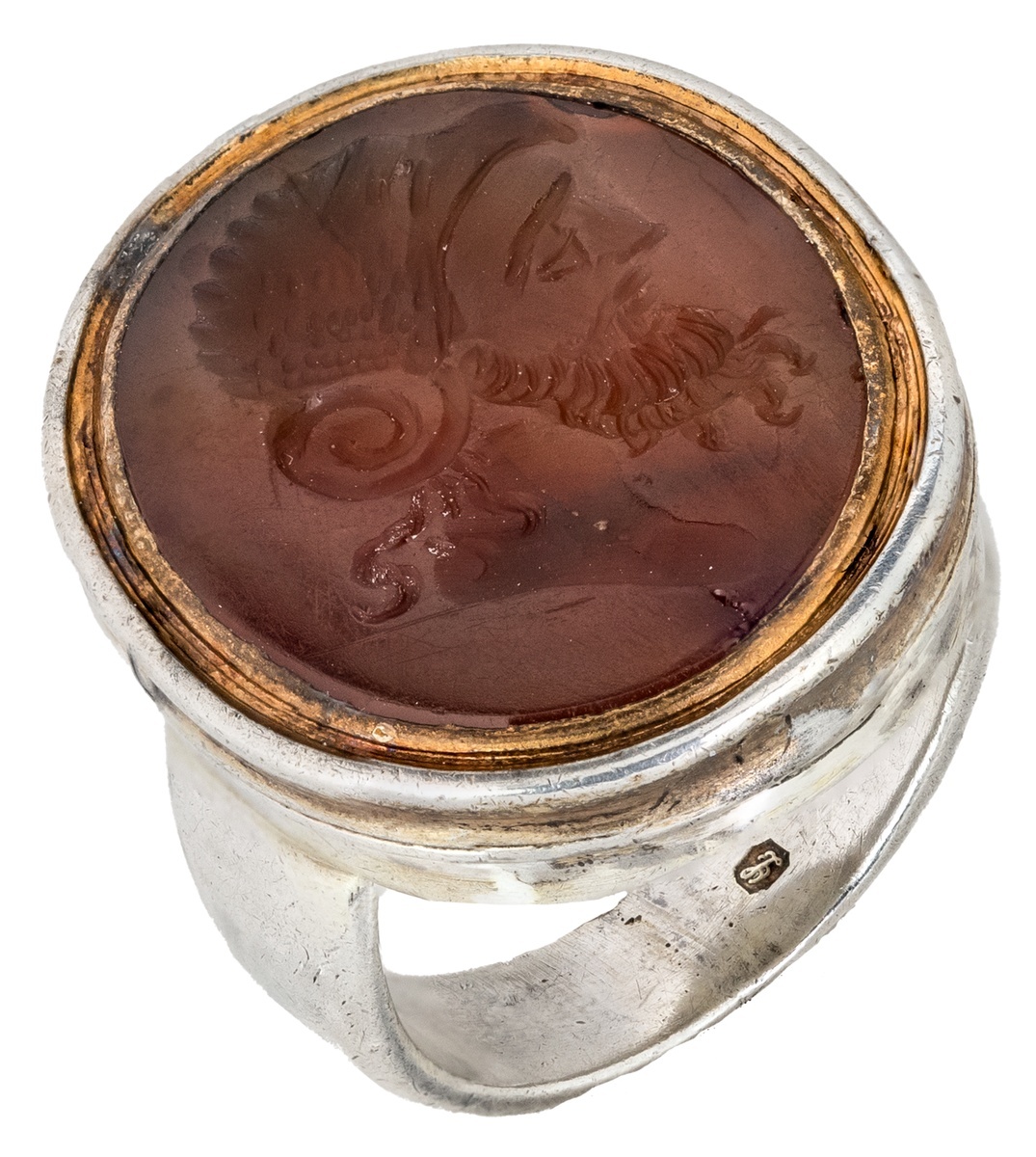
(x) A 19TH CENTURY AND LATER CARNELIAN INTAGLIO RING
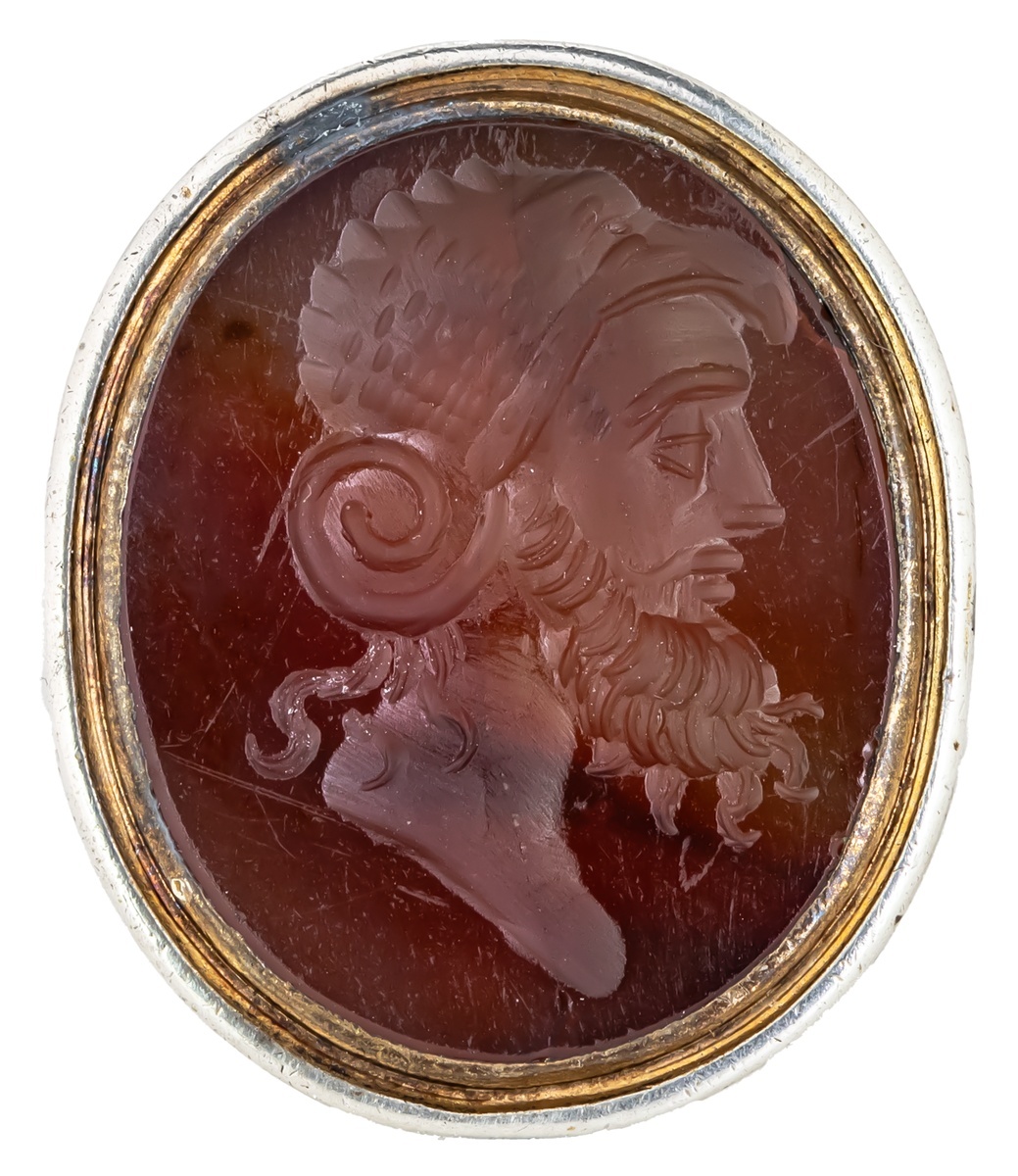
Set with a carnelian intaglio carved with the head of Zeus Ammon, within a flat protective bezel on a thick band.
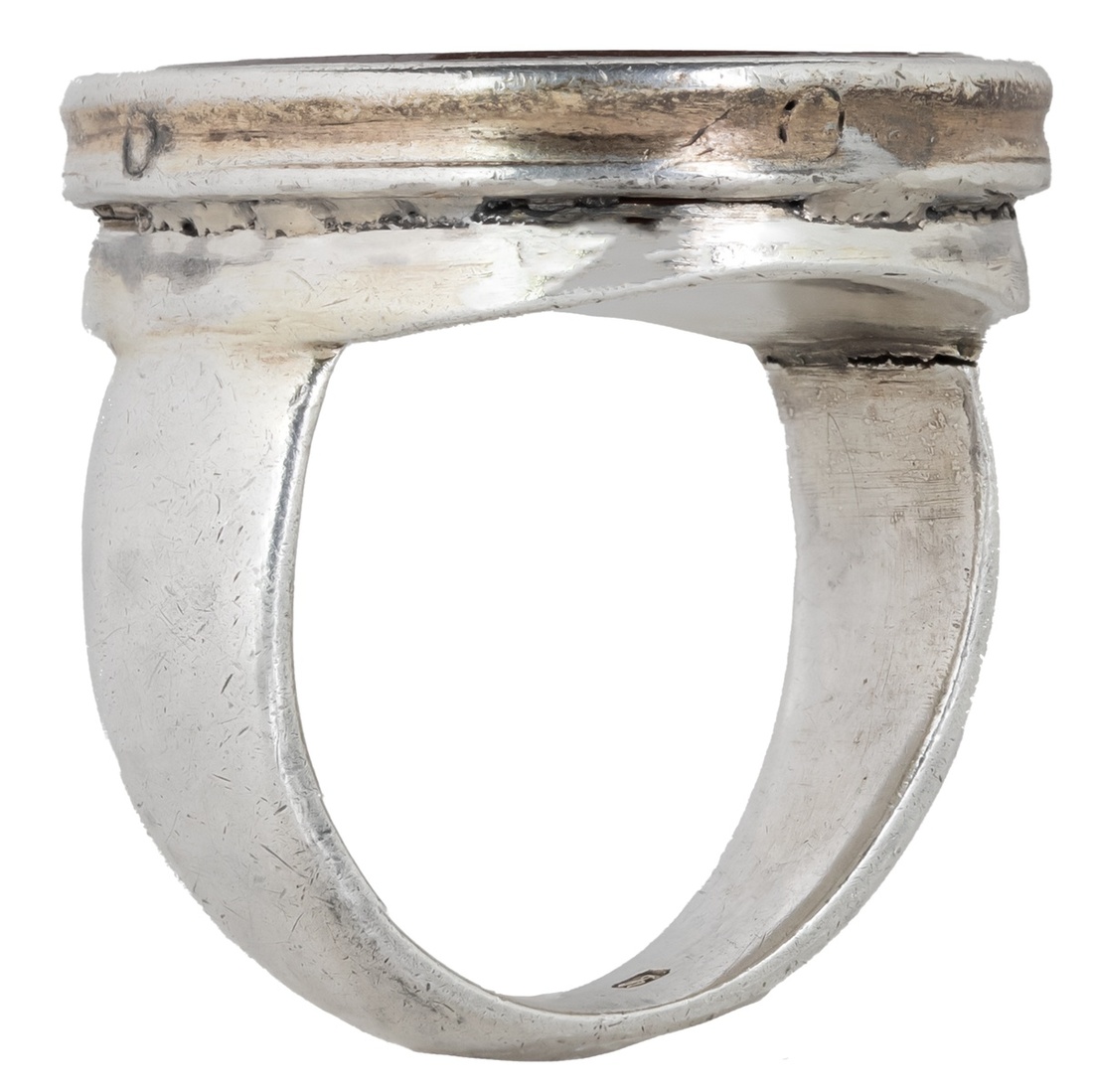
In silver, with traces of former gilding
With a duty mark (Queen Victoria’s head) to the reverse of the bezel and Chester hallmark for 1911 to the band
Size/dimensions: ring size L (US 6)
Gross weight: 10.92g
The intaglio shows some light scratching and abrasion but the carving remains crisp, sharp and highly defined, with visible tool marks and no deep fractures. The gilding is largely worn away with traces remaining, the shank remains round, and there is some wear to the solder about the bezel and light scuffing to the metal. The band appears to be a later replacement, as its 1911 date letter indicates. The ring is offered in good condition.
Zeus Ammon combined the Greek Zeus with the Egyptian god Amun and is shown with the curling horns of a ram. His oracle at the Siwa oasis in the Libyan desert was famous throughout the ancient world, and when Alexander the Great visited it in 331 BC he was greeted as the son of Ammon. After Alexander’s death, his successors placed his portrait wearing the ram’s horns of Ammon on their coinage, most famously the silver tetradrachms of Lysimachus. The subject was much admired by collectors of engraved gems and widely reproduced from the eighteenth century onwards.
From the later seventeenth century until the coming of the railways in the 1840s, a period of travel on the Continent was regarded as the essential completion of a gentleman's education. Young British aristocrats, accompanied by tutors and servants, journeyed through France and across the Alps to Italy, where Rome, Florence, Naples and Venice offered direct experience of the classical world they had studied at school. Many returned with paintings, sculpture and antiquities, and with a lasting conviction that the art of Greece and Rome represented the highest standard of taste.
Engraved gems held a special place in this culture. Small, portable and often genuinely ancient, intaglios and cameos let a traveller own a work of classical art and display their learning, whether set in a ring or arranged in cabinets. Demand far exceeded the supply of originals, and workshops met it with reproductions: James Tassie in London produced casts in glass paste and sulphur of more than fifteen thousand gems, and the Paoletti family in Rome sold impressions in plaster and sulphur, mounted in trays and book-shaped boxes, to visitors to the city. Collections of these impressions became study aids and souvenirs of the Tour in their own right.
Rome was also the centre of Christendom, and the same workshops and visitors that served the taste for classical antiquity also produced and bought devotional jewels. The technique of micromosaic, in which minute tesserae of coloured glass are set to create pictures of extraordinary detail, was perfected in Rome in the late eighteenth century, and its subjects ranged from classical ruins to sacred imagery. In the nineteenth century, as rail travel opened Italy to a far wider public, the Tour gave way to tourism, but intaglio rings, gem impressions and micromosaic jewels remained among the most popular reminders of a visit to The Eternal City.
Subject to 5% tax on Hammer Price in addition to 20% VAT on Buyer’s Premium.
Estimate
£100 to £150
Starting price
£85

Watch, listen and bid as if you were in the room. Now available for auctions worldwide.
Click here to bid live
An exclusive and confidential service for the discerning collector or vendor.
View the Gallery
Download every Spink catalogue on your iPad, iPod or iPhone using free Spink app.
Download From iTunes© 2026 Spink & Son. All rights reserved.