
Auction: 26052 - Jewellery & Objets de Vertu
Lot: 38
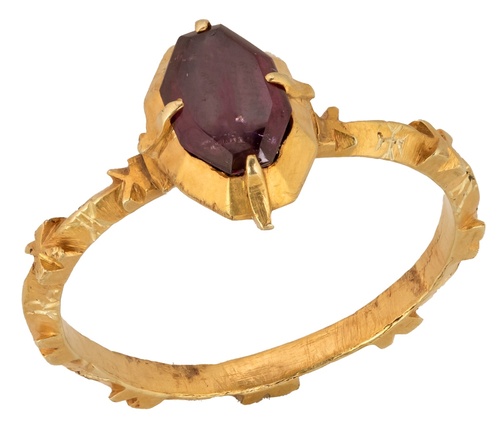
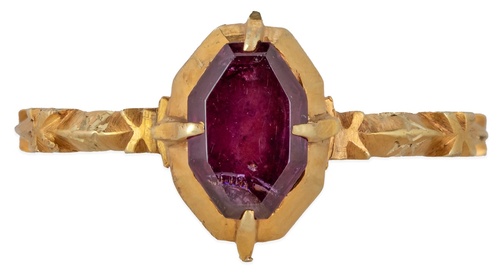
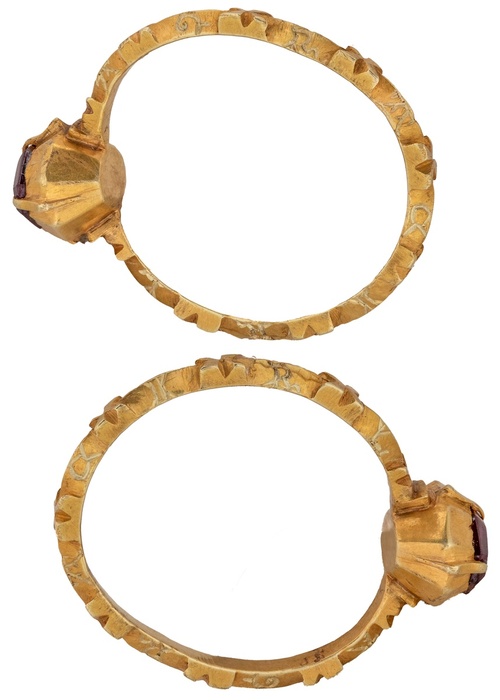
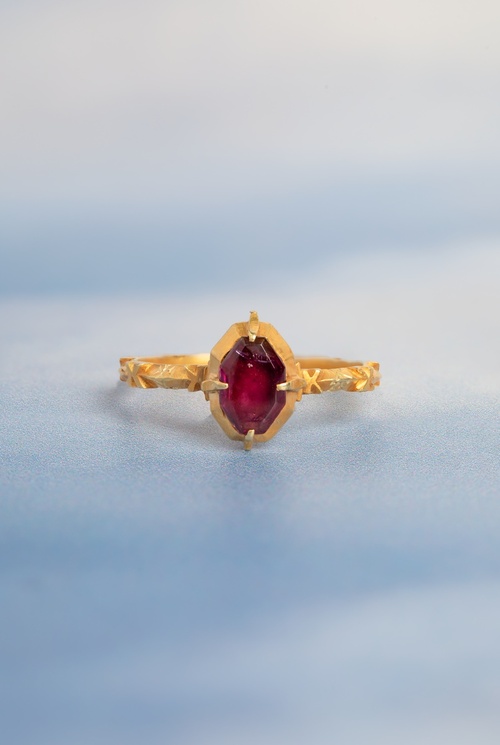
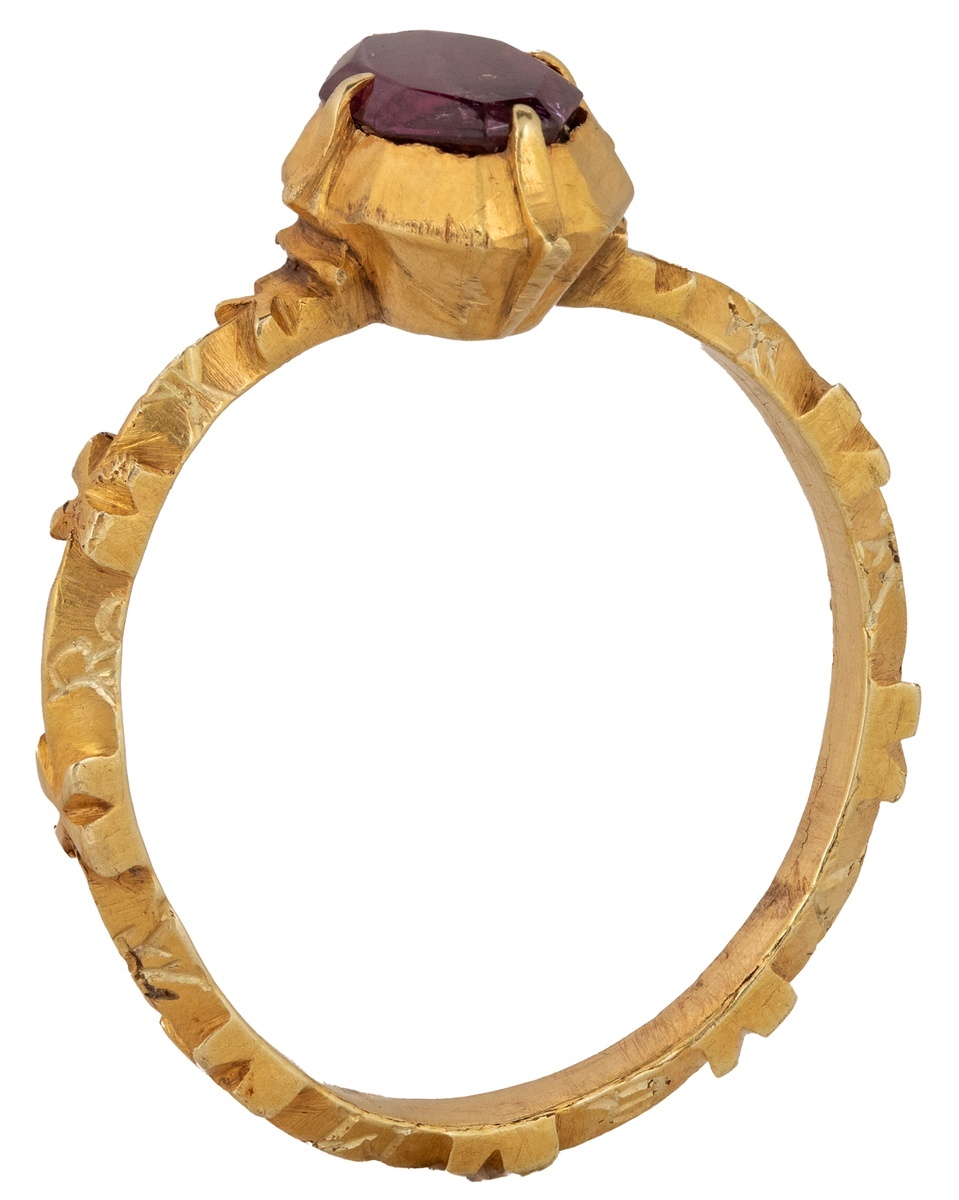
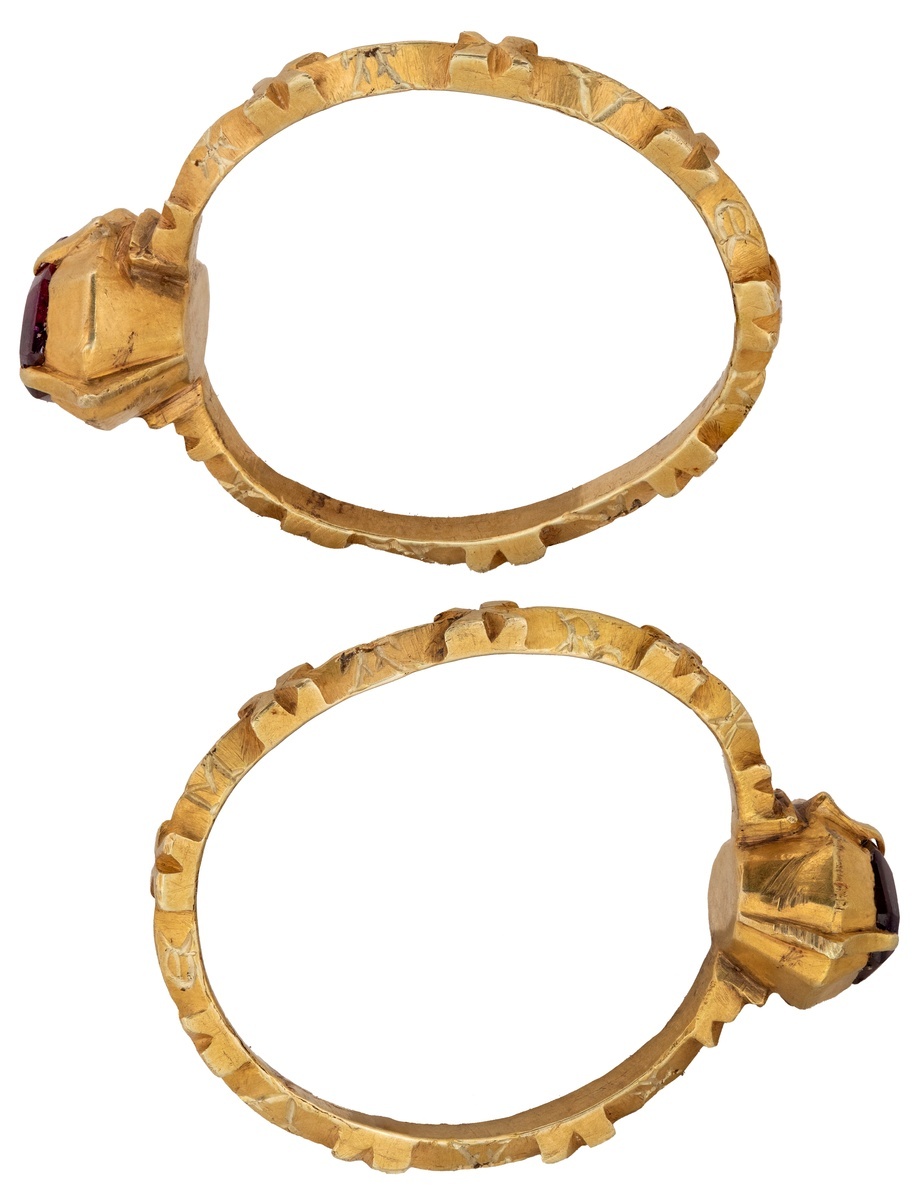
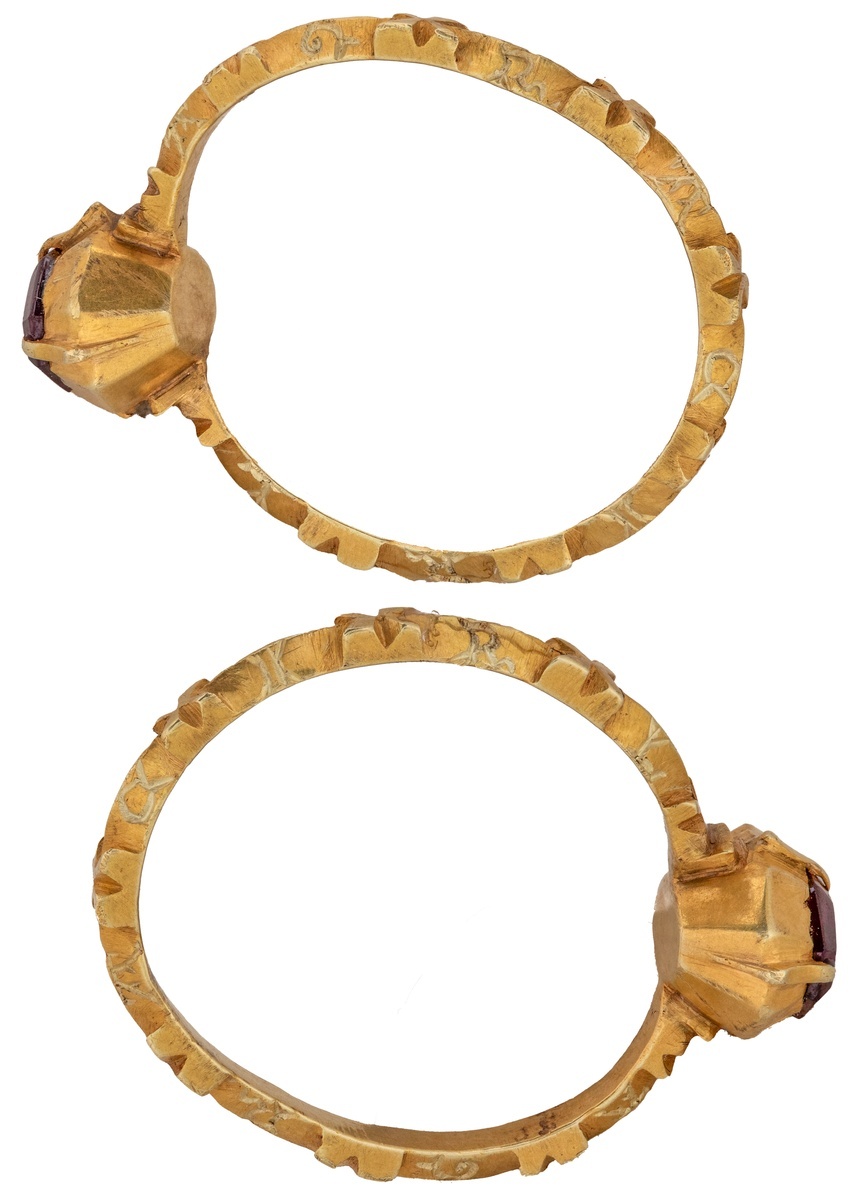
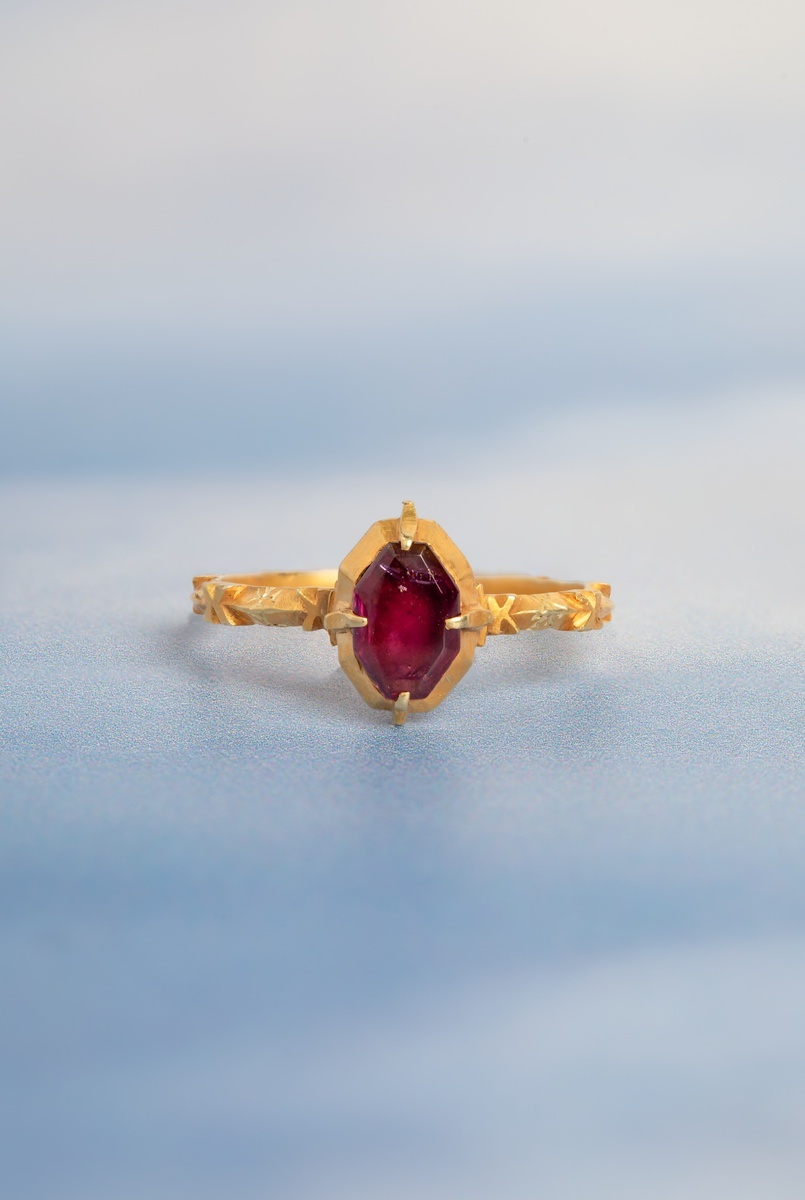
A MEDIEVAL GARNET GOLD ROSARY RING
CIRCA 1300-1500
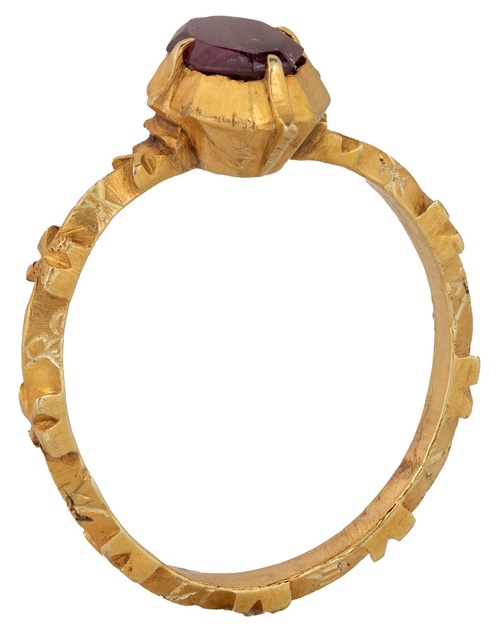
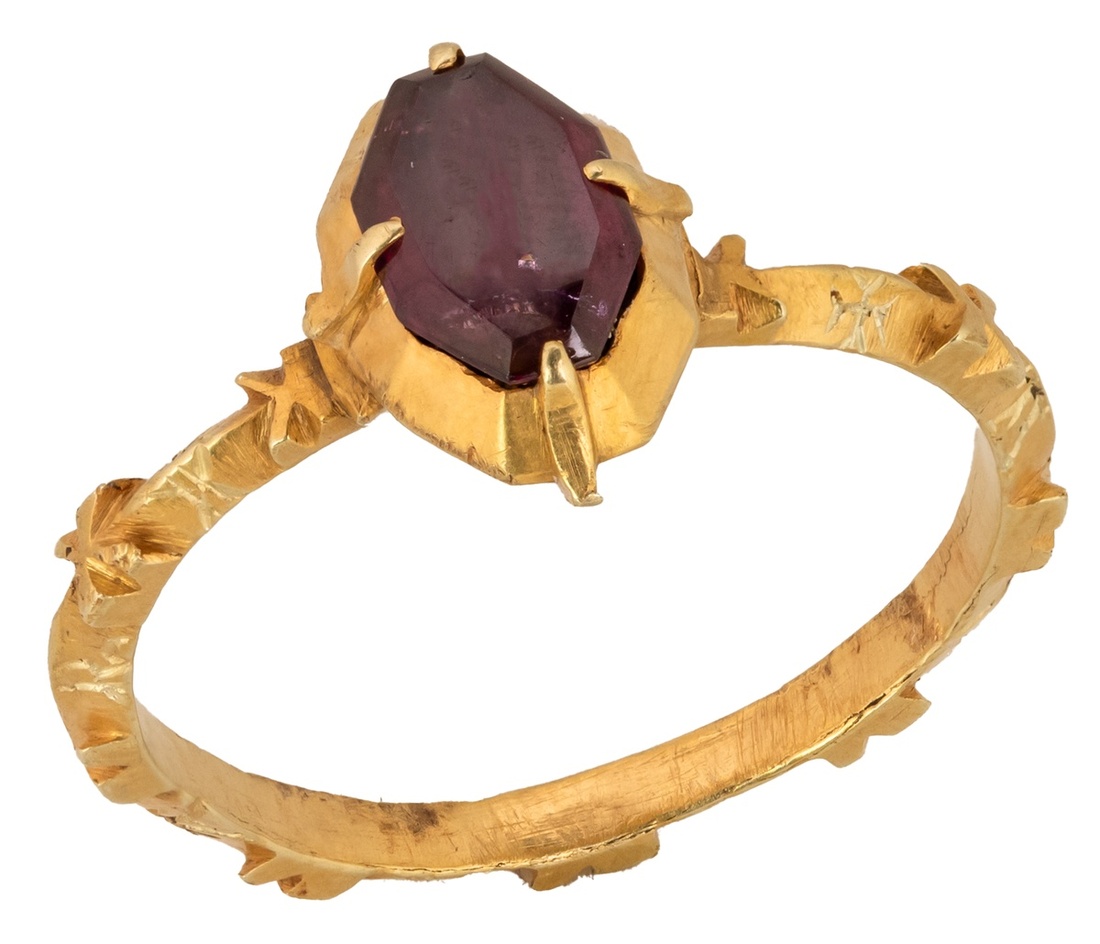
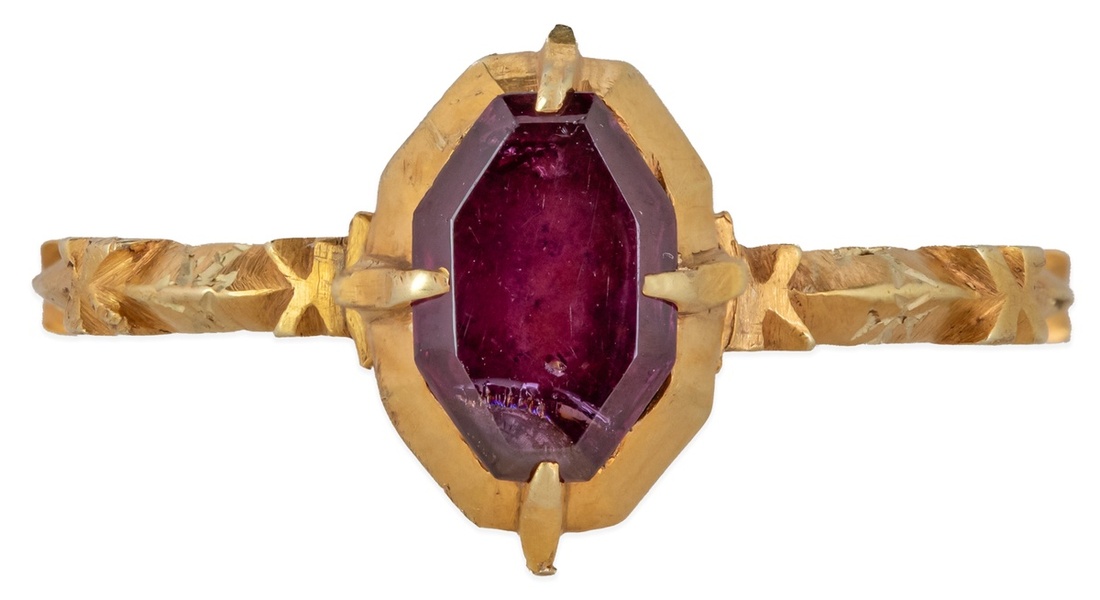
The elongated octagonal pie-dish bezel with bevelled edges and flat reverse, claw-set with an octagonal faceted garnet.
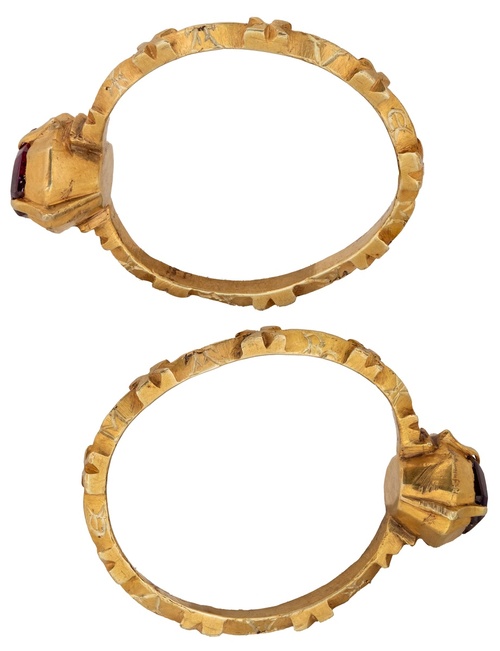
The band of triangular section, the exterior with evenly spaced raised saltires formed of four wedges, between which are capital letters reading, after a cross potent, AVE MARI / A GRACI PL, for 'Ave Maria Gratia Plena' (Hail Mary, full of grace), the second-last letter resembling an 'R' but probably intended as a 'P'.
Analysed as 68.90% gold, 24.90% silver, 6.20% copper
Size/dimensions: ring size O-P (US 7-8)
Gross weight: 2.53g
The stone, an early faceted gem of rich purplish-red tone, has a small incipient fracture at the top that does not reach the surface, and a small mineral inclusion. The hoop is slightly bent out of shape; otherwise the metal is in excellent condition, with the engraved and chased details sharp. The ring is offered in very good condition.
Provenance
Found at Rushbury (Shropshire) on 8 February 2026
~ Recorded with the British Museum (ref. PAS-HESH-E34701; Treasure ref. 2026T382) ~
The rosary became one of the most popular devotions of the late Middle Ages. Rosary rings, also known as decade rings, allowed the faithful to keep count without beads. Turning the ring on the finger, the wearer said one Ave Maria at each of the ten bosses around the hoop, and the bezel marked the Paternoster that began or ended each decade. Worn discreetly, such a ring made private prayer possible at any moment of the day.
The pie-dish form of the bezel and the style of the lettering are characteristic of medieval goldsmiths’ work. The stone, however, points to the later part of the period: in the fourteenth and fifteenth centuries, lapidaries began to cut gems with facets rather than simply polishing them into smooth cabochons, and a faceted stone such as this was a mark of high fashion and expense. Rings closely comparable in their bezel, hoop and inscription have been recorded through the Portable Antiquities Scheme, the nearest of which is dated to about 1300-1400. A similar ring in the British Museum is dated to the fourteenth century.
Cf. PAS DEV-88DB2A (Treasure 2021T593), SF-4BD850 (2015T771), LEIC-94D628 (2025T1552) and GLO-FA2F18 (2020T995); British Museum AF.997.
Subject to 20% VAT on Buyer’s Premium. For more information please view Terms and Conditions for Buyers.
Estimate
£2,400 to £3,400
Starting price
£2000

Watch, listen and bid as if you were in the room. Now available for auctions worldwide.
Click here to bid live
An exclusive and confidential service for the discerning collector or vendor.
View the Gallery
Download every Spink catalogue on your iPad, iPod or iPhone using free Spink app.
Download From iTunes© 2026 Spink & Son. All rights reserved.