
Auction: 26052 - Jewellery & Objets de Vertu
Lot: 20
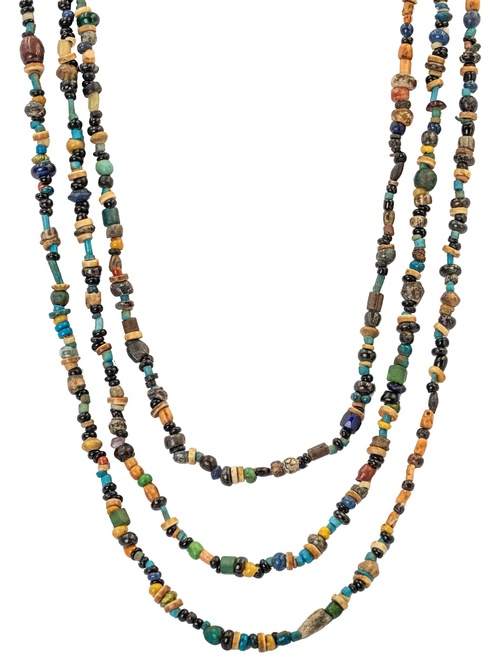
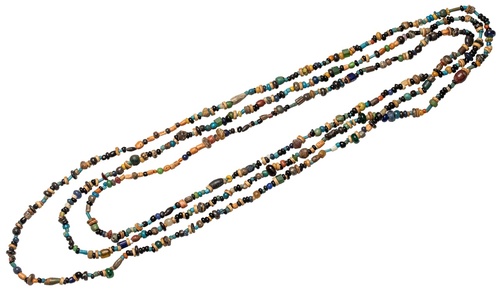
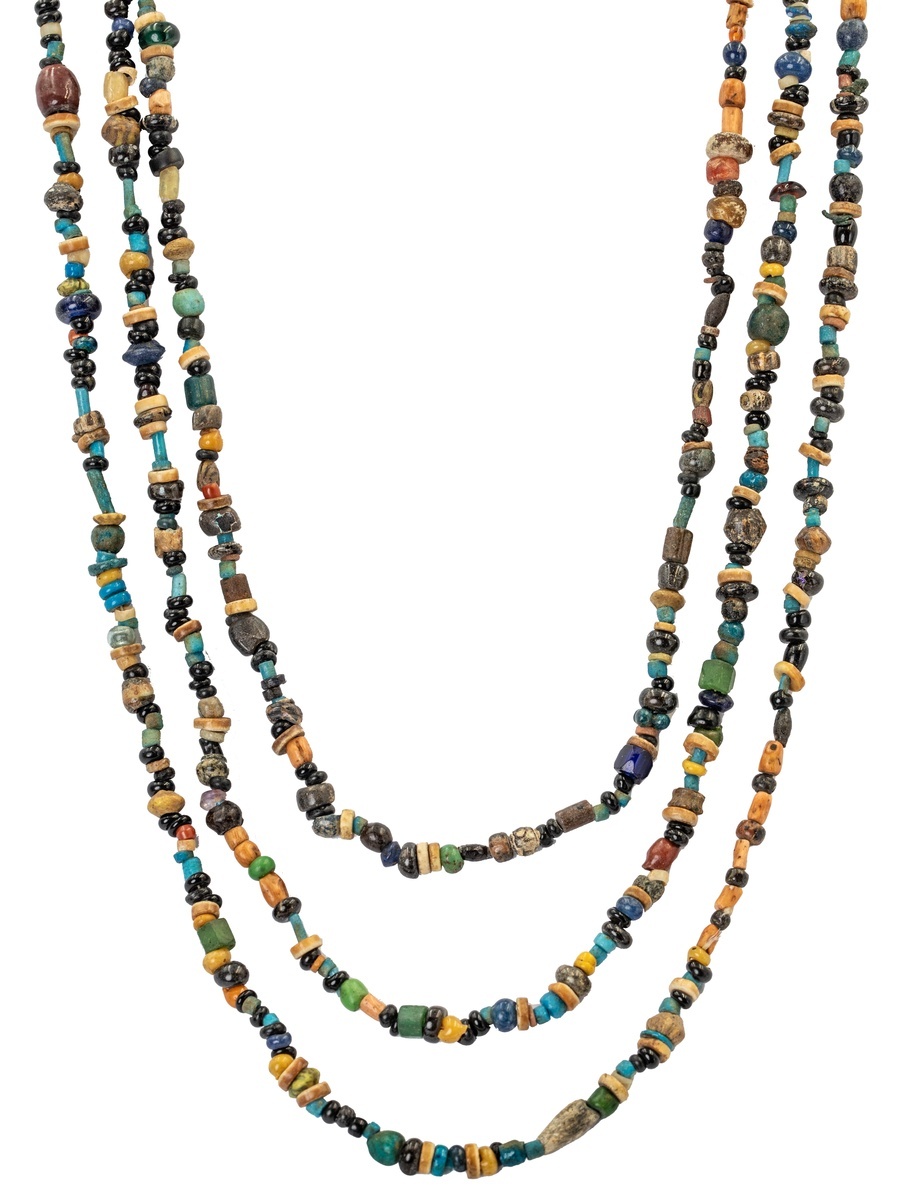
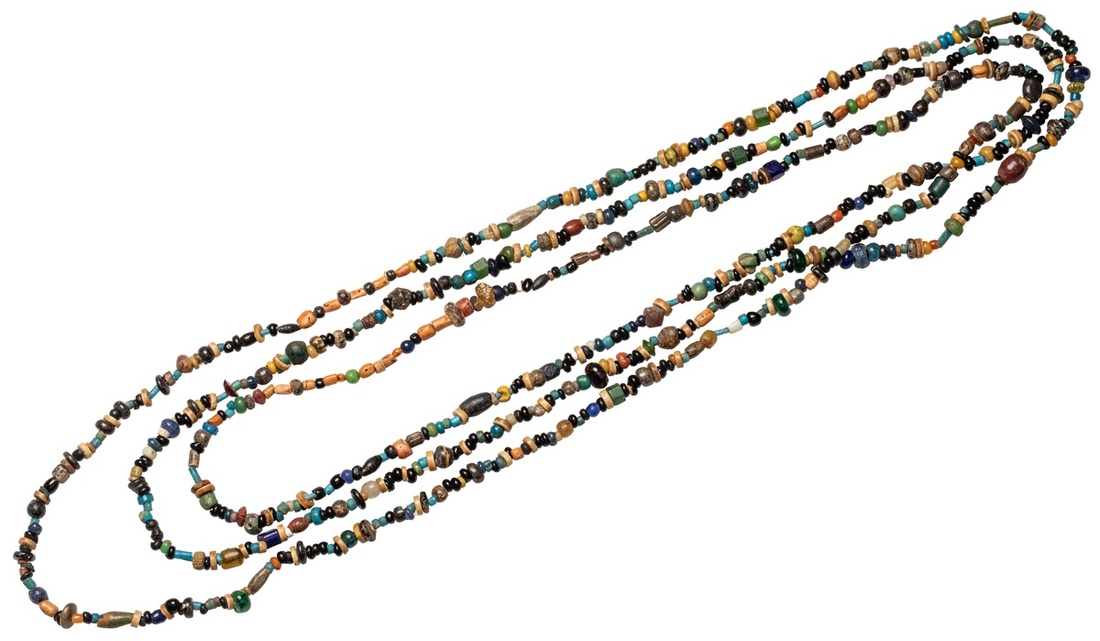
(x) A LONG STRAND OF ANCIENT EGYPTIAN FAIENCE AND GLASS BEADS
Composed of polychrome faience and glass 'mummy' disc and tubular beads, restrung as a single long wearable strand, the glazes in tones of turquoise, deep blue, tan, cream, red and charcoal.
Size/dimensions: 180.00cm long
Gross weight: 45.96g
Restrung in the modern age. As expected of ancient beads, the beads show weathered matte surfaces, minor earth encrustations and some surface wear consistent with age and burial, but overall offered in good condition.
Provenance
Private collection, San Francisco Bay Area, California, acquired in the second half of the 20th century
Thence by descent to the present owner
The material 'faience' is closely associated with ancient Egypt. It is made from crushed quartz or sand, mixed together with small amounts of lime and plant ash, and then moulded into beads, amulets and small vessels. The different colours, often of blue and green occur as a result of firing the beads with copper. This glazing was referred to by the Egyptians as 'tjehenet', meaning 'dazzling', and it carried distinctive meanings of new vegetation and rebirth, evoking the fertile Nile.
Amulets, as throughout history, were worn by the living and placed with the dead for protection. Among the most recognisable was the wedjat, the Eye of Horus, which according to myth was torn out in the god's struggle with Seth and magically restored. It became a symbol of healing, wholeness and protection. The scarab beetle, was likened to the god Khepri pushing the sun across the sky each morning, and it came to embody renewal and rebirth.
From the Middle Kingdom onward, scarabs served both as amulets and as personal seals, their flat undersides engraved with names, titles, protective signs and decorative designs.
Faience beads were produced in enormous numbers. In the Late Period, wrapped mummies were often covered with nets of tubular and disc beads, and it is from such sources that many of the beads known today derive. Few ancient necklaces survive on their original threads, so most have been restrung in modern times, often by collectors. Interest in them grew sharply after the discovery of Tutankhamun's tomb in 1922, which inspired a wave of Egyptian taste in jewellery and design throughout the interwar years.
Subject to 5% tax on Hammer Price in addition to 20% VAT on Buyer’s Premium.
Estimate
£300 to £400
Starting price
£200

Watch, listen and bid as if you were in the room. Now available for auctions worldwide.
Click here to bid live
An exclusive and confidential service for the discerning collector or vendor.
View the Gallery
Download every Spink catalogue on your iPad, iPod or iPhone using free Spink app.
Download From iTunes© 2026 Spink & Son. All rights reserved.