
Auction: 26050 - Jewellery & Objets de Vertu
Lot: 50
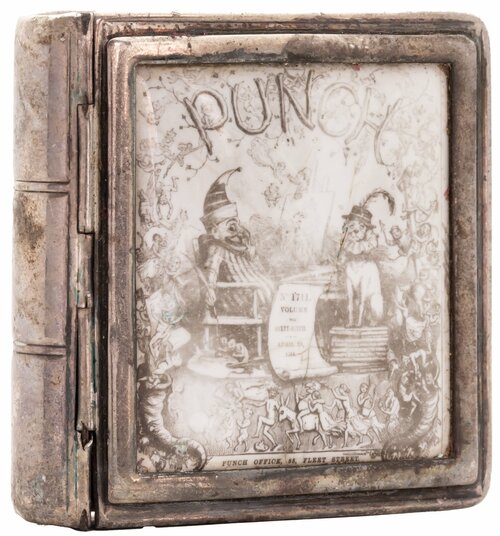
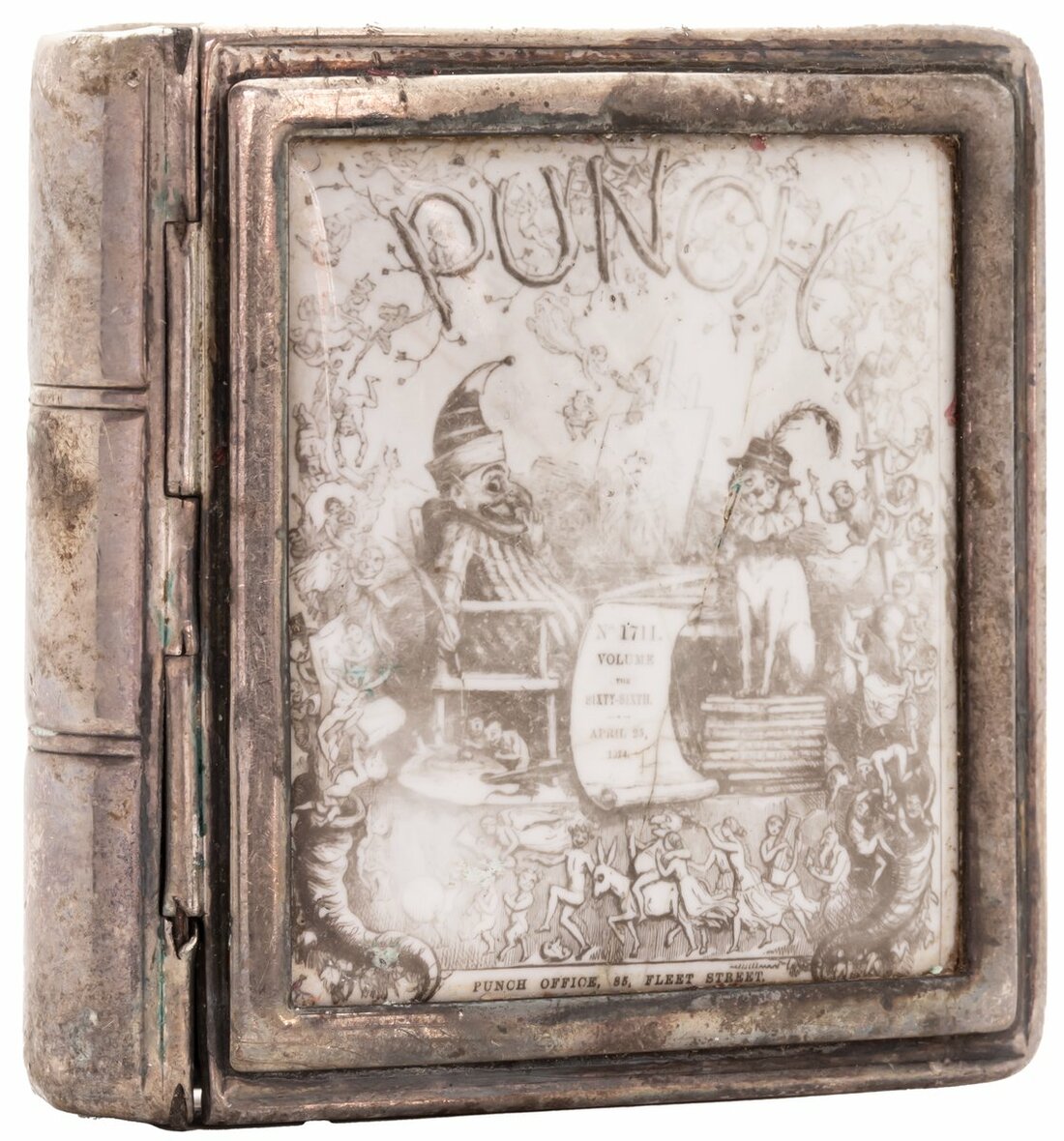
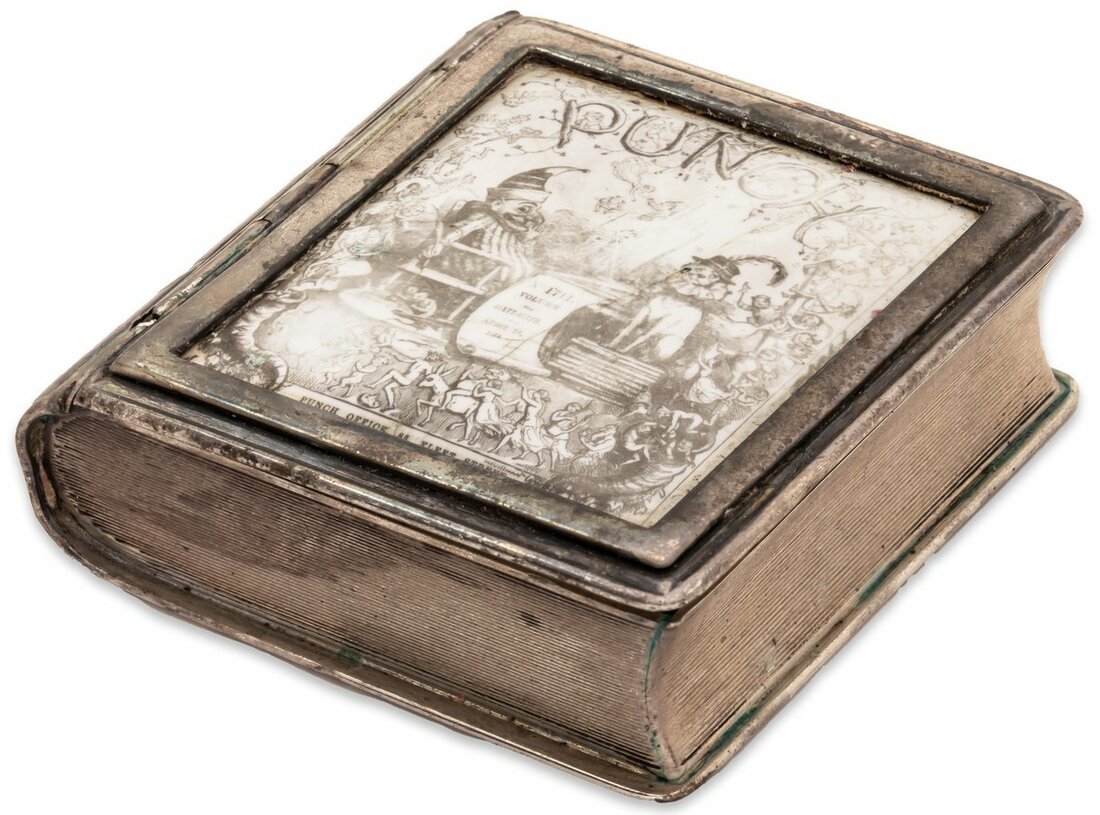
HENRY WILLIAM DEE, A VICTORIAN 'PUNCH' MAGAZINE SILVER AND ENAMEL VESTA CASE
LONDON, 1874
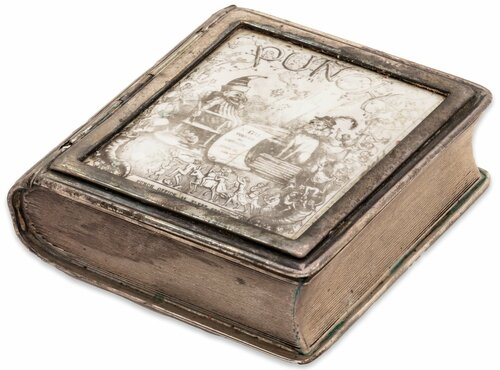
Modelled as a miniature book, depicting Punch magazine cover imagery.
Featuring a finely detailed enamel panel showing Mr Punch and Toby the Dog, with hinged opening and striker base.
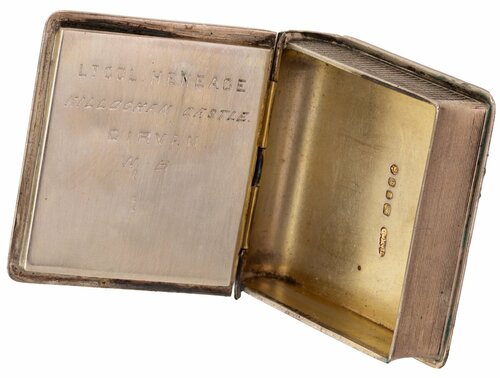
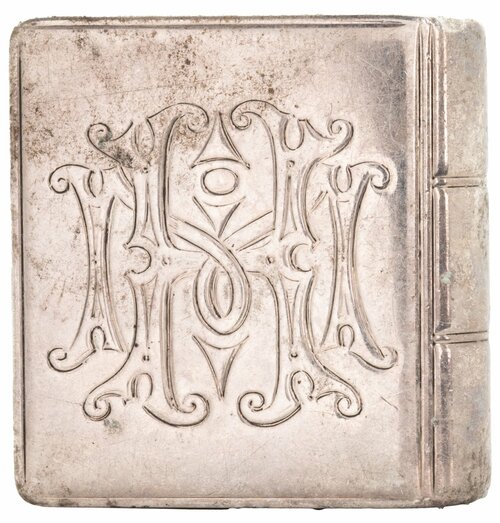
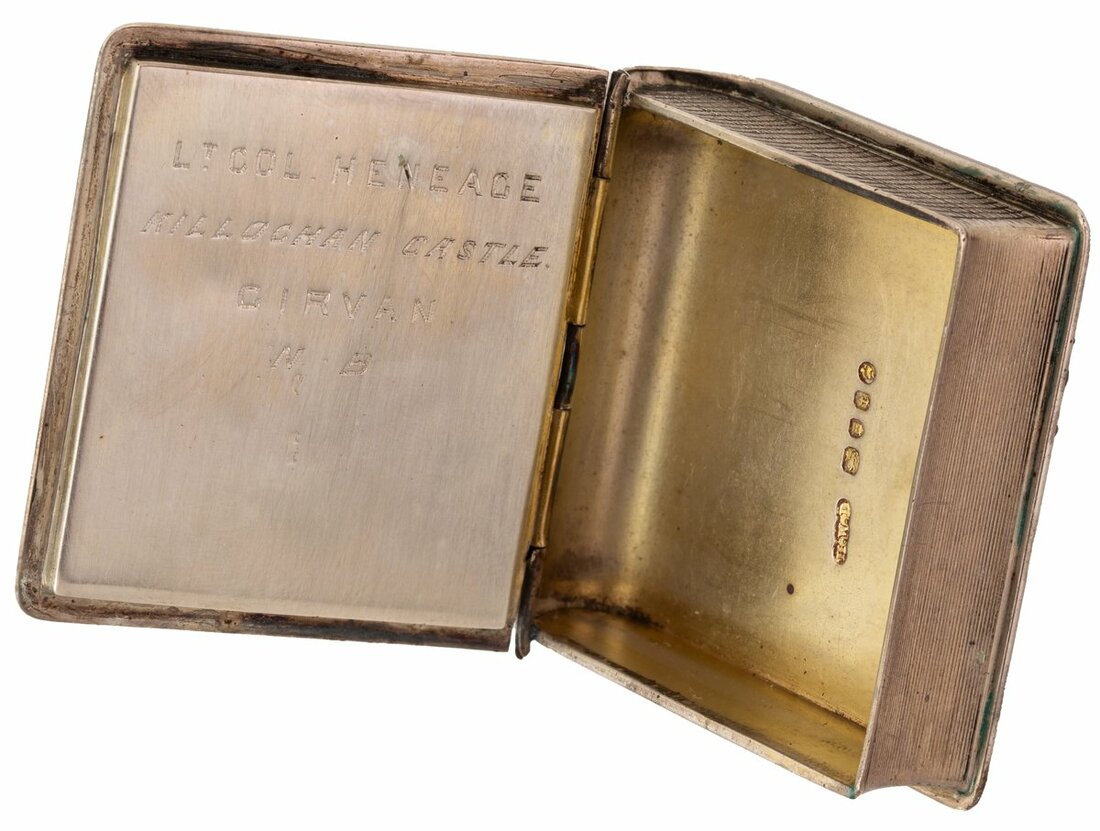
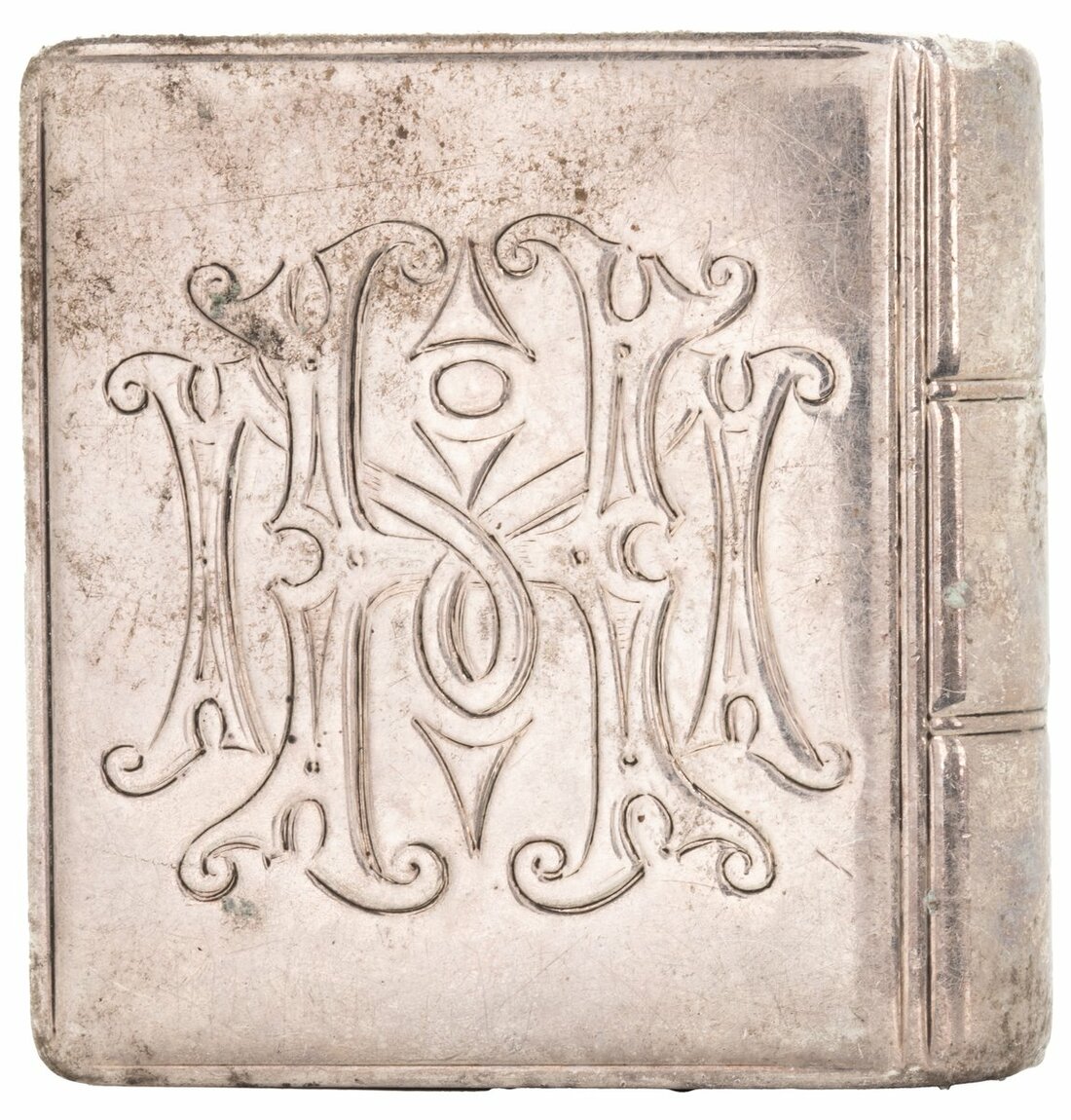
Inscribed on inside: Lt. Col. Heneage | Killochan, Castle Girvan N.B. with engraved cypher to reverse
Maker's mark 'H . W. D' for Henry William Dee.
London hallmarks
Marked for sterling silver
Size/dimensions: 4.60cm x 4.50cm
Gross weight: 62.00g
The enamel remains in good condition with no loss. The piece shows light surface wear consistent with age. The hinges are in good working order, and the item is offered in good condition.
Lieutenant Colonel Michael Walker Heneage (1835–1906)
Lieutenant Colonel Heneage entered the Coldstream Guards as an Ensign in December 1853 and was promoted Lieutenant in December 1854, during the opening phase of the Crimean War. He served throughout the conflict as part of the Brigade of Guards within the 1st Division of the British Army expeditionary force in the Crimea.
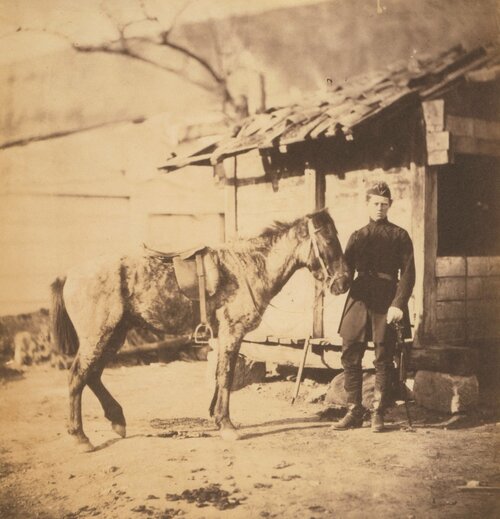
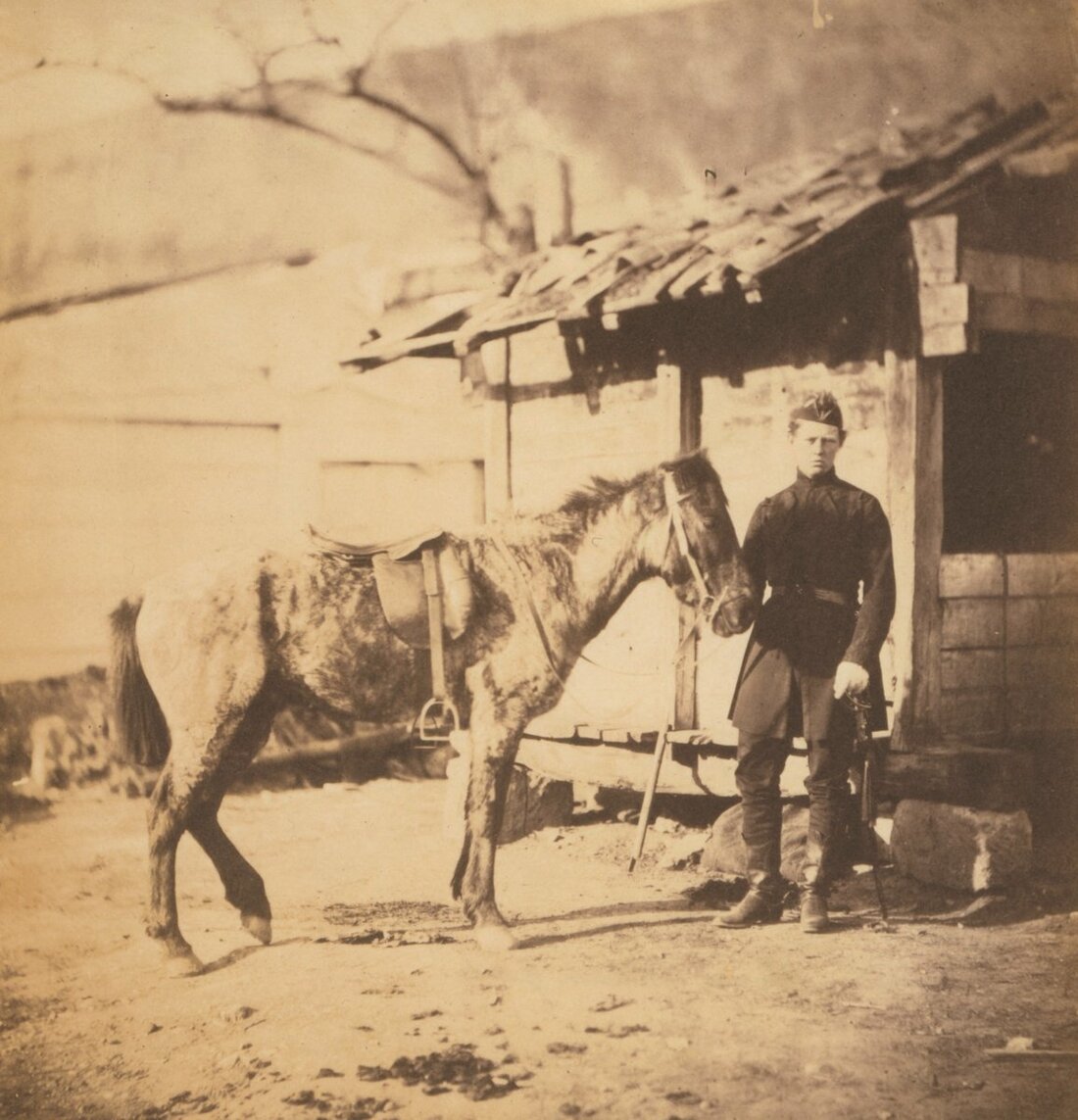
His presence is further distinguished by his inclusion among the officers photographed by Roger Fenton in 1855, during one of the earliest systematic photographic campaigns of war. These images provide a rare visual record of serving British officers in the field and place Heneage within one of the defining visual archives of the Victorian military experience.
In 1864, Heneage married Florence Margaret Isabella Cathcart, daughter of Sir George Cathcart. Following their marriage, the family were associated with Killochan Castle in Ayrshire, a substantial and historic L-plan tower house set within extensive estate grounds near Girvan.
The wider military distinction of the Walker-Heneage family is also important. His elder brother, Major Clement Walker-Heneage, was awarded the Victoria Cross for gallantry during the Indian Mutiny at Gwalior in 1858, placing the family within the highest echelon of military honour.
Against this background, Punch occupied a central position in Victorian print culture, combining satire, political commentary, and reflections on contemporary military and social life, and was widely read among the officer class.
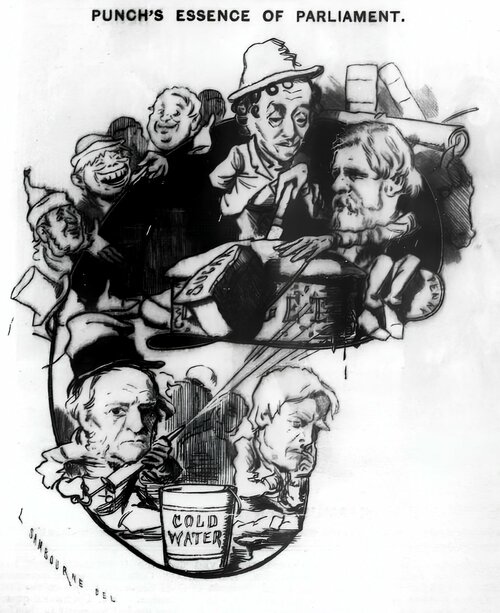
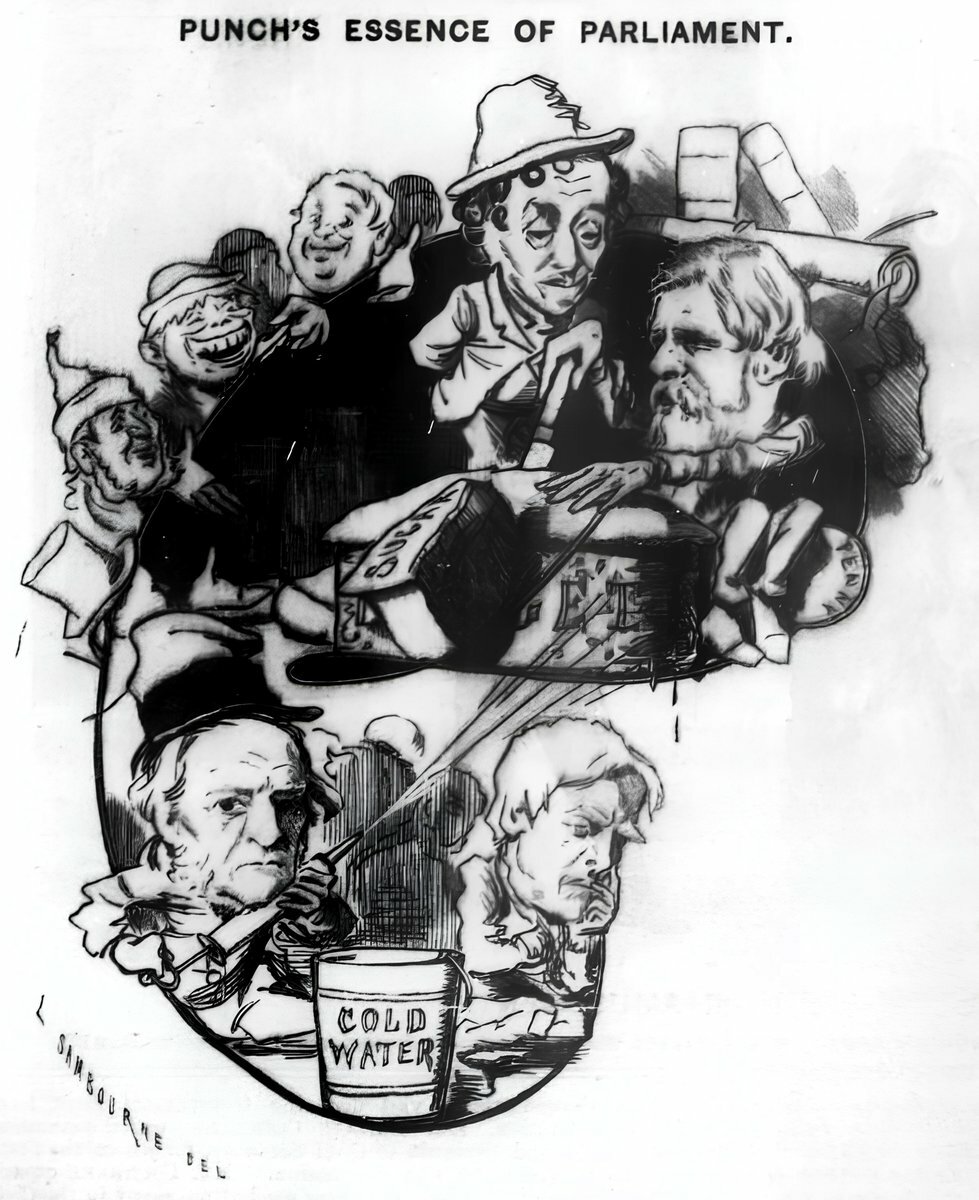
A closer reading of the April 25, 1874 issue of Punch (the edition referenced by the cover design of this case) reveals a lead parliamentary satire under “Essence of Parliament” focused on Lord Cardwell’s Army Reforms. The principal cartoon, titled “Cold Water,” accompanies commentary on short-service enlistment, the restructuring of the British Army, and the abolition of the purchase of commissions - reforms introduced between 1871 and 1874 which fundamentally reshaped the officer class from which Heneage himself had emerged.
The parliamentary debate satirised in this issue reflects the transitional tensions of the period. Major Beaumont opens a motion concerning Army recruiting and the state of the Reserve forces, prompting a wider critique from a number of MPs and military figures. Their objections focus on the short-service system, recruiting structures, and the broader consequences of Cardwell’s reforms.
In response, Henry Campbell-Bannerman, then a junior minister, defends the reforms by urging patience, arguing in effect that their results cannot fairly be judged before they have had time to mature. The exchange encapsulates the broader political debate of the 1870s, in which Edward Cardwell’s reforms (abolishing purchase, restructuring regiments, introducing short service, and developing a trained reserve) were transforming the British Army from a purchase-based officer system to a modern professional structure.
For a retired Coldstream Guards officer who had purchased his commission and left the service in 1866, this debate represented not abstract politics but the dismantling of the system under which his own career had been formed. The Punch issue therefore occupies a space directly adjacent to his professional world, satirising the transition from the old regimental purchase system to the new Cardwellian structure of short service and reserves.
The vesta case may thus be understood within a milieu in which Punch functioned not merely as entertainment, but as a shared commentary on institutional change, particularly within the officer class of the Guards and line regiments.
A comparable Victorian military vesta case by leading makers Sampson Mordan & Co., incorporating enamelled regimental imagery and inscribed with the name of Lieutenant-Colonel Heneage, sold at Reeman Dansie in August 2020 for £1,900 hammer, catalogued with a cautious attribution to him. The engraved cypher and style of personalised inscription closely correspond with this example, suggesting it was very likely commissioned or acquired by Heneage himself rather than being a gift.
Subject to 20% VAT on Buyer’s Premium. For more information please view Terms and Conditions for Buyers.
Sold for
£420
Starting price
£400

Watch, listen and bid as if you were in the room. Now available for auctions worldwide.
Click here to bid live
An exclusive and confidential service for the discerning collector or vendor.
View the Gallery
Download every Spink catalogue on your iPad, iPod or iPhone using free Spink app.
Download From iTunes© 2026 Spink & Son. All rights reserved.