
Auction: 26050 - Jewellery & Objets de Vertu
Lot: 18
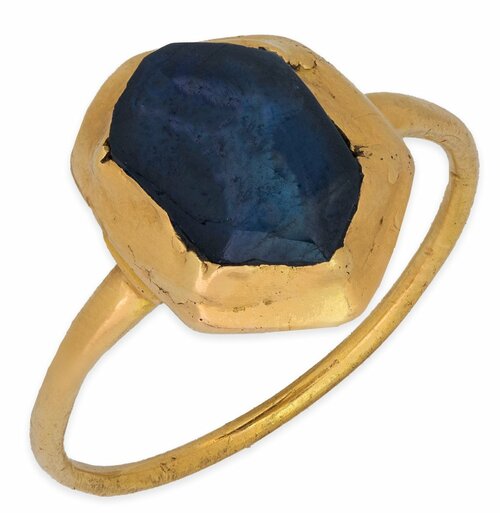
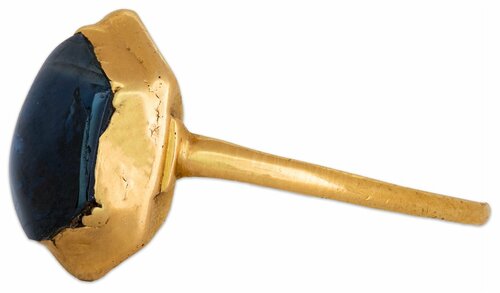
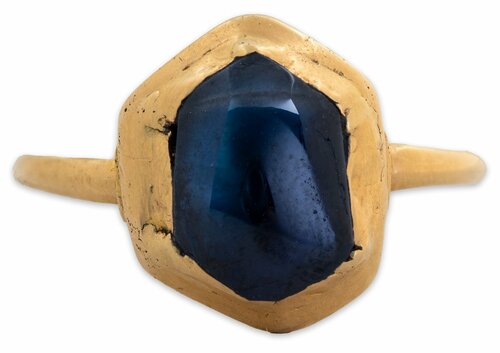
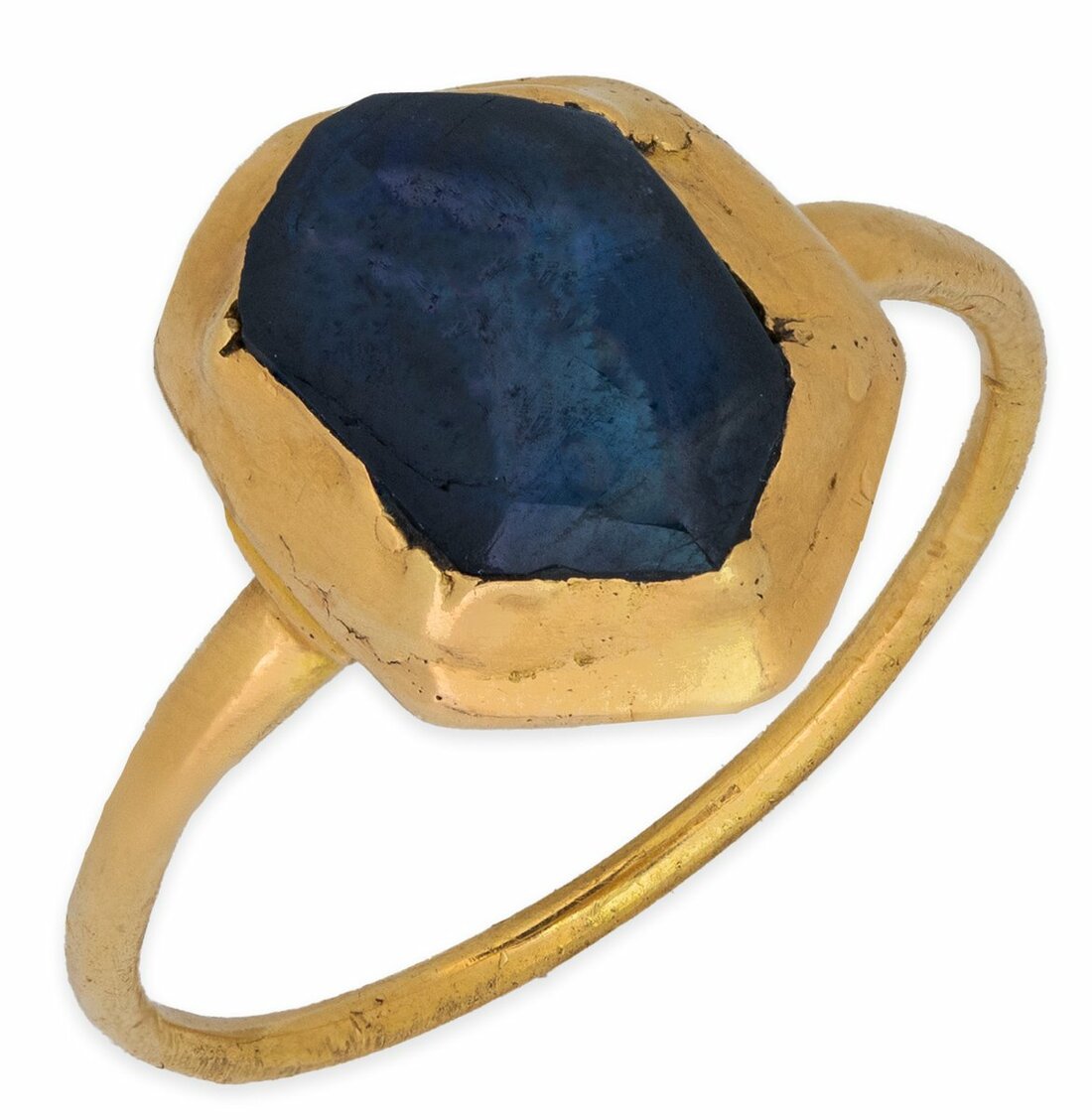
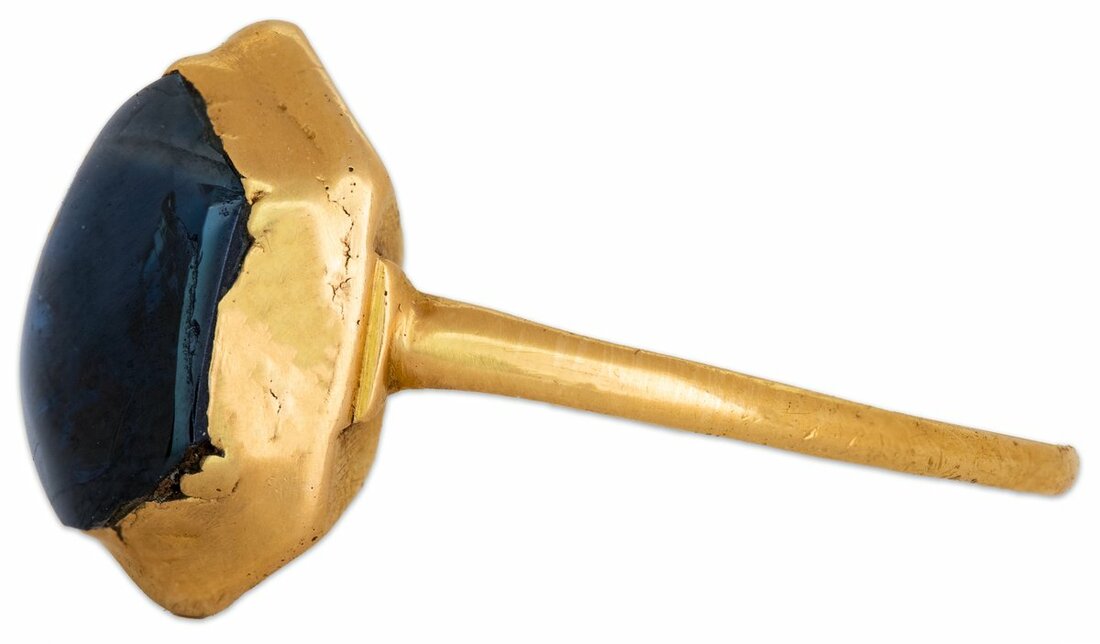
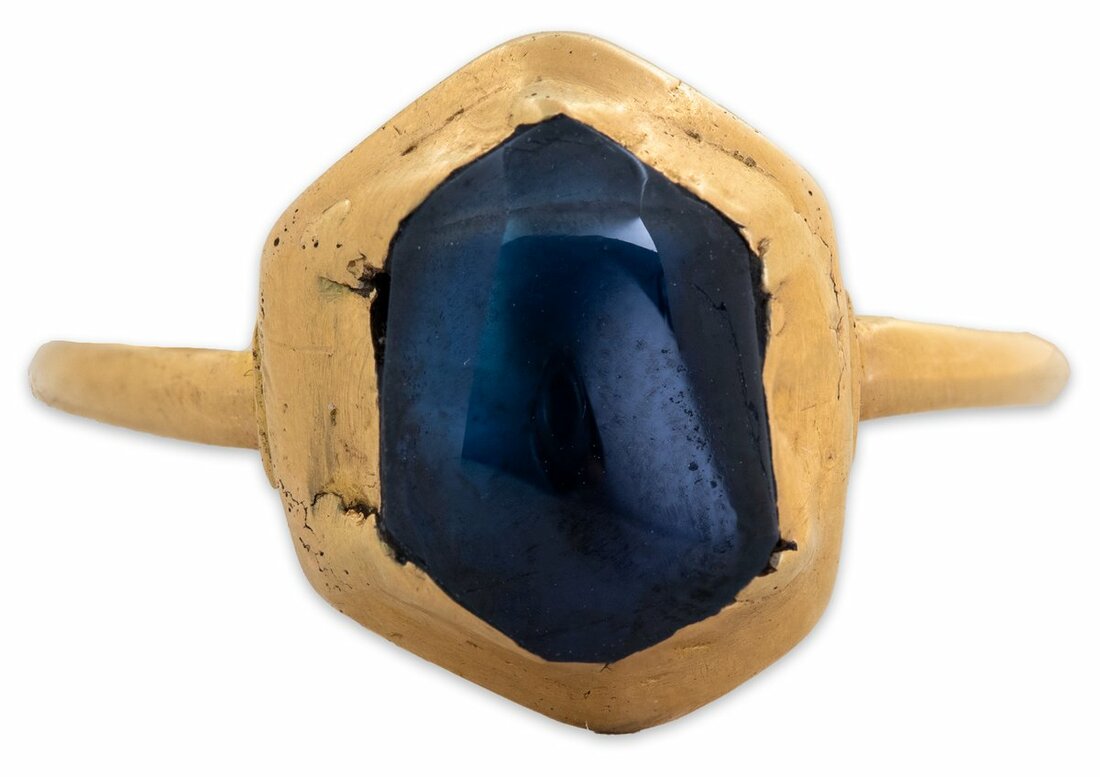
A MEDIEVAL SAPPHIRE GOLD RING
CIRCA 1300-1500
Set with a sizeable natural blue sapphire cabochon within a closed-back cusped hexagonal bezel of characteristic pie-dish form.
The bezel mounted on a rounded hoop.
Tests as ~24ct gold (shank), ~19ct (bezel).
Unmarked
Size/dimensions: ring size Q (US 8 1/4)
Gross weight: 4.46g
The sapphire is estimated at approximately 5.14ct and is securely set. It exhibits attractive, visible angular colour zoning throughout the stone. The piece shows wear consistent with age, including light dents and evidence of historical manipulation to the bezel, and is offered in fair condition.
Provenance
Passed down by familial descent
Reported to the Portable Antiquities Scheme but due to the lack of findspot, unable to be recorded
This finely preserved medieval gold ring exemplifies the enduring appeal of sapphire-set jewellery among the elite classes of late medieval Europe. They were among the most prized gemstones of the Middle Ages and occupied a unique position at the intersection of religious devotion, aristocratic identity, and magical belief. Its deep blue was associated with the heavens and divine wisdom, making it a favoured stone within ecclesiastical circles. From the early medieval period onward, bishops and senior churchmen wore sapphire-set rings as symbols of spiritual authority, while sapphires also adorned reliquaries, processional crosses, and liturgical vessels.
Beyond the Church, sapphires were highly sought after by royalty and the nobility. Their rarity, coupled with the considerable expense of importing them along trade routes from Sri Lanka, Persia, and the wider Islamic world, restricted ownership to the wealthiest ranks of society. Contemporary lapidaries and medieval writers attributed a remarkable range of virtues to the stone. Sapphires were believed to preserve chastity, encourage peace and reconciliation, protect against envy and treachery, and even act as an antidote to poison. They were also credited with medicinal powers, including the ability to cure headaches, heal ulcers, and protect against snake bites. Such beliefs transformed gemstone rings into potent amulets as well as conspicuous displays of wealth and status.
Unlike later faceted gemstones designed to maximise brilliance, medieval sapphires were typically fashioned as smooth cabochons, emphasising the purity and depth of colour believed to embody their spiritual and protective qualities. In many cases, the gemstone itself represented the majority of the ring's value, while the gold mounting served to frame and display this precious and symbolically charged material.
This ring belongs to a well-documented group of medieval gem-set finger rings characterised by pie-dish bezels and geometric settings. Comparable examples are preserved in major museum and archaeological collections, including the Victoria and Albert Museum (inv. no. 642-1871), and are recorded through the Portable Antiquities Scheme (references HAMP-EBA980, ESS-49D8F6, and SUSS-8219A6). The hexagonal bezel employed here reflects a sophisticated geometric aesthetic popular during the later medieval period.
Subject to 20% VAT on Buyer’s Premium. For more information please view Terms and Conditions for Buyers.
Sold for
£6,500
Starting price
£1400

Watch, listen and bid as if you were in the room. Now available for auctions worldwide.
Click here to bid live
An exclusive and confidential service for the discerning collector or vendor.
View the Gallery
Download every Spink catalogue on your iPad, iPod or iPhone using free Spink app.
Download From iTunes© 2026 Spink & Son. All rights reserved.