image

Previous Lot Next Lot

Auction: 26015 - "The Treasure of the Eagles" Collection of Albania - Part I
Lot: 3133

(x) Albanian Occupation of Dibër (1913)
The Most Important Item
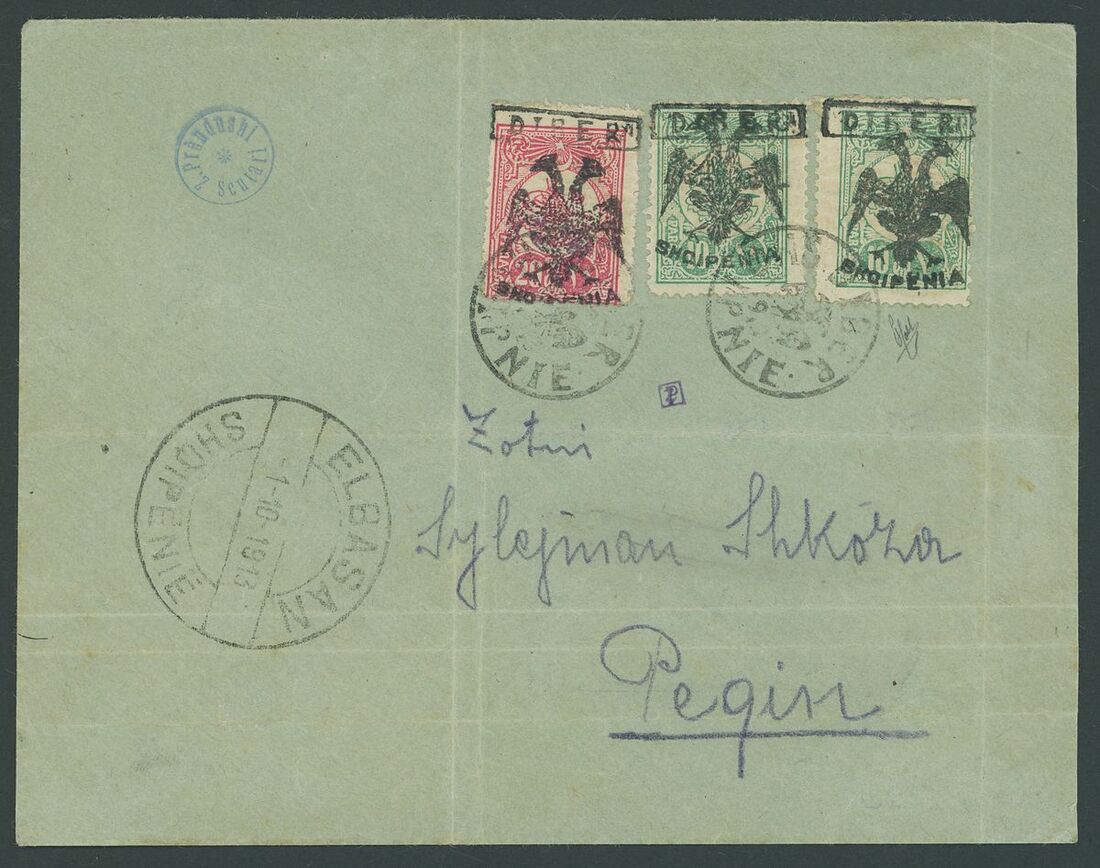
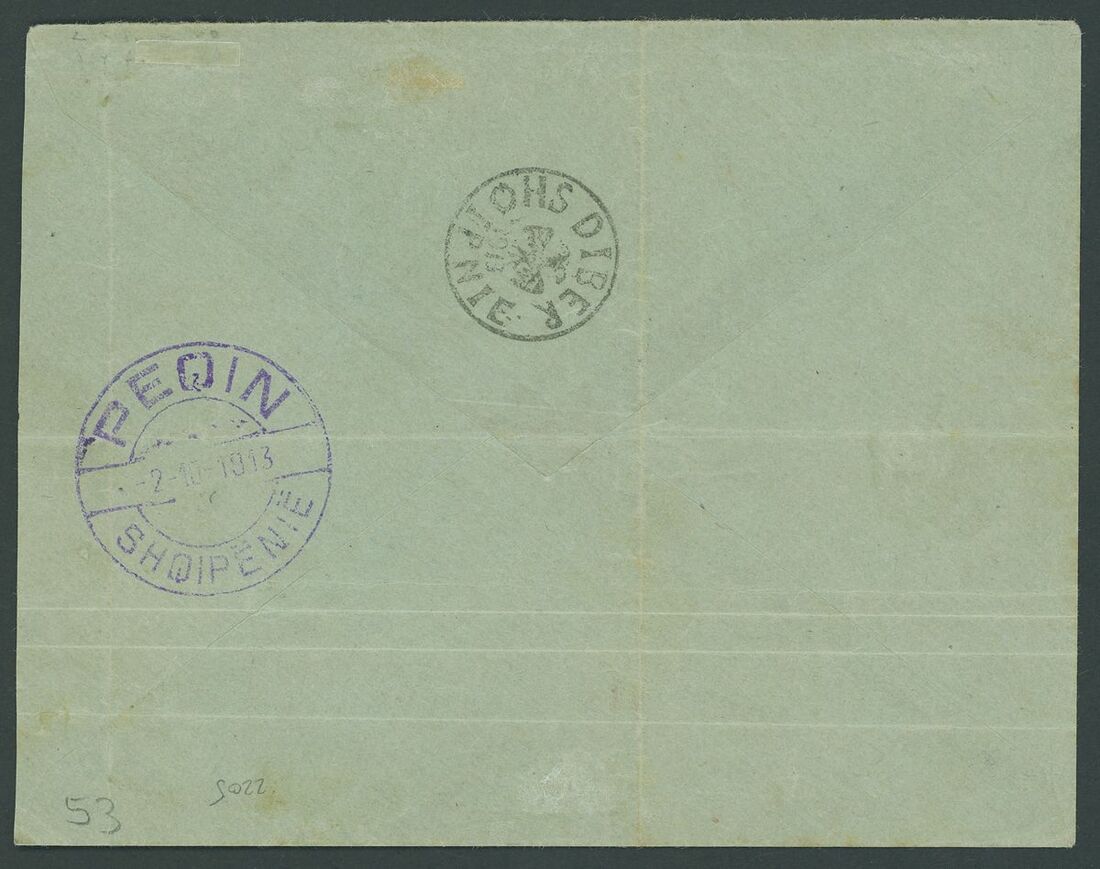
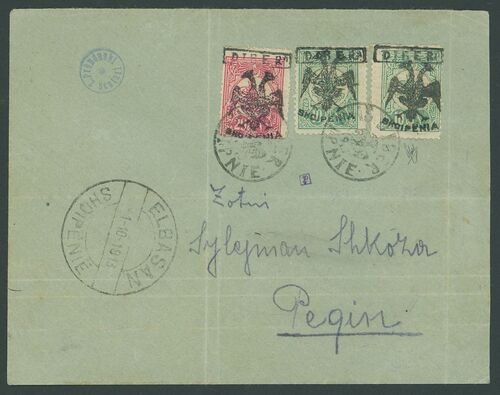
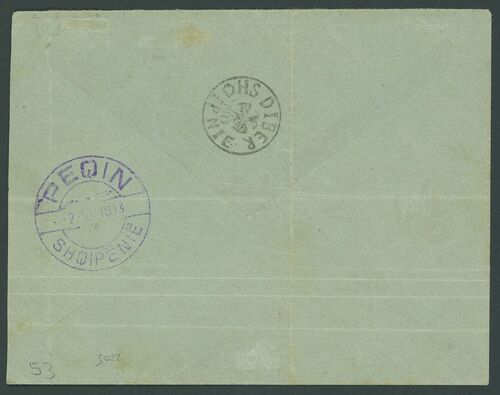
1913 (Sept. 23 or 24). Cover from Dibër to Peqin, probably dispatched on the 23rd or 24th, franked by "DIBER" overprinted stamps of the Albanian occupation, including 10pa. blue-green (2) and 20pa. rose, both representing all Albanian stamps issued for this territory, tied by "diber/shqipenie/1913" single circle, the primitive undated cancellation provisionally produced for the occupation, showing transit c.d.s. of Elbasan at left. Some minor creases not affecting the franking. The most spectacular of the only three letters known with Albanian overprinted stamps from this occupation, and the most important item of this territory. Cert. Holcombe and signed by Prendusi with his characteristic "Z. Prëndushi/Scutari" circle at top left and his small framed "ZP" marking below the franking. Michel 1, 2.

provenance: Kolë Gjinaj (nephew of Prince Bibë Doda, one of the founders of Albania). Illustrated in article published by Markus W. E. Peters and the late Kolë Gjinaj in "The Skanderbeg" (1999.
Note on postal features: It is considered that the few letters handled by the Albanian Dibër P.O. may have been dispatched on the same date, immediately after the territory was taken, since during that very difficult time the postal agent may have decided to make only one journey along a very risky route due to the Serbian presence. During that period, it was obviously not possible to have a canceller with a movable date manufactured, as such cancellers were generally produced outside Albania.
Note on the historical events: After the declaration of Albanian independence at the end of 1912, the region fell into confusion as several foreign powers sought to assert control: the Greeks in the south, the Montenegrins in the north, the Serbians in the north and along the central coast, and the Italians and Austrians along the coast. Dibër (now in North Macedonia), then an Albanian-majority town -in fact, the Albanian national hero Gjergj Kastrioti “Skanderbeg” (1405–1468) came from the district of Dibër-, had belonged to the Ottoman sanjak of Monastir until the Ambassadors’ Conference in London in May 1913 formally annexed it to Serbia. In practice, however, Serbia found it difficult to maintain effective control over the district. Hostilities began on 13.8.1913 and intensified in mid-September, culminating on 21 September with the killing of 48 Albanian notables by the Serbian army. On 23 September, Albanian insurgents expelled the Serbian troops from Dibër in a bloody battle and raised the national flag, re-establishing what they considered the original ethnic boundary, keeping control until approximately 10 October. Following the occupation of Dibër, Albanian forces advanced towards Ohrid together with a Bulgarian band. Within a few days, they captured the towns of Gostivar, Struga, and Ohrid, expelling the Serbian troops.


Subject to 5% tax on Hammer Price in addition to 20% VAT on Buyer’s Premium.

Estimate
£2,500 to £5,000

Starting price
£2200