
Auction: 26005 - British and World Coins and Medals: The Martin J Waldron Collection of English Coins
Lot: 430
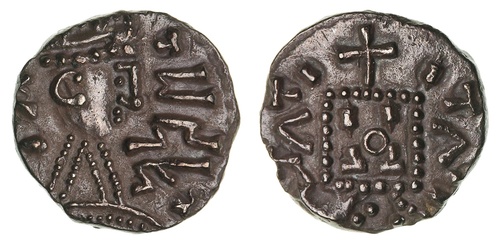
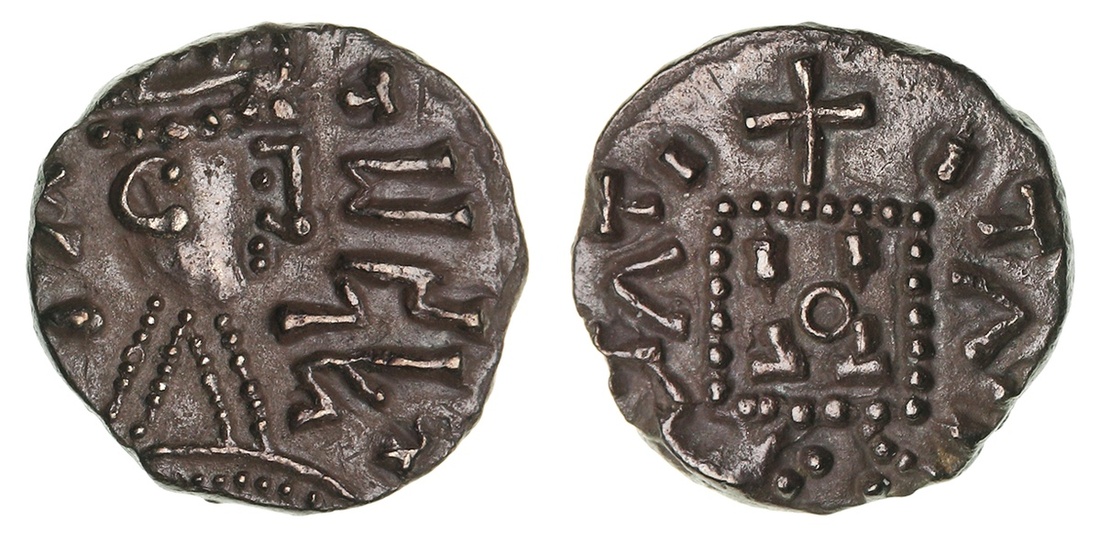
Early Anglo-Saxon England, Secondary Phase (c. 710-760), AR Sceat, Series R2, 'Rigold' (R1X), radiate bust right, short pyramidical neck, TWpa before, ◇ behind, rev. beaded standard enclosing votive legend, central annulet, tufa above enclosing trefoil, cross pattée below, chevron each side, diagonals at outer corners, 7h (SCBI 69 [Abramson], 656; SL 11-20; T&S pp. 502-9, 394-5; North 153; S.813), a most exquisite little coin, largely centred and with uniform dark coffee-brown patina, extremely fine, a perfect 'torch' through which to shine a light on the 'Dark Ages'
This small silver denomination belongs to one of the most historically resonant episodes in early English coinage: the "restoration" currency struck in the wake of the catastrophic debasement and collapse of the earlier gold thrymsa coinage, traditionally associated with the crisis and recovery of Kentish royal authority under Wihtred (fl. 691–725).
S E Rigold, whose 1960 classification remains the foundation of Sceatta studies, described the primary series as "a 'restored' currency, almost in the Roman sense"; in essence the radiate bust and degenerate "standard" reverse consciously revived imagery inherited, ultimately, from late Roman imperial prototypes via the preceding gold coinage, lending the type a genuine art-historical lineage stretching back to antiquity.
Series R itself is best understood as a major East Anglian trading currency, most plausibly minted at Ipswich, and its unusually conservative, slowly-degenerating design over decades suggests a deliberate strategy of building trust and familiarity among merchants trading along the North Sea coasts and inland up the Thames; evidenced by the pattern of domestic and continental finds alike.
Its various runic legends remains one of the coinage's enduring mysteries: read by some as a moneyer's name, and more evocatively by others as an invocation of Bishop Eappa of Selsey, a near-talismanic legend rather than a conventional signature. That ambiguity, far from diminishing the type, adds a layer of scholarly intrigue that continues to attract specialist interest.
Subject to 20% VAT on Buyer’s Premium. For more information please view Terms and Conditions for Buyers.
Estimate
£400 to £600
Starting price
£300

Watch, listen and bid as if you were in the room. Now available for auctions worldwide.
Click here to bid live
An exclusive and confidential service for the discerning collector or vendor.
View the Gallery
Download every Spink catalogue on your iPad, iPod or iPhone using free Spink app.
Download From iTunes© 2026 Spink & Son. All rights reserved.