
Auction: 26004 - British and World Coins and Medals
Lot: 183
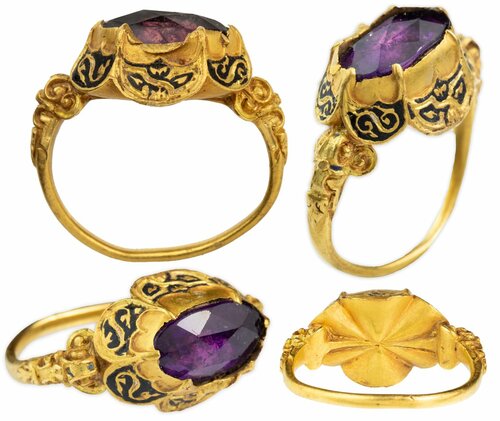
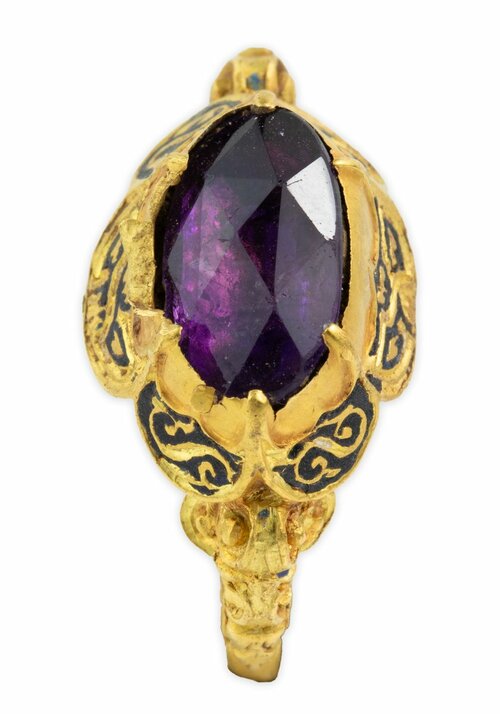
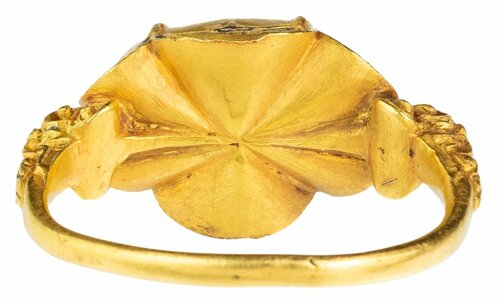
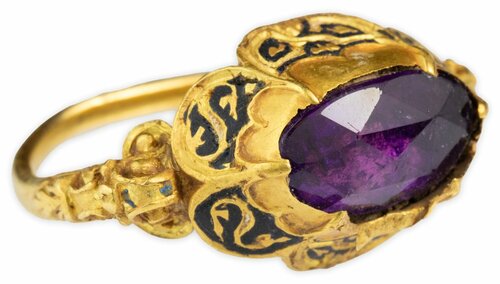
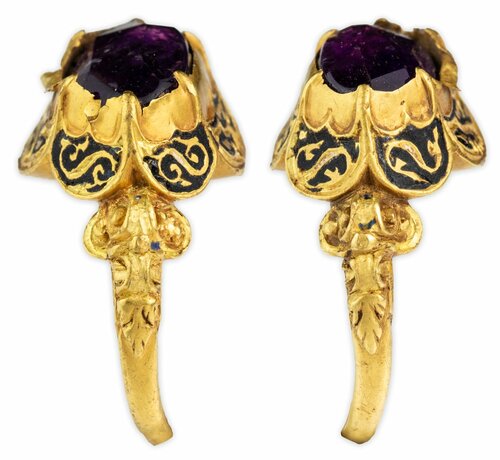
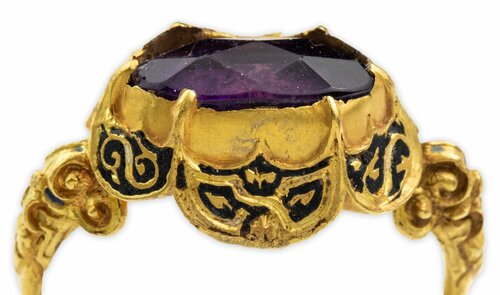
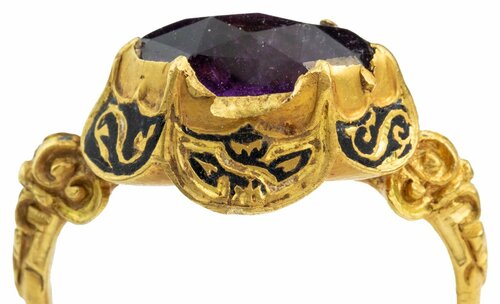
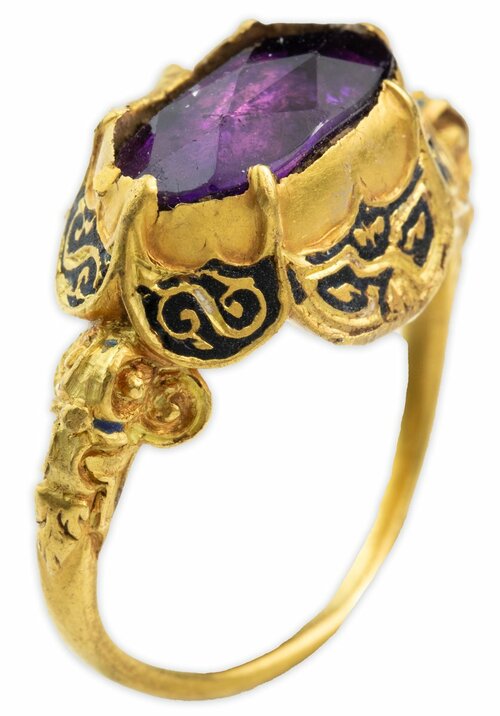
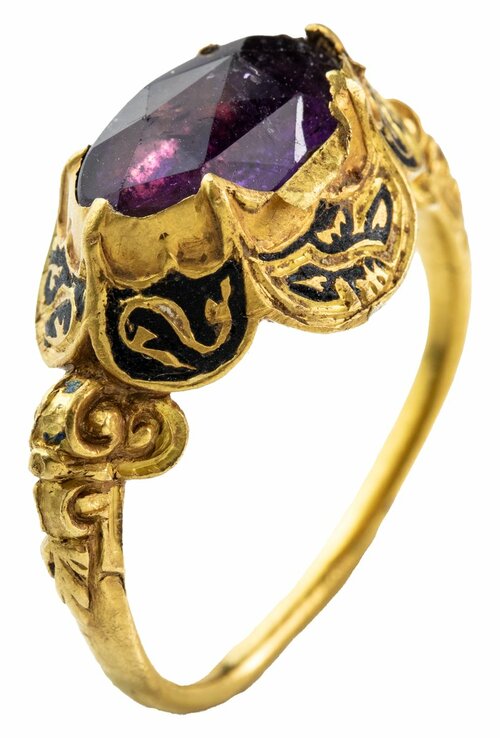
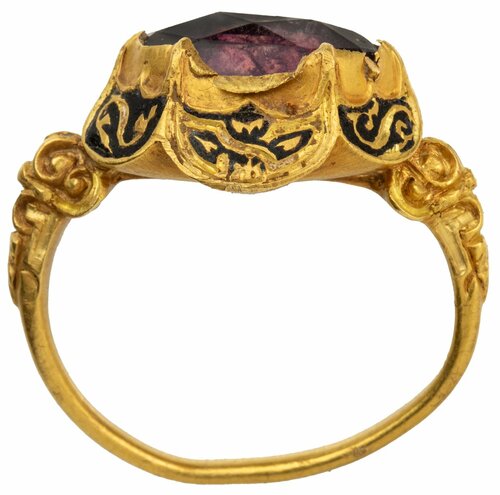
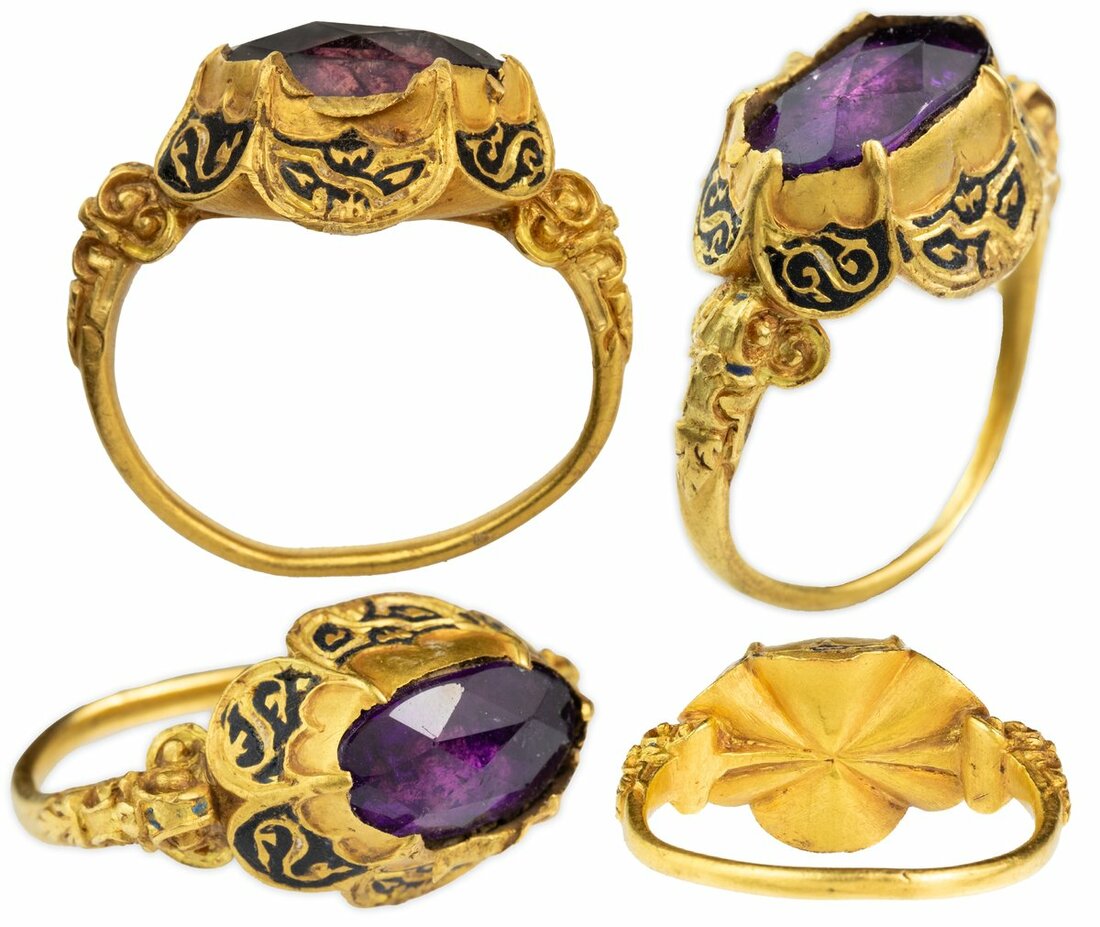
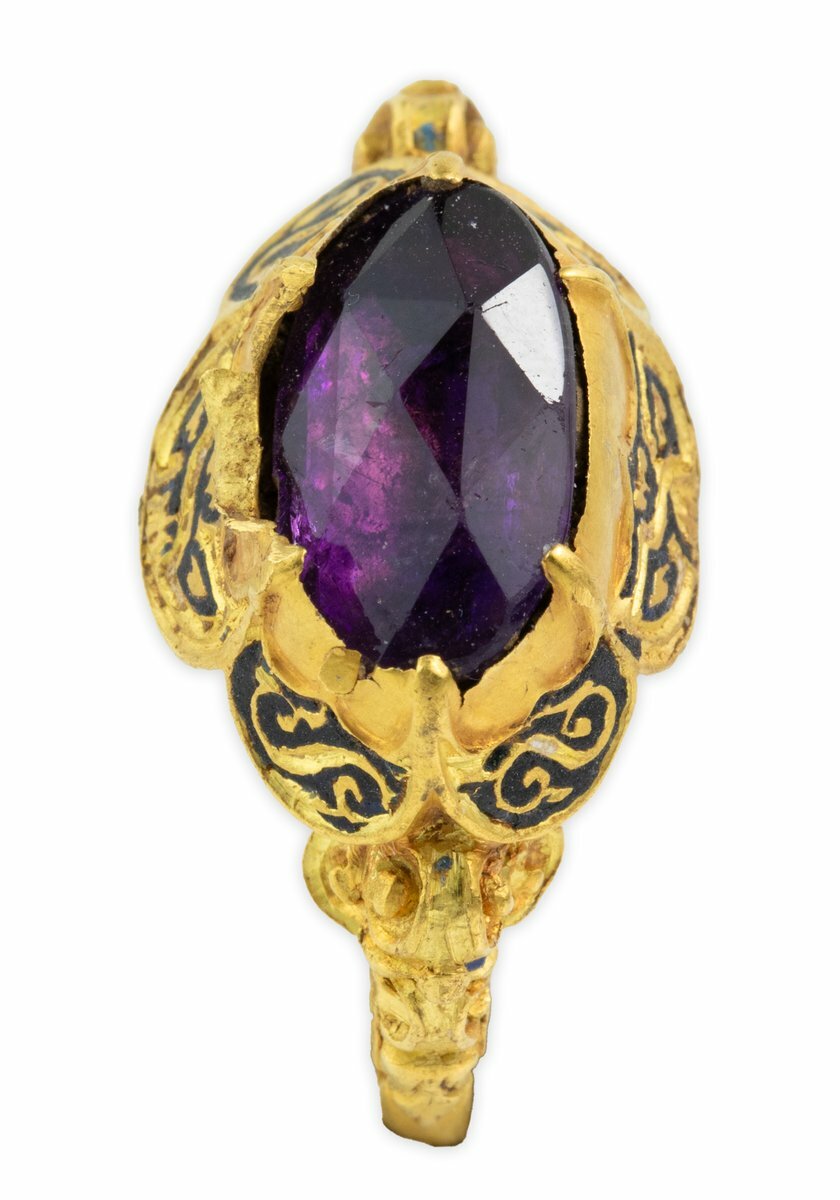
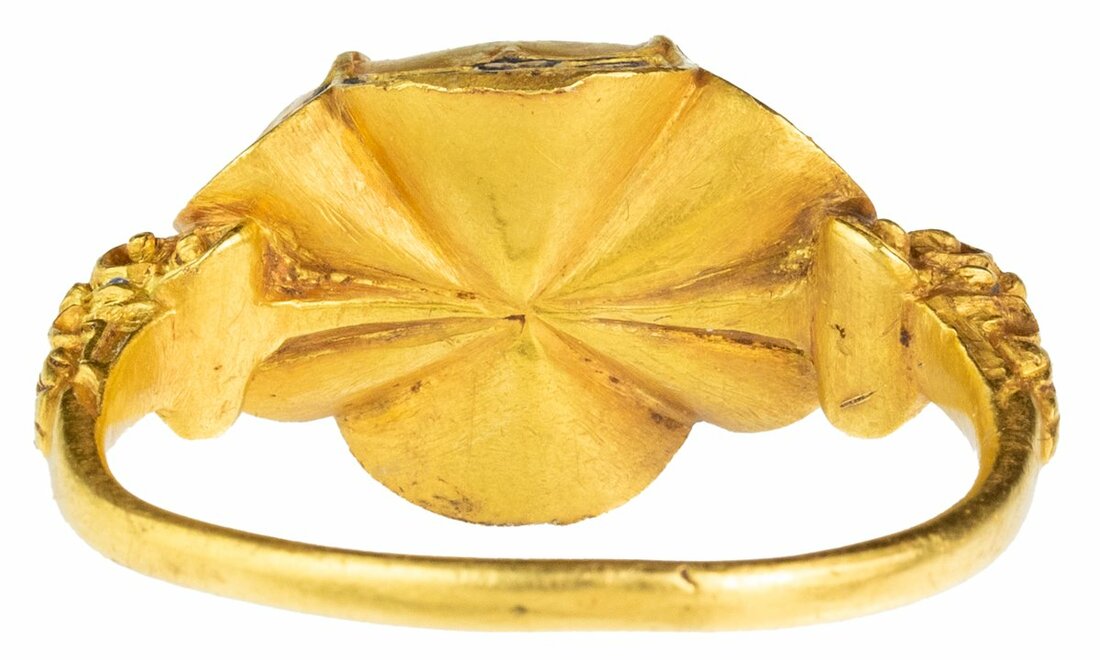
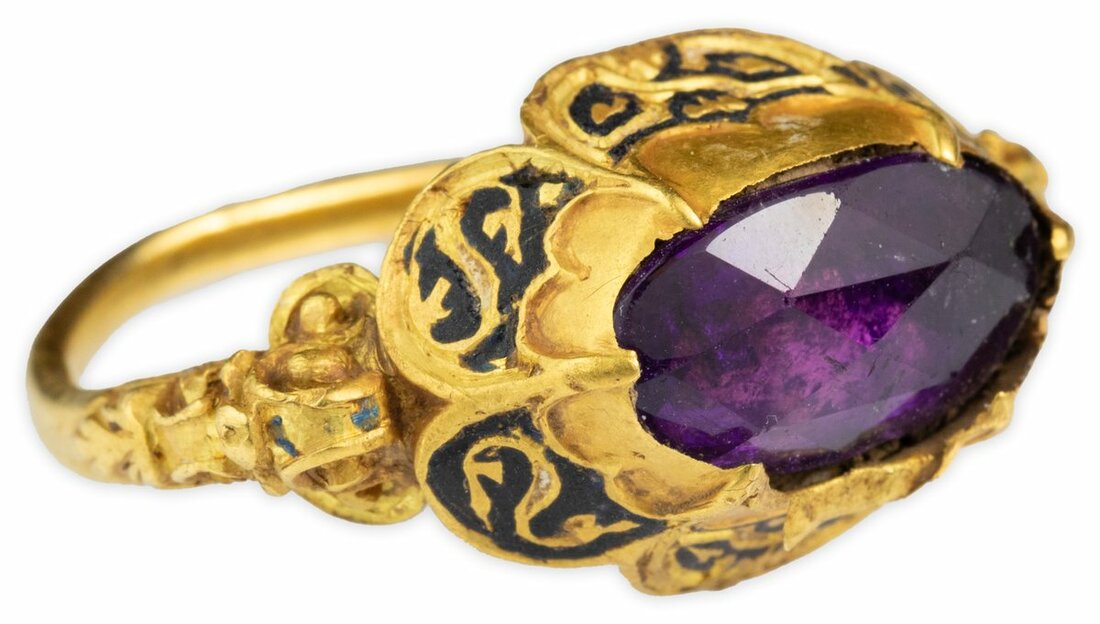
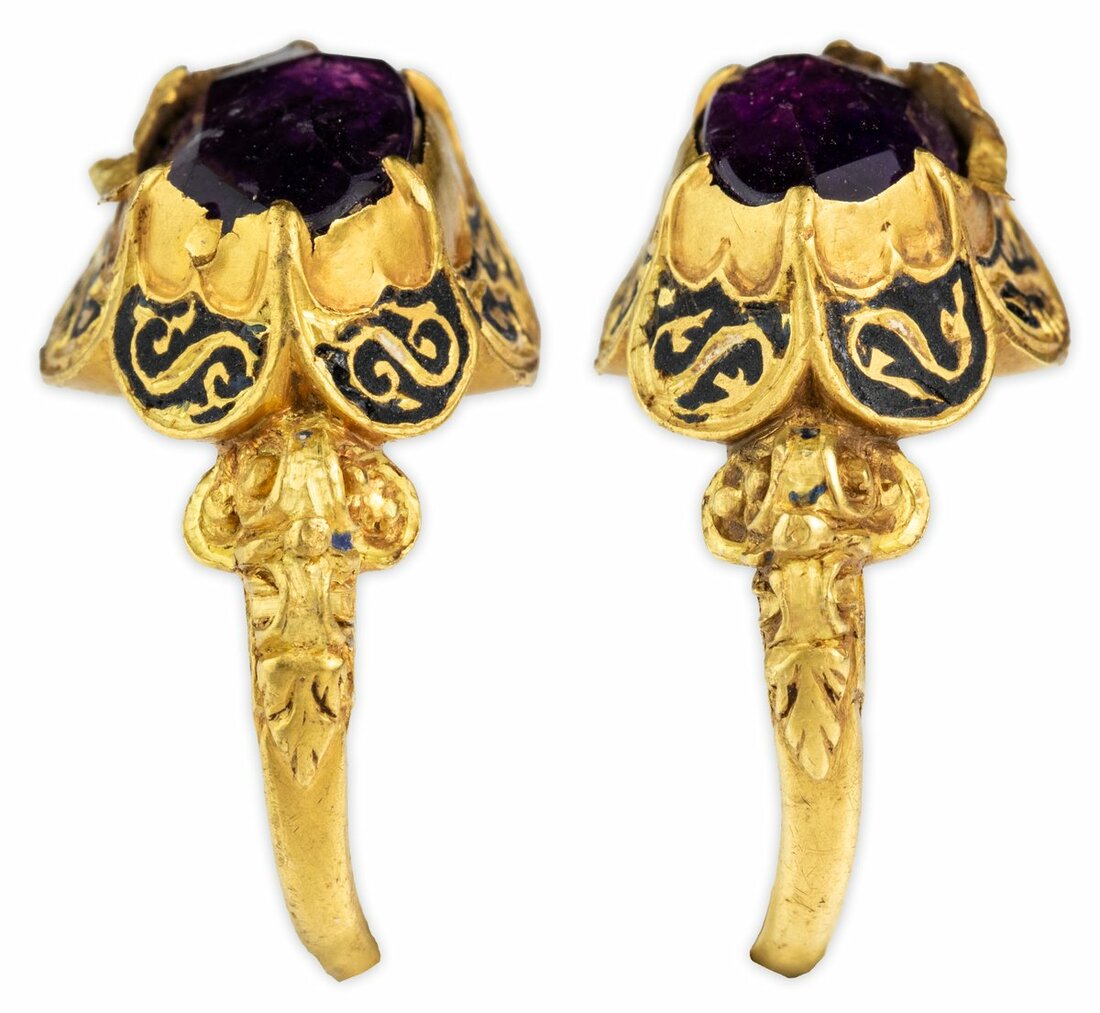
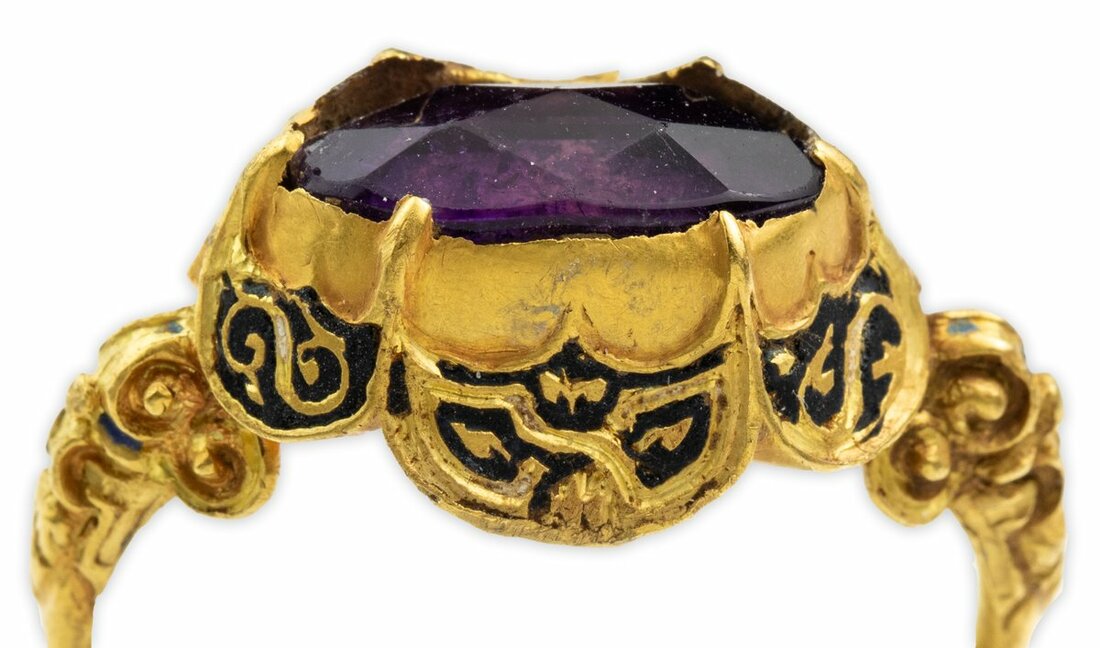
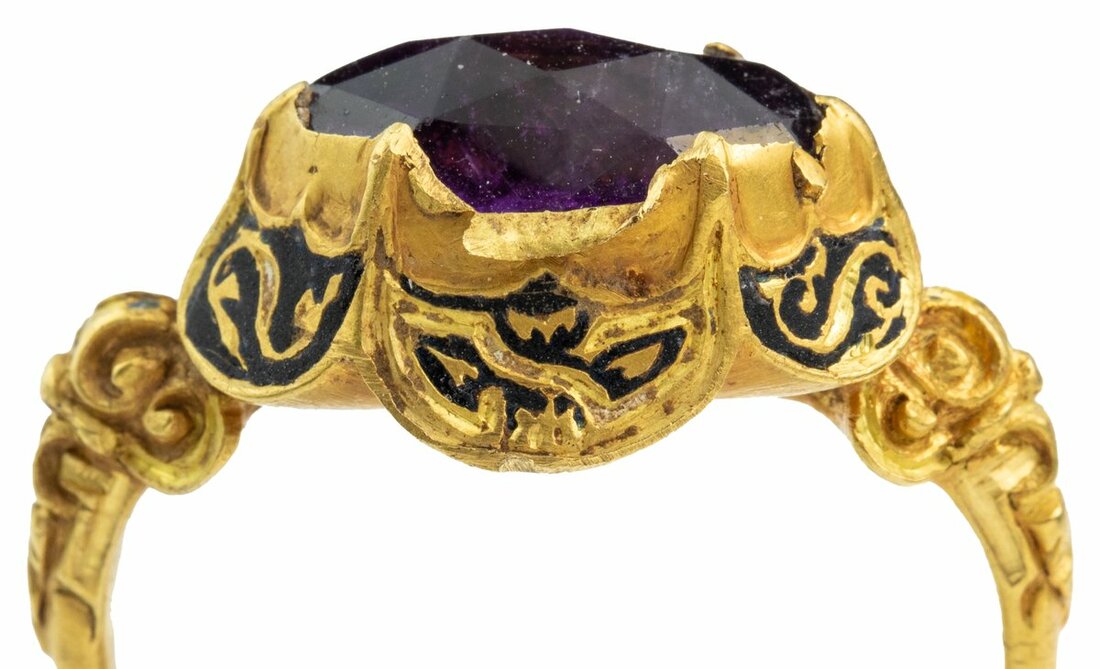
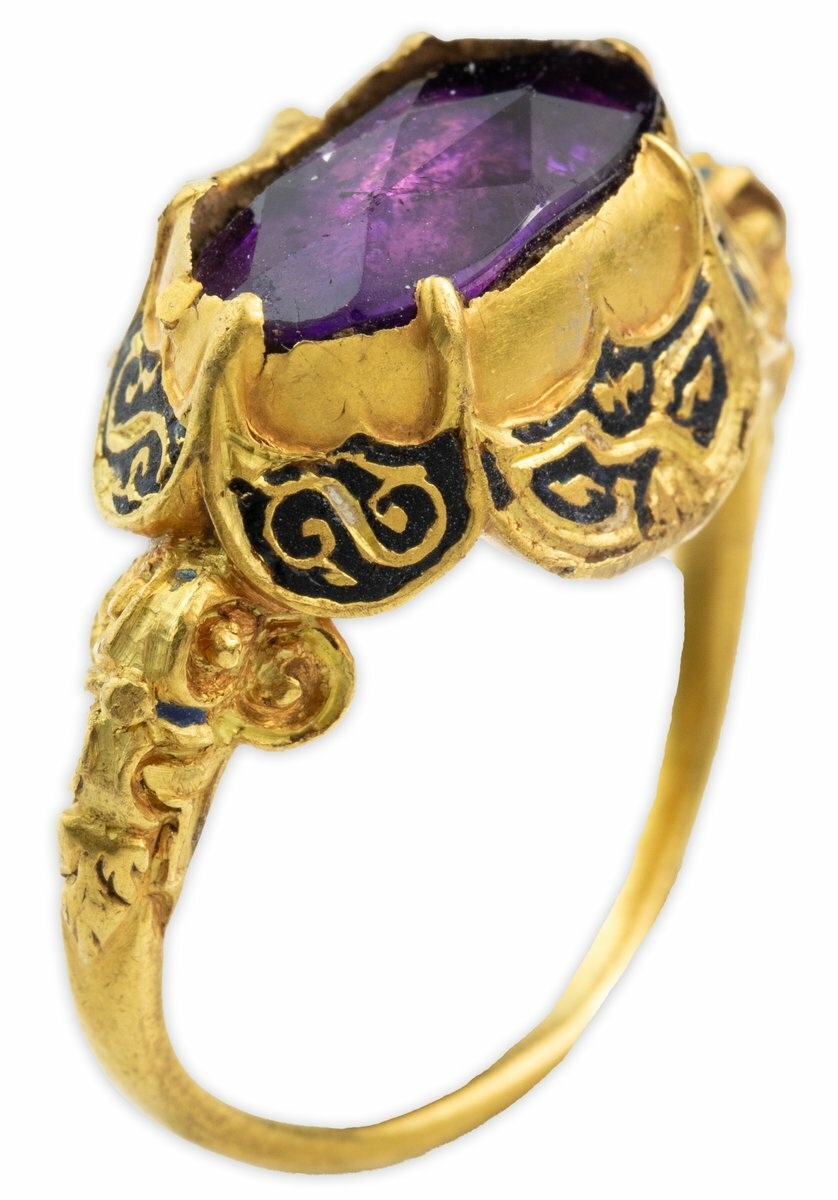
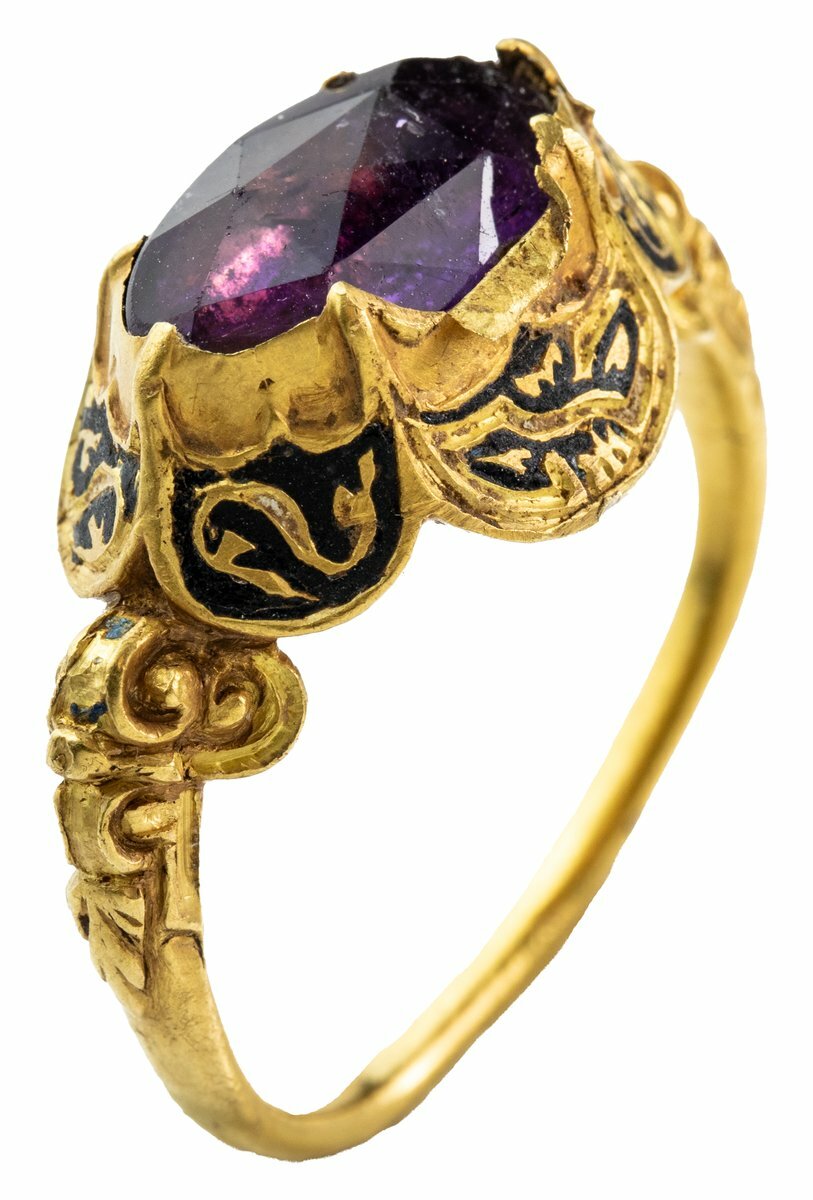
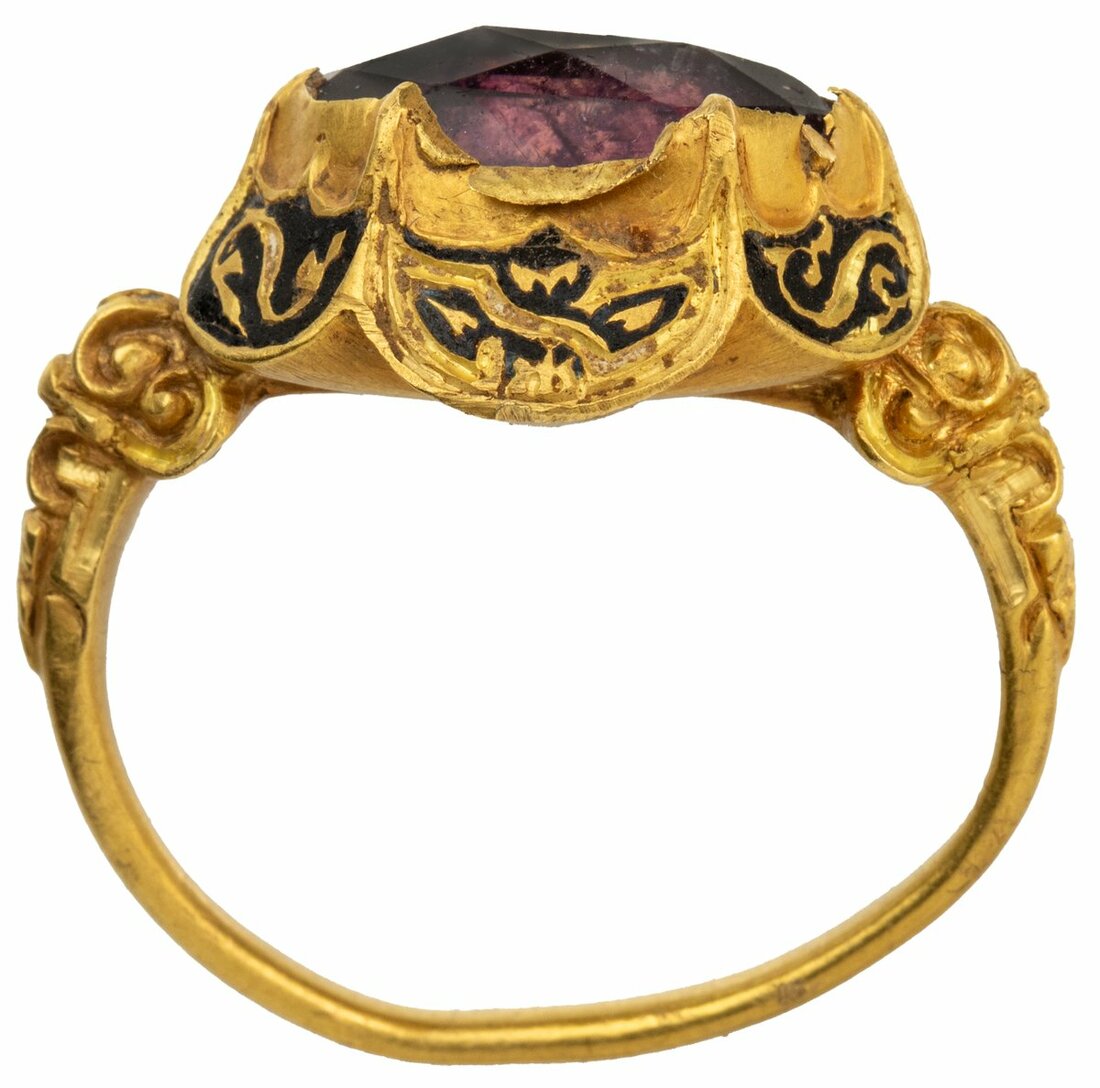
The Broadhembury Ring | A Late Renaissance Amethyst and Enamel Ring (c. 1585-1620), large, ornate bezel set with a deep purple, oval faceted amethyst (~3.20ct), thought to be an early Taille en Seize cut, held in place by six claws, the setting richly decorated with petal-like cells containing complex enamel enamelwork, now almost wholly black but traces of white and possibly blue suggest the ring was once polychrome, below the bezel the ornamented shoulders feature pellets and swirling figure-of-eight motifs tapering into leaf-shaped forms that then meet the slender, plain, D-shaped band, diameter 28.0mm, width 1.9mm, thickness 1.5mm, bezel measures 20.0mm x 15.0mm, 11.05g, ring size approx. U-V [Spink XRF: 85.35% Gold; 8.66% Silver; 5.99% Copper] (cf. Museo Poldi Pezzoli: Inv. 691; cf. V&A: 4397-1857, 201-1906, O118882; cf. BM: AF.1943, and 1914,0423.6 from Cheapside Hoard showing later rose-cut amethysts; cf. MAK: F 655; cf. Nordic Museum, Stockholm: NM.0219157, NM.0219160; cf. Louvre: OA 5631; no close parallel on the PAS database), in very good overall condition consistent with its age. The high-carat gold bezel remains intact and secure, retaining its oval amethyst, which displays strong pleochroic colour and appears free from significant chips or cracks visible to the naked eye. The D-section hoop shows minor historic distortion but no splits or evident repairs. Blackwork enamel decoration survives with some expected losses, including minor areas of wear to the white and blue enamel and one slightly folded enamel cell. Surface wear and patination throughout are consistent with age, use, and burial, and do not detract from the ring’s visual impact.
Provenance
Found at Broadhembury (East Devon), 10 December 2020
~ Recorded with the British Museum (ref. PAS-DEV-FD12D7) ~
Declared Treasure but returned as Museum unable to acquire
https://finds.org.uk/database/artefacts/record/id/1018662
According to XRF analysis, the gold purity is 85.35%, or 20.5 karat
The Broadhembury Ring is a striking example of late Renaissance jewellery, a substantial gold finger ring, likely worn on the thumb, dating to the late 16th or early 17th century. Discovered in Broadhembury parish in Devon, it offers a rare glimpse into the sophistication of English elite jewellery during a period of stylistic transition, combining a finely cut gemstone, polychrome enamel, and intricate goldsmithing influenced by continental Europe.
At its centre lies a long oval amethyst, cut in the early “taille en seize” style, a 16-facet form developed in France that prioritised symmetry and colour over brilliance. Pleochroic in nature, the stone shifts from reddish-purple to deep bluish-purple, a quality highly prized in the period. Set within six gold claws and a bold bezel, the gem may have been adjusted or replaced over time, yet it remains harmonious with the ring’s architectural form.
The bezel and shoulders display sophisticated blackwork enamel typical of the late Renaissance. Central petal-shaped cells are filled with scrolling S-shaped arabesques and traces of white enamel, contrasting with the gold setting. Five petal-like cells flank the bezel, the central featuring a bird with spread wings (possibly a phoenix or falcon) symbolising renewal, virtue, or vigilance, while the smaller flanking birds may recall martlets or falcons in flight. The shoulders continue the decoration with figure-of-eight strapwork ending in leaf or fleur-de-lis forms, with faint traces of blue enamel emphasizing the polychrome character.
The ring’s D-shaped hoop measures 26.9 mm in diameter, with a broad bezel of 17 × 9.7 mm, suggesting thumb wear, both functional and a statement of status. Despite minor damage and enamel loss, the ring remains remarkably intact, preserving the integrity of its intricate design. X-ray fluorescence reveals a high-quality 20.5-carat gold alloy, reflecting both English and continental practices, particularly Italian and Spanish influences, with careful attention to symmetry and harmonious integration of stone, enamel, and metal.
Stylistically, the Broadhembury Ring bridges continental Mannerist and emerging auricular forms. Its black-and-gold enamel and strapwork draw on Renaissance arabesque and Moresque motifs, with close parallels found in prominent collections such as the Victoria and Albert Museum, British Museum, and Museo Poldi Pezzoli. Early faceted coloured stones remained rare in England before 1600, making this amethyst particularly exceptional. The ring reflects a cosmopolitan awareness of continental trends, likely mediated through London goldsmiths and immigrant craftsmen.
The ring’s findspot near Broadhembury situates it within a historically significant landscape. Following the Dissolution of the Monasteries, lands around Broadhembury passed to the Drewe family, notable lawyers and court figures, whose wealth and connections suggest they could have owned such a jewel. While no documentation directly links the ring to them, its quality and style align with their social and material standing.
Beyond its material richness, the ring conveys layered symbolism. Amethyst was associated with sobriety, chastity, and divine wisdom, while the possible bird motifs evoke renewal, vigilance, or heraldic meanings. Combined with its luxurious materials, ornate enamel, and architectural form, the ring was designed as a statement of intellect, refinement, and status, reflecting the values of late Tudor and early Stuart elites.
The Broadhembury Ring is thus a rare survival of late Renaissance jewellery in England, exemplifying technical virtuosity, international influence, and symbolic sophistication. Its early faceted amethyst, black-and-gold enamel, and ornate shoulders capture a transitional moment in European design, bridging continental aesthetics and English tastes. More than a jewel, it is a tangible link to the social, cultural, and artistic life of elite England between 1585 and 1620.
Subject to 20% VAT on Buyer’s Premium. For more information please view Terms and Conditions for Buyers.
Estimate
£18,000 to £24,000
Starting price
£15000
Watch, listen and bid as if you were in the room. Now available for auctions worldwide.
Click here to bid live
An exclusive and confidential service for the discerning collector or vendor.
View the Gallery
Download every Spink catalogue on your iPad, iPod or iPhone using free Spink app.
Download From iTunes© 2026 Spink & Son. All rights reserved.