Auction: 26003 - Orders, Decorations and Medals
Lot: 421
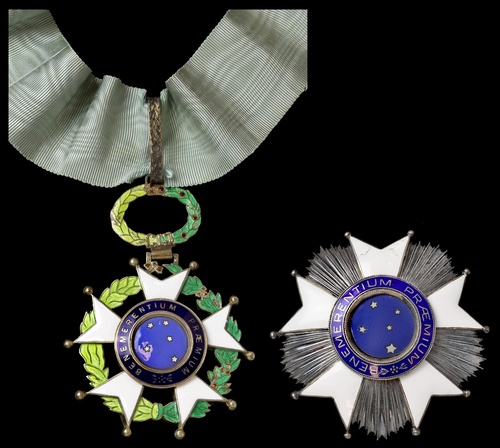
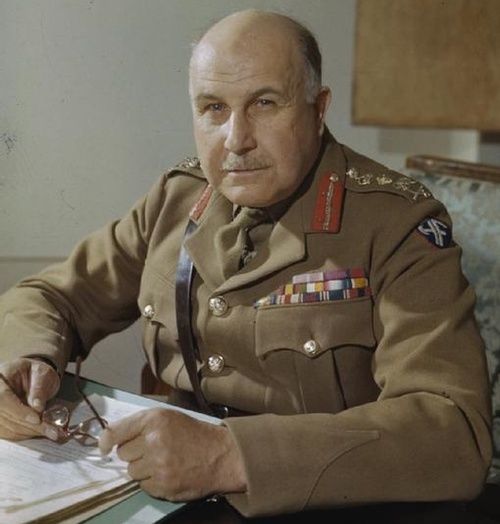
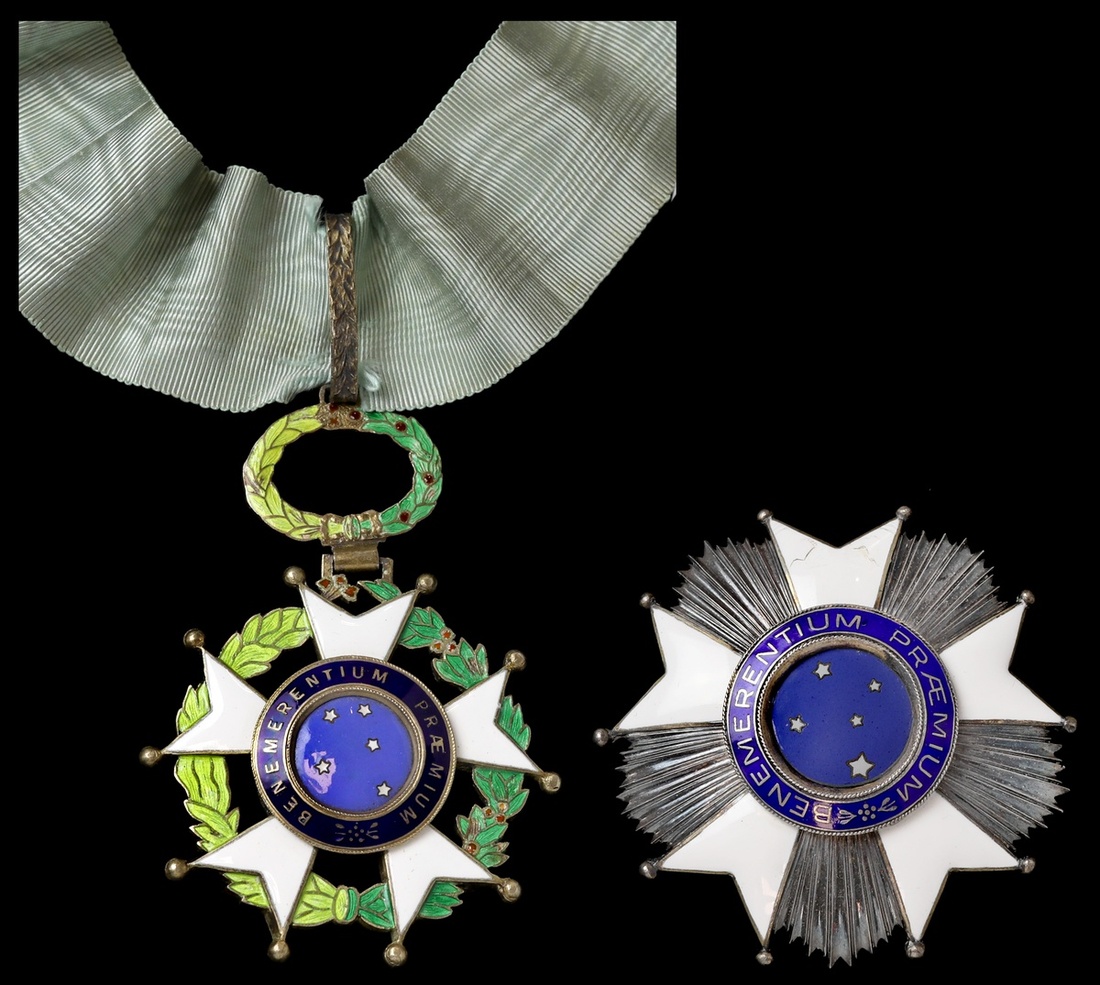
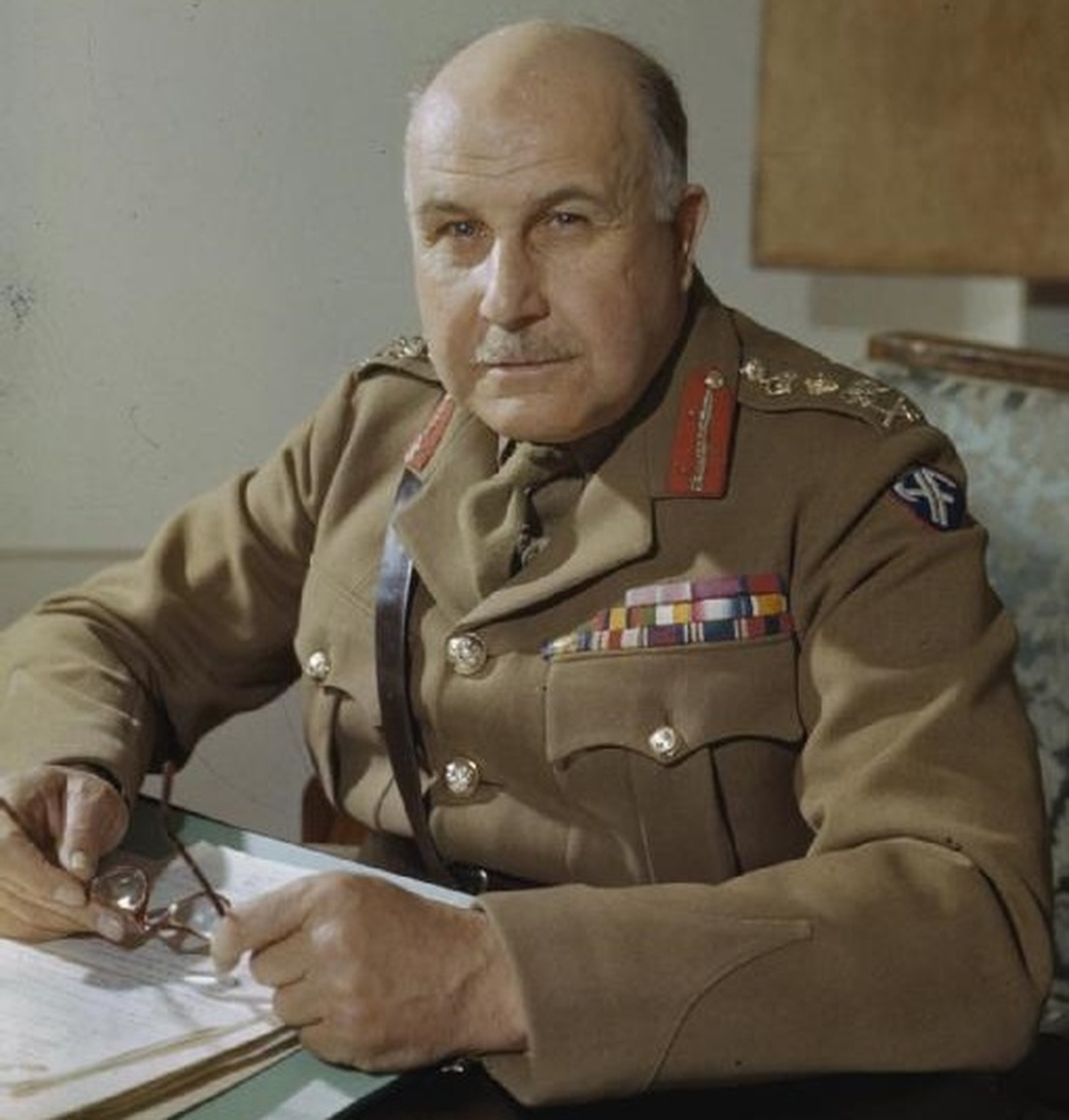
The Order of the Southern Cross insignia attributed to Field Marshal The Rt. Hon. H. Maitland Wilson, The Lord Wilson, G.C.B., G.B.E., D.S.O., British Army, who saw outstanding service during the Second World War; he finished his war as Supreme Allied Commander, Mediterranean Theatre, but saw action for several years in the Middle East as Commander-in-Chief, Middle Eastern Command
Brazil, Republic, National Order of the Southern Cross, Grand Officer's set of Insignia, comprising neck Badge, 91mm including wreath suspension x 65mm, silver-gilt and enamel, on full length neck riband; breast Star by La Royale, Rio, 72mm, silver, silver-gilt and enamel, in case of issue, this with named label affixed to the case, two rays bent on Badge, chip to enamel on Star, otherwise very fine (2)
Henry Maitland Wilson - or 'Jumbo' to his friends and comrades - was born in London to Captain Arthur Maitland Wilson and Harriet Wilson in September 1881. He was educated at Eton College before advancing to Royal Military College, Sandhurst where he commissioned with the Rifle Brigade as 2nd Lieutenant in March 1900.
Within six months, Wilson was sent with the 2nd Battalion to South Africa to fight in the Boer War. While serving out there he was promoted Lieutenant in March 1901 at which rank he served the entirety of the war. He then transferred with his unit to Egypt where he was briefly commanded by his uncle, Lieutenant Colonel H. F. M. Wilson. Then, after a stint in India in 1907, he returned Home and was promoted Captain in April 1908. He transferred to the 3rd Battalion and served in Ireland before being promoted adjutant of the Oxford Officer Training Corps in 1911.
Wilson saw further action upon the outbreak of the Great War and was appointed Brigade Major of the 48th Infantry Brigade in October 1914. He was quickly promoted Major and then sent to the Western Front the following year in December 1915. He was a capable and commanding officer which saw him promoted to General Staff Officer (G.S.O.) 2 of the 41st Division on the Somme and the 19th Corps at Passchendaele. Thus Wilson was part of some of the bloodiest actions seen at the Great War, and his military acumen saw him appointed G.S.O. 1 of the New Zealand Division with promotion to Lieutenant Colonel in October 1917. Wilson survived the war, was mentioned three times in despatches and awarded the D.S.O..
The Great War was only the beginning of his assumption of some really rather prestigious and militarily important positions in the Army. In 1919 he was hand-picked to serve at Staff College, Camberley, a post he returned to in the beginning of the 1930s. In the meantime, he took command of the 2nd Battalion, Rifle Brigade in 1923, and later, led the 1st Battalion on the North-West Frontier in 1927. By 1934, he had been promoted Temporary Brigadier, and became Commander of the 6th Infantry Brigade. On the eve of war in 1937, he became General Officer Commanding 2nd Division at the rank of Major-General.
However, it was his actions during the Second World War as to why Wilson is so dearly remembered; he oversaw some of the most consequential and significant actions in Egypt, Greece and the Middle East. From June 1939, Wilson was appointed General Officer Commanding (G.O.C.) of the British Troops in Egypt, at the rank of Lieutenant-General. Not only did he command the British Army in Egypt, but he was also a key advisor for a number of other countries fighting in Egypt. After Benito Mussolini declared war in June 1940, Wilson immediately sent his troops to invade Libya. While outnumbered against the Italians in terms of men and machinery, his military cunning to attack the enemies extended lines at certain points proved fruitful and on 7 December 1940, he launched Operation Compass. The strategy was an overwhelming success and the Italian forces were very quickly cut in two. The operation not only held him in esteem with Anthony Eden, now Secretary of State for War, but also Winston Churchill, who commented "General Wilson, who actually commands the Army of the Nile, was reputed to be one of our finest tacticians, and few will now deny that quality".
And yet, in February 1941, Wilson was recalled to Cairo and offered the new position of Military Governor of Cyrenaica, which led him to Greece. In April 1941, Wilson headed 'W' Force, a Commonwealth Expeditionary Force to help Greece resist Italy and any subsequent German invasion. However, the operation was not meant to be and Wilson carried out a full evacuation of British troops from Greece in April 1941; he was awarded a G.B.E. for his troubles and promoted full General the following month.
His next posting was to Palestine where he oversaw the Syria-Lebanon campaign as G.O.C. of the British Forces in Palestine and Trans-Jordan before then taking command of the 9th Army in Syria and Palestine. In doing so he also received the honorary title of Aide-de-Camp General to King George VI. He remained posted out here until 1943, when he was then appointed Commander-in-Chief of the Middle East. Under orders from London to create a diversion during the fight with Italy, in September he organised an unsuccessful attempt to invade and occupy the Greek islands of Kos, Leros and Samos. The Germans hounded the British troops from above and the losses were many.
His final post during the Second World War was as the Supreme Allied Commander in the Mediterranean in January 1944. In this post, Wilson would have had enormous strategic control over the entire Italian campaign, and he strongly advocated for an invasion of Germany via the Danube. Lastly, he was finally promoted Field Marshal in December 1944 and was sent to Washington to be Chief of the British Joint Mission, a post he served in from 1945-47. He was present at meetings concerning the development, production and testing of the atomic bomb in his role as military representative of the Combined Policy Committee. For his services, he was awarded the Distinguished Service Medal from President Truman in November 1945.
After the war, in January 1946, Wilson was appointed Aide-de-Camp to King George VI once more before he was then created Baron Wilson, of Libya and of Stowlangtoft in the Country of Suffolk. He then served as Constable of the Tower of London between 1955-60. He died four years later on 31 December 1964 in Chilton, Buckinghamshire. He is buried at St George's, Stowlangtoft, Suffolk and his barony passed to his only son, Patrick.
Subject to 20% VAT on Buyer’s Premium. For more information please view Terms and Conditions for Buyers.
Estimate
£240 to £280
Starting price
£190
Watch, listen and bid as if you were in the room. Now available for auctions worldwide.
Click here to bid live
An exclusive and confidential service for the discerning collector or vendor.
View the Gallery
Download every Spink catalogue on your iPad, iPod or iPhone using free Spink app.
Download From iTunes© 2026 Spink & Son. All rights reserved.