Auction: 26003 - Orders, Decorations and Medals
Lot: 406
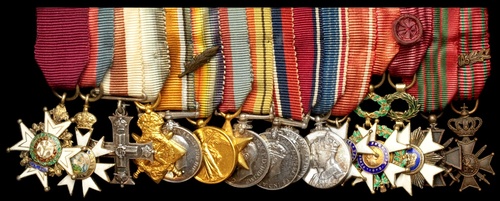
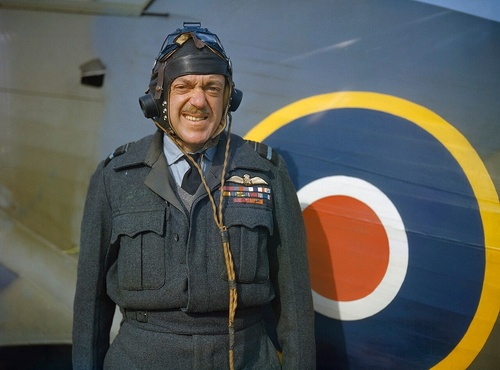
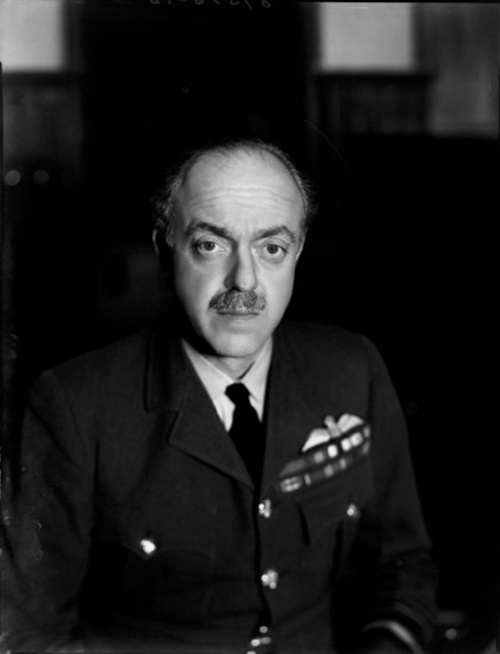
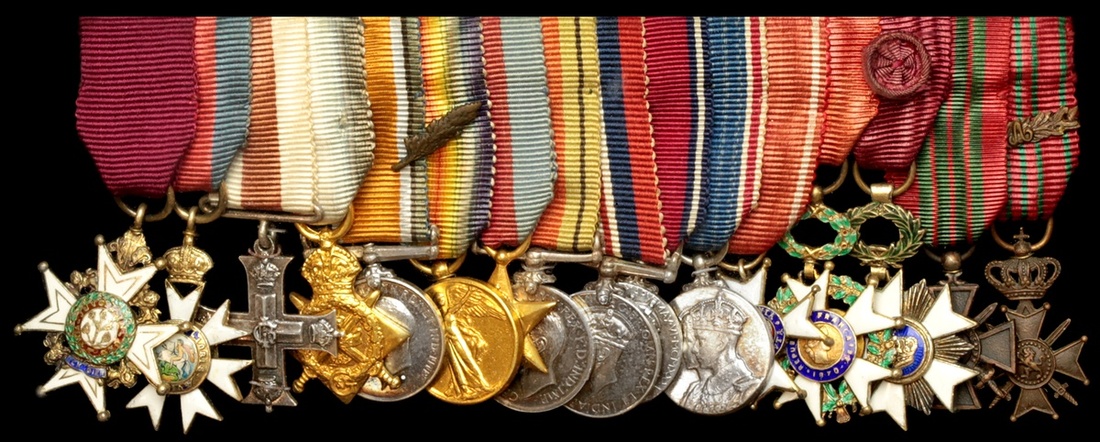
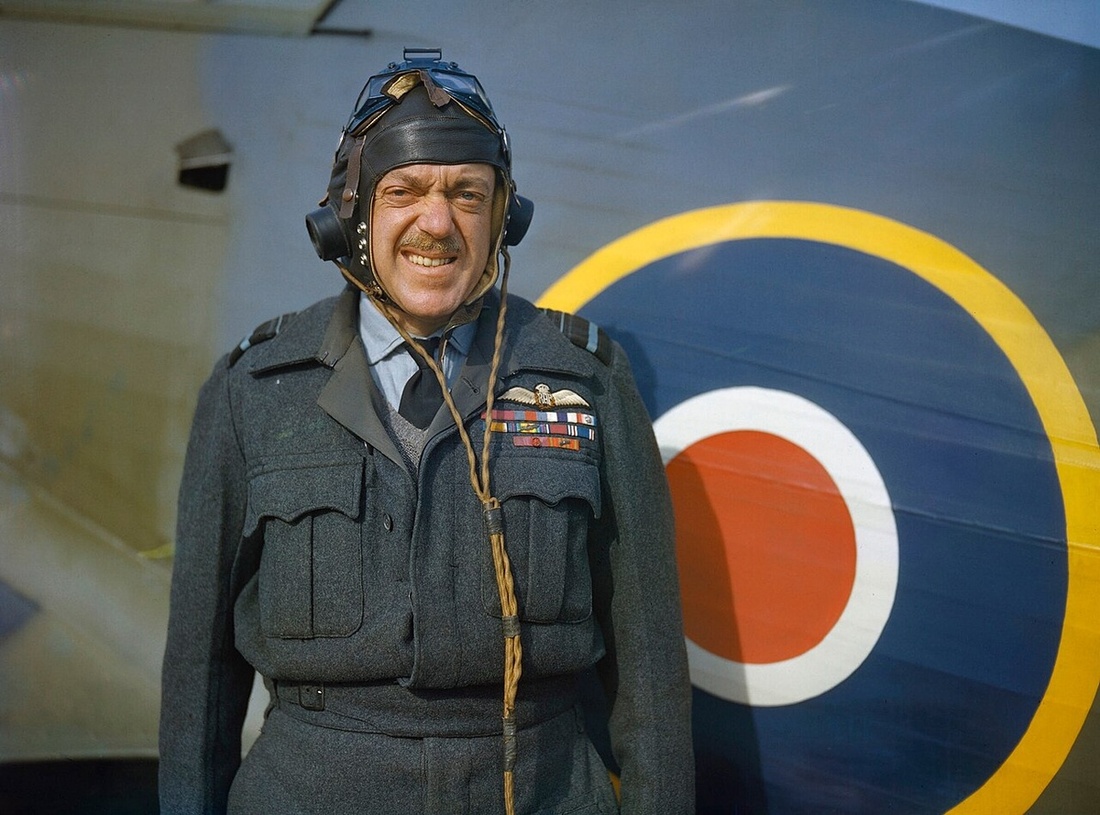
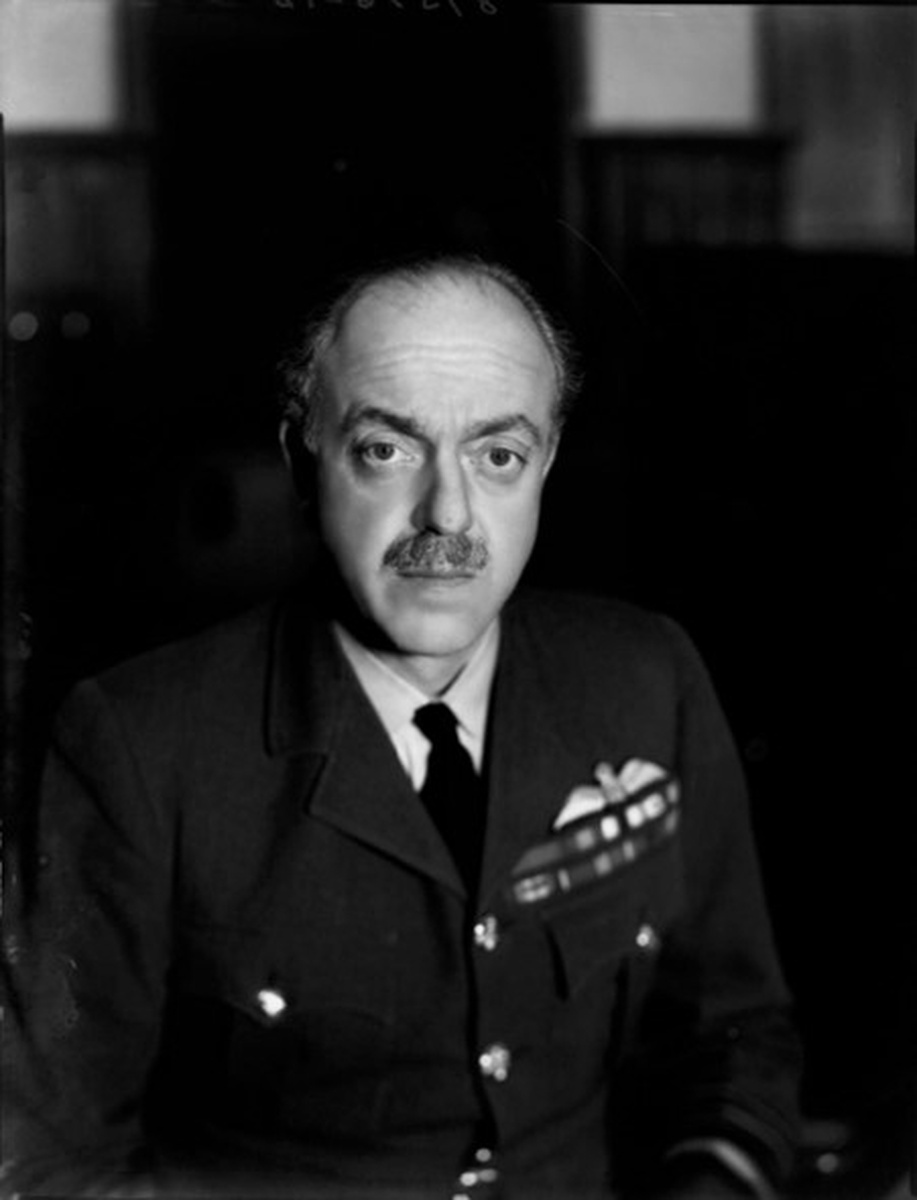
The mounted miniature dress medal group of sixteen worn by Air Chief Marshal Sir Arthur Barratt, K.C.B., C.M.G., M.C., a gallant Great War Squadron Commander who McCudden V.C. rated highly; he went on to lead the Advanced Air Striking Force in France in 1940
The Most Honourable Order of the Bath, Military Division, silver-gilt and enamel; The Most Distinguished Order of St. Michael and St. George (C.M.G.), silver-gilt and enamel; Military Cross, G.V.R.; 1914 Star; British War and Victory Medals, M.I.D. oak leaf; 1939-45 Star; Defence and War Medals 1939-45; Jubilee 1935; Coronation 1937; Poland, Order of Polonia Restituta, gilt and enamel; France, Legion of Honour, silver-gilt and enamel; Belgium, Order of the Crown, breast badge, silver-gilt and enamel; France, Croix de Guerre; Belgium, Croix de Guerre, with palm, mounted as worn and contained in a glazed display frame, generally very fine or better (17)
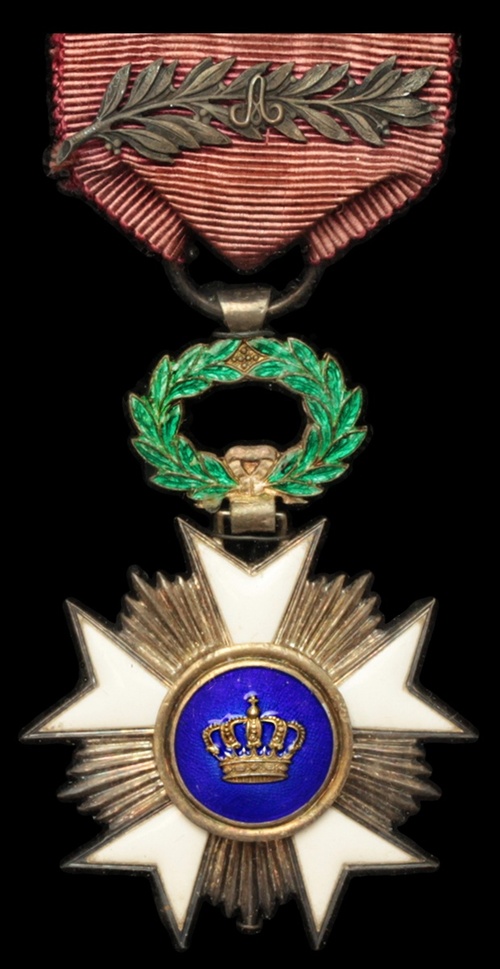
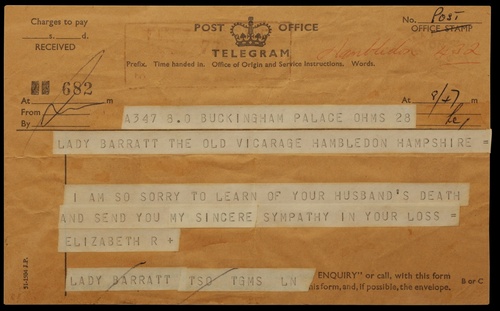
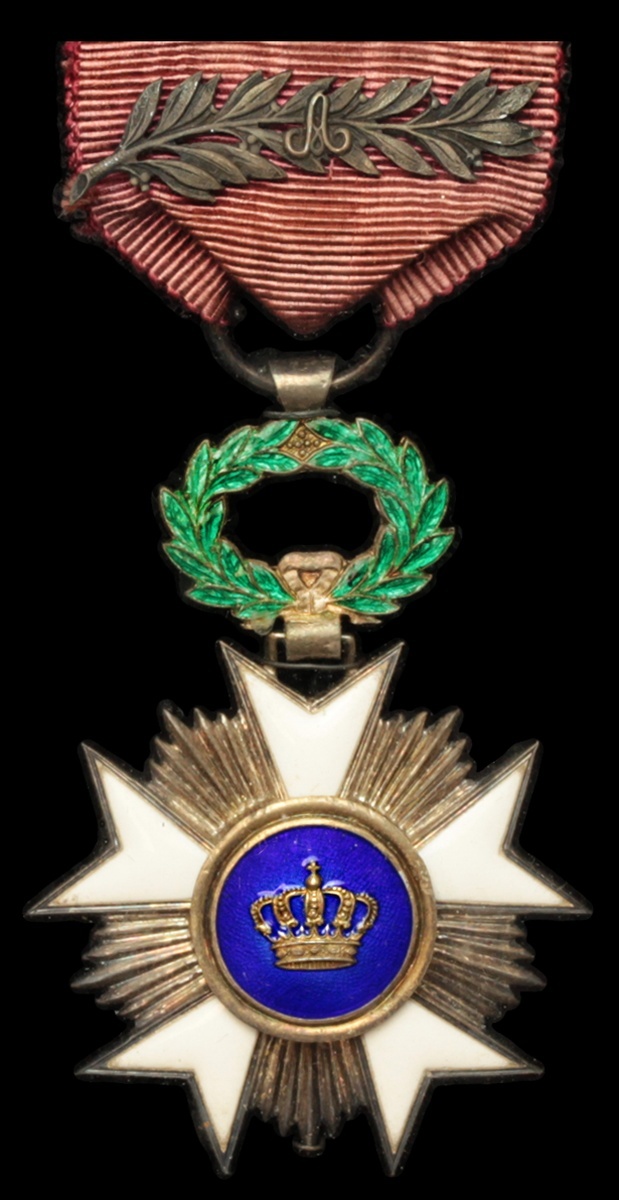
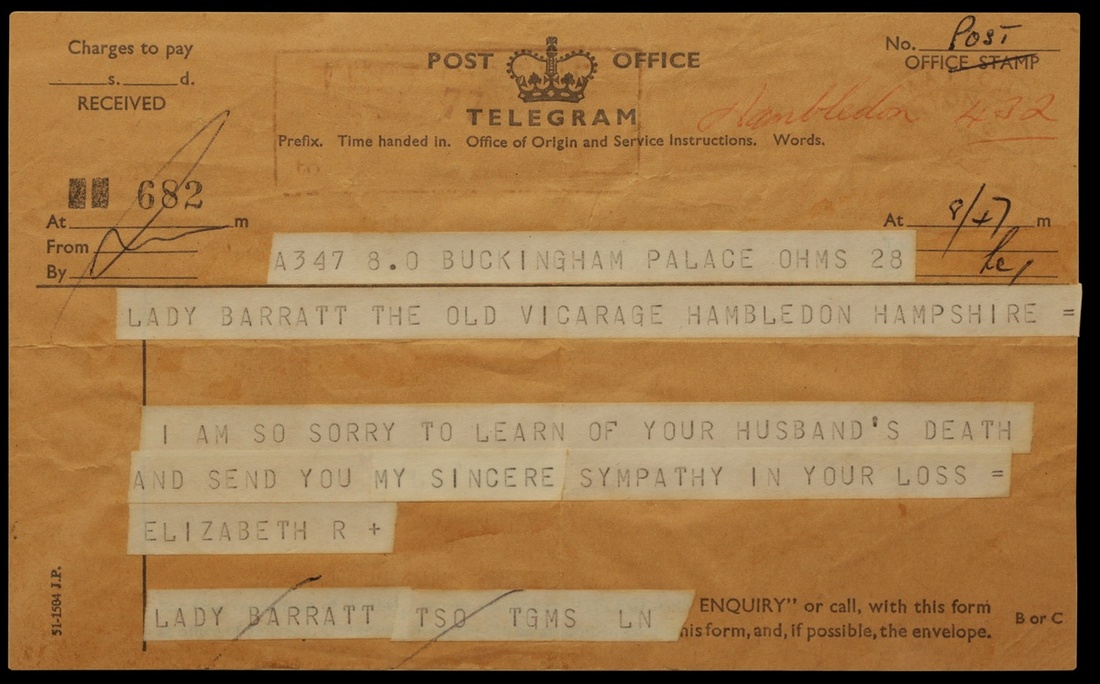
To be sold with his full-size Belgian Order of the Crown, Knight's breast badge, silver, gilt and enamel, with palm on riband, in glazed display frame, and an original telegram from Buckingham Palace to Lady Barratt at the Old Vicarage, Hambledon, Hampshire:
'I am so sorry to learn of your husband's death and send you my sincere sympathy in your loss. Elizabeth R.'
K.C.B. London Gazette 11 July 1940.
C.M.G. London Gazette 3 June 1919.
M.C. London Gazette 14 January 1916.
Arthur Sheridan Barratt was born in Peshawar, India on 25 February 1891 and was educated at Clifton School and the R.M.A. Woolwich. His career as a gunner was short-lived, however, for he transferred to the fledgling Royal Flying Corps and took his Aviator's Certificate (No. 756) on 26 March 1914.
Western Front - The McCudden V.C. connection - Pioneer's M.C.
Posted to No. 3 Squadron in June 1914, he first saw action in France that September and he remained similarly employed until December 1915, latterly as an Acting Captain and Flight Commander. It's a well-catalogued period in the squadron's history, not least for the detail contained in McCudden V.C.'s Flying Fury. Well-known to Barratt, on occasion he flew as his Observer, prior to his return to the U.K. for pilot training.
In fact, McCudden admired Barratt's pioneering work, Flying Fury noting that in November 1914 a Parasol Blériot was delivered to the main R.F.C. depot to have a wireless set fitted, all part of ongoing improvements for artillery spotting. However, when the aircraft was returned to the squadron, no such wireless had been fitted. Nonetheless, wrote McCudden:
'It was fitted with a signalling lamp for the use of Captain A. S. Barratt of 'B' Flight. Mr. Barratt did about forty hours flying on this machine, directing artillery fire, and how he managed to fly the machine and Morse to the battery by means of his lamp single-handed, still remains a mystery to me … '
Barratt certainly appears to have been a leading light in improving such artillery co-operation, so much so that he was in popular demand from the gunners. He undertook a particularly successful 'shoot' on 23 July 1915, soon after being appointed a Flight Commander. The target in question was an enemy long-range gun which had been shelling Bethune for some time but the position of which had been reported by a local Frenchman - the gun was in fact concealed in a factory between Bethune and nearby Haisnes, where it was kept under a moveable roof which was closed when firing ceased. Accordingly, on the morning of 23 July 1915, despite poor weather and gale force winds, Barratt took off to direct fire of 19th Siege Battery on the factory, his resultant work leading to three direct hits, the last of which went clean through the roof, and ignited the ammunition store.
As noted by McCudden, after he commenced work as an Observer in September 1915, he undertook occasional sorties with Barratt. The latter, according to Flying Fury, was 'at this time doing extraordinarily fine work, for he was flying regularly for five or six hours daily, registering our heavy batteries on hostile targets, preparatory to the expenditure of carefully hoarded summer's supply of shells.'
McCudden goes on to describe one of their outings:
'On December 1st [1915] I went up with Captain Barratt on a very rough day - I remember it was frightfully bumpy - to range some 9.2-inch howitzers on some houses on the north-eastern outskirts of La Bassée. We got our height and reached the trenches over Cuinchy at 4,000 feet. The wind at this height was quite fifty miles per hour from the west, and the pilot had to keep the machine pointing west most of the time to make any headway at all.
Captain Barratt was very experienced in directing artillery fire, and he soon got on O.K. on the desired target. As each shell burst in the red-tiled houses, a cloud of brow-red dust rose a few hundred feet into the air and was then blown off east by the wind just like smoke from a factory chimney. After we had been up for nearly two hours the atmosphere became very cloudy and, being no longer able to see our target, we came home and landed successfully in a very gusty and bumpy wind.'
Returning to the home establishment at the year's end, Barratt was awarded the M.C. and served in various reserve squadrons until appointed to the command of No. 6 Squadron as a Temporary Major in September 1916. And he commanded No. 6 in France until January 1917, where it operated in B.E. 2s and R.E. 8s.
In the latter month he was granted temporary command of No. 2 Wing, and he remained likewise employed until June 1917, when, back home once more, he was advanced to Temporary Lieutenant-Colonel. A string of senior appointments ensued, including command of 2nd and 3rd (Corps) Wings and of 2nd Brigade, and he ended the war as a Staff Officer at H.Q. R.A.F. in the Field.
In addition to his subsequent award of the C.M.G., he was four times mentioned in despatches (London Gazettes 1 January 1916, 15 May 1918, 20 May 1918 and 11 July 1919, refer), and was awarded the Belgian Order of the Crown and Croix de Guerre.
Between the Wars
Following the Armistice, Barratt became Assistant Commandant at the R.A.F. College, Cranwell and then - in 1923 - Staff Officer for Administration at Headquarters No. 3 Group. And he was subsequently appointed Commandant at the School of Army Co-operation in 1926 and Air Staff Officer to the G.O.C. Shanghai in 1927, prior to returning home to Air Staff H.Q. No. 22 Group.
Then, following his promotion to Group Captain, he was appointed Chief Instructor at the R.A.F. Staff College, Andover in January 1929 and - as an Air Commodore - to A.O.C. No. 1 (Indian) Group in November 1932. He afterwards served as Director of Staff Duties at the Air Ministry in 1935 but returned to the R.A.F. Staff College as a recently advanced Air Vice Marshal in 1936.
Awarded the C.B. for the latter services (London Gazette 11 May 1939, refers), he was promoted to Air Marshal in July 1939.
France 1939-40 - Advanced Air Striking Force - K.C.B.
Barratt was next destined to take up senior command in India but with the renewal of hostilities increasingly likely, he was instead appointed A.O.C. of No. 1 Mission, France, in August 1939, in which role he acted as Principal R.A.F. Liaison Officer to the French Air Force.
And that role became all the more exacting with the declaration of war in the following month, so much so that Barratt had to tell his daughter he could not get home to attend her wedding. In his place, he arranged for her godfather to undertake the honours but - to his daughter's delight - he eventually managed to fly back to the U.K. and make a surprise appearance, a flight likely undertaken in his Hurricane, in which he visited forward airfields and units in France.
Then in mid-January 1940, he took on the onerous responsibilities of A.O.C. in C. of the Advanced Air Striking Force (A.A.S.F.) in France. Conscious of the pending German attack - the devastating Blitzkrieg that unfolded on 10 May 1940 - Barratt was keen to take the fight back to the enemy, but French High Command would not support such aggressive tactics for fear of 'antagonising' the Germans in what became known as the 'Phoney War'. Nor was his cause assisted by a last-minute decision to postpone the arrival of a second echelon of squadrons and aircraft to reinforce his beleaguered command.
Nonetheless, when the Blitzkrieg kicked-off proper, his units were quickly in action, multiple combats being played out by our aircraft, in some cases at great cost. Barratt's Fairey Battle squadrons suffered 40% losses on the 10 May alone and in just 48 hours the number of operational A.A.S.F. bombers fell from 135 to 72. When, on the 14 May, Barratt was informed that 40 of 71 aircraft he had ordered up had failed to return, he is said to have shed tears.
And such losses were compounded by the fact insufficient transport was available to keep his squadron personnel and vital aircraft parts on the move to new airfields. Barratt had long questioned the wisdom of the contention that because the A.A.S.F. was behind the Maginot Line, mobility was not an issue, but by the time the powers that be had sat up and listened, it was too late.
By the end of May 1940, the A.A.S.F. had lost 119 Battle aircrew killed and 100 aircraft. Experience, better tactics and periods of bad weather from 15 May to 5 June led to less serious loss, but in mid-June the remaining Battles returned to the U.K.; the Hurricane squadrons returned on 18 June and the A.A.S.F. was dissolved on 26 June 1940.
Appointed K.C.B. in July 1940, Barratt went on to serve as A.O.C. in C. of Army Co-operation Command 1940-43 and of Technical Training Command 1943-45 and was appointed Inspector-General of the R.A.F. in October of the latter year, in which capacity he took part in the Victory Parade in June 1946.
His K.C.B. aside, he was twice mentioned in despatches (London Gazettes 20 December 1940 and 17 October 1941, refer), in addition to being appointed to the Grand Cross of the French Legion of Honour and awarded the Croix de Guerre in 1940.
Placed on the Retired List as an Air Chief Marshal in 1947, Barratt served as Gentleman Usher to the Sword of State from August 1952 up until his death in November 1966.
Subject to 20% VAT on Buyer’s Premium. For more information please view Terms and Conditions for Buyers.
Estimate
£400 to £600
Starting price
£320
Watch, listen and bid as if you were in the room. Now available for auctions worldwide.
Click here to bid live
An exclusive and confidential service for the discerning collector or vendor.
View the Gallery
Download every Spink catalogue on your iPad, iPod or iPhone using free Spink app.
Download From iTunes© 2026 Spink & Son. All rights reserved.