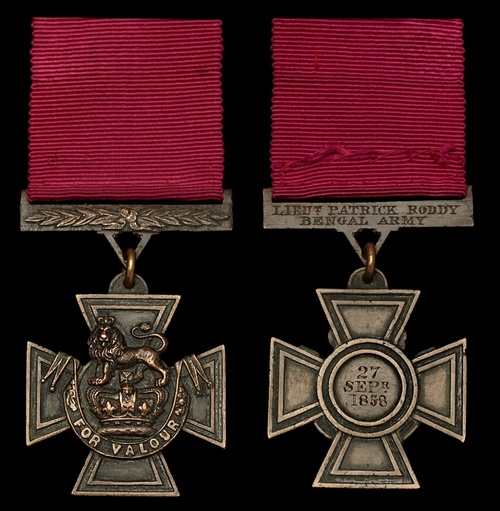
Auction: 26003 - Orders, Decorations and Medals
Lot: 347
Sold by Order of a Direct Descendant
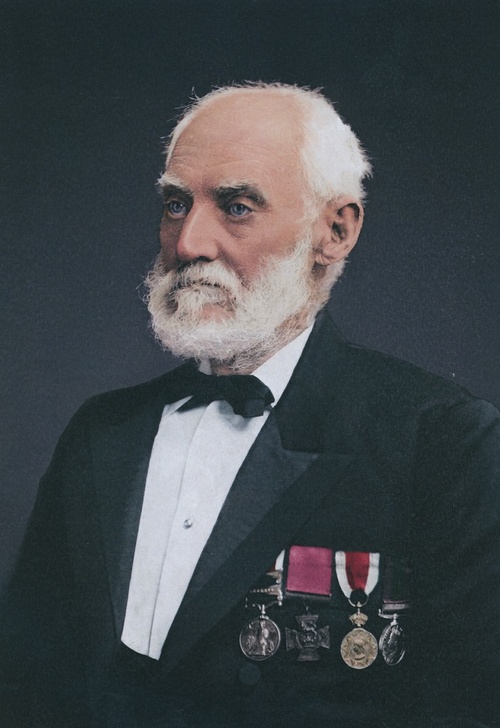
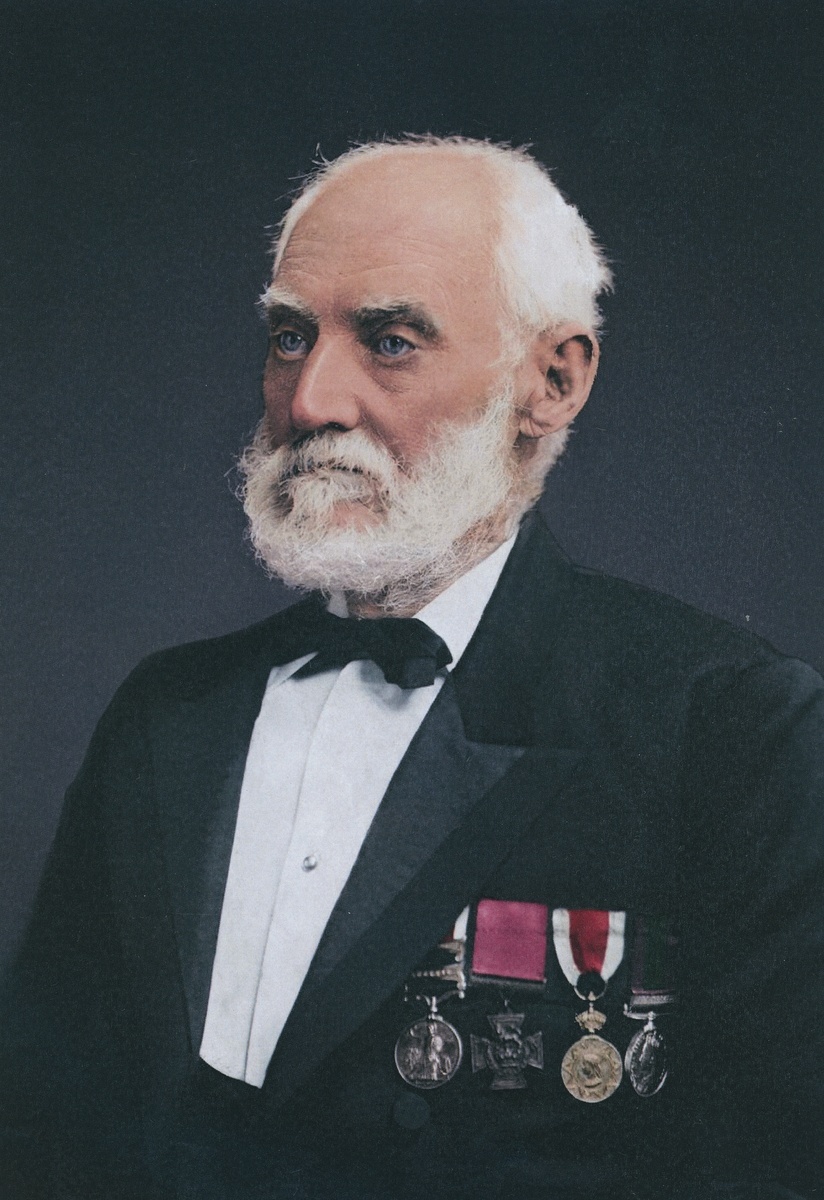
'Colonel Patrick Roddy, V.C., who died in Jersey on the 21st ult., deserves more than a passing notice. In the days of the Mutiny, unless I mistake not, he was a young Staff Sergeant in the Bengal Artillery, and so distinguished himself as to be specially recommended by Sir Hope Grant, and promoted Ensign and Lieutenant, and awarded the Victoria Cross. The latter he well-earned in an action on 27th September, 1858, when he charged a powerful and determined rebel - a subadar of the 8th Native Infantry - whom the cavalry were afraid to approach. Roddy, however, rode boldly at him, and when within six yards fell, his horse having been shot. While disengaging himself from the horse, the rebel tried to cut him down, but Roddy seized him until he could get at his sword, when he ran him through the body. After serving in the Abyssinia and Afghan campaigns, Roddy retired from the Bengal Army as Lieutenant-Colonel, and was sixty-eight when he died'
A brief but descriptive synopsis of the brave Colonel Roddy's life and career, and V.C.-winning exploit, as reported in The Globe on 11 December 1895.
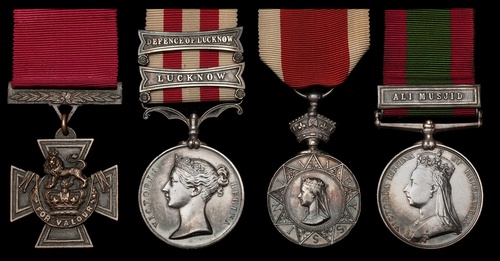
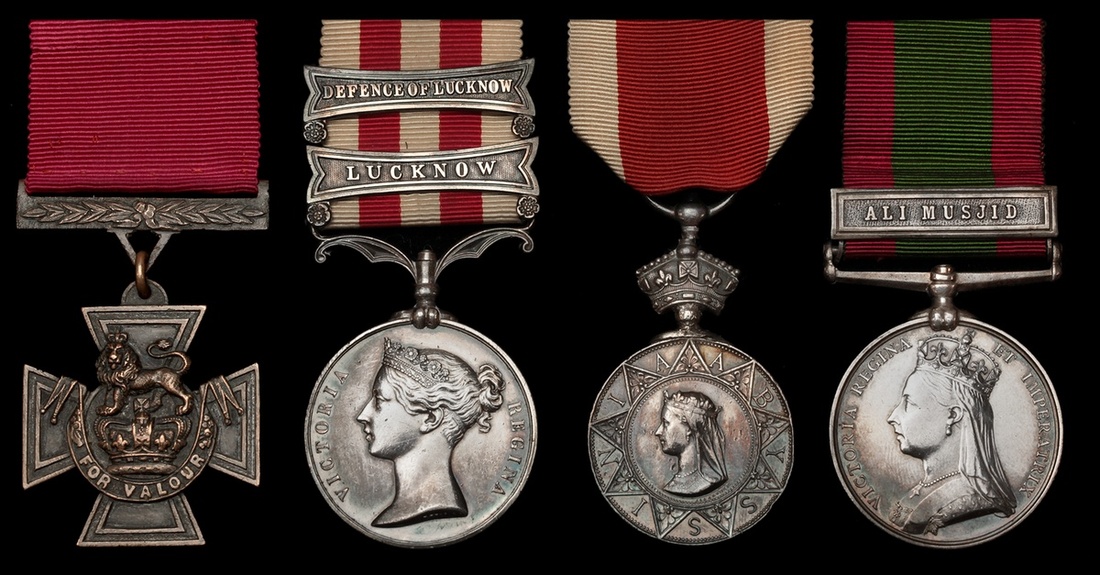
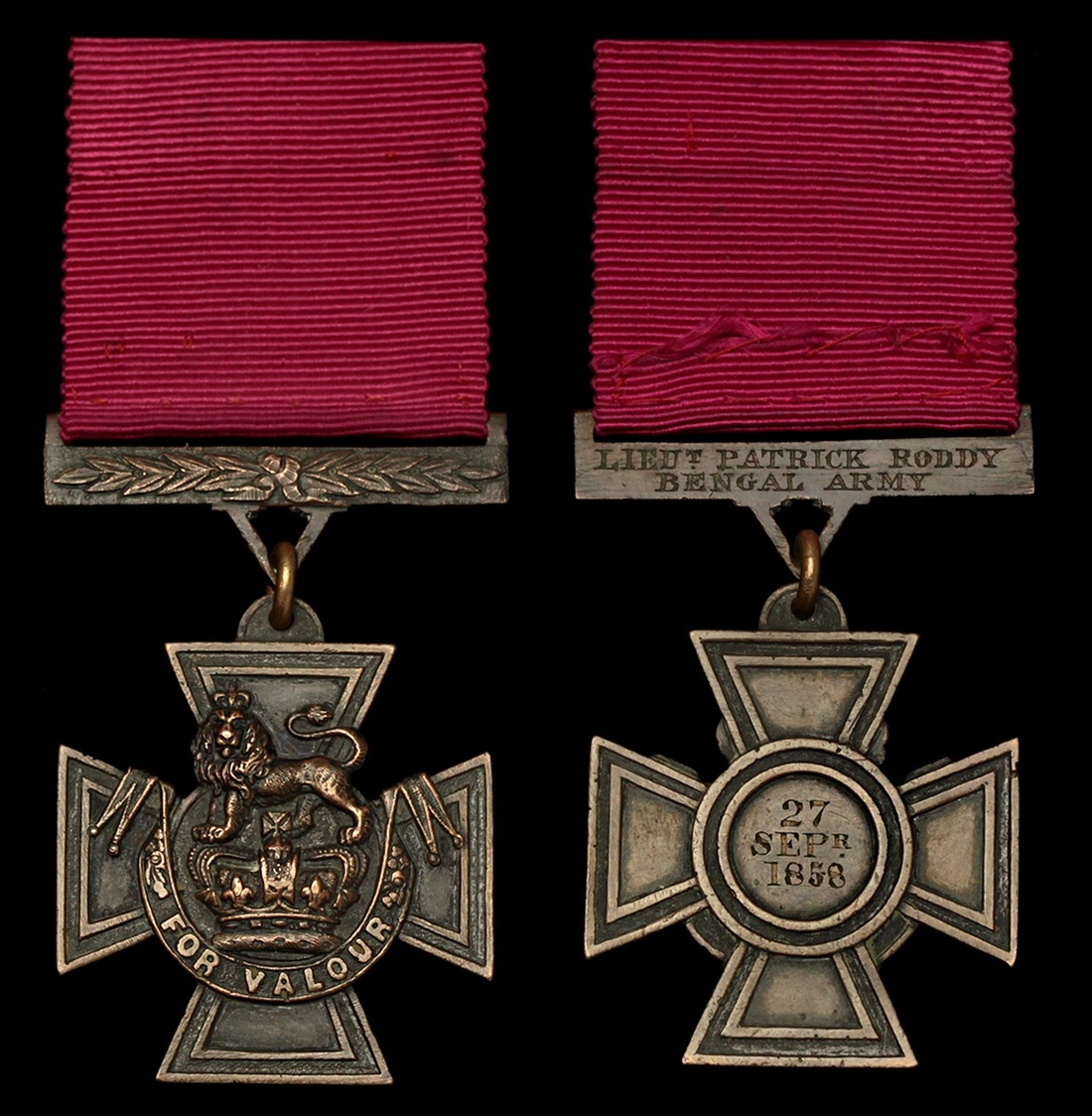
The outstanding Indian Mutiny V.C. group of four awarded to Hon. Colonel P. Roddy, Indian Army, a gallant Irishman who journeyed to England to escape the dreadful consequences of the potato famine and who signed up for the Bengal Artillery in Liverpool in late 1848
A Sergeant by the time the outbreak of the Mutiny, he distinguished himself in the operations to relieve Lucknow - at the Baillie Guard Gate and the Alumbagh - and was wounded by a bursting gun. But it was for his subsequent gallantry at Kurthirga on 27 September 1858 – after being rewarded with an Ensigncy in the Oudh Military Police Cavalry - that he was awarded the V.C.
On that occasion, when returning with the Kuppurthulla Contingent – when his fellow cavalrymen backed off from engaging an armed rebel who was described as ‘a powerful man and a most determined character’ – Roddy stuck in his spurs and charged him. His horse being shot dead when just six yards from his assailant, the rebel moved to cut him up, but in the furious struggle that ensued, Roddy managed to recover his own sword and run his opponent through
Taking a brace of 'mentions' for the Mutiny, he added a third to his accolades for the Abyssinia operations in 1868, and a fourth for the Second Afghan War in 1879, in which latter conflict he was attached to the 20th Punjab Infantry under the redoubtable General Sir Sam Browne V.C.; Roddy gave all but four decades of service to Queen & Country and it is reputed that he was offered a Bar to his Victoria Cross for gallantry, but instead took a promotion; he also managed to attend the annual Lucknow Dinner the month before he died
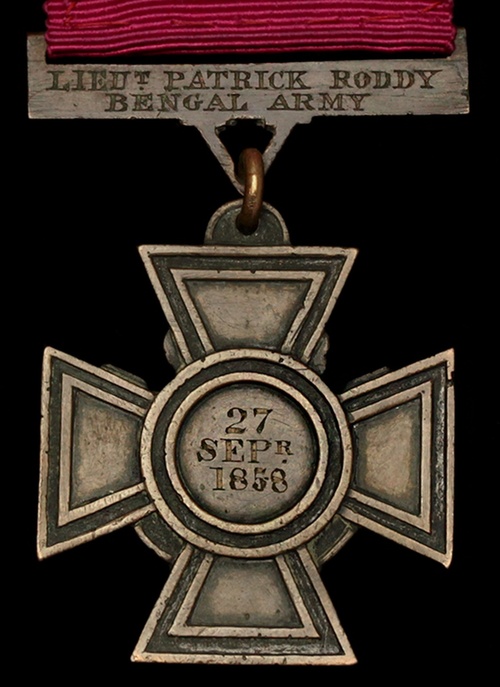
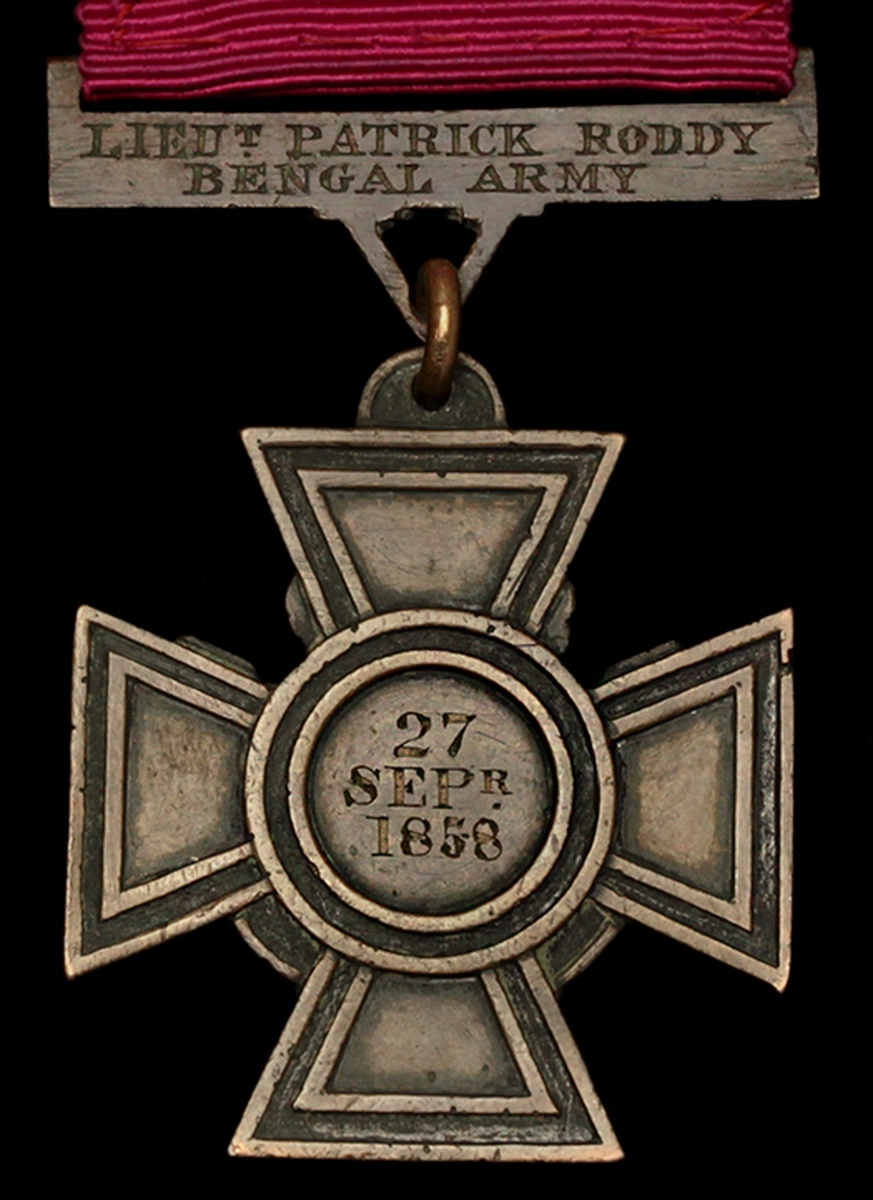
Victoria Cross, the reverse of the suspension bar engraved 'Lieut. Patrick Roddy Bengal Army', the reverse of the Cross engraved '27 Sepr. 1858'; Indian Mutiny 1857-59, 2 clasps, Defence of Lucknow, Lucknow (Ensn. P. Roddy, 3rd Bn. Bengal Art.); Abyssinia 1867-68 (Captn. P. Roddy. V.C. Bengal Army); Afghanistan 1878-80, 1 clasp, Ali Musjid (Maj. P. Roddy. V.C. 20th N.I.), a few contact marks, good very fine (4)
V.C. London Gazette 12 April 1859:
'Major-General Sir James Hope Grant, K.C.B., Commanding Oudh Force, bears testimony to the gallant conduct of Lieutenant Roddy, on several occasions.
One instance is particularly mentioned. On the return from Kuthirga of the Kuppurthulla Contingent, on the 27th of September, 1858, this officer, when engaged with the enemy, charged a Rebel (armed with a percussion musket), whom the Cavalry were afraid to approach, as each time they attempted to do so, the Rebel knelt and covered his assailant; this, however, did not deter Lieutenant Roddy, who went boldly in, and when within six yards, the Rebel fired, killing Lieutenant Roddy's horse, and before he could get disengaged from the horse, the Rebel attempted to cut him down. Lieutenant Roddy seized the Rebel until he could get at his sword, when he ran the man through the body. The Rebel turned out to be a subadar of the late 8th Native Infantry - a powerful man, and a most determined character.'
Patrick Roddy was born on 17 March 1827 in Elphin, Co. Roscommon, Ireland on 17 March 1827 and, in consequence of the hardships of the Irish potato famine, made his way to Liverpool, where he enlisted in the Royal Artillery in early 1848. Almost immediately, however, he signed up for the Bengal Artillery, in which he enjoyed better pay and prospects of promotion. Embarked for India in H.M.S. Collingwood in October 1848, he was drafted as a gunner to the 1st Company, 3rd Battalion.
He subsequently enjoyed rapid advancement and was serving as a Sergeant in the 2nd Company, 3rd Battalion come the outbreak of the Indian Mutiny. Having been holed up at Lucknow with Sir James Outram's relief force, he was tasked with the defence of the Baillie Guard Gate and the Alumbagh, duties which he continued to fulfil until the arrival of Sir Colin Campbell's relief force in March 1858, when he was wounded by a bursting gun.
Roddy's conduct was such that he was appointed an Ensign on the Unattached List in February 1858, prior to joining the Oudh Military Police Cavalry in May of the same year. Attached to the column commanded by Major-General Sir James Hope Grant, he and his comrades spent the summer months pursuing the rebels in Oudh Province. Here, then, the chapter of active service that led to his V.C. exploits at Kuthirga, east of Cawnpore, on 27 September 1858. His 'powerful' and 'most determined' opponent turned out to be a Subadar from the 8th Native Infantry.
Invested with his V.C. in a special parade conducted by Colonel Schopp, the station commander at Ferozepore, on 5 September 1861, he was also twice mentioned in despatches. He had meanwhile been advanced to Lieutenant and appointed a Divisional Adjutant of the Military Police at Oudh.
Promoted to Captain in January 1867, in which year he served on the Nepalese Frontier, Roddy was next embarked for Abyssinia, where he gained another 'Mention' in the following year, in addition to being given the Brevet of Major.
His subsequent appointments back in India included those of Staff Station Officer 2nd Class at Amritsar and he was confirmed in the rank of Major in March 1875, whilst serving at Roorkee.
Yet his active service career was not yet over, for some 20 years following his V.C. exploits, he lent further valuable service in the Second Afghan War in 1878-79, in which period he was attached to the 20th Punjab Native Infantry under General Sir Samuel Browne, V.C. As part the 1st Division of the Peshawar Field Force, the regiment undertook difficult flanking operations over the precipitous heights of the Ali Musjid, thereby forcing the Afghans to abandon their mountain-top fort. Roddy was again mentioned in despatches.
Also given the Brevet of Lieutenant-Colonel in March 1882, he served out his days in India as a Station Staff Officer at Rorkeee and Morar and was placed on the Retired List as an Honorary Lieutenant-Colonel in February 1887, just shy of his fortieth year in the service of Queen and country.
Roddy retired to his wife's home in Jersey, but managed to attend the Lucknow Dinner at the Hotel Metropole on 25 September 1895. He died less than a month later, on 21 November 1895, and is buried in Mount L'Abbe Cemetery, St Helier (his grave was restored in April 2023). Their marriage produced six sons and three daughters, of whom the former included James Morris Roddy, who was killed on the North-West Frontier in India on 9 November 1897 (see Lot 340 for his Medal), and Major Edwin Louis Roddy, who died in 1919 from the effects being gassed in France.
Subject to 20% VAT on Buyer’s Premium. For more information please view Terms and Conditions for Buyers.
Estimate
£120,000 to £150,000
Starting price
£110000
Watch, listen and bid as if you were in the room. Now available for auctions worldwide.
Click here to bid live
An exclusive and confidential service for the discerning collector or vendor.
View the Gallery
Download every Spink catalogue on your iPad, iPod or iPhone using free Spink app.
Download From iTunes© 2026 Spink & Son. All rights reserved.