Auction: 26003 - Orders, Decorations and Medals
Lot: 272
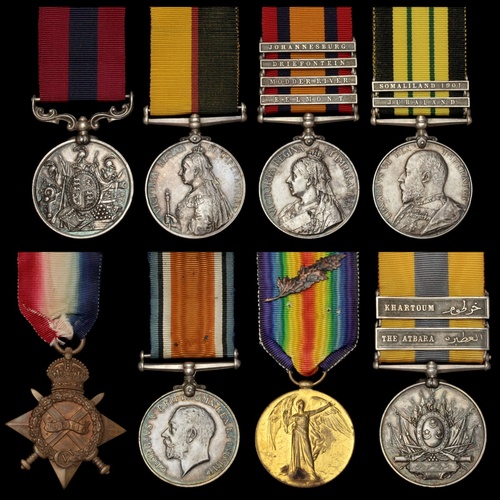
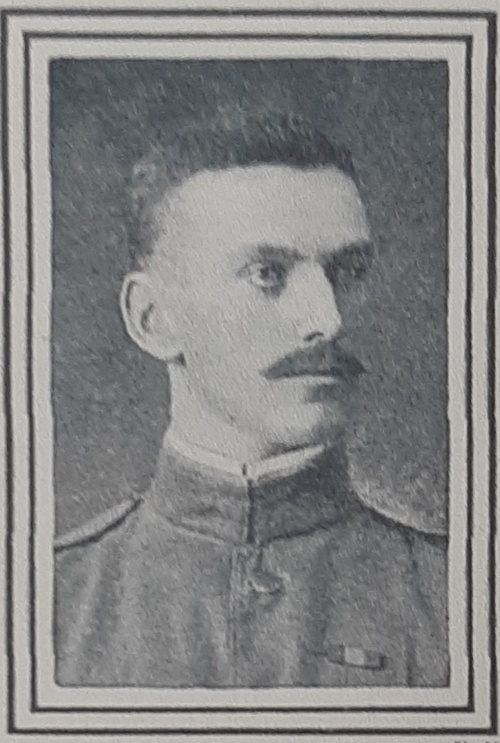
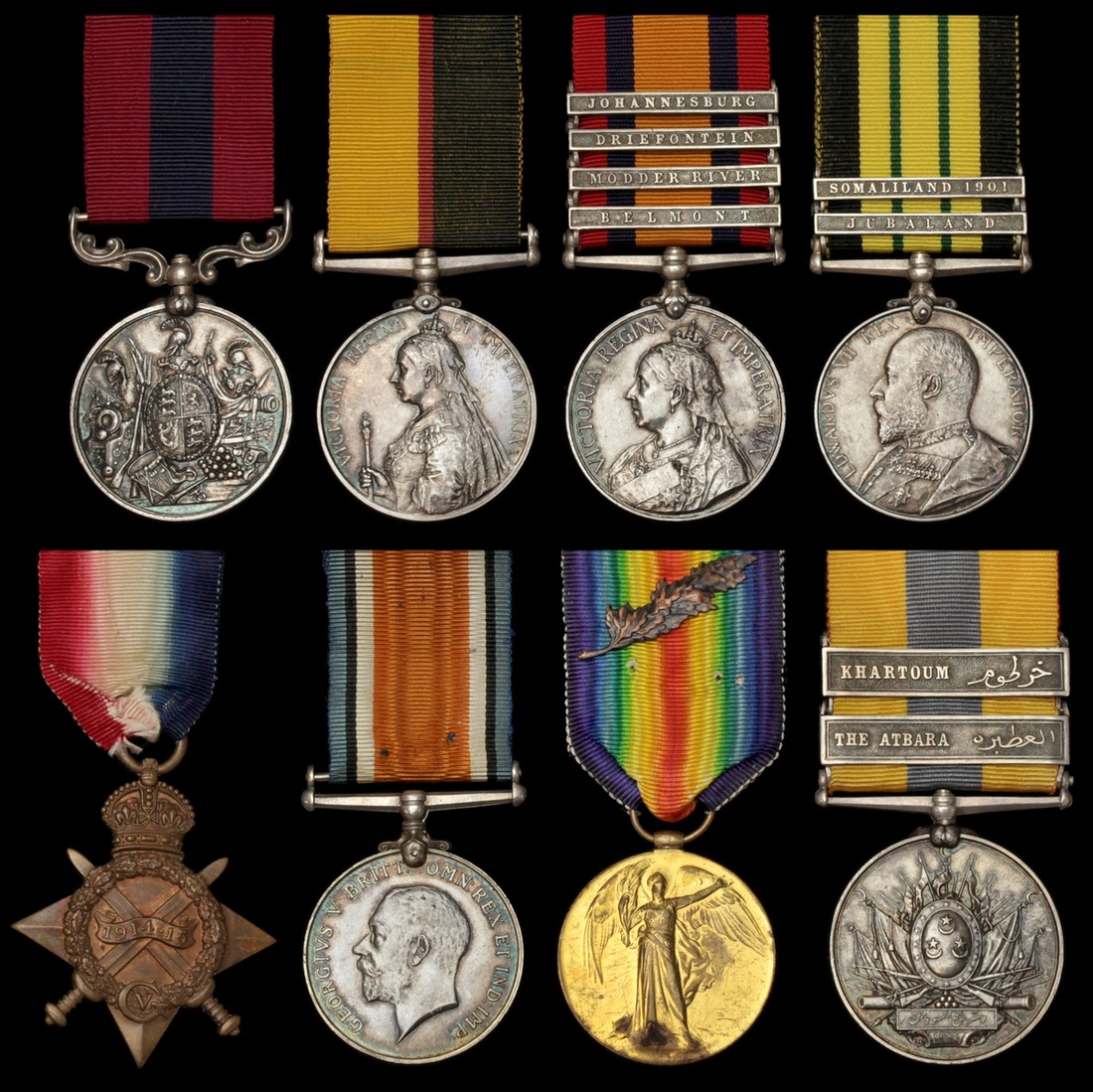
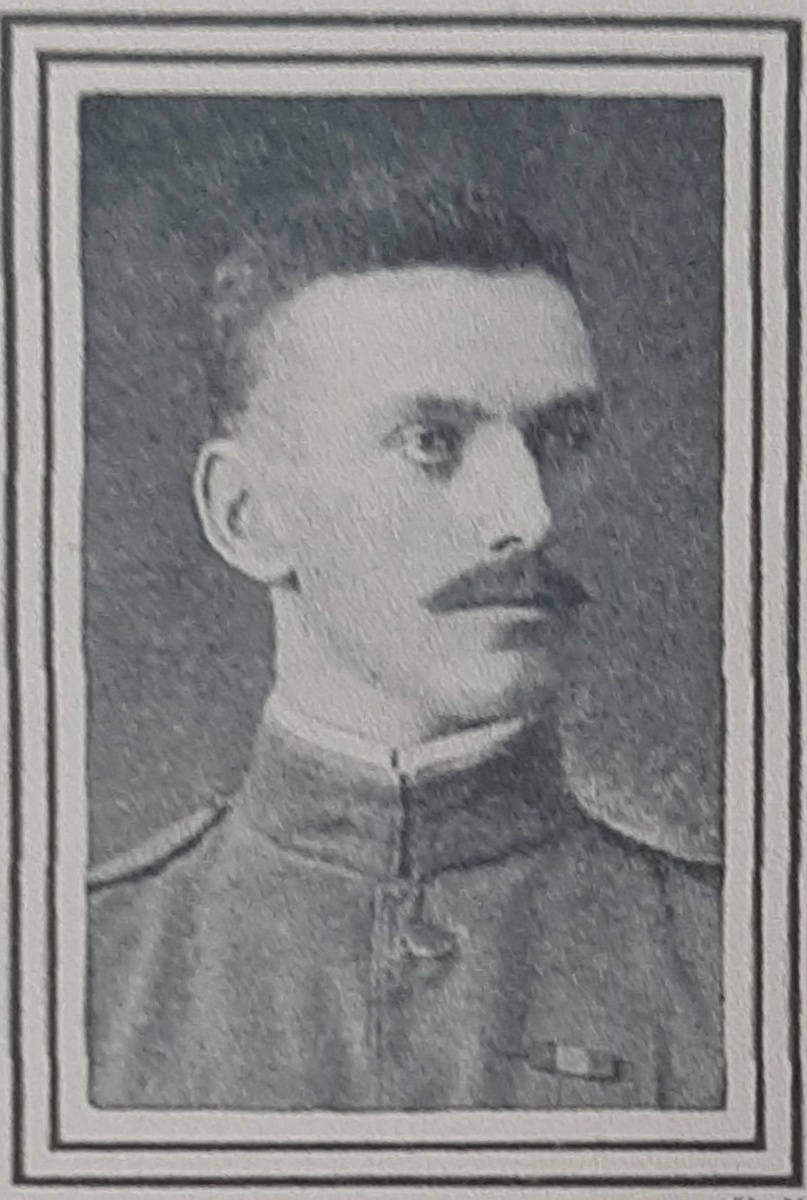
The unique Battle of Atbara 1898 D.C.M. group of eight awarded to Sergeant G. Hilton, Scots Guards, attached Egyptian Army, later Major, King's Own Scottish Borderers, who was wounded whilst performing his acts of gallantry and was later 'mentioned' for his troubles
Commissioned during the Boer War - reportedly turning down the Victoria Cross to do so - he was to serve during the operations in Jubaland and Somaliland in 1901, besides being twice wounded on the Western Front, including on 1 July 1916, the First Day of the Battle of the Somme when as Second-in-Command of the King's Own Scottish Borderers
Distinguished Conduct Medal, V.R. (Sergt. G. Hilton. Sco: Gds. (8th. April 1898)); Queen’s Sudan 1896-98 (9539 Sgt. G. Hilton. 12/ Bn: Sud: R.); Queen’s South Africa 1899-1902, 4 clasps, Belmont, Modder River, Driefontein, Johannesburg (Lieut: G. Hilton, D of C. L.I.); Africa General Service 1902-56, 2 clasps, Jubaland, Somaliland 1901 (2/Lieut. G. Hilton. D of C. L.I.); 1914-15 Star (Capt. G. Hilton. D.C.M. K.O. Sco. Bord.); British War and Victory Medals, with M.I.D. oak leaves (Major G. Hilton); Khedive’s Sudan 1896-1908, 2 clasps, The Atbara, Khartoum, unnamed as issued, minor contact marks, generally good very fine (8)
Just 2 D.C.M.'s were awarded to the Scots Guards for the Sudan campaign 1898-99, the other being for Khartoum (Omdurman).
D.C.M. London Gazette 15 November 1898.
George Hilton was born at Blackburn, Lancashire on 12 November 1872 and attested for the Scots Guards in April 1892. He saw home service until 1897 when, in the rank of Sergeant, he was posted as a non-commissioned instructor to the Egyptian Army. He served during the Sudan campaign whilst attached to the and was present at the Battle of the Atbara, 8 April 1898, where he was wounded, a report on the action notes the severity of his injury stating:
'The Soudanese suffered very severely. Sergeant Hilton, 1st Scots Guards, attached to the 1st Soudanese, was wounded in the right upper arm. The bullet went in just above the elbow, and was extracted on the inside of his arm. It is a marvel how it missed the bone and artery, neither of which was touched.'
For his efforts in the action Hilton was awarded the Distinguished Conduct Medal and added to his laurels with a 'mention' (London Gazette 22 May 1898), it is a mark of his fortitude that he took part in the Battle of Omdurman just a few months later on 2 September 1898.
Returning to his parent Regiment, he served with them in South Africa during the Boer War, and was present at the advance on Kimberley, including the actions at Belmont, Enslin and Modder River. It was at the latter engagement on 28 November 1899 that he was recorded by the Daily Chronicle as having '… again distinguished himself by carrying the wounded armourer-sergeant of his regiment off the field under a heavy fire'. Indeed Armour Sergeant Alexander Jack does appear on the casualty list for the action having been 'wounded both thighs at Modder River'.
He was present for the final reverse of the campaign at Magersfontein and was later to see operations in the Orange Free State, including the actions at Poplar Grove, Driefontein on 10 March 1900, Vet River, and Zand River. An article in the Cornish & Devon Post on 14 July 1906 referring to Hilton's career, states:
'He took part with the 1st Scots Guards in the Transvaal campaign, where he did such good work that he was offered the Victoria Cross or a commission. He accepted the latter, and in May, 1900, was gazette second lieutenant in the old 32nd, with whom he has served in Ceylon and South Africa.'
Indeed Hilton was commissioned Second Lieutenant with the 1st Battalion, Duke of Cornwall's Light Infantry on 23 May 1900 and was present with his new Regiment in the Transvaal, including the actions near Johannesburg and Pretoria. Hilton related his last action in One and All the Regimental Gazette of the D.C.L.I., describing the story of a train journey to reach Pretoria and receive the orders that would eventually take him to India. Camping down in the train with a Colonial Farmer he had met enroute he received a rude awakening, Hilton states:
'My friend and I made a humble supper of tea and biscuits, wrapped our blankets around us and went to sleep. I must have been asleep about four hours, when I was awakened by the cracking of a rifle. I gave my sleeping friend a kick and informed him that too much sleep wasn't good for him; he woke up with a start. We were in a pretty tight corner; the train was about a quarter of a mile from us. The Basutos by this time were scattered all over the veldt; the bullets were coming pretty thick the Boers having crept up to about 200 yards of our position; fortunately the railway was banked up a little, thus sheltering us. I didn't take much time to consider what to do; I had neither rifle, sword nor revolver, having given up my arms on leaving the Scots' Guards. There were only two alternatives left me either to be taken prisoner or bolt: I chose the latter. The Boers came from the West so I made for the East; my friend had bolted and was mixed up with the Basuto Boys. Fortunately the attack was made during the night a thing the Boers seldom resort to. The night was moonlit and they were able to see me making off; some of them made pretty good shooting; I could hear the ping ping of the bullets that passed me and the fuzz and thud of the ones that ploughed the earth near me. I had about 200 yards to run before I could get under cover of a rise and I made pretty good use of my legs, after I had gained the shelter of the rise, they ceased to fire, and probably turned their attention to someone else, but I still ran.'
Swimming the Rheynoster River and continuing all night Hilton eventually managed to reach a Yeomanry patrol who brought him to Headquarters. There he received orders to travel to India; taking the train from Bombay to Dum Dum he dryly commented on the 'dreary journey' that took him there.
Remaining in the Africa, Hilton served in Somaliland from 17 January-11 October 1901, and took part in operations against the Ogaden Somalis in Jubaland under the command of Colonel Ternan from January to April 1901. He also served during the operations against the Mullah Muhammed-bin-Abdullah in Somaliland under the command of Lieutenant-Colonel Swayne from May to July 1901. Promoted Lieutenant on 1 January 1904, he was appointed Adjutant of the Volunteer Battalion (later Territorial Force) on 9 June 1906, continuing in this post for the next three years.
Hilton transferred as a Captain to the King's Own Scottish Borderers on 17 April 1909, seeing service in the Great War he entered the war in France on 7 December 1914. Wounded at Hill 60 in 1915 he was 'mentioned' around the same time (London Gazette
The 1st Battalion, King's Own Scottish Borderers were in the second wave behind the Inniskillings on the First Day of the Somme. Unfortunately, the Regimental history states the Germans used the same flare as the agreed upon signal for the British to launch their second wave, resulting in the K.O.S.B. being launched after the already decimated Inniskillings. The K.O.S.B. in the Great War refers stating:
'One company had 202 casualties out of a strength of 219. The officer's disguises as private soldiers made no difference in such a browning hail of M.G. bullets. Major Hilton's reserve of about 80 was thrown in to hold the trenches, and the Borders handed over the impossible task to the 88th… The Essex on the R., who leapfrogged the K.O.S.B. at 8.45 a.m., found them, so to speak, weltering in their gore, the trenches blocked and damaged so that it was not till nearly 11 a.m. that a new attack was pushed half-way (in parts) across No Man's Land.'
The Regimental history goes on to confirm that Hilton was wounded in action on that infamous day, possibly the injury that caused his return to Britain. Regardless he was back in 'Blighty' by 1917 and appointed Deputy Assistant Adjutant General at the War Office on 13 June 1917. Joining the Air Board (later the Air Ministry) on 4 February 1918 his remarkable career ended when he retired as a Wing Commander in the Royal Air Force on 7 September 1921; sold together with comprehensive copied research.
Subject to 20% VAT on Buyer’s Premium. For more information please view Terms and Conditions for Buyers.
Estimate
£5,000 to £7,000
Starting price
£4000
Watch, listen and bid as if you were in the room. Now available for auctions worldwide.
Click here to bid live
An exclusive and confidential service for the discerning collector or vendor.
View the Gallery
Download every Spink catalogue on your iPad, iPod or iPhone using free Spink app.
Download From iTunes© 2026 Spink & Son. All rights reserved.