Auction: 26003 - Orders, Decorations and Medals
Lot: 250
Sold by Order of a Direct Descendant
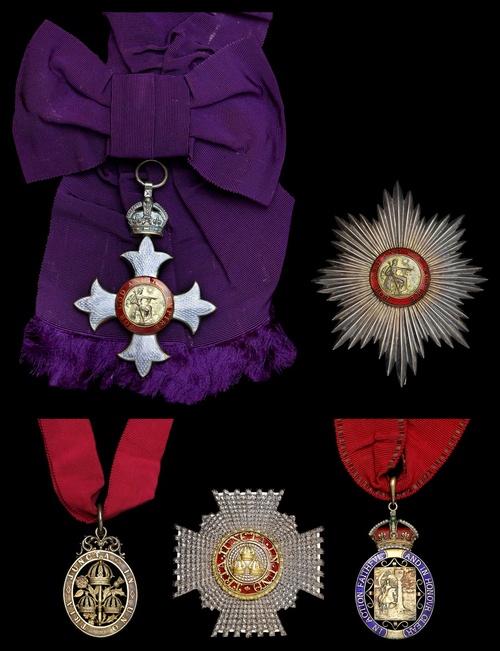
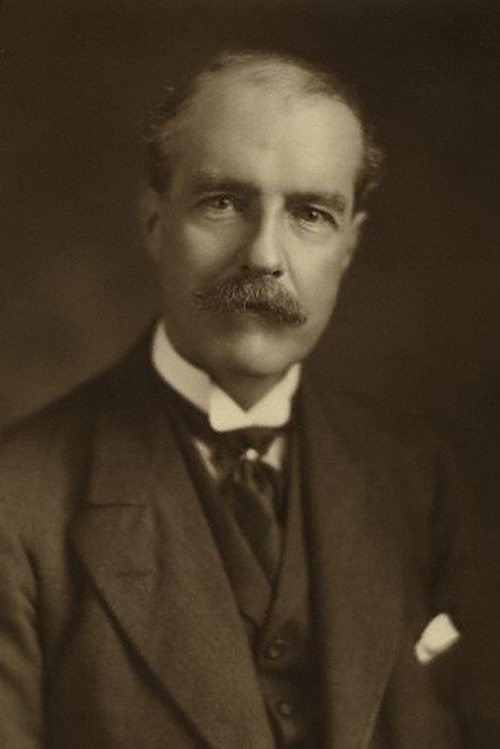
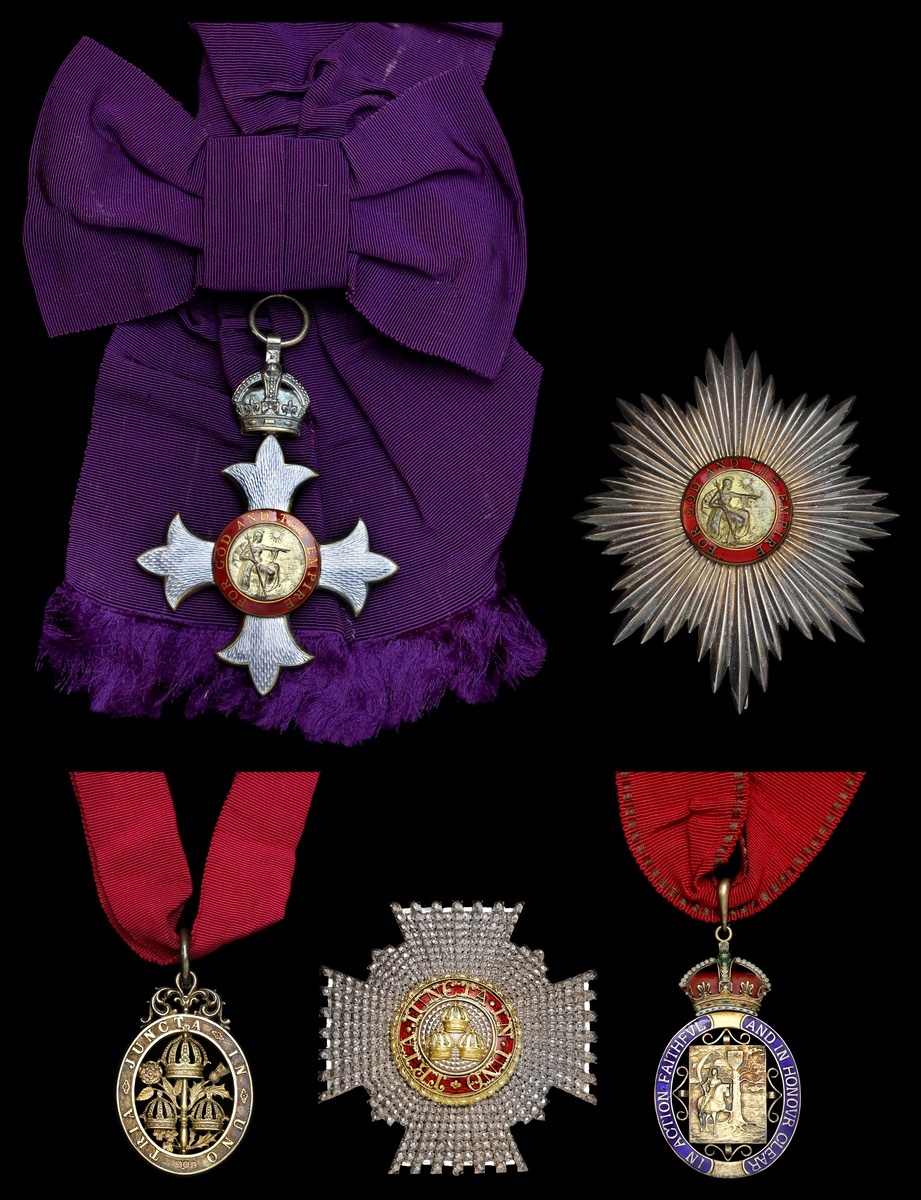
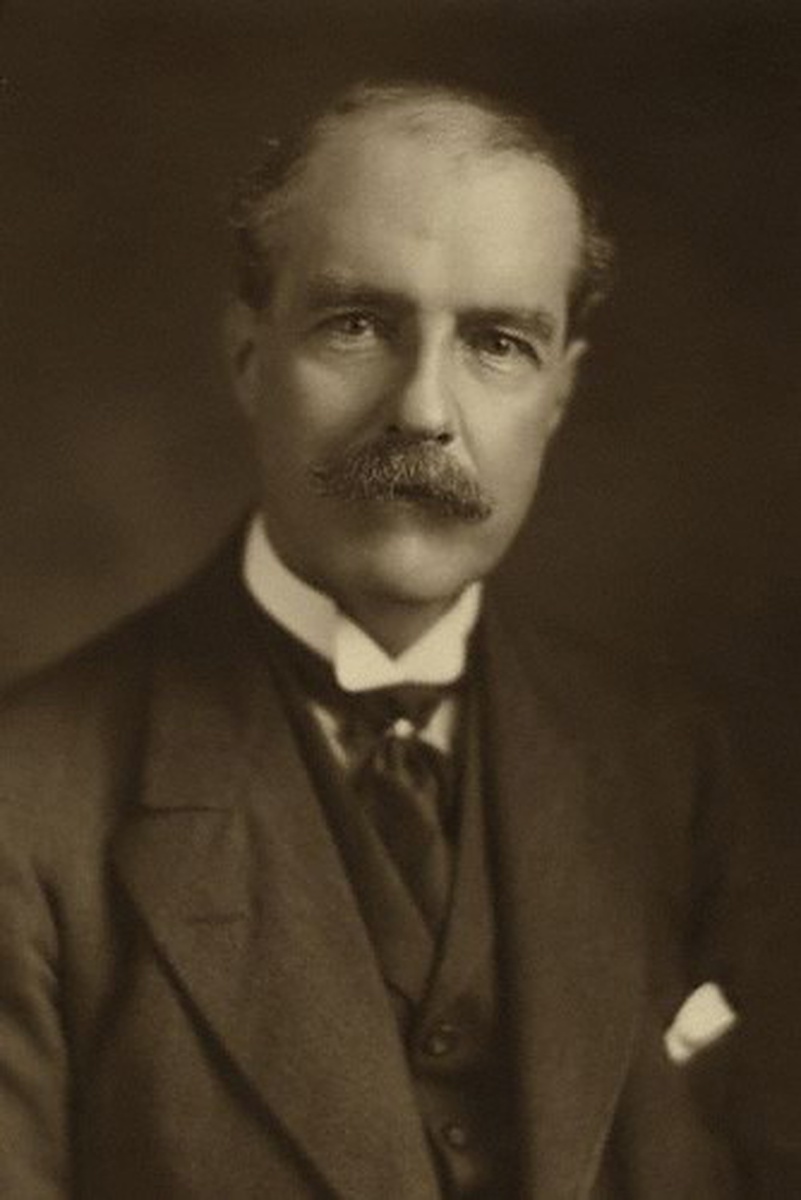
The G.B.E., C.H. and K.C.B. group to Sir H. Babington Smith who served as one of Britain's most senior Civil Servants, representing Britain on the global stage in India, South Africa and Constantinople.
After a vital civil war-service during the Great War, he went on to become the director of the Bank of England in 1920
The Most Excellent Order of the British Empire, Civil Division, 1st Type Knight Grand Cross (G.B.E.) set of Insignia by Garrard & Co, London, comprising sash Badge, 94mm including crown suspension x 72mm, silver-gilt and enamel, with full riband sash, blued patina to crown suspension; breast Star, 104mm x 87mm, silver, silver-gilt and enamel, in case of issue; The Order of the Companions of Honour, Member's (C.H.) neck Badge, G.V.R., 67mm including crown suspension x 40mm, silver-gilt and enamel, on full length neck riband, in case of issue, one minor enamel chip; The Most Honourable Order of the Bath, Civil Division, Knight Commander (K.C.B.) set of Insignia by Garrard & Co, London, comprising neck Badge, 53mm x 38mm, silver-gilt and enamel, hallmarks to 1902 and marker's cartouche to reverse, on full length neck riband; breast Star, 75mm, gold, silver and enamel, with gold retaining pin, in case of issue, all very fine (5)
G.B.E. Edinburgh Gazette 1 April 1920.
C.H. London Gazette 24 August 1917.
K.C.B. London Gazette 28 June 1908.
[C.S.I.] London Gazette 22 June 1897.
Henry Babington Smith was born in Putney, London in February 1863 and was the son of famed barrister and amateur mathematician Archibald Smith of Jordanhill. Babington Smith got his double barrelled surnamed from his maternal grandmother Mary, who was the daughter of Thomas Babington, the member of Parliament for Leicester who actively campaigned for the anti-slavery movement and was a personal acquaintance of William Wilberforce.
Babington Smith was educated at Eton College and Trinity College, Cambridge where he read Classics. While studying at Cambridge, he was also a member of the underground private members club the 'Cambridge Apostles' which was made up of a limited number of men (as few as 12) who met up to discuss politics and philosophy. This group was foundational in helping establish future intellectual groups such as the Bloomsbury Group, which were often made up of past members of the Apostles. Babington Smith excelled in this environment and indeed academically at university, and was awarded the Browne Medal and the Winchester Reading Prize in 1886. Such excellence secured his fellowship at Trinity in 1889.
Upon graduating university he worked at Winchester College as an Assistant Master before then joining the Board of Education as an examiner. He worked with the Board of Education for four years before he then joined the civil service. He was appointed the principle private secretary to George Goschen, the newly appointed Chancellor of the Exchequer and would have partook in the Brussels Monetary Conference in 1892. After serving in this post for a few years, he then transferred to becoming the private secretary to Lord Elgin upon his appointment as Viceroy of India. This new job became quite the turning point for Babington Smith as this was when he met and married Elgin's eldest daughter, Lady Elisabeth Mary Bruce. For his work out in India, he was appointed Companion of the Order of the Star of India in 1897.
He then returned Britain in 1899 and was immediately send to Natal as a representative for H.M. Treasury in the Boer War. The following year he became the British representative on the Council of Administration of the Ottoman Public Debt and later, he was elected chairman. Here, he represented Britain on the global stage and for his services in this role, he was awarded the 1st Class, Order of Osmanieh. Upon his return home, he became secretary to the General Post Office and while he served in this role, he was appointed C.B. and then later K.C.B..
Babington Smith's next posting was to Constantinople, where he completed his first stint at running a bank, in this case being the president of the National Bank of Turkey. He rather nobly turned down the offer of Governor of Bombay, a most prestigious role, usually accompanied by peerage. It is said that while explaining his decision to his children, he said: "no man is wise who burdens a large family with such trappings. I did without them and so can you" (Smith, Sir Henry Babington by William C. Lubenow refers).
His experience in the financial sector proved useful during the Great War and he was appointed Deputy Governor of the British Trade Corporation. In 1915, he was part of the Anglo-French Financial Commission to the United States. That same year he was appointed Chairman of a Royal Commission which inspected the making of appointments in the Civil Service. For his war service, he was appointed C.H. in 1917, and he finished his war in America accompanying Lord Reading as Assistant Commissioner. For his services across the pond, he was appointed G.B.E. in 1920.
Following the war, he chaired the Indian Finance and Currency Committed in 1919 and the Railway Amalgamation tribunal in 1921. His most famous appointment came at the very end of his life, in 1920 when he was appointed Director of the Bank of England. He served in this role as well as serving as the Vice-Chancellor of the University of Cambridge until his death in September 1923. He is buried at the Eton Parish Cemetery in Berkshire.
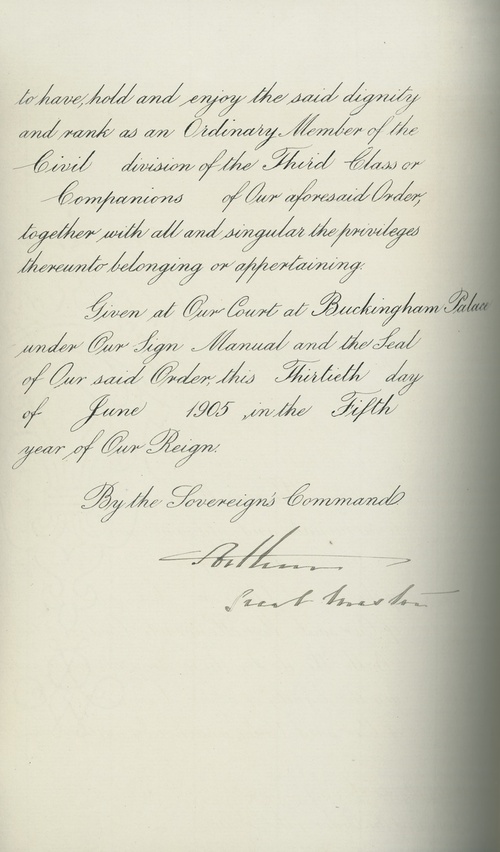
Sold with an archive of original material comprising:
i)
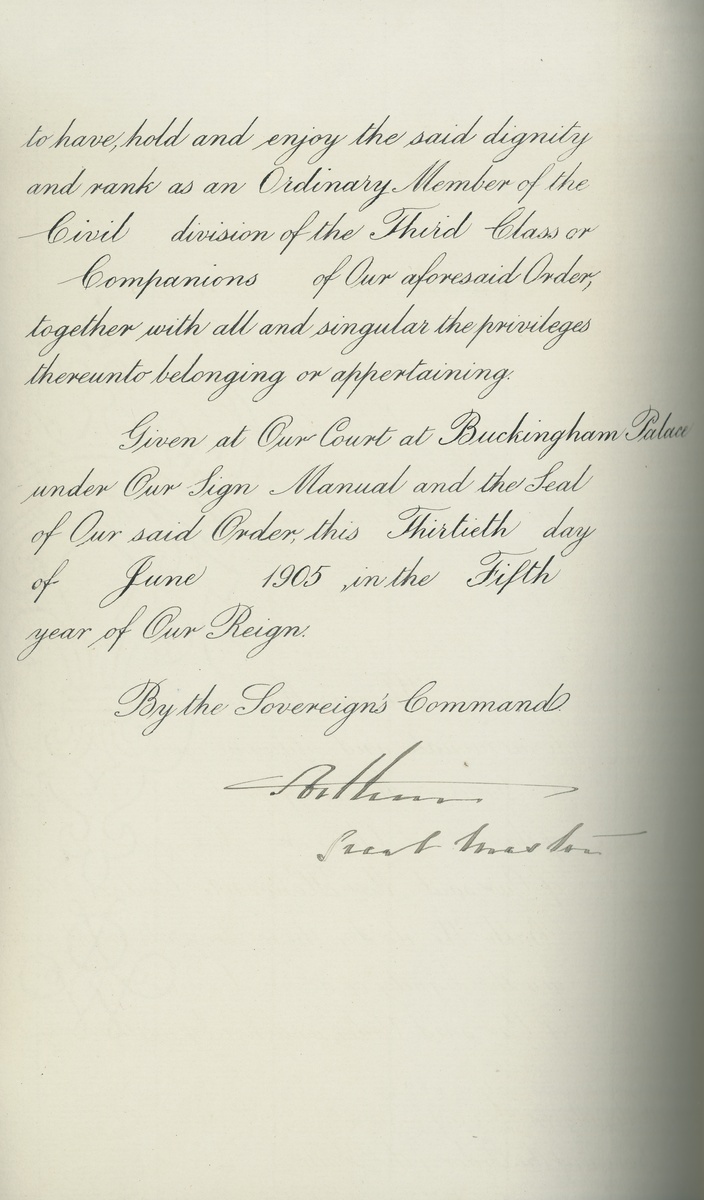
A Grant of the dignity of a Companion (Civil Division) of the Order of the Bath.
ii)
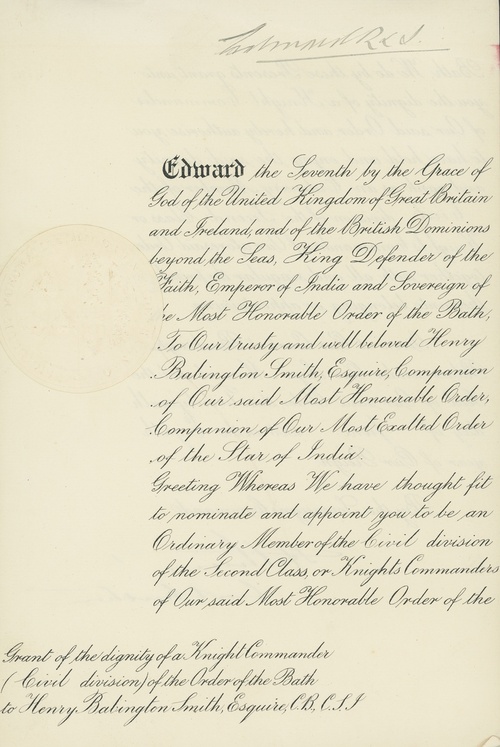
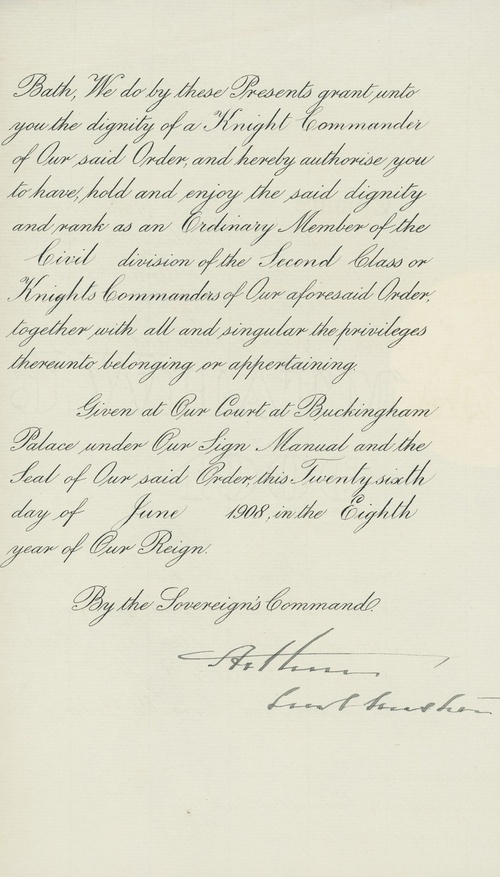
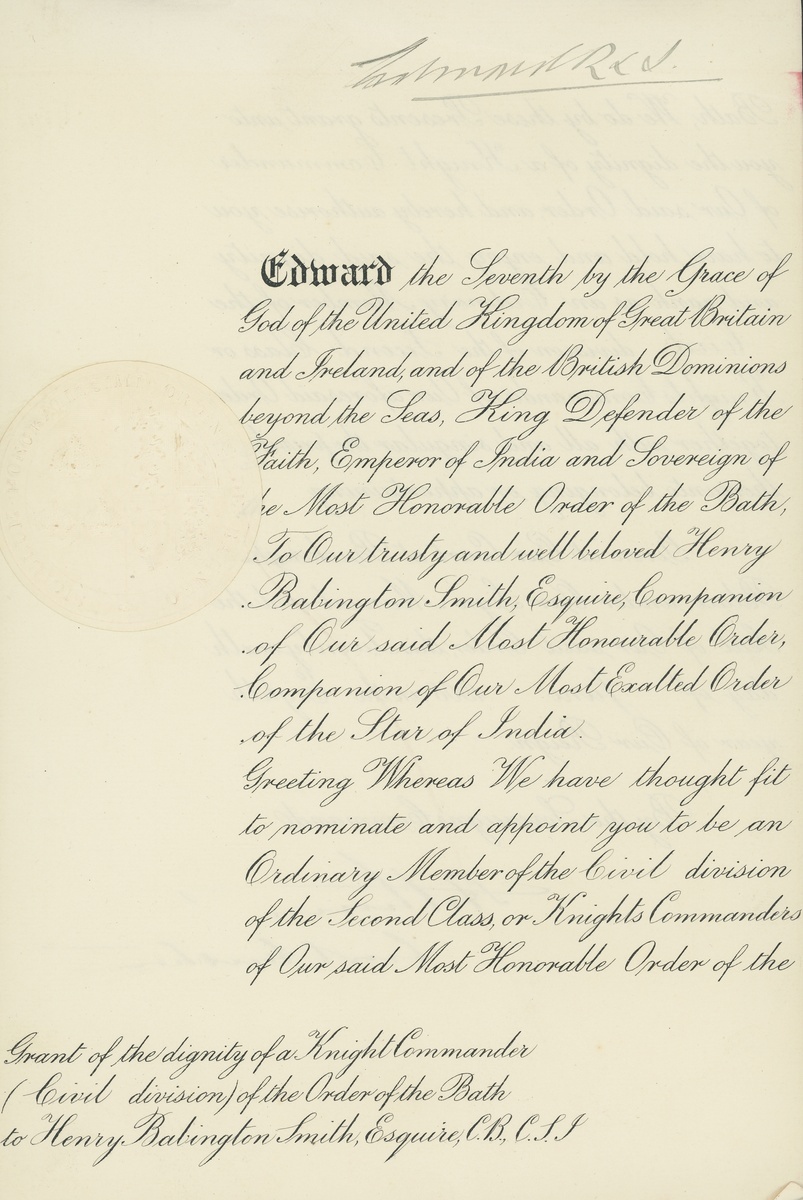
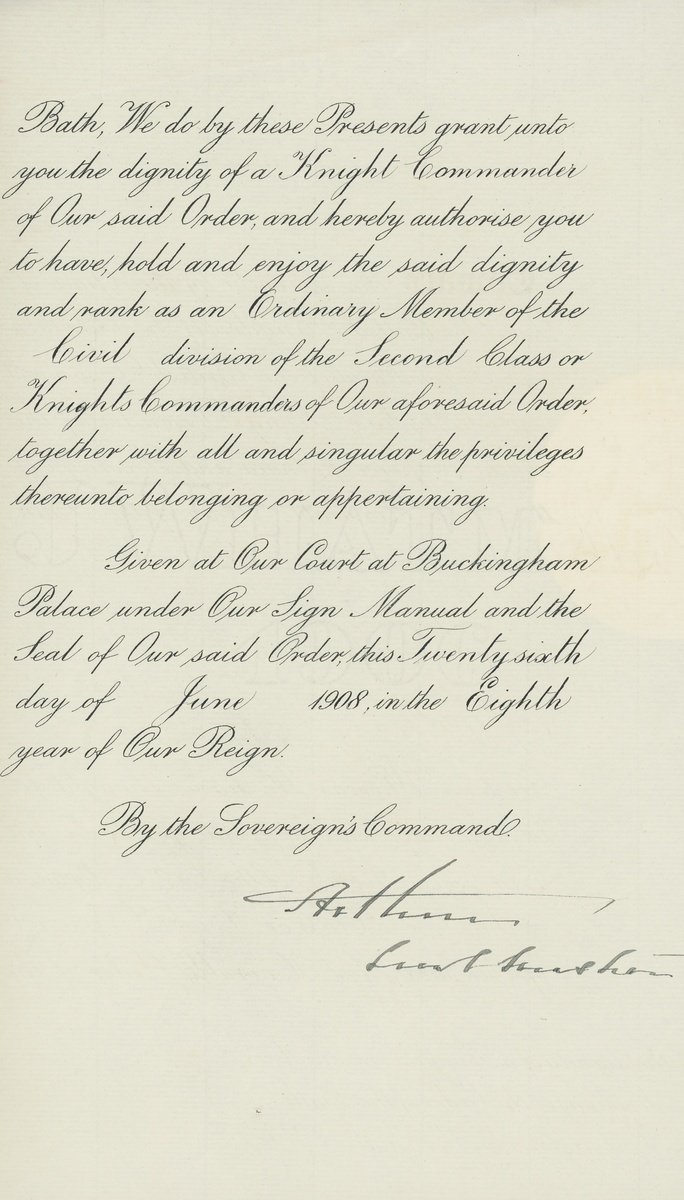
A Grant of the dignity of a Knight Commander (Civil Division) of the Order of the Bath.
iii)
A letter from 10 Downing Street, Whitehall dated 27 June 1905, addressed to Babington Smith congratulating him on his appointment as a Companion of the Order of the Bath.
iv)
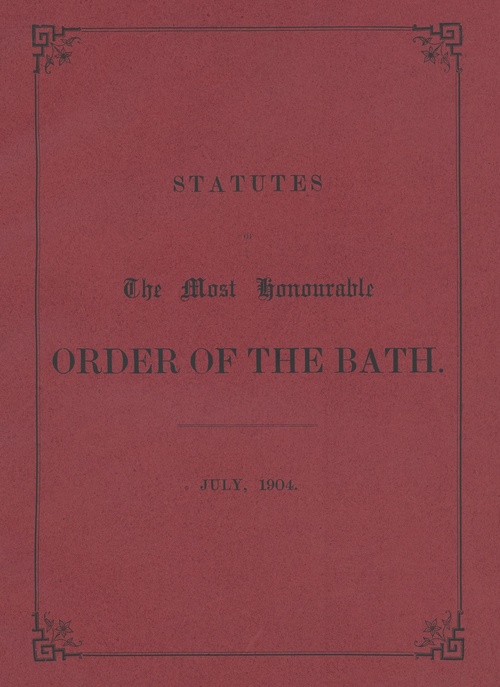
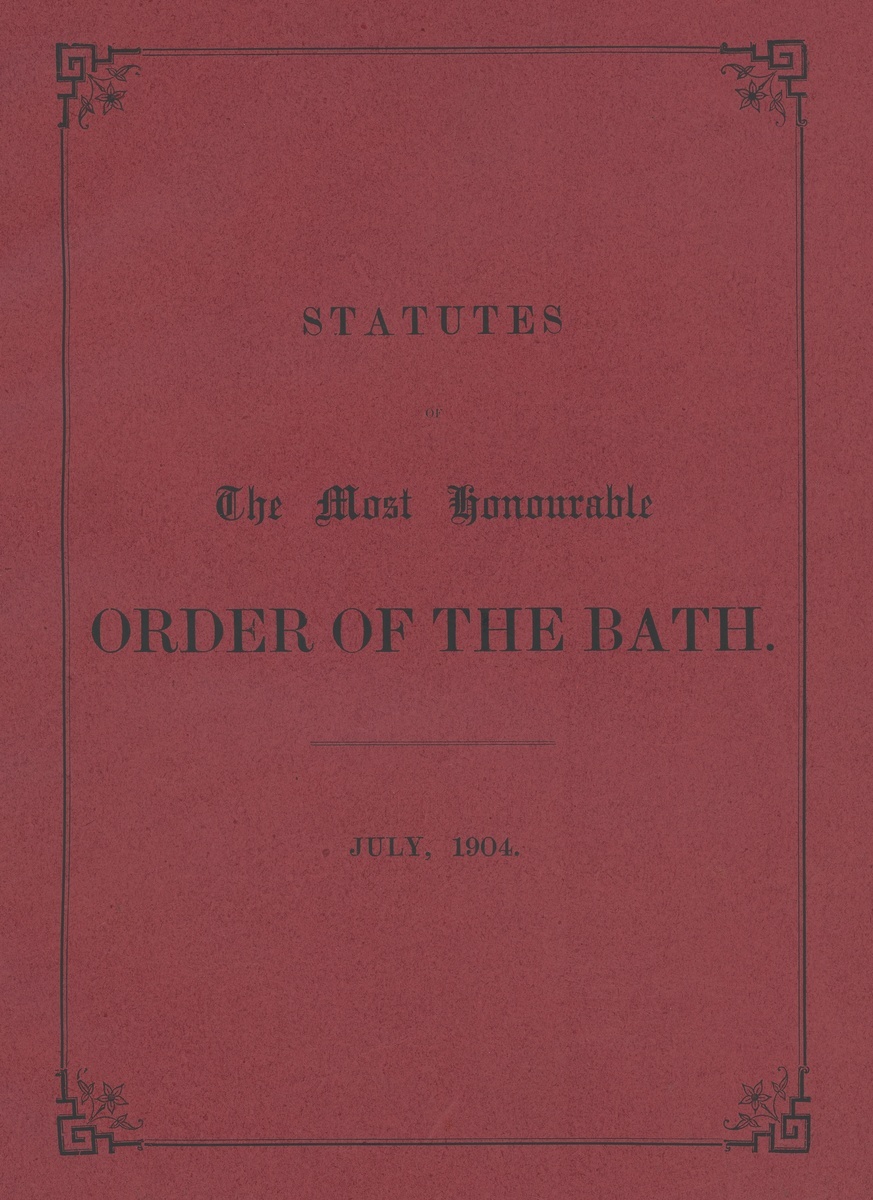
A book of Statues of the Most Honourable Order of the Bath dated July 1904.
v)
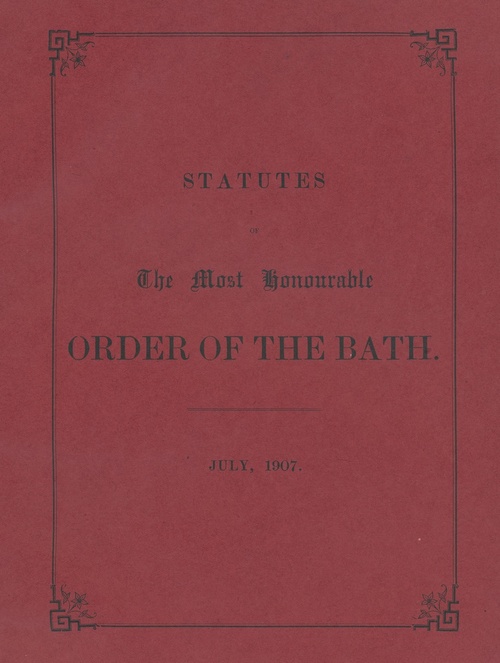
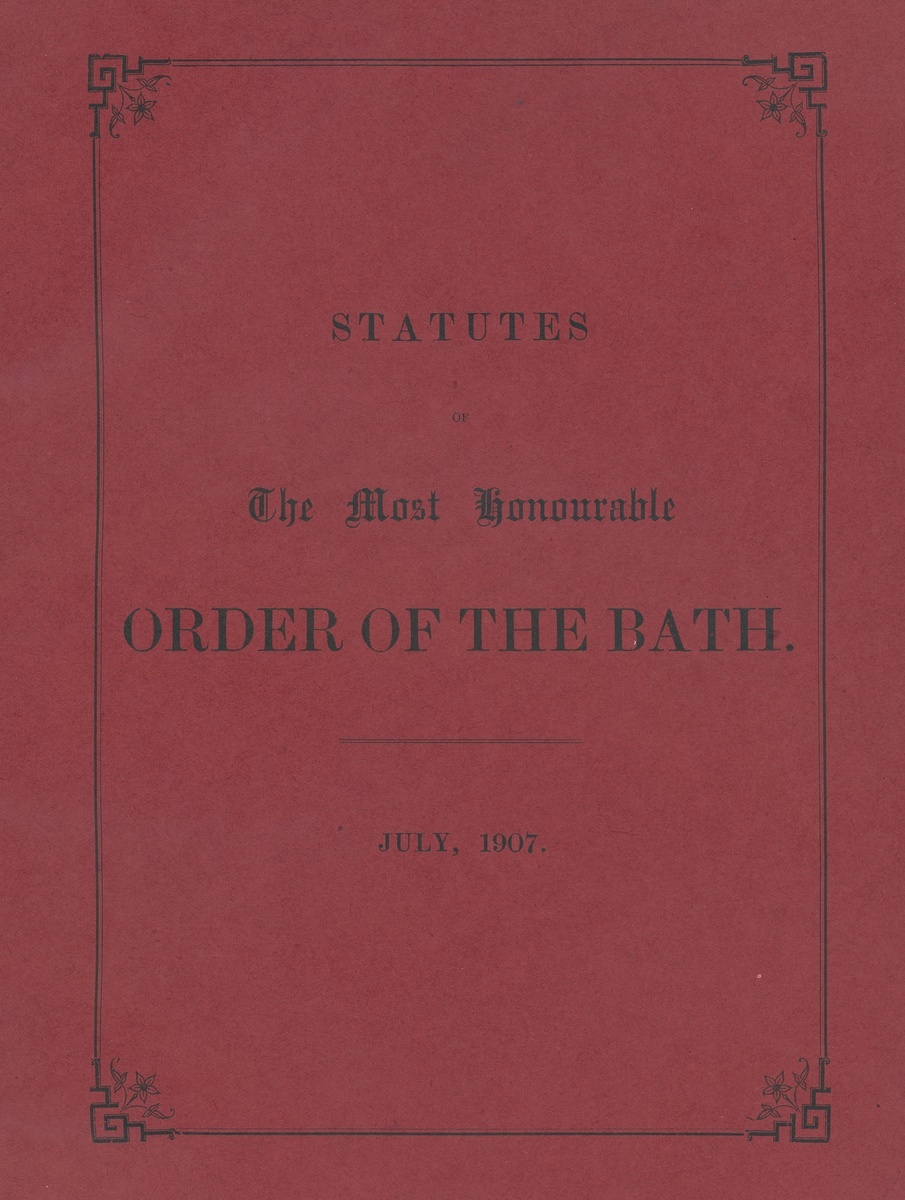
A book of Statues of the Most Honourable Order of the Bath dated July 1907.
For Babington Smith's miniature C.S.I., please see Lot 408. For his despatch box, please see Lot 387. For the full size medals awarded to his son please see Lot 251 and for his miniatures, Lot 399.
Subject to 20% VAT on Buyer’s Premium. For more information please view Terms and Conditions for Buyers.
Estimate
£3,000 to £5,000
Starting price
£2400
Watch, listen and bid as if you were in the room. Now available for auctions worldwide.
Click here to bid live
An exclusive and confidential service for the discerning collector or vendor.
View the Gallery
Download every Spink catalogue on your iPad, iPod or iPhone using free Spink app.
Download From iTunes© 2026 Spink & Son. All rights reserved.