Auction: 26003 - Orders, Decorations and Medals
Lot: 230
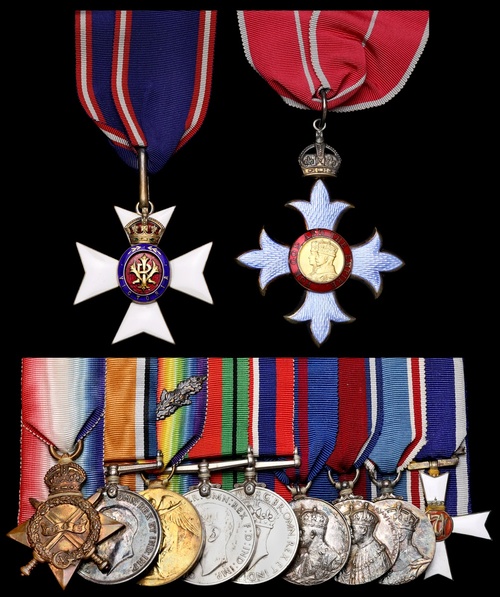
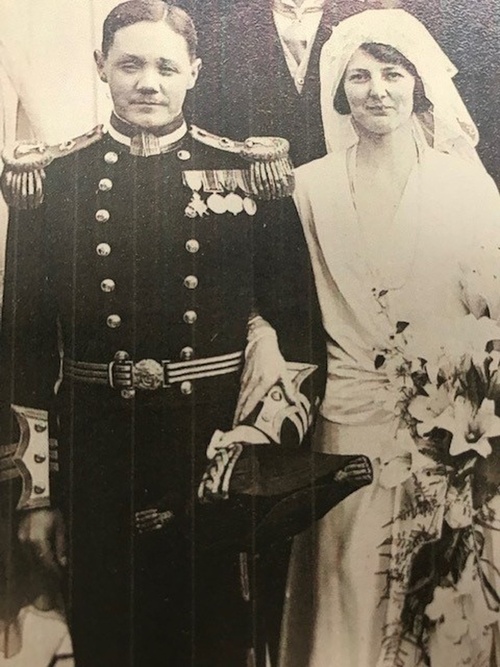
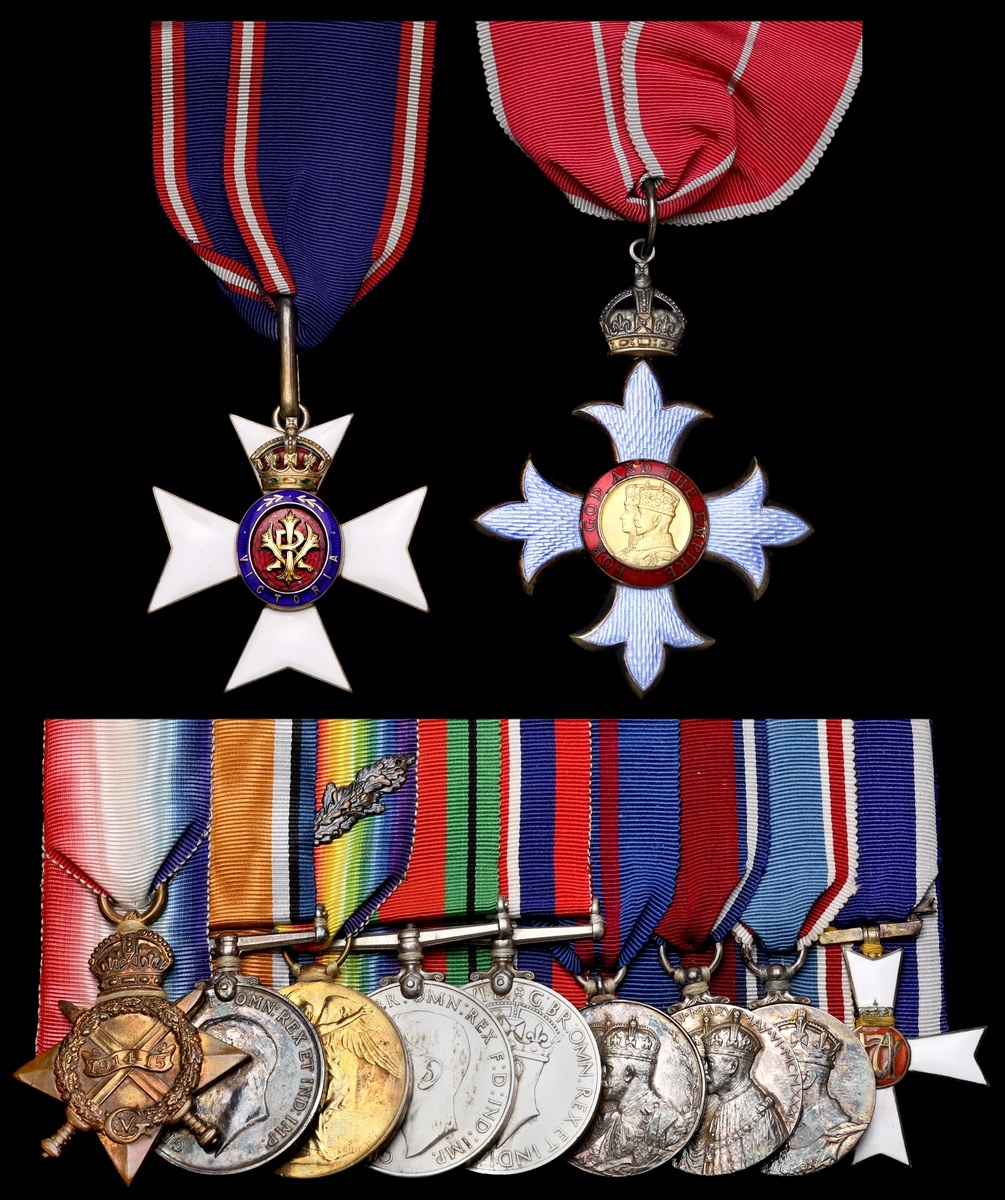
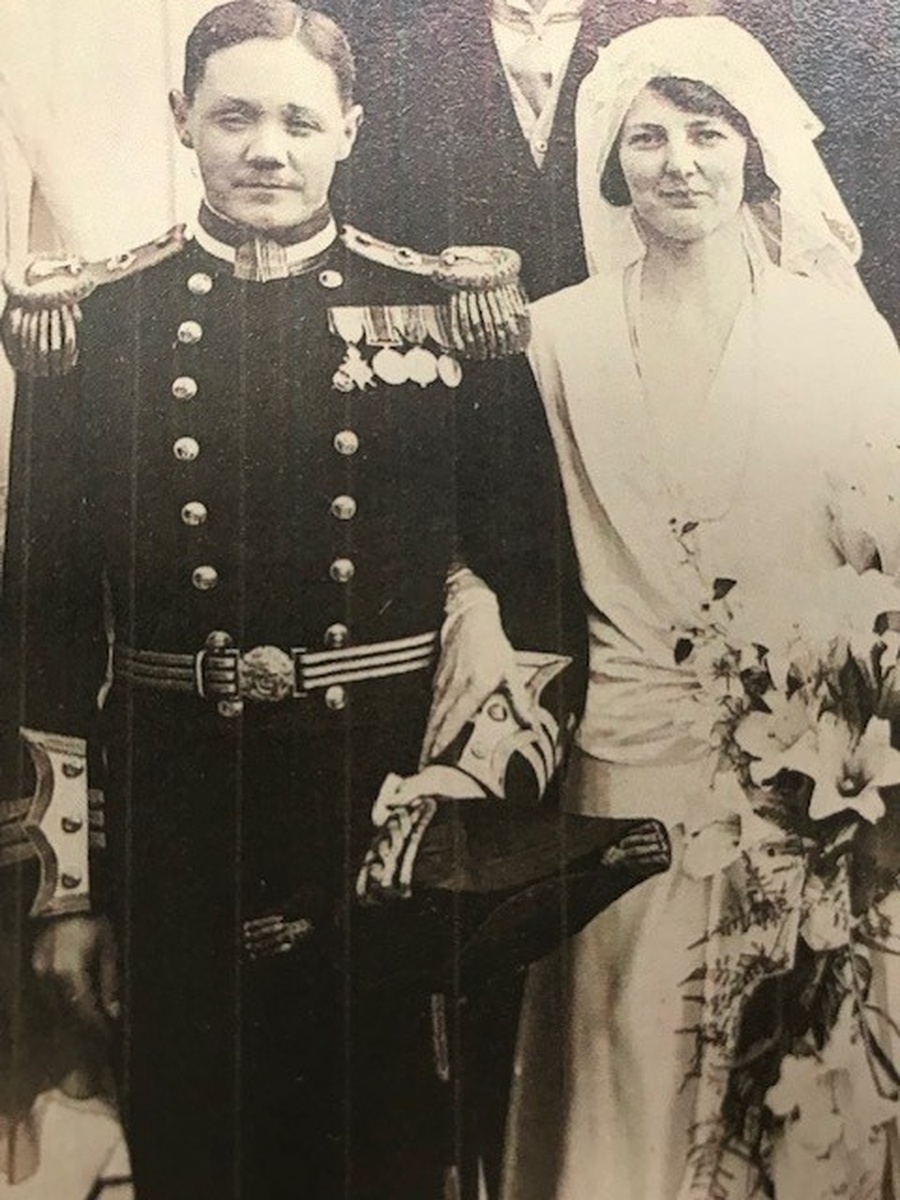
The Newfoundland Royal Visit C.V.O. and Second World War C.B.E. group of eleven to Captain C. M. R. Schwerdt, Royal Navy, who was 'mentioned' for his work on Lion during the action at Dogger Bank in January 1915 and saw action during the Battle of Jutland, he was later Private Secretary to the Governor of Newfoundland and held the position of Port Captain at Sydney, Nova Scotia during the Second World War on secondment to the Royal Canadian Navy and was further awarded by the King of Norway
The Royal Victorian Order, Commander's (C.V.O.) neck Badge, numbered 'C1028' silver-gilt and enamel; The Most Excellent Order of the British Empire, 2nd Type, Military Division, Commander's (C.B.E.) neck Badge, silver-gilt and enamel; 1914-15 Star (Lieut C. M. R. Schwerdt. R.N.); British War and Victory Medals, with M.I.D. oak leaves (Lieut. C. M. R. Schwerdt. R.N.); Defence and War Medals 1939-45; Coronation 1911; Jubilee 1935; Coronation 1937; Norway, Kingdom, King Haakon VII Freedom or Liberty Cross 1945, silver-gilt and enamel, mounted court-style as worn where applicable, very fine (11)
C.V.O. London Gazette 30 June 1939:
'For services during their Majesties' visit to Canada and the United States.'
C.B.E. London Gazette 1 January 1943.
M.I.D. London Gazette 3 March 1915 (Dogger Bank):
'Action on 24 January 1915: In the transmitting station maintained an efficient control with great coolness and energy and coped with situations arising from temporary failures in the electrical communication with great promptitude, under circumstances of considerable difficulty and anxiety.'
King Haakon VII Liberty Cross London Gazette 26 August 1947.
Charles Maxwell Richard Schwerdt was the eldest son of Charles Francis George Richard Schwerdt and Mathilde Sofie Annette (nee von Guaita) born at Kensington, London on 3 December 1889. He was one of the original intake of 45 Cadets at the newly built Royal Naval College, Dartmouth, Devon which opened in January 1905. He passed out on 15 June 1906 with the rank of Midshipman and joined the pre-dreadnought Canopus-class battleship Vengeance. Schwerdt was promoted Sub-Lieutenant on 20 September 1909 and was selected to serve as one of the Guard of Honour at Westminster Abbey for the Coronation of 1911 earning his first medal in the process.
In April 1913 he joined Lion which formed part of the 1st Battlecruiser Squadron and was the flagship of Rear Admiral David Beatty. The squadron took part in the successful Battle of Heligoland Bight on 28 August 1914, participated in the abortive attempt to engage the Germans during their bombardment of Scarborough, Whitby and Hartlepool on 16 December 1914, took a major role in the Battle of Dogger Bank on 15 January 1915 where he was 'mentioned' with a specific citation, the squadron forced the Germans to retreat, sinking the German armoured cruiser S.M.S. Blucher in the process although Lion suffered heavy damage during the engagement and finally, saw action with the Grand Fleet at the Battle of Jutland on 31 may 1916. Schwerdt left Lion in January 1917 and joined the Iron Duke class battleship Marlborough, serving aboard this ship through to the end of the Great War. He then attended the Naval Staff College at Greenwich in June 1919 and having completed the course served as a Staff Officer under a succession of senior officers which also seemingly included duties for the Naval Intelligence Department where his language skills (fluent in French and German) made him eminently suited for that role.
Schwerdt retired as Captain in 1936 and travelled to Newfoundland as Private Secretary to the newly appointed Governor, Vice Admiral (ret'd) Sir Humphrey Thomas Walwyn where he was heavily involved with the planning for the visit of H.M. King George VI and Queen Elizabeth in 1939. He was personally presented his C.V.O. by the King on 17 June 1939 in the study of the Governor in Government House, St. John, Newfoundland.
With the outbreak of the Second World War on 3 September 1939, he was re-commissioned and loaned to the Canadian Navy. He was made Captain in Charge of Maintenance and Captain of the Port of St. John's before going to be Naval Officer in Charge H.M.C.S. Avalon from 1941 -1942. He then took command as Captain-in-Charge and Naval Officer-in-Charge of HMCS Protector (the port of Sydney) through to the end of the war in 1945.
Sydney Harbour played an important role during H.M.C.S. Protector during the Second World War and was established to stage supply convoys bound for Europe. These convoys tended to be slower and had the prefix S.C. for Slow Convoy. Convoy S.C. 7 typified the dangers inherent with the German U-boats off the coast of Cape Breton and Newfoundland during the Battle of the Atlantic, when 20 of the 35 merchant cargo vessels were sunk on their journey to England. Sydney Harbour was one of the hotspots of the Battle of the St. Lawrence. Two notable shipping attacks occurred during this battle: the sinking of the train ferry S.S. Caribou in October 1942 on its way from North Sydney to Port aux Basques, Newfoundland; and the sinking of the Sydney based H.M.C.S. Shawinigan on 24 November 1944 in the Cabot Strait, near Cape North, on Cape Breton Island Sydney's coal shipping and steel manufacturing made a significant contribution to the Allied war effort.
Schwerdt was decorated by the King of Norway with the King Haakon VII Liberty Cross, one of 154 awards across all three armed services, made for services in the Second World War. He died at Esher on 18 November 1968 and is buried in the Schwerdt Mausoleum at the Churchyard of St. Mary, Old Alresford, Hampshire.
i)
Naval Prize medal, silver, 45mm., (Awarded to Lieut. C. M. R. Schwerdt for Foreign Languages 1913).
ii)
A copy of With the Fleet Studies in Naval Life by Filson Young, 1913, 93pp, with personal dedication to Schwerdt from Xmas 1914.
iii)
Cases for the C.V.O. and C.B.E..
iv)
A quantity of photocopied research to include service papers, entries for the Coronation and Jubilee awards, the 'mention' and London Gazette entries.
For his miniature dress awards please see Lot 392.
Subject to 20% VAT on Buyer’s Premium. For more information please view Terms and Conditions for Buyers.
Estimate
£1,800 to £2,200
Starting price
£1400

Watch, listen and bid as if you were in the room. Now available for auctions worldwide.
Click here to bid live
An exclusive and confidential service for the discerning collector or vendor.
View the Gallery
Download every Spink catalogue on your iPad, iPod or iPhone using free Spink app.
Download From iTunes© 2026 Spink & Son. All rights reserved.