
Auction: 26003 - Orders, Decorations and Medals
Lot: 196
'But then it come over the channel...Fire Mission Regiment, and I thought, ‘Oh, here we go.’
I hadn't even had a sip of my beer, and I just left it, and ran back for the gun. 'D' Company had been ambushed and they were under attack. Things weren’t looking too good because the North Vietnamese Army forces and the Viet Cong numbers surpassed our guys. We were firing [in support], and then it came across ‘Danger Close’, so we knew the blokes from 6RAR must have been really close to getting overrun. We were just pouring fire out and burning through our first line ammo...
The noise was unbelievable...but it wasn’t just us. [It was] the whole regiment...and all the guns were firing. It was absolutely amazing. And apparently we really were ‘Danger Close’, because we did bring that fire down to just about on top of where our guys were.'
Warrant Officer Burns recalls his part in the Battle of Long Tan
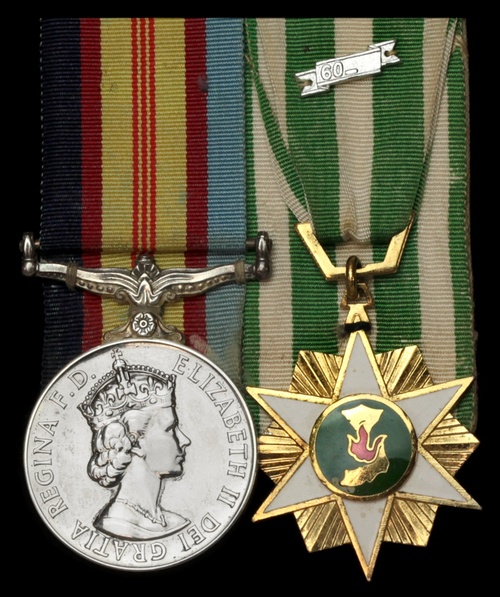
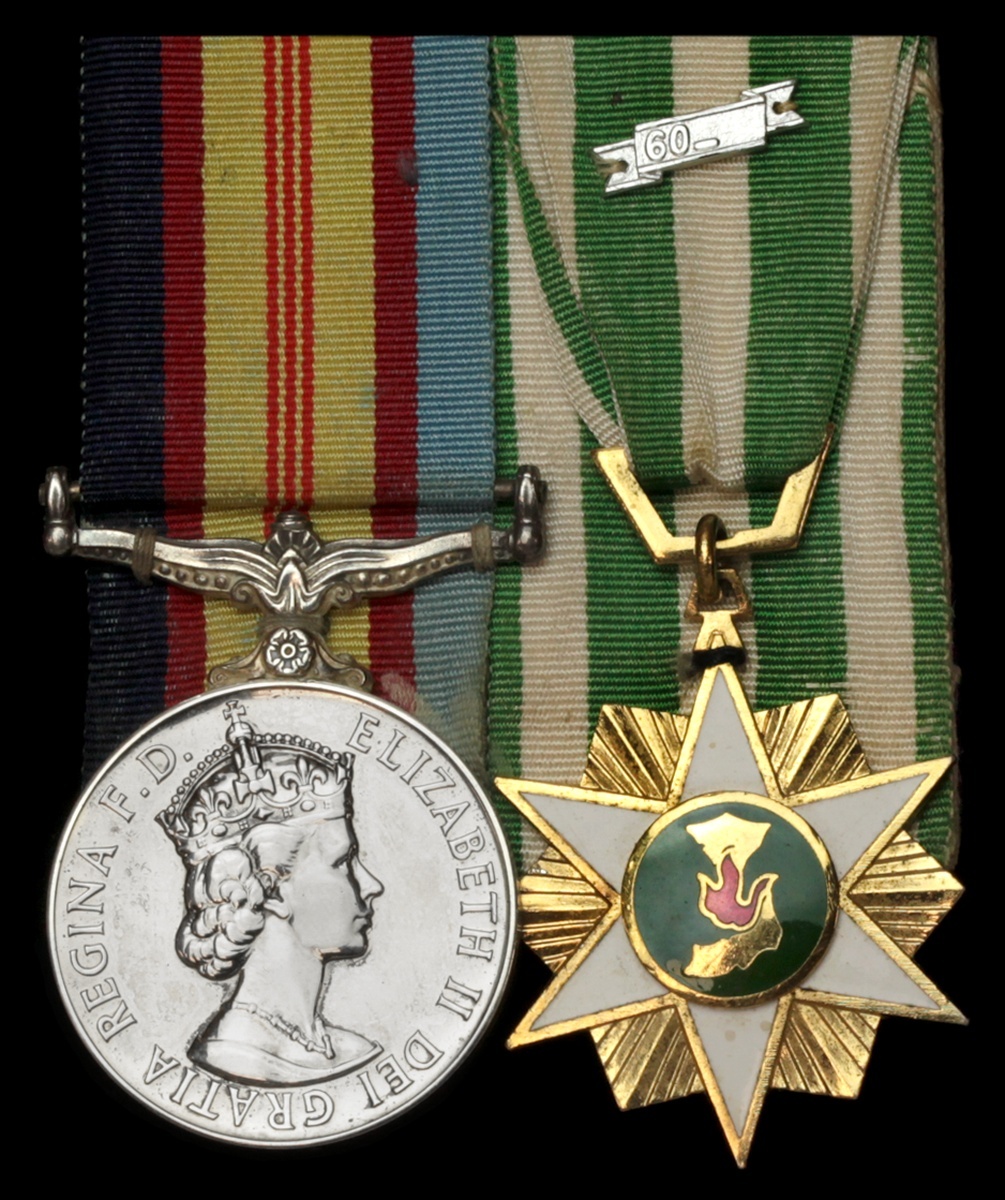
The campaign pair awarded to Warrant Officer Class 2 J. L. Burns, Royal Australian Artillery, one of the few Aboriginal & Torres Straight Islanders recorded on the Indigenous Service List of the Australian War Memorial
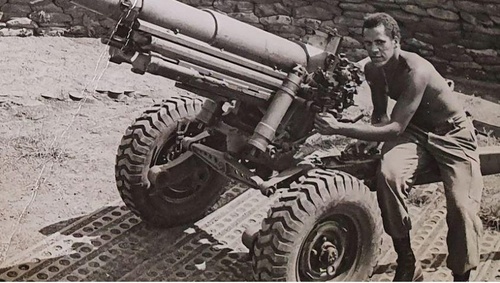
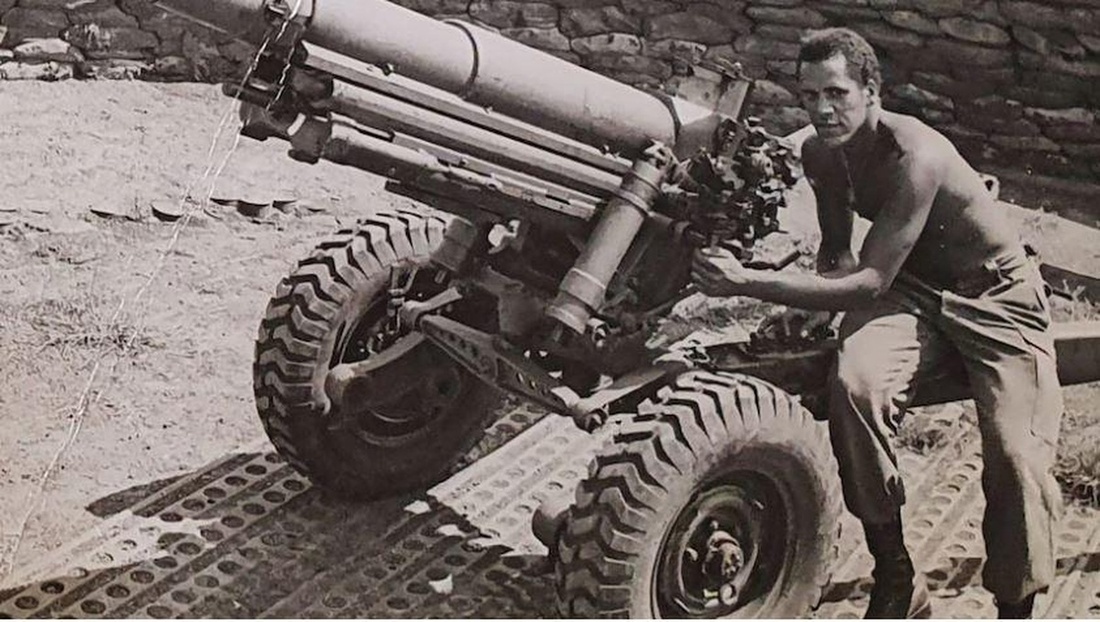
Burns was to share in the artillery support for the Battle of Long Tan, when they took the famous 'Danger Close' order; his Battery also earned a Unit Citation for Gallantry for their part in the Battle of Coral in May 1968 - he is understood to be the only Aussie Artilleryman to serve at both of these iconic actions
Vietnam 1964-73 (18110 J. L. Burns); South Vietnam Medal 1964, 1 clasp, 1960- (18110 J. L. Burns), mounted court-style as worn, good very fine (2)
John Lawrence Burns was born at Brisbane on 8 June 1944 to an Aboriginal mother he never knew. He was adopted by an English woman as a baby and never knew his father either. His service is recalled by the recipient:
'In 1961 I was working as a junior labourer at the Brisbane abattoirs, when a couple of work mates suggested I join them in their Citizens Military Forces (CMF) unit (now called Army Reserve). They said it was a lot of fun, a parade night once a week and a weekend bivouac every couple of months. I said that I was only sixteen and that enlistment age was seventeen, but my mates told me they didn’t check up on the enlistment form details, so I filled out the form and was enlisted. So there I was doing an army driver’s course before my seventeenth birthday. Thinking about it much later, I thought that I could have been in big trouble for doing that. But I knew my mates who put me up to it would fight ‘to the last drop of my blood.’
During one of our annual two-week training camps, a corporal from a regular RAASC unit said I would make a good soldier and should join the regular army. So, in April 1963, after serving 22 months in the CMF, I enlisted in full-time service. After completing recruit and Corps training, I was posted to 1st Field Regiment based at Holsworthy, NSW, as a gun number in 103 Field Battery, Royal Australian Artillery.
In May 1966, the Regiment, with 103 Battery, was deployed to Nui Dat in South Vietnam as part of 1st Australian Task Force. A couple of months later, on August 18th, I was the Bombardier (Bdr) 2ic of No. 5 gun when the Battery fired, along with the other batteries of the Regiment, in support of D Company 6 RAR (Royal Australian Regiment) at the Battle of Long Tan where the fire order Danger Close was given to the guns. The North Vietnamese Army (NVA) troops and the Viet Cong were advancing so close to our guys that extra precautions had to be taken on the guns to ensure that the shells fell where they were supposed to.
I returned to Australia as part of the advance party, the next year, on March 3rd, 1967, but after a few months I enquired if it was possible to go back to Vietnam. Major Gavin Andrews, Battery Commander of 102 Field Battery asked me if I would go with his Battery as Bdr 2ic of – coincidently – No. 5 gun. So on March 3rd, 1968, there I was flying out of Sydney airport again en route to Vietnam with 102 Battery, 12 Field. Regiment.
On May 12-13th, whilst on Operation Thoan Tang, 102 Battery moved to set up a new Fire Support Base named Coral. During the early hours of the 13th, the Battery position was attacked by a large force of NVA soldiers and Viet Cong. During the battle No. 5 gun was ordered to fire Splintex rounds in defence of the Battery position and also to allow the remaining members of 1 RAR Mortar platoon a chance to fall back to the Battery position. I believe I am the only Artillery member of a gun detachment to have been present and involved in both significant battles of the Vietnam War. 102 Battery was eventually awarded the Unit Citation for Gallantry, and permission was granted for the Battery, now a part of 8/12 Regiment, Royal Australian Artillery, to be known as 102 (Coral) Battery.
Ten days after returning from my second tour of duty in Vietnam, on February 15th, 1969, I married my fiancée Valmai. We had two children, a girl Joanne and a boy, Paul and the family travelled with me on all my postings, which included Woomera, South Australia; Launceston, Tasmania; Queensland; and New South Wales.
After 23 years’ full-time service, I retired from the Army as a Warrant Officer Class 2 and moved back to Brisbane where we bought our home. Since then I have been involved with Disabilities Ten Pin Bowling, where I have been president of Tryers League for the past 25 years.'
Burns has kindly given his memories of his career to the Australian War Memorial, RSL Queensland and in various other outlets. He was photographed in the field on multiple occasions and spoke on camera; sold together with copied research.
Subject to 20% VAT on Buyer’s Premium. For more information please view Terms and Conditions for Buyers.
Estimate
£500 to £700
Starting price
£400

Watch, listen and bid as if you were in the room. Now available for auctions worldwide.
Click here to bid live
An exclusive and confidential service for the discerning collector or vendor.
View the Gallery
Download every Spink catalogue on your iPad, iPod or iPhone using free Spink app.
Download From iTunes© 2026 Spink & Son. All rights reserved.