
Auction: 26003 - Orders, Decorations and Medals
Lot: 170
'The greatest loss to the Battalion was Oscar Bethune, who died that same evening without regaining consciousness. He had been for twelve years with the Regiment and had greatly endeared himself to all who knew him, both officers and men. He was buried in the cemetery at Bannu.
As one who knew him wrote at the time, "...he was loved by us all and his only enemy can have been the tribesman who shot him”.'
The Regimental History laments the loss of Captain Bethune in March 1937
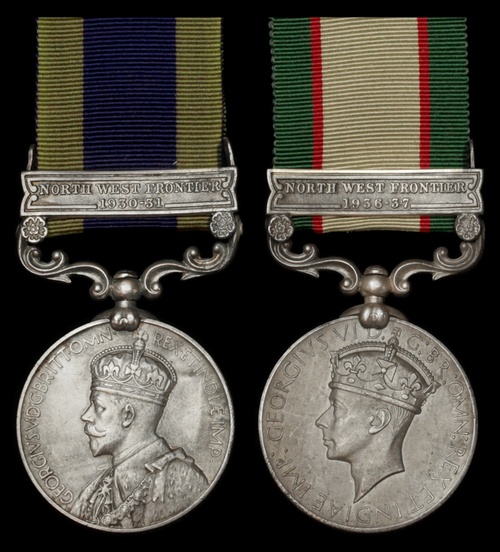
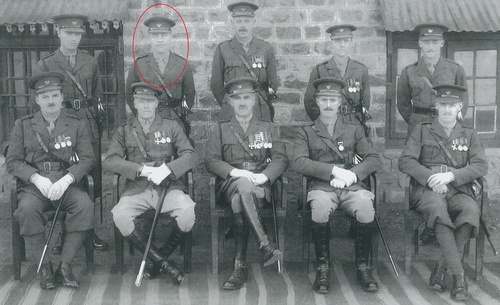
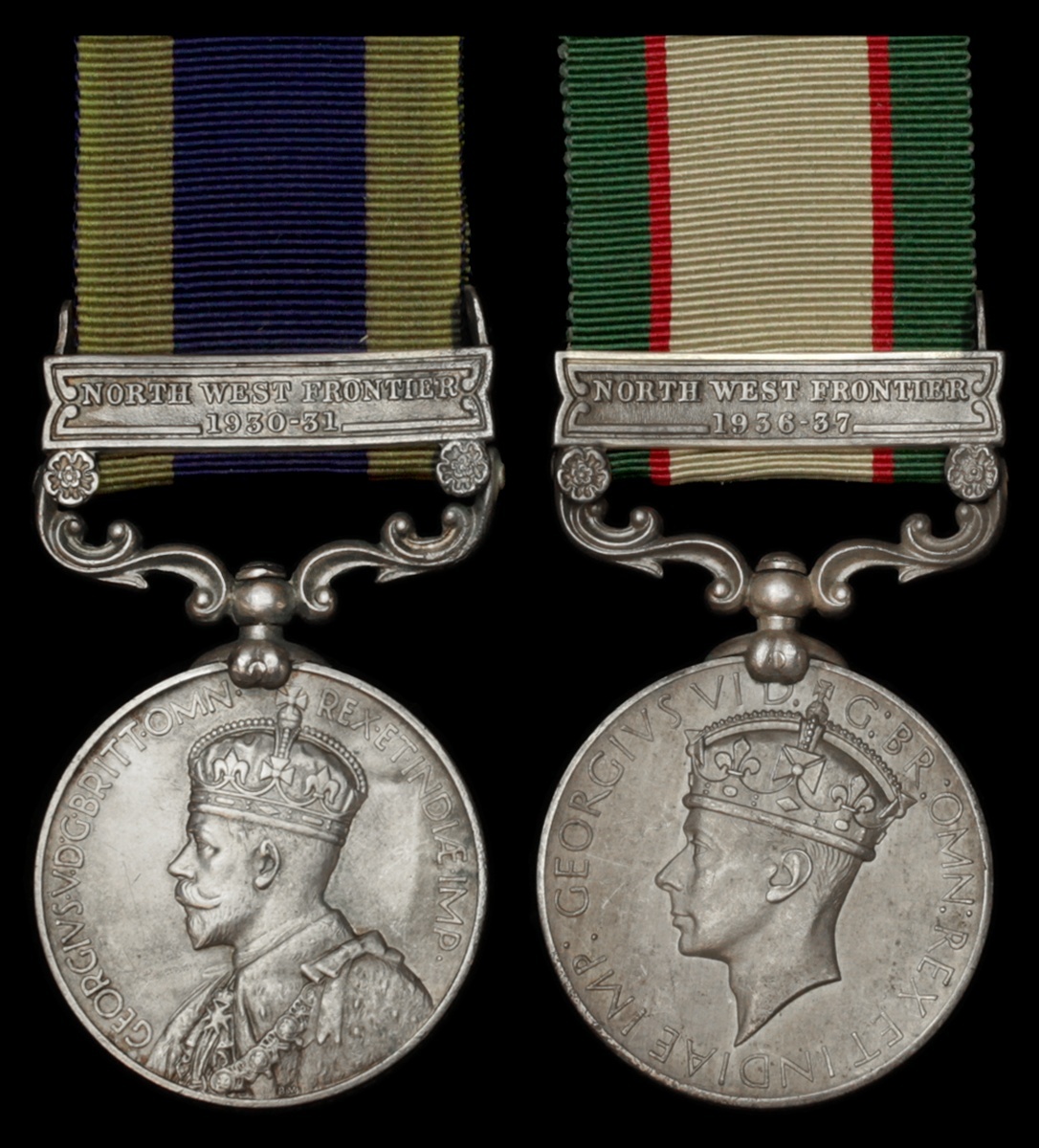
The campaign pair awarded to Captain O. R. Bethune, 2nd Battalion, 5th Gorkha Rifles (Frontier Force), who was killed in action at the head of his men in the attack on the Damdil Picquet at 'Whale Hill' on the North West Frontier on 29 March 1937
India General Service 1908-35, 1 clasp, North West Frontier 1930-31 (Lt. O. R. Bethune, 2-5 G.R.); India General Service 1936-39, 1 clasp, North West Frontier 1936-37 (Capt. O. R. Bethune. 2-5 G.R.), very fine (2)
Oscar Roland Bethune was born on 4 October 1902 in British Guiana, the son of George Bethune, a sugar planter. Educated at Bedford School from 1913-20, he was a Lance-Corporal in the Officer Training Corps, played in the rugby XV, was Vice-Captain of the cricket XI and passed 43rd into Sandhurst in November 1920. Appointed to the 2nd Battalion, 5th Gurkhas in March 1925, the unit were divided between Malakand Fort and Chakdara, which had regular visitors including the King & Queen of Belgium that year.
By April 1930, the unit was sent into Peshawar to quell the 'Red Shirts' and shared in the actions (Medal & clasp). By 1936, they were once again called into the North West Frontier to Damdil to protect the road and its convoys onto Razmak. Without too much contact with the enemy in their initial deployment, besides heavy night sniping, it was all set to change.
Whale Hill
As recalled in the Regimental History
'On the 29th March the road protection duties were undertaken by 1/6th Gurkha Rifles and 2/6th Gurkha Rifles. The 2/6th left camp very early and occupied a large double-hill feature. The 1/6th then passed through them and began its advance along the long, narrow, scrub-covered ridge which ran parallel to the road. The advanced guard company had moved about a mile along the ridge when it came under heavy fire from both flanks followed immediately by an attack by well over a hundred tribesmen who had been concealed in small nalas. The company was too far ahead of the remainder of the Battalion to enable it to get immediate support and the 2/6th, secure on double-hill feature, were not strong enough to clear the enemy from the nalas below them. The Brigade Commander now ordered 2/5th (held in reserve) to move from Damdil to attack and capture a feature named "Whale Hill" in order to relieve pressure on 1/6th.
The attack on "Whale Hill" was mounted on a two Company front, which included Captain Bethune's 'C' Company. The companies moved rapidly and secured the eastern end of "Whale". Battalion Headquarters then moved forward to join the Companies. As it neared the crest, Captain Bethune, who was walking down to meet them, was shot in the chest and fell. Lieutenant-Colonel Bruce, the Commanding Officer, and Major Marindin, the other Company Commander who had taken part in the assault, ran forward to carry him in, but he was again hit. He was evacuated to the dressing station and then back to camp. Both these shots came from the low ground below eastern end of "Whale". The 2/5th now started to attack towards the 1/6th until orders were received to withdraw. The Battalion was back in camp just as it was getting dark without further interference from the enemy.
The Battalion had lost one officer and six G.O.Rs. killed and fourteen G.O.Rs. wounded. The total losses in the Brigade were two officers, two Gurkha officers and thirty G.O.Rs. killed; one Gurkha officer, one B.O.R. (Signals) and forty one G.O.Rs. wounded. The enemy were later ascertained to have been nearly a thousand strong and to have lost ninety-two killed and sixty-seven seriously wounded. A posthumous 1.O.M and two I.D.S.Ms were awarded to the Battalion.
The greatest loss to the Battalion was Oscar Bethune, who died that same evening without regaining consciousness. He had been for twelve years with the Regiment and had greatly endeared himself to all who knew him, both officers and men. He was buried in the cemetery at Bannu. As one who knew him wrote at the time, "he was loved by us all and his only enemy can have been the tribesman who shot him”.'
By the following morning, the tribesmen chose to withdraw & evacuate their positions instead of facing the Gurkhas who opposed them. The good Captain died for a good cause; sold together with a good file of copied research.
Subject to 20% VAT on Buyer’s Premium. For more information please view Terms and Conditions for Buyers.
Estimate
£800 to £1,200
Starting price
£600
Watch, listen and bid as if you were in the room. Now available for auctions worldwide.
Click here to bid live
An exclusive and confidential service for the discerning collector or vendor.
View the Gallery
Download every Spink catalogue on your iPad, iPod or iPhone using free Spink app.
Download From iTunes© 2026 Spink & Son. All rights reserved.