Auction: 26003 - Orders, Decorations and Medals
Lot: 167
'This represents not merely piracy, but piracy on a vaster scale of murder than any old-time pirate ever practiced… It is warfare against innocent men, women and children on the ocean and on our own fellow countrymen and country women. It seems inconceivable that we should refrain from taking action. We owe it to humanity and to our own national self-respect.'
(The first public statement of Mr. Roosevelt after the sinking of Lusitania, reported in The New York Herald, European edition, 9 May 1915 refers).
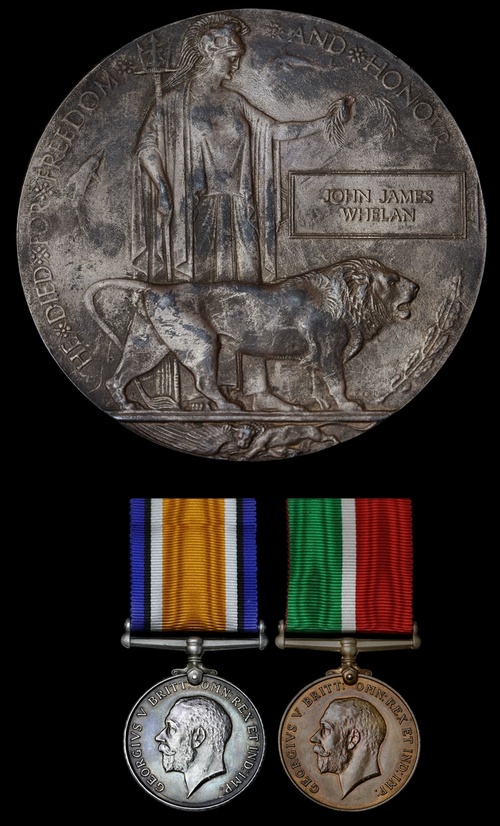
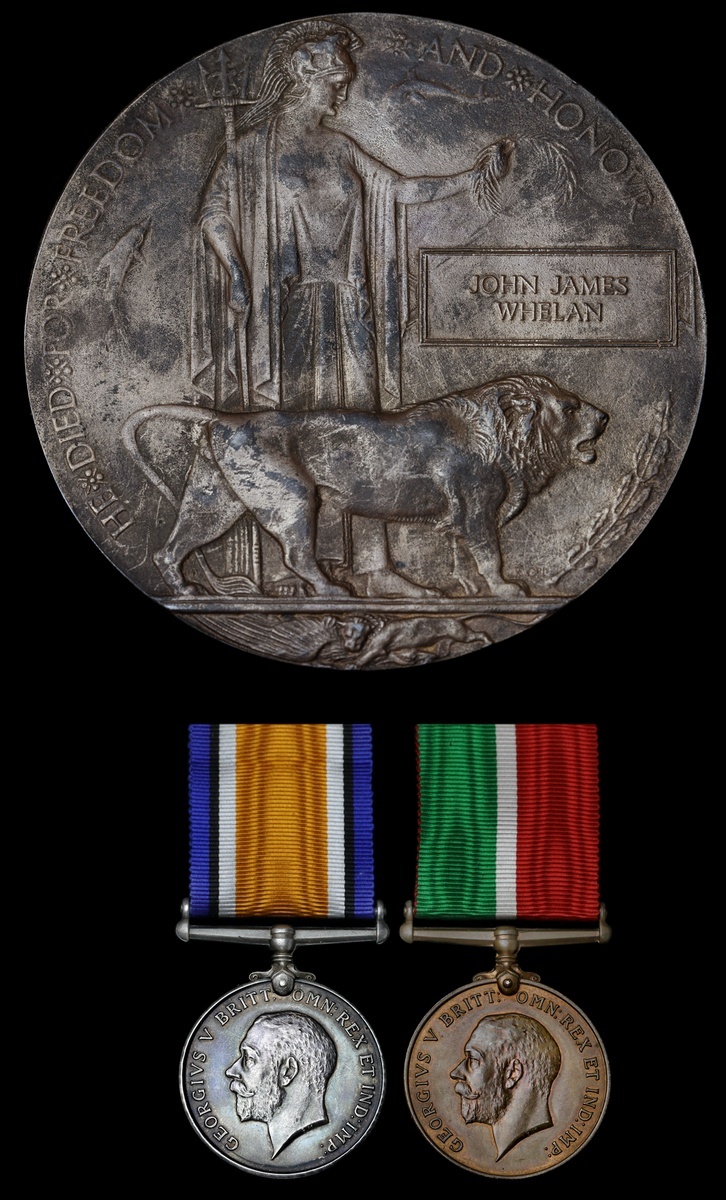
The Great War group of three awarded to Fireman J. J. Whelan, Merchant Navy, who served aboard R.M.S. Lusitania, the ship famed for being hit by tragedy on 7 May 1915, when over 1,000 of her civilian passengers were killed when mercilessly torpedoed by U-20
Germany had only a few months prior announced their new 'exclusion zone', giving themselves the right to attack any ships deemed threatening in this new maritime war zone, the plan was ruthless, and included attacking and taking the lives of innocent civilians and Merchant sailors
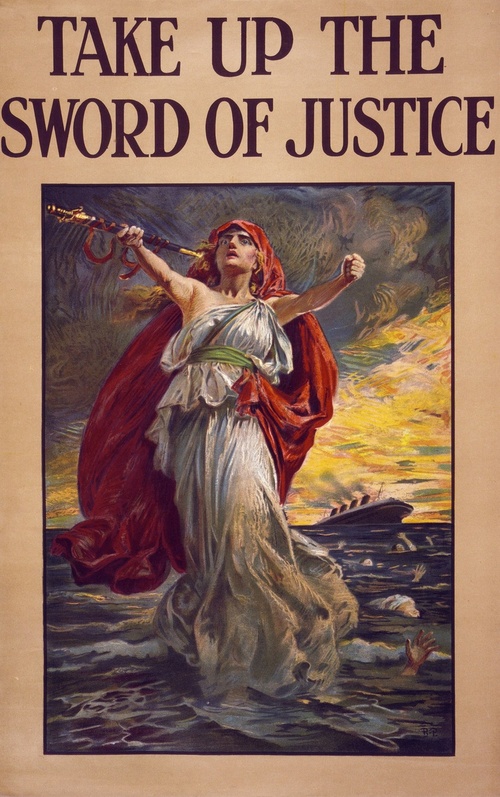
And so it goes, upon the orders of 'Baby Killer' Walther Schwieger, the first torpedo ripped through Lusitania's starboard, the second through her hull, an attack so brutal, the ship took a mere 18 minutes to sink, leaving her passengers and crew for dead
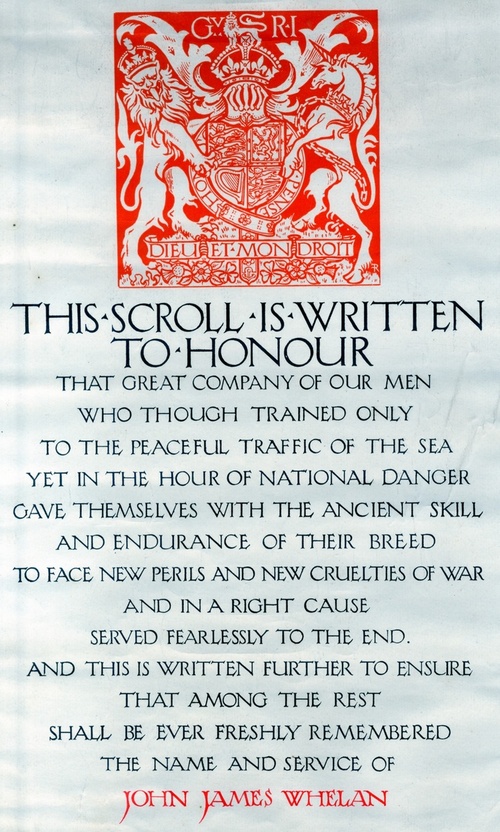
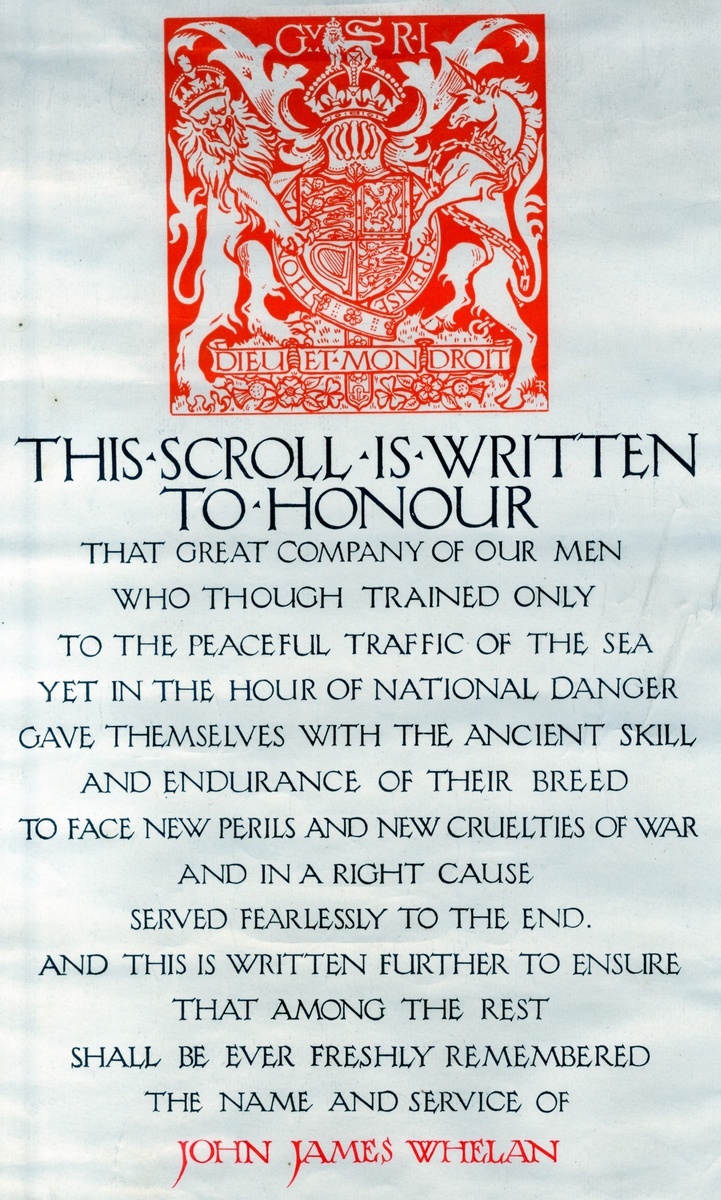
British War Medal 1914-20 (John J. Whelan), officially impressed naming; Mercantile Marine War Medal 1914-18 (John J. Whelan); Great War Bronze Memorial Plaque (John James Whelan); Mercantile Marine Memorial Scroll, named to 'John James Whelan', sold together with two condolence slips, original Mercantile Marine Medal slip, good very fine, the Mercantile Scroll rare (4)
John James Whelan was born in Liverpool, Lancashire in 1878 and was the son of James and Elizabeth Whelan. He enlisted into the Mercantile Marine and served as a Fireman in the Engineering Department aboard the R.M.S Lusitania, boarding at Liverpool on 12 April 1915.
Before her wartime service, R.M.S. Lusitania was a famous British ocean liner and was the world's largest passenger ship up until the completion Mauretania, her sister ship a few months later. Lusitania gained further notoriety in 1907 for breaking the record for the fastest Atlantic crossing. The ship didn't serve militarily during the Great War, but she did continue to work as a transatlantic passenger service, often carrying war materials for the Allied war effort in her cargo.
By early 1915, the threat of German U-boat submarines was growing louder and louder as they were proving increasingly successful in attacking naval vessels. Indeed, this included attacks on merchant navy ships at times, although these attacks were nearly always done in line with long standing cruiser rules, arguably until that notable day on 7 May. Three months prior on 4 February 1915, Germany declared the seas around the coast of the UK (at the time including Ireland) to be war zone. The Germans wished to gain advantage on the Atlantic, and most importantly, solidify the effectiveness of their new weapon, and thus Admiral Hugo von Pohl, Chief of the Admiralty Staff, stepped up the submarine campaign. His aim: to sink all Allied ships in the region without warning, with some efforts to avoid sinking neutral ships, or so was the party line. In reality, Pohl secretly instructed captains to target passenger crafts, thus putting Lusitania in real, tangible danger.
She arrived in Liverpool on 6 March under the neutral U.S. ensign, where she later picked up Whelan, and thus he commenced his service onboard as a Fireman in the Engineering Department. In a ship of this size, Whelan had the vital job of tending the ship's coal-fired boilers in the engine room, a punishing and labour-intensive job, and one certainly not for the weak. And so, it was at this point in her journey that Lusitania made key changes to her protocols - for this next voyage, she was not to fly any flags in the war zone. Deemed risky by some, it was decided that disguising herself was pointless, her profile was too famous, and the British made no effort to even paint out the name on her bow.
And thus, on the 17 April 1915, Lusitania left Liverpool for the final time and embarked on her 201st transatlantic voyage. She arrived in New York a few days later, by which time, the German Embassy had issued warnings in all major American newspapers about travel in these new designated war zones:
'NOTICE!
TRAVELLERS intending embark on the Atlantic voyage are reminded that a state of war exists between Germany and her allies and Great Britain and her allies; that the zone of war includes the waters adjacent to the British Isles; that, in accordance with formal notice given by the Imperial German Government, vessels flying the flag of Great Britain, or any of he allies, are liable to destruction in those waters ad that travellers sailing in the war zone on the ships of Great Britain or her allies do so at their own risk.
IMPERIAL GERMANY EMBASSY'
The printed warning was issued on 30 April, the day before Lusitania set sail back to Liverpool, the great irony being that in some papers, the warning was placed adjacent to advertisements for the return voyage! And so it goes, the ship left New York, with 1,960 passengers, all of them acutely aware of the risks that eventually became their reality. The ship also carried 173 tons of war supplies for the Allied war effort, including 4.2 million rounds, circa 5,000 shrapnel-filled artillery shell casings and 3,240 brass percussion fuses.
All the while on British terra firma, Room 40 of the British Admiralty had been tracking the movements of the German submarine U-20 as she circled the British Isles. She was commanded by Kapitanleutnant Walther Schwieger, who in the weeks leading up to the sinking of Lusitania, had previous with contacting British merchant ships and sinking them. One such example was only a couple days before, when on 5 May, the U-20 stopped a merchant schooner, Earl of Lathom, off the Old Head of Kinsale, the very place they would sink to Lusitania, examined her papers then ordered her crew to leave before sinking the ship with gunfire. The day after, U-20 fired a torpedo at the British steamer Cayo Romano, who flew a neutral flag and later sank Centurion in this same region before the 7 May, a 6000 tonne cargo ship. But it was not until the 7 May, when Schweiger earnt his epithet "the Baby Killer". Little did he know that he was about to become known to the entire world as the man that sank Lusitania, quite possibly the man who brought America into the war.
And so it came to pass that at 14:10 on 7 May while running along the coast of Kinsale, Cork, the Lusitania met her fate and crossed paths with U-20. Supposedly Schwieger did not know the identity of the ship before he attacked it, presuming it to be like any other large passenger ship. He launched the first torpedo, hitting her in the starboard, and unperturbed, he ordered the launch of a second one, this time hitting her hull. The ship was in pieces. The crew scrambled rapidly to launch the lifeboats, but the ship was already sinking at such a rate it became increasingly impossible to get them all out in time. Schweiger himself recorded the attack in the U-20's log book:
'Torpedo hits starboard side right behind the bridge. An unusually heavy detonation takes place with a very strong explosive cloud. The explosion of the torpedo must have been followed by a second one… The ship stops immediately and heels over the starboard very quickly, immersing simultaneously at the bow... the name Lusitania becomes visible in golden letters.'
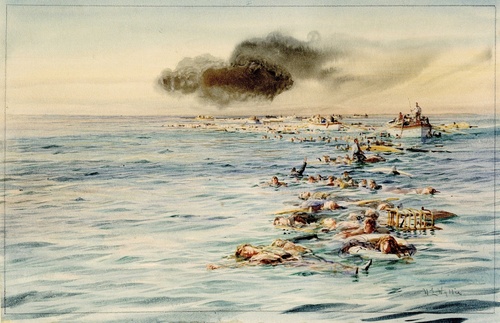
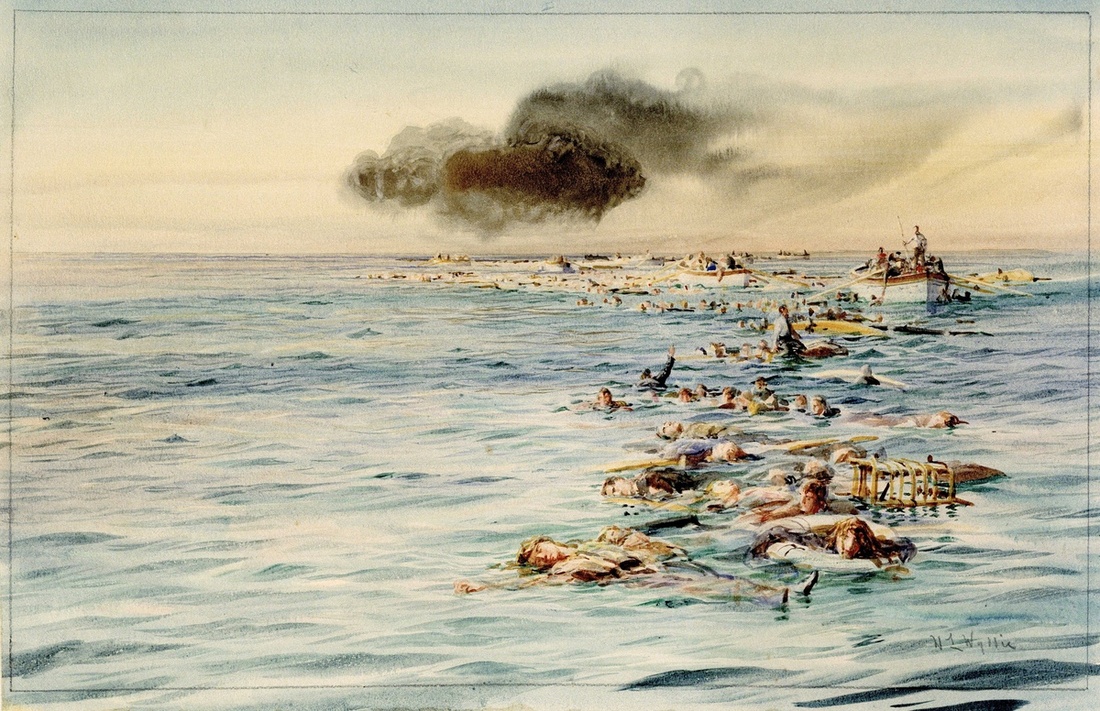
It is a stark and sorrowful image, Lusitania's golden lettering turned to face the sky in her final moments. Only six of the 48 lifeboats were successful launched, and after a mere 18 minutes, she sank, with her funnels and masts the last to disappear. The loss of human life was devastating. Four minutes after being struck the electricity faulted and the ship was plunged into darkness, and one minute after that Captain Turner finally gave the order to abandon ship. There was no such time for social courtesies such as 'women and children first' here and instead, it was predominantly the younger and physically fitter young adults who had the means to fight for their survival. A total of 1,197 individuals out of 1,960 passengers lost their lives, Whelan in their number. The majority who died were British and Canadian, but 128 Americans died in the tragedy and a total of 94 children. Desperate attempts by Irish rescuers were made to save those stranded in the water, and the survivor count came to circa 767 individuals.
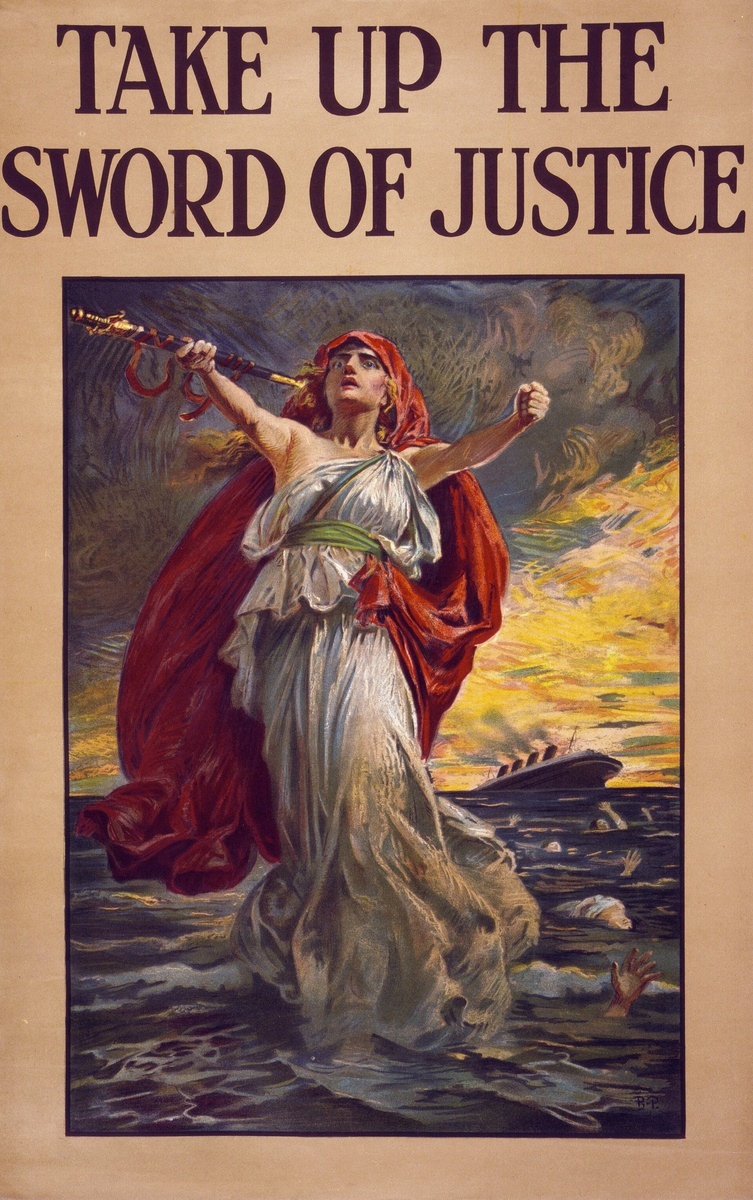
However, initially, the disaster was not deemed worthy of intervention from H.M.S. Juno, another ship that could have helped, but saw no "urgent necessity". The true scope of the horror was not revealed until the following morning, when it hit the global press. There was public outcry both in Britain and across the pond, with many Americans seeing it as a legitimate reason to declare war on Germany. The sinking of Lusitania caused significant rifts between President Woodrow Wilson and his closest advisors. Secretary of State William Jennings Bryan resigned his post as felt Wilson's position was too bellicose and failed to maintain a neutral response, whereas former President Theodore Roosevelt sharply denounced Wilson's stance for being too weak, cowardly and passive. Even though it took the American two further years to join the war, it is undeniable that the sinking of Lusitania had profound effects on American foreign policy and sparked public outrage, with many calling on Wilson to declare war on Germany.
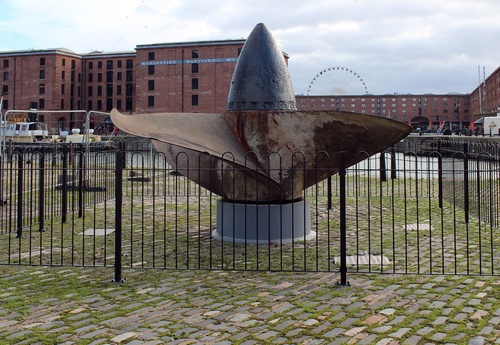
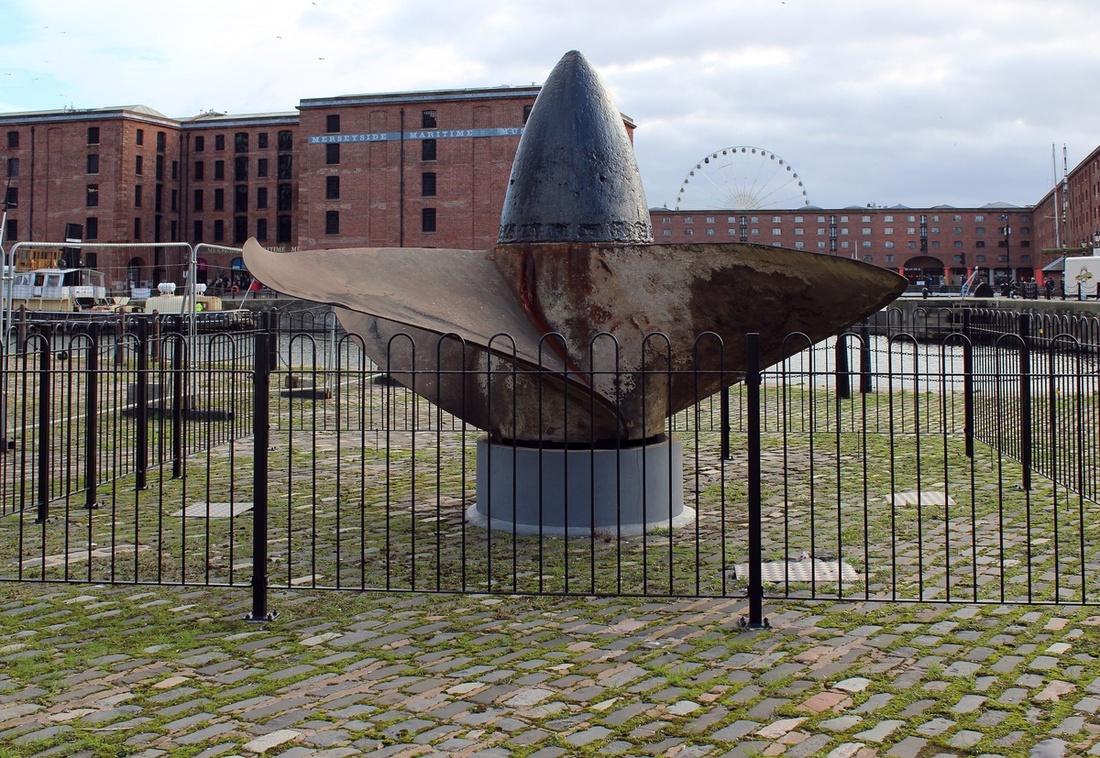
Whelan's story ended in sorrow as his body was not recovered that night, leaving behind his widow, Annie. He was 37 years old at the time of his death and is commemorated on the Mercantile Marine Memorial at Tower Hill, London. One of the three propellers from Lusitania that were salvaged from the wreck in 1982 is now on display as a memorial at Merseyside Maritime Museum in Liverpool and the ever-popular The Rest Is History podcast recently serialised this tragic episode at length.
Subject to 20% VAT on Buyer’s Premium. For more information please view Terms and Conditions for Buyers.
Estimate
£4,000 to £6,000
Starting price
£3000

Watch, listen and bid as if you were in the room. Now available for auctions worldwide.
Click here to bid live
An exclusive and confidential service for the discerning collector or vendor.
View the Gallery
Download every Spink catalogue on your iPad, iPod or iPhone using free Spink app.
Download From iTunes© 2026 Spink & Son. All rights reserved.