
Auction: 26003 - Orders, Decorations and Medals
Lot: 110
Sold by Order of a Direct Descendant
'In private life his character was everything which a truly honourable mind and amiable disposition could constitute. In his public services he maintained and promoted the high reputation of the noble troops which he commanded, and was honoured both for his conduct in the field and for his mild, steady, and judicious discipline, with the confidence and esteem of the illustrious chief under whom he served'
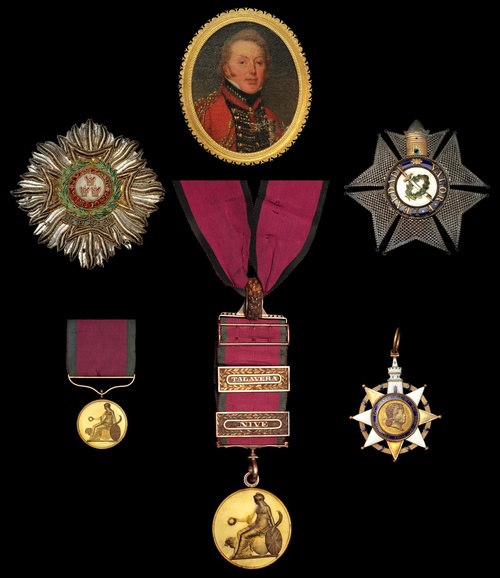
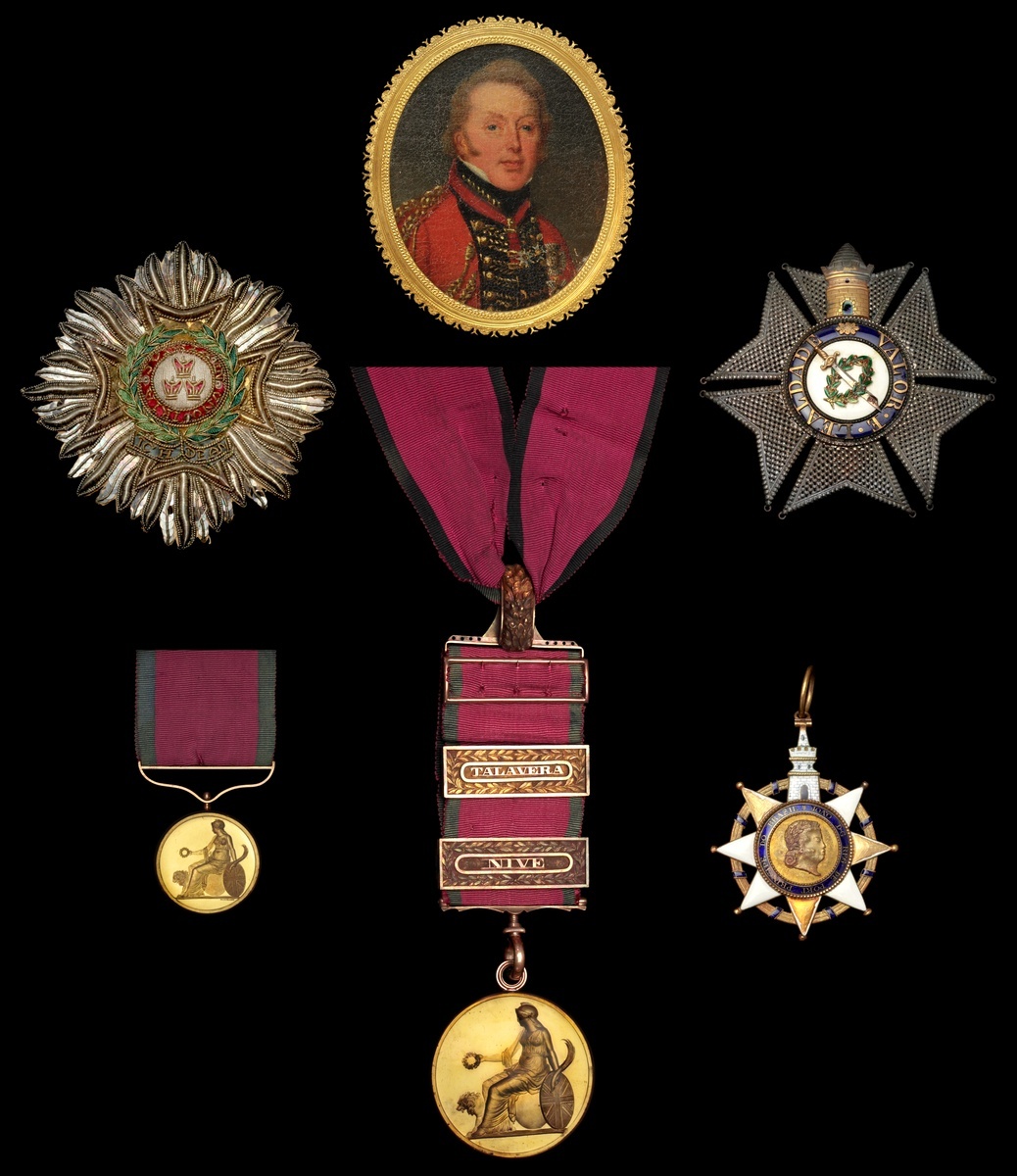
The exceptional and rare G.C.B., K.T.S., Large and Small Army Gold Medal group of five awarded to Lieutenant-General Sir E. Stopford, an Old Etonian, Member of Parliament, and officer of the 3rd Foot Guards, who commanded the 1st Battalion of that regiment at the Battle of Talavera where they were in the thick of the action; rising to Brigade and Divisional command during the subsequent years in Spain and Portugal, he was wounded during the desperate fighting at Bayonne in 1814 but survived to finally retire as a Lieutenant-General in 1821
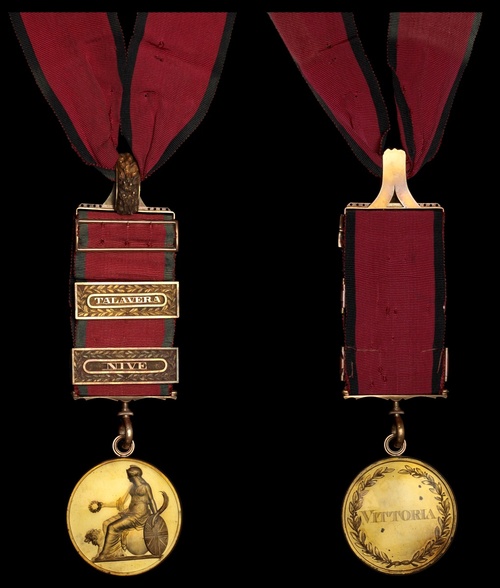
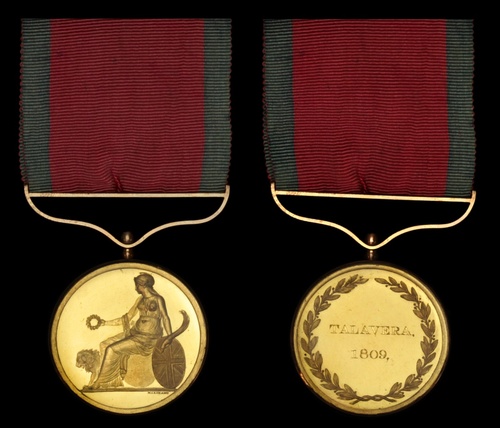
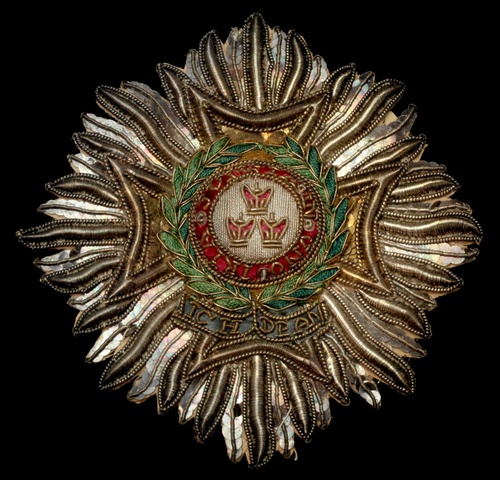
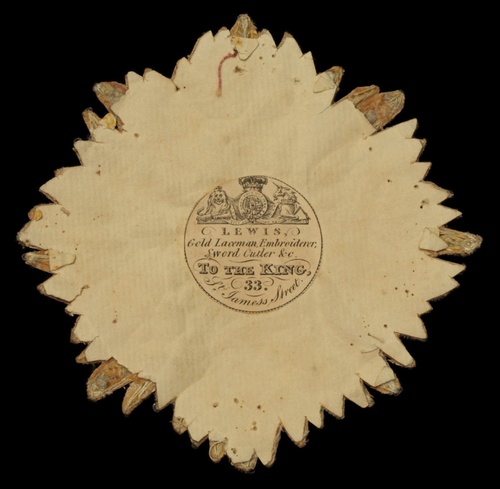
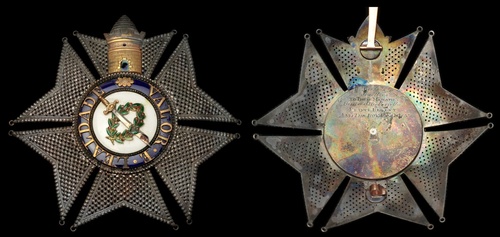
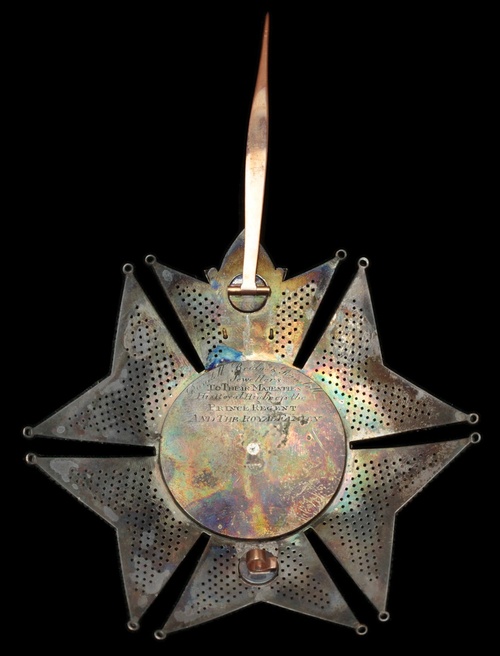
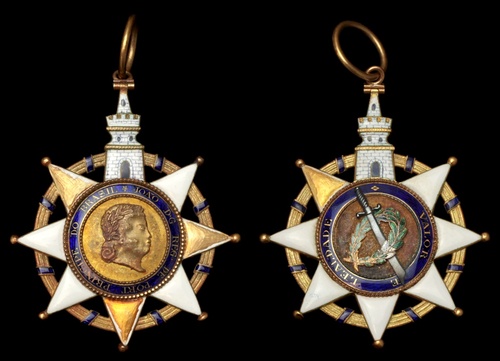
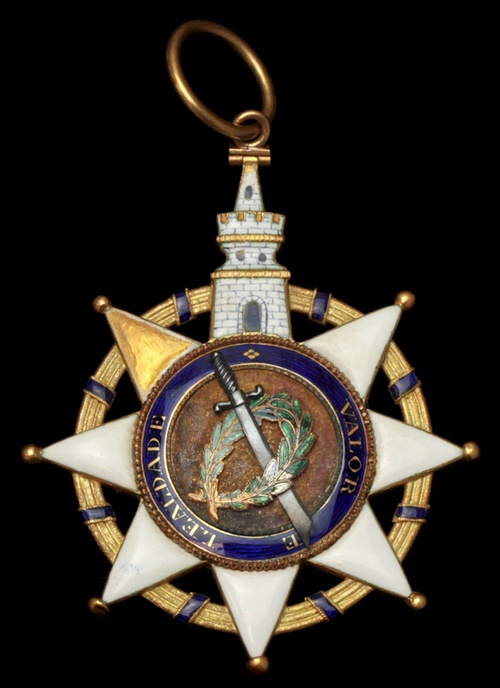
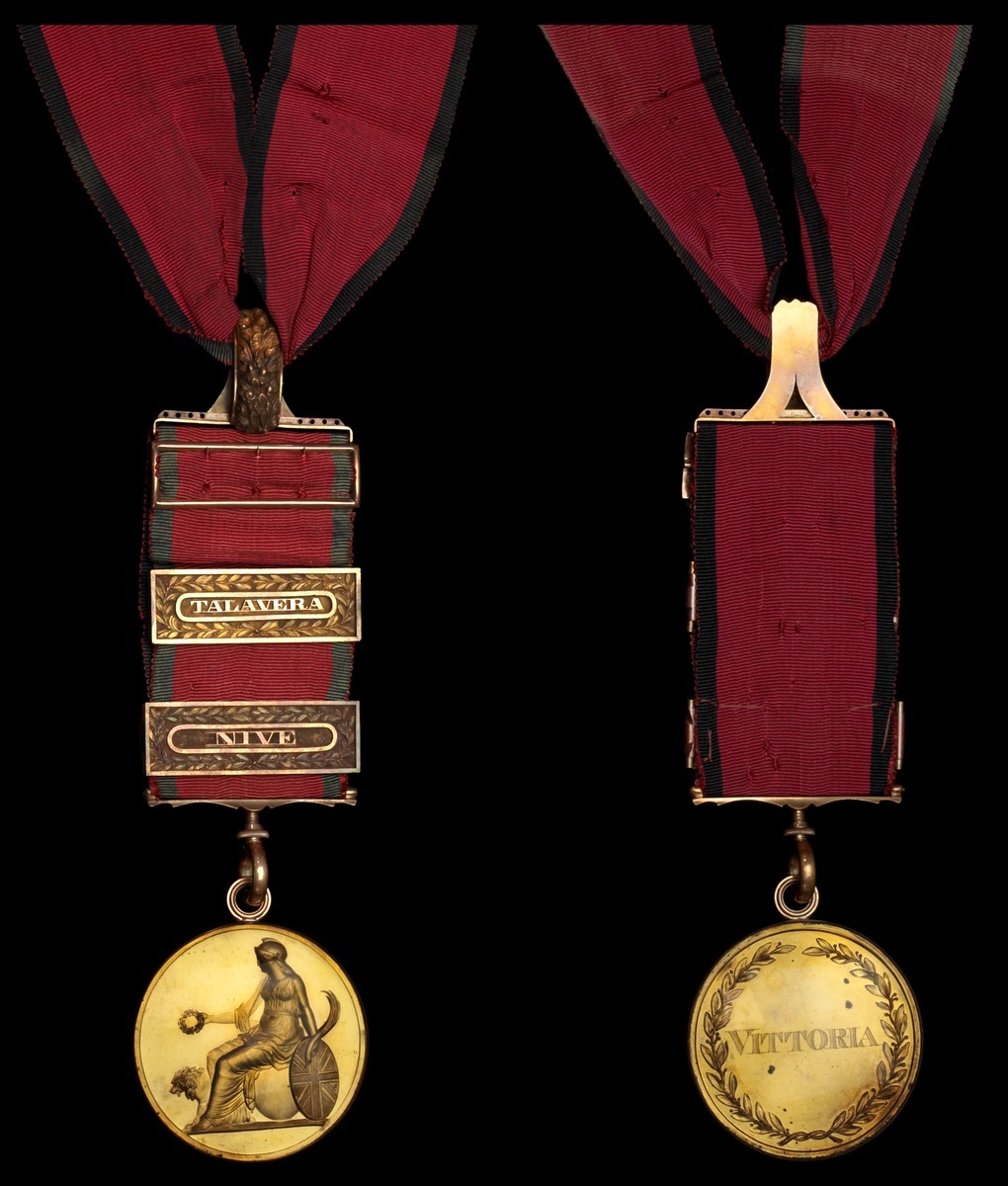
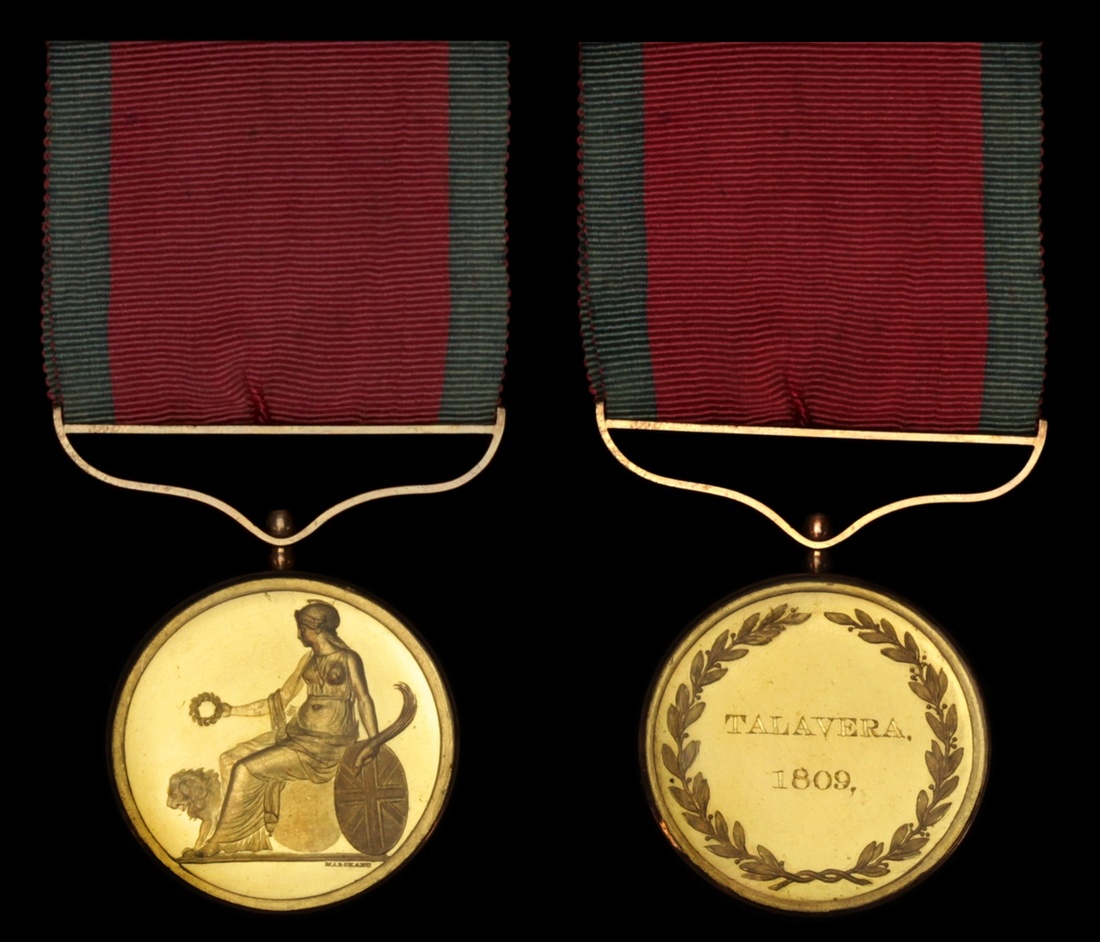
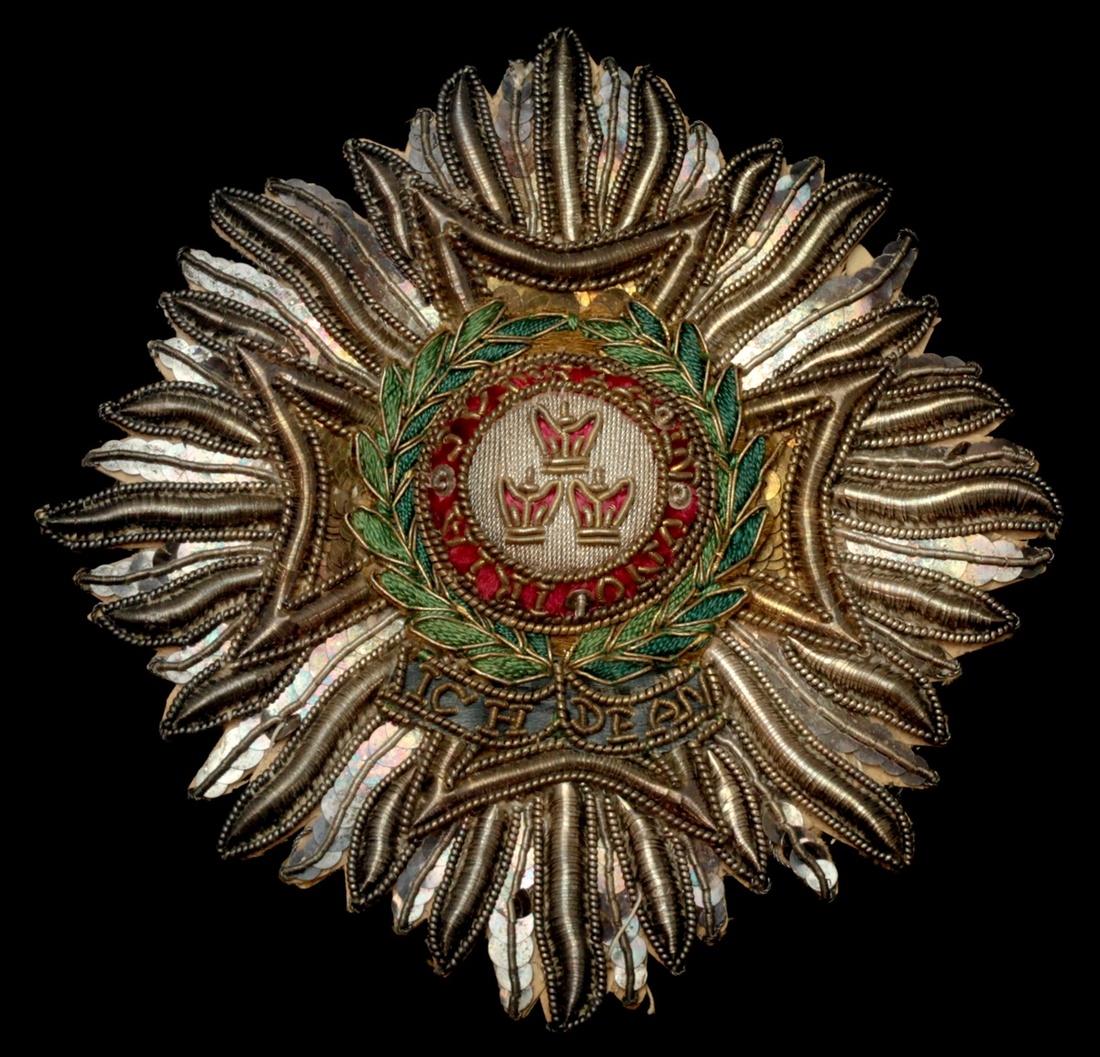
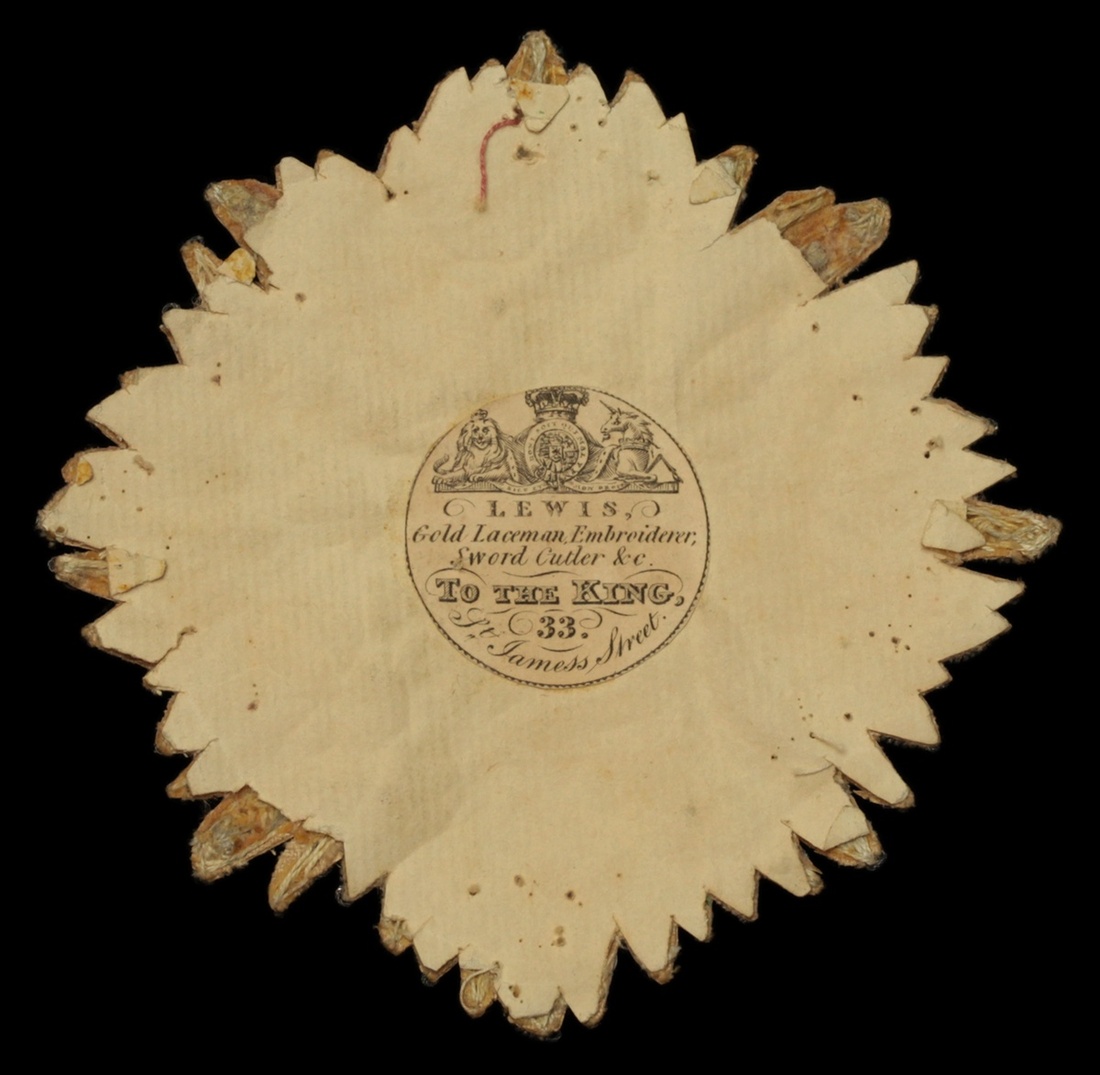
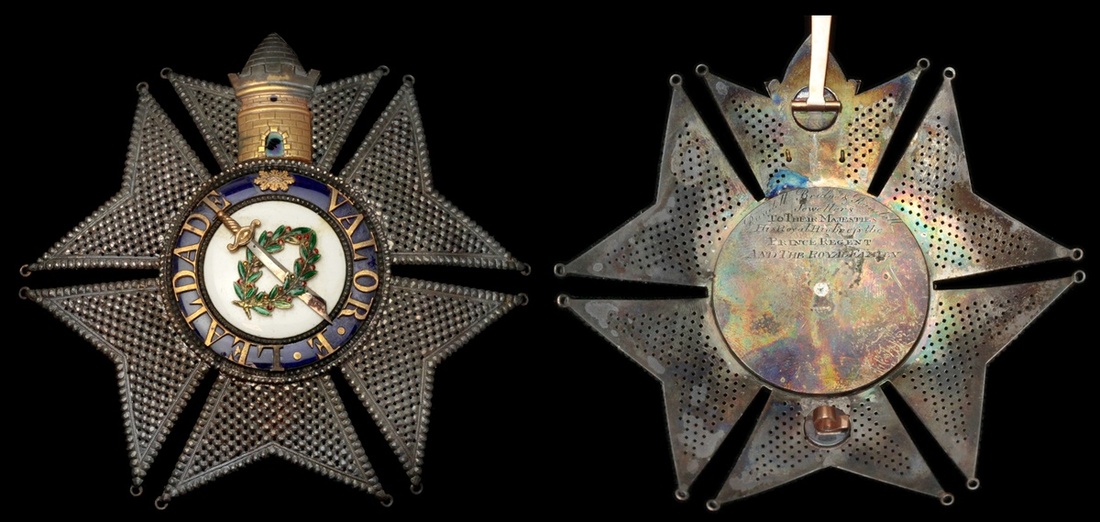
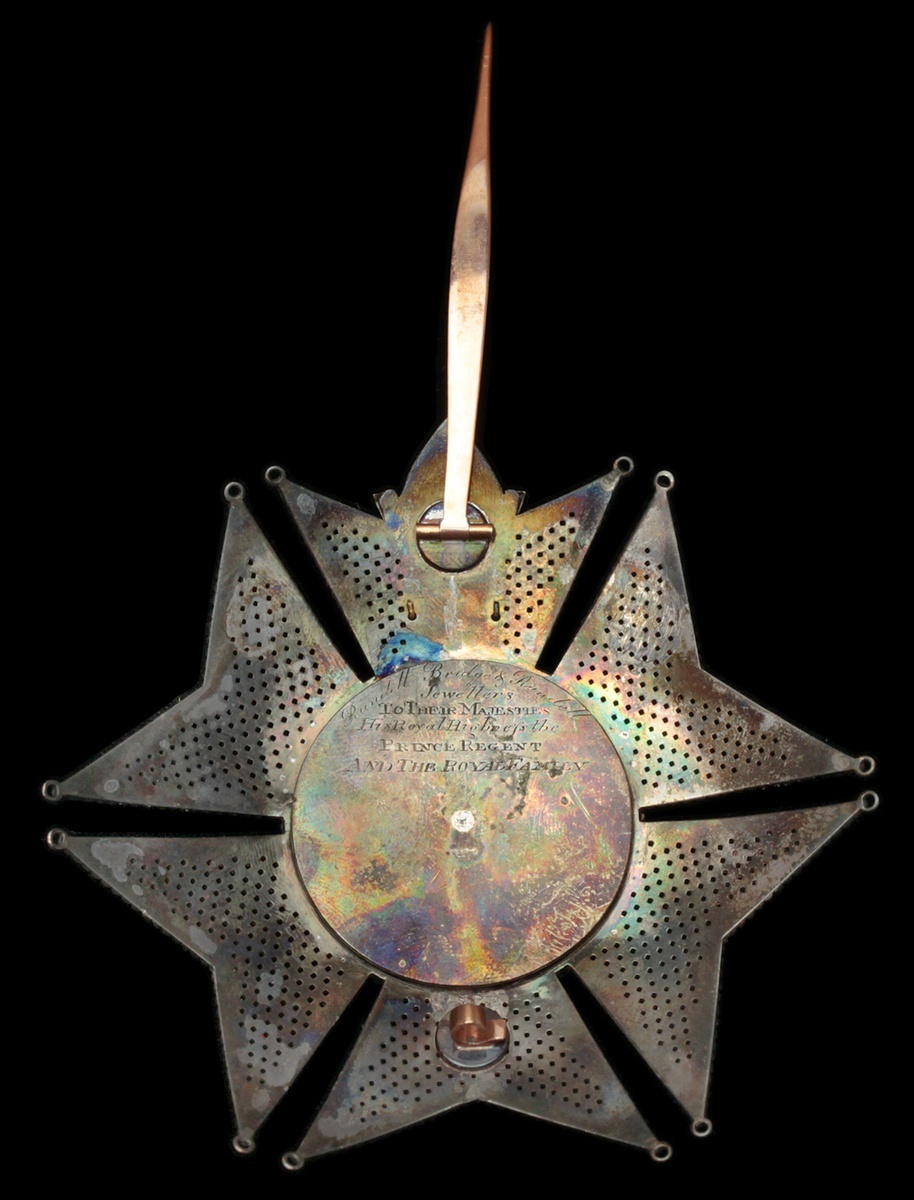
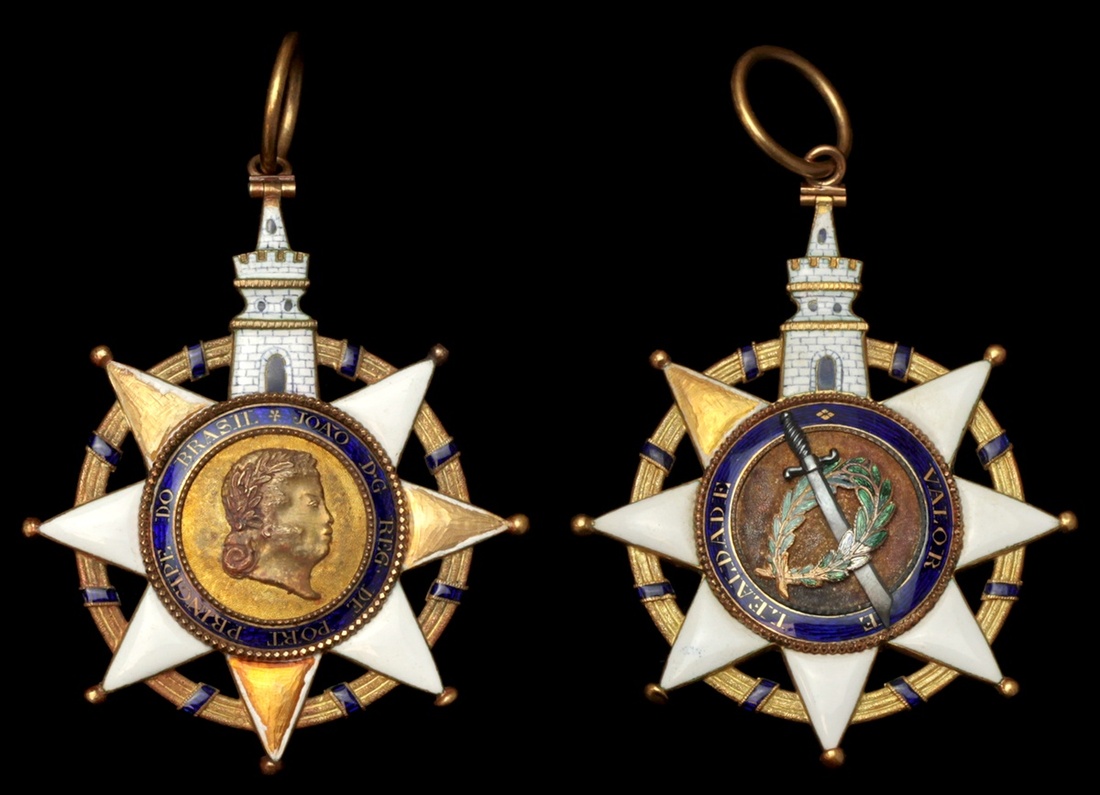
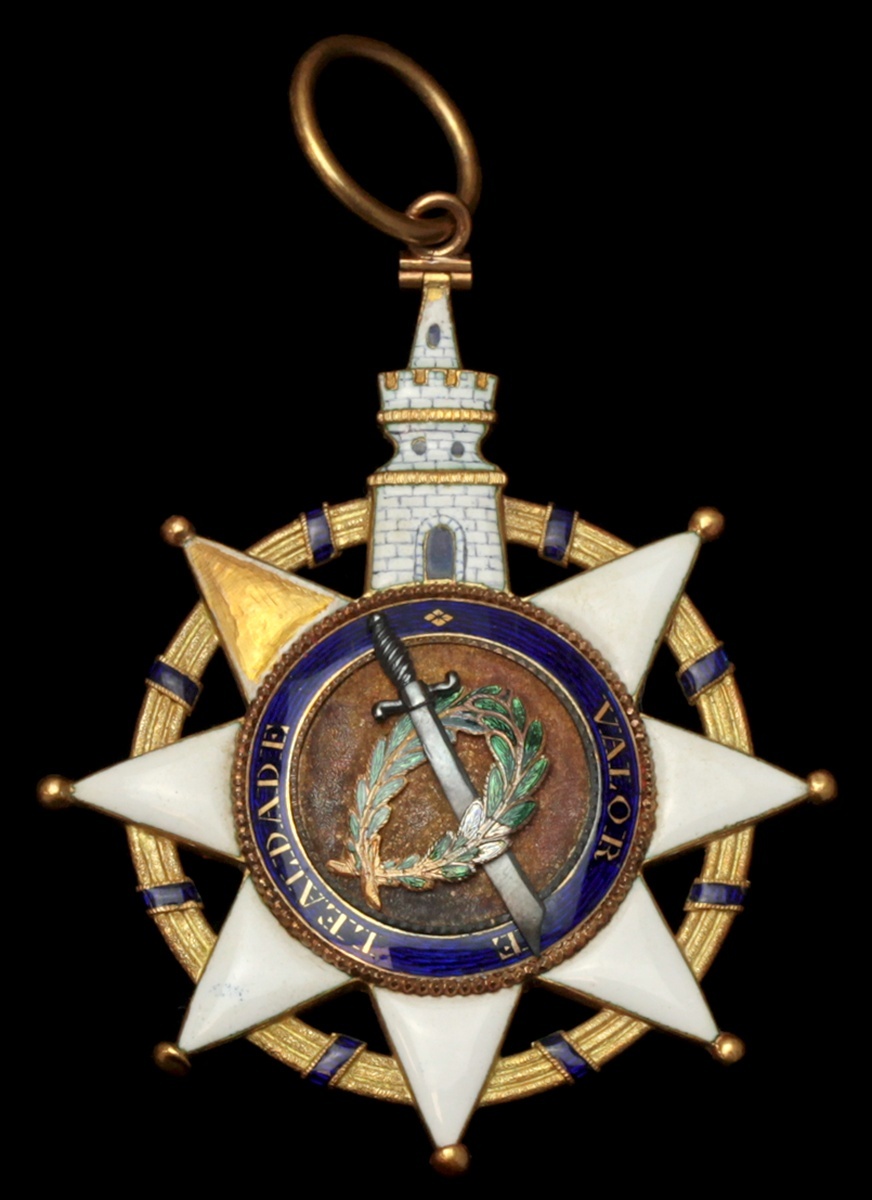
The Most Honourable Order of the Bath, G.C.B. (Military) breast Star, circa 1830, cloth with silver bullion spangles, gold and silver wire embroidery, by Lewis, Gold Laceman, Embroiderer, Sword Cutler &c. to The King, 33. St. James's Street, 102mm x 102mm; General Officer's Large Gold Medal, for Vittoria, 2 clasps, Nive, Talavera (Major General Honble. E. Stopford), upon its original full-length silk neck riband and fitted with gold fastening clip, gold suspension bar decorated with oak leaves, and gold three-pronged buckle, encased within original lunettes; Field Officer's Small Gold Medal, for Talavera 1809 (Coll. Honble. Edwd. Stopford, 3d. Foot Gds.), upon its original silk riband, encased within original lunettes; Portugal, Kingdom, Military Order of the Tower and Sword, Knight Commander's set of Insignia, comprising breast Star, gold, silver-gilt, silver and enamel, by Rundell, Bridge & Rundell, Jewellers to Their Majesties His Royal Highness the Prince Regent and The Royal Family, 98mm x 98mm; neck Badge, gold and enamel, 97mm x 62mm including ring suspension, enamel loss to four rays on this last, otherwise good very fine and better (5)
K.C.B., London Gazette 2 January 1815.
G.C.B., London Gazette 28 March 1835.
K.T.S., 10 February 1814, the original notification (by Royal Licence) states: 'The Honourable Edward Stopford, a Major General in the Army, "in testimony of the high sense which The Prince Regent of Portugal entertains of the great courage and intrepidity displayed by him, in several Actions with the Enemy"
Just 88 examples of the Army Gold Medal (Large) awarded between 1810-14, and 596 awards of the Small Gold Medal; of that latter number, only five awarded to officers of the 3rd Foot Guards with only one other for Talavera.
Early Life
The Honourable Edward Stopford was born on 28 September 1766, son of James Stopford, 2nd Earl of Courtown K.P., P.C. (Ire) and Mary Powys. Like many great families of the period, several Stopfords saw military service - in addition to Edward's own career, an uncle (also Edward) rose to become a Major-General; an elder brother, James, was a Lieutenant-Colonel in the Coldstream Guards, and a younger brother, Robert, joined the Royal Navy and had an illustrious 60-year career afloat resulting in the award of the G.C.B., G.C.M.G., and command of the Allied fleet at the Bombardment of Acre in 1840.
After education at Eton College (1779-1783), on 20 October 1784 Stopford was commissioned by purchase as Ensign in the 3rd Regiment of Foot Guards, a regiment with whom he was to serve in one way or another for the next 28 years. In 1792 he purchased his next step, to Lieutenant and Captain (the Foot Guards then having the unique distinction of 'double ranks', the first being the regimental rank and the second being the army rank) and in May 1793 proceeded to Flanders with the 1st Battalion, seeing service on campaign with the Duke of York's army until returning home in April 1795. Promoted Captain-Lieutenant and Lieutenant-Colonel in May 1798, five months later, at the age of 32, Stopford was advanced Captain and Lieutenant-Colonel: rapidly becoming a senior officer within the regiment, he commanded a company of the 1st Battalion in the abortive expedition to Hanover in 1805 and was finally given his first experience of wider leadership during the expedition to Denmark in 1807, where he commanded (albeit temporarily) the battalion in which he had given solid service over a number of years.
His career now accelerated: in April 1808 Stopford was promoted to full Colonel and officially appointed commanding officer of the 1st Battalion 3rd Foot Guards. By the end of the year, with the war in Spain and Portugal rapidly developing and the British government earmarking greater and greater numbers of troops for this theatre, a Guards Brigade was formed, under the command of General John Sherbrooke, and Stopford and his men found themselves under orders to sail with this formation for Cadiz.
The Peninsular War
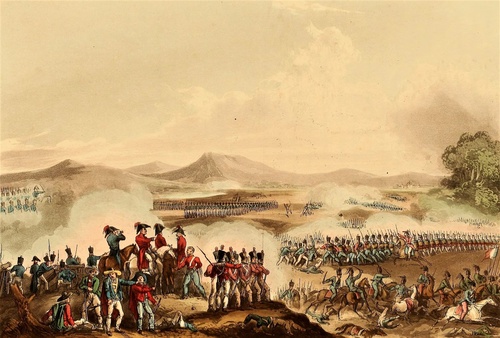
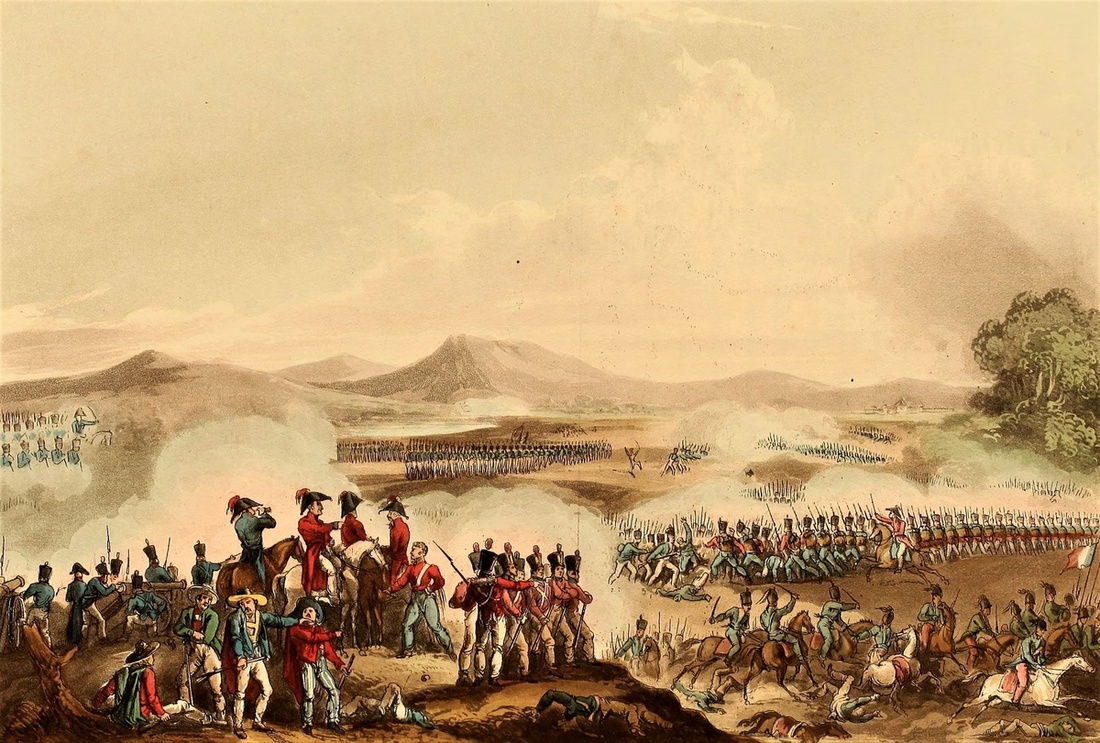
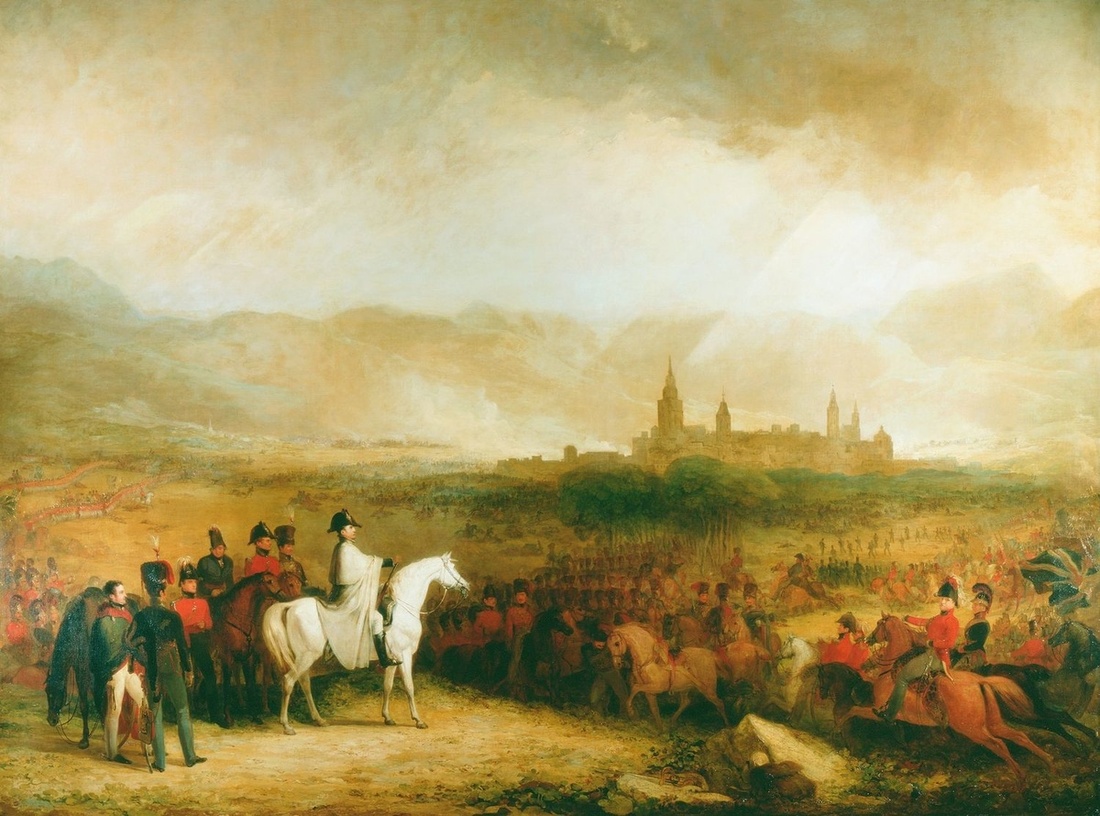
Arriving off Cadiz on 8 March 1809 aboard Royal Navy transports, local Spanish authorities refused to allow Sherbrooke's force to disembark and so they sailed for Lisbon instead, arriving there five days later and officially joining the garrison of Portugal. Colonel Stopford subsequently commanded his battalion during the Oporto Campaign in May and for the advance into Spain which culminated in the Battle of Talavera, fought over 27 - 28 July 1809. On the night of 27 July, Marshal Victor's French army made an attack on Wellesley's Anglo-Spanish left flank; the fighting was confused and casualties were heavy on both sides - especially amongst the King's German Legion. The Guards, being positioned in the centre of the first defensive line, had missed the action - but would get more than their fair share the following morning.
A general attack on Wellesley's army commenced at 5 a.m. and Stopford, almost certainly mounted upon his horse at the rear-centre of the battalion, must have viewed the advance of two French divisions, preceded by a swarm of skirmishers, with a degree of trepidation. However, in a situation that was to be oft-repeated during the many engagements between the opposing sides, the massed French attack was repulsed by the solid discipline of the British infantry. Nevertheless, as their enemy retreated in disorder and the Guards and their neighbouring battalions followed up with an advance to push them back further across the Portina stream which crossed the battlefield, Stopford lost control of his battalion and the advance became disorganised, uncoordinated, and went too far. Ensign John Aitchison, who carried the battalion's King's Colour at Talavera (being wounded in the right arm in the process) wrote shortly afterwards to his father of his own experiences of that day:
'In the centre where at last the enemy made his grand push, we charged when he was within 100 yards, and our fire was reserved until they were flying. The eagerness of our men in advancing without support, beyond the distance intended, had nearly proved fatal, for we had no sooner passed the ravine in our front that the enemy perceived the troops on our left halted, took us in our left flank by his retiring columns and the columns which we posted in our front in a wood behind the bank of a vineyard. Thus gaining confidence, nearly turned our right, they stood till the grenadiers were nearly within musket length, but they then retired in great confusion. At this point of the action our numbers were diminishing very fast, and it being impossible to maintain this advance position we were ordered to be withdrawn. Accordingly we faced about, retired to the ravine, slower and in better order than we advanced. Here we made a stand and did considerable execution, but the enemy having come on with all those troops that had been flying, supported by strong columns which concealed in the wood, it was deemed necessary to order another retirement, and we once again faced about – the enemy by this time having advanced within a few yards, the havoc was great, and we were thrown into momentary confusion – but the same ardent spirit which had urged our men to advance beyond the point originally intended still operated – they rallied with astonishing rapidity and their exertions keeping pace with the exigencies, success crowned their efforts in the complete rout of the enemy.' (An Ensign in the Peninsular War, p.58, refers).
Unlike Aitchison, thankfully Stopford came through the action without a scratch - although he had lost 30 per cent of his command, including five officers killed and six wounded. Interestingly, upon the institution of the Army Gold Medal series a short time later, his name appeared on the very first list of those to be rewarded:
'Horse Guards - September 9, 1810.
His Majesty having been graciously pleased to command, that in commemoration of the brilliant victories obtained by divisions of his army over the enemy in the battles of Roleia, Vimiera...and in the battles of Corunna and Talavera de la Reyna, the under-mentioned officers of the army, present on those occasions, should enjoy the privilege of bearing a medal; and his Majesty having approved of the medal which has been struck, is pleased to command that it should be worn by the general officers, suspended by a ribbon of the colour of the sash, with a blue edge, round the neck; and by the commanding officers of corps, (not being of rank inferior to Lieutenant-Colonel), and the chiefs of military departments, attached by a ribbon of the same colour to the button-hole of their uniform...Colonels...Honourable Edward Stopford, 3d foot guards...' (London Gazette, 11 September 1810, refers).
Another of those wounded at Talavera was Stopford's immediate commander, Henry Campbell; as the senior Colonel in the brigade, Stopford was promoted onto the Staff and given command of the Guards Brigade on 1 August 1809. The Allied army shortly afterwards withdrew to Portugal and Stopford remained in command of his brigade for the next two years, including at the battles of Busaco (27 September 1801) and Fuentes de Onoro (1-3 May 1811); however, as he was not personally under fire during both engagements, they do not feature on his medallic recognition. After the latter hard-fought action, Stopford was promoted to Brigadier General; the now General Stopford then commanded the entire 1st Division for a short period when its regular divisional commander stepped up to command the army during one of Wellington's very brief absences.
In June 1811 he was further promoted Major General, but in April 1812 returned to England - possibly due to ill health and the constant strain and stresses of command in such an intense theatre of war. After nine months' recovery, by January 1813 Stopford was in Lisbon - though seemingly in no great hurry to rejoin Wellington's army on campaign in the depths of winter. A fellow Foot Guards officer wrote: 'I breakfasted this morning with General Stopford; he has as yet settled nothing about going, except that he means to send his baggage off three days before he starts [and] as that cannot go in less than ten days & he means to go in seven, my baggage will of course go with his...he is to let me know as soon as anything is settled.'
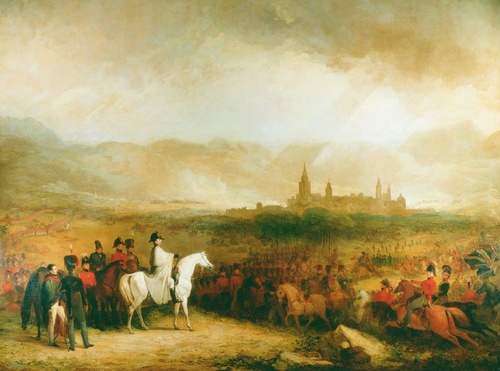
In March, Stopford was back in command of the Guards Brigade, leading his men well and effectively at the decisive Battle of Vitoria on 21 June - the action which was, of course, to earn him his General Officer's Gold Medal. It is worth noting that of the two brigades making up the 1st Division in Lieutenant-General Thomas Graham's Left Column (attacking the extreme right flank of the French army), his fellow brigade commander was Colonel Colin Halkett, whose Orders, Decorations and Medals were sold in these rooms in July 2024 for £220,000. After Vitoria, Stopford and his men were present at the Siege (and capture) of San Sebastian (July - September 1813); the crossing of the Bidassoa (6 October); and the battles of Nivelle and the Nive on 13 November and 10 December respectively - however, they were only lightly engaged on all occasions.
On 23 February 1814, the Guards Brigade crossed the river Ardour in 50-man rafts to secure a foothold on the opposite side to allow a bridge to be constructed: Stopford went with them and by 5 p.m. five companies of the Guards and two companies of the 5th/60th Foot were on the north bank. Despite being vastly outnumbered by the French force in Bayonne there was no serious attempt to dislodge Stopford's guardsmen and, by midnight on 24 February, the entire 1st Division had crossed safely so that the investment of Bayonne could begin in earnest.
On 10 April 1814, General John Hope (conducting the siege) heard news that Napoleon had been deposed, and two days later the French commander at Bayonne, Pierre Thouvenot, received the same information; Hope's conduct of the investment had been leisurely in the extreme and Thouvenot, a fervent Bonapartist, decided at last to sally forth and attack the British lines "in a fit of spite and frustration". At 3 a.m. on 14 April, the French struck with a force of over 6,000 men; whilst the attack itself was anticipated, its strength took everyone by surprise. Two columns hit Stopford's outlying pickets, who were quickly overwhelmed with many being taken prisoner - Hope and two of his staff officers were wounded and captured, Major-General Andrew Hay was killed, and Stopford himself was wounded - though fortunately avoided capture and the fate of his general officer comrades. With so many casualties amongst the senior British officers, the defence was initially confused and lacking in coordination - however, subordinate officers swiftly rallied their men, correctly appraised the situation, and led several counter-attacks which in turn caught their enemy offguard; eventually Thouvenot's men withdrew after themselves taking severe casualties and, by 8 a.m., everything initially lost was back in British hands. The sortie had been a costly - and pointless - loss of lives on both sides.
Later Life
With the war over and the British Army gradually withdrawing either home or being redeployed elsewhere, Stopford himself took the opportunity to spend several months touring across France: whilst many others (particularly civilians) did the same, for a senior Army officer to suddenly do so caused some consternation - indeed, Stopford deliberately did not receive the Thanks of Parliament for his services in the Peninsula because, in the words of the Speaker: ..."he stayed abroad for several months for his own private amusement after the war was over" and had therefore also neglected his duties as an M.P! He was not offered a command during the Waterloo Campaign, nor in North America for the final months of the War of 1812; in 1818 Major-General Stopford was appointed Regimental Colonel of the Royal African Corps and, in 1819, removed to the same appointment in the 41st Regiment of Foot: two years later he was promoted to Lieutenant General, and had held a ceremonial appointment as Equerry to Queen Charlotte (queen consort of King George III) from 1795 - 1818.
Though Edward Stopford never married, after the Peninsular War he entered into a long-term relationship with a French actress, Anais Aubert (known as Mademoiselle Anais), and their son, Edward Stopford Claremont, was born in 1818; he followed his father's footsteps into the British Army but also maintained strong links with France throughout his life. Lieutenant-General Sir Edward Stopford G.C.B., K.T.S., M.P. died on 14 September 1837 at Leamington Spa, Warwickshire, and was interred in the parish church of Leamington five days later. His obituary appeared in many periodicals at the time, with the Leamington Spa Courier of 23 September 1837 stating: 'In private life his character was everything which a truly honourable mind and amiable disposition could constitute. In his public services he maintained and promoted the high reputation of the noble troops which he commanded, and was honoured both for his conduct in the field and for his mild, steady, and judicious discipline, with the confidence and esteem of the illustrious chief under whom he served. The remains of the gallant General were interred in a vault in our Parish Church, on Tuesday morning last. The funeral was attended by several distinguished officers as well as by friends who wished to testify their respect of his public and private character.'
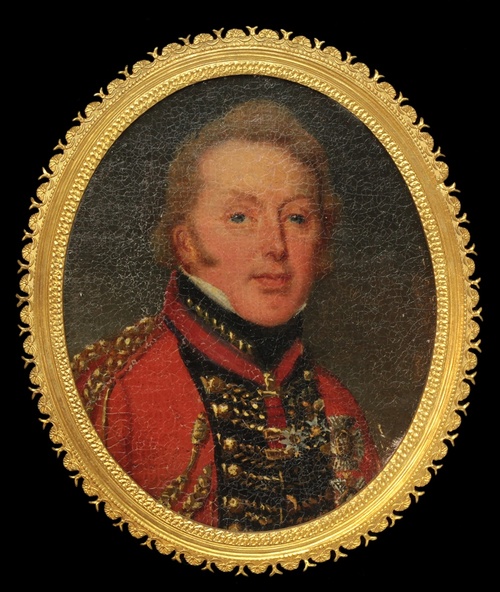
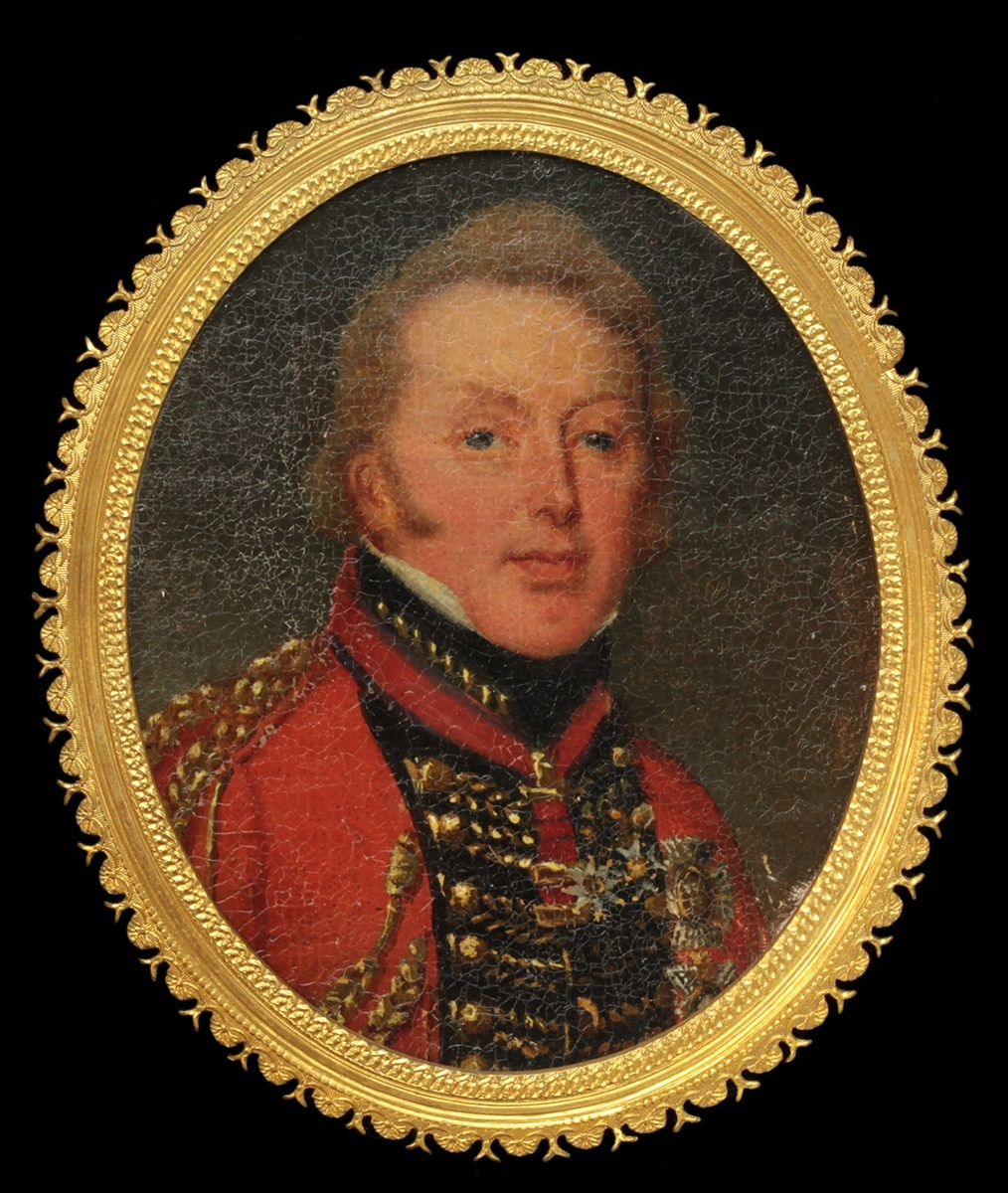
Sold in a large oval frame, set together with a very attractive and finely-executed portrait miniature of the recipient, depicted in General Officer's Full Dress uniform, with gold aiguilette on right shoulder and wearing his Orders, Decorations and Medals, circa 1815, set within a fine gilt frame, 85mm x 102mm.
Subject to 20% VAT on Buyer’s Premium. For more information please view Terms and Conditions for Buyers.
Estimate
£70,000 to £90,000
Starting price
£65000
Watch, listen and bid as if you were in the room. Now available for auctions worldwide.
Click here to bid live
An exclusive and confidential service for the discerning collector or vendor.
View the Gallery
Download every Spink catalogue on your iPad, iPod or iPhone using free Spink app.
Download From iTunes© 2026 Spink & Son. All rights reserved.