
Auction: 26001 - Orders, Decorations and Medals
Lot: 298
Sold by Order of a Direct Descendant
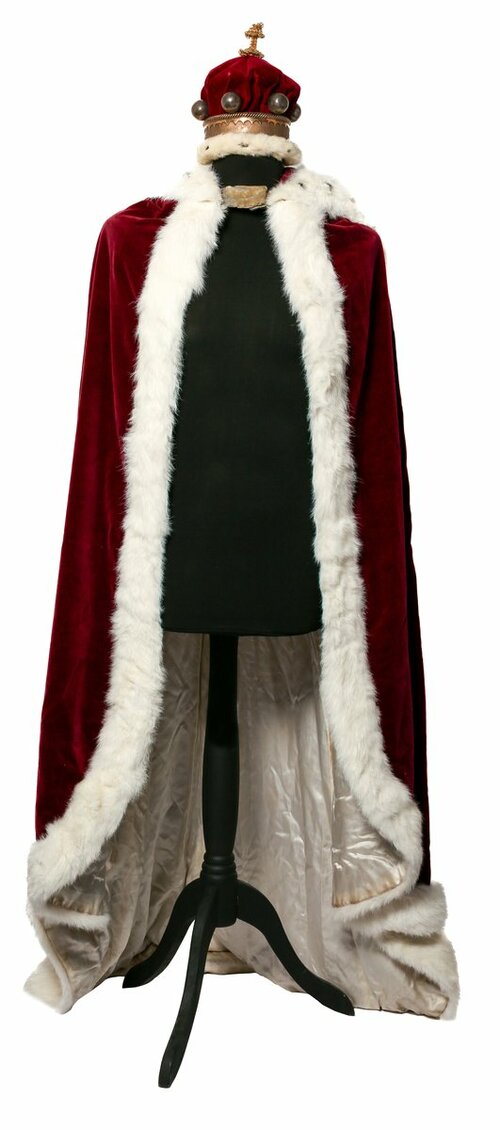
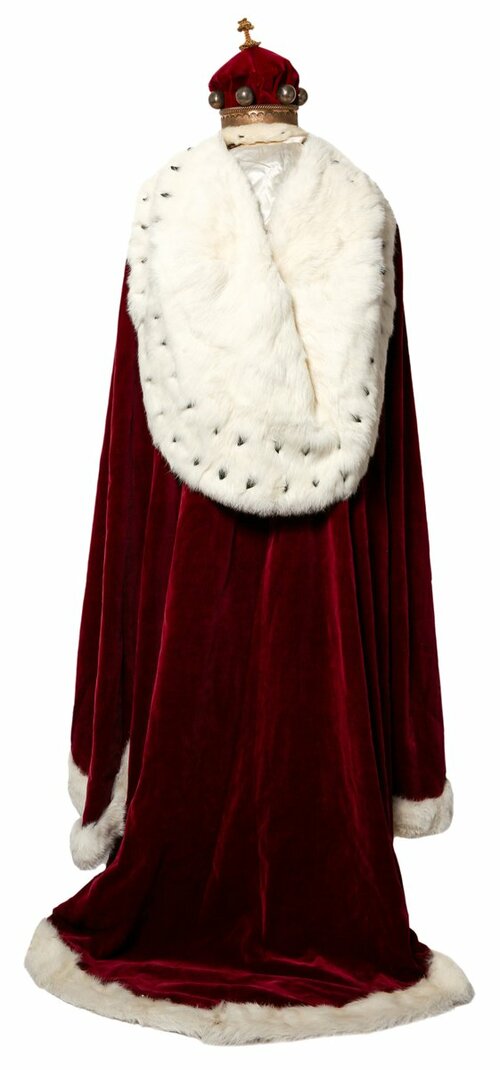
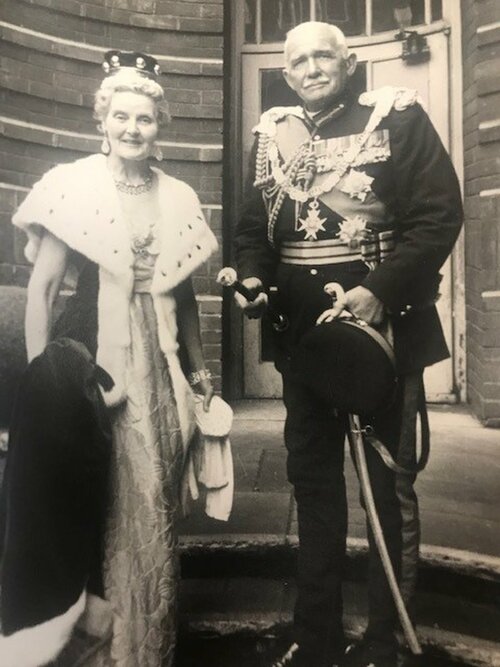
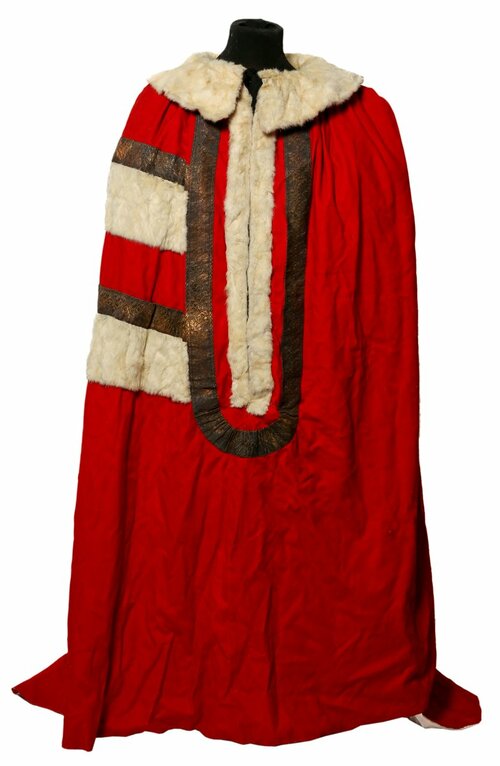
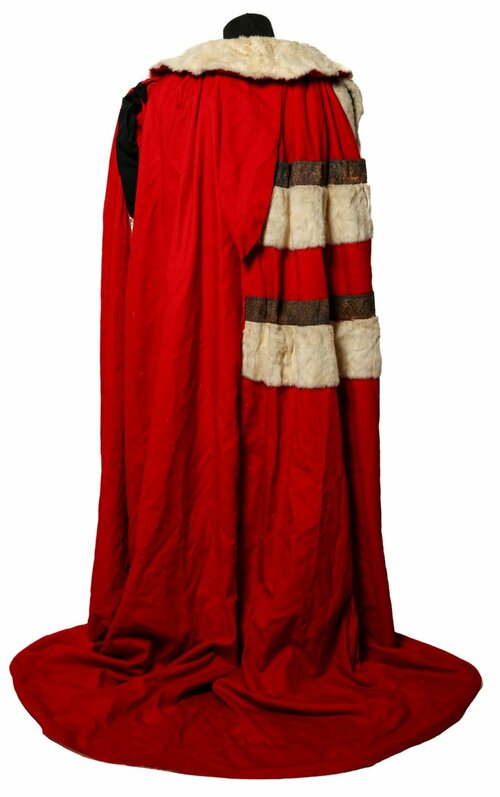
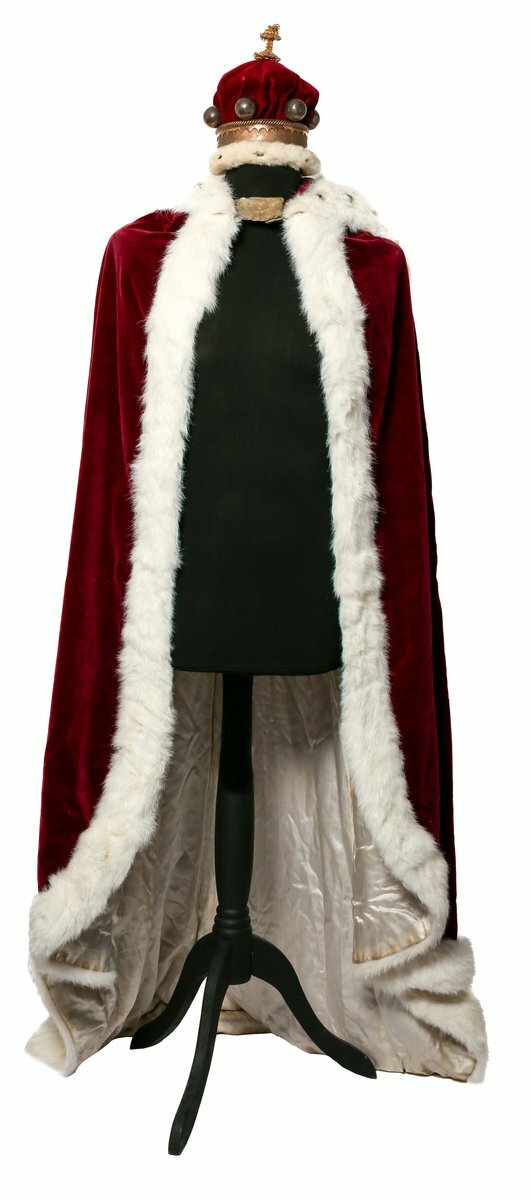
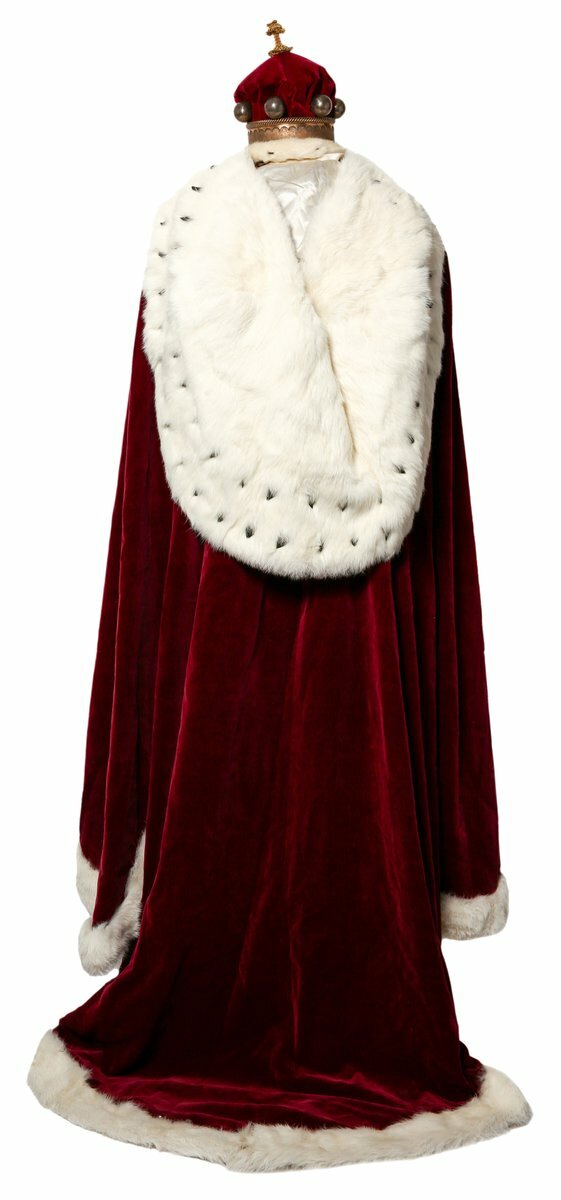
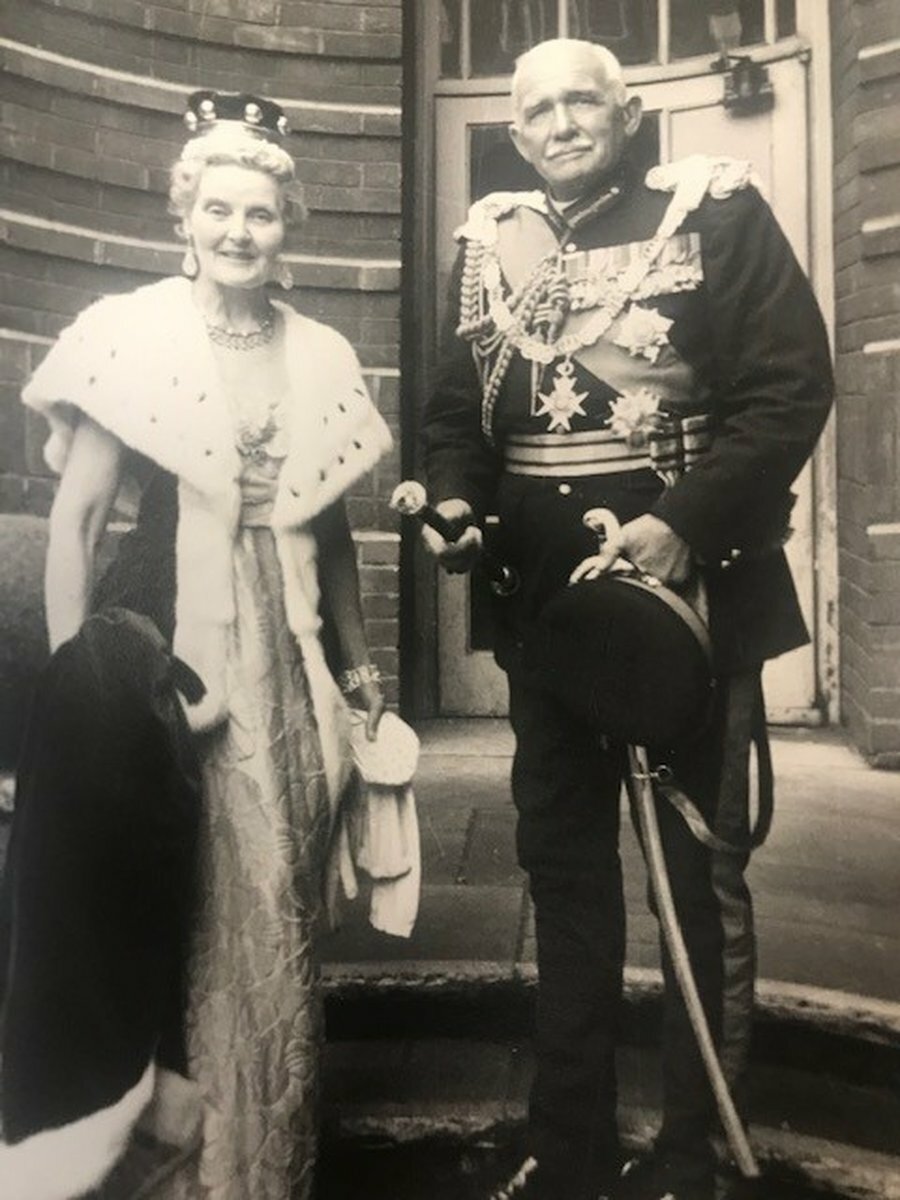
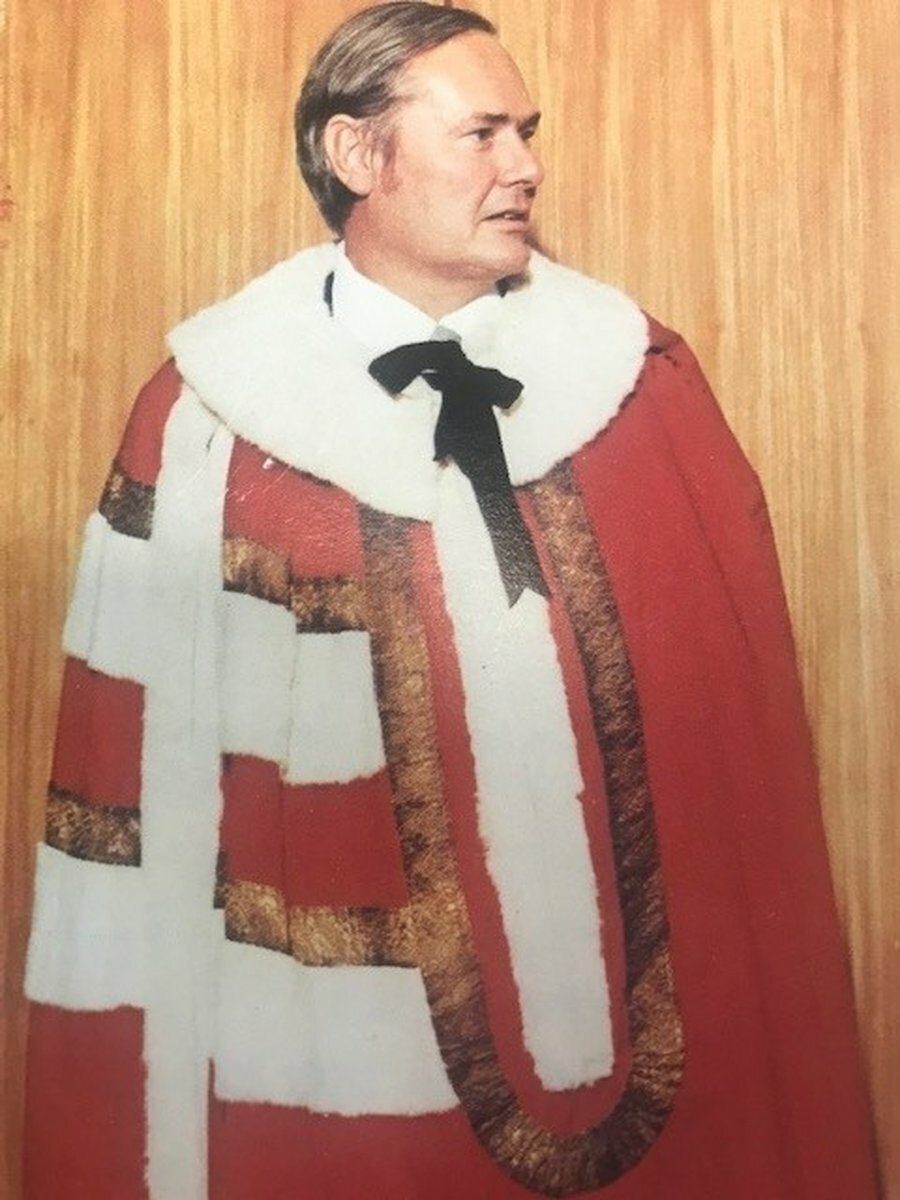
The Parliament and Coronation Robes worn by Field Marshal W. E. Ironside, 1st Baron Ironside, and Lady Ironside
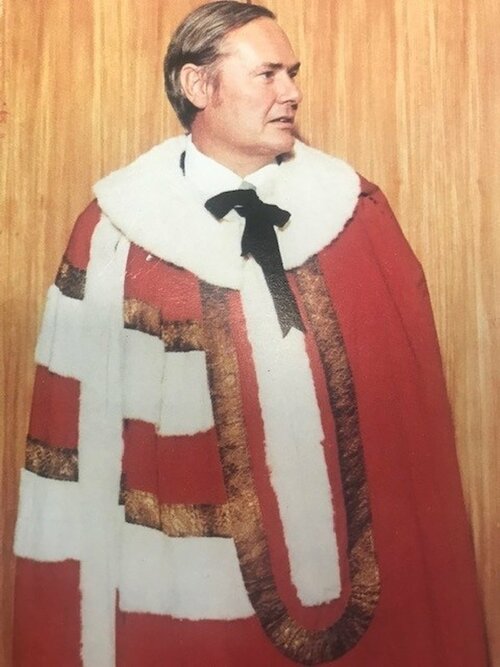
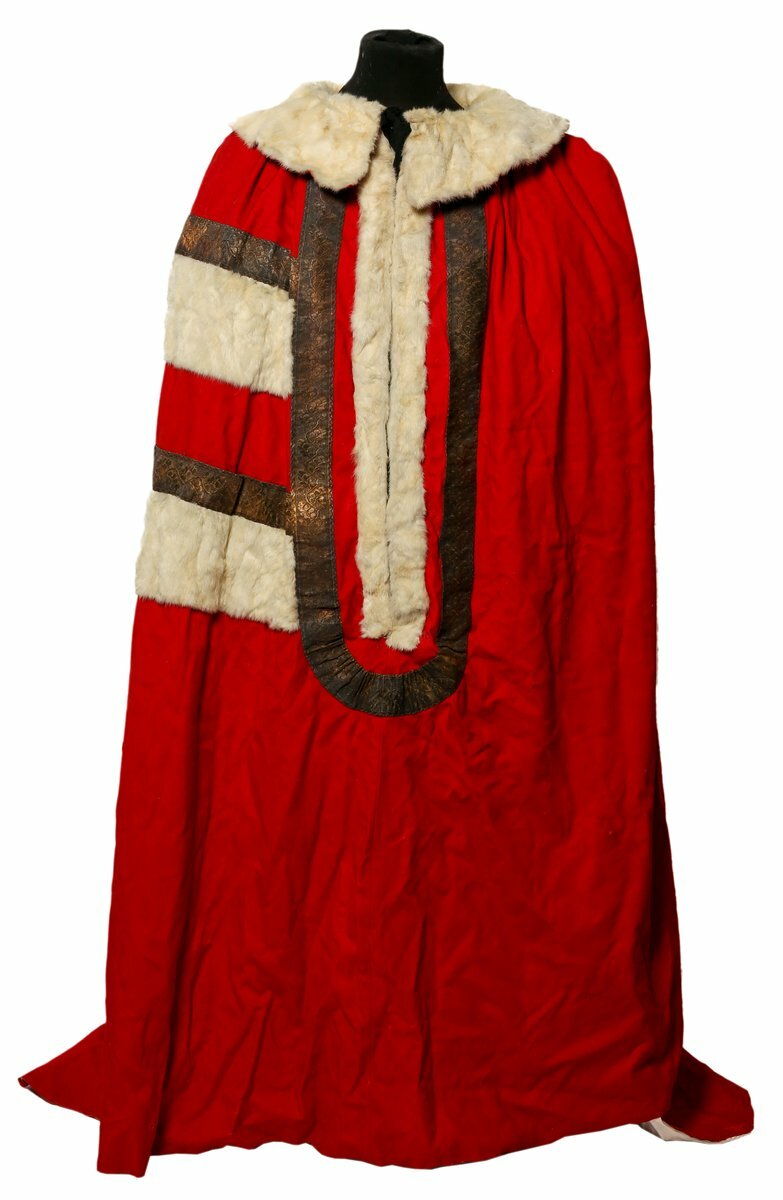
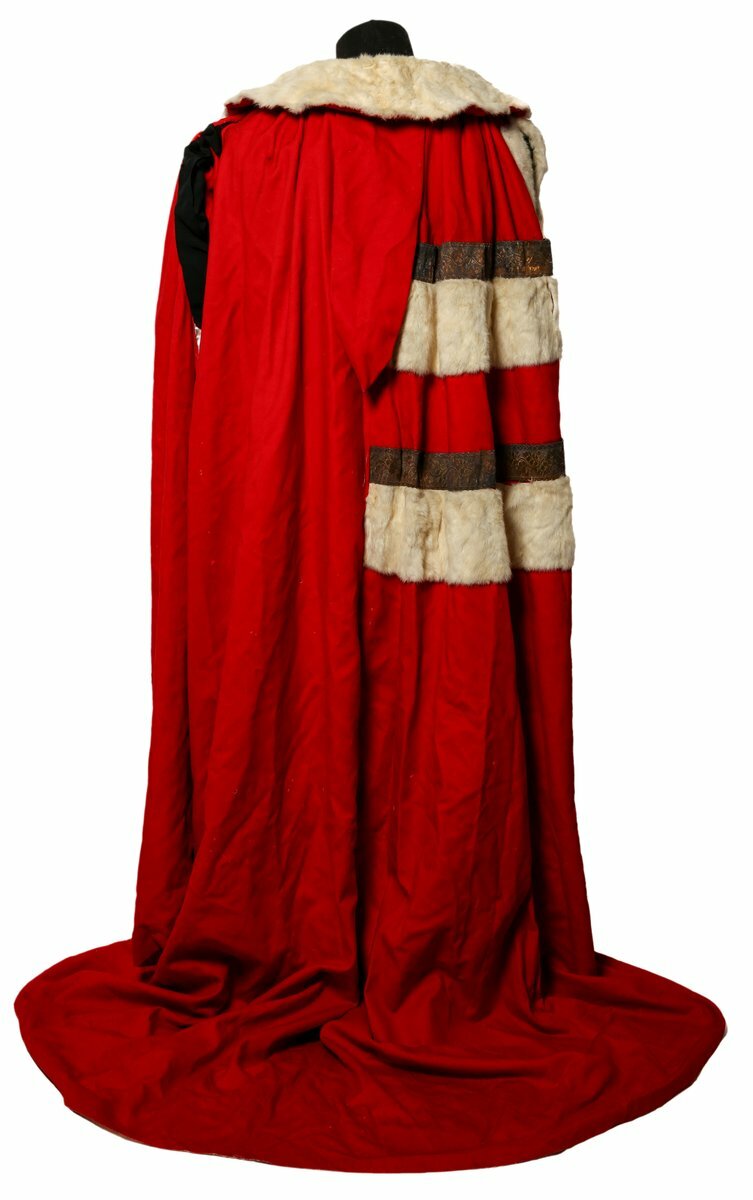
Comprising a set of Parliament robes as worn by 1st Baron Ironside of full length in scarlet wool with a collar and edging of white miniver fur, closed at the front with black silk satin ribbon ties, with two miniver bars edged with gold oak leaf lace on the right hand side of the robe indicating the rank of a Baron, with white satin lining, some loss of stitching to where the gold lace is fitted, light moth damage, otherwise generally in good condition, together with the Robes and Coronet worn by Lady Ironside, comprising a Vicountess's fitted kirtle of crimson velvet, without sleeves and with edges lined in ermine, with fitted ermine cape to cover the shoulders, and with satin cream lined lining fitted with an internal belt which clasps at the front; the Coronet of silver-gilt and silver, with six balls, hallmarked WFW London 1922, with crimson velvet cap finished with a gold thread pineapple, with base trimmed with ermine and with cream silk lining, both pieces unmarked, the first with Ede Son & Ravenscroft draw-string bag with label stitched to the outside, this marked 'Lord Ironside', the bag with wear and some moth damage, (Lot)
William Edmund Ironside was born at Edinburgh on 6 May 1880, and was educated at a school in St.Andrew's and Tonbridge School before going to the Royal Military Academy, Woolwich. Ironside then joined the Royal Artillery in 1899, and served throughout the Second Boer War. This was followed by a brief period spying on the German colonial forces in German South West Africa. Returning to regular duty, he served on the staff of the 6th Infantry Division during the first two years of the Great War, before being appointed to a position on the staff of the newly raised 4th Canadian Division in 1916. In 1918, he was given command of a brigade on the Western Front, and in 1919, he was promoted to command the Allied intervention force in northern Russia. Ironside was then assigned to an Allied force occupying Turkey, and then to the British forces based in Persia in 1921. He was offered the post of the commander of British forces in Iraq, but was unable to take up the role due to injuries in a flying accident.
He returned to the Army as Commandant of the Staff College, Camberley, where he advocated the ideas of a close friend, J. F. C. Fuller, who was a proponent of mechanisation. He later commanded a division, and military districts in both Britain and India, but his youth and his blunt approach limited his career prospects, and after being passed over for the role of Chief of the Imperial General Staff (CIGS) in 1937 he became Governor of Gibraltar, a traditional staging post to retirement. He was recalled from "exile" in mid-1939, being appointed as Inspector-General of Overseas Forces, a role which led most observers to expect he would be given the command of the British Expeditionary Force (BEF) on the outbreak of war.
However, after some political manoeuvring, General John Vereker, 6th Viscount Gort, was given this command and Ironside was appointed as the new Chief of the Imperial General Staff. Ironside himself believed that he was temperamentally unsuited to the job, but felt obliged to accept it. In early 1940 he argued heavily for Allied intervention in Scandinavia, but this plan was shelved at the last minute when the Finnish–Soviet Winter War ended. During the invasion of Norway and the Battle of France he played little part; his involvement in the latter was limited by a breakdown in relations between him and Gort. He was replaced as CIGS at the end of May, and given a role to which he was more suited: Commander-in-Chief, Home Forces, responsible for anti-invasion defences and for commanding the Army in the event of German landings. However, he served less than two months in this role before being replaced. After this, Ironside was promoted to field marshal. He was raised to the peerage in the New Year Honours, on 29 January 1941, as "Baron Ironside of Archangel and of Ironside in the County of Aberdeen" and retired to Morley Old Hall in Norfolk with his family where he took up writing. He never spoke in the House of Lords. He died at the Queen Alexandra Military Hospital, London on 22 September 1959.
Mariot Ysobel (née Cheyne), Lady Ironside was the daughter of Charles Cheyne and Elva Alice Wheeler and was born at Switzerland on 3 June 1890. She married (then Captain and future Field Marshal) William Edmund Ironside on 26 June 1915, in Cambridge, Cambridgeshire, England. She had two children Hon. Elspeth Mariot Ironside and Edmund Oslac Ironside, 2nd Baron Ironside. She died at Richmond-on-Thames on 7 February 1984.
Subject to 20% VAT on Buyer’s Premium. For more information please view Terms and Conditions for Buyers.
Sold for
£5,500
Starting price
£800
Watch, listen and bid as if you were in the room. Now available for auctions worldwide.
Click here to bid live
An exclusive and confidential service for the discerning collector or vendor.
View the Gallery
Download every Spink catalogue on your iPad, iPod or iPhone using free Spink app.
Download From iTunes© 2026 Spink & Son. All rights reserved.