
Auction: 26001 - Orders, Decorations and Medals
Lot: 240
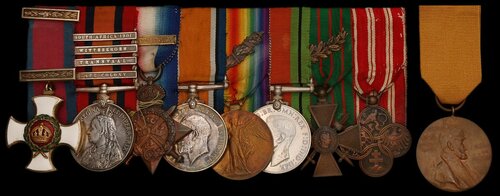
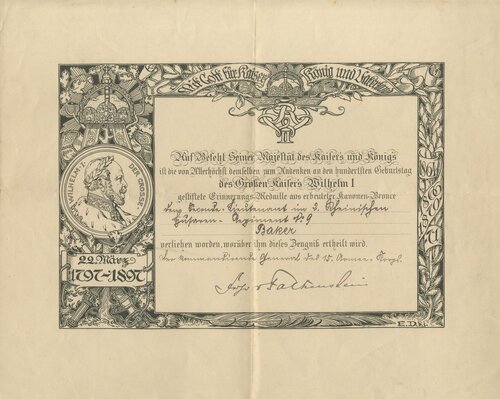
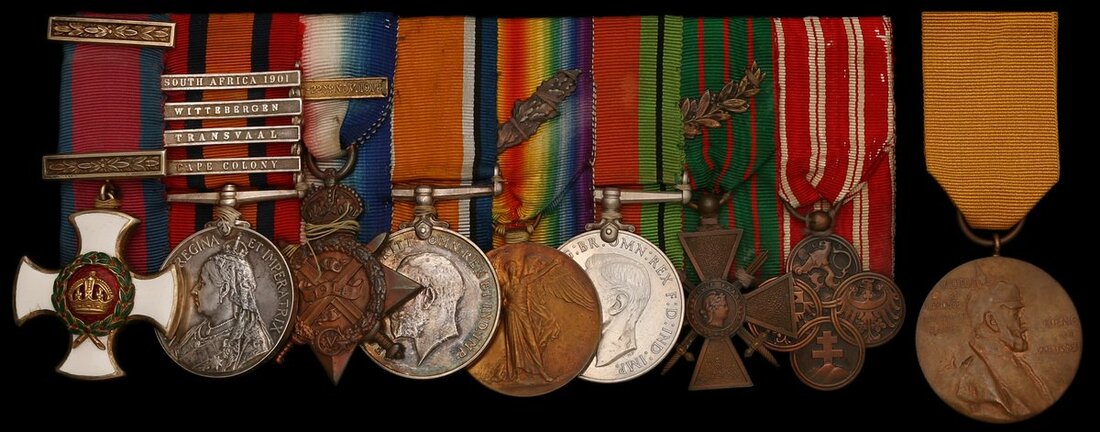
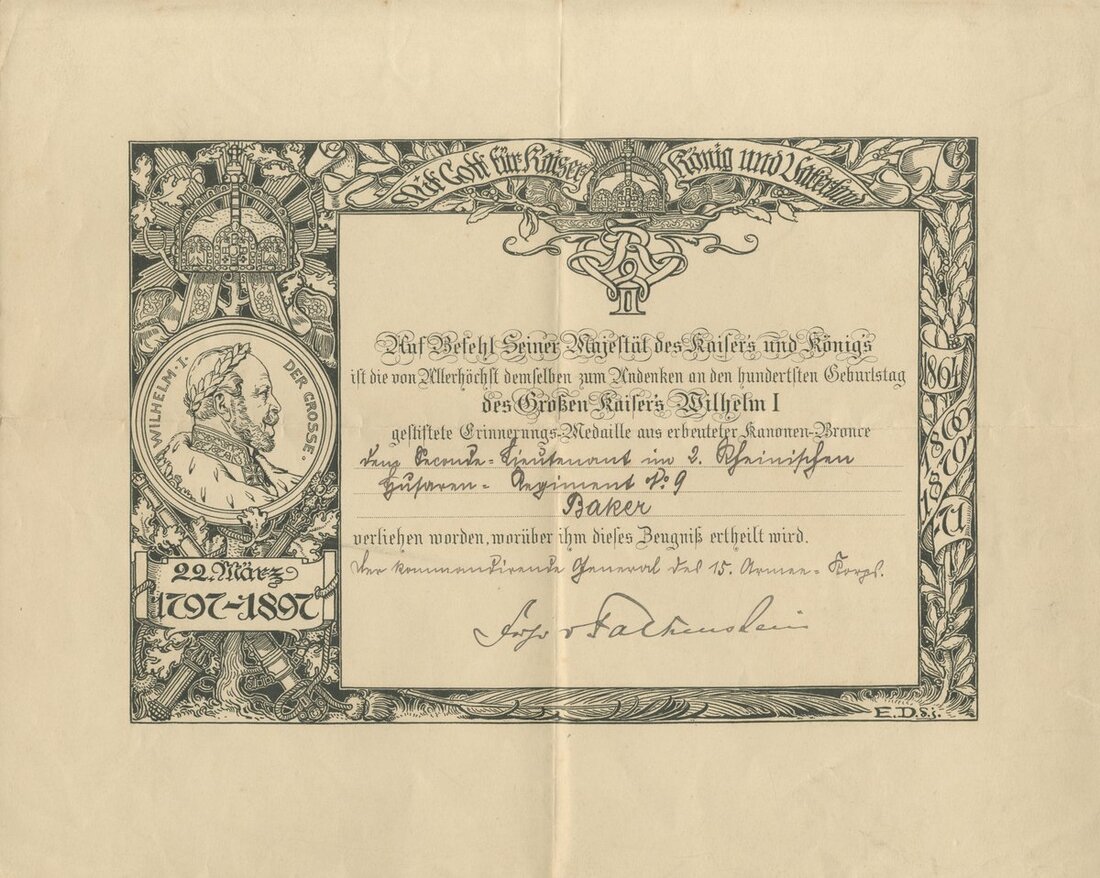
The most unusual D.S.O. group eight awarded to Lieutenant-Colonel B. G. Baker, the soldier, artist and author who served with the 21st (Empress of India's) Hussars, late German Imperial Army and Imperial Yeomanry who rose to command the 13th Battalion, Yorkshire Regiment in the Great War; a noted military artist, Baker was the recipient of a Kaiser Wilhelm I 100th Anniversary Medal
Distinguished Service Order, G.V.R., silver-gilt and enamel, with top suspension bar; Queen's South Africa 1899-1902, 4 clasps, Cape Colony, Transvaal, Wittebergen, South Africa 1901 (Capt: B. C. Baker. Imp: Yeo.), re-impressed naming, clasps privately affixed; 1914 Star, with clasp (Capt. B. G. Baker.); British War and Victory Medals, with M.I.D. oak leaves (Lt. Col. B. G. Baker.); Defence Medal 1939-45; France, Republic, Croix de Guerre, with bronze laurel leaves upon riband; Czechoslovakia, Republic, War Cross 1914-18; Germany, Prussia, Kaiser Wilhelm I 100th Anniversary Medal, mounted court-style as worn besides this last, presumably removed at the outbreak of the Great War, very fine (Lot)
D.S.O. London Gazette 3 June 1918.
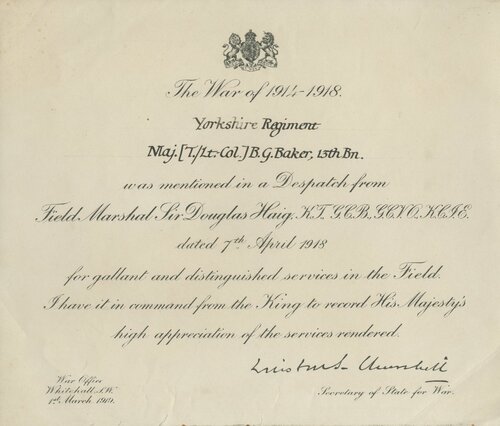
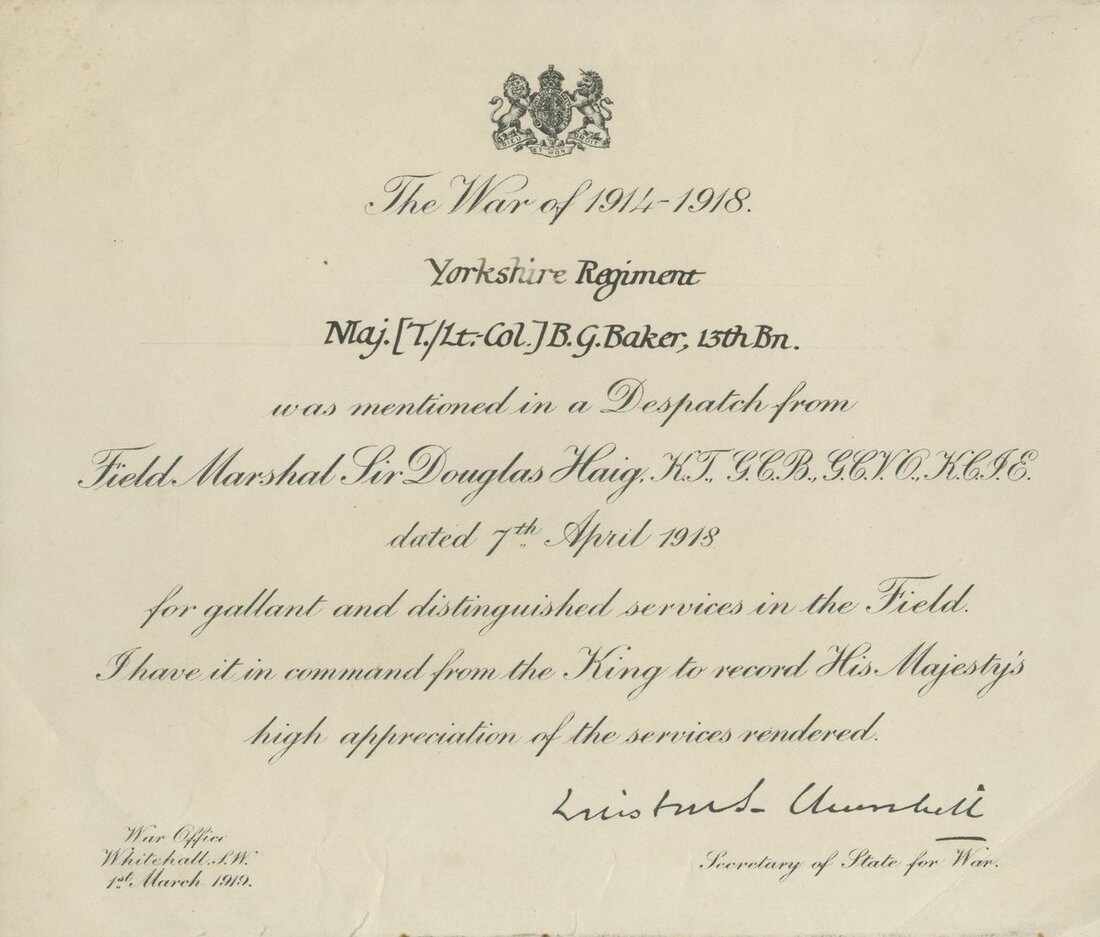
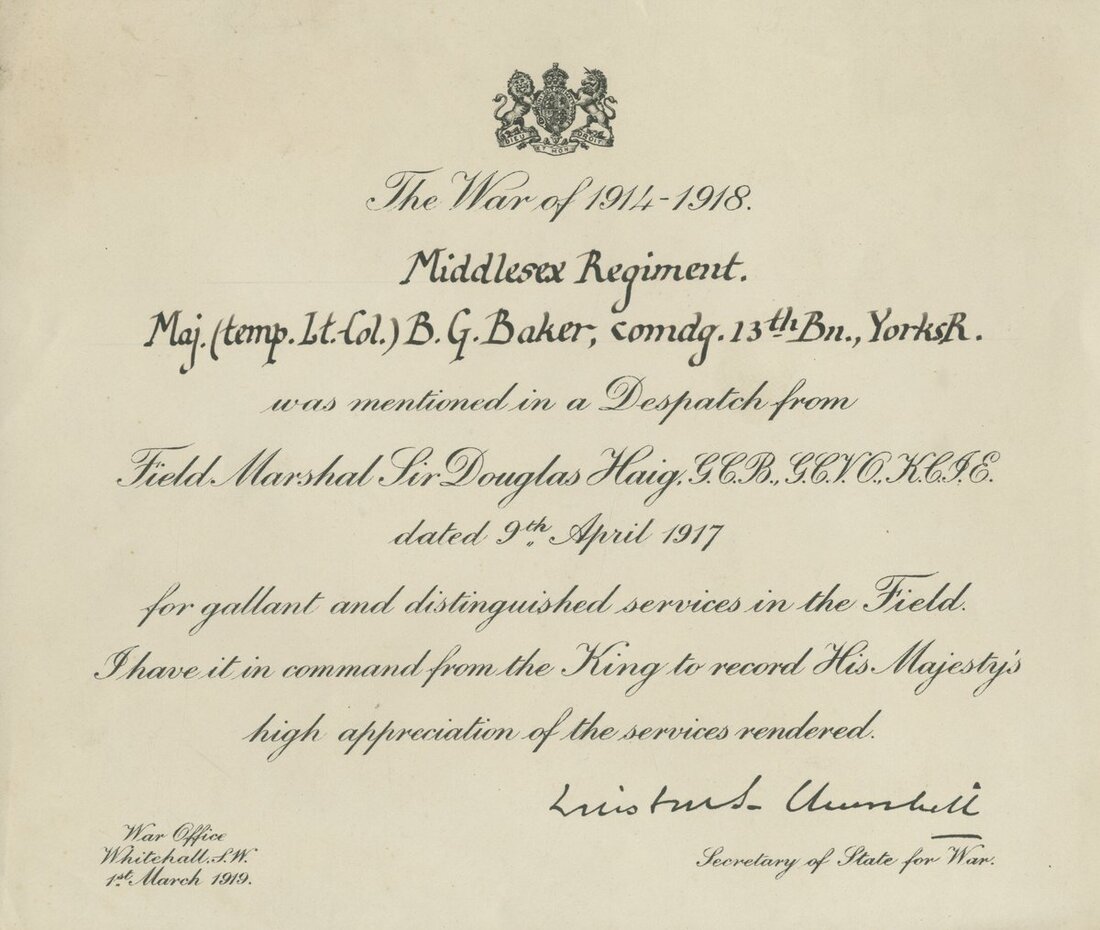
M.I.D. London Gazette 10 September 1901; 7 April 1917; 9 April 1917; 25 May 1917; 23 May 1918.
France, Croix de Guerre London Gazette 24 October 1919.
[Serbian Order of the White Eagle, 3rd Class] London Gazette 31 March 1925.
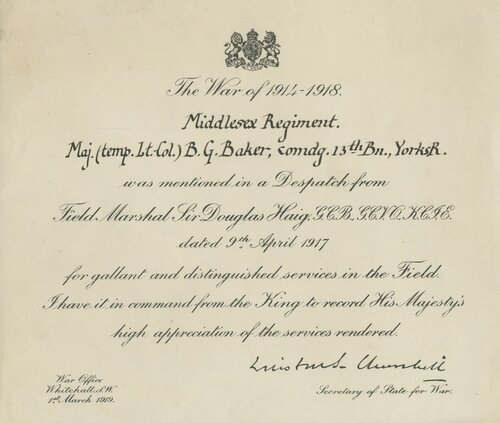
'For distinguished service rendered during the War of 1914-19'
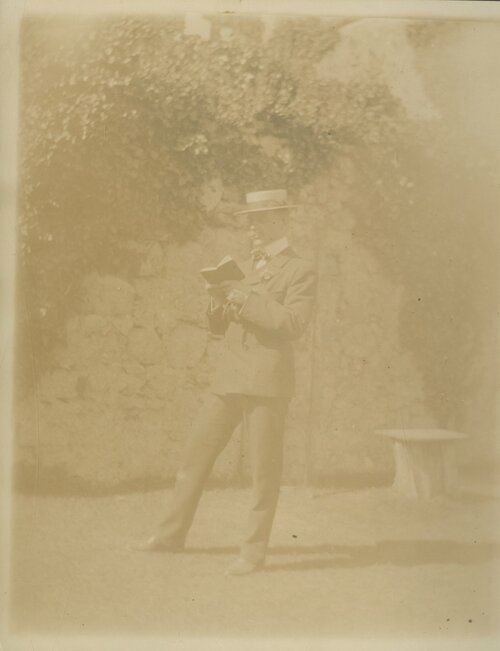
Bernard Granville Baker was born in Poona, Bombay on 23 October 1870 to Montague Bernard Baker, Indian Civil Service and Harriet Fanny Bangh. He was educated at Winchester College and received his military training at the Military College at Dresden between 1883-86. He then enlisted into the 3rd Battalion, Middlesex Regiment. In 1889 he transferred to the 21st Hussars and detached for duty with the Deputy Assistant Quartermaster General's Department, Upper Burma for intelligence and survey work after which he was recommended for commission in 1894. He then rejoined the 3rd Battalion, Middlesex Regiment as a Lieutenant in November 1894, but promptly wrote to the German Emperor requesting commission in the 9th Prussian Hussars, which was approved. Therefore when the Boer War broke out, Baker was preparing to enter the German Army Staff College, so he thus resigned his commission in the German Army and was granted commission with the Imperial Yeomanry in February 1900. He was appointed Adjutant of the 14th Battalion, Imperial Yeomanry and was promoted Captain by June that same year. However, he was invalided home in the October on account of a horse having fallen on top of him, resulting in several fractured ribs, collar bone and shoulder blade. By January 1901 he had recovered enough to return to South Africa and was appointed to command the 1st Company, East Kent Imperial Yeomanry. However he was yet again invalided home, this time for sickness and in January 1902, he reigned his Imperial Yeomanry commission altogether.
In 1902, his request to rejoin the Imperial German Army was refused. It wasn't until ten years later in 1912 that Baker once again undertook military service and joined the National Reserve and in that same year participated in the Balkan War supporting the Turkish. The outbreak of the Great War saw him commission Captain on 7 September 1914 and serve in the intelligence branch of the Indian Corps on the Western Front. He then served with the 1st Cavalry Division Staff in France where he was promoted Temporary Major on 28 August 1915 and later that year was appointed second in command of the 20th Battalion, Middlesex Regiment. He was then appointed to command the 13th Battalion, Yorkshire Regiment on 28 July 1916 and granted the acting rank of Lieutenant Colonel on 25 August 1916. He was wounded in action at Gouzeacourt Wood on 20 April 1917 but once he recovered he was appointed British Commissioner for propaganda in enemy countries, particularly of the Italian and Salonika Fronts. On 8 July 1918 he was awarded the Distinguished Service Order for his war service and in 1919 he was appointed to the Supreme Economic Council's Mission to Central Europe.
After serving his country to the highest degree he finally relinquished his commission on completion of service in July 1919, retaining the rank of Lieutenant Colonel. After the war, Baker travelled extensively and authored several travel books. He was appointed Justice of the Peace for East Suffolk in 1931 and during the Second World War he was a member of the 1st Battalion, Suffolk Local Defence Volunteers. He died at his home in Beccles, Suffolk in Mary 1957, aged 86 years old.
The lot comes with an extensive archive including:
i)
Two original Mentioned in Dispatches certificates, Royal Geographical Society admission certificate, a letter from Marlborough House, an original Kaiser Wilhelm I centenary medal certificate, original post office telegraphs.
ii)
A number of copied London Gazette entries concerning Baker, copied research of Baker's Great War records.
iii)
Copied research from Hussars and Mounted Rifle Uniforms of the Imperial German Cavalry 1900-1914 by D. H. Hagger, an article on Boker by R. G. Harris, extracts from The Green Howards in The Great War by Col. H. C. Wylly, C.B., copied research from Officers of the Royal Prussian Army and (Royal Wurttemburgh) Army Corps (in German), research provided by the Royal Historical Society.
iv)
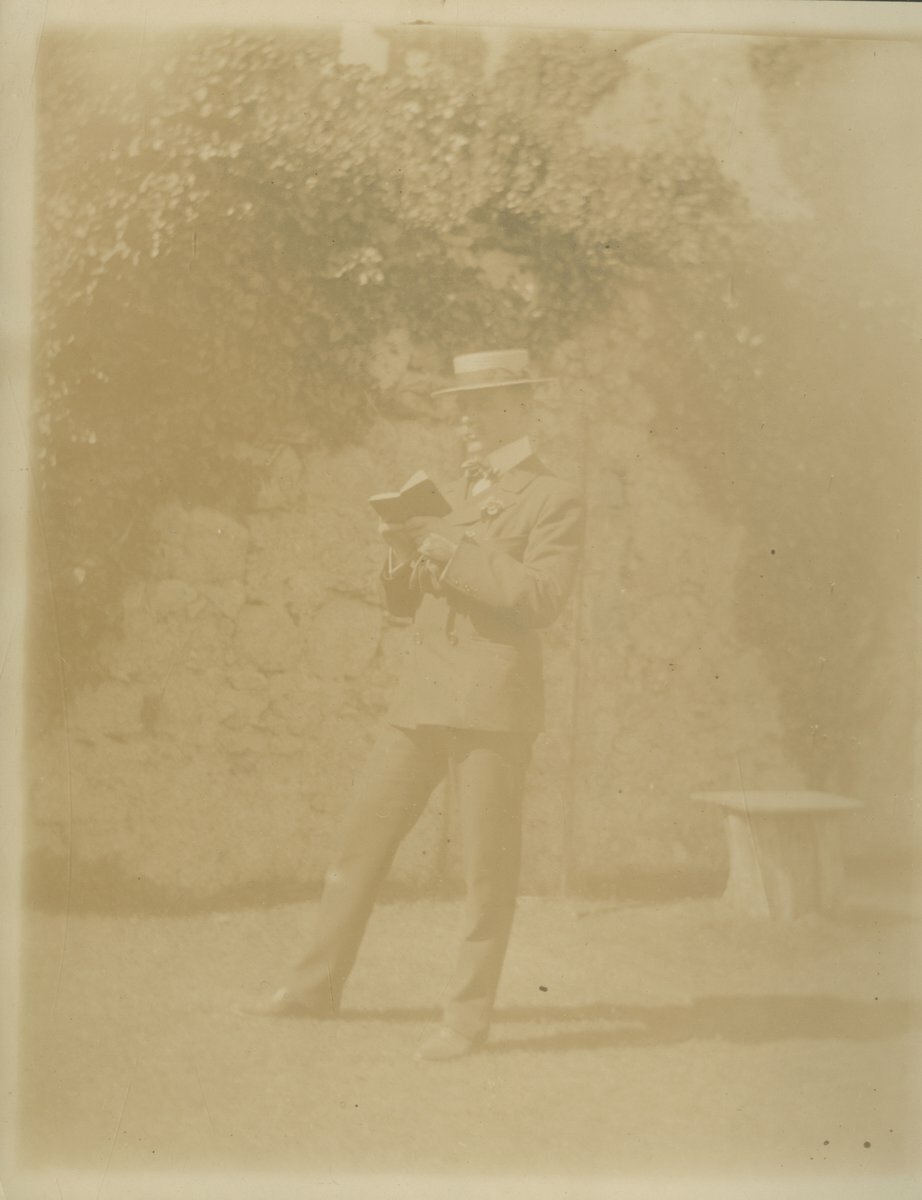
Copied photographs of Baker, obituaries, and copied Who's Who references.
v)
Copy of an extract from Waveney by B. G. Baker.
Subject to 20% VAT on Buyer’s Premium. For more information please view Terms and Conditions for Buyers.
Sold for
£1,400
Starting price
£1600
Watch, listen and bid as if you were in the room. Now available for auctions worldwide.
Click here to bid live
An exclusive and confidential service for the discerning collector or vendor.
View the Gallery
Download every Spink catalogue on your iPad, iPod or iPhone using free Spink app.
Download From iTunes© 2026 Spink & Son. All rights reserved.