
Auction: 26001 - Orders, Decorations and Medals
Lot: 237
'How shall I begin to tell you all my adventures and misadventures? To start with I arrived here about the 21st October and we seemed to do nothing but move camp all that time. On the 30th came the lamentable day of Lombards Kopf where, if we didn't get a licking. I certainly never want to get one. We started out about 2 a.m. and commenced the fight at daybreak. The regiment was on the right flank, and the ground was so awful -nothing but hills and covered with stones that we were practically useless. However, we dodged shells from guns which we could not see until the infantry all retired, and we covered their retreat by holding a hill dismounted against a lot of Boers who were following them up.
We then went covered in our turn by the guns. It was a miserable day altogether, and no one seemed to know exactly what they were expected to do. One fight we had before that- three days previous I think it was- in which we were supposed to have achieved our object tho' all I saw of it was that 3 of my troop were shut without being able to fire a shot in return'
(Lieutenant Steuart Binny on the Battle of Lombard's Kop and his arrival at Ladysmith, his letter quoted in The Defence of Ladysmith and Mafeking by Arthur Davey)
A keen sportsman and noted cricketer, he was 'mentioned' during both the Boer War and Great was he was tragically killed at Ypres in March 1916, whilst in command of a Battalion of the Royal Welsh Fusiliers
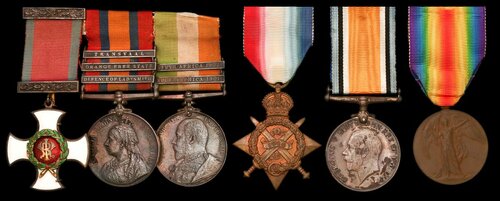
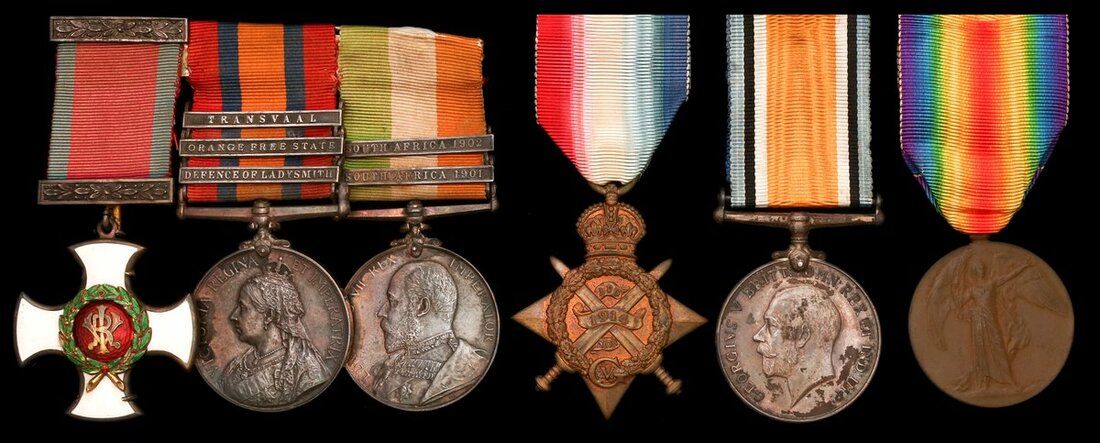
Distinguished Service Order, V.R., silver-gilt and enamels; Queen’s South Africa 1899-1902, 3 clasps, Defence of Ladysmith, Orange Free State, Transvaal (Lieut. S. S. Binny, 19/Hrs.); King’s South Africa 1901-02, 2 clasps, South Africa 1901, South Africa 1902 (Lt. & Adjt. S. S. Binny. D.S.O. 19/Hus.); 1914 Star (Major S. S. Binny. D.S.O. 19/Hrs.); British War and Victory Medals (Lt: Col: S. S. Binny) the first three mounted ‘cavalry’ style as worn, the first with some chips to green enamel wreath, otherwise nearly extremely fine (6)
D.S.O. London Gazette 26 June 1902: 'In recognition of services during the operations in South Africa.'
M.I.D. London Gazette 15 November 1901, 1 January 1916.
Steuart Scott Binny was born at Sydney, New South Wales, on 1 July 1871, only son of John Binny, of Sydney. He was educated at Haileybury College and in Germany. He was a very keen cricketer, a member of the M.C.C. and Free Foresters, and a very good shot.
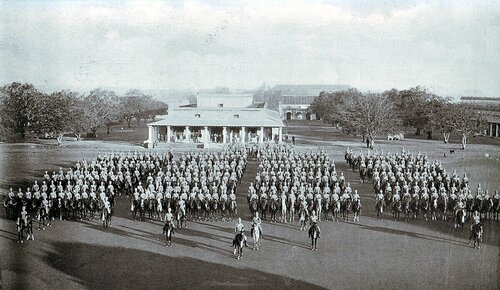
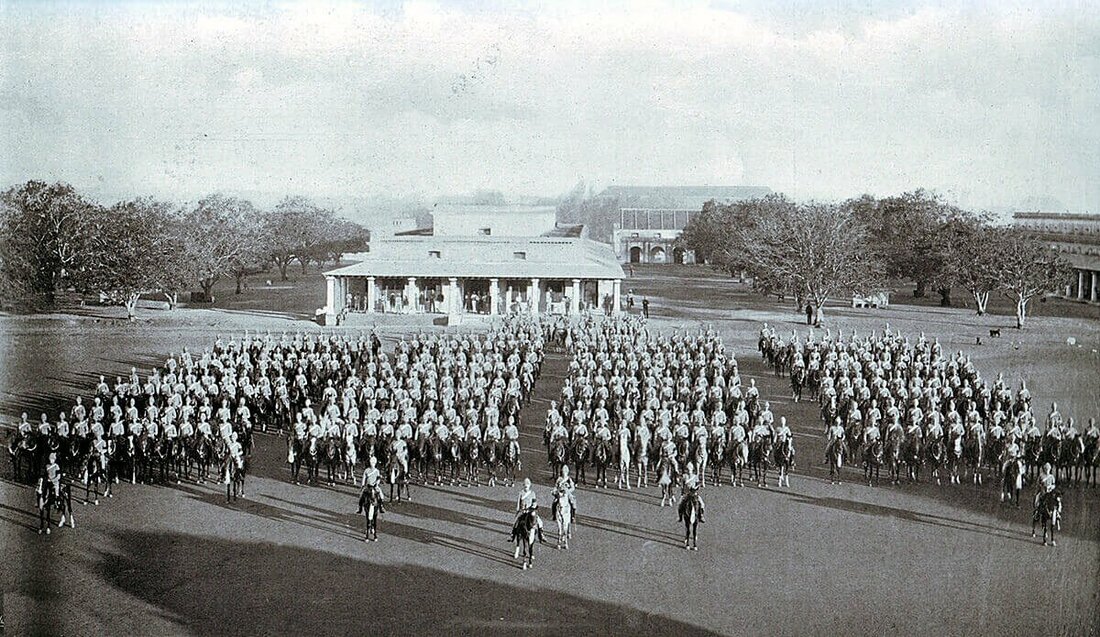
Commissioned to the 19th Hussars on 2 June 1894, Binny arrived outside Ladysmith on 21 October and soon found himself involved in the disaster at Lombard's Kop as outlined above. In a letter home to an 'old friend', since married, he wrote from Ladysmith:
'My dear Mrs Blunt... I don't talk much about the siege as I am trying to forget it, and look upon it as a bad dream. But as a special favor I will give you a few details. The first will be a little advice! If you want to be besieged, don't chose a town in a hole, with hills all around, where Boers can shell you at leisure. Also send all your cavalry away before it begins for, tho' their horses may come in very useful afterwards in the shape of soup and sausages, it is very hard to find a place where they are out of sight from N., S., E. and W. Make up your mind that you prefer always to sleep in your boots, and clothes...'
He later quotes the story of a near death experience in a manner of extremely so nonchalance:
'One Boer war ungentlemanly enough to send a shell through my tent, which made an awful mess - but not of me as I'd walked out about a minute before. Thoughtless wasn't it? But it was worth going through it to be relieved.'
Binny went on to serve for the rest of the war also operations in the Transvaal and Orange River Colony. The Defence of Ladysmith and Mafeking refers: 'Binny particularly distinguished himself in an action near Blauwbank in the Blood River Valley, north-eastern Transvaal, on 29 July 1901, being awarded the D.S.O.'.
The action was referred to by Lord Kitchener in his despatch of 8 August 1901, which states:
'On 29th July General Kitchener was able to report from Blauwbank the gratifying news of a very successful engagement, in which the 19th Hussars, after a long chase, had recaptured one of the two pom-poms taken from the Victorians on 11th June. The 18th Hussars, who followed the 19th in support, were also able to come up with the enemy and assist in the capture of 32 prisoners and 20 waggons'.
A later supplement provides more specific detail, giving the citation for Binny's 'mention': 'For dash and vigour in leading his squadron on 29th July, 1901, on the Blood River, and for constant good work'.
(London Gazette 15 November 1901, refers).
Serving as Adjutant of his regiment from 1901 to 1904, he was promoted Captain on 1 April 1903. Joining the Imperial Yeomanry as an Adjutant in 1905 he was at some stage transferred to the East Kent Yeomanry, where he served until 1908. Promoted Major on 9 July 1910 whilst serving on the Staff at Sandhurst where he remained until March 1914, when he retired from the Army.
On the advent of the Great War he was appointed Railway Transport Officer, and later promoted Deputy Assistant Director of Railway Transports. Appointed to command the 10th (Service) Battalion, Royal Welsh Fusiliers, in February 1916 he was to serve with the rank of Lieutenant Colonel as he did so.
He may very well have seen action with them at the Bluff near Ypres later that month. Binny was killed instantaneously in action near Ypres, on 3 March 1916, by the bursting of a shell in his dug-out. He is buried at Shoilbank, near Zillebeke; Sold with transcripts of two interesting letters written by Binny from Ladysmith, dated 11 January and 10 March 1900, giving good detail of life under siege and the action at Lombards Kop as well as a copied medal roll.
Subject to 20% VAT on Buyer’s Premium. For more information please view Terms and Conditions for Buyers.
Sold for
£2,400
Starting price
£2400
Watch, listen and bid as if you were in the room. Now available for auctions worldwide.
Click here to bid live
An exclusive and confidential service for the discerning collector or vendor.
View the Gallery
Download every Spink catalogue on your iPad, iPod or iPhone using free Spink app.
Download From iTunes© 2026 Spink & Son. All rights reserved.