
Auction: 26001 - Orders, Decorations and Medals
Lot: 235
'You have just behaved as two spoiled children. You only think of yourselves. You don't realize that there is at this moment a war going on, that women and children are being bombed and killed while you talk of your PRIDE.'
Major E. D. 'Fruity' Metcalfe, M.V.O., M.C., delivers a telling broadside to the Duke and Duchess of Windsor, following their crass behaviour on the outbreak of war in September 1939.
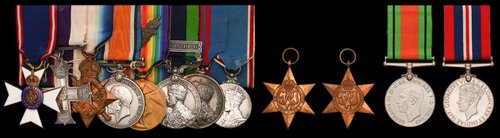
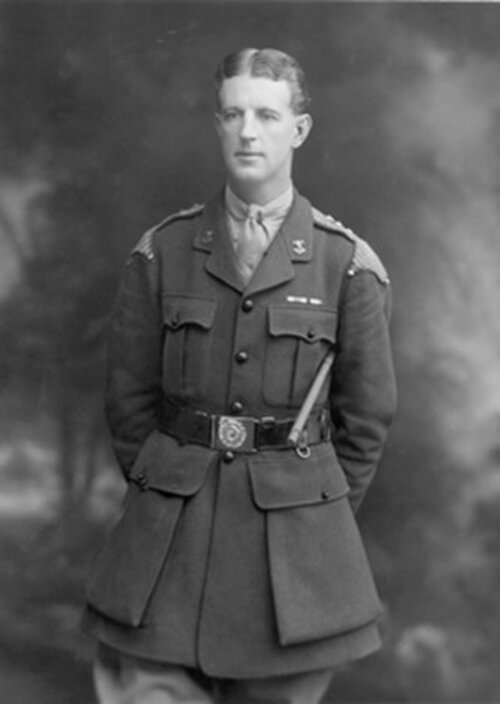
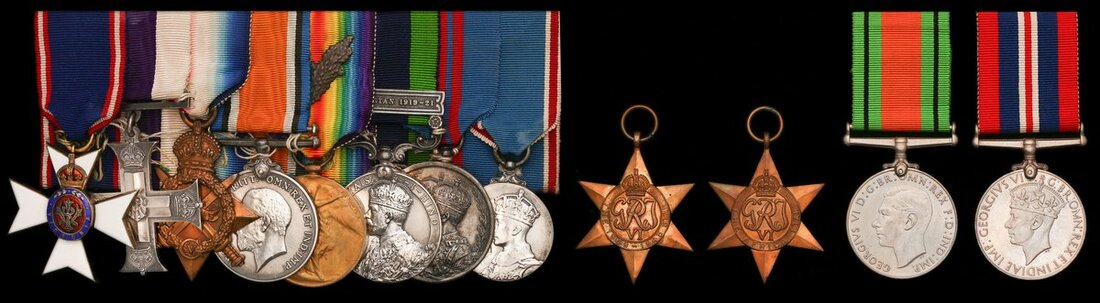
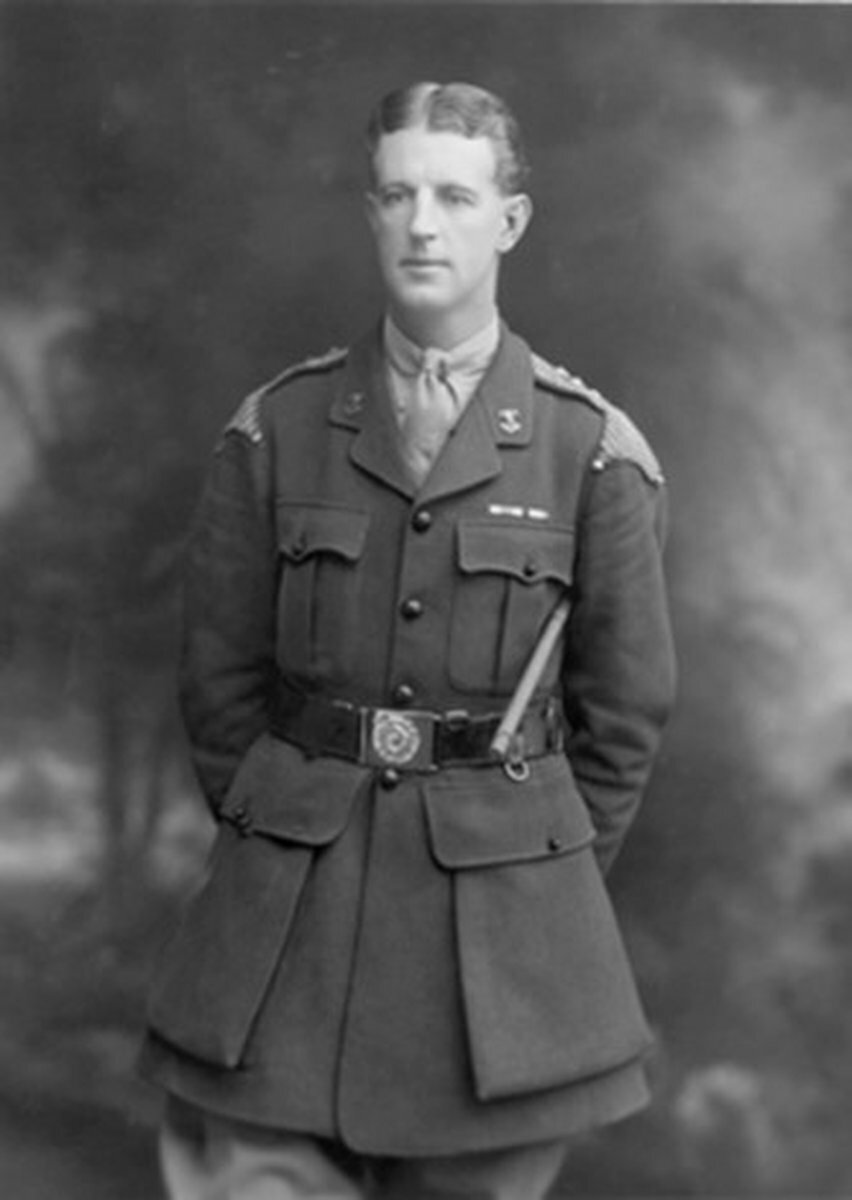
The notable inter-war M.V.O., Great War M.C. group of twelve awarded to Major E. D. 'Fruity' Metcalfe, Indian Army, 'a wild, wild Irishman'
Onetime an A.D.C. and Equerry to the Prince of Wales - afterwards King Edward VIII and Duke of Windsor - and a close witness to the torrid Wallis Simpson saga, in which he acted as Best Man at their wedding, and a close observer to the abdication, his friendship and loyalty were severely tested by the Windsors behaviour in France in 1939-40
The Royal Victorian Order, M.V.O., Fourth Class breast badge, silver-gilt and enamel, the reverse officially numbered '1143'; Military Cross, G.V.R., the reverse engraved, 'Captain E. D. Metcalfe 3rd Skinners Horse 25th Aug. 1917'; 1914-15 Star (Lt. E. D. Metcalfe, 3/Horse); British War and Victory Medals, with M.I.D. oak leaves (Capt. E. D. Metcalfe), the V.M. with officially re-impressed naming as common to the Indian Army; India General Service 1908-35, 1 clasp, Waziristan 1919-21 (Capt. E. D. Metcalfe, 1 Lcrs.); Delhi Durbar 1911; Coronation 1937; 1939-45 Star; Africa Star; Defence and War Medals 1939-45, very fine, the earlier awards mounted court-style as worn and the Second World War medals in their O.H.M.S. card forwarding box addressed to 'F./O. E. D. Metcalfe, M.V.O. M.C., Little Compton Manor, Moreton-in-Marsh, Glos.' (12)
M.C. London Gazette 25 August 1917.
M.V.O. London Gazette 11 July 1922.
Edward Dudley Metcalfe was born in Ireland on 16 January 1887 and was educated privately and at Trinity College, Dublin.
Commissioned in the Auxiliary Forces in May 1907, he transferred to the Unattached List of Indian Army in the following year and, after a short period of attachment to the Connaught Rangers in India, joined 3rd Skinner's Horse. He was subsequently present at the Delhi Durbar in 1911, attended the Cavalry School at Saugor and was appointed Adjutant of the Governor's Body Guard, Bombay.
Mobilised with his regiment on the outbreak of war, Metcalfe arrived in France towards the end of 1914 and was appointed Temporary Captain in September 1915. Ordered back to India in the summer of 1916, and keen to see further action, he volunteered for service in Mesopotamia, where he was attached to the 7th Meerut Cavalry. And it was in that capacity that he was awarded the M.C. and mentioned in despatches (London Gazette 15 August 1917, refers). Latterly attached to the Signals Service, and seconded to the 27th Light Cavalry, he was also present in the Waziristan operations.
Royal service - Royal scandal
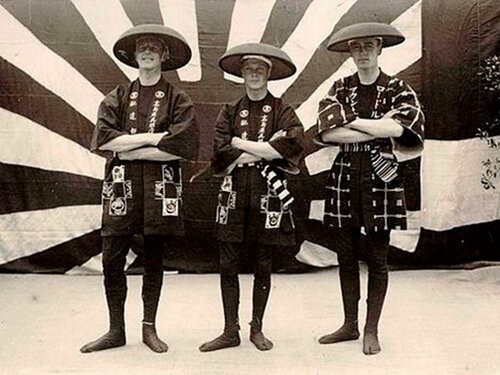
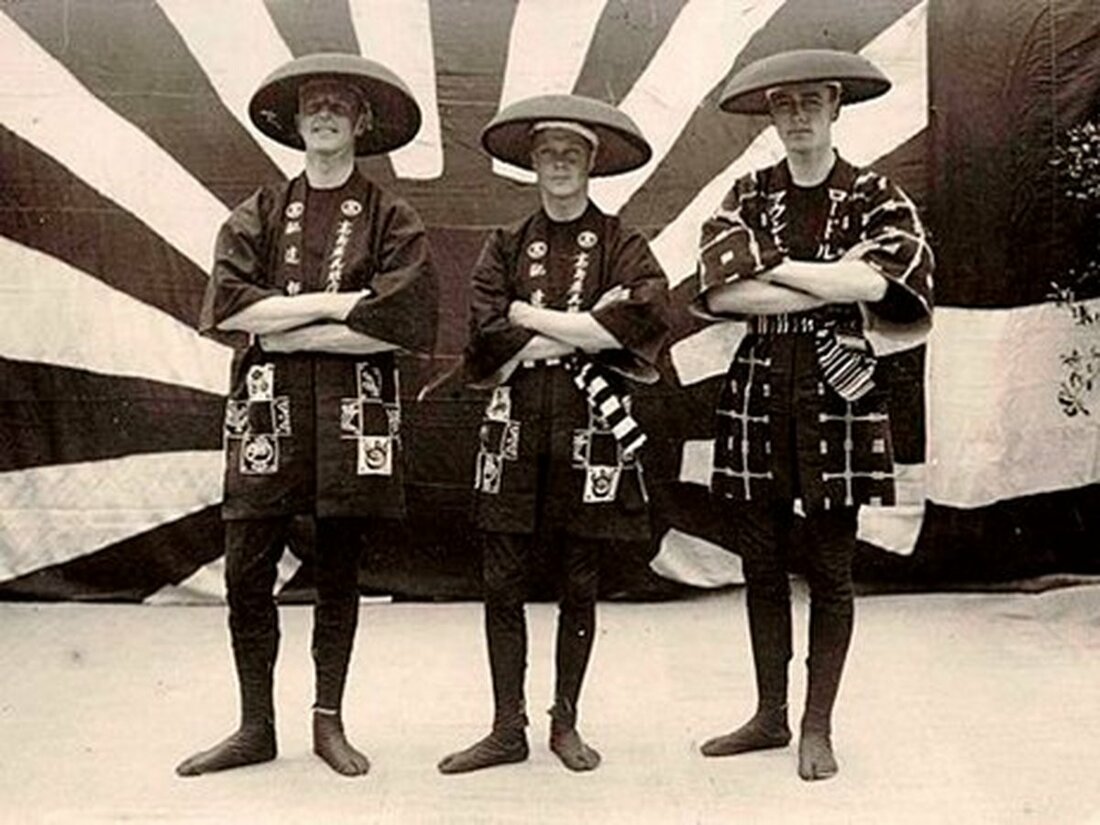
By 1921, Metcalfe was serving in the State Forces of Indore and it was in that capacity that he first met the future Edward VIII when, as Prince of Wales, he was touring India. The latter was duly impressed and appointed Metcalfe an A.D.C. for his forthcoming visit to Japan, a successful trip for which he was appointed M.V.O.
Advanced to Major in August 1922, Metcalfe's final appointment in the Indian Army was as an A.D.C. to the Commander-in-Chief in India.
Of his subsequent career as a member of the Prince's staff, much had been written, not least in Philip Ziegler's official biography, King Edward VIII, the whole embracing the torrid Wallis Simpson affair and the abdication. And throughout that period the Prince deemed Metcalfe a 'marvellous friend' and resented parental and royal household attempts to separate them.
Such interference stemmed from early reports of Metcalfe being a bad influence, although he could hardly have prevented the Prince's less acceptable habits. More serious, however, was his encouragement of Edward's participation in point-to-points, in which he took too many risks and was regularly injured. The King let his displeasure be known but the Prince got his way, for Metcalfe was in fact officially employed by the household on further royal tours, among them a much-publicised trip to Canada and the U.S.A. in the mid-20s.
Metcalfe - 'with his checks and brogue' - certainly proved to be popular travelling companion, but certain courtiers deemed him a bit wayward. One of them, Admiral Sir Lionel Halsey, rated him 'an excellent fellow, always cheery and full of fun but far, far too weak and hopelessly irresponsible.' The Admiral added, 'He is a wild, wild Irishman and no one knows anything about his family.'
And evidence of Metcalfe's 'wild' side emerged in the U.S.A. trip, when he carelessly left his wallet behind in the flat of a New York prostitute. It contained several letters from the Prince. 'Damned old fool,' observed the courtier Tommy Lascelles, 'but it is impossible to be really angry with him, and tho the incident might do the Prince very serious harm, we have all rocked with laughter over it.' Luckily, no such damage occurred, but Metcalfe was laid off when the Prince undertook a subsequent tour to South Africa.
But if there was an official parting of the ways, Metcalfe remained a firm friend, so much so that he was a significant witness to the Wallis Simpson saga and Edward's abdication. In January 1937, in a six-month period of separation from Wallis Simpson after the abdication, the Prince asked Metcalfe to join him at Schloss Enzesfeld in Austria, and to bring his wife. But Wallis Simpson, who was in France and spent many hours berating the Prince on the telephone, objected to Metcalfe's wife being present. 'I feel so sorry for him, he never seems able to do what she considers the right thing,' observed Metcalfe. A week later he used rather stronger language, 'God, that woman's a b---h, she'll play hell with him before long.'
Life at the Schloss evolved around a mixture of skiing, golf and trips to Vienna by day, and poker and conversations as late as 4 a.m. by night. The now retitled Duke of Windsor had a habit of dropping by Metcalfe's room to reminisce over old times and to enthuse about Wallis Simpson: 'It's very pathetic', wrote to Metcalfe to his wife, 'Never have I seen a man more madly in love.' The Duke also had a habit of telephoning his brother, King George VI, much to the annoyance of the latter. In the end the King told him the calls had to stop, Metcalfe noting that 'It was pathetic to see H.R.H.'s face. He couldn't believe it! He's been so used to having everything done as he wishes.'
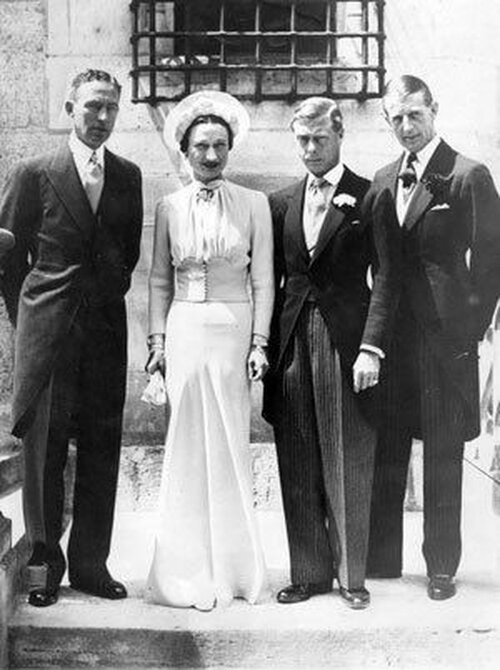
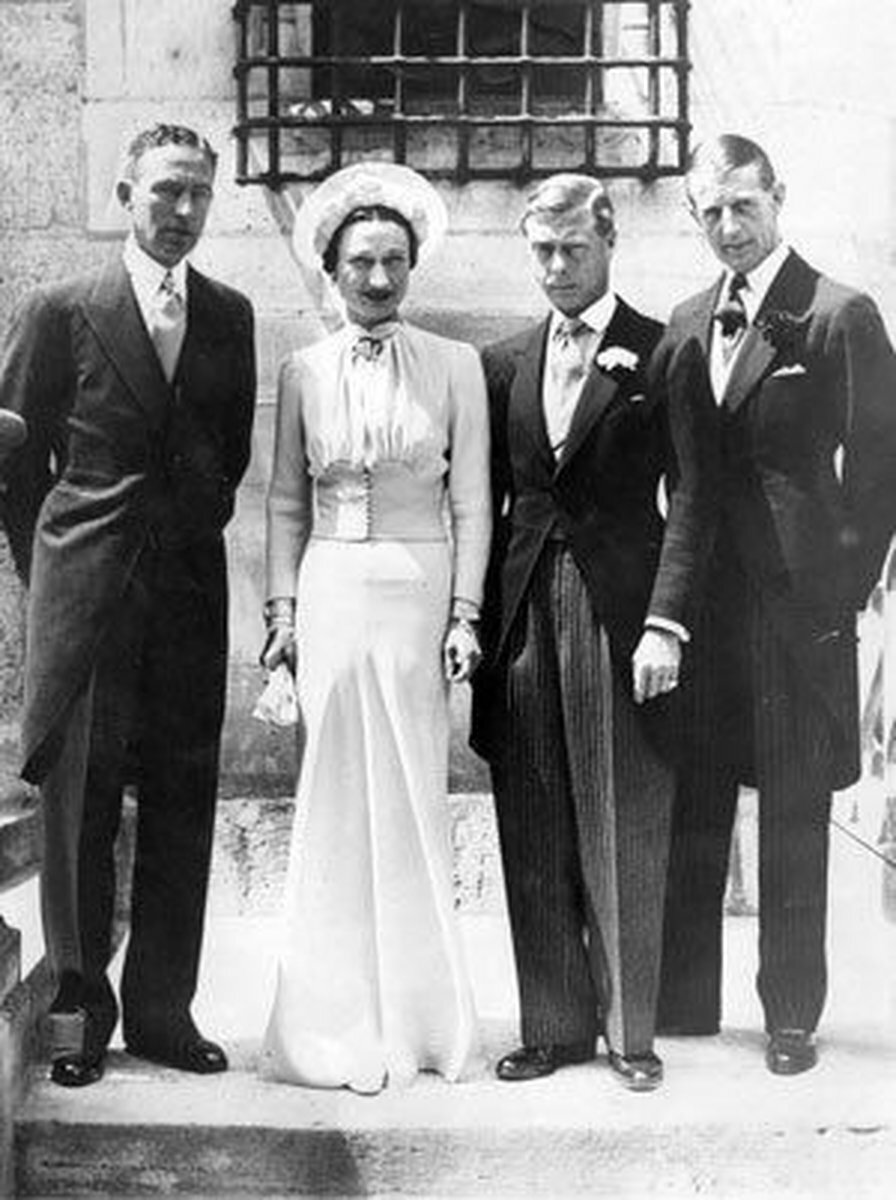
Meanwhile, arrangements were being made for the marriage of the Duke and Duchess at the Chateau de Cande in France in June 1937. Metcalfe acted as Best Man but guests were thin on the ground, not a few having declined their invitations. Outside the chateau grounds, however, around 200 journalists gathered for the occasion.
Another event in 1937 attracted the press for entirely different reasons, namely the Windsors' visit to Germany, where they met Hitler at the Berghof, his Berchtesgaden retreat. Metcalfe was in no way connected to that unfortunate episode, but, through marriage, he had his own skeletons in the cupboard, for his wife, Lady Alexandra 'Baba' Curzon - the third daughter of the 1st Marquess Curzon of Kedleston and late Viceroy of India - was a sister-in-law of Oswald Mosley. In consequence, Metcalfe attended fascist gatherings in the January Club and, in May 1934, a dinner at the Savoy Hotel for the British Fascist Blackshirts, of which he was a member. Apparently 'dressed to the teeth' on the latter occasion, Metcalfe was photographed by the society magazine The Tatler.
Having settled in France in the period leading up to the outbreak of war - the Windsors had homes in Paris and in Antibes - it was inevitable they would need to be evacuated in the event of hostilities. And when that moment came in September 1939, the British government offered to fly them to the U.K., where it was proposed they stay at the Metcalfe's home in Sussex until further arrangements could be made. Much to Metcalfe's annoyance, they rudely declined the offer, because they felt they should be housed in a royal residence. Here, then, the moment his friendship hit a crisis point, for he berated them in no uncertain terms:
'You have just behaved as two spoiled children. You only think of yourselves. You don't realize that there is at this moment a war going on, that women and children are being bombed and killed while you talk of your PRIDE.'
In the event, and owing to the Duchess's fear of flying, Louis Mountbatten in the destroyer H.M.S. Kelly collected them from Cherbourg. And they did indeed spend time at the Metcalfe's residences in Sussex and London.
Next arose the question of how to employ the Duke, the King and the government opting for his appointment to a Military Mission in Vincennes in France under Major-General Sir Richard 'the Wombat' Howard-Vyse. Metcalfe accompanied the Duke as his Equerry, with long days on the road inspecting the French defences in the period October 1939 and February 1940.
But with the advent of the Blitzkrieg in May, the Duke opted to dash south to Biarritz and join the Duchess, apparently with the blessing of Howard-Vyse, who suggested he inspect the Franch lines on the Italian border. Be that as it may, he didn't bother informing Metcalfe, who was left behind in Paris. The latter was furious and, in a letter to his wife, said, 'Re my late master, he has run like two rabbits.' In fact, the Duke had stripped the Paris house of all valuables and taken the cars, leaving behind a highly irate Metcalfe:
'After twenty years I am through - utterly I despise him … He deserted his job in 1936; well, he's deserted his country now, at a time when every office boy and cripple is trying to do what he can. It is the end.'
The Duke had also caused him further angst by ordering him deliver his dogs to his villa in the south:
'I was a soldier! When I resigned from my regiment in India to serve the Prince, it wasn't to be a valet to his God-damned dogs!'
Accordingly, on 3 June 1940, he wrote to the Duke to explain he was quitting his post and returning to England.
Subsequently commissioned in the Administrative and Special Duties Branch of the Royal Air Force in August 1940, he served in Cairo in the period September 1941 to September 1942, but he resigned his commission on returning to the U.K.
Retiring to Little Compton Manor near Moreton-in-Marsh, Gloucestershire, Metcalfe entertained friends and dignitaries, including the American Major-General J. C. H. Lee, who was responsible for the build-up of supplies in readiness for the Normandy landings.
It also appears that he renewed his friendship with the Duke after the war. Certainly, his ex-boss attended his funeral in London in November 1957, when he described him as 'one of my oldest and closest friends. We shall miss him a great deal.'
Note:
The 'Metcalfe Photograph Album' is held in the Royal Collection, and contains images taken by him and others of the Duke of Windsor, when Prince of Wales and King Edward VIII (1922-39), including the Duke in India in 1921-22, playing polo, hunting, on board H.M.S. Renown; his visit to Japan in the spring of 1922 and his marriage to Wallis Simpson in 1937 at the Château de Cande in France.
For his miniature dress medals, please see Lot 283.
Subject to 20% VAT on Buyer’s Premium. For more information please view Terms and Conditions for Buyers.
Sold for
£3,000
Starting price
£2200
Watch, listen and bid as if you were in the room. Now available for auctions worldwide.
Click here to bid live
An exclusive and confidential service for the discerning collector or vendor.
View the Gallery
Download every Spink catalogue on your iPad, iPod or iPhone using free Spink app.
Download From iTunes© 2026 Spink & Son. All rights reserved.