
Auction: 26001 - Orders, Decorations and Medals
Lot: 231
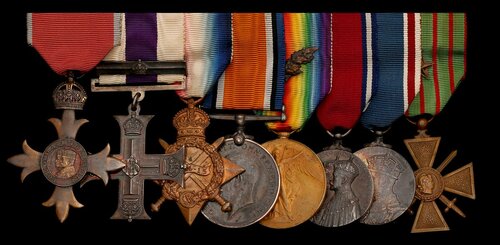
The well-documented O.B.E., M.C. and Bar group of eight awarded to Major S. B. Keast, Royal Engineers, Director of Public Works at Accra, Gold Coast, a remarkable man who served in both World Wars and whose magnitude of public work must not be under appreciated
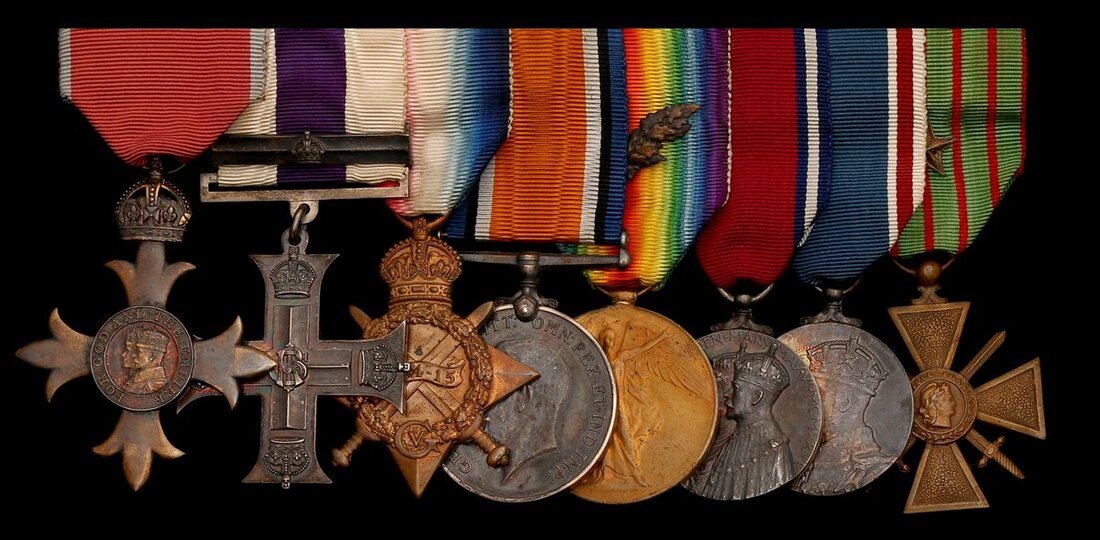
The Most Excellent Order of the British Empire, Civil Division, Officer's (O.B.E.) breast Badge, 2nd Type, silver-gilt; Military Cross, G.V.R., with Second Award Bar, 'Capt: S. Banks Keast. R.E. June 1917.' engraved to reverse, 'Aug.-Sept. 1918' engraved to reverse of Second Award Bar; 1914-15 Star (Lieut. S. B. Keast. Attd. W.A.F.F.); British War and Victory Medals, with M.I.D. oak leaves (Major S. B. Keast.); Jubilee 1935; Coronation 1937; France, Republic, Croix de Guerre, with bronze Star on riband, reverse dated '1914-1918', mounted for wear, toning, very fine (8)
O.B.E. London Gazette 1 February 1937.
M.C. London Gazette 14 September 1917:
'For conspicuous gallantry and devotion to duty on numerous occasions whilst engaged in siting and constructing defences. His determination and great powers of organisation in dealing with working parties at night, under heavy fire and in exposed positions, were entirely responsible for the successful and rapid completion of the trenches, and he showed untiring energy and great fearlessness when constructing trenches within very short distance of the enemy's line.'
Second Award Bar to M.C. London Gazette 2 December 1918:
'For conspicuous gallantry and resource during several days' operations. He repeatedly carried out reconnaissances under shell and machine-gun fire, on two occasions in front of the advanced line of outposts. He obtained valuable information, which enabled his unit rapidly to restore communications which had been destroyed by the enemy's fire.'
French Croix de Guerre, London Gazette 19 June 1919.
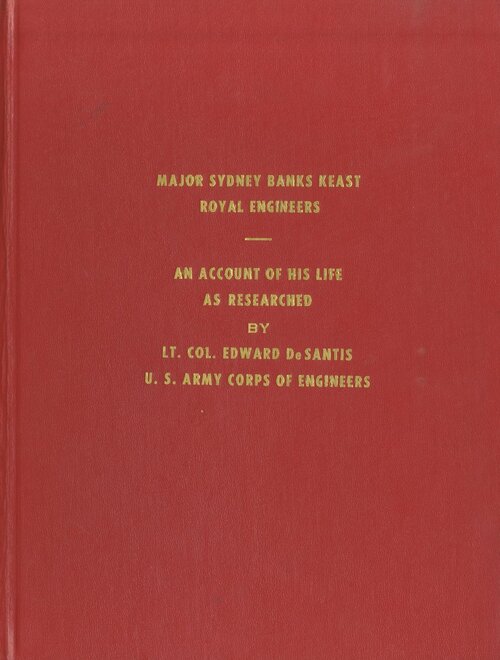
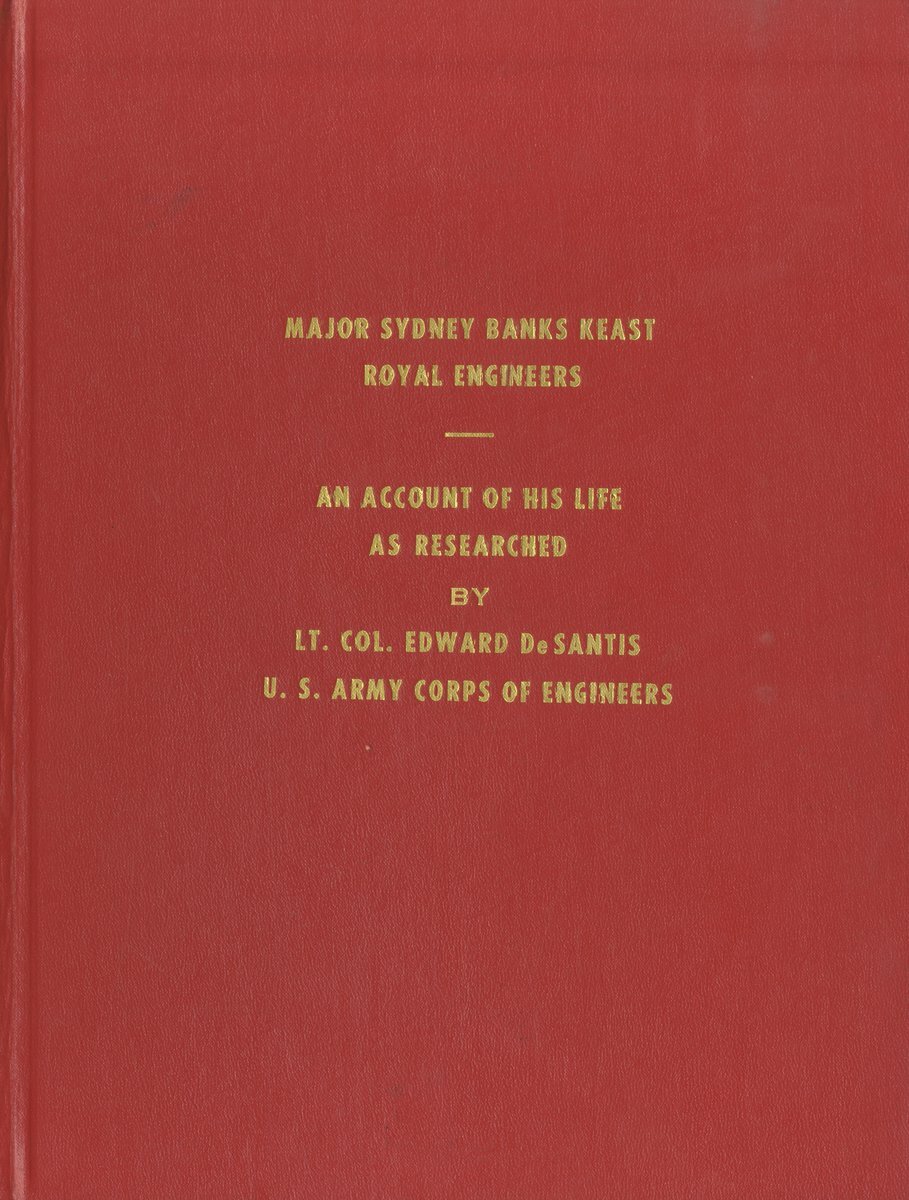
'This is not the book of a well known hero. Rather it is the story of a relatively unknown British officer who served his country in two major wars as an officer in the Royal Engineers and between the wars as a colonial civil servant. He represented all that we normally think of when we think of the British officer born in the Victorian era, raised in the Edwardian era, and living through the troubled times of King George V and King George VI.
Sydney Banks Keast was many things during his life; soldier, engineer, explorer, hunter, rifleman, and polo player. He was in fact an extraordinary individual whose life is well worth recording.' (Major Sydney Banks Keast Royal Engineers An Account of his Life by Lt. Col. E. DeSantis included within the lot refers, p. vi).
Sydney Banks Keast was born on 5 January 1884 in Lambeth, Surrey, the second child of Walter Keast, a master bootmaker, and Emma Mary Keast. In 1897, aged 13, he attended Geddington as a boarder and later attended City of London School in 1901. He went to King's College, London and Technical College where he took evening classes, graduating in 1906 as a Civil Engineer and immediately sought employment as an Assistant Engineer with the Sudan Civil Service.
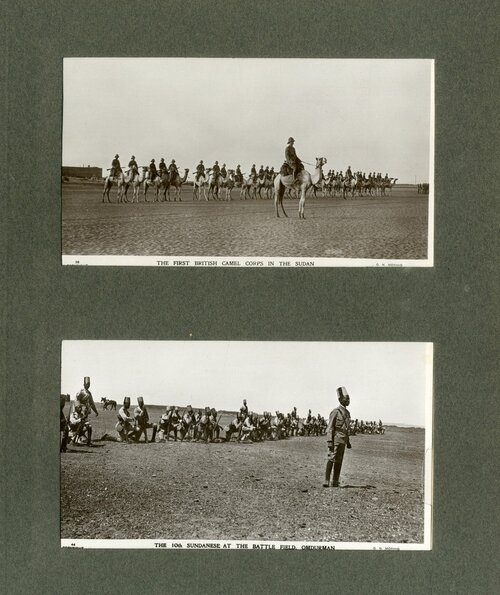
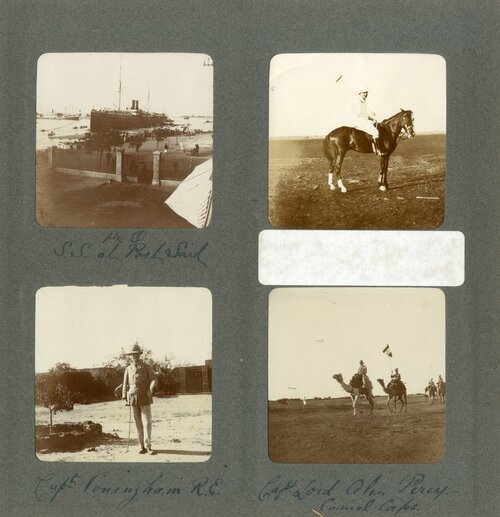
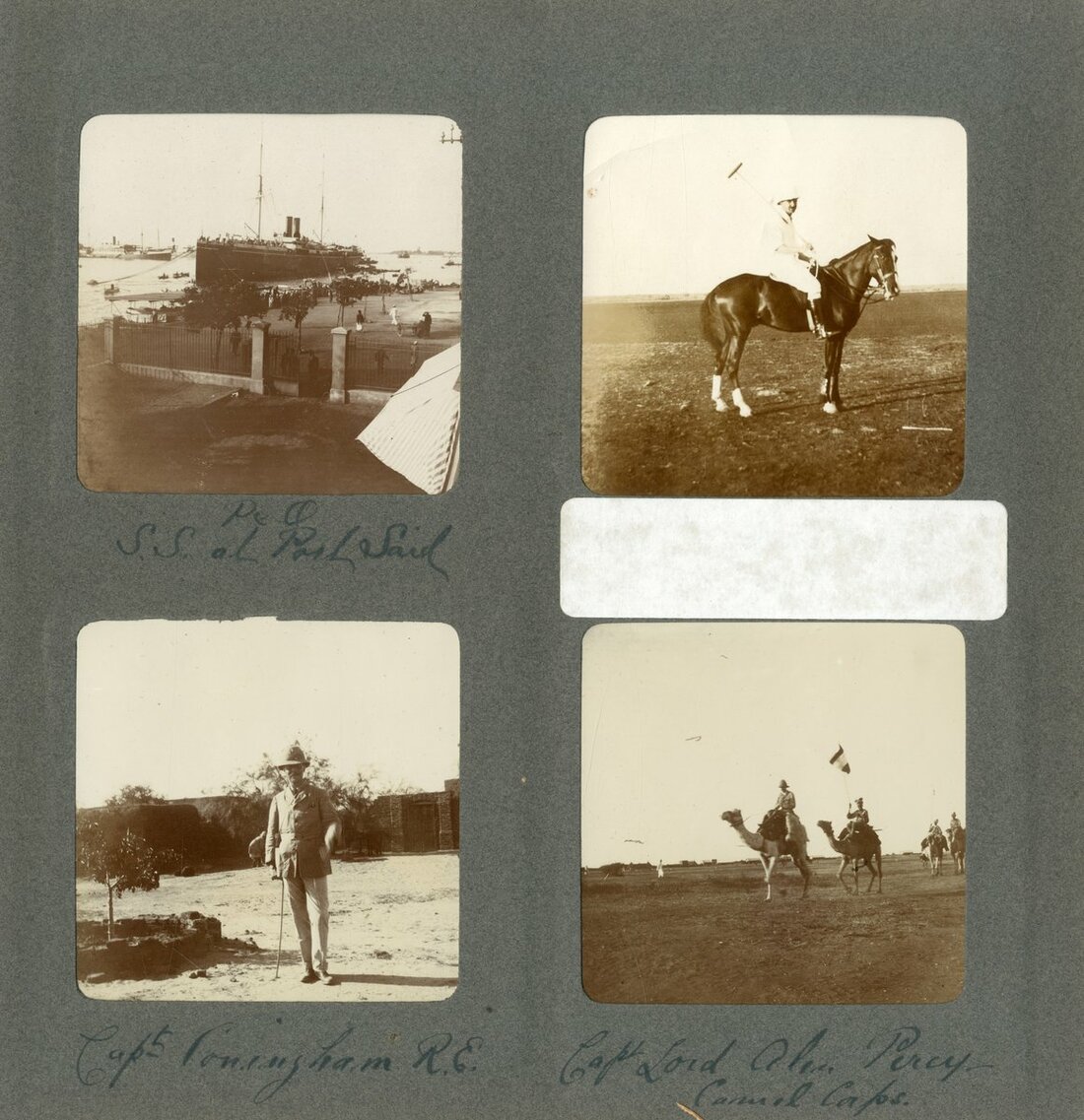
The harsh landscape of Sudan is recorded well in his photo albums included in the lot, particularly the aridity and desolation of Gordon, Steevens and Grogan. Keast was then posted to El Obeid, the historic capital of Kordofan. His duties were many and varied, and with his House Boy, Hussan, to aid him, oversaw the procurement of lumber at Kosti, the procurement of camels at Ed Dueim, the operation of oil drills in El Obeid and the water well drilling and water supply for El Obeid to name but a few duties which are well documented in the photo albums. It was also at this time that Keast began a life-long love affair with polo, rifle shooting and hunting.
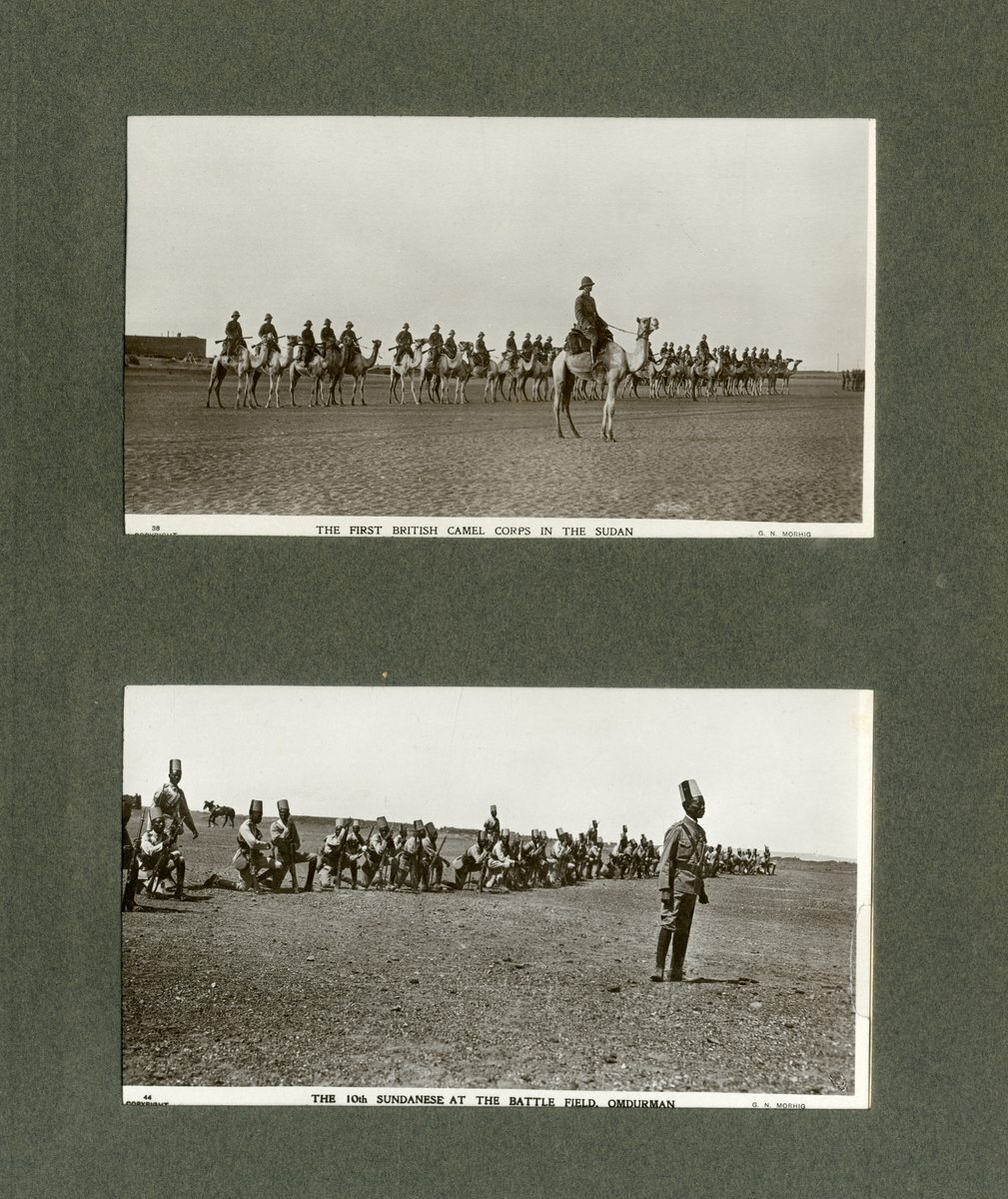
In 1909, Keast attended a review of the Camel Corps in El Obeid. His close friend Captain B. H. S. Romilly, D.S.O. of the Scots Guards was O.C. of 2 Company and is the main subject in many of Keast's photos. In September, Keast made the long journey, some 660 miles, to Omdurman, Khartoum and Port Sudan. His camera recorded the sights of the journey, including native boats, timber rafts and steamers on the Nile and the tomb of Said el Mekki. In October 1910 he was off on another trip with J. A. Gillan, Inspector of the El Obeid District and photographs from the trip show the men together. This year also brought a series of splendid celebrations at El Obeid in honour of the coronation of King George V which took the form of a series of sporting events such as camel wrestling, tug of war and quarterstaff. Other celebrations took place in February to celebrate the opening of the Kosti-El Obeid railway line by Lord Kitchener of Khartoum. The inspection of the Camel Corps is covered in great detail in Keast's photo albums.
In the spring of 1913, Keast made a formal application to the Colonial Office for transfer and on the 20 June he signed a contract for engagement on the Gold Coast as Sanitary Engineer at Accra. His efficient performance there was recognised and during his first two years he was elected a Member of the Royal Sanitary Institute in January 1915. But five months earlier the Great War had begun and while it had commenced in Europe, it was now spreading to the rest of the world. Keast's interest in military affairs in the Sudan had instilled in him the desire to serve and as the war spread to West Africa he now had his chance. His education and experience enabled him to secure an appointment as a Lieutenant in the Royal Engineers, working alongside the West African Frontier Force on 14 May 1915.
Lieutenant Keast initially served in the Cameroons, firstly in Duala, the major port at the head of the Cameroon Estuary. It was here that he was assigned to the 36th (Sierra Leone) Field Company, Royal Engineers. Keast's column advanced from Edea to Yaunde and captured Wumbiagas on the way in October 1915. The remaining march was around 65 miles - the first 40 lay through dense forest consisting of high trees and impenetrable undergrowth. By January 1916, the column had finally occupied Yaunde Fort without opposition and in February the Germans surrendered to General Dobell at Mora thus ending the campaign. The following month the Allied Forces began their departure from the Cameroons and Keast was granted full pay leave on 23 March 1916. He returned to the Gold Coast where he decided to continue his military service rather than return to civil duties. On the 16 April 1916, he asked permission from the Colonial Office to allow him to leave the civil service and seek a permanent appointment in the Army. His request was approved and he was set sail for England where he was appointed Temporary/Acting Lieutenant in the Royal Engineers and later deployed to the European Theatre.
In September 1916, Keast joined the 130th Field Company with the 25th Division. Shortly after his arrival, he was promoted Acting Captain and became Second-in-Command of the company. At this time, the bloody battle of the Somme had been raging for two months, and soon Keast was in the thick of it. The 25th Division took a very active part in the campaign, particularly in the advance to follow up the German withdrawal from the Hingenburg Line from February - April 1917. Lieutenant Keast's distinguished services in the field were recognised by a mention in Sir Douglas Haig's despatch on 9 April 1917.
From June 1917, the division took part in the Battle of Messines and Keast became a casualty on 20 July 1917 when he was gassed in the vicinity of Ypres. He recovered promptly and on the 3 August, was part of the action that reoccupied St Julien and on the 10th August, helped take complete possession of Westhoek. It was here, for his conspicuous gallantry and prior to his being wounded, that Keast was awarded the Military Cross and a mention in the despatches of the 25th Division.
Keast's wounds were of such a serious nature that he had to be evacuated to England for treatment. However painful a time this certainly was for him, this was most likely negated by the fact that Brancepeth Castle was where he met his future wife, nurse and member of the V.A.D., Ms Una Tomlin.
By 19 April, Keast had fully recovered and had joined his new unit on the West Front, 510th (London) Field Company which was with the 29th Division. Keast joined the unit as the Officer Commanding and was promoted to Acting Major on the same day. The unit saw action at Hooge, Gheluvelt and Kruiseke and after a short rest took part in the advance at Lys and St Louis from 6 October. Major Keast was mentioned in the Records of the 29th Division for his actions during this period. By November, the division again went into the front line at Scheldt and advanced to the Armistice Line. It was here that Major Keast was awarded a bar to his Military Cross for "gallantry and devotion to duty in the field".
On 8 December 1918, the French Government awarded Keast the Croix de Guerre. The division continued its advance into Germany and crossed the Rhine River at the Hohenzollern Bridge on 13 December. He received one final mention in the Records of the 29th Division for the period and finally on 26 February 1919, Major Keast was replaced as O.C. 510th Field Company and departed for England and demobilisation. He relinquished his commission and his final honour for the Great War came in the form of a Mention in Despatches of Sir Douglas Haig, dated 16 March 1919.
Upon his return to England, Keast married Una Tomlin Hunter on 16 April 1919 and the following month was personally decorated by King George V. He then was recontracted as Superintending Sanitary Engineer on the Gold Coast at Accra where the pair lived for the proceeding 18 years. Keast's work on the Gold Coast was not unlike that which he had done in Sudan except this time with a level of greater responsibility. He focused on projects such as sanitation and health problems and assisted other R.E. officers with road development programmes. In January 1925, Keast was recommended for and granted a fellowship in the Royal Geographical Society. The following year in October 1926, with over seven years of seniority with the Gold Coast P.W.D., Keast was appointed Assistant Director of Public Works and two years later, he rose to Deputy Director of Public Works in May 1928. With this promotion came the requirement to travel to outlying districts in the Colony to visit P.W.D. projects. Keast and Una also took the opportunity to socialise with old friends as they visited the Pomoroys in Salaga on the River Daka, Tamale in the Northern Territories and the upper regions of the Northern Territories along the border of the Ivory Coast. Here they visited local native chiefs and mosques. The year 1929 proved a busy one for Keast on the Gold Coast. It was a good year for polo with the Accra team competing against Tamale. Keast was then appointed Acting Director of Public Works in October and joined the Gold Coast Defence Force as Second-in-Command only to be promoted assume command later in the year. In the summer, Keast went to Bisley Camp where he shot in the famous Imperial Challenge Cup, the national full-bore shooting competition of the year, hosted by the National Rifle Association. He was a remarkable marksman and took part in the King's Prize, two competitions Keast regularly returned to England for in the summer throughout the 1930s.
By 1935, Keast had been promoted to Lieutenant Colonel and again, he excelled in the Imperial, with the Gold Coast team winning the 'Morning Post' (Junior Kolapore) and Keast himself top scoring 147/150. He additionally won the Fletcher Challenge Trophy and the Public Schools Veterans Challenge Trophy. He further won the N.R.A. Silver Jubilee Medal (of which only 57 were struck) and was personally congratulated via telegram from the Prince of Wales. In 1936, Keast was in charge of organising the coronation celebrations in Accra for King George VI and participated in the West African Polo Cup against Nigeria.
By 1936, his career as a Colonial Civil Servant came to a close. He completed his final tour of duty in October and he received a letter from G.C. du Boulay, detailing the following: 'The Colony's excellent road system and its many fine public buildings stand out among other achievements of the Public Works Department. Your services to the Local Forces, to the Rifle Association and, not least, to sport add further distinction to a record of which you may be justly proud.' The magnitude of Keast's work on the Gold Coast appears to have been quite extensive, with the P.W.D. becoming involved in such projects as urban and rural roads, water purification and sewage treatment plants, highway and railway bridges, dams, reservoirs, water storage facilities and building construction. He retired to Somerset, where horses and riding kept him busy. But the life of leisure was very short lived as the clouds of war gathered over Europe in 1939.
With his country at war again, Keast offered his services. On the 29 March 1940, he was granted a Regular Army Emergency Commission as a Lieutenant in the Royal Engineers. The following day he was granted the acting rank of Captain and appointed Assistant Commander Royal Engineers, Warwick. On 2nd September 1941, he was granted the acting rank of Major and on 2 December he was granted the temporary rank of Major. Despite the apparent excelling through the ranks, his most painful blow came on the 4 December 1942 when his beloved wife Una died at the age of 56. This was a defeat from which he never quite recovered. He continued his military duties attached to the A.C.R.E., his name last appearing in the Army lists in July 1944, and on 23 August he resigned his commission. For his services, he was further entitled to Defence and War Medals, neither of which he had mounted with the rest of his group.
Keast lived out the remainder of his retirement in South Petherton, still continuing to ride into his old age. He died on the 20 March 1964 and was laid to rest at Taunton where he and Una had spent so many happy days together.
Archive includes:
i)
An extraordinary bound biography researched by Edward DeSantis, meticulously researched and beautifully written.
ii)
Three photo albums extensively documenting key parts of Keast's life (as referenced above) in the 1920s.
iii)
29th Division Mentions mounted on cardboard and portrait of Keasts.
iv)
Two copies of the N.R.A. Journal and shooting news dated August and September 1935 respectively, with a Bisley Meeting 1935 Prize list book, along with his Morning post Junior-Kolapore Cup Bisley 1935 Badge.
v)
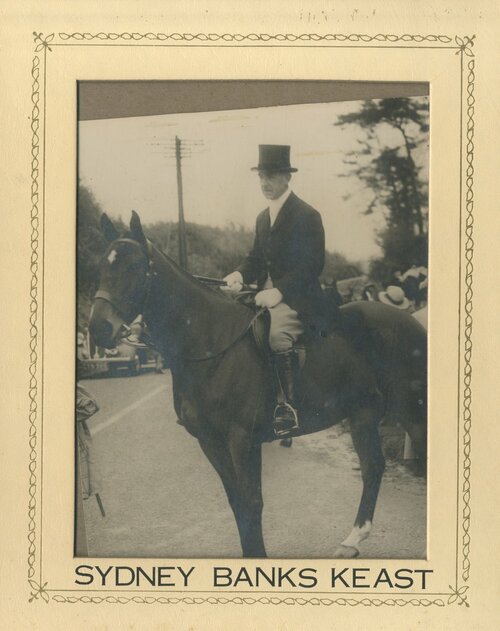
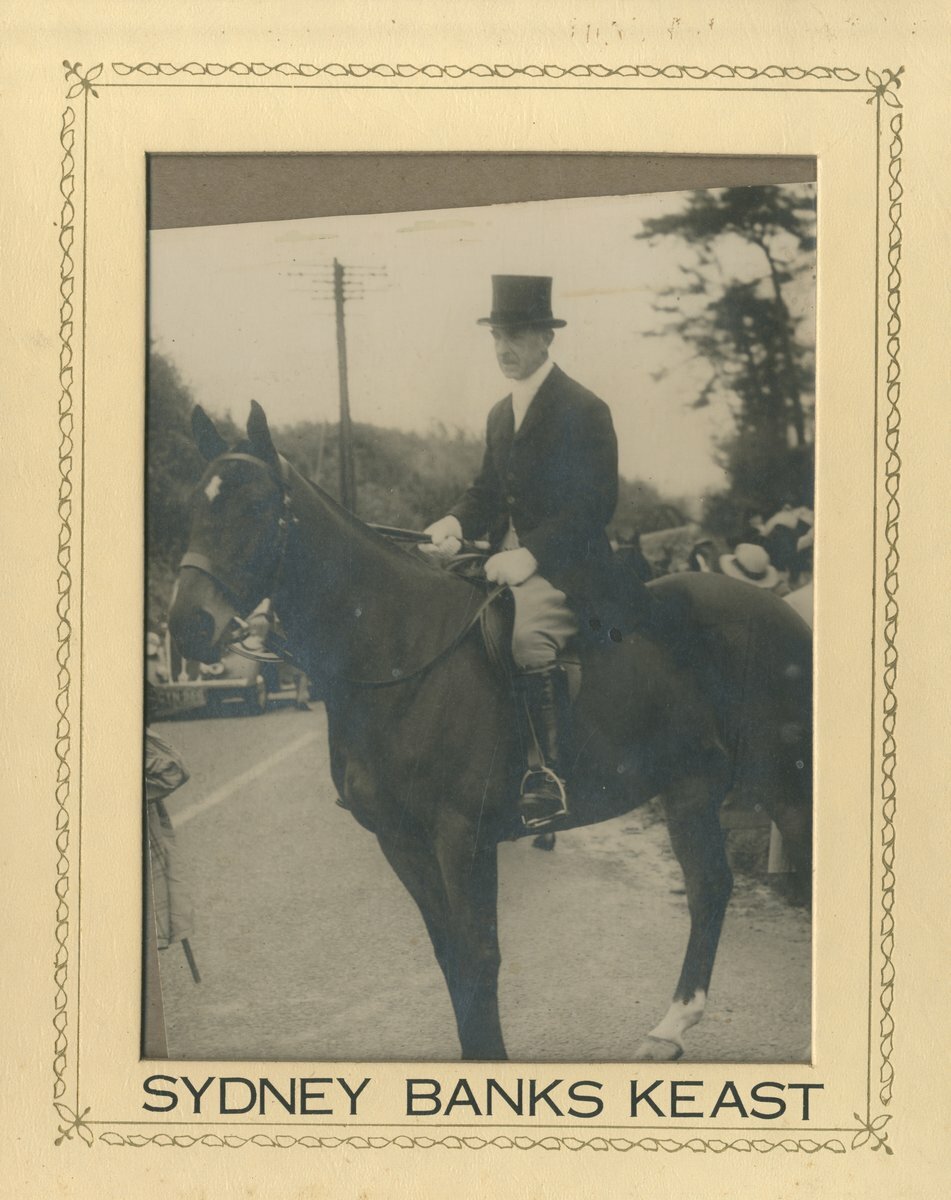
A framed portrait of Sydney Banks Keast on horseback.
vi)
Cardboard mounted Mentioned in Dispatches, Military Cross London Gazette entry and obituary.
vii)
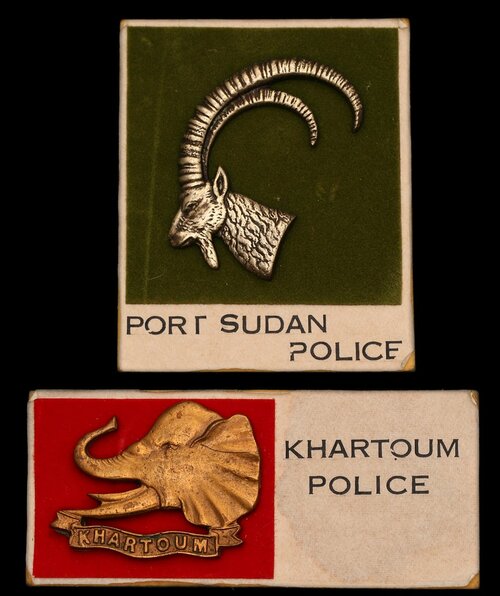
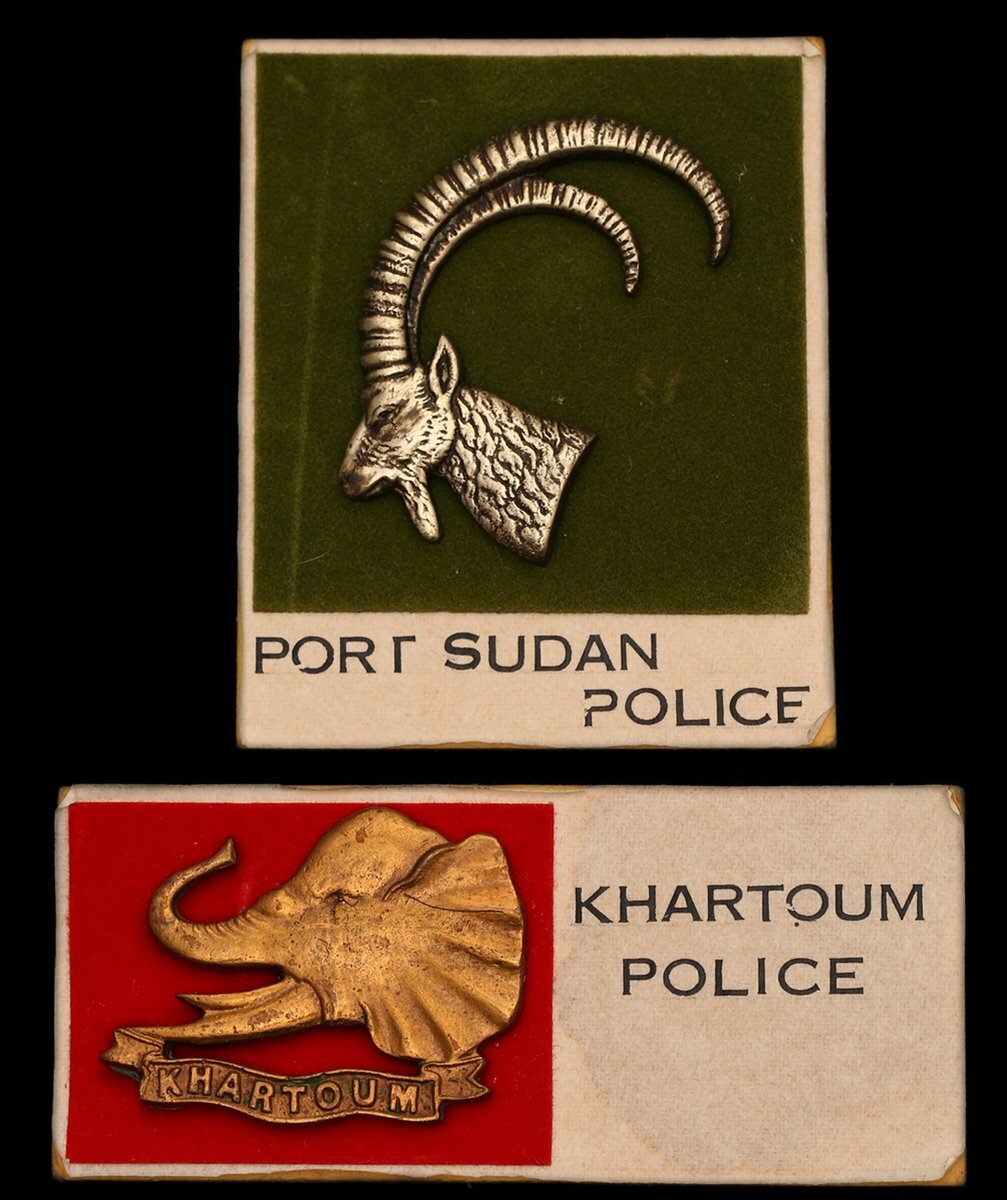
A Gold Coast Colony Civil Service List Book and the John Carpenter Club Member's List Book of 1962, with Khartoum Police and Port Sudan Police Badges.
Subject to 20% VAT on Buyer’s Premium. For more information please view Terms and Conditions for Buyers.
Sold for
£1,600
Starting price
£1600
Watch, listen and bid as if you were in the room. Now available for auctions worldwide.
Click here to bid live
An exclusive and confidential service for the discerning collector or vendor.
View the Gallery
Download every Spink catalogue on your iPad, iPod or iPhone using free Spink app.
Download From iTunes© 2026 Spink & Son. All rights reserved.