
Auction: 26001 - Orders, Decorations and Medals
Lot: 213
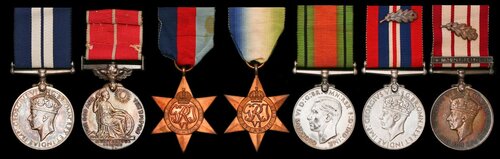
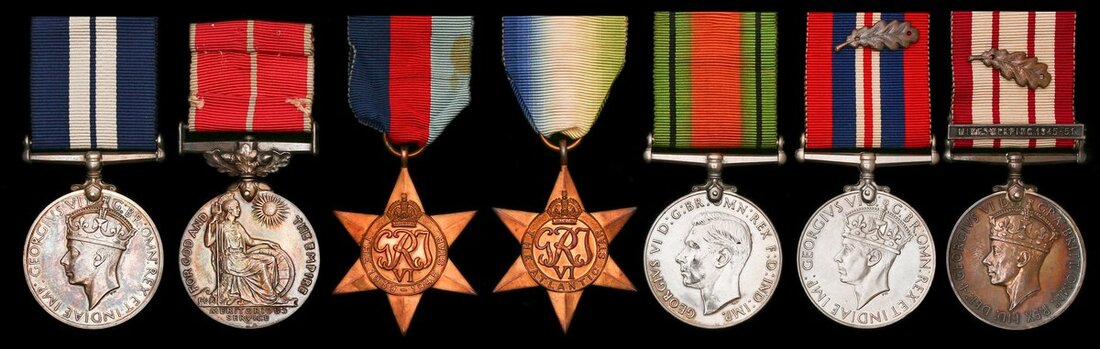
The outstanding Second World War mine disposal immediate D.S.M. and B.E.M. group of seven awarded to Able Seaman J. H. 'Jack' Martin, Royal Navy, a long-served diving specialist in Vernon's Rendering Mines Safe Section
Working alongside the likes of Lieutenant-Commander J. S. Mould, G.C., G.M., and Lieutenant-Commander L. V. Goldsworthy G.C., D.S.C., G.M., in their extensive 'delousing' operations, his heroic part in clearing the Channel and liberated French and Dutch ports of highly dangerous devices was further recognised by a brace of 'mentions'
Operating under fire was very much the order of the day, his boss Goldsworthy reporting that some of his divers suffered 'loosened teeth' in consequence of 'considerable shock' caused by detonating mines and shells
Whether Martin was among them remains unknown, but he certainly had a close call in Cherbourg Harbour in August 1944, when the detonator of a mine he was recovering from a sunken barge whirred into action - mercifully, in a rare case of German carelessness, the primer had been left in the 'safe' position
Distinguished Service Medal, G.VI.R. (A.B. J. H. Martin. B.E.M., P/JX. 147610), officially engraved naming, with its case of issue; British Empire Medal, Military Division, G.VI.R. (A.B. John H. Martin, P/JX 147610. R.N.), officially engraved naming; 1939-45 Star; Atlantic Star; Defence and War Medals 1939-45, with M.I.D. oak leaf; Naval General Service 1915-62, 1 clasp, Minesweeping 1945-51, with M.I.D. oak leaf (P/JX. 147610 J. H. Martin. D.S.M. B.E.M. A.B. R.N.), together with a bronze N.A.A.F.I. Medal, the reverse engraved, 'H.M.S. Hood 1 Mile Relay 1938 2nd', minor official correction to surname on this last, otherwise good very fine (8)
D.S.M. London Gazette 15 August 1944:
'For courage and undaunted devotion to duty.'
The original recommendation - for an immediate award - states:
'This rating displayed great courage and coolness in cutting a GM Mine mooring wire below the surface while working as a diver, in spite of strong spring tides with very little slack water.'
B.E.M. London Gazette 3 November 1942:
'For bravery and devotion to duty.'
The original recommendation - for an immediate award - states:
'This Able Seaman, during operations subsequent to 20 May 1942, showed great coolness and courage in diving to investigate and secure the first German sinker to be recovered.'
John Henry Martin was born in West Derby, Liverpool on 14 February 1920 and entered the Royal Navy as a Boy 2nd Class on leaving school in January 1936. His pre-war appointments included H.M.S. Hood, which he joined just before the Coronation Review at Spithead in the following year.
By the outbreak of hostilities, however, he was serving as an Able Seaman in the light cruiser Durban, in which he participated in convoy escort duties off the Cape, West Africa and in the Far East. Returning home to an appointment at the shore establishment Excellent in April 1940, Martin undertook a diver's course, prior to being posted to the torpedo and mining establishment Vernon in January 1941.
G.C. and B.E.M.: making safe the first magnetic-acoustic moored mine
Here, then, the commencement of his gallant career as a diver on mine disposal duties, in which capacity he worked closely alongside two of Australia's finest, Lieutenant-Commander J. S. Mould, G.C., G.M. and Lieutenant-Commander L. V. Goldsworthy, G.C., D.S.C., G.M.
Martin's sphere of operations concerned the Channel, his B.E.M. representing mine clearance work in the period November 1941 to July 1942. The announcement for Mould's G.C. was gazetted on the same date as his B.E.M., and both men received their awards at Buckingham Palace on 23 March 1943. General duties of a daring and dangerous nature aside, the awards stemmed from their gallant work in recovering and investigating 'the first German magnetic acoustic unit and moored magnetic mine'.
Subsequently, Mould began work with Professor Jack Haldane to develop a diving-suit with an independent air supply. Later that year, he and a fellow Australian, Lieutenant L. V. Goldsworthy, and Lieutenant-Commander J. L. Harries, Royal Canadian Navy, trained groups of men known as 'P' Parties in preparation for the invasion of Western Europe. The Parties were to be dispatched to newly captured harbours to clear them of booby traps, mines and other obstructions. Martin was among them.
D.S.M.: Cutting - and towing - the line
Meanwhile, as the Normandy landings approached, clearance work continued apace, Vernon having acquired a small flotilla of fishing vessels to assist operations. The most significant of these was the Esmeralda, as described by Goldsworthy in Touch and Go War:
'Esmerelda, once the pleasure yacht of the Coleman (mustard) family was fitted with every type of sweep for the task. The 105-ton, 105-foot vessel was acquired by the Admiralty after Dunkirk and her original armament was a hand-cranked Gatling Signal gun which had once belonged to the Shah of Persia. With it came 13 rounds of ammunition. As the war progressed, she boasted a Bofors, an Oerlikon, two Brownings, two illicit Lewis and sundry hand-guns.
With the approach of D-Day the section entered another phase of the many-faceted mine recovery business. Esmeralda pinged her way into mid-Channel seeking small snag line mines which were taking their toll of towed folboats and stripped M.T.B.s engaged in mysterious nocturnal operations off the French coast.
These mines were moored below the surface with their long nylon snag lines floating on the surface. When caught in a propeller or other projection, the line tightened and actuated the mine close enough to destroy a small vessel or damage a larger one.
Esmeralda entered suspected areas and located the tell-tale nylon lines. When the line was vertical in the water the diver entered the water, cut the mooring cable with a pair of double action wire cutters and passed a tow line to Esmeralda. The mine was then towed to a beaching site.
The work was carried out at night or under misty conditions. In the full light of day, Calais and Dover were equidistant, and the German guns were only too ready to vent their hate on a slow-moving vessel towing a mine.'
It was for just such a recovery operation that Martin gained his D.S.M., namely cutting the snag line of a German moored mine in strong tides on 21 April 1944. Goldsworthy gained a 'mention' on the same occasion.
A brace of 'Mentions': 'P' Parties - D-Day and Beyond
Then, following the Allied landings, the Mould-inspired 'P' Parties came into their own, notable early successes being the clearance of 'suspicious objects' in the Seine Bay and Cherbourg harbour.
At the latter location, Martin worked for a week on a German sunken barge laden with mines and in clearing the transatlantic dock. And Goldsworthy - surely with Martin's assistance - dealt with the first 'K' Type mine in 15 metres of water, under fire. Otherwise deployed to clearance duties around Arromanches and Sword Beach, Martin once again came to the notice of his seniors.
As recorded in the relevant recommendation, he ran a serious risk of death or injury, 'bombs, mines and shells exploding in the vicinity' of where he worked. He was mentioned in despatches 'for gallantry and distinguished services in the work of mine-clearance in the face of the enemy.' (London Gazette 16 January 1945, refers), and Goldsworthy was awarded the D.S.C.
Martin's expertise next extended to mine clearance work undertaken in the Motor Fishing Vessel MFV 1037, commanded by Skipper J. D. Harness, M.B.E., R.N.R. Allocated to Vernon in November 1944, the MFV 1037 was specially fitted out as a diving tender for mine recovery operations, and first went into action in clearing Boulogne in the winter months.
Later, still, in April-May 1945, Martin and his shipmates undertook much hazardous clearance work off Flushing and Walcheren, for magnetic mines in shallow waters could not be 'swept': they had to be located by the divers, then de-activated and recovered.
Similar clearance operations continued off Belgium, too, followed by like operations off Ostend and Rotterdam after V.E. Day.
For this ongoing and gallant work in MFV 1037, Martin added a further 'mention' to his accolades (London Gazette 13 June 1946, refers).
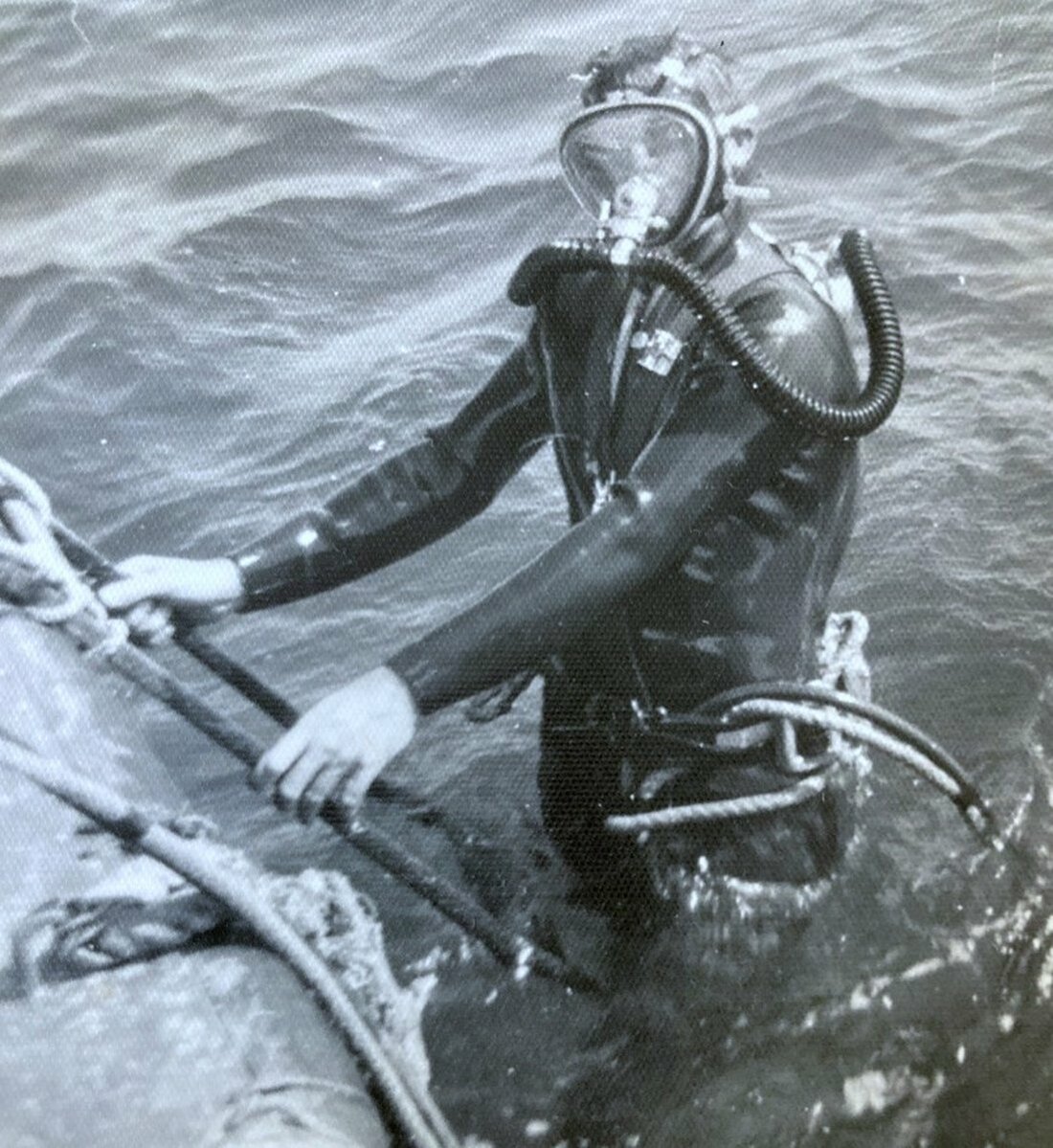
Having then retired from the Royal Navy, he was employed as a professional deep-sea diver in the post-war era. He died in Liverpool in July 2003.
Sold together with a quantity of original documentation, comprising:
(i)
The Buckingham Palace forwarding letter for his D.S.M. and his M.I.D. certificate for his second 'Mention', dated 13 June 1946, together with Admiralty forwarding letters for his Naval General Service Medal and second M.I.D. oak leaf, dated in March 1947.
(ii)
A Liverpool Education Certificate, with a glowing end of term report for his attendance at Butler Street School, dated 6 September 1935.
(iii)
An old, certified copy of his birth certificate, dated 18 March 1952, and another of his marriage certificate, dated 7 July 1964, in which he is described as a 'Deep Sea Diver'.
(iv)
Letters of reference for his employment as a diver by the British Arc Welding Co. in 1951-52, and Mersey Docks and Harbour Board in 1953.
(v)
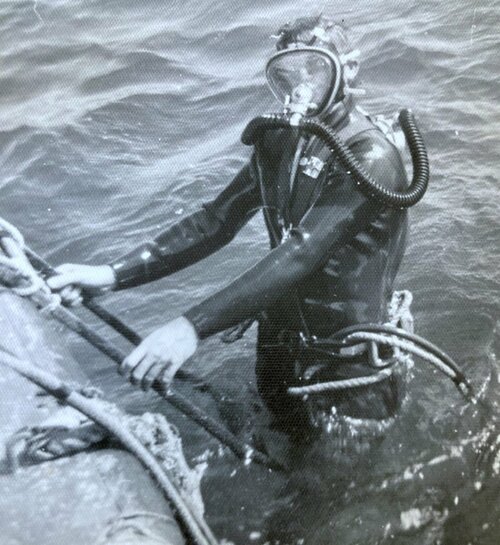
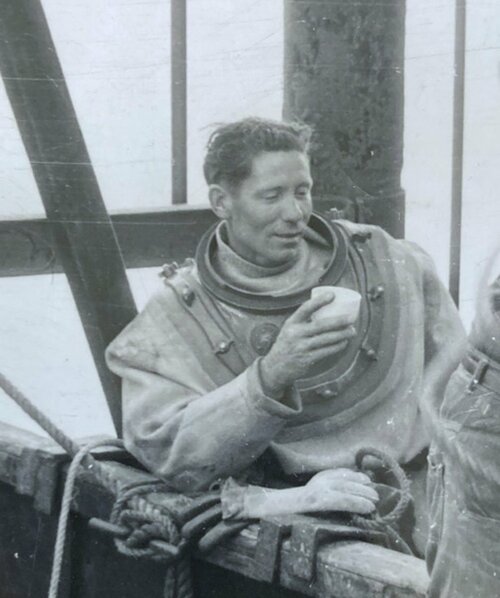
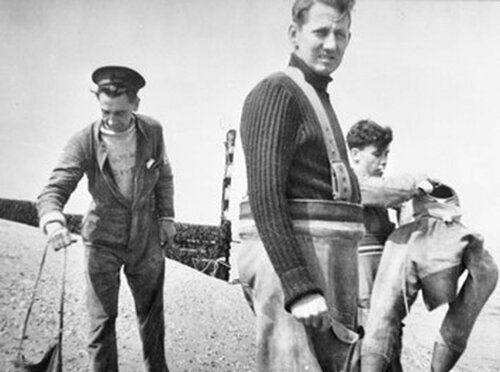
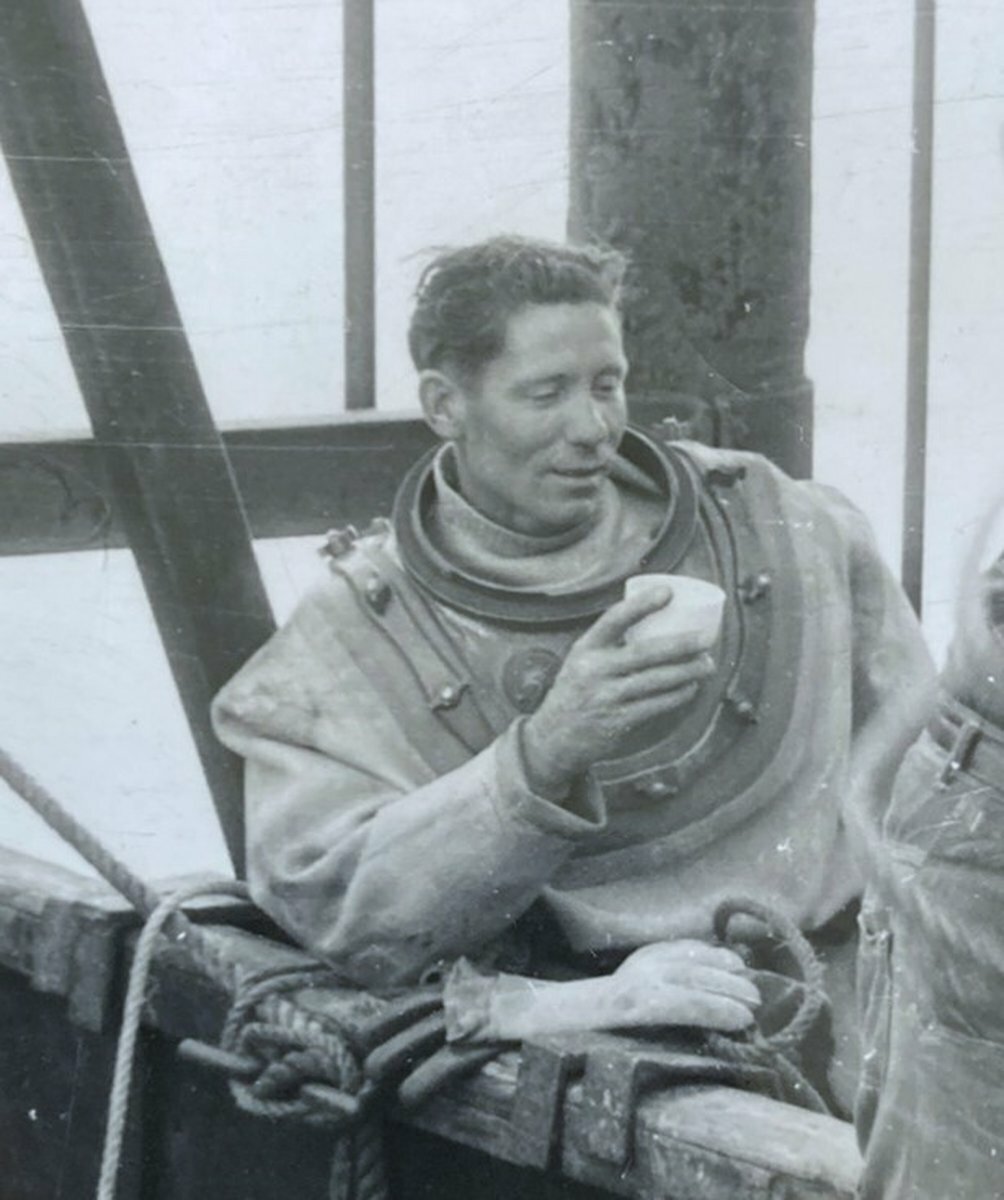
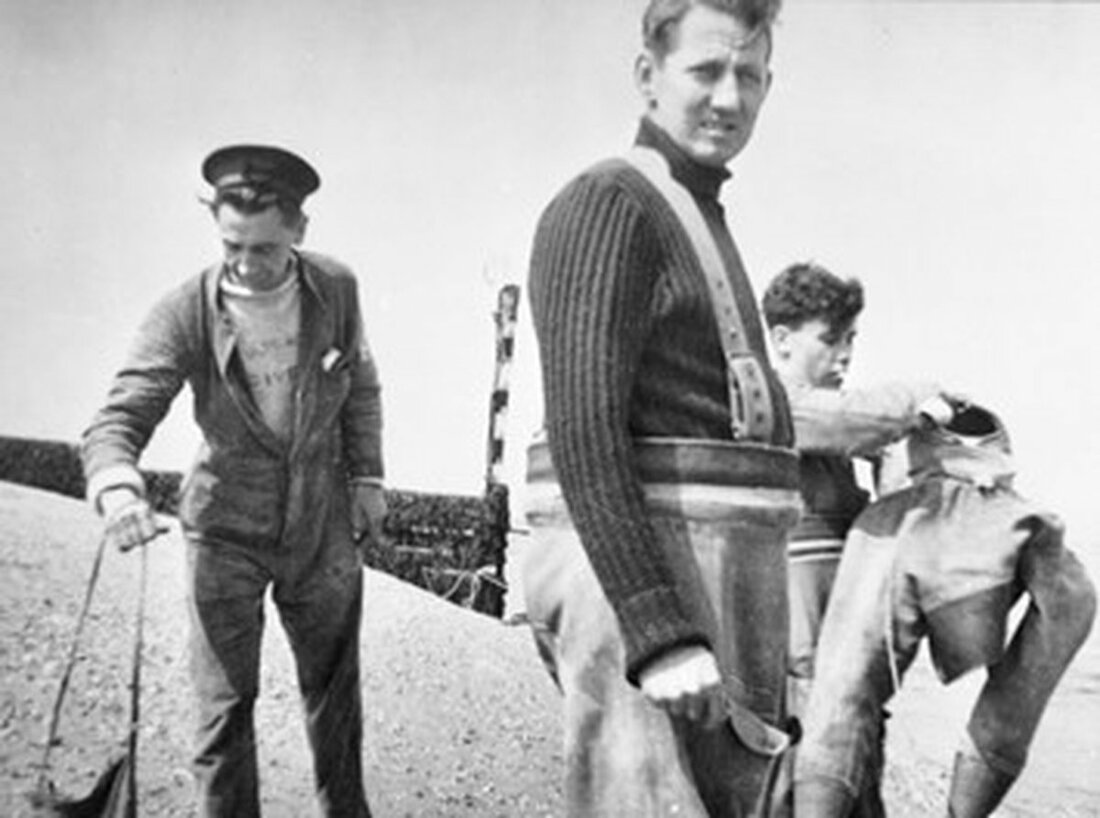
Several photographs, including the recipient in diving gear.
Subject to 20% VAT on Buyer’s Premium. For more information please view Terms and Conditions for Buyers.
Estimate
£2,400 to £2,800
Starting price
£2000
Watch, listen and bid as if you were in the room. Now available for auctions worldwide.
Click here to bid live
An exclusive and confidential service for the discerning collector or vendor.
View the Gallery
Download every Spink catalogue on your iPad, iPod or iPhone using free Spink app.
Download From iTunes© 2026 Spink & Son. All rights reserved.