
Auction: 26001 - Orders, Decorations and Medals
Lot: 33
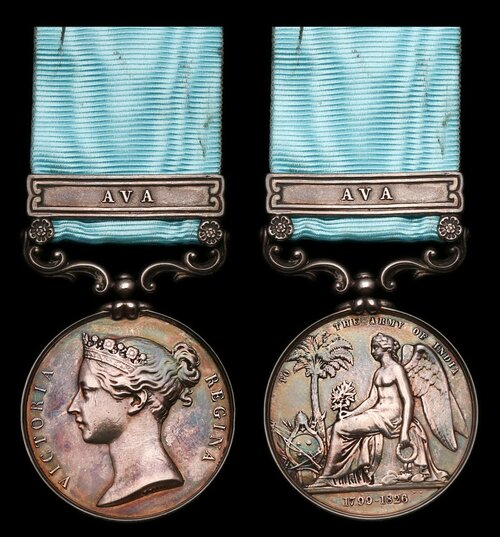
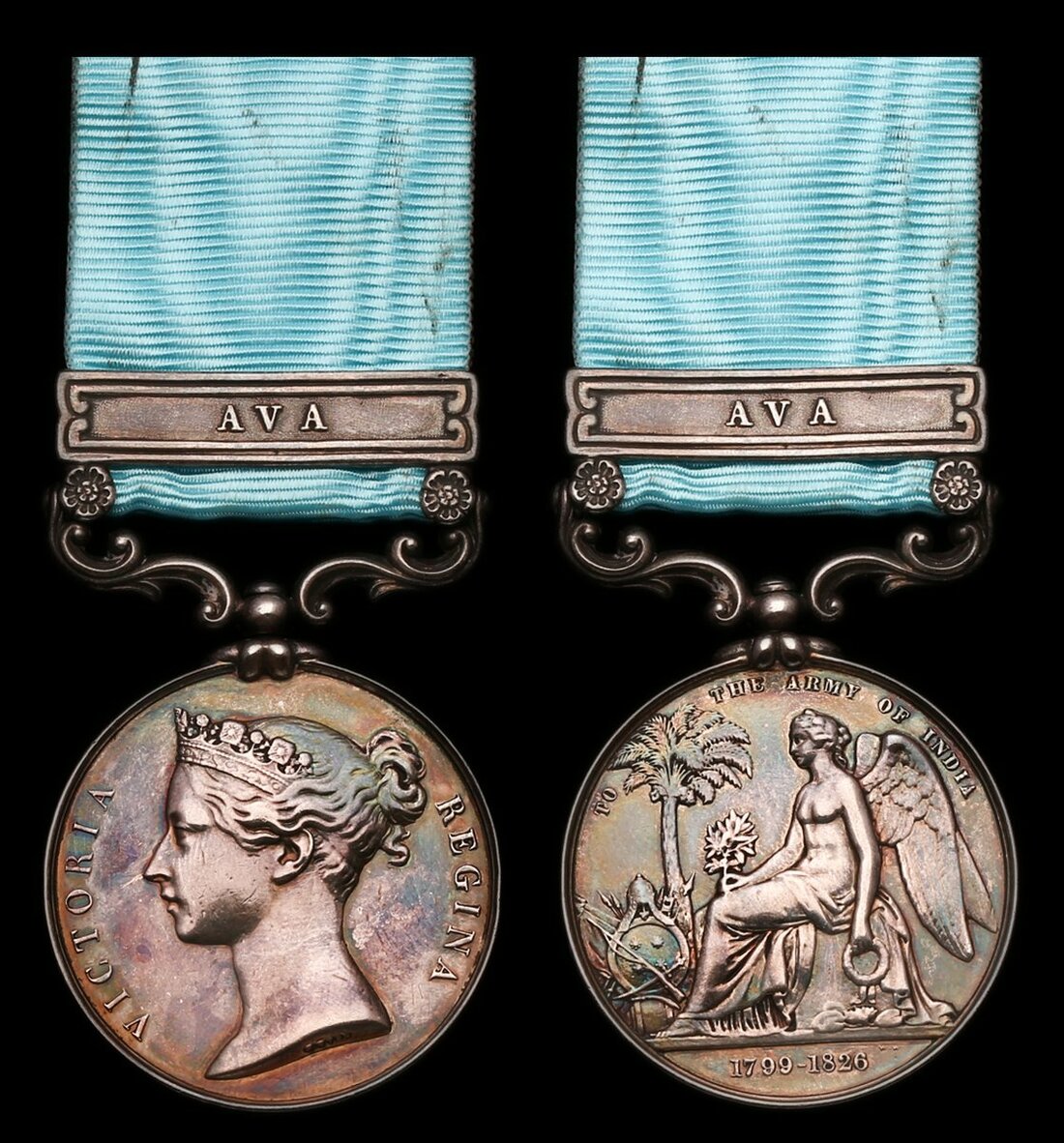
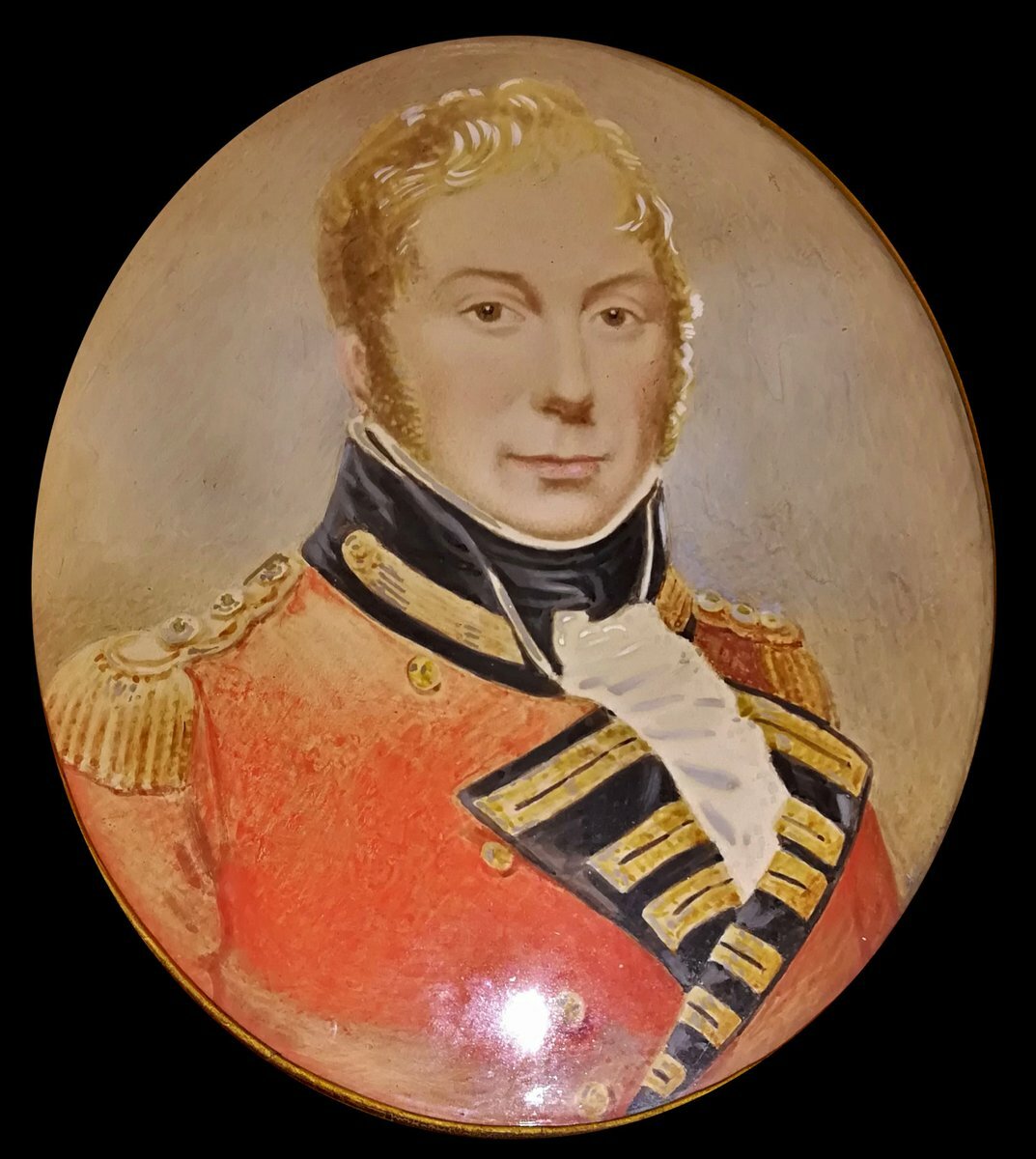
The outstanding Army of India Medal awarded to Lieutenant-General Sir H. Fraser, Indian Army
A veteran of the Siege of Asseerghur, he took a superb K.C.B. for the storming of Copal Droog in 1819 and went on to Command the largest Division of Troops during the Anglo-Burmese War 1824-26
Army of India 1799-1826, short-hyphen reverse, 1 clasp, Ava (Coll. H. Fraser, Commg. Division.), a little polished, nearly very fine
[K.C.B.] confirmed April 1832 and presented from the hands of The King at St James's Palace, 21 February 1834 - as reward for the action at Copal Droog (Dodd's Peerage refers).
Hugh Fraser was born on 14 May 1773, the son of William Fraser, Commissary of Inverness. Having entered the Madras Service as an Ensign on 29 July 1791, he was advanced Lieutenant on 17 February 1794 and he served at the capture of Colombo, a fortress in the Island of Ceylon, in 1796 and was included in the Prize Roll. Advanced Captain on 11 February 1801, Major 16 March 1805 and Lieutenant-Colonel on14 December 1809, in 1811 he was appointed to command at Pondicherry, receiving approbation of his conduct when he resigned command in 1816.
Third Maratha War - K.C.B.
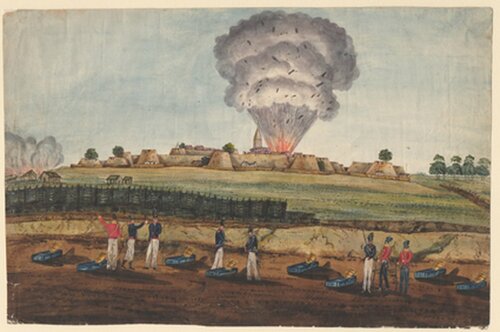
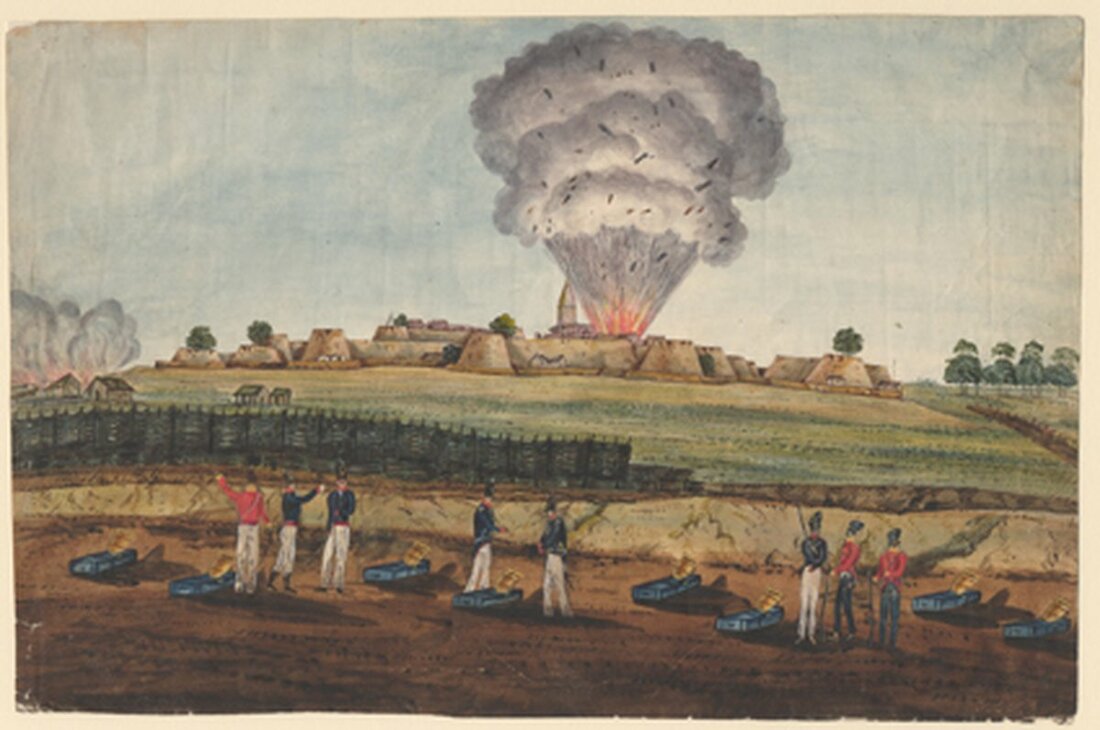
In 1817 he was appointed to take charge of the garrison at Vellore. However with the outbreak of the Third Maratha War in 1817, Fraser, who was at this time served with the 12th Madras Native Infantry, was appointed to command the second Brigade of Infantry with Field Force under General Pritzler. Taking part in the various operations of Pritzler's Division, he shared the Prizes for the capture of Singkeir, Shotapore, Pogrunder and Wassotta in 1818. In March-April 1819, he took part in the siege and taking of the Fortress of Asseerghur and on 12 May commanded the troops at the successful assault of the formidable hill fortress of Copaul Droog, leading the attack in person. His reward of the K.C.B. took over a decade to be promulgated. Both Asseerghur and Copaul Droog, were two of eight additional actions (1818-42) put forward as additional clasps for the Army of India Medal.
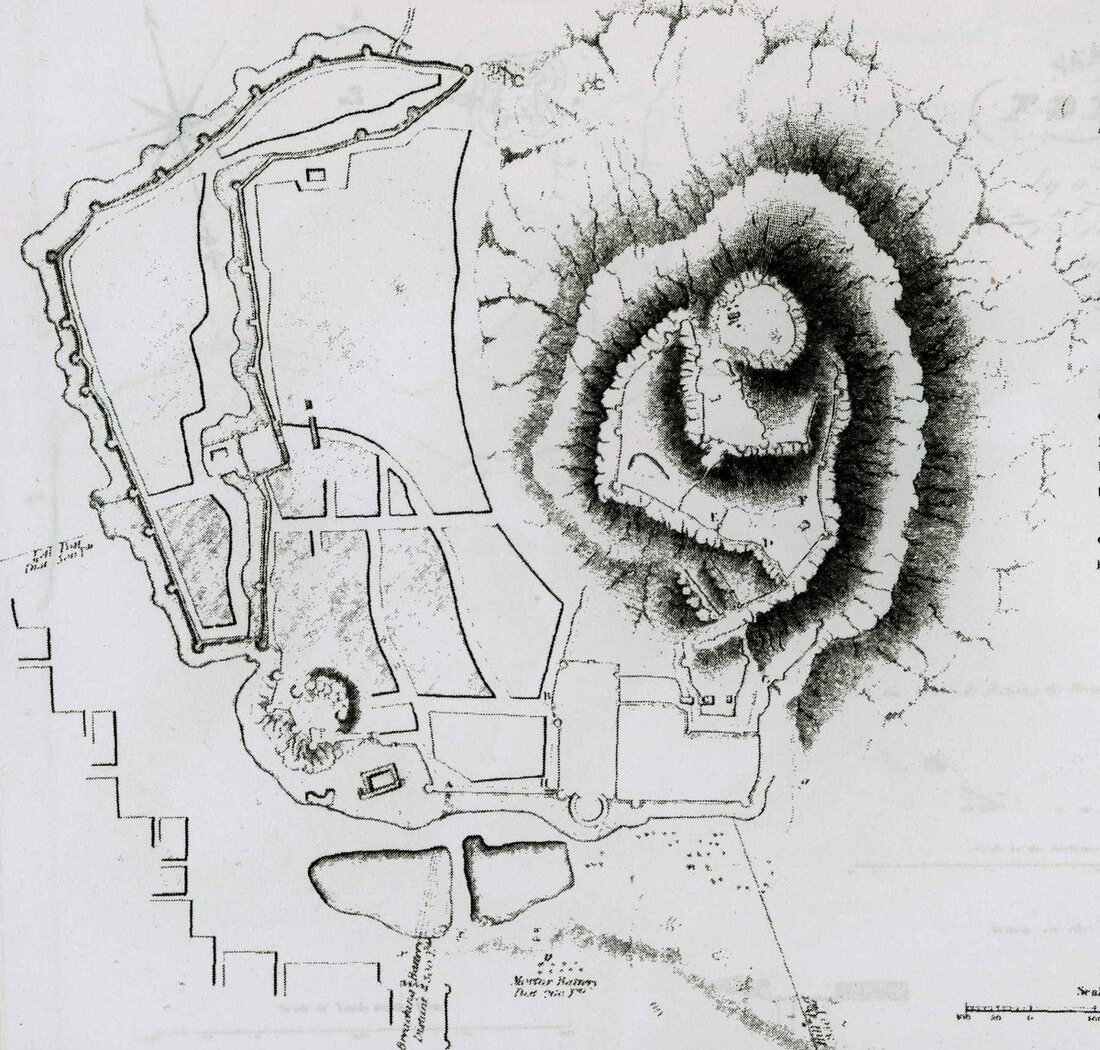
Sieges of the Madras Army, in the years 1817, 1818, and 1819 gives good detail on the action which saw him take his Knighthood:
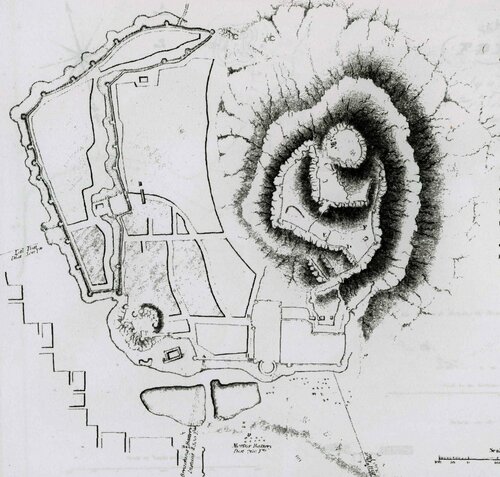
'The works of Copal Droog are of extraordinary magnitude and strength, and (as will appear by the plan) very complicated. The hill, which forms the upper Fort, is about 600 feet high above the plain, and is totally inaccessible on three sides. The fourth, or Eastern side, is encircled with walls to the very base, where a strong rampart terminates the hill fortifications; below which there are, on this side, two additional enclosures, each consisting of a very respectable rampart with towers.
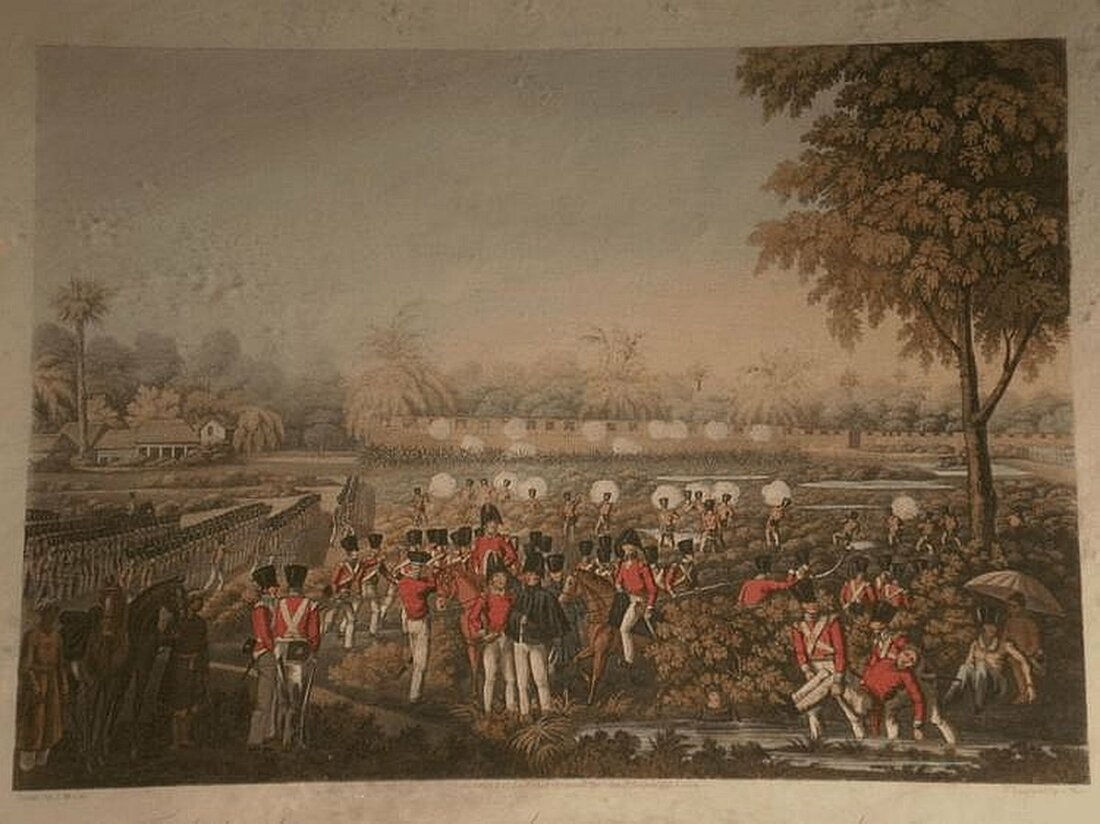
This then was the target. For several days in early May the walls were pounded by the British weaponry until a breach was considered practicable, and the army prepared to storm the lower forts. At this point the Indian Garrison surrendered, and 1400 men marched out and the forts were occupied by the British troops. The upper and more challenging fort confronted them. There were negotiations to persuade the Rajah to surrender, but it appeared that the Rajah was simply playing for time. The period fixed upon having arrived, and it appearing that no reliance could be placed upon the Rajah's professions and promises, the following plan of attack was decided upon. Two columns, of 4 companies each, to escalade the walls at the points G and H; and having gained admittance, to support each other. A galloper gun to accompany the left attack, for the purpose of blowing open the gate B. Advantage to be taken of the confusion of the enemy, to follow them to the summit of the hill, if possible. A reserve of 3 companies to advance from the mortar battery, to reinforce the column which should first establish a footing.
At twelve o'clock precisely, both columns advanced to the assault. The right under Captain Cuppage, of His Majesty's 53rd Regiment; the left under Captain Tew, of His Majesty's 34th Regiment; the whole commanded by Lieutenant-Colonel Fraser, of the 12th Native Infantry.
Both escalades succeeded, and the gateway was blown open at the same instant. The troops rushed in, and effected a junction at the gateway C, which afforded cover to a considerable number of men. At this point, they were checked by a tremendous shower of stones, which was hurled from the rocks above...the enemy intimidated by the perseverance and gallantry of the attack, called for quarter, which was granted; and the Garrison, to the amount of 500 men, were marched out prisoners of war.
Hugh Fraser's role in this action was mentioned when he was awarded the K.C.B. ten years later. At the time, Brigadier-General Pritzler reported that nothing could exceed the zeal shown to the Service by him, and every thing that could be done by men was accomplished by the Troops under his command. Fraser's own report detailing the attack and surrender of Copaul Droog (an extract appears in the London Gazette of 30 August 1820) was very complimentary of his staff and men, and his description of the final surrender of the Indian leader, the Killedar, is very prosaic: After a good deal of firing the Killedar's people hoisted a white flag, and demanded terms, and the Killedar after much hesitation came out and delivered himself up, on my assuring him at the gateway, he being on the top of the wall, that his life should be spared; and his whole garrison surrendered on the same terms.'
First Burmese War
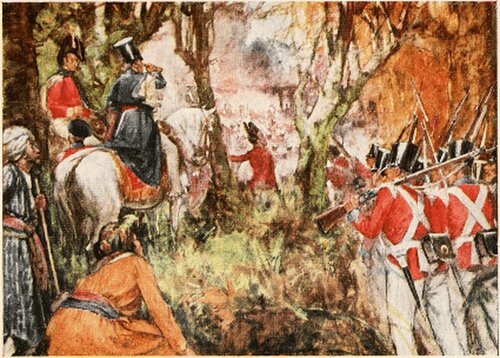
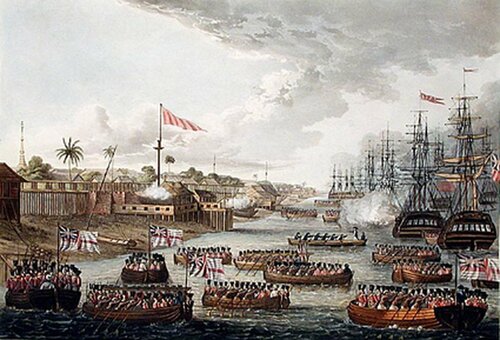
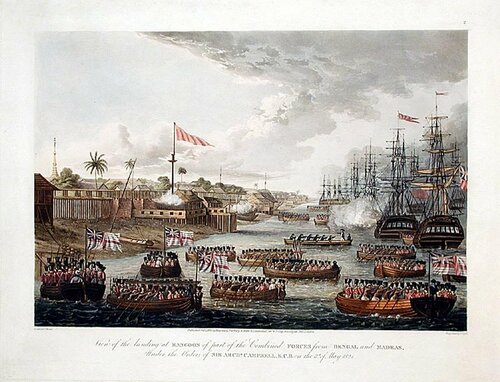
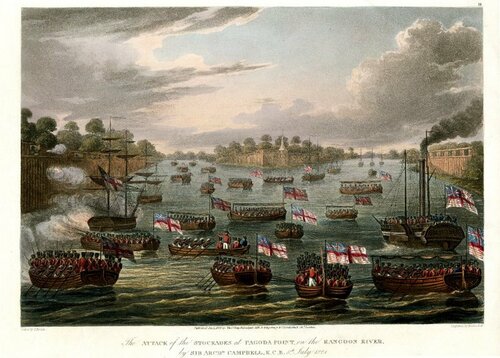
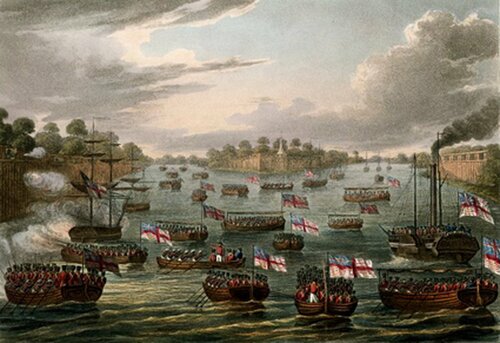
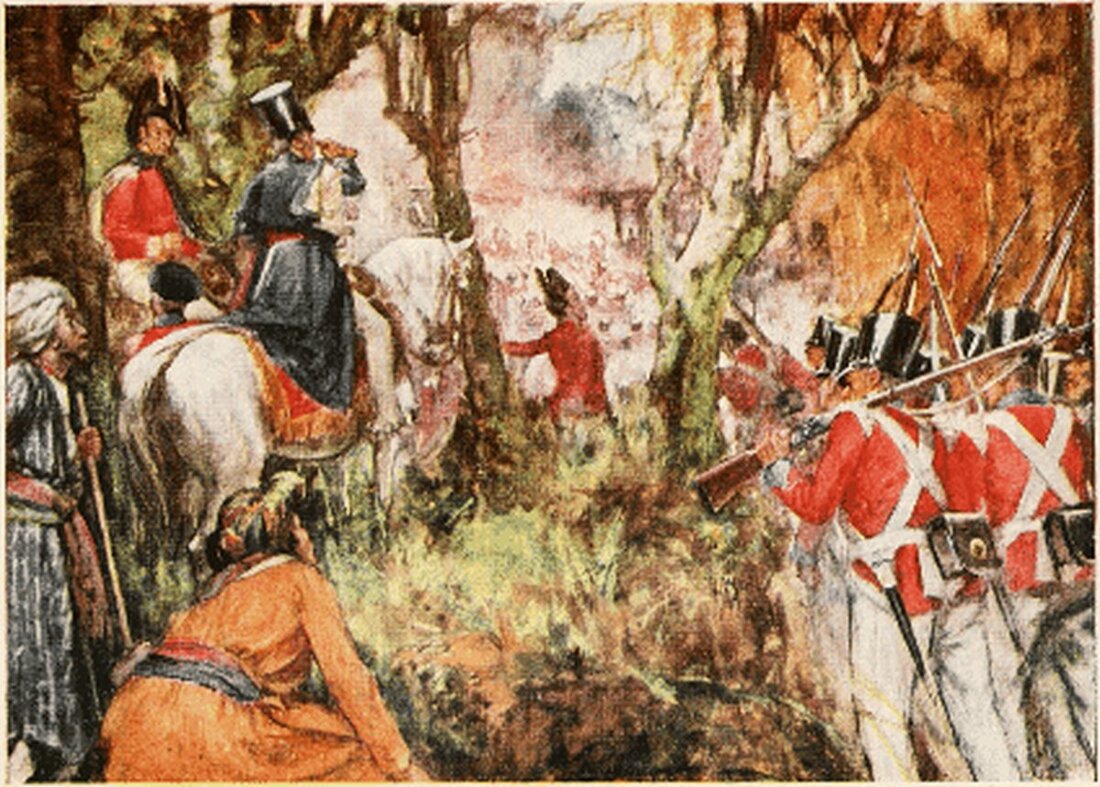
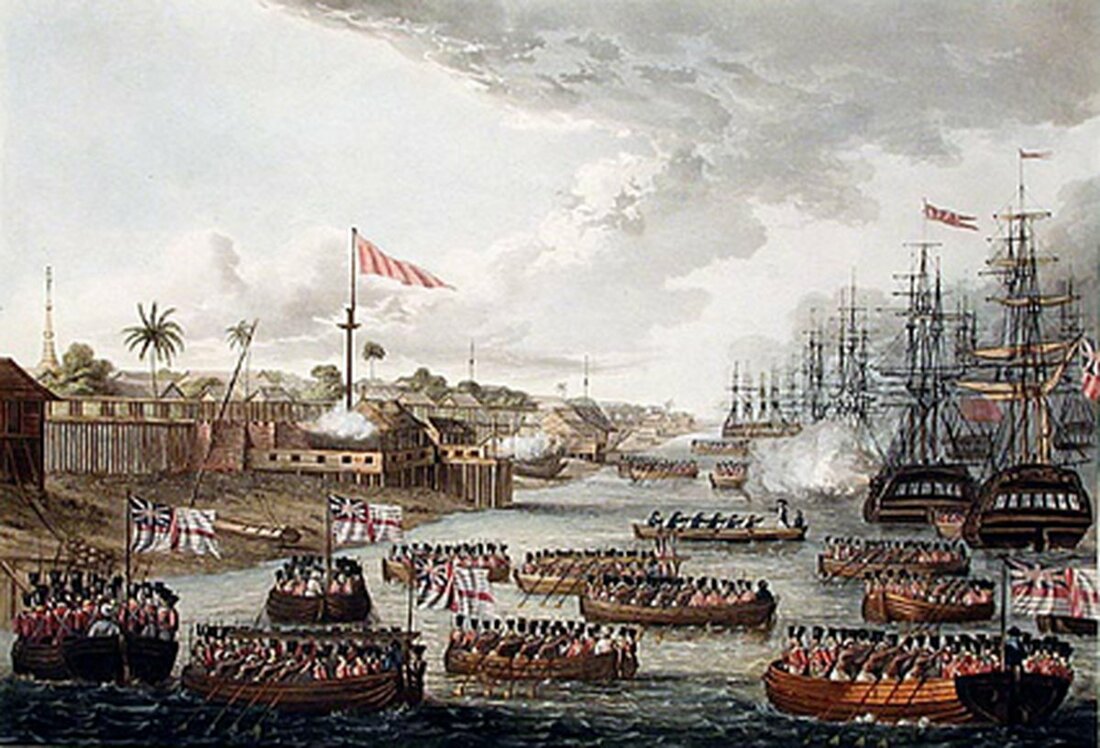
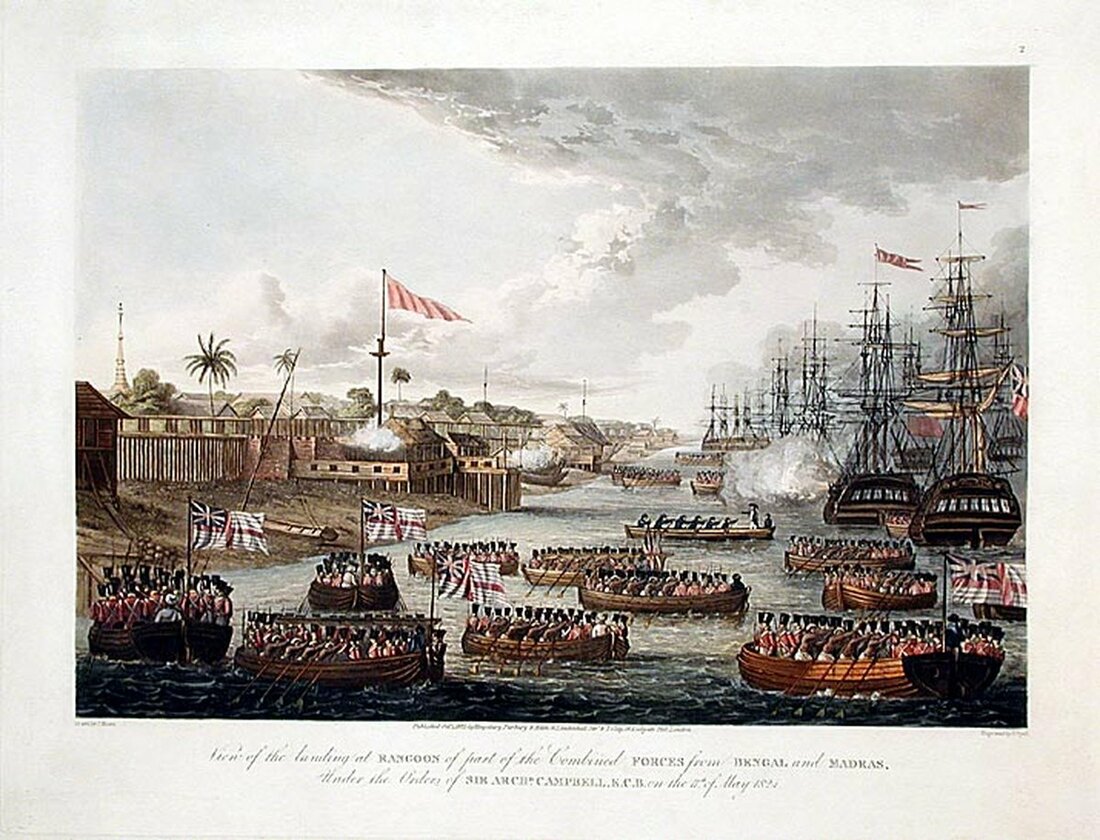
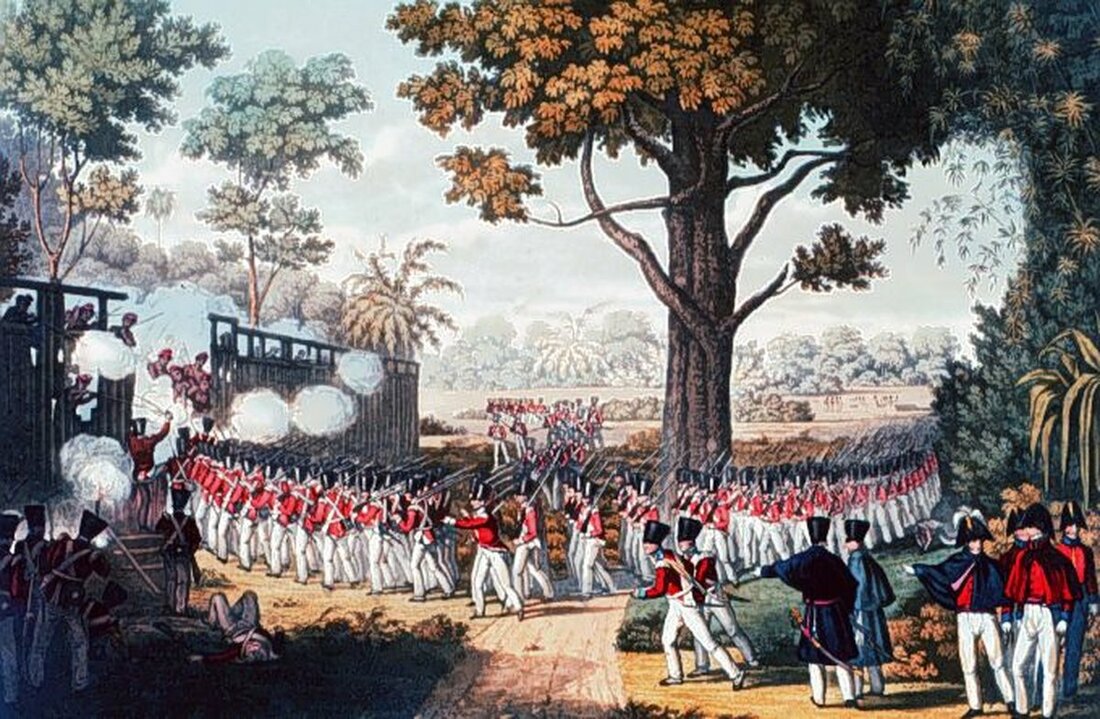
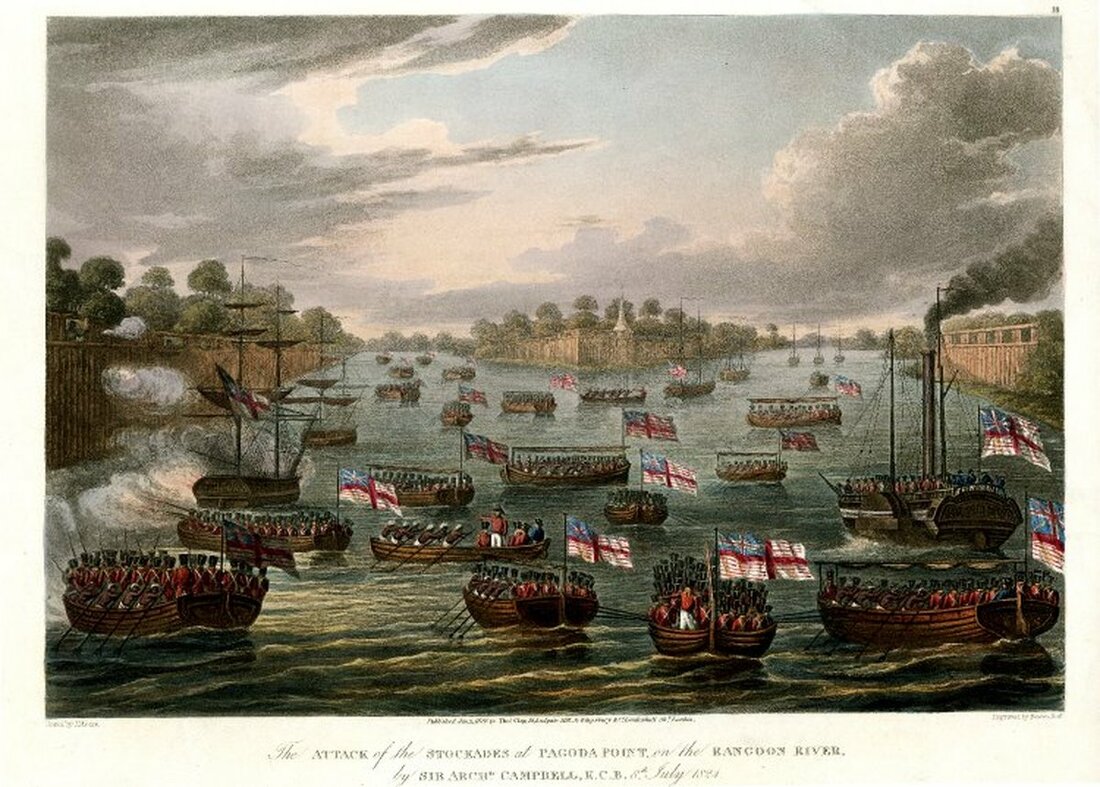
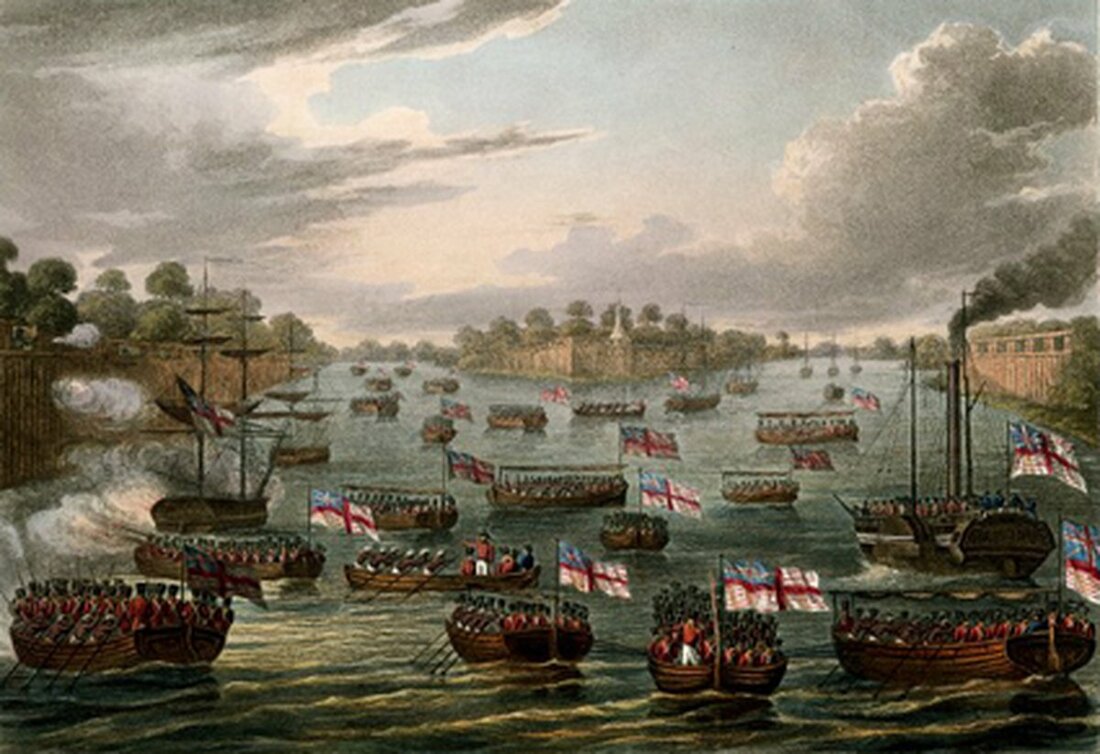
Having been promoted full Colonel on 12 August 1819, Fraser transferred to the Command of the 22nd Native Infantry and in January 1824, was again given command at Vellore. This appointment again was short lived for his Regiment was selected to serve in the First Anglo-Burmese War. In August 1824, he was appointed to succeed Colonel Macbean in the Command of the Madras Division of the Army; serving with the local rank of Brigadier-General. On 21 September 1824, General Fraser, led a successful combined Army and Naval expedition against enemy stockades near Paulang. A misunderstanding with Brigadier-General Sir Archibald Campbell saw him reprimanded for appointing officers in the field, despite this he was thanked for his efforts in the campaign. His own despatch gives good detail:
'I have the honour to report, that in conformity to your orders of the 19th instant, the party detailed in the margin* embarked on the morning of the 21st, and anchored off Kemmundine the same evening. It proceeded on the 22d, and about two miles from Pagoda-point, fell in with five stockades, three on the right side and two on the left. The Satellite, towed by the steam vessel, led, and on approaching these stockades, a heavy fire was opened, from both sides, from musketry and cannon, which was returned by the ships and by the troops on die decks and tops of the Satellite. Arrangements were immediately made to disembark a proportion of the troops. On their approach to the stockades, the enemy, after a slight resistance, quitted their position, and fled to the jungle, leaving several men killed in the right stockade, as reported by Major Sale, H. M. 13th Light Infantry, who led this party. One large gun was found burst, and four others were brought off, with several jingals and other arms. On the 23d, the flotilla continued to advance without meeting with any obstacle-distance estimated between twelve and fifteen miles. On the 24th, continued our route up the river about five miles, and in the afternoon fell in with three stockades, stockades, which were bombarded for a short time previous to the landing of the troops, who found the different stockades evacuated. On the 25th, several boats filled with troops, went in pursuit of some war boats stated to be near, but did not succeed in overtaking them. During this time the Pioneers were employed in destroying the different stockades, which being completed, the flotilla commenced its return to Rangoon, at the recommendation of the naval commander.
The destruction of the different stockades taken on the 22d was completed during our passage down the river. I am happy to add, that no casualties occurred amongst the troops during these operations, but I understand two or three sailors were wounded. The ordnance was taken possession of by the naval commander, with the exception of one gun burst, and another sunk in the river. No regular return of the ordnance was taken in consequence of the hurried nature of the operations, and the necessity of taking advantage of the tide to reach the anchoring ground, but the number of all calibres is estimated, by the naval commander, at fifteen pieces.'
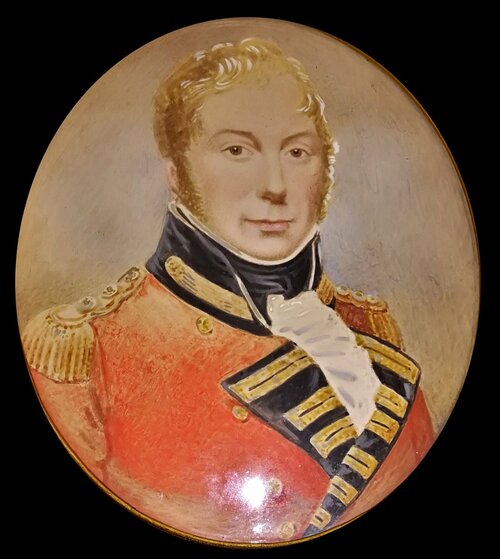
Fraser had the largest Division of troops of the Burma Expeditionary Force under his charge. Like so many his health was ravaged by the campaign and he returned to London on long furlough and retired in the late 1830's. Purchasing Braelangwell House in Cromarty, Invernesshire, he was promoted Lieutenant-General in November 1841. Made appointed Deputy-Lieutenant of Cromarty, the good General died on 6 October 1851; sold together with copied research to include an image of a portrait miniature of the recipient.
Subject to 20% VAT on Buyer’s Premium. For more information please view Terms and Conditions for Buyers.
Estimate
£4,000 to £6,000
Starting price
£3500
Watch, listen and bid as if you were in the room. Now available for auctions worldwide.
Click here to bid live
An exclusive and confidential service for the discerning collector or vendor.
View the Gallery
Download every Spink catalogue on your iPad, iPod or iPhone using free Spink app.
Download From iTunes© 2026 Spink & Son. All rights reserved.